RoboForex announces receiving the “Best Investment Products – Global” accolade at the Global Brands Awards 2022. In the past, Global Brands Awards have rewarded RoboForex for the best investment products on three occasions – in 2019, 2020, and 2021.
Global Brands Awards was established to honour companies, which demonstrate outstanding results in different business areas. The organising committee gives awards to the most successful representatives in the spheres of finance, education, tourism, lifestyle, technology, and the car industry.
Robert Stephenson, Chief Business Officer at RoboForex, commented: “We’re very proud of receiving this award for some years now. For us, it’s a criterion of success of the direction the Company chose, and a motivation to excel ourselves next year and compete for a win again. We’d like to express our profound gratitude to organisers and the jury panel, who gave such a high appraisal of our investment products.”
About Global Brands Awards
Global Brands Awards rewards the best companies that have an obvious advantage over competitors due to providing their clients with high quality services. The event is organised by Global Brands Magazine, one of the leading online medias, that publishes the latest news, reviews, opinions, and polls about leading global brands in various market segments.
About RoboForex
RoboForex is a company which delivers brokerage services. The company provides traders who work on financial markets with access to its proprietary trading platforms. RoboForex Ltd has the brokerage licence FSC 000138/333. More detailed information about the Company’s products and activities can be found on the official website at roboforex.com.
The US indices rose on Thursday, thanks to support from growth and semiconductor stocks, as investors watched the Federal Reserve’s conference in Jackson Hole to gain insight into the future outlook for monetary policy. Fed Chairman Jerome Powell will give a speech today that will be analyzed for any indication that the economic slowdown may change the Central Bank’s strategy. The US GDP data showed yesterday that the US economy contracted at a more moderate pace in the second quarter than originally thought, as consumer spending partially cushioned resistance to the sharp slowdown in inventory accumulation, dispelling fears that the recession was continuing. Nobel Prize-winning economist Richard Thaler said the US economy was showing more signs of strength than weakness.
The National Bureau of Economic Research, the official arbiter of recessions in the United States, defines a recession as a significant decline in economic activity that extends throughout the economy, lasting more than several months, usually manifested in production, employment, and real income.
As the stock market closed yesterday, the Dow Jones Index (US30) increased by 0.98%, and the S&P 500 Index (US500) added 1.41%. The NASDAQ Technology Index (US100) gained 1.67%.
Federal Reserve Bank of Kansas City President Esther George said yesterday that it is too early to predict how much the US Central Bank will raise interest rates next month because key inflation and labor market reports are still to come. Atlanta Fed President Raphael Bostic also said he has not yet decided whether the Fed should raise interest rates by 50 or 75 basis points at its policy meeting next month. Traders of Fed funds futures contracts estimate a 59% chance that the Fed will raise rates another 75 basis points at its September meeting and a 41% chance of a 50 bps hike.
Graphics chip maker Nvidia Corp forecasts a sharp drop in revenue for the current quarter amid a weakening gaming industry. Analysts believe Nvidia could see further declines in the crypto-mining and data center markets as well.
Equity markets in Europe traded yesterday without a single dynamic. German DAX (DE30) gained 0.39%, French CAC 40 (FR40) fell by 0.08%, Spanish IBEX 35 (ES35) lost 0.15%, British FTSE 100 (UK100) closed on Wednesday at plus 0.11%.
According to July’s ECB monetary policy minutes, most central bank officials agreed to a more aggressive 50 bps rate hike at the next meeting in the context of the recent deterioration in inflation prospects as well as the deteriorating economic conditions in the Eurozone.
Germany’s IFO business climate Index fell to 88.5 points in August from a revised 88.7 points in July. The IFO index is based on a survey of about 9,000 companies in manufacturing, services, trade, and construction. Business confidence in Germany worsened in August as companies became more pessimistic about rising energy prices and the threat of gas shortages.
The situation in the oil market remains uncertain. Oil prices fell yesterday as investors prepare for the possible return of sanctioned Iranian oil exports to global markets and over concerns that rising US interest rates will weaken fuel demand. On the other hand, the prospect that the OPEC+ group of producers may limit oil supplies limits the fall in oil prices.
Asian markets were mostly up yesterday. Japan’s Nikkei 225 (JP225) gained 0.58%, Hong Kong’s Hang Seng (HK50) jumped by 3.63%, and Australia’s S&P/ASX 200 (AU200) added 0.70% yesterday.
S&P 500 (F) (US500) 4,199.12 +58.35 (+1.41%)
Dow Jones (US30) 33,291.78 +322.55 (+0.98%)
DAX (DE40) 13,271.96 +51.90 (+0.39%)
FTSE 100 (UK100) 7,479.74 +8.23 (+0.11%)
USD Index 108.44 −0.24 (−0.22%)
Important events for today:
– New Zealand RBNZ Gov Orr Speaks at 01:30 (GMT+3);
– Japan Tokyo Core CPI (m/m) at 02:30 (GMT+3);
– US PCE Price index (m/m) at 15:30 (GMT+3);
– Jackson Hole Symposium at 16:00 (GMT+3);
– US Fed Chair Powell Speaks at 17:00 (GMT+3);
– US Michigan Consumer Sentiment (m/m) at 17:00 (GMT+3).
This article reflects a personal opinion and should not be interpreted as an investment advice, and/or offer, and/or a persistent request for carrying out financial transactions, and/or a guarantee, and/or a forecast of future events.

The new Inflation Reduction Act is stuffed with subsidies for everything from electric vehicles to heat pumps, and incentives for just about every form of clean energy. But pouring money into technology is just one step toward solving the climate change problem.
Wind and solar farms won’t be built without enough power lines to connect their electricity to customers. Captured carbon and clean hydrogen won’t get far without pipelines. Too few contractors are trained to install heat pumps. And EV buyers will think twice if there aren’t enough charging stations.
In my new book about climate solutions, I discuss these and other obstacles standing in the way of a clean energy transition. Surmounting them is the next step as the country figures out how to turn the goals of the most ambitious climate legislation Congress has ever passed into reality.
Two outcomes matter: how deeply U.S. actions slash emissions domestically, and how effectively they cut the costs of clean technologies so that other countries can slash their emissions too.
Infrastructure and obstacles
Various studiespredictthat the Inflation Reduction Act will cut U.S. greenhouse gas emissions to around 40% below their 2005 levels by 2030. That’s a cut of roughly 1 billion tons per year, far more than any other U.S. legislation has achieved.
But it still leaves a roughly 10 percentage point gap from President Joe Biden’s target of at least a 50% reduction in emissions by 2030.
What will it take to close that gap?
The Inflation Reduction Act’s subsidies will make clean technologies cheaper, but the biggest need domestically is for more infrastructure and stricter environmental regulations.
For infrastructure, tax credits for electric cars will do little good without enough publicly available chargers. The U.S. has around 145,000 gas stations, but only about 6,500 fast-charging stations that can power up a battery quickly for a driver on the go.
Over 1,300 gigawatts of wind, solar and battery projects – several times the existing capacity – are already waiting to be built, but they’ve been delayed for years by a lack of grid connections and backlogged approval processes by regional grid operators.
The Infrastructure Investment and Jobs Act passed by Congress last year provides some funding for chargers, power lines and pipelines, but nowhere near enough. For example, it sets aside only a few billion dollars for high-voltage power lines, a tiny share of the hundreds of billions of dollars needed to chart a path toward net-zero emissions. Its $7.5 billion for chargers is just a third of what electric car advocates project will be needed.
Even more important is to clear the regulatory obstacles to building clean energy infrastructure.
Democratic leaders of the Senate and House have pledged to pass legislation to make it easier to obtain permits for power lines and pipelines, but doing so would require bipartisan support, and that remains in doubt.
State and local governments and regional grid operators also play pivotal roles in approving new infrastructure and clean energy projects. They must overcome not-in-my-backyard opposition – some of it from policymakers themselves – to the power lines, pipelines and facilities that will be needed for clean energy, and simplify approval processes for rooftop solar panels.
It can’t all be carrots: Sticks are needed, too
We’ll also need regulatory sticks to supplement the Inflation Reduction Act’s carrot cake buffet.
By tightening emissions limits for greenhouse gases and other air pollutants under its Clean Air Act authority, the Environmental Protection Agency can spur the closure of old fossil-fueled power plants, require carbon capture at new ones and drive emissions reductions across a range of industries.
Stricter emissions limits could force gasoline and diesel vehicles to become more efficient and accelerate the adoption of electric ones. Tougher reporting rules and better monitoring of methane leaks will be needed to back up the one stick in the Inflation Reduction Act – its tax on methane emissions.
States wield powerful regulatory sticks too. Ten states have already set 100% clean or renewable electricity standards. California and Oregon have set requirements for cleaner fuels, and states like New York and Washington are implementing comprehensive climate strategies. The more states follow their lead, the more quickly emissions can be cut. The new federal subsidies will ease the path to doing so.
Ramping up research and global impact
All the new spending has the potential to achieve deep emissions cuts domestically, but they will have little impact abroad without further action.
Other countries will only adopt clean technologies if they’re affordable, but the Inflation Reduction Act’s subsidy buffet is only available to U.S. citizens and companies. Its rewards for domestic solar manufacturers may help them gain market share in the U.S., but they’ll likely do little to reduce prices in markets dominated by low-cost Asian manufacturers.
More progress abroad may be driven in future decades by the boosts in funding for emerging technologies. For example, the Inflation Reduction Act provides billions of dollars for clean hydrogen and carbon capture technologies that are not yet commercially viable but could become so with greater deployment. Carbon capture should be targeted toward locking up carbon from difficult-to-decarbonize industries like biofuel production, rather than to prolong the use of coal power plants or subsidize oil and gas production.
The CHIPS and Science Act Biden signed in early August 2022 authorizes $67 billion in funding for zero-carbon industries and climate research, although subsequent legislation will be needed to ensure that those funds are actually appropriated.
It would double the budget for the Department of Energy’s ARPA-E program, which funds research into the most cutting-edge energy technologies. As I discuss in my book, that could be especially important for making clean hydrogen cheap, making geothermal viable in more places, and developing new forms of energy storage. Together with the subsidies provided by the Inflation Reduction Act, that could jump-start the research, development and deployment needed to make these technologies affordable worldwide in the decades ahead.
After years of gridlock, there’s reason to celebrate Congress passing three bills that will do more to cut U.S. emissions than any legislation in history. But much more will be needed to reach the nation’s climate goals and to make clean energy more affordable at home and abroad.
The new movie “Fall” is a survival-thriller about two young women, Becky and Hunter, who are avid rock climbers. To mark the one-year anniversary of Becky’s husband’s death in a climbing accident, they decide to climb an abandoned 2,000-foot TV tower.
But a ladder breaks, and they find themselves stranded atop the rusty steel latticework. Ironically, at the top of the communication tower, the climbers are too high in the air to get a phone signal to call for rescue.
Other recent movies have also featured terrifying communication towers.
Take the 2016 film “Cell,” which is based on a Stephen King novel. In it, a cell tower signal turns normal people into zombies, a literal version of the cliché about the effect mobile phones have on users. The 2018 Indian sci-fi blockbuster “2.0” features a gigantic Kaiju monster – akin to Godzilla or Mothra – made of cellphones. It rises to avenge the deaths of millions of birds supposedly killed by cell tower radiation. (Millions of birds do die every year by crashing into towers, but probably because they become disoriented by their lights, not from the radiation they emit.)
Why are communication towers so scary? Why, in “Fall,” is the steel tower somehow more disturbing than the rocky cliff face where Becky’s husband died?
As anthropologist Shannon Mattern has argued, towers and antennas are visible manifestations of vast invisible networks – mostly wireless or underground – that can be hard for people to wrap their heads around, even as they grow increasingly dependent on them.
They’re a reminder of something that most of us would rather forget: that we’re immersed in an electromagnetic soup of radio waves, walking around every day in what design scholar Anthony Dunne has called “hertzian space.” Those same invisible waves also signal the possibility of ubiquitous surveillance and manipulation.
So a latticework steel tower or a sleek monopole mast with an array of rectangular antenna panels clustered at its top can elicit powerful responses.
On the one hand, there’s denial – you might half-consciously “unsee” them and pretend they’re not there.
On the other hand, they can become a source of paranoia, which sometimes metastasizes into conspiracy theories.
Hidden in plain sight
Cell towers are often designed to hide in plain sight. Some are even disguised as pine trees or palm trees – rather poorly, in most cases. But stealth towers like these aren’t actually meant to pass for the natural objects they imitate.
Like all camouflage, they’re just supposed to distract our attention long enough for us to overlook them. The brown painted “bark” and green plastic “leaves,” or the rows of rectangular antenna panels painted to blend into building façades, are simply prompts to our unseeing – cues to look away. Nothing to see here, they say.
In recent years, 5G antennas have started showing up everywhere, often as unlabeled boxes or cylinders on standalone poles or streetlights.
Known as small-cell networks, these faster and more powerful 5G systems require many more antennas spaced closer together. This greater density has provoked increased fears about potential risks to health and security, along with more paranoid reactions linking cellular radiation to cancer – a link not supported by scientific research. Some people even wrongly blamed 5G for the COVID-19 pandemic.
Some of the extreme reactions against cell towers may be the result of displaced anxiety about the very real risks of everyday technology.
Most of us sense – though we often prefer to forget – that each steel cell tower or sleek 5G box is just the tip of the iceberg. It’s a visible sign of mostly invisible global communication networks, tied to centers of commercial and political power, that are gradually eroding our privacy and autonomy.
During the long seafaring voyages of the 15th and 16th centuries, a period known as the Age of Discovery, sailors reported experiencing visions of sublime foods and verdant fields. The discovery that these were nothing more than hallucinations after months at sea was agonizing. Some sailors wept in longing; others threw themselves overboard.
The cure for these harrowing mirages turned out to be not a concoction of complex chemicals, as once suspected, but rather the simple antidote of lemon juice. These sailors suffered from scurvy, a disease caused by a deficiency of vitamin C, an essential micronutrient that people acquire from eating fruits and vegetables.
Vitamin C is important for the production and release of neurotransmitters, the chemical messengers of the brain. In its absence, brain cells do not communicate effectively with one another, which can lead to hallucinations.
Beyond that, my research is also focused on understanding how food can influence our thoughts, moods and behaviors. While we can’t yet prevent or treat brain conditions with diet, researchers like me are learning a great deal about the role that nutrition plays in the everyday brain processes that make us who we are.
Perhaps not surprisingly, a delicate balance of nutrients is key for brain health: Deficiencies or excesses in vitamins, sugars, fats and amino acids can influence brain and behavior in either negative or positive ways.
As with vitamin C, deficits in other vitamins and minerals can also precipitate nutritional diseases that adversely impact the brain in humans. For example, low dietary levels of vitamin B3/niacin – typically found in meat and fish – cause pellagra, a disease in which people develop dementia.
Niacin is essential to turn food into energy and building blocks, protect the genetic blueprint from environmental damage and control how much of certain gene products are made. In the absence of these critical processes, brain cells, also known as neurons, malfunction and die prematurely, leading to dementia.
In animal models, decreasing or blocking the production of niacin in the brain promotes neuronal damage and cell death. Conversely, enhancing niacin levels has been shown to mitigate the effects of neurodegenerative diseases such as Alzheimer’s, Huntington’s and Parkinson’s. Observational studies in humans suggest that sufficient levels of niacin may protect against these diseases, but the results are still inconclusive.
Interestingly, niacin deficiency caused by consumption of excessive amounts of alcohol can lead to similar effects as those found with pellagra.
Another example of how a nutrient deficiency affects brain function can be found in the element iodine, which, like niacin, must be acquired from one’s diet. Iodine, which is present in seafood and seaweed, is an essential building block for thyroid hormones – signaling molecules that are important for many aspects of human biology, including development, metabolism, appetite and sleep. Low iodine levels prevent the production of adequate amounts of thyroid hormones, impairing these essential physiological processes.
Not all dietary deficiencies are detrimental to the brain. In fact, studies show that people with drug-resistant epilepsy – a condition in which brain cells fire uncontrollably – can reduce the number of seizures by adopting an ultralow-carbohydrate regimen, known as a ketogenic diet, in which 80% to 90% of calories are obtained from fat.
Carbohydrates are the preferred energy source for the body. When they are not available – either because of fasting or because of a ketogenic diet – cells obtain fuel by breaking down fats into compounds called ketones. Utilization of ketones for energy leads to profound shifts in metabolism and physiology, including the levels of hormones circulating in the body, the amount of neurotransmitters produced by the brain and the types of bacteria living in the gut.
Researchers think that these diet-dependent changes, especially the higher production of brain chemicals that can quiet down neurons and decrease levels of inflammatory molecules, may play a role in the ketogenic diet’s ability to lower the number of seizures. These changes may also explain the benefits of a ketogenic state – either through diet or fasting – on cognitive function and mood.
Some foods can negatively affect your memory and mood.
Sugar, saturated fats and ultraprocessed foods
Excess levels of some nutrients can also have detrimental effects on the brain. In humans and animal models, elevated consumption of refined sugars and saturated fats – a combination commonly found in ultraprocessed foods – promotes eating by desensitizing the brain to the hormonal signals known to regulate satiety.
Interestingly, a diet high in these foods also desensitizes the taste system, making animals and humans perceive food as less sweet. These sensory alterations may affect food choice as well as the reward we get from food. For example, research shows that people’s responses to ice cream in brain areas important for taste and reward are dulled when they eat it every day for two weeks. Some researchers think this decrease in food reward signals may enhance cravings for even more fatty and sugary foods, similar to the way smokers crave cigarettes.
High-fat and processed-food diets are also associated with lower cognitive function and memory in humans and animal models as well as a higher incidence of neurodegenerative diseases. However, researchers still don’t know if these effects are due to these foods or to the weight gain and insulin resistance that develop with long-term consumption of these diets.
Time scales
This brings us to a critical aspect of the effect of diet on the brain: time. Some foods can influence brain function and behavior acutely – such as over hours or days – while others take weeks, months or even years to have an effect. For instance, eating a slice of cake rapidly shifts the fat-burning, ketogenic metabolism of an individual with drug-resistant epilepsy into a carbohydrate-burning metabolism, increasing the risk of seizures. In contrast, it takes weeks of sugar consumption for taste and the brain’s reward pathways to change, and months of vitamin C deficiency to develop scurvy. Finally, when it comes to diseases like Alzheimer’s and Parkinson’s, risk is influenced by years of dietary exposures in combination with other genetic or lifestyle factors such as smoking.
In the end, the relationship between food and the brain is a bit like the delicate Goldilocks: We need not too little, not too much but just enough of each nutrient.
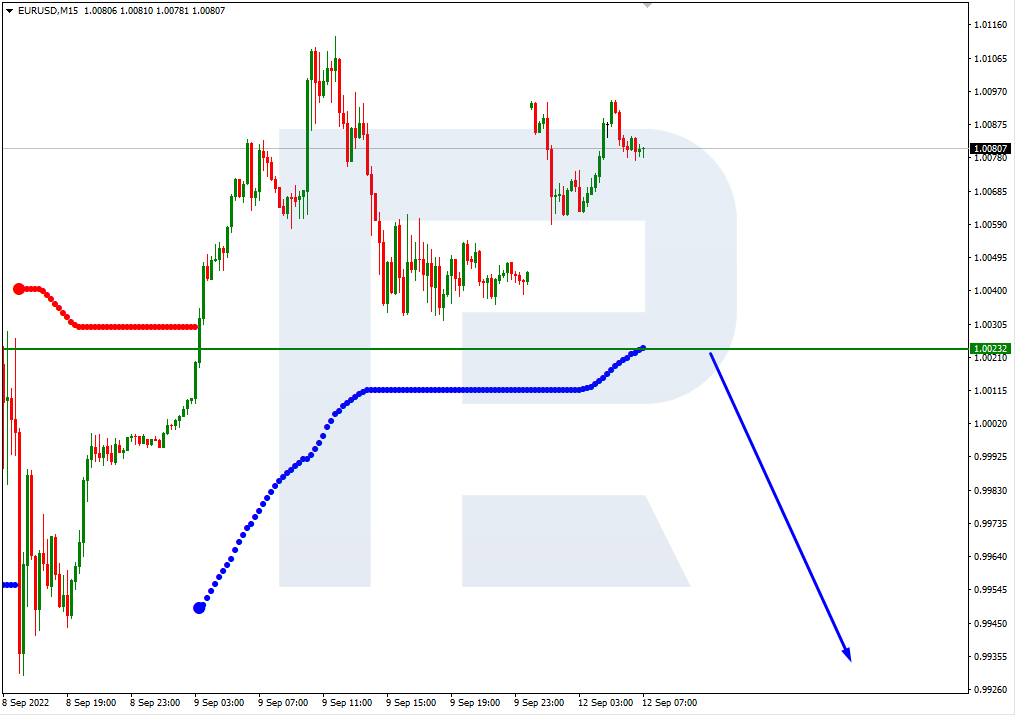
Having completed the descending wave at 0.9909, EURUSD is growing towards 1.0030. After that, the instrument may start another with the target at 0.9950, or even extend this structure down to 0.9807.
GBPUSD, “Great Britain Pound vs US Dollar”
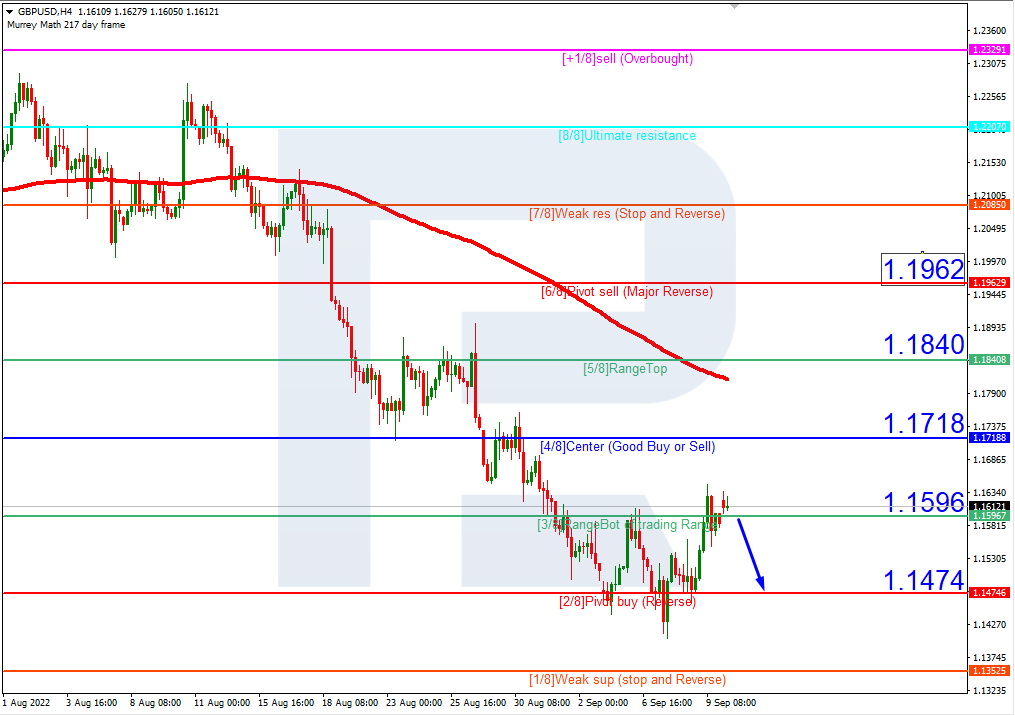
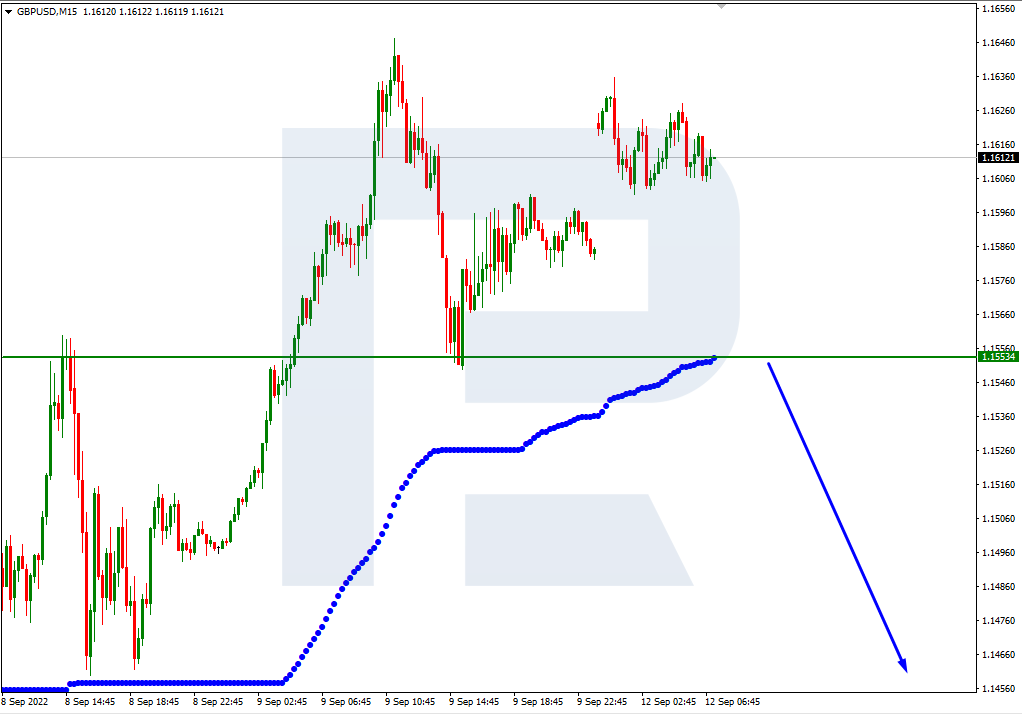
After finishing the descending wave at 1.1755, GBPUSD is growing towards 1.1885. Later, the market may start a new decline to break 1.1777 and then resume trading downwards with the target at 1.1695.
USDJPY, “US Dollar vs Japanese Yen”
USDJPY is consolidating around 136.50. Today, the pair may fall towards 135.70 and then form one more ascending structure to test 136.00 from below. After that, the instrument may resume trading downwards with the target at 134.66.
USDCHF, “US Dollar vs Swiss Franc”
USDCHF is still consolidating around 0.9645. Possibly, today the pair may fall towards 0.9600. If later the price breaks this range to the upside, the market may resume trading upwards with the target at 0.9715; if to the downside – start a new correction to reach 0.9515.
AUDUSD, “Australian Dollar vs US Dollar”
AUDUSD is consolidating around 0.6900. Today, the pair may grow towards 0.6970 and then start another decline with the target at 0.6900.
BRENT
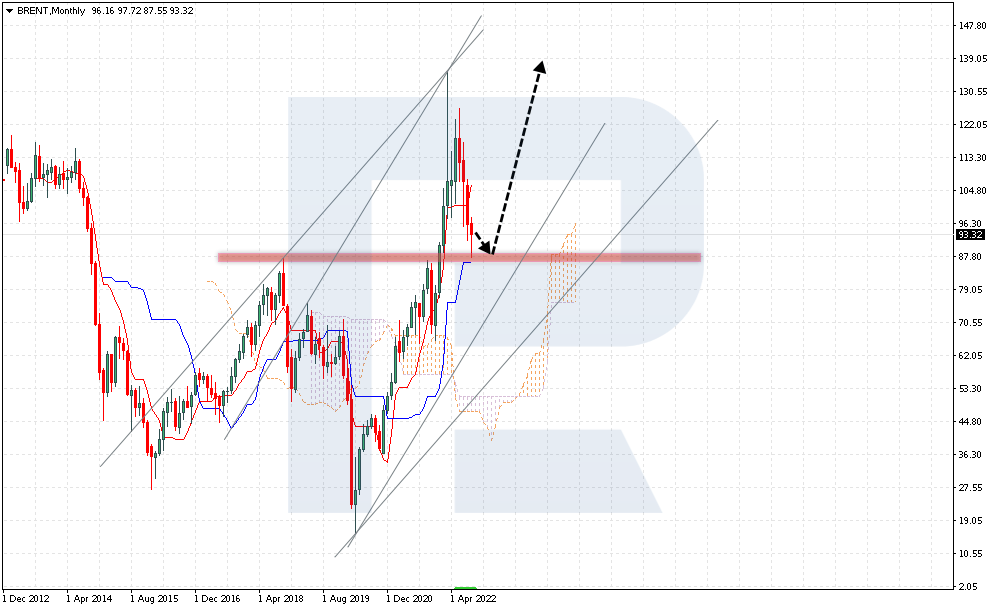
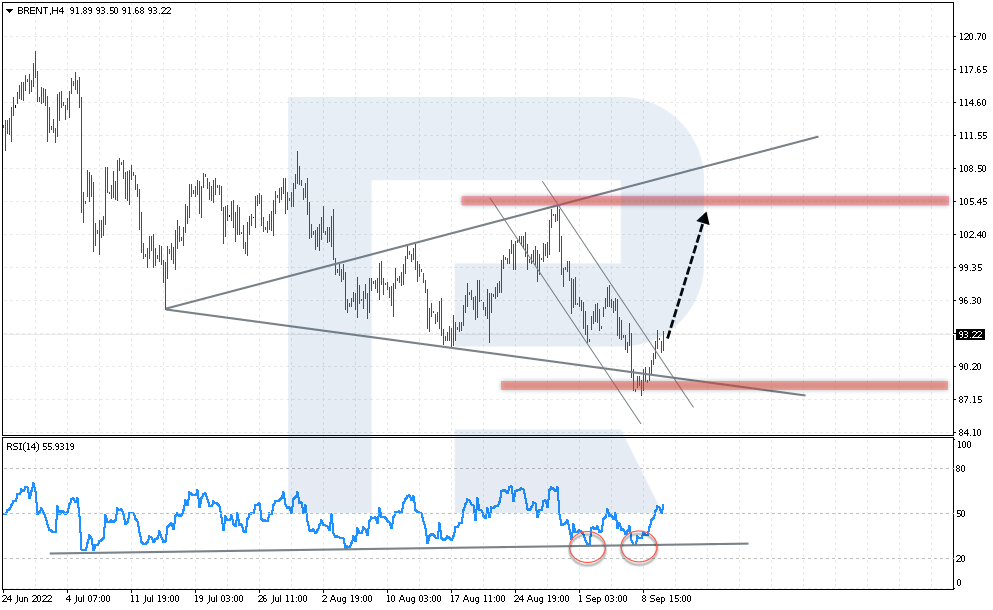
Brent has reached its upside target at 102.22; right now, it is consolidating there. Possibly, the asset may expand the range up to 102.33 and then start a new decline with the target at 99.70, or even extend this correctional structure down to 97.40.
XAUUSD, “Gold vs US Dollar”
After finishing the ascending wave at 1757.30, Gold is expected to consolidate there. Possibly, the metal may break the range to the downside and continue the correction down to 1742.42. Later, the market may form one more ascending structure with the target at 1772.00.
S&P 500
The S&P index has completed the descending wave at 4110.0; right now, it is consolidating around 4139.0. Possibly, today the asset may grow towards 4170.0 and then fall to return to 4139.0. If later the price breaks this range to the upside, the market may start a new growth to reach 4222.0; if to the downside –resume trading downwards with the target at 4090.0.
Attention! Forecasts presented in this section only reflect the author’s private opinion and should not be considered as guidance for trading. RoboForex LP bears no responsibility for trading results based on trading recommendations described in these analytical reviews.
EURUSD is rebounding from Kijun-Sen. The instrument is currently moving below Ichimoku Cloud, thus indicating a descending tendency. The markets could indicate that the price may test the bullish channel’s upside border at 1.0040 and then resume moving downwards to reach 0.9780. Another signal in favour of a further downtrend will be a rebound from the descending channel’s upside border. However, the bearish scenario may no longer be valid if the price breaks the cloud’s upside border and fixes above 1.0165. In this case, the pair may continue growing towards 1.0250. To confirm a further downtrend, the price must break the bullish channel’s downside border and fix below 0.9985.
USDJPY, “US Dollar vs Japanese Yen”
USDJPY is testing Tenkan-Sen and Kijun-Sen. The instrument is currently moving above Ichimoku Cloud, thus indicating an ascending tendency. The markets could indicate that the price may test the cloud’s upside border at 133.25 and then resume moving upwards to reach 140.35. Another signal in favour of a further uptrend will be a rebound from the rising channel’s downside border. However, the bullish scenario may no longer be valid if the price breaks the cloud’s downside border and fixes below 133.45. In this case, the pair may continue falling towards 132.55. To confirm a further uptrend, the price must break the bearish channel’s upside border and fix above 137.45.
NZDUSD, “New Zealand Dollar vs US Dollar”
NZDUSD has fixed below the support area. The instrument is currently moving below Ichimoku Cloud, thus indicating a descending tendency. The markets could indicate that the price may test the cloud’s downside border at 0.6235 and then resume moving downwards to reach 0.6035. Another signal in favour of a further downtrend will be a rebound from the upside border of the Triangle pattern. However, the bearish scenario may no longer be valid if the price breaks the cloud’s upside border and fixes above 0.6355. In this case, the pair may continue growing towards 0.6445. To confirm a further downtrend, the price must break the pattern’s downside border and fix below 0.6135.
Attention! Forecasts presented in this section only reflect the author’s private opinion and should not be considered as guidance for trading. RoboForex LP bears no responsibility for trading results based on trading recommendations described in these analytical reviews.
Dutch gas prices, the European benchmark, rose again on Wednesday as the prospect of a Nord Stream 1 supply cut kept investors on edge. Russia’s state energy company Gazprom said on Friday that Russia would suspend natural gas supplies to Europe via Nord Stream 1 for three days due to unscheduled maintenance. The spike in gas prices continues to pressure the region’s economy and the European currency in particular. Also, the difference in interest rates between the US Federal Reserve (2.5%) and the ECB (0.5%) affects the decrease in the quotes.
From the technical point of view, the trend on the EUR/USD currency pair on the hourly time frame is bearish. The price is now forming a wide balance. The MACD indicator has become positive, and buying pressure prevails. Under such market conditions, buy trades are best to be sought on intraday time frames from the support level of 0.9932, but with confirmation. Sell trades can be considered from resistance levels of 0.9996, but only after additional confirmation, as the level has already been tested twice.
Alternative scenario: if the price breaks out of the 1.0146 resistance level and fixes above, the uptrend will likely resume.
News feed for 2022.08.25:
– Eurozone Germany GDP (q/q) at 09:00 (GMT+3);
– Eurozone Germany Ifo Business Climate (m/m) at 11:00 (GMT+3);
– Eurozone ECB Monetary Policy Meeting at 14:30 (GMT+3);
– US GDP (q/q) at 15:30 (GMT+3);
– US Initial Jobless Claims (w/w) at 15:30 (GMT+3);
– Jackson Hole Symposium at 16:00 (GMT+3).
The GBP/USD currency pair
Technical indicators of the currency pair:
Prev Open: 1.1825
Prev Close: 1.1791
% chg. over the last day: +0.29%
Traders are betting that the ECB and Bank of England will be forced to take bolder action to rein in rising prices. Markets have increased bets on a rate hike for the Bank of England, betting that interest rates will rise to 3.5% by the end of the year. The option model shows a 60% chance that the pound will fall to $1.14 by the end of the year, the lowest level since 1985. The economy is approaching recession, energy prices continue to skyrocket, and uncertainty about who will be the next prime minister are all factors creating a bearish mood for the British currency.
From the technical point of view, the trend on the GBP/USD currency pair on the hourly time frame is bearish. The price is now forming an accumulation zone. The MACD indicator has become positive, and sellers’ pressure has slightly decreased, but the main priority is still downward. At the moment, it is better to look for sell deals from the resistance level of 1.1903, but only after the additional confirmation. Buy trades can be considered on intraday time frames from the support level of 1.1786, but only with confirmation and short targets.
Alternative scenario: if the price breaks out through the 1.2000 resistance level and fixes above, the uptrend will likely resume.
There is no news feed for today.
The USD/JPY currency pair
Technical indicators of the currency pair:
Prev Open: 136.76
Prev Close: 137.12
% chg. over the last day: +0.26%
Bank of Japan board member Toyoaki Nakamura said on Thursday that a new surge in pandemic cases clouds Japan’s economic outlook, continued supply constraints, and a steady rise in global commodity prices. So the Bank of Japan should maintain a large-scale stimulus to support the economy. Nakamura said that market worries about aggressive interest rate hikes by major central banks to curb inflation could also trigger capital outflows from emerging economies and hurt global growth.
Trading recommendations
Support levels: 135.89, 135.35, 134.23, 133.47, 132.27, 131.08, 130.85
Resistance levels: 137.01, 137.43, 138.25
From the technical point of view, the medium-term trend on the currency pair USD/JPY is bullish. The USD/JPY quotes have corrected to the levels of the moving averages and are forming a balance. Under such market conditions, buy trades can be sought from the support level of 135.89 or 135.35, but with additional confirmation. For sell deals, traders can consider the resistance level of 137.01, but only with additional confirmation, as fundamentally, USD/JPY quotes are inclined to grow.
Alternative scenario: If the price fixes below 135.35, the downtrend will likely resume.
There is no news feed for today.
The USD/CAD currency pair
Technical indicators of the currency pair:
Prev Open: 1.2955
Prev Close: 1.2971
% chg. over the last day: +0.12%
The US Energy Information Administration reported a 3.3 million barrel drop in crude oil inventories last week. The Canadian dollar is a commodity currency that highly depends on oil prices. Also, yesterday it became known that the OPEC countries will fight the low oil prices, and if Iranian oil comes back to the world market, OPEC is ready to cut its production not to let the oil prices fall drastically. Therefore, the Canadian dollar, in addition to monetary tightening by the Bank of Canada, also has fundamental support in keeping oil prices from falling.
Trading recommendations
Support levels: 1.2900, 1.2858, 1.2809, 1.2761
Resistance levels: 1.2998, 1.3016, 1.3090, 1.3105
From the point of view of technical analysis, the trend on the USD/CAD currency pair is bullish. The price is now trading at the levels of the moving averages, with the sellers’ pressure temporarily prevailing. Under such market conditions, buy trades should be considered on the lower time frames from the support level of 1.2900, but only with confirmation. For sell deals, it is better to consider the resistance level of 1.2998.
Alternative scenario: if the price breaks down and consolidates below the 1.2900 support level, the downtrend will likely resume.
This article reflects a personal opinion and should not be interpreted as an investment advice, and/or offer, and/or a persistent request for carrying out financial transactions, and/or a guarantee, and/or a forecast of future events.
At the stock market close yesterday, the Dow Jones Index (US30) added 0.18%, while the S&P 500 (US500) decreased by 0.29%. The NASDAQ Technology Index (US100) gained 0.41%.
The US durable goods orders were unchanged month-over-month in July. Unfinished US home sales fell in July for the sixth time this year to the lowest level since the pandemic began, extending a sharp decline in the housing market. The number of signed contracts was down 22.5% from a year ago. Rising interest rates always negatively affect the housing market, so things will only worsen in the near future.
Today, traders of Fed funds futures contracts estimate a 61% probability that the Fed will raise rates by 75 basis points at its September meeting. The probability of a 50 basis point hike is 39%.
Equity markets in Europe traded yesterday without a single dynamic. German DAX (DE30) gained 0.20%, French CAC 40 (FR 40) increased by 0.39%, Spanish IBEX 35 (ES35) lost 0.33%, British FTSE 100 (UK100) closed on Wednesday down by 0.22%.
The German government is concerned about possible problems with coal supplies for power plants in the fall and winter due to low water levels in the Rhine River and oil supplies in the eastern parts of the country. The price of gas in Europe has exceeded $3100 per 1,000 cubic meters for the first time since early March. Dutch gas prices, the European benchmark, rose again Wednesday as the prospect of an end to supplies through the Nord Stream 1 pipeline kept investors on edge. Russia’s state energy company Gazprom said Friday that Russia would suspend natural gas supplies to Europe via Nord Stream 1 for three days because of unscheduled maintenance.
The Energy Information Administration reported a 3.3 million barrel drop in crude oil inventories for the week through August 19. Also, yesterday it became known that OPEC countries are going to fight with low oil prices, and in case Iranian oil returns to the world market, OPEC countries (in particular Saudi Arabia and Iraq) are ready to cut their production in order not to allow the oil prices to fall significantly.
Asian markets were mostly down yesterday. Japan’s Nikkei 225 (JP225) decreased by 0.49%, Hong Kong’s Hang Seng (HK50) ended the day down by 1.20%, while Australia’s S&P/ASX 200 (AU200) was up by 0.52%.
On Wednesday, Japan’s prime minister said that his country would restart several idle nuclear power plants and study the possibility of developing next-generation reactors. It indicates that Japan (a major energy importer) is looking to bolster its capabilities amid continued uncertainty in global energy markets. Japan is aiming for carbon neutrality by 2050. According to the “ambitious outlook,” the country’s 6th Strategic Energy Plan calls for renewables to account for 36% to 38% of its electricity generation mix in 2030, with nuclear power accounting for 20% to 22%.
Stats NZ data showed a 2.3% drop in seasonally adjusted retail sales in the last quarter in New Zealand. Economists had forecast a 1.7% increase as consumer spending was expected to rebound after the initial Omicron hit, which reduced retail spending by 1% in the year’s first quarter. Analysts believe the drop in retail spending points to a potential recession.
China announced an additional 1 trillion yuan ($146 billion) in stimulus to save the economy from recession. The stimulus measures will include an additional 300 billion yuan, which state banks can invest in infrastructure projects.
S&P 500 (F) (US500) 4,140.77 +12.04 (+0.29%)
Dow Jones (US30) 32,969.23 +59.64 (+0.18%)
DAX (DE40) 13,220.06 +25.83 (+0.20%)
FTSE 100 (UK100) 7,471.51 −16.60 (−0.22%)
USD Index 108.61 −0.02 (−0.01%)
Important events for today:
– New Zealand Retail Sales (q/q) at 01:45 (GMT+3);
– Eurozone Germany GDP (q/q) at 09:00 (GMT+3);
– Eurozone Germany Ifo Business Climate (m/m) at 11:00 (GMT+3);
– Eurozone ECB Monetary Policy Meeting at 14:30 (GMT+3);
– US GDP (q/q) at 15:30 (GMT+3);
– US Initial Jobless Claims (w/w) at 15:30 (GMT+3);
This article reflects a personal opinion and should not be interpreted as an investment advice, and/or offer, and/or a persistent request for carrying out financial transactions, and/or a guarantee, and/or a forecast of future events.
Tensions between former Pakistan prime minister Imran Khan and the current coalition government are coming to a head.
Khan made a speech in the northern city of Rawalpindi near Islamabad on Sunday, August 21, seeking a return to office after losing a no-confidence vote in April and being ousted as prime minister. Just hours beforehand, Pakistan’s electronic media regulator prohibited Khan’s rallies from being broadcast live on all satellite TV channels.
As he started his address, which was being broadcast on social media, YouTube experienced “disruptions”. This prompted Khan to accuse the government of attempting to silence him.
Following this, Pakistani police laid charges of terrorism against Khan for comments he had made in a speech about the judiciary a day earlier in Islamabad.
Previously, the government had been quite permissive of Khan’s rallies, but this approach appears to have changed.
So how did we get here?
Khan’s narrative
Since March this year, even before he was ousted, Khan has held numerous rallies, gatherings and social media activities to present his narrative to the Pakistani people locally and overseas.
He has accused, without evidence, the coalition government of working at the behest of the United States. He has labelled the government an “imported government” and popularised the hashtag “imported government na Manzoor” (the imported government is unacceptable).
Khan has also levelled varying degrees of criticism against the judiciary, bureaucracy and media for enabling the coalition government’s return to power in April.
In contrast, he portrays himself as a good Muslim, someone who is following in the footsteps of the founder of the country, Mohammad Ali Jinnah, and as being knowledgeable about the West, honest and incorruptible.
He believes he’s different from the government, which he denounces as corrupt “thieves”, and that he can lead the people of Pakistan in their struggle for true independence. He has urged young people and others to wage the struggle for “haqiqi azadi” (real independence).
The often well-choreographed rallies feature music by renowned musicians and singers, and appearances by popular actors. The appeal of this narrative is obvious in the thousands of Pakistanis of all ages and backgrounds attending these rallies.
Khan’s speeches are broadcast on social media, including YouTube and Twitter, with the Pakistani diaspora following these developments.
The government’s changing stance
Since coming to power in April, the coalition government has allowed almost all of these rallies to take place.
One exception was Khan’s May 25 “independence march”, when his supporters marched to Islamabad to call for new elections. The government had attempted to shut down the march, but the Supreme Court overturned the ban. Media reported some clashes between police and Khan’s supporters, with police firing teargas and detaining some protesters.
There are two possible explanations for the government’s mostly permissive approach to Khan’s rallies. The first is that it’s keen to demonstrate its democratic credentials.
The second is that the military – which was instrumental in removing Khan from power – thought Khan’s popularity would run its course and decline over time, so there was no need to intervene especially given the support for Khan’s party apparent among some retired military officials. But that didn’t happen.
Khan’s criticism of the regime became more strident. His references to the “neutrals”, a euphemism for the military establishment, became increasingly pronounced. Calling upon the “neutrals” to see the light and return power to the rightful representatives, Khan implied the military had supported his ouster and needed to mend its ways. Coupled with his increasing popularity despite his own government’s poor performance, such references fuelled anti-military sentiment that has swept across social media.
A Pakistan Army helicopter crash on August 1 in the province of Balochistan killed six military officials. This unfortunately led to anti-military groups stoking speculation online that the military itself had orchestrated the crash, and that military hardware was more precious than the military officials lost.
The terrorism charges, along with Pakistan’s electronic media regulator banning live broadcast of his rallies, show Pakistani authorities are coming down firmly on Khan. They are now attempting to deny Khan the ability to mobilise masses against the judiciary, law enforcement agencies and the military. Time will tell whether this will be successful. But there are ominous signs of impending instability.