Archive for Financial News – Page 37

Investors began actively buying “blue chips.” WTI crude oil prices rose to $61 per barrel

By JustMarkets

By Tuesday’s close, the Dow Jones Index (US30) gained 1.18%. The S&P 500 Index (US500) rose by 0.21%. The Nasdaq (US100) closed lower at 0.25%. Investors shifted away from technology stocks into “blue chips” and cyclical sectors amid expectations that the House of Representatives will approve the funding agreement and the government will reopen as early as Wednesday. Progress on the bill in the Senate improved sentiment in economy-sensitive industries. Investors hope that reopening the government will allow delayed macroeconomic data to be released and support short-term growth prospects.

European stock markets rose yesterday. Germany’s DAX (DE40) gained 0.53%, France’s CAC 40 (FR40) closed up 1.25%, Spain’s IBEX 35 (ES35) rose by 1.27%, and the UK’s FTSE 100 (UK100) closed positive 1.15%. The ZEW Economic Sentiment Index for the Eurozone in November 2025 climbed to 25 points, above market expectations (23.5 points), indicating cautious optimism among analysts. The assessment of the current economic situation also improved, rising by 4.5 points, but remained negative at 27.3. This means analysts still view the Eurozone economy as weak, though less bleak than a month ago.

WTI crude oil prices rose to $61 per barrel, extending gains for the third consecutive session. Support came from expectations of a swift end to the record-long 42-day US government shutdown: the Senate approved temporary funding, and the House will review the bill on Wednesday. Optimism boosted interest in risk assets and commodities overall. On the supply side, limiting factors emerged. The US sanctions against major Russian oil companies have begun to affect logistics: seaborne shipments of Russian oil have declined for the third week in a row. This creates a risk of reduced supply in the global market.

The US natural gas prices (XNG/USD) rose by 5% to $4.54 per MMBtu – the highest since December 2022. The increase was driven by bets on a colder December and higher electricity demand, despite temporarily mild weather expected next week. In November, deliveries to the eight largest US LNG plants averaged 17.8 billion cubic feet per day, above October’s record of 16.7 billion. Meanwhile, Europe is increasing imports from the U.S. to reduce dependence on Russian gas.

Asian markets mostly declined yesterday. Japan’s Nikkei 225 (JP225) fell by 0.14%, China’s FTSE China A50 (CHA50) dropped 0.56%, Hong Kong’s Hang Seng (HK50) added 0.18%, and Australia’s ASX 200 (AU200) closed down 0.19%. At the end of the week, final Q3 GDP data for Hong Kong will be released, with preliminary estimates signaling moderate improvement in economic dynamics.
Indonesia’s central bank expects the economy to grow about 5.33% in 2026. According to the Bank Indonesia Governor, growth could reach the government’s target of 5.4% if budget spending accelerates and fiscal stimulus is more actively deployed. The inflation prognosis for 2026 remains moderate at around 2.62%. The rupiah is expected to average near 16,430 per dollar.

S&P 500 (US500) 6,846.61 +14.18 (+0.21%)

Dow Jones (US30) 47,927.96 +559.33 (+1.18%)

DAX (DE40) 24,088.06 +128.07 (+0.53%)

FTSE 100 (UK100) 9,899.60 +112.45 (+1.15%)

USD Index 99.48 -0.11% (-0.11%)


By JustMarkets


This article reflects a personal opinion and should not be interpreted as an investment advice, and/or offer, and/or a persistent request for carrying out financial transactions, and/or a guarantee, and/or a forecast of future events.

Pound Succumbs to Pressure from Weak Labour Data

By RoboForex Analytical Department

The GBP/USD pair snapped a four-day winning streak, declining for a second day to trade around 1.3135. The sell-off was triggered by UK labour market data revealing a rise in unemployment and a deceleration in annual wage growth. These figures have bolstered market expectations that the Bank of England (BoE) could initiate interest rate cuts as early as December.

The shifting sentiment was reflected in government bonds, with the two-year gilt yield falling 6 basis points to 3.74%, its lowest level since August 2024.

Appetite for risk was mixed across asset classes. European stock indices managed gains, while S&P 500 futures edged down approximately 0.2%.

In currency markets, traders are increasingly pricing in a more dovish path for BoE policy. Current pricing implies roughly 21 basis points of cuts by December, with a total of up to 65 basis points of easing projected by the end of 2026. Economists suggest that, given the softening labour market and anticipated fiscal tightening, the BoE’s base rate could fall to 3.00% from the current 4.00%.

Technical Analysis: GBP/USD

H4 Chart:

On the H4 chart, GBP/USD broke upwards from a consolidation range around 1.3100, completing a corrective wave to 1.3185. We now anticipate a decline back towards the 1.3100 support level. A brief rebound to 1.3150 may follow, establishing a new consolidation range. A subsequent downward breakout from this range would signal a resumption of the broader downtrend, opening the path towards 1.3000, with a further potential decline to at least 1.2915. This bearish scenario is supported by the MACD indicator. Its signal line is above zero but has diverged from its histogram, suggesting the initial upward correction is exhausted and a new decline is beginning.

H1 Chart:

On the H1 chart, the pair completed an upward correction to 1.3188 after breaking from a range at 1.3100. A new downward wave is now developing, initially targeting 1.3108. Following this, a technical retracement to test 1.3150 from below is expected. Once this correction is complete, the downtrend is projected to extend towards 1.3050. The Stochastic oscillator confirms this outlook. Its signal line is at the 20 level, indicating oversold conditions but also supporting the view that downward momentum is currently dominant.

Conclusion

The pound is weakening as soft labour market data fuels expectations of imminent BoE monetary easing. Technically, the pair appears to have completed a corrective bounce and is now poised to resume its primary downtrend. The immediate focus is on the 1.3100 support; a sustained break below this level would confirm a move towards 1.3000 and potentially lower.


Disclaimer:

Any forecasts contained herein are based on the author’s particular opinion. This analysis may not be treated as trading advice. RoboForex bears no responsibility for trading results based on trading recommendations and reviews contained herein.

USD/JPY Climbs to Fresh Nine-Month High

By RoboForex Analytical Department

The USD/JPY pair advanced to 154.36 on Tuesday, edging closer to a new ten-month peak. The rally was driven by growing market optimism that the protracted US government shutdown may soon conclude, dampening demand for traditional safe-haven assets like the Japanese yen.

In Japan, Economic Recovery Minister Minoru Kiuchi highlighted the domestic challenges posed by the currency’s weakness, warning that a soft yen risks amplifying inflationary pressures by increasing the cost of imports. He called for vigilant monitoring of the situation.

Concurrently, a draft of the government’s new economic stimulus plan—scheduled for approval on 21st November—reveals that Prime Minister Sanae Takaichi’s cabinet will urge the Bank of Japan to prioritise economic growth alongside price stability. The programme is also set to feature tax breaks and investment incentives targeting 17 key industries.

This comes as the Bank of Japan’s October report reaffirmed its close watch on wage growth to determine the timing of its next potential rate hike. In a positive economic sign, the country registered a record current account surplus of ¥4.5 trillion in September, bolstered by robust export growth.

Technical Analysis: USD/JPY

H4 Chart:

On the H4 chart, USD/JPY has formed a consolidation range around 153.80. We anticipate an upward expansion of this range towards 154.80. Following this, a pullback to retest the 153.80 level from above is expected. This would likely set the stage for the next leg of the uptrend, targeting 155.70. This bullish scenario is technically confirmed by the MACD indicator, whose signal line is firmly above zero and pointing upwards, indicating sustained positive momentum.

H1 Chart:

On the H1 chart, the pair has completed an initial growth impulse to 154.48. A near-term correction towards 153.65 is now expected. Once this corrective phase concludes, we anticipate the resumption of the broader upward trend, with the next primary target at 155.70. The Stochastic oscillator corroborates this view. Its signal line is below 50 and trending downwards towards 20, suggesting that short-term downward pressure (the expected correction) is building before the next potential upward wave.

Conclusion

USD/JPY continues its ascent, propelled by renewed risk appetite and domestic Japanese policy that implicitly favours a weaker yen. While minor corrective dips are anticipated in the short term, the overall technical and fundamental backdrop remains bullish. The path of least resistance points towards a test of 155.70, provided the pair maintains its footing above key support near 153.80.


Disclaimer:

Any forecasts contained herein are based on the author’s particular opinion. This analysis may not be treated as trading advice. RoboForex bears no responsibility for trading results based on trading recommendations and reviews contained herein.

The US politicians are close to a funding agreement, increasing the chances of ending the government shutdown this week

By JustMarkets 

By Friday’s close, the Dow Jones Index (US30) rose by 0.16% (weekly -1.49%). The S&P 500 Index (US500) gained 0.13% (weekly -2.23%). The tech-heavy Nasdaq (US100) closed lower at 0.28% (-4.04%). Sentiment was supported by hopes of progress in resolving the government shutdown. The latest inflation expectations data came out mixed: one-year inflation expectations rose from 4.6% to 4.7%, while long-term expectations fell from 3.9% to 3.6%. Friday’s top gainers included Exxon Mobil, T-Mobile, and Coca-Cola (+2% and above), while the tech sector, including Tesla (-4%), Meta, and Oracle (-2%), continued to face pressure from concerns over inflated valuations of AI companies.

The Canadian dollar strengthened to 1.4 USD, rebounding from a seven-month low of 1.41 after strong labor market data. Unemployment fell to 6.9%, employment increased, and wage growth accelerated to 4% – the highest in eight months and above current inflation. This reinforced expectations that the Bank of Canada has ended its rate-cutting cycle, as the economy remains resilient and core inflation stays above target.

In October, inflation in Mexico slowed as expected. Annual inflation eased to 3.57% in October (from 3.76% in September), the first decline in three months and in line with the prognosis of 3.56%. Core inflation stood at 4.28% – the highest since April 2024 and close to market expectations (4.27%).
European stock markets fell on Friday. Germany’s DAX (DE40) dropped 0.69% (weekly -1.75%), France’s CAC 40 (FR40) closed down 0.18% (weekly -2.08%), Spain’s IBEX 35 (ES35) fell by 1.34% (weekly -0.82%), and the UK’s FTSE 100 (UK100) closed negative 0.55% (weekly -0.36%). European equities opened in the “green zone” on Monday amid improved risk appetite. Optimism grew after the US Senate approved an initial funding bill, raising hopes for a swift end to the record-long government shutdown.

On Monday, silver rose above $49 per ounce, hitting a three-week high amid dollar weakness and growing concerns about the US economy. The University of Michigan Consumer Sentiment Index fell to 50.3 – the second-worst reading in history, against the backdrop of the prolonged government shutdown. The market remains divided ahead of the Fed’s December decision, with the probability of a 25 bps rate cut estimated at around 67%.

Asian markets traded mixed last week. Japan’s Nikkei 225 (JP225) fell by 2.62%, China’s FTSE China A50 (CHA50) rose by 1.18%, Hong Kong’s Hang Seng (HK50) gained 0.93%, while Australia’s ASX 200 (AU200) posted a five-day decline of 1.00%.

In October 2025, consumer prices in China rose 0.2% year-over-year. This was the first increase in consumer inflation since June and the fastest pace since January. Core inflation, excluding food and energy, rose 1.2% year-over-year, the highest in 20 months. The offshore yuan remained around 7.12 per dollar, trading sideways.

The Australian dollar climbed above $0.65 after comments from RBA Deputy Governor Andrew Hauser on the need to maintain tight policy to curb inflation. He noted that GDP growth was the strongest since the early 1980s and demand remains slightly above potential, limiting room for easing. The RBA previously kept rates at 3.6%, and markets still expect a possible cut next year, though some believe the easing cycle may be over. Additional support for the AUD came from improved global sentiment and easing trade tensions between the US and China.

The Japanese government plans to finalize its first major economic package on November 21. The measures focus on supporting weak recovery, tax incentives for 17 industries, and maintaining low interest rates: the cabinet will urge the Bank of Japan to target strong economic growth with stable prices. The package includes steps to ease the burden of high living costs, stimulate investment, crisis management, and strengthen defense. Authorities pledged close coordination with the Bank of Japan to prevent a return to deflation.

S&P 500 (US500) 6,728.80 +8.48 (+0.13%)

Dow Jones (US30) 46,987.10 +74.80 (+0.16%)

DAX (DE40) 23,569.96 −164.06 (−0.69%)

FTSE 100 (UK100) 9,682.57 −53.21 (−0.55%)

USD Index 99.56 −0.18% (−0.18%)

By JustMarkets


This article reflects a personal opinion and should not be interpreted as an investment advice, and/or offer, and/or a persistent request for carrying out financial transactions, and/or a guarantee, and/or a forecast of future events.

Gold Climbs to Two-Week High

By RoboForex Analytical Department

On Monday, gold advanced by more than 1% to 4,050 USD per ounce, reaching a fresh two-week high. The rally was fuelled by mounting concerns over the health of the US economy.

A softening US dollar provided further support for the precious metal, enhancing the affordability of dollar-denominated assets for international buyers.

Data released on Friday revealed that the University of Michigan’s consumer sentiment index had fallen to its lowest level in nearly three and a half years. This decline is largely attributed to the ongoing US government shutdown, which has now become the longest in the nation’s history. Investors are closely monitoring the situation as the US Senate moves closer to approving a Democratic-backed proposal to reopen the government.

Amid the economic uncertainty, market expectations for the Federal Reserve’s next move remain divided. The probability of a 25 basis point rate cut in December is currently priced at approximately 67%, unchanged from the end of last week.

Technical Analysis: XAU/USD

H4 Chart:

On the H4 chart, XAU/USD is forming a consolidation range around 3,988 USD. A breakout to the upside is expected to initiate a growth wave towards 4,075 USD, which may then be followed by a decline to 4,020 USD (testing the level from below). A subsequent breakdown from this range could extend the correction towards 3,660 USD, where the downward move is anticipated to conclude. This would potentially set the stage for a new upward wave targeting 4,400 USD. The MACD indicator supports this outlook, with its signal line above zero and pointing upward, suggesting continued near-term bullish momentum.

H1 Chart:

On the H1 chart, the market is also consolidating around 3,988 USD. An upward breakout is likely to propel prices towards 4,075 USD, after which a decline to at least 4,020 USD is expected. The Stochastic oscillator aligns with this view, as its signal line is positioned above 80 and appears poised to reverse downward towards 20, indicating potential for a near-term pullback.

Conclusion

Gold is trading at a two-week high, supported by economic concerns and a weaker US dollar. While the near-term technical structure suggests potential for further gains towards 4,075 USD, a subsequent correction towards 4,020 USD is anticipated. The broader outlook remains constructive, with a deeper corrective move towards 3,660 USD expected to present a buying opportunity ahead of a potential resumption of the broader uptrend.


Disclaimer:

Any forecasts contained herein are based on the author’s particular opinion. This analysis may not be treated as trading advice. RoboForex bears no responsibility for trading results based on trading recommendations and reviews contained herein.

Banxico cuts interest rate to 7.25%. Norges Bank holds the rate at 4%

By JustMarkets 

On Thursday, the Dow Jones Index (US30) fell by 0.84%. The S&P 500 Index (US500) dropped by 1.12%. The technology-heavy Nasdaq Index (US100) closed lower by 1.90%. Pressure on the technology sector and companies linked to artificial intelligence once again hit Wall Street sentiment. Weak signals from the labor market exacerbated the tech sell-off. According to Challenger, employers announced 153,000 job cuts in October, the highest figure for this month in 22 years, with a significant portion of the reductions linked to AI adoption and cost optimization. Due to limited official data releases amid the government shutdown, investors were forced to rely on private indicators.

The Mexican peso strengthened above 18.6 per US dollar, rebounding from an eight-week low, as investors digested the latest decision from the Bank of Mexico (Banxico) amid a weakening dollar. As expected, the regulator cut the key interest rate by 25 bps to 7.25% with a 4-to-1 vote, but the accompanying statement was more balanced than some market participants had feared. Domestic inflation continues to slow: the Headline Index hovers around 3.63%, and the Core Index is around 4.24%, which expands the central bank’s room for maneuver.

European stock markets generally declined on Thursday. Germany’s DAX (DE40) fell by 1.31%, France’s CAC 40 (FR 40) closed down by 1.36%, Spain’s IBEX 35 (ES35) gained 0.12%, and the UK’s FTSE 100 (UK100) closed negative 0.42%. The German DAX Index dropped to a one-month low. Sentiment worsened amid renewed concerns about the overstretched valuations of AI-linked companies and the risk of a bubble forming in that segment. Investors were also assessing fresh corporate reports and macro data. German industrial production rose by 1.3% in September after a revised 3.7% drop the previous month, but the pace of recovery was weaker than the 3% consensus prognosis.

The Norges Bank (Central Bank of Norway) maintained its key interest rate at 4%, following a 25 bps cut at the previous meeting, which was in line with market expectations. The regulator noted that no new information has emerged since the September meeting that could significantly alter the expectations for the Norwegian economy. Core inflation remains around 3%, and unemployment has risen slightly. Policymakers stated that a restrictive policy remains warranted.
WTI crude oil prices dropped to the $59.3 per barrel area on Thursday, continuing their decline amid new pricing decisions by Saudi Arabia and persistent supply risks. Saudi Aramco lowered its official selling prices for Asian buyers. India, highly dependent on imports, is striving to diversify its sources of crude oil as sanctions risks complicate the purchase of Russian oil. Against this backdrop, even major refiner Reliance is reportedly reselling Middle Eastern oil cargoes – a move considered atypical.

The US natural gas prices (XNG/USD) rose to around $4.30 per million British thermal units (MMBtu), reaching a high since March. The increase was driven by near-record demand for LNG exports: the average gas flow to the eight largest terminals in November hit 17.4 billion cubic feet per day, surpassing the October record. Exports are expected to grow further as Europe continues to seek alternatives to Russian gas, and Asian buyers negotiate long-term supply deals with the US.

Asian markets saw solid gains yesterday. Japan’s Nikkei 225 (JP225) rose by 1.34%, China’s FTSE China A50 (CHA50) climbed by 1.21%, Hong Kong’s Hang Seng (HK50) gained 2.12%, and Australia’s ASX 200 (AU200) recorded a positive result of 0.30%.
On Friday, the offshore Chinese yuan weakened to around 7.12 per dollar, pulling back from the previous session’s gain as an unexpected contraction in Chinese exports amplified economic pressure. China’s exports in October 2025 declined for the first time in eight months, falling to the lowest level since February. Shipments to the US fell for the seventh consecutive month by more than 25%. Meanwhile, imports grew at the slowest pace since May and were significantly weaker than market expectations, signaling weak domestic demand and labor market uncertainty.

S&P 500 (US500) 6,720.32 −75.97 (−1.12%)

Dow Jones (US30) 46,912.30 −398.70 (−0.84%)

DAX (DE40) 23,734.02 −315.72 (−1.31%)

FTSE 100 (UK100) 9,735.78 −41.30 (−0.42%)

USD Index 99.70 −0.51% (−0.51%)

News feed for: 2025.11.07

  • China Trade Balance (m/m) at 05:00 (GMT+2);
  • German Trade Balance (m/m) at 09:00 (GMT+2);
  • Mexico Inflation Rate (m/m) at 14:00 (GMT+2);
  • Canada Unemployment Rate (m/m) at 15:30 (GMT+2);
  • US Michigan Consumer Sentiment (m/m) at 17:00 (GMT+2).

By JustMarkets


This article reflects a personal opinion and should not be interpreted as an investment advice, and/or offer, and/or a persistent request for carrying out financial transactions, and/or a guarantee, and/or a forecast of future events.

USD/JPY Declines as Safe-Haven Demand Bolsters the Yen

By RoboForex Analytical Department

The USD/JPY pair retreated to 153.10 on Friday, with the yen retaining a portion of its recent gains amid a flight to safety. A sharp uptick in stock market volatility, driven by concerns over a potential overvaluation of artificial intelligence stocks, prompted investors to seek refuge in traditional safe-haven assets, thereby supporting the Japanese currency.

The pair faced additional pressure from a broadly weaker US dollar. Signs of a cooling US labour market have reinforced market expectations of an imminent interest rate cut from the Federal Reserve.

Domestic data from Japan presented a mixed picture. Consumer spending in September rose by a modest 1.8%, following a 2.3% increase in August and falling short of the 2.5% forecast. While nominal wage growth accelerated to 1.9%, real household incomes continued their decline, falling 1.4% year-on-year. This marks the ninth consecutive month of decline in real incomes, highlighting the persistent squeeze on purchasing power.

In light of this, Bank of Japan Governor Kazuo Ueda stated that the central bank’s wage growth forecast for 2026 will be a critical determinant for resuming rate hikes. For now, the BoJ maintains its accommodative stance, leaving monetary policy unchanged.

Technical Analysis: USD/JPY

H4 Chart:

On the H4 chart, USD/JPY is forming a consolidation range around 153.33. We anticipate a near-term expansion of this range to the downside, targeting 152.20. Following this, the primary scenario involves an upward breakout, initiating a new bullish wave towards 155.70. An alternative downward breakout would signal a deeper correction towards 149.90 before any sustained recovery can begin. The MACD indicator supports this view, with its signal line below zero and pointing downward, confirming the current corrective momentum.

H1 Chart:

On the H1 chart, the pair is completing a corrective rise to test 153.50 from below. A tight consolidation range is forming around this level. We expect this range to break downwards initially, with a first target at 152.52. A rebound to 153.50 may follow. The broader trajectory hinges on the subsequent breakout. An upward breakout opens the path to 155.70, while a downward breakout would likely extend the correction towards 149.90. The Stochastic oscillator on the H1 offers a conflicting short-term signal. Its signal line is above 50 and rising towards 80, suggesting the potential for limited near-term upside before the next directional move.

Conclusion

USD/JPY is caught between a weaker US dollar and mixed domestic signals from Japan. The immediate driver is risk sentiment, which has provided the yen with temporary support. Technically, the pair is in a consolidation phase, with a near-term bias for a dip towards 152.20. The medium-term outlook, however, remains tentatively bullish, targeting 155.70, contingent on a successful upside breakout from the current range.


Disclaimer:

Any forecasts contained herein are based on the author’s particular opinion. This analysis may not be treated as trading advice. RoboForex bears no responsibility for trading results based on trading recommendations and reviews contained herein.

The US Supreme сourt may cancel most of Trump’s reciprocal tariffs. Riksbank holds rate at 1.75%

By JustMarkets 

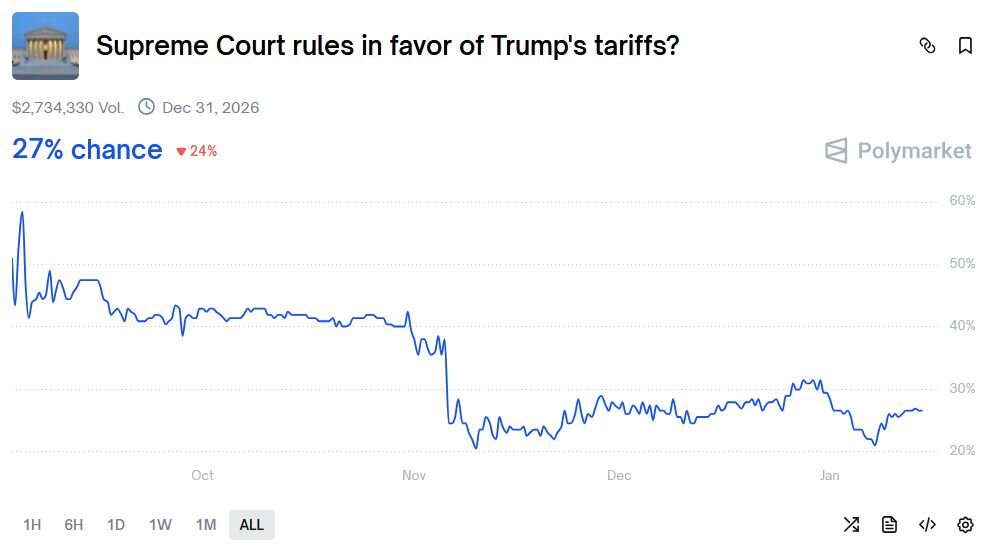
On Wednesday, the Dow Jones Index (US30) rose by 0.48%. The S&P 500 Index (US500) gained 0.37%. The technology-heavy Nasdaq Index (US100) closed higher by 0.65%. A positive factor for the market was the skeptical stance of the US Supreme Court regarding the case on Donald Trump’s “reciprocal tariffs,” which reduced the likelihood of their premature application. Against this backdrop, market participants cut their bets on the Supreme Court upholding the imposed tariffs. Further support for risk appetite came from stronger-than-expected employment data: the ADP report showed a moderate job gain of about 42,000, and the ISM Services PMI rose to an eight-month high, signaling continued economic resilience.

The Canadian dollar weakened to 1.41 CAD per US Dollar, nearing a seven-month low, amid the further strengthening of the US currency and heightened trade uncertainty. An additional factor was the announcement of the new federal budget, which will see the deficit more than double to approximately 78.3 billion CAD this year. This significant expansion of fiscal spending eases financial conditions but increases pressure on the currency amid an already weak macroeconomic outlook.

European stock markets grew steadily on Wednesday. Germany’s DAX (DE40) rose by 0.42%, France’s CAC 40 (FR40) closed up by 0.08%, Spain’s IBEX 35 (ES35) gained 0.39%, and the UK’s FTSE 100 (UK100) closed up by 0.64%.

The Swedish Central Bank (Riksbank), as expected, left its key interest rate unchanged at 1.75% at its October meeting, adhering to a course of supporting economic activity and gradually returning inflation to its medium-term target of 2%. The regulator indicated that the borrowing cost is likely to remain unchanged in the near term. Economic growth in the third quarter was slightly above expectations, but the labor market continues to signal weakness.
The Swiss franc traded near 0.81 per US dollar, remaining near its maximum levels since 2011, amid increased demand for safe-haven assets and expectations that the Swiss National Bank (SNB) will refrain from cutting rates in the near future. Simultaneously, softer-than-expectations inflation data in Switzerland renewed discussions about the possibility of further policy easing, which could theoretically return rates to negative territory. However, the SNB leadership is exercising caution, citing risks to financial stability.

WTI crude oil prices dropped to the $60 per barrel area. Concerns over excess supply and sluggish demand continued to weigh on the market. According to the US Energy Information Administration (EIA), crude oil inventories rose by 5.202 million barrels for the week – the largest increase since July. Pressure on prices is intensified by rising production from both OPEC+ countries and non-OPEC producers, fueling concerns about a global market glut.
Asian markets also declined yesterday. Japan’s Nikkei 225 (JP225) fell by 2.50%, China’s FTSE China A50 (CHA50) dropped by 0.01%, Hong Kong’s Hang Seng (HK50) declined by 0.07%, and Australia’s ASX 200 (AU200) showed a negative result of 0.13%.

Australia’s trade surplus expanded to 3.94 billion AUD in September, compared to a revised 1.11 billion AUD in August, and exceeded the prognosis of 3.85 billion AUD. The increase was driven by a 7.9% jump in exports, primarily due to increased shipments of gold amidst rising prices for the precious metal. Meanwhile, imports rose by 1.1% and reached a record level, supported by an increase in the inflow of capital goods.

S&P 500 (US500) 6,796.29 +24.74 (+0.37%)

Dow Jones (US30) 47,311.00 +225.76 (+0.48%)

DAX (DE40) 24,049.74 +100.63 (+0.42%)

FTSE 100 (UK100) 9,777.08 +62.12 (+0.64%)

USD Index 100.16 -0.06% (-0.06%)

News feed for: 2025.11.06

  • Japan Average Cash Earnings (m/m) at 01:30 (GMT+2);
  • Japan Services PMI (m/m) at 02:30 (GMT+2);
  • Australia Trade Balance (m/m) at 02:30 (GMT+2);
  • German Industrial Production (m/m) at 09:00 (GMT+2);
  • Sweden Inflation Rate at 09:00 (GMT+2);
  • Switzerland Unemployment Rate (m/m) at 10:00 (GMT+2);
  • Norway Norges Rate Decision at 11:00 (GMT+2);
  • UK BoE Interest Rate Decision at 14:00 (GMT+2);
  • UK BoE Rate Statement at 14:00 (GMT+2);
  • UK BoE Gov Bailey Speaks at 14:30 (GMT+2);
  • Canada Ivey PMI (m/m) at 17:00 (GMT+2);
  • US Natural Gas Storage (w/w) at 17:30 (GMT+2);
  • Mexico Interest Rate Decision at 21:00 (GMT+2).

By JustMarkets


This article reflects a personal opinion and should not be interpreted as an investment advice, and/or offer, and/or a persistent request for carrying out financial transactions, and/or a guarantee, and/or a forecast of future events.

GBP/USD Hovers Near Lows as Bank of England Decision Looms

By RoboForex Analytical Department

The GBP/USD pair is attempting to find support around 1.3062 on Thursday, with investors cautiously positioning themselves ahead of today’s pivotal Bank of England (BoE) monetary policy meeting. The British currency remains under pressure, trading near a seven-month low against the US dollar and at its weakest level in over two years against the euro.

Market pricing currently implies roughly a one-in-three chance of a 25-basis-point rate cut from the BoE. This uncertainty creates significant asymmetric risk, meaning the pound is poised for a sharp move in either direction once the decision and accompanying statement are released.

The pound’s weakness was compounded by the recent release of softer-than-expected UK inflation data, which bolstered expectations for an imminent shift towards policy easing. A simultaneous global sell-off in equity markets, particularly in the tech sector, has further dampened sentiment by reducing appetite for risk-sensitive assets such as sterling.

Adding to the headwinds, investor focus is shifting to the UK budget, due for approval later this month. Chancellor Rachel Reeves has signalled the potential for tax rises, a measure that could stifle economic growth and potentially prompt the BoE to adopt a more dovish stance – another factor weighing on the currency.

Technical Analysis: GBP/USD

H4 Chart:

On the H4 chart, GBP/USD broke downwards from a consolidation range around 1.3140, completing a bearish wave to 1.3010. We now anticipate a technical correction towards 1.3090. Following this pullback, the primary downtrend is expected to resume, with the next key targets at 1.2910 and, ultimately, 1.2811. The MACD indicator supports this bearish outlook. While its signal line is at deeply oversold levels and has diverged from its histogram, suggesting the potential for a short-term corrective rise, the overall structure remains negative.

H1 Chart:

On the H1 chart, the pair similarly broke down from a range around 1.3157, reaching the 1.3010 target. A corrective retracement to test 1.3100 from below is now expected. Once this correction is complete, the downtrend is likely to extend towards at least 1.2950. The Stochastic oscillator aligns with this view. Its signal line is in overbought territory above 80 and appears poised to turn down towards 20, indicating that any near-term strength is likely corrective before selling pressure reasserts itself.

Conclusion

GBP/USD is stabilising at multi-month lows ahead of a high-stakes BoE meeting. The combination of dovish inflation data, a risk-off market mood, and looming fiscal uncertainty has created a profoundly negative backdrop for sterling. Technically, the path of least resistance remains downward. While a short-covering bounce back towards 1.3100 is possible post-decision, the broader trend suggests further losses, with key targets at 1.2910 and 1.2811.

Disclaimer:

Any forecasts contained herein are based on the author’s particular opinion. This analysis may not be treated as trading advice. RoboForex bears no responsibility for trading results based on trading recommendations and reviews contained herein.

Investors are switching to risk-off mode. The price of Bitcoin has fallen below $100,000

By JustMarkets 

On Tuesday, the Dow Jones Index (US30) fell by 0.53%. The S&P 500 Index (US500) declined by 1.17%. The technology-heavy Nasdaq Index (US100) closed lower by 2.04%. Investors intensified their concerns over the overheated valuations of artificial intelligence (AI) companies. Pressure mounted as the S&P 500’s forward P/E ratio rose above 23, bringing the metric close to the highs of the early 2000s and triggering fears of a correction after months of gains concentrated among a narrow group of AI giants. The technology sector was the hardest hit. Palantir plunged 8.1% due to valuation concerns despite reporting better-than-expected earnings. Nvidia (-2.7%), AMD (-2.1%), and Oracle (-2.6%) also saw notable drops. Market caution was amplified by warnings from Goldman Sachs CEO David Solomon and Morgan Stanley CEO Ted Pick, who both suggested a potential market drop of 10-20%.

The Mexican peso weakened to 18.6 per US dollar, hitting an eight-week low as domestic and external factors amplified pressure on the currency. Local interest rates are now being priced by the market to include future cuts, while the dollar strengthened amid reduced expectations for an imminent Federal Reserve rate cut. The market anticipates that Banxico (Mexico’s central bank) will continue its easing cycle this week and lower the rate by 25 bps to 7.25%, which would narrow Mexico’s yield advantage and potentially weaken capital inflows into the peso.

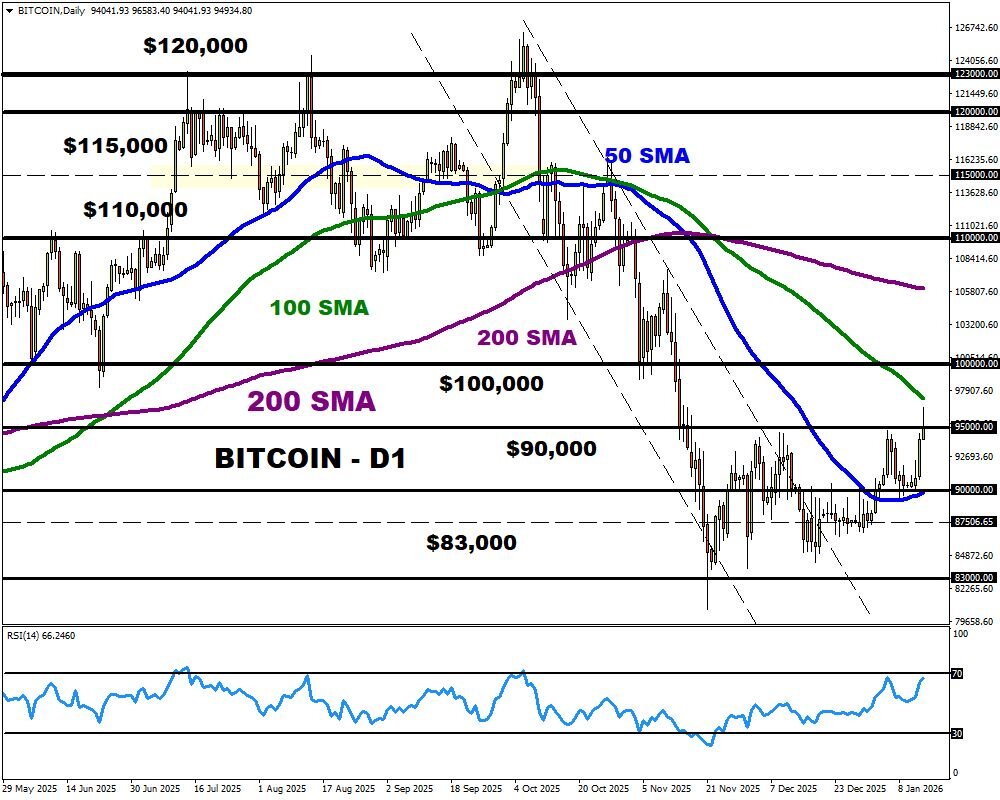
The Bitcoin price dropped below $100,000, approaching two-month lows and intensifying the downtrend that began after the digital assets market’s “Black Friday” in mid-October. Global equities and digital assets were under pressure amid mounting concerns over the overheated valuations of artificial intelligence companies. Against this backdrop, spot Bitcoin ETFs experienced significant capital outflows. The correction also affected a broad range of altcoins.

European stock markets were mostly lower on Tuesday. Germany’s DAX (DE40) fell by 0.76%, France’s CAC 40 (FR40) closed down by 0.52%, Spain’s IBEX 35 (ES35) declined by 0.01%, and the UK’s FTSE 100 (UK100) closed up by 0.14%. Trading saw profit-taking amidst continued market uncertainty: the publication of key economic data remains suspended due to the ongoing US government shutdown.

Silver (XNG/USD) was under pressure yesterday due to weak demand for industrial metals after total US auto sales in October fell to a 14-month low. Additional negative impact came from comments by ECB Governing Council member Yannis Stournaras, who stated that the Eurozone’s economic growth prospects are subject to multiple downside risks. Nevertheless, precious metals retain fundamental support as safe-haven assets due to the ongoing US government shutdown, uncertainty surrounding tariff policy, geopolitical tensions, active central bank purchases, and political pressure on the Federal Reserve.
Asian markets also declined yesterday. Japan’s Nikkei 225 (JP225) fell by 1.74%, China’s FTSE China A50 (CHA50) dropped by 0.27%, Hong Kong’s Hang Seng (HK50) declined by 0.79%, and Australia’s ASX 200 (AU200) recorded a negative result of 0.91%.

The overnight sell-off on Wall Street dampened investor sentiment, increasing caution and lowering risk appetite in regional markets. The correction was driven by rising concerns over inflated valuations, particularly in the high-tech and AI-related sectors. An additional pressure factor was a private survey that showed China’s services sector posted its weakest growth in three months in October. The indicator reflects weakening external demand and continued job contraction.
New Zealand’s unemployment rate rose to 5.2% in the second quarter of 2025, slightly exceeding the previous quarter’s figure (5.1%) and matching market expectations. This marks the highest level since late 2016. The number of unemployed individuals increased to 158,000 compared to 156,000 in March, representing an annual increase of 16,000 people, or 11.1%. The data points to a further softening of the labor market and intensifies pressure on the RBNZ amidst the ongoing economic downturn.

S&P 500 (US500) 6,771.55 −80.42 (−1.17%)

Dow Jones (US30) 47,085.24 −251.44 (−0.53%)

DAX (DE40) 23,949.11 −183.30 (−0.76%)

FTSE 100 (UK100) 9,714.96 +13.59 (+0.14%)

USD Index 100.20 +0.33% (+0.33%)

News feed for: 2025.11.05

  • Japan Monetary Policy Meeting Minutes at 01:50 (GMT+2);
  • Australia Services PMI (m/m) at 02:30 (GMT+2);
  • Sweden Riksbank Rate Decision at 10:30 (GMT+2);
  • German Services PMI (m/m) at 10:55 (GMT+2);
  • Eurozone Services PMI (m/m) at 11:00 (GMT+2);
  • UK Services PMI (m/m) at 11:30 (GMT+2);
  • Eurozone Producer Price Index (m/m) at 12:00 (GMT+2);
  • US ADP Employment Change (m/m) at 15:15 (GMT+2);
  • Canada Services PMI (m/m) at 16:30 (GMT+2);
  • US ISM Services PMI (m/m) at 17:00 (GMT+2);
  • US Crude Oil Reserves (w/w) at 17:30 (GMT+2).

By JustMarkets


This article reflects a personal opinion and should not be interpreted as an investment advice, and/or offer, and/or a persistent request for carrying out financial transactions, and/or a guarantee, and/or a forecast of future events.