Archive for Financial News – Page 35

USD/JPY Rally Pauses as Yen Seeks Footing

By RoboForex Analytical Department

The USD/JPY pair slowed its ascent on Friday, stabilising near 149.69 – close to its lowest level in nearly two months. The yen remained under pressure from broad US dollar strength, fueled by robust economic data that tempered expectations for aggressive Federal Reserve easing.

Recent figures reinforced the resilience of the US economy: weekly jobless claims fell to 218,000, while second-quarter GDP growth was revised up to 3.8% year-on-year, marking the fastest pace in nearly two years.

In Japan, data provided mixed signals. Core inflation in Tokyo held steady at 2.5% in September, matching the August reading but falling short of the 2.8% forecast. The minutes from the Bank of Japan’s July policy meeting revealed that some members are inclined toward further rate hikes, contingent on aligned economic and inflation trends. While rates were held unchanged in September, two dissenting votes suggest that monetary tightening may be approaching sooner than anticipated.

Technical Analysis: USD/JPY

H4 Chart:

On the H4 chart, USD/JPY completed an initial advance to 149.90. The pair is now forming a consolidation range below this level. A downward breakout would likely initiate a correction towards 148.78, with a potential extension to 147.77 (testing the level from above). Once this correction concludes, a new upward move targeting 151.05 is expected to develop. This outlook is supported by the MACD indicator: its signal line remains well above zero, although a pullback towards the zero line is anticipated.

H1 Chart:

The H1 chart shows the pair forming a consolidation range around 148.78 before breaking upward and achieving its first target at 149.90. A new range is now forming below this peak. An expected downside breakout should trigger a correction towards 148.78. The Stochastic oscillator aligns with this view, as its signal line is below 50 and falling sharply towards 20.

Conclusion

USD/JPY is taking a breather after its recent rally, caught between a strong US dollar and growing speculation around a more hawkish BoJ. The near-term technical bias suggests a corrective pullback is likely, which could offer a more solid foundation for the next leg upward. Traders will be watching for clearer signals from both central banks to determine the pair’s next sustained move.


Disclaimer:

Any forecasts contained herein are based on the author’s particular opinion. This analysis may not be treated as trading advice. RoboForex bears no responsibility for trading results based on trading recommendations and reviews contained herein.

Banxico cuts rate by 0.25% as expected. Silver hits $45 per ounce

By JustMarkets 

The US indices fell for a third consecutive session on Thursday as investors weighed strong economic data against expectations for future Federal Reserve rate cuts. The Dow Jones (US30) dropped by 0.38%, the S&P 500 (US500) declined by 0.50%, and the tech-heavy Nasdaq (US100) closed 0.50% lower. Data showed the labor market remains resilient, with initial jobless claims falling to 218,000 for the week ending September 20. Furthermore, Q2 GDP growth was revised higher to an annual rate of 3.8%, supported by robust consumer spending and business investment. Market participants are now repricing the Fed’s next moves, with investor bets on an additional 25 basis point (bp) rate cut in October falling sharply. Technology stocks were hit the hardest, with Oracle tumbling 5% and Tesla dropping 4%. Meanwhile, Intel jumped 9% on news it approached Apple with an investment proposal. Investors are now awaiting Friday’s release of the Fed’s preferred inflation gauge, the PCE Index, for clues on the Central Bank’s path.

Mexico’s Central Bank, Banxico, cut its benchmark interest rate by 25 basis points to 7.5% on Thursday. In its statement, the Central Bank noted that global economic activity expanded at a slower pace in the third quarter of 2025 compared to the previous quarter. The bank pointed to persistent trade tensions, which are expected to cause an economic slowdown both globally and in the United States this year and in 2026. The Central Bank still projects headline inflation to reach its 3% target by the third quarter of 2026.

European equity markets declined yesterday. Germany’s DAX (DE40) fell by 0.56%, France’s CAC 40 (FR40) closed down 0.41%, Spain’s IBEX35 (ES35) dropped 0.27%, and the UK’s FTSE 100 (UK100) closed 0.39% lower. The GfK Consumer Climate Index in Germany surprisingly improved slightly for October, though it remained in negative territory. Shares of German company Siemens Healthineers fell approximately 3.5% after the US Administration announced a new national security investigation into imports of robotics, medical devices, and industrial machinery. The European Commission plans to impose tariffs of 25% to 50% on Chinese steel and related products in the coming weeks to protect domestic producers, as the global overcapacity continues to pressure profits and constrain investment in the decarbonization of the European steel industry. Analysts expect China’s steel exports to reach a record high this year, increasing by 4-9% to an estimated 115-120 million tonnes.

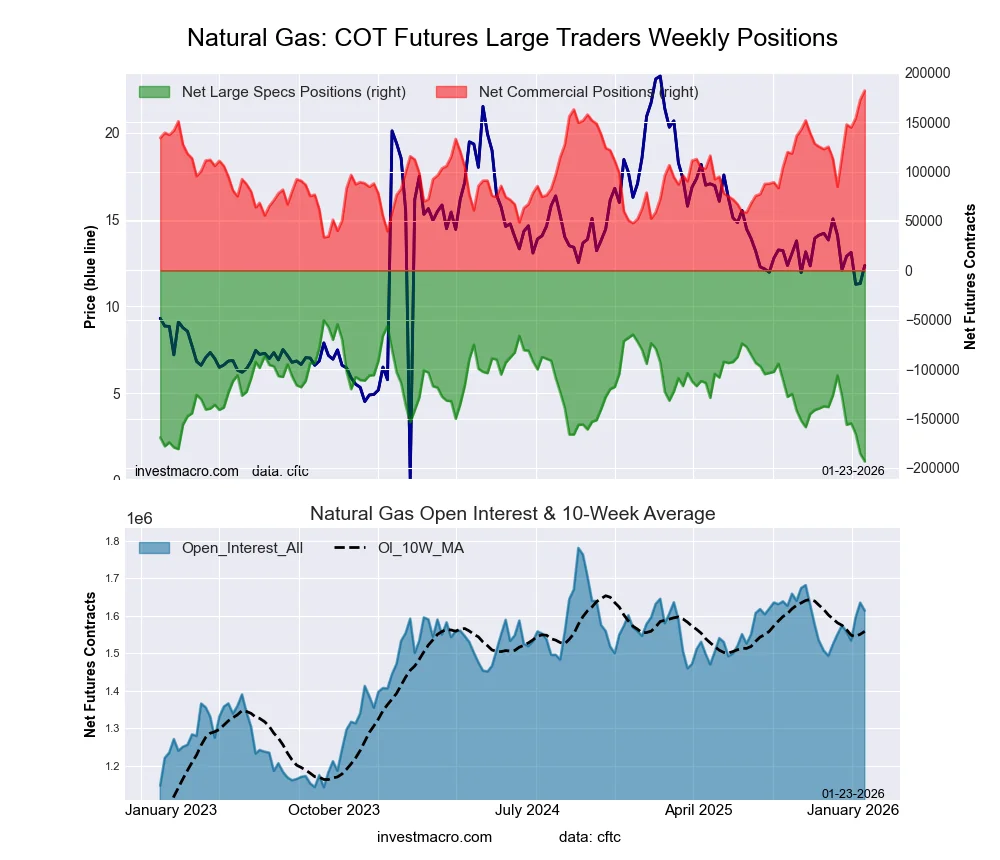
The US natural gas prices (XNG/USD) surged over 3% to $2.94 per million British thermal units (mmBTU), reaching a one-week high and continuing a three-session rally. The EIA reported a storage build of 75 billion cubic feet (bcf) for the week ending September 19, which matched expectations. Meanwhile, projections point to warmer-than-normal weather in early October. Feedgas flows to LNG facilities averaged 15.7 bcf/d in September, a slight reduction from August.

Silver (XAG/USD) climbed above $45 per ounce on Thursday, hitting a new 14-year high. Increased industrial demand and tight physical supply outweighed stronger-than-expected US macroeconomic data, which typically pushes up yields and the dollar. On the demand side, greater shipments of photovoltaic panels and electronics, where silver is difficult to substitute, are supporting near-term consumption. Regarding supply, most silver is produced as a byproduct of base metal mining and cannot be quickly ramped up; recent disruptions at smelting and processing facilities in key refining hubs have reduced refining availability, lowered delivery promptness, and increased near-term metal premiums.

Asian markets were mostly higher yesterday. Japan’s Nikkei 225 (JP225) rose by .27%, China’s FTSE China A50 (CHA50) gained 0.59%, while the Australian ASX 200 (AU200) finished 0.09% higher. Hong Kong’s Hang Seng (HK50) fell by 0.13%. Weak economic data in New Zealand prompted traders to price in greater policy easing by the Reserve Bank of New Zealand (RBNZ). Markets are now fully pricing in a 25 bp rate cut to 2.75% in October, with a 30% probability of a larger 50 bp cut. The ANZ-Roy Morgan survey, meanwhile, showed that New Zealand consumer confidence improved in September, suggesting that earlier rate cuts are starting to take effect. The New Zealand dollar lost over 1% for the week, marking its second consecutive weekly decline.

The offshore Yuan stabilized at 7.14 per dollar on Friday but still showed a significant weekly drop amid a strengthening US dollar. The dollar continued to gain as traders revised expectations for aggressive Fed rate cuts following a series of better-than-expected economic releases. Adding further pressure on the Yuan was President Donald Trump’s announcement of a new round of punitive tariffs. Effective October 1, a 100% tariff will be placed on branded and proprietary pharmaceutical imports, except for companies that establish manufacturing capacity in the US.

S&P 500 (US500) 6,604.72 −33.25 (−0.50%)

Dow Jones (US30) 45,947.32 −173.96 (−0.38%)

DAX (DE40) 23,534.83 −131.98 (−0.56%)

FTSE 100 (UK100) 9,213.98 −36.45 (−0.39%)

USD Index 98.46 +0.59 (+0.60%)

News feed for: 2025.09.26

  • Japan Tokyo Core CPI (m/m) at 02:30 (GMT+3);
  • Eurozone ECB President Lagarde Speaks at 12:30 (GMT+3);
  • Canada GDP (m/m) at 15:30 (GMT+3);
  • US PCE Price Index (m/m) at 15:30 (GMT+3);
  • US Michigan Consumer Sentiment (m/m) at 17:00 (GMT+3).

By JustMarkets


This article reflects a personal opinion and should not be interpreted as an investment advice, and/or offer, and/or a persistent request for carrying out financial transactions, and/or a guarantee, and/or a forecast of future events.

Oil prices jumped to $65 a barrel. The Canadian dollar fell to a 4-month low

By JustMarkets 

The US stocks declined for a second consecutive day on Wednesday. The Dow Jones (US30) dropped 0.37%, the S&P 500 (US500) was down 0.28%, and the tech-heavy Nasdaq (US100) fell by 0.31%. Individual stocks also saw mixed results. Nvidia dropped almost 1% despite announcing a $100 billion partnership with OpenAI. Oracle fell by 1.7%, and Micron Technology was down 2.9% even after reporting better-than-expected earnings. Conversely, Alibaba’s pledge to increase AI spending beyond its initial $50 billion commitment lifted its US-listed shares by 8.2%. Broader market sentiment was weighed down by overvaluation concerns after Federal Reserve Chair Jerome Powell reiterated that inflation and labor market risks persist and warned that stock prices remain overvalued. On the economic front, new home sales unexpectedly rose in August, a bright spot amid fears of slowing growth and seasonal market weakness.

The Canadian dollar (CAD) fell to a four-month low, breaking the 1.39 mark against the US dollar. This was driven by weaker domestic data and a strengthening US dollar. Markets are repricing a more aggressive easing path for the Bank of Canada (BoC) after the Central Bank cut its policy rate and signaled the possibility of further easing, which reduced the appeal of CAD fixed-income assets. At the same time, the headline Consumer Price Index (CPI) for August was 1.9%, with core measures largely holding steady, giving the BoC room to ease and lowering the incentive for foreign capital to remain in the country.

European stock markets were mixed yesterday. Germany’s DAX (DE40) rose by 0.23%, France’s CAC 40 (FR40) closed down 0.57%, Spain’s IBEX35 (ES35) gained 0.24%, and the UK’s FTSE 100 (UK100) closed down 0.04%. The DAX in Frankfurt saw a slight gain for the second day, primarily supported by defense stocks following comments from Donald Trump about Ukraine. Trump signaled a major policy shift on Tuesday, suggesting that Ukraine could retake all its territory from Russia. In other news, German business sentiment in September unexpectedly dropped sharply from August, according to IFO data. On the corporate front, defense companies like Renk (+7%), Hensoldt (+6.7%), and Rheinmetall (+3.5%) were notable standouts. Other top performers included Commerzbank (+4.4%), Zalando (+2.7%), and Siemens Energy (+2.3%).

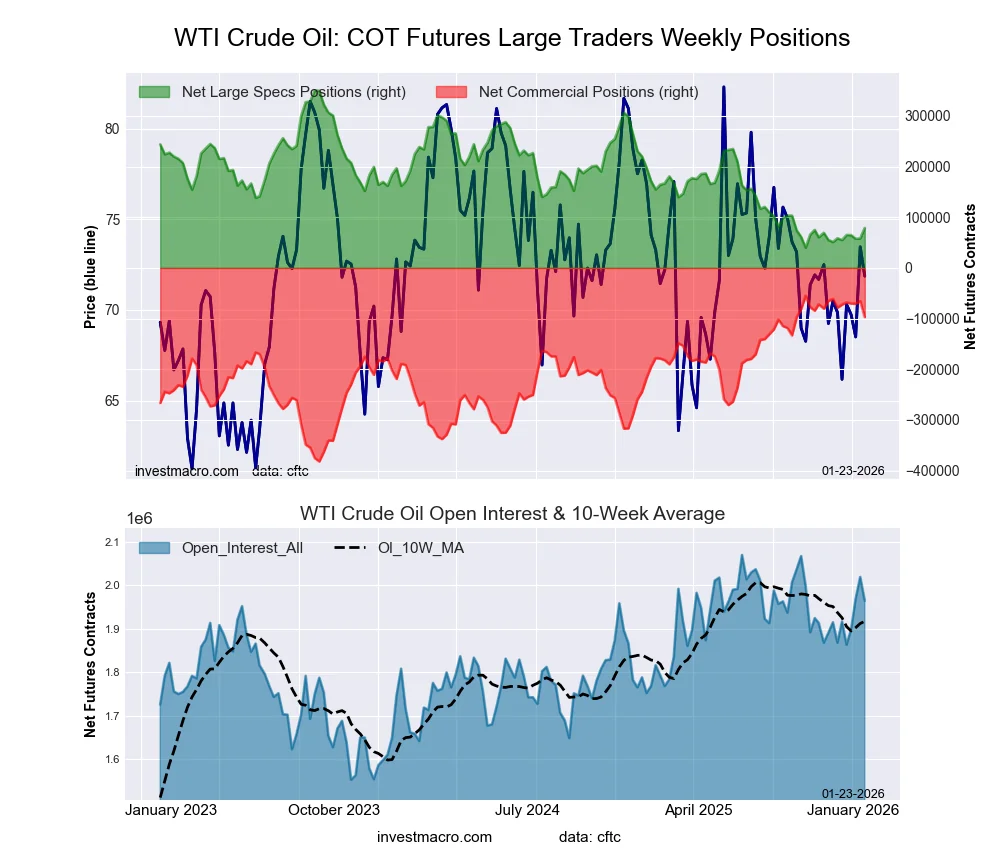
WTI crude oil prices rose over 2% to the $65 per barrel mark on Wednesday, extending a 1.8% gain from the previous session. This was fueled by a drop in US crude inventories, which intensified supply concerns. Data from the EIA showed that US crude oil inventories fell by 0.607 million barrels, defying market expectations for a build. This came after talks to resume oil exports from Iraqi Kurdistan stalled as two major producers demanded debt repayment guarantees, keeping pipeline flows to Turkey halted. Geopolitical risks also continued to support prices, as NATO pledged a “resolute” response to Russia’s airspace incursions and Ukrainian drone attacks on Russian oil refineries and pipelines.

Asian markets were mostly higher yesterday. Japan’s Nikkei 225 (JP225) rose by 0.30%, China’s FTSE China A50 (CHA50) gained 0.47%, Hong Kong’s Hang Seng (HK50) was up 1.37%, while Australia’s ASX 200 (AU200) finished the day down 0.92%.

Sentiment improved after reports that China is developing new regulations to boost competition in the food delivery sector, including capping service fees for restaurants, increasing subsidy transparency, and limiting platform fees. Alibaba rose nearly 10% after pledging over $53 billion in AI investments, surpassing its previous target, and releasing a new model. However, further gains were capped by concerns over Typhoon Ragasa, the world’s most powerful cyclone this year. Cathay Pacific announced it would cancel more than 500 regional flights, reposition aircraft, and gradually resume operations from Thursday into Friday.

The Australian dollar (AUD) rose to $0.659 on Thursday, recovering some of its losses from the previous session, as reduced bets on domestic policy easing outweighed a strengthening US dollar. Investors scaled back expectations for a near-term rate cut from the Reserve Bank of Australia (RBA) after recent data showed Australia’s monthly CPI grew by 3.0% in August, the fastest pace in a year and slightly above expectations of 2.9%. Markets are now pricing in just a 6.5% chance of a 0.25% rate cut at the RBA’s meeting next week, and a 38.2% chance of a cut at the following meeting in November.

S&P 500 (US500) 6,637.97 −18.95 (−0.28%)

Dow Jones (US30) 46,121.28 −171.50 (−0.37%)

DAX (DE40) 23,666.81 +55.48 (+0.23%)

FTSE 100 (UK100) 9,250.43 +27.11 (+0.29%)

USD Index 97.89 +0.63 (+0.64%)

News feed for: 2025.09.25

  • Japan Monetary Policy Meeting Minutes (m/m) at 02:50 (GMT+3);
  • Switzerland SNB Policy Rate at 10:30 (GMT+3);
  • Switzerland SNB Monetary Policy Assessment at 10:30 (GMT+3);
  • US GDP (q/q) at 15:30 (GMT+3);
  • US Initial Jobless Claims (w/w) at 15:30 (GMT+3);
  • US Durable Goods Orders (m/m) at 15:30 (GMT+3);
  • US Existing Home Sales (m/m) at 17:00 (GMT+3);
  • US Natural Gas Storage (w/w) at 17:30 (GMT+3);
  • Mexico Banxico Interest Rate Decision at 22:00 (GMT+3).

By JustMarkets


This article reflects a personal opinion and should not be interpreted as an investment advice, and/or offer, and/or a persistent request for carrying out financial transactions, and/or a guarantee, and/or a forecast of future events.

GBP/USD Under Pressure as Markets Question Bank of England’s Stance

By RoboForex Analytical Department

The GBP/USD pair remains under pressure, trading around 1.3460, as it contends with a mix of conflicting factors.

In the UK, Bank of England Governor Andrew Bailey stated that inflation is expected to decline next year but confirmed that the central bank’s policy will remain restrictive. He pointed to a weakening labour market and cautious consumers, whose savings are twice as high as pre-pandemic levels. Bailey acknowledged that interest rates would likely continue to fall but emphasised that the pace of easing would be strictly dependent on incoming inflation data.

Across the Atlantic, the US dollar is holding its ground following the Fed’s rate cut last week. Markets are currently pricing in approximately 43 basis points of additional easing by year-end, although there is no clear consensus on whether a move will occur at the next meeting. Recent comments from Chair Jerome Powell and other Fed officials consistently underscore that any further action will be data-dependent, hinging on fresh inflation and employment figures.

Consequently, the pound is weighed down by domestic economic concerns and the BoE’s cautious stance. The dollar, in turn, finds support from expectations of a gradual and measured Fed policy. This creates a stalemate marked by uncertainty, which is clearly reflected in the current range-bound dynamics of GBP/USD.

Technical Analysis: GBP/USD

H4 Chart:

On the H4 chart, GBP/USD formed a tight consolidation range around 1.3544 before breaking lower to achieve the local target of the decline at 1.3427. Today, we anticipate the development of a consolidation range above this level. An upward breakout from this range would open the potential for a corrective move towards 1.3544 (testing it as resistance from below). Following this, we would expect the resumption of the downtrend targeting 1.3366. This bearish outlook is technically confirmed by the MACD indicator, whose signal line is located below zero and pointing decisively downward.

H1 Chart:

The H1 chart shows the pair forming the second leg of a downward impulse towards 1.3422, marking a local target. Upon its completion, we anticipate a potential correction towards the 1.3544 level. This scenario is supported by the Stochastic oscillator, with its signal line currently below 80 and falling sharply towards the 20 level.

Conclusion

The GBP/USD pair is caught between a cautious BoE and a data-dependent Fed, leading to a tentative equilibrium. The technical structure leans bearish, suggesting that any near-term rebounds are likely to be corrective within a broader downtrend, contingent on upcoming economic data from both sides of the Atlantic.


Disclaimer:

Any forecasts contained herein are based on the author’s particular opinion. This analysis may not be treated as trading advice. RoboForex bears no responsibility for trading results based on trading recommendations and reviews contained herein.

Australia’s monthly CPI hits 13-month high. Riksbank unexpectedly cuts rate

By JustMarkets 

The record US stock rally took a breather on Tuesday as investors weighed cautious comments from Federal Reserve officials and concerns about the sustainability of AI-driven trading. The Dow Jones (US30) fell by 0.19%, the S&P 500 (US500) dropped 0.55%, and the Nasdaq (US100) closed 0.73% lower. Nvidia plunged 2.8% after a sharp Monday gain related to its $100 billion investment in OpenAI, as investors questioned the deal’s structure and energy requirements. Oracle and Amazon also fell, down 4.1% and 3.1%, respectively. Fed Chair Jerome Powell described stock prices as “quite richly valued” and stressed the need to balance inflation risks with a weakening labor market. Other Fed officials supported the cautious tone: Goolsbee warned against reigniting inflation, while Michelle Bowman noted that rate cuts could accelerate if job losses intensify.

The S&P Global US Composite PMI for September 2025 dropped to 53.6 from 54.6 in August, falling short of market expectations. Although the figure marks a second consecutive month of slower growth, it still points to the strongest quarterly expansion since late 2024. Service sector activity slowed to its weakest pace since June, while manufacturing output growth eased from August’s 39-month high. The services PMI fell to 53.9 from 54.5, largely in line with market expectations of 54 and marking the slowest growth since June, according to the flash estimate.

European stock markets were mostly up. Germany’s DAX (DE40) rose by 0.36%, France’s CAC 40 (FR40) closed 0.54% higher, Spain’s IBEX35 (ES35) gained 0.50%, while the UK’s FTSE 100 (UK100) had closed negative 0.04%. Data for September showed an acceleration in Germany’s private sector activity, as well as strengthening growth in the Eurozone’s service sector. In the UK, private sector growth slowed to its lowest level since May, with services expanding at a slower pace and manufacturing contracting further. Meanwhile, the OECD slightly raised its UK growth expectations to 1.4% for 2025 but indicated that inflation could reach 3.5% by year-end, the highest among major economies.

Sweden’s Central Bank, the Riksbank, unexpectedly lowered its policy rate by 25 basis points to 1.75% at its September meeting, defying market expectations for a hold. Policymakers stated the decision was aimed at supporting economic activity and returning inflation to target in the medium term. The Riksbank noted that conditions for stronger growth remain, and recent data provides confidence that elevated inflation is likely temporary. For now, the Central Bank stated that if its inflation and growth outlook holds, the rate is likely to remain at this level “for some time.”

Asian markets were mostly higher yesterday. Japan’s Nikkei 225 (JP225) rose by 0.99%, China’s FTSE China A50 (CHA50) gained 0.27%, and Hong Kong’s Hang Seng (HK50) fell by 0.70%, while Australia’s ASX 200 (AU200) closed 0.40% higher. Sentiment weakened as China’s policy measures fell short of expectations following a Monday press briefing by top financial regulators, including the head of the PBoC. Hong Kong closed ahead of Super Typhoon Ragasa, with most flights suspended until Thursday.

The Australian dollar strengthened to around $0.661 USD as investors processed stronger-than-expected consumer price growth in August. Data showed headline inflation accelerated to a one-year high, although core inflation eased, indicating mixed price pressures. The numbers did not change expectations that the Reserve Bank of Australia will keep rates unchanged at 3.6% at its September meeting, while the probability of a rate cut in November fell from 70% to 60% before the data release.

On Tuesday, the New Zealand dollar fell to $0.586 USD, returning to a more than two-week low after a brief lift in the previous session. The currency is also pressured by expectations of further rate cuts, after unexpectedly weak Q2 GDP data reinforced prospects for additional policy easing. Markets have fully priced in a 25 basis-point rate cut to 2.75% in October, with about a 25% chance of a larger, half-point move. On Wednesday, New Zealand’s Minister of Finance announced the appointment of Anna Breman as the country’s new Central Bank head, making her the first woman to hold the position. Breman, currently the first deputy governor of Sweden’s Central Bank, the Riksbank, will take up her post at the Reserve Bank of New Zealand (RBNZ) on December 1st. Breman is also the first foreign national appointed to the role in 37 years.

S&P 500 (US500) 6,656.92 −36.83 (−0.55%)

Dow Jones (US30) 46,292.78 −88.76 (−0.19%)

DAX (DE40) 23,611.33 +84.28 (+0.36%)

FTSE 100 (UK100) 9,223.32 −3.36 (−0.04%)

USD Index 97.24 −0.11 (−0.11%)

News feed for: 2025.09.24

  •  Japan Manufacturing PMI (m/m) at 03:30 (GMT+3);
  • Japan Services PMI (m/m) at 03:30 (GMT+3);
  • Australia Consumer Price Index (m/m) at 04:30 (GMT+3);
  • German ifo Business Climate (m/m) at 11:00 (GMT+3);
  • US New Home Sales (m/m) at 17:00 (GMT+3);
  • US Crude Oil Reserves (w/w) at 17:30 (GMT+3).

By JustMarkets


This article reflects a personal opinion and should not be interpreted as an investment advice, and/or offer, and/or a persistent request for carrying out financial transactions, and/or a guarantee, and/or a forecast of future events.

Gold Holds Near Record Highs as Demand Sustains Rally

By RoboForex Analytical Department

Gold traded around 3,760 USD per ounce on Wednesday, hovering near the record high established the previous day. The market continued to digest commentary from Federal Reserve officials, including Chair Jerome Powell.

Powell acknowledged the Fed’s challenging position, citing a combination of accelerating inflation and sluggish employment growth, which together heighten risks for the labour market. While he expressed satisfaction with the current policy trajectory, he left the door open for further interest rate cuts if warranted by economic conditions.

Market pricing in futures contracts indicates expectations for two additional 25-basis-point cuts this year, potentially in October and December. Investor focus now shifts to the upcoming release of the August PCE index – the Fed’s preferred inflation gauge – as well as scheduled speeches from other Fed officials.

Geopolitical tensions are providing additional support for the precious metal. NATO’s recent warning that it is prepared to deploy all necessary measures, both military and non-military, in its defence has bolstered gold’s appeal as a safe-haven asset.

Technical Analysis: XAU/USD

H4 Chart:

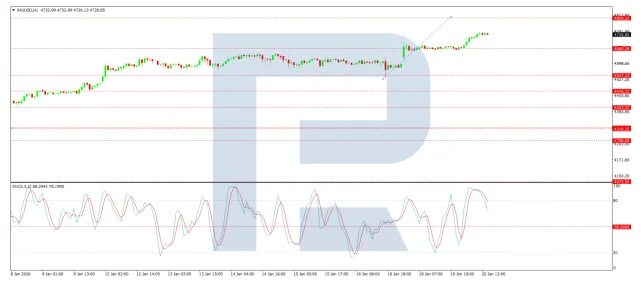
On the H4 chart, XAU/USD formed a tight consolidation range around 3,734 USD before breaking upwards to complete an upward move towards 3,790 USD. Following a correction to 3,750 USD, a new upward impulse has begun. The immediate focus is now on a break above the 3,790 USD level, which could open the path for a continuation towards 3,840 USD, with a longer-term prospect of reaching 3,878 USD. This bullish scenario is technically confirmed by the MACD indicator, whose signal line is well above the zero line and trending higher.

H1 Chart:

The H1 chart shows the pair consolidating around 3,717 USD before initiating an upward move targeting 3,808 USD. Upon reaching this level, a corrective pullback towards 3,730 USD is possible. Following this, a resumption of the uptrend towards at least 3,820 USD is anticipated. This outlook is supported by the Stochastic oscillator, with its signal line currently above 50 and rising sharply towards 80.

Conclusion

Gold remains well-supported fundamentally by a dovish-leaning Fed and geopolitical risks, while the technical picture suggests the bullish momentum is intact. A sustained break above the immediate resistance could trigger the next leg higher towards fresh record levels.


Disclaimer:

Any forecasts contained herein are based on the author’s particular opinion. This analysis may not be treated as trading advice. RoboForex bears no responsibility for trading results based on trading recommendations and reviews contained herein.

Wall Street extends its record run. Weak PMI data pressures AUD

By JustMarkets 

Wall Street extended its record-breaking streak on Monday, fueled by optimism in megacap companies. The Dow Jones (US30) gained 0.14%, the S&P 500 (US500) rose 0.44%, and the Nasdaq (US100) was up 0.55%. Nvidia shares surged 4% after announcing an investment of up to $100 billion in OpenAI, while Oracle jumped 6.3% following a leadership change and continued enthusiasm for AI. Apple shares increased by 4.3% on strong demand for the iPhone 17, and Tesla climbed 1.9%, reaching its 2025 high as investors anticipated new product launches and enhancements to its self-driving system.

The US President Donald Trump is set to announce this week that the deal to sell TikTok’s US operations to its Chinese parent company, ByteDance, complies with the 2024 law. Under the plan, ByteDance will hold less than a 20% stake, and TikTok US will be controlled by a group of existing American and international companies, as well as new investors not affiliated with ByteDance. Key investors include Oracle and Silver Lake, with Trump specifically highlighting US backers like Lachlan Murdoch, Larry Ellison, and Michael Dell. Trump will sign an executive order confirming the legality of the deal, which mandates storing US user data in Oracle’s cloud infrastructure.

European stock markets were mostly down on Monday. Germany’s DAX (DE40) fell by 0.48%, France’s CAC 40 (FR40) closed 0.30% lower, Spain’s IBEX35 (ES35) declined 1.17%, while the UK’s FTSE 100 (UK100) had closed 0.11% higher. Carmakers faced losses after Porsche lowered its profit outlook for the year and delayed an EV launch due to weak demand, causing its shares to fall 7.2%. Volkswagen shares, a major Porsche shareholder, dropped 7.1%, and Stellantis fell more than 2%. Meanwhile, BBVA underperformed tech stocks, dropping 2.7% after raising its offer to acquire Banco Sabadell by 10% to €17 billion.

WTI crude oil prices were trading around $62 a barrel as traders weighed geopolitical risks against concerns over tariffs and slowing demand. Over the weekend, reports of Russian airstrikes on western Ukraine near the Polish border, airspace violations in Estonia, and a Russian military plane entering neutral Baltic airspace heightened fears of further regional escalation. Adding to the tension, the EU introduced its 19th package of sanctions against Russia on Friday, including a ban on LNG imports and restrictions on 118 additional shadow vessels. In the Middle East, geopolitical uncertainty also remained a focus as several countries officially recognized the state of Palestine ahead of a UN summit.

Asian markets were mostly higher yesterday. Japan’s Nikkei 225 (JP225) rose by 0.99%, China’s FTSE China A50 (CHA50) gained 0.45%, Hong Kong’s Hang Seng (HK50) fell by 0.76%, and Australia’s ASX 200 (AU200) closed 0.43% higher.

On Tuesday, the Australian dollar weakened to above the $0.658 level, giving up gains from the previous session as investors digested disappointing PMI data. Preliminary estimates showed the composite PMI fell to 52.1 in September from 55.5 in August. Market attention is now focused on the monthly CPI Index, due on Wednesday, which will clarify whether the inflation spike in July was caused by the end of electricity subsidies or broader price pressures. If inflation remains high or accelerates, expectations for an RBA rate cut could be pushed into next year.

Malaysia’s annual inflation rate rose to 1.3% in August 2025 from 1.2% in the previous month, its highest reading since April and in line with market expectations. Food prices increased 2.0% year-over-year, slightly above the ten-month low of 1.9% in July. On a monthly basis, consumer prices rose 0.1%, matching the gain from the previous four months.

Singapore’s annual inflation rate eased to 0.5% in August 2025, below market expectations and the 0.6% recorded in the previous month. The latest figure marked the lowest inflation level since January 2021. On a monthly basis, consumer prices rose 0.5% in August. Meanwhile, annual core inflation declined to 0.3% in August, the lowest since February 2021, compared to market prognoses of 0.4% and the July figure of 0.5%.

S&P 500 (US500) 6,693.75 +29.39 (+0.44%)

Dow Jones (US30) 46,381.54 +66.27 (+0.14%)

DAX (DE40) 23,527.05 −112.36 (−0.48%)

FTSE 100 (UK100) 9,226.68 +10.01 (+0.11%)

USD Index 97.33 −0.32 (−0.33%)

News feed for: 2025.09.23

  • Australia Manufacturing PMI (m/m) at 02:00 (GMT+3);
  • Australia Services PMI (m/m) at 02:00 (GMT+3);
  • Singapore Consumer Price Index (m/m) at 08:00 (GMT+3);
  • German Manufacturing PMI (m/m) at 10:30 (GMT+3);
  • German Services PMI (m/m) at 10:30 (GMT+3);
  • Eurozone Manufacturing PMI (m/m) at 11:00 (GMT+3);
  • Eurozone Services PMI (m/m) at 11:00 (GMT+3);
  • UK Manufacturing PMI (m/m) at 11:30 (GMT+3);
  • UK Services PMI (m/m) at 11:30 (GMT+3);
  • US Manufacturing PMI (m/m) at 16:45 (GMT+3);
  • US Services PMI (m/m) at 16:45 (GMT+3);
  • US Fed Chair Powell Speaks at 19:35 (GMT+3).

By JustMarkets


This article reflects a personal opinion and should not be interpreted as an investment advice, and/or offer, and/or a persistent request for carrying out financial transactions, and/or a guarantee, and/or a forecast of future events.

EUR/USD Extends Gains as US Dollar Weakens on Fed Uncertainty and Shutdown Fears

By RoboForex Analytical Department

The EUR/USD pair advanced to 1.1804 on Tuesday, marking a second consecutive day of gains. The US dollar faced sustained pressure as markets digested mixed signals from Federal Reserve officials regarding the interest rate outlook.

Several Fed members advocated for caution on further easing, pointing to signs of stabilising inflation. However, this stance was countered by new Governing Council member Stephen Miran, who warned that the central bank may be underestimating current policy tightness and risks damaging the labour market without more decisive rate cuts.

Investors are now focused on the upcoming release of the PCE price index on Friday – the Fed’s preferred inflation gauge – which is expected to provide critical guidance for future monetary policy.

Adding to the market’s unease are the ongoing US congressional budget negotiations. Lawmakers are working to avert a potential government shutdown by the 30 September deadline, creating a fresh layer of uncertainty.

Technical Analysis: EUR/USD

H4 Chart:

On the H4 chart, EUR/USD completed a decline to 1.1727, followed by a correction to 1.1818. The current expectation is for a resumption of the downward move towards an initial target of 1.1704. Upon reaching this level, a subsequent rebound towards 1.1800 is anticipated. This bearish scenario is technically supported by the MACD indicator, whose signal line is around the zero line and pointing decisively downwards.

H1 Chart:

The H1 chart shows the pair completed its descent to 1.1727 and is now forming a corrective structure. Today’s price action has created an upward move towards 1.1818. From here, we expect a decline to 1.1777. A further rise to 1.1824 could then unfold, completing the corrective phase and setting the stage for a new downward wave targeting 1.1704. This outlook is confirmed by the Stochastic oscillator, with its signal line currently below 50 and falling sharply towards 20.

Conclusion

While the euro is capitalising on a weaker dollar driven by divergent Fed commentary and political risks, the technical structure suggests the upside may be limited. The broader trend appears poised for a resumption of declines, contingent on the key PCE data and developments in Washington.


Disclaimer:

Any forecasts contained herein are based on the author’s particular opinion. This analysis may not be treated as trading advice. RoboForex bears no responsibility for trading results based on trading recommendations and reviews contained herein.

China is keeping its Loan Prime Rate (LPR) at a record low. Meanwhile, silver prices have hit a new 14-year high

By JustMarkets 

On Friday, the Dow Jones (US30) rose by 0.37% (ending the week up +1.02%). The S&P 500 (US500) gained 0.49% (ending the week up +0.92%), and the Nasdaq (US100) technology Index closed 0.70% higher (ending the week up +1.85%). The US stocks closed at new highs on Friday, continuing a record-breaking streak. Investors were buoyed by positive corporate results, the Federal Reserve’s first rate cut of 2025, and signs of progress in US-China relations. FedEx jumped 2.3% after reporting stronger-than-expected results, while Apple rose by 3.2% following a price target upgrade from J.P. Morgan and the launch of a new iPhone. Tesla shares climbed 2.2% after Baird upgraded its rating to “outperform,” which helped lift the technology and consumer discretionary sectors. Markets also monitored a lengthy conversation between President Trump and Chinese leader Xi Jinping, in which Trump noted progress.

The Canadian dollar strengthened to 1.375 per US dollar, nearing its September highs. Preliminary estimates show that retail sales rose by about 1.0% in August, reversing July’s 0.8% decline. This points to stronger household demand than markets had feared, which lowered the probability of a sharp policy easing by the Bank of Canada. The Bank of Canada recently cut its policy rate by 25 basis points to 2.5% after a sharper-than-expected economic slowdown, including a 1.6% contraction in Q2 GDP and a 27% collapse in exports. The deteriorating labor market, with a net job loss and an unemployment rate of 7.1% in August, has eased wage pressures and supported the case for policy easing.

European stock markets were mixed on Friday. The German DAX (DE40) fell by 0.15% (down -0.61% for the week), while the French CAC 40 (FR40) closed down 0.01% (up +0.07% for the week). The Spanish IBEX35 (ES35) rose by 0.56% (down -0.65% for the week), and the British FTSE 100 (UK100) closed down 0.12% (down -0.72% for the week).

On Monday, silver prices surged to $43.5 per ounce, reaching a new 14-year high as expectations of further rate cuts from the US Federal Reserve supported demand for precious metals. Strong fundamentals have bolstered silver, with limited supply helping to maintain its upward momentum. On the demand side, robust consumption in the solar energy, electric vehicle, and electronics sectors provided additional support.

WTI crude oil prices fell by 1.4% on Friday to $62.70 per barrel, marking the third consecutive session of losses. A supply surplus and concerns about weakening demand outweighed hopes that the recent US Fed rate cut would boost consumption. Traders also monitored developments in US-China and US-India relations, which could affect Russian oil flows, along with a strengthening dollar that reduced demand for dollar-denominated commodities.

The US natural gas prices dropped to $2.90/MMBtu, their lowest in three weeks, thanks to ample gas in storage and expectations for milder weather, which will reduce near-term demand. Record production earlier this year allowed for more gas than usual to be put into storage, and supplies are currently about 6% above average. On Thursday, the EIA reported a 90 billion cubic foot storage build for the week ending September 12, exceeding last year’s 56 billion cubic feet and the five-year average of 74 billion cubic feet, as mild temperatures limited heating and cooling demand.

Asian markets had a mixed performance last week. Japan’s Nikkei 225 (JP225) rose by 0.54%, China’s FTSE China A50 (CHA50) fell by 1.46%, Hong Kong’s Hang Seng (HK50) added 0.90%, and Australia’s ASX 200 (AU200) ended the week down 0.54%.

The People’s Bank of China (PBoC) kept its one- and five-year Loan Prime Rates at 3% and 3.5%, respectively, for the fourth straight month, despite the recent US Fed rate cuts. Authorities are holding back on major stimulus measures even as economic data points to a slowdown. Meanwhile, US President Donald Trump stated that he and Xi Jinping had approved a TikTok deal during a “productive” phone call, although Beijing has not confirmed this information.

The Reserve Bank of Australia (RBA) is continuing to closely monitor economic developments, though recent data is broadly in line with expectations, according to Governor Michele Bullock on Monday. Speaking to lawmakers, Bullock noted that the Central Bank is nearing its inflation and employment goals, with inflation on track to reach the 2-3% range and the labor market close to full employment. The board has gradually eased policy, cutting rates in February, May, and August to 3.6%, with further action depending on incoming data.

S&P 500 (US500) 6,664.36 +32.40 (+0.49%)

Dow Jones (US30) 46,315.27 +172.85 (+0.37%)

DAX (DE40) 23,639.41 −35.12 (−0.15%)

FTSE 100 (UK100) 9,216.67 −11.44 (−0.12%)

USD Index 97.65 +0.30 (+0.31%)

News feed for: 2025.09.22

  • China 1-y Loan Prime Rate (m/m) at 04:15 (GMT+3);
  • China 5-y Loan Prime Rate (m/m) at 04:15 (GMT+3);
  • UK BoE Gov Bailey Speaks at 21:00 (GMT+3).

By JustMarkets


This article reflects a personal opinion and should not be interpreted as an investment advice, and/or offer, and/or a persistent request for carrying out financial transactions, and/or a guarantee, and/or a forecast of future events.

USD/JPY Soars as Yen Weakens on BoJ Policy Concerns

By RoboForex Analytical Department

The USD/JPY pair climbed to 148.31 on Monday, extending its gains from the previous week as the US dollar strengthened across the board. The yen faced additional pressure from heightened anticipation around upcoming comments from Federal Reserve officials and the release of critical US inflation data.

Last week, the Federal Reserve delivered a widely expected 25-basis-point cut – its first since December. The central bank’s projections indicated two further reductions before the end of the year.

This contrasts sharply with the Bank of Japan’s (BoJ) stance. Last Friday, the BoJ held its key rate at 0.5% per annum for a fifth consecutive meeting, a decision that was squarely in line with market forecasts. In its accompanying statement, the central bank described a moderate economic recovery but pointed to persistent weak spots and warned of risks stemming from global trade policy.

In a more significant step, the regulator unanimously approved plans to begin selling ETFs and J-REITs from its vast portfolio. This detail is particularly noteworthy and can be interpreted as a cautious signal that the bank is preparing to wind down its long-standing asset purchase program.

This week, investor focus will shift to the latest PMI data and inflation figures for Tokyo, alongside the release of the minutes from the BoJ’s July meeting. These documents may provide crucial insights into the timing and nature of the regulator’s next policy steps.

Technical Analysis: USD/JPY

H4 Chart:

On the H4 chart, USD/JPY found solid support at the 147.20 level and is now developing a fresh upward move targeting 148.88. We expect this target to be tested today. Following this, a corrective pullback towards 147.20 is likely. Following this correction, we anticipate another upward move aiming for the 150.00 psychological level. This outlook is technically confirmed by the MACD indicator, whose signal line is positioned above zero and pointing sharply upwards.

H1 Chart:

The H1 chart shows the pair completed an upward move to 148.23, followed by a correction to 147.20. The current momentum is building for a further advance towards 148.88. Upon reaching this level, a corrective pullback towards 147.20 is possible. The broader upward trajectory is then expected to resume, with a minimum target of 150.00. This scenario is supported by the Stochastic oscillator, with its signal line currently above 50 and rising firmly towards the 80 level.

Conclusion

The yen remains under significant pressure, caught between a resilient US dollar and the Bank of Japan’s cautious, gradual approach to policy normalisation. The path of least resistance for USD/JPY remains higher, contingent on this week’s key data releases reinforcing the current fundamental and technical picture.

Disclaimer:

Any forecasts contained herein are based on the author’s particular opinion. This analysis may not be treated as trading advice. RoboForex bears no responsibility for trading results based on trading recommendations and reviews contained herein.