The BTC stopped at 28,147 USD. Prices for digital assets are growing slowly because the market is saving power for the end of the March meeting of the Fed. The intrigue is whether the Fed will lift the interest rate or not.
Investors are ready to attack 29,000 USD, which will open a pathway to 35,000 USD. However, further events will directly depend on what and how the Fed will say.
The capitalisation of the crypto market on Wednesday is estimated as 1.179 trillion USD. The share of the BTC has dropped to 46.2%, while the ETH occupies 18.6% of the market.
Oasis Origin launches metaverse
The issue of metaverses remains topical: the Oasis Origin platform announced integrating GPT4-based AI in it to create an absolutely new metaverse. In it, users will be able to create avatars with the help of AI or interact with it directly.
Polygon network will get in game
Nexon, a game giant from South Korea, will use the features of the Polygon network for its new digital universe. At the moment, it is necessary for supporting NFT inside the MapleStory Universe game.
Attention! Forecasts presented in this section only reflect the author’s private opinion and should not be considered as guidance for trading. RoboForex LP bears no responsibility for trading results based on trading recommendations described in these analytical reviews.
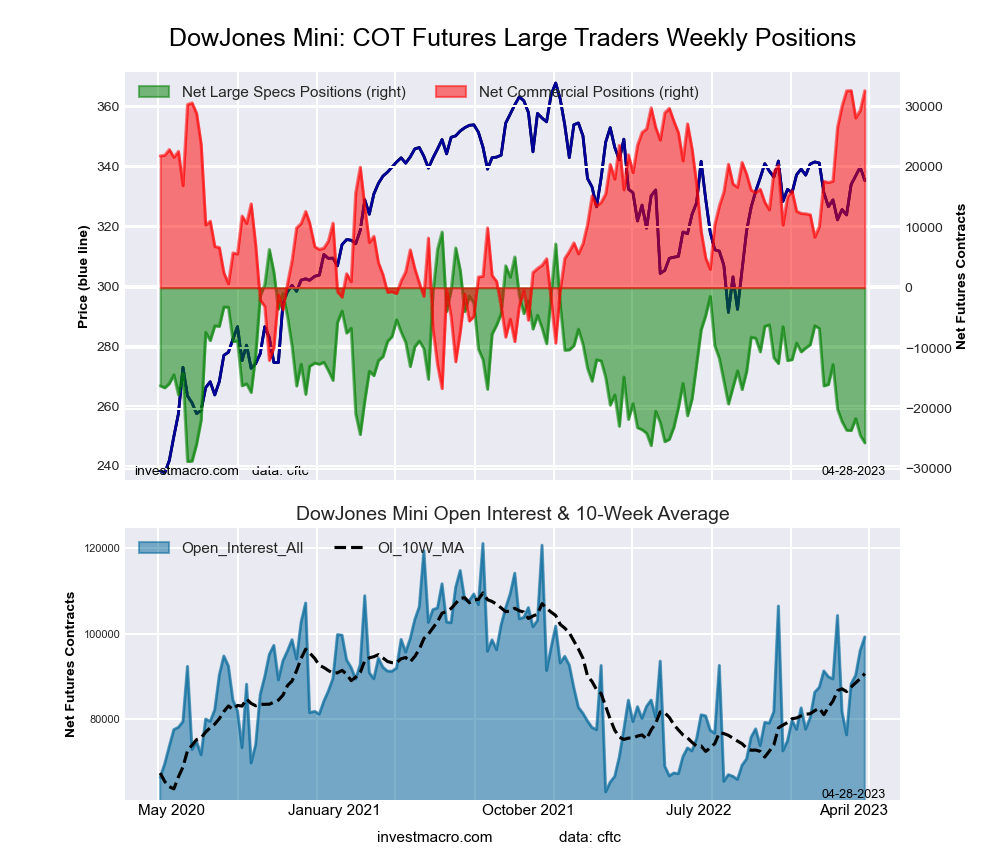
Concerns about problems in the banking sector are easing. The US First Republic Bank (FRC) shares jumped about 30% yesterday after US Treasury Secretary Yellen said the US government would be willing to step in and support smaller banks. Other regional banks also rose sharply on the news. At the close of the stock market yesterday, the Dow Jones Index (US30) Increased by 0.98%, and the S&P 500 (US500) added 1.30%. The NASDAQ Technology Index (US100) gained 2.06%.
The Federal Reserve is expected to raise interest rates by 0.25% today, despite concerns about stress in the banking system. Investors are also waiting for the Fed to reassure them that regional bank problems will be solved. Analysts believe Fed Chairman Jerome Powell will indicate at the press conference that the Fed is fighting inflation by raising rates and then assure markets that the central bank can use other tools to preserve financial stability. If Powell’s press conference speech is dovish and hints at an end to the cycle soon, it will cause the dollar index to fall and stock indices to rise. But if Powell hints that the Fed will continue to tighten policy at future meetings, it could cause another panic rush, which would cause investors to buy dollars again.
ExxonMobil Corp (XOM) shares rose more than 4% after Morgan Stanley expressed optimism about the oil company, citing its “competitive positioning.” Tesla’s (TSLA) stock rose sharply yesterday. The company was supported by retail sales data from China Merchants Bank International, suggesting the automaker will report strong sales in the first quarter.
Cathie Wood, founder, and CEO of ARK Investment Management told Bloomberg TV on Tuesday that her company has more than $2 billion in losses from stock sales during the market crash. Cathie Wood explained that her fund reduced its holdings from more than 50 to just 28 shares. Selling stocks at a loss to offset portfolio gains is a popular strategy investors use during market downturns to cushion the impact.
European stock indices rose on Tuesday. Germany’s DAX (DE30) gained 1.75%, France’s CAC 40 (FR40) jumped by 1.42%, Spain’s IBEX 35 (ES35) added 2.45%, and the British FTSE 100 (UK100) closed yesterday up by 1.79%.
Years of massive expansion have accumulated a staggering €4 trillion of idle liquidity in the pockets of eurozone banks. Until this stockpile of cash disappears, the ECB can only raise rates by subsidizing the deposits it receives from banks. According to analysts, this is a dangerous course. The assets the central bank holds against these deposits generate returns far below the cost of funding. Calculations by Daniel Gros, a senior fellow at the Center for European Policy Research, show that this is enough to wreck the accounts of the ECB and its constituent national central banks in the coming years. The ECB has begun reducing its investments in securities at a rate of 15 billion euros a month, but this is not enough. All other things being equal, it would take about 27 years to reabsorb all liquidity. The ECB, therefore, urgently needs to launch new tools to get rid of liquidity.
Despite encouraging signs that inflationary pressures are easing, analysts believe the Bank of England is likely to go for a final 25bp hike on Thursday, although this will certainly depend on what happens in financial markets and what the latest inflation data are today. A calmer financial market backdrop would support at 25 basis point hike. Further volatility could easily lead to a “no change” decision, with an evasive indication that further hikes could be taken if things change.
A survey of economists on Tuesday indicates that the Swiss National Bank (SNB) is expected to raise its discount rate by 50 basis points to 1.5%, even though the SNB agreed last week to lend a whopping 50 billion Swiss francs ($54 billion) to troubled local lender Credit Suisse, which UBS then bought out on Monday in a deal struck by local regulators. The US crude inventories rose for a second straight week despite expectations of a decline. The American Petroleum Institute reported that inventories rose by 3.2 million barrels. The US government’s Energy Information Administration will release its oil stockpile data today. Falling inventories will push oil prices higher and vice versa.
Asian markets were mostly up on Tuesday. Japan’s Nikkei 225 (JP225) was not trading because of the holiday, China’s FTSE China A50 (CHA50) gained 1.36%, Hong Kong’s Hang Seng (HK50) gained 1.36% on the day, India’s NIFTY 50 (IND50) added 0.70%, and Australia’s S&P/ASX 200 (AU200) was up by 0.82%.
S&P 500 (F) (US500) 4,002.87 +51.30 (+1.30%)
Dow Jones (US30)32,560.60 +316.02 (+0.98%)
DAX (DE40) 15,195.34 +261.96 (+1.75%)
FTSE 100 (UK100) 7,536.22 +132.37 (+1.79%)
USD Index 103.30 −0.40 (−0.39%)
Important events for today:
– UK Consumer Price Index (m/m) at 09:00 (GMT+2);
– UK Producer Price Index (m/m) at 09:00 (GMT+2);
– Eurozone ECB President Lagarde Speaks at 10:45 (GMT+2);
This article reflects a personal opinion and should not be interpreted as an investment advice, and/or offer, and/or a persistent request for carrying out financial transactions, and/or a guarantee, and/or a forecast of future events.
“Moral hazard” refers to the risks that someone or something becomes more inclined to take because they have reason to believe that an insurer will cover the costs of any damages.
Here are some illustrative examples: Having worker’s compensation insurance could potentially encourage some workers to stay out of work longer than needed for their health. Or, homeowners insurance may explain why a homeowner might not bother spending their own money on a small repair not covered by their insurance policy because they figure that over time it will turn into a larger problem that would be covered.
Or think of what happens when someone rents a car and parks it where it can easily be damaged. That carelessness reflects an assumption that the rental car company’s insurance policy will pay for the repairs.
Congress established the FDIC during the Great Depression, which began with a spate of bank runs. The goal was to boost confidence in the banking system.
The implicit assumption behind the government’s insurance limit, which prior to 2008 stood at $100,000, is that depositors who have accounts worth more than the limit will bear the loss of bank failure along with the bank’s executives and shareholders. Yet boosting the size of the guarantee amount also made future bank bailouts more costly, which in turn increased moral hazard.
And when Silicon Valley Bank failed in March 2023, all its depositors got access to their funds – including those with accounts that exceeded the $250,000 limit – because the government made an exception.
‘Too big to fail’
I teach and write about moral hazard in the banking industry as a banking law professor. As it happens, my banking law class had discussed moral hazard and bank failure for three class sessions held before the 2023 spring break.
When the students returned from their vacation, news of Silicon Valley Bank’s failure appeared to be the start of what might become a bank crisis.
“What happened? It’s completely different from what you taught us!” the students in my class exclaimed, almost in unison. Questions tumbled from their heads demanding an explanation.
Why did the government apparently throw out concerns about moral hazard when SVB failed?
Any explanation would have to begin with what moral hazard can mean in the context of banking, which can summon the colloquial phrase “too big to fail.”
That controversial concept applies to how the government responds in the aftermath of the risky behavior of a bank – if the collapse of the bank is likely to harm the economy. Yet, in reducing the risk of a widespread financial crisis, the government can end up sending the message that it’s willing to protect banks that engage in reckless behavior – and to shield their customers from the consequences.
Near the resistance, gold has formed a Shooting Star reversal pattern. Currently, the instrument might go by the reversal signal in a descending wave. The target of the decline might be 1960.00. Upon testing the support level, the pair might push off it and continue the uptrend. However, the quotes might grow directly to 2000.00 without any pullback.
NZDUSD, “New Zealand Dollar vs US Dollar”
On H4, near the resistance, NZDUSD has formed a Harami reversal pattern. Currently, the instrument might go by the reversal signal in a descending wave. The target of the correction might be 0.6180. After a rebound from the support level, the quotes might continue the uptrend. However, the pair might rise to 0.6270 without testing the support.
GBPUSD, “Great Britain Pound vs US Dollar”
On H4, near the resistance level, GBPUSD has formed a Shooting Star reversal pattern. Currently, the instrument might go by the reversal signal in a descending wave. The target of the pullback might be 1.2200. However, the price might grow to 1.2325 and continue the uptrend without correcting to the support.
Attention! Forecasts presented in this section only reflect the author’s private opinion and should not be considered as guidance for trading. RoboForex LP bears no responsibility for trading results based on trading recommendations described in these analytical reviews.
Investors are ready to build their investment portfolios with new money amid a growing consensus that looser monetary policies are coming which will boost financial markets, says the CEO of one of the world’s largest independent financial advisory and asset management organisations.
This assessment from Nigel Green of deVere Group comes ahead of critical policy meetings this week at the US Federal Reserve and Bank of England.
It also follows the Fed and five other major central banks announcing, in a coordinated joint statement, fresh measures to improve global liquidity. The central banks said the move served as an “important backstop” to ease strains in global funding markets.
He comments: “Global markets remain jittery from the turmoil caused by the fallout of the crises hitting Silicon Valley Bank, Signature Bank, Credit Suisse and First Republic Bank.
“There are fears of runs on other banks as other lenders could find themselves in trouble after rises in interest rates left some harbouring major losses.”
The deVere CEO continues: “The coordinated action being taken by the US Federal Reserve, the Bank of England, Bank of Japan, Bank of Canada, the European Central Bank and Swiss National Bank launched on Monday to keep credit flowing in the serious issues affecting the banking sector, show that they are willing to do whatever it takes to avert a crash.
“Investors are taking this as a sign that central banks will now ease off interest rate hikes.
“Looser monetary policies will trigger a surge in financial markets.
“Not wanting to miss out on the next rally, clients are now telling our consultants around the world that they want to build-up their investment portfolios with new money.”
Looser monetary policy increases liquidity in the markets, stimulates economic activity, and boosts investor confidence, all of which can contribute to higher stock prices.
The next Federal Open Market Committee (FOMC) meeting is scheduled for March 21 and 22. The US Fed rate hike decision will be announced on March 22 at 2 pm (ET) followed by a press conference.
Meanwhile, the Bank of England will meet on Thursday and hold a press conference at noon in London.
“Central banks have the unenviable task of trying to cool stubbornly high inflation and restore financial stability,” says Nigel Green.
He concludes: “It seems that investors are gripped by the Fear Of Missing Out. They’re looking past interest rate hikes and assuming that the chaos in the banking sector will unleash looser monetary policies from central banks, which will be fuel for the markets.”
About:
deVere Group is one of the world’s largest independent advisors of specialist global financial solutions to international, local mass affluent, and high-net-worth clients. It has a network of offices across the world, over 80,000 clients and $12bn under advisement.
At the close of the stock market yesterday, the Dow Jones Index (US30) gained 1.20%, and the S&P 500 Index (US500) increased by 0.89%. The NASDAQ Technology Index (US100) added 0.32% yesterday. The US Federal Reserve said late last week that it would work with other major central banks to provide liquidity to the global banking sector. Certainly, this has brought some optimism back to the stock market. But that could easily dissipate if the US Federal Reserve raises interest rates on Wednesday and hints at further policy tightening.
Former Goldman Sachs chief executive Lloyd Blankfein said the Federal Reserve might take a pause in raising interest rates this week as the unfolding banking crisis tightens lending standards in the economy. Blankfein also warned that without intervention to protect deposits at small and regional banks, consumers could only rely on large banks that have high capital and liquidity standards. This, he said, could lead to consolidation in the financial sector, which would negatively impact the nation’s large and growing economy. Before the SVB collapse and the resulting policy implications, the Fed was willing to raise rates by as much as 50 basis points as price pressures in the US economy were deemed sustainable. Given the current market volatility, some Fed observers expect a quarter-point hike, while others predict a pause.
Shares of the New York Community Bancorp jumped by more than 31% after his subsidiary Flagstar Bank agreed to buy most of Signature Bank for $2.7 billion. Concerns about the banks’ liquidity crisis subsided somewhat Monday when Swiss investment bank UBS said it would buy Credit Suisse, and JPMorgan (JPM) appeared to have made progress in rescuing First Republic Bank (FRC) following last week’s federal takeover of regional banks Silicon Valley and Signature.
European stock indexes rose on Monday amid improving sentiment in the banking sector after UBS agreed to buy struggling rival Credit Suisse. German DAX (DE30) gained 1.12%, French CAC 40 (FR40) jumped by 1.27%, Spanish IBEX 35 (ES35) gained 1.31%, and British FTSE 100 (UK100) closed yesterday with a 0.93% gain.
To further improve financial stability in Europe, European Central Bank President Christine Lagarde said that the central bank is “ready to respond as necessary” to maintain the stability of the euro area.
Gold prices have finally reached the $2,000 per ounce mark. Falling dollar index and falling government bond yields amid the banking crisis are fueling gold’s rise. But analysts are confident that traders should expect a correction wave in the coming days because prices are heavily overbought now.
Crude markets tried to rebound yesterday after regulatory measures to shore up liquidity and consolidate weak players in the banking sector helped ease some fears of an impending crisis. But that was largely offset by uncertainty ahead of this week’s key Fed meeting. Asian markets mostly fell Monday. Japan’s Nikkei 225 (JP225) decreased by 1.42%, China’s FTSE China A50 (CHA50) lost 0.41% for the day, Hong Kong’s Hang Seng (HK50) lost 2.65% for the day, India’s NIFTY 50 (IND50) decreased by 0.65%, and Australia’s S&P/ASX 200 (AU200) was down by 1.38%.
On Monday, the Bank of Japan appointed Seiichi Shimizu, whose market and technical expertise in the bank’s Yield Curve Control (YCC) policy has earned him the nickname “Mr. YCC. During his tenure as head of the financial market division, the 57-year-old banker helped put together a package of steps to mitigate the side effects of the YCC in 2021, such as phasing out large purchases of risky assets. Shinichi Uchida was elected deputy governor. The new governor, Kazuo Ueda, will join the Bank of Japan when the term of incumbent Haruhiko Kuroda expires next month. Many analysts expect the Bank of Japan to change or cancel the YCC during Ueda’s five years in office, as the bank’s huge bond purchases to protect the yield cap have been criticized for distorting the shape of the yield curve and depleting bond market liquidity.
S&P 500 (F) (US500) 3,951.57 +34.93 (+0.89%)
Dow Jones (US30)32,244.58 +382.60 (+1.20%)
DAX (DE40) 14,933.38 +165.18 (+1.12%)
FTSE 100 (UK100) 7,403.85 +68.45 (+0.93%)
USD Index 103.30 −0.40 (−0.39%)
Important events for today:
– Australia RBA Meeting Minutes at 02:30 (GMT+2);
– German ZEW Economic Sentiment (m/m) at 12:00 (GMT+2);
– Eurozone ZEW Economic Sentiment (m/m) at 12:00 (GMT+2);
– Canada Consumer Price Index (m/m) at 14:30 (GMT+2);
– Eurozone ECB President Lagarde Speaks at 14:30 (GMT+2);
This article reflects a personal opinion and should not be interpreted as an investment advice, and/or offer, and/or a persistent request for carrying out financial transactions, and/or a guarantee, and/or a forecast of future events.
Asian markets rose on Tuesday after Wall Street staged a rebound overnight as the historic takeover of Credit Suisse Group AG soothed concerns over the global banking sector.
Switzerland’s largest bank UBS Group AS has agreed to purchase Credit Suisse for $3.2 billion in what’s being labelled a “shotgun marriage”. But it is aimed at containing the panic and jitters currently around the financial system. Although the latest developments have lifted sentiment, the overall mood remains fragile with investors likely to remain guarded ahead of the Fed meeting tomorrow. In the currency space, the dollar steadied during early trade and could end a three-day losing streak if bulls fight back. In the previous session, oil prices rebounded after tumbling to their lowest levels since 2021 while gold punched above$2000 for the first time since March 2022 before ending the session 0.5% lower.
We expect financial markets to remain volatile and highly sensitive to any fresh news concerning the global banking sector. With fears over the crisis easing, we could see a modest return in risk appetite, lending support to global stocks. Shifting our focus elsewhere, this will be a big week for markets with the US Federal Reserve (Fed), Bank of England (BoE), and Swiss National Bank (SNB) policy meetings in focus. It will be interesting to see what the SNB has to say about the Credit Suisse developments, especially after the historic takeover.
Fed meeting in focus
The upcoming Fed meeting could be tough as the central bank decides whether to focus on solid macroeconomic data or the stability of the financial system.
Markets expect the Federal Reserve to raise interest rates by 25 basis points this month, with the chances of this decision currently priced at 74%, according to Fed funds futures. Key for markets will be what the central bank has to say about the recent developments concerning the SVB collapse and Credit Suisse drama, especially after the UBS takeover.
If the Federal Reserve surprises markets by leaving rates unchanged, this could signal the end of the rate hike cycle with the next move being a cut in rates. Such a development is likely to deal a heavy blow to the dollar along with Treasury yields. Markets might also take it as a sign that the Fed fears contagion risks in markets via the banking sector, and this would likely see a sharp sell-off in stock markets. Whatever the outcome of the Fed meeting, it may influence the dollar’s outlook for the rest of March.
Taking a quick look at the Dollar Index (DXY), it remains under pressure on the daily charts. The recent close below 103.00 may signal further downside with 102.30 acting as the next key point of interest. Should prices close back above 103.00, this may invite a move towards 104.00.
Currency spotlight: GBPUSD
The Bank of England policy meeting on Thursday could be tense given the latest turmoil in financial markets.
We could witness a battle between doves and hawks as both charge into the meeting well-equipped and ready to attack. On one side of the equation, stalling wage growth has fueled speculation about the MPC’s tightening cycle coming to an end. However, UK inflation is still well above the 2% target with the latest figures on Wednesday forecast to show prices cooling to 9.9% in February. If the BoE decides to leave rates unchanged this month, this could weigh heavily on the pound. Talking technicals, the GBPUSD is bullish on the daily charts. The daily close above 1.2250 could signal further upside. However, where the currency pair concludes this week will be heavily influenced by the Fed and BoE meetings.
Commodity spotlight – Gold
Gold kicked off Tuesday’s session on a mellow note, a complete contrast from the previous day.
On Monday, the precious metal punched above $2000 for the first time since March 2022 as concerns over the banking system boosted the appetite for safe-haven assets. Given how fears of a full-blown crisis later eased following the historic takeover of Credit Suisse, this blunted appetite for gold. Nevertheless, the precious metal is set to glow amid the fragile sentiment with expectations around a less aggressive Federal Reserve limiting downside losses. Looking at the technical picture, gold could experience a technical pullback towards $1955 before bulls take further action. Should $1955 prove to be unreliable support, prices may decline towards $1935, $1915, and $1900, respectively.
The latest reports from the Intergovernmental Panel on Climate Change, including the synthesis report released March 20, 2023, discuss changes ahead, but they also describe how existing solutions can reduce greenhouse gas emissions and help people adjust to impacts of climate change that can’t be avoided.
The problem is that these solutions aren’t being deployed fast enough. In addition to pushback from industries, people’s fear of change has helped maintain the status quo.
To slow climate change and adapt to the damage already underway, the world will have to shift how it generates and uses energy, transports people and goods, designs buildings and grows food. That starts with embracing innovation and change.
Fear of change can lead to worsening change
From the industrial revolution to the rise of social media, societies have undergone fundamental changes in how people live and understand their place in the world.
Residents of the Pacific island nation of Kiribati describe the changes they’re experiencing as sea level rises.
Other transformations have had both good and bad effects. The industrial revolution vastly raised standards of living for many people, but it spawned inequality, social disruption and environmental destruction.
People often resist transformation because their fear of losing what they have is more powerful than knowing they might gain something better. Wanting to retain things as they are – known as status quo bias – explains all sorts of individual decisions, from sticking with incumbent politicians to not enrolling in retirement or health plans even when the alternatives may be rationally better.
This effect may be even more pronounced for larger changes. In the past, delaying inevitable change has led to transformations that are unnecessarily harsh, such as the collapse of some 13th-century civilizations in what is now the U.S. Southwest. As more people experience the harms of climate change firsthand, they may begin to realize that transformation is inevitable and embrace new solutions.
A mix of good and bad
The IPCC reports make clear that the future inevitably involves more and larger climate-related transformations. The question is what the mix of good and bad will be in those transformations.
If countries allow greenhouse gas emissions to continue at a high rate and communities adapt only incrementally to the resulting climate change, the transformations will be mostly forced and mostly bad.
For example, a riverside town might raise its levees as spring flooding worsens. At some point, as the scale of flooding increases, such adaptation hits its limits. The levees necessary to hold back the water may become too expensive or so intrusive that they undermine any benefit of living near the river. The community may wither away.
The riverside community could also take a more deliberate and anticipatory approach to transformation. It might shift to higher ground, turn its riverfront into parkland while developing affordable housing for people who are displaced by the project, and collaborate with upstream communities to expand landscapes that capture floodwaters. Simultaneously, the community can shift to renewable energy and electrified transportation to help slow global warming.
Optimism resides in deliberate action
The IPCC reports include numerous examples that can help steer such positive transformation.
For example, renewable energy is now generally less expensive than fossil fuels, so a shift to clean energy can often save money. Communities can also be redesigned to better survive natural hazards through steps such as maintaining natural wildfire breaks and building homes to be less susceptible to burning.
Costs are falling for key forms of renewable energy and electric vehicle batteries. IPCC sixth assessment report
No one group can enact these changes alone. Everyone must be involved, including governments that can mandate and incentivize changes, businesses that often control decisions about greenhouse gas emissions, and citizens who can turn up the pressure on both.
Technical analyst Clive Maund of clivemaund.com reviews Dolly Varden Silver Corp.’s 6-month chart to tell you why he believe now would be the time to buy.
So we have been angling for a good point to add to positions or make fresh purchases but have been waiting for signs that the intermediate downtrend of recent weeks has run its course.
As is so often the case, when too many people are positive on a stock, it drops, and that is what happened with this, excellent fundamentals or not, but now it looks like the excess enthusiasm has been wrung out.
Dolly Varden was mentioned as looking attractive some days back in a wide-ranging Market Notebook article and the reason for this article devoted just to it is that it put in a strongly bullish reversal candle, called a “dragonfly doji” yesterday, which is a sign that the low for the reaction is in and that it should now start higher again.
We have what may prove to be an excellent entry point now, for after closing near to the day’s high yesterday after a wide range that tested support, it is order for it to back off some today which is what it has done.
On short-term charts, we can see greater upside volume kicking in in recent days, which is encouraging.
The conclusion is that this is an excellent point to add to positions in Dolly Varden or make fresh purchases.
Dolly Varden Silver closed for trading at CA$0.90, $0.685 at 12.15 pm on March 16, 2023.
CliveMaund.com Disclosures
The above represents the opinion and analysis of Mr. Maund, based on data available to him, at the time of writing. Mr. Maund’s opinions are his own, and are not a recommendation or an offer to buy or sell securities. Mr. Maund is an independent analyst who receives no compensation of any kind from any groups, individuals or corporations mentioned in his reports. As trading and investing in any financial markets may involve serious risk of loss, Mr. Maund recommends that you consult with a qualified investment advisor, one licensed by appropriate regulatory agencies in your legal jurisdiction and do your own due diligence and research when making any kind of a transaction with financial ramifications. Although a qualified and experienced stock market analyst, Clive Maund is not a Registered Securities Advisor. Therefore Mr. Maund’s opinions on the market and stocks can only be construed as a solicitation to buy and sell securities when they are subject to the prior approval and endorsement of a Registered Securities Advisor operating in accordance with the appropriate regulations in your area of jurisdiction.
Disclosures 1) Clive Maund: I, or members of my immediate household or family, own securities of the following companies mentioned in this article: None. I personally am, or members of my immediate household or family are, paid by the following companies mentioned in this article: None.
2) The following companies mentioned in this article are billboard sponsors of Streetwise Reports: Dolly Varden Silver Corp. Click here for important disclosures about sponsor fees. As of the date of this article, an affiliate of Streetwise Reports has a consulting relationship with: None. Please click here for more information.
3) Statements and opinions expressed are the opinions of the author and not of Streetwise Reports or its officers. The author is wholly responsible for the validity of the statements. The author was not paid by Streetwise Reports for this article. Streetwise Reports was not paid by the author to publish or syndicate this article. Streetwise Reports requires contributing authors to disclose any shareholdings in, or economic relationships with, companies that they write about. Streetwise Reports relies upon the authors to accurately provide this information and Streetwise Reports has no means of verifying its accuracy.
4) This article does not constitute investment advice. Each reader is encouraged to consult with his or her individual financial professional and any action a reader takes as a result of information presented here is his or her own responsibility. By opening this page, each reader accepts and agrees to Streetwise Reports’ terms of use and full legal disclaimer. This article is not a solicitation for investment. Streetwise Reports does not render general or specific investment advice and the information on Streetwise Reports should not be considered a recommendation to buy or sell any security. Streetwise Reports does not endorse or recommend the business, products, services or securities of any company mentioned on Streetwise Reports.
5) From time to time, Streetwise Reports LLC and its directors, officers, employees or members of their families, as well as persons interviewed for articles and interviews on the site, may have a long or short position in securities mentioned. Directors, officers, employees or members of their immediate families are prohibited from making purchases and/or sales of those securities in the open market or otherwise from the time of the decision to publish an article until three business days after the publication of the article. The foregoing prohibition does not apply to articles that in substance only restate previously published company releases. As of the date of this article, officers and/or employees of Streetwise Reports LLC (including members of their household) own securities of Dolly Varden Silver Corp., a company mentioned in this article.
The weekly increase in the leading cryptocurrency is impressive – more than 25%.
The demand for risky assets grew after it became clear that the banking crisis in the US and Europe will be held back. Simultaneously, investors are interested in cryptocurrencies, while there are not many footholds in the US stock market.
The market has secured above important resistance at 25,250 USD. Practically, at the moment nothing prevents the BTC from growing to 35,000 USD. A more ambitious goal is 40,000 USD.
The capitalisation of the crypto sector is 1.181 trillion USD. The figure is growing, which is taken as a certainly positive signal. The share of the BTC keeps increasing and now amounts to 46.3%, while the ETH share is declining to 18.6%.
The FTX exchange might be restarted
Jefferies investment company is negotiating with potential FTX buyers over a potential restart of the exchange. The user base of the FTX looks like a very valuable asset, and the demand for it is high. In the market, they say that the start of the FTX in theory can liven up the whole sector.
Justin Sun missed the time to buy Credit Suisse
The TRON founder Justin Sun voiced a suggestion to buy the Credit Suisse bank for 1.5 billion USD. However, he missed the chance: UBS agreed to buy the troublesome bank for more than 2 billion USD. Its market capitalisation on Friday held above 7 billion USD.
Transaction volume in the Cardano network sky-rocketed
According to IntoTheBlock, the total volume of all transactions inside the Cardano ecosystem last week amounted to 30 billion USD. Last time the figures were so high in spring 2022.
Attention! Forecasts presented in this section only reflect the author’s private opinion and should not be considered as guidance for trading. RoboForex LP bears no responsibility for trading results based on trading recommendations described in these analytical reviews.