By ForexTime
And things could liven up further due to more earnings releases and high impact economic reports.
Here are how these discussed instruments performed this week:
In our week ahead article published on Friday, 19th April:
We cautioned that more volatility could be on the horizon and highlighted that “should 17,000 prove to be reliable support, this may open a path back towards the 100-day SMA at 17,400….”
After testing the 17,000 level last Friday, the NAS100 rebounded earlier this week due to soft US data and optimism around tech earnings.
The Index rallied on Tuesday evening as Tesla stocks surged in pre-market after publishing its earnings. However, bears were back in action on Wednesday evening after Meta shares tumbled in after-hours trading.
Note: NAS100 could see more volatility due to earnings from Microsoft & Alphabet after US markets close on Thursday.
A handsome 4000 points for traders who entered NAS100 from the 17,000 level.

Earlier in the week, we discussed how fundamental forces were powering Robusta Coffee higher.
We identified how “prices seem to be in a range on the H1 charts with support around $4130 and resistance at $4280.”
Robusta Coffee soared to a new record high on Wednesday as crop concerns in Vietnam and Brazil fuelled concerns over tight global supplies.
Prices charged past the $4280 resistance level, punching above $4372.85 to create a fresh all-time high.
Traders who took advantage of the breakout and exited at $4372.85 would have caught a 2% move to the upside.

This technical scenario (USDCHF) is based on the FXTM Signals that are posted twice a day (before the London and New York sessions) for all FXTM clients to follow.
It can be found in the MyFXTM profile under Trading Services… FXTM Trading Signals.
The USDCHF slipped this morning as the Dollar weakened against most G10 currencies.
USDCHF has hit all bearish targets.
Traders who entered at 0.91394 and exited at the final target level of 0.91265 would have gained 13 pips.

You can keep following our “Daily Market Analysis” for fresh trading ideas and opportunities across global financial markets.
Article by ForexTime
ForexTime Ltd (FXTM) is an award winning international online forex broker regulated by CySEC 185/12 www.forextime.com
By JustMarkets
At Wednesday’s close, the Dow Jones Industrial Average (US30) was down 0.11%, while the S&P 500 Index (US500) was up 0.02%. The NASDAQ Technology Index (US100) closed positive 0.10%. The US stock indices traded mixed, with the S&P 500 (US500) and NASDAQ (US100) hitting weekly highs. Strengthening technology stocks provided support for the overall market. However, the broader market’s gains were limited as rising bond yields pressured equities. On the positive side, shares of Tesla (TSLA) rose more than 12% despite weaker-than-expected first-quarter earnings per share after the company said it would accelerate the launch of less expensive models as early as this year. Also on Wednesday, semiconductor stocks rose after Texas Instruments (TXM) reported better-than-expected first-quarter earnings and projected second-quarter profit above consensus.
On Wednesday, chip developer Qualcomm (QCOM) announced its latest chips designed to run Windows software on laptops. Qualcomm is thus entering the AI race and potentially competing with software developers such as Intel (INTC) and AMD (AMD). It introduced the Arm (ARM)-based Snapdragon X Plus chip for Windows laptops, having previously announced the more powerful Snapdragon X Elite chips for Windows. These chips will be available in mid-2024 and are designed to consider the latest lineup of chips from rival Intel’s Core Ultra and Apple’s (AAPL) M3.
Meta (META) achieved record first-quarter sales, showing strong growth in its advertising business thanks to new advances in artificial intelligence. The company announced a substantial increase in revenue to $36.5 billion, up 27% year-over-year, setting a new record for the January through March period and beating analysts’ expectations. However, the company provided a softer revenue outlook for the second quarter, forecasting between $36.5 billion and $39 billion, averaging 18% growth for the year – below analysts’ average forecast of $38.3 billion. This conservative outlook caused Meta’s shares to fall by — 11% in extended trading, reflecting investor concerns about the company’s ability to grow at the pace it has previously.
Equity markets in Europe mostly went up yesterday. Germany’s DAX (DE40) fell 0.27%, France’s CAC 40 (FR40) closed down 0.17%, Spain’s IBEX 35 (ES35) lost 0.43%, and the UK’s FTSE 100 (UK100) closed positive 0.26%.
WTI crude oil futures faced downward pressure on Thursday as investors weighed the potential impact of a delayed US rate cut on the demand outlook. Traders were wary of the prospect of the Fed taking longer to raise rates amid a string of solid inflation and employment data. Markets now await Thursday’s US GDP data and the PCE Price Index report, which the Fed prefers to release on Friday, to determine the future outlook. However, official data showed that US crude inventories fell by 6.37 million barrels last week, contradicting expectations of a 1.6 million barrel increase. Meanwhile, supply concerns eased as tensions in the Middle East continued to reduce, and Iran and Israel signaled no further military action against each other.
Asian markets were predominantly rising yesterday. Japan’s Nikkei 225 (JP225) rose 2.42%, China’s FTSE China A50 (CHA50) gained 0.35% for the day, Hong Kong’s Hang Seng (HK50) added 2.21%, and Australia’s ASX 200 (AU200) closed at its opening price. The Hang Seng Index (HK50) hit its highest level in nearly five months as positive outlooks for Chinese and Hong Kong equities from central investment banks, including Goldman Sachs and UBS, continued to lift sentiment.
Malaysia’s annual inflation rate unexpectedly reached 1.8% in March 2024, unchanged for the second consecutive month but below market forecasts of 2%. The latest result remained at the highest level since October 2023.
The Japanese yen breached 155 per dollar on Thursday, falling to new 34-year lows as the Bank of Japan begins its two-day monetary policy meeting. The BoJ is expected to leave rates unchanged after exiting negative rates in March. Still, traders will watch for any hawkish signals as the yen weakens, breaking through a psychologically crucial level market previously thought would prompt Tokyo to act.
S&P 500 (US500) 5,071.63 +1.08 (+0.02%)
Dow Jones (US30) 38,460.92 −42.77 (−0.11%)
DAX (DE40) 18,088.70 −48.95 (−0.27%)
FTSE 100 (UK100) 8,040.38 −4.43 (−0.055%)
USD Index 105.83 +0.15 (+0.14%)
By JustMarkets
This article reflects a personal opinion and should not be interpreted as an investment advice, and/or offer, and/or a persistent request for carrying out financial transactions, and/or a guarantee, and/or a forecast of future events.
By RoboForex Analytical Department
The USD/JPY pair reached an all-time high on Thursday, touching the 155.50 level. This development comes as the Bank of Japan (BoJ) starts its two-day monetary policy meeting with widespread expectations that the interest rate will remain unchanged at zero. Investors are keenly watching for any aggressive signals from the BoJ, as further declines in the yen could prompt Tokyo to intervene in the currency market. However, any such intervention is expected to provide only a short-term respite for the yen.
The primary driver behind the yen’s weakness remains the significant disparity in monetary policies between the Bank of Japan and the US Federal Reserve, particularly regarding interest rates. The current situation will likely persist if there is no shift in these policies.
Last week, BoJ Governor Kazuo Ueda indicated at the G-20 summit that the regulator might consider raising rates if the yen’s weakness leads to a sustained increase in import prices. The BoJ is closely monitoring inflation trends, and should the consumer price index approach the 2% target, the bank may adopt a more decisive stance.
The yen has been on a consistent downward trajectory since 13 March this year, showing few signs of interruption.
USD/JPY technical analysis
On the H4 chart, USD/JPY found support at 153.65, and the fifth wave of growth is unfolding. The pair is expected to reach 155.85 soon. Following this, a corrective move to at least 154.60 (testing from above) is anticipated, potentially followed by further growth towards 156.56. This target represents the primary objective of the growth wave. This bullish scenario is technically supported by the MACD oscillator, whose signal line is above zero and trending upwards.
On the H1 chart, USD/JPY has established support at 154.55, with the upward structure aiming for 155.85. Currently, the growth to 155.73 has been executed. A slight retracement to 155.20 (testing from above) may occur next. After reaching this level, the likelihood of an ascent to 155.85 will be reassessed. This technical outlook is confirmed by the Stochastic oscillator, whose signal line is currently above 80, poised for a drop to around 50.
Disclaimer
Any forecasts contained herein are based on the author’s particular opinion. This analysis may not be treated as trading advice. RoboForex bears no responsibility for trading results based on trading recommendations and reviews contained herein.
By JustMarkets
At Monday’s close, the Dow Jones Industrial Average (US30) was up 0.69%, while the S&P 500 Index (US500) added 1.20%. The NASDAQ Technology Index (US100) closed positive 1.59% on Tuesday. The US stock indices closed moderately higher, with the Dow Jones Industrials Index rising to a one-week high. Better-than-expected first-quarter earnings results supported stocks. Stock indices continued to rise after a weaker-than-expected report on the S&P US manufacturing PMI for April, which led to lower bond yields.
Tesla’s (TSLA) first-quarter net income fell by 55%, but its share price rose in aftermarket trading Tuesday as the company said it would accelerate production of new, more affordable vehicles. The small models will include the Model 2, which is expected to cost about $25,000 and will use the basis of next-generation cars and some features of current models.
Equity markets in Europe mostly went up yesterday. Germany’s DAX (DE40) rose by 1.55%, France’s CAC 40 (FR40) closed up 0.81%, Spain’s IBEX 35 (ES35) jumped by 1.70%, and the UK’s FTSE 100 (UK100) closed positive 0.26%.
The S&P Eurozone Manufacturing PMI for April unexpectedly declined 0.5 to 45.6, weaker than expectations of a rise to 46.5. However, the composite PMI for April rose by 1.1 to 51.4, exceeding expectations of 50.7 and showing the fastest growth rate in 11 months. ECB Vice President de Guindos said yesterday that if the situation develops in the same direction as in recent weeks, the ECB will ease the restrictive monetary policy regime in June. For his part, ECB Governing Council representative and Bundesbank President Nagel added that if the favorable inflation outlook from March is confirmed in the June forecast and incoming data support it, the ECB may consider lowering interest rates. Thus, most ECB representatives agree to a rate cut at the June 6 meeting. The probability of such a scenario is 86%.
WTI crude futures are holding above $83 per barrel after rising nearly 2% on Tuesday, helped by data showing an unexpected decline in US crude inventories last week, indicating steady demand. Latest data from the American Petroleum Institute showed that US crude inventories fell by 3.23 million barrels last week, reversing a 4.09 million barrel increase the previous week and defying market expectations for a 1.8 million barrel rise in inventories. The demand outlook was also boosted by cooling US business activity data, which supports the need for an interest rate cut by the Federal Reserve.
Asian markets were predominantly up yesterday. Japan’s Nikkei 225 (JP225) rose by 0.30%, China’s FTSE China A50 (CHA50) was down 0.02% for the day, Hong Kong’s Hang Seng (HK50) was up 1.92% and Australia’s ASX 200 (AU200) was positive 0.45%.
The Australian dollar rose to $0.65, hitting its highest level in nearly two weeks, as stronger-than-expected domestic inflation data bolstered expectations that the Reserve Bank of Australia (RBA) will not cut interest rates anytime soon. The country’s Consumer Price Index fell to 3.6% in the first quarter from 4.1% in the previous quarter, slowing for the fifth consecutive quarter but above forecasts of 3.4%. Australia’s monthly consumer price index accelerated to 3.5% in March from 3.4% in February.
Hong Kong’s annual inflation rate eased to 2% in March from 2.1% in February. All sectors participated in the rally, including the technology sector, which climbed more than 2% after Nvidia recovered from a recent drop. Xiaomi Corp. shares rose by 2% on signs that an active electric car business could support the company’s earnings in the coming years.
In Asia, investors are eagerly awaiting the start of the Beijing Auto Show on Thursday, which could lift automakers’ share prices. At the event, BYD Co. will unveil its new all-electric Ocean-M car, which is expected to be a benchmark for future models.
S&P 500 (US500) 5,070.55 +59.95 (+1.20%)
Dow Jones (US30) 38,503.69 +263.71 (+0.69%)
DAX (DE40) 18,137.65 +276.85 (+1.55%)
FTSE 100 (UK100) 8,044.81 +20.94 (+0.26%)
USD Index 105.69 −0.39 (−0.36%)
By JustMarkets
This article reflects a personal opinion and should not be interpreted as an investment advice, and/or offer, and/or a persistent request for carrying out financial transactions, and/or a guarantee, and/or a forecast of future events.
By ForexTime
On Wednesday morning, USDJPY was a whisker away from the psychological 155 level as the dollar gained across the board. It’s worth noting that back in March, there was much discussion around Japanese authorities potentially intervening when the USDJPY pushed above 152. Since then, prices have jumped another 300 pips…
Just yesterday, the Japanese Finance Minister issued his strongest warning of the chance of intervention.
So essentially, more volatility could be on the horizon for the USDJPY – especially with the upcoming Bank of Japan rate decision and key US data on Friday.
Shedding more light on the above:
No Changes to monetary policy are expected, so the focus will be directed towards the BoJ’s inflation projections for the next three years. Investors will also be watching how hawkish/dovish Governor Kazuo Ueda sounds.
Traders are currently pricing in a 40% probability of a 10-basis point hike by June with this jumping to 97% by July.
Note: April’s Tokyo CPI data will also be published on Friday and could influence expectations around what actions the BoJ takes beyond April.
These incoming US data may impact bets around when the Fed will start cutting rates in 2024. Ultimately, if these reports support the case for “higher for longer” rates, the dollar may appreciate and vice versa.
From an Elliot wave perspective, USDJPY is in the 3rd impulse wave from the March 11th low at 146.483 and has the 161.8 golden fib level as a measured move objective.
The Relative Strength Index (RSI), an indicator computed to highlight overbought zones a condition where the market is saturated with buyers-, shows that USDJPY is overbought. This could limit upside gains with the threat of potential currency intervention inviting bears back into the scene.

Article by ForexTime
ForexTime Ltd (FXTM) is an award winning international online forex broker regulated by CySEC 185/12 www.forextime.com
By RoboForex Analytical Department
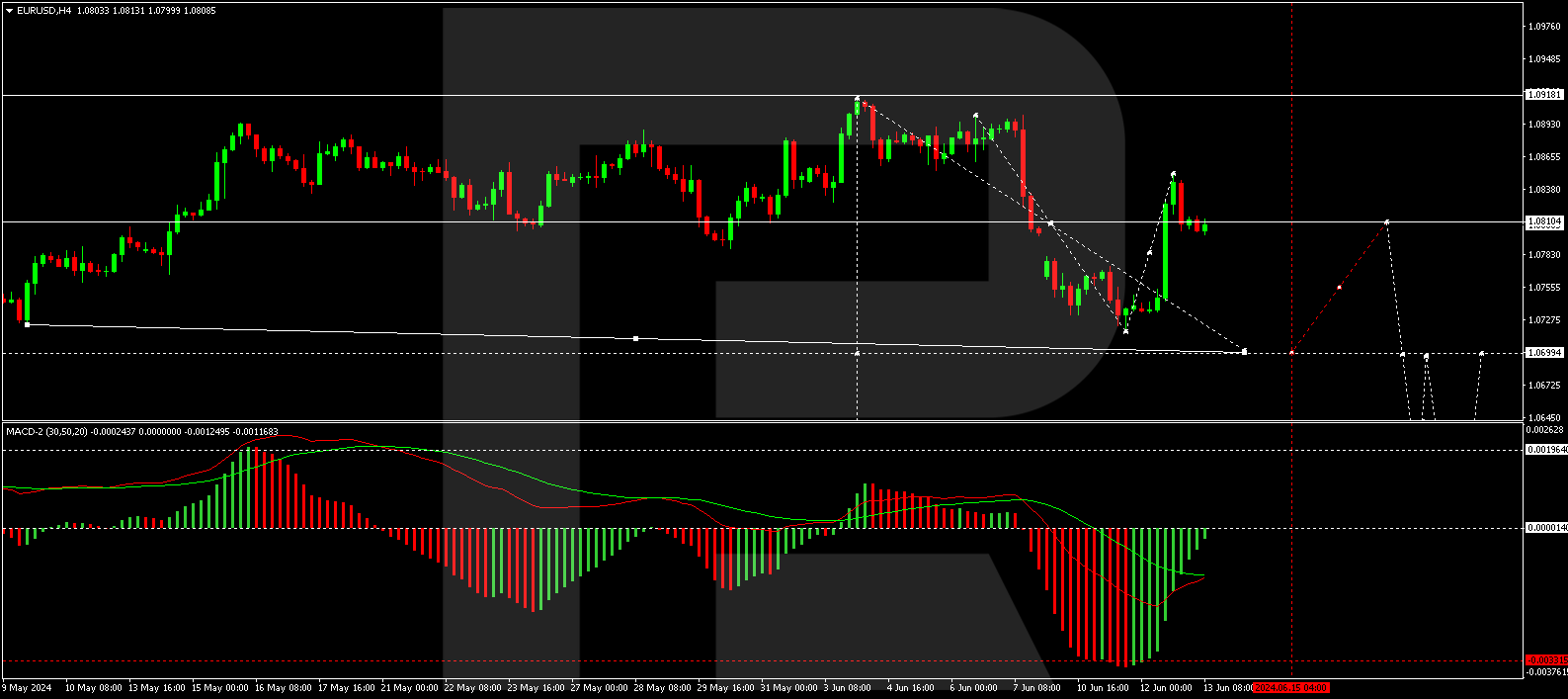
The EUR/USD pair rose to 1.0707 on Wednesday, driven by increased local risk appetite and the belief that the currency was significantly oversold against the US dollar. This resurgence indicates a temporary rebalancing in the currency market.
In the US, newly published statistics provide fodder for economic analysis. Sales of new homes in March showed a robust increase of 8.8% month-on-month, climbing to 693,000 from February’s 637,000, surpassing expectations. The year-on-year comparison also reflected strength with an 8.3% increase. Additionally, the weighted average price of a sold house in the US rose to USD 524.8 thousand from USD 488.6 thousand in February, pointing to a market that is still vibrant despite elevated interest rates.
These indicators are inherently pro-inflationary, suggesting that consumer behaviour has adapted well to elevated interest rates. Continued activity in the housing market is likely to sustain inflationary pressures in the US for an extended period. If interest rates were to be lowered, the attractiveness of buying property would increase further, prompting the Federal Reserve to keep higher rates to temper economic overheating.
Despite substantial efforts by the Fed to stabilise price pressures, the US economy shows a high degree of resilience to changed conditions. This adaptability is a mixed blessing, maintaining economic vitality but complicating inflation management.
As long as the Fed keeps interest rates at the current peak of 5.5% per annum, the US dollar will likely retain its strength. Any current weakening of the dollar is seen as a temporary adjustment rather than a trend reversal.
EUR/USD technical analysis
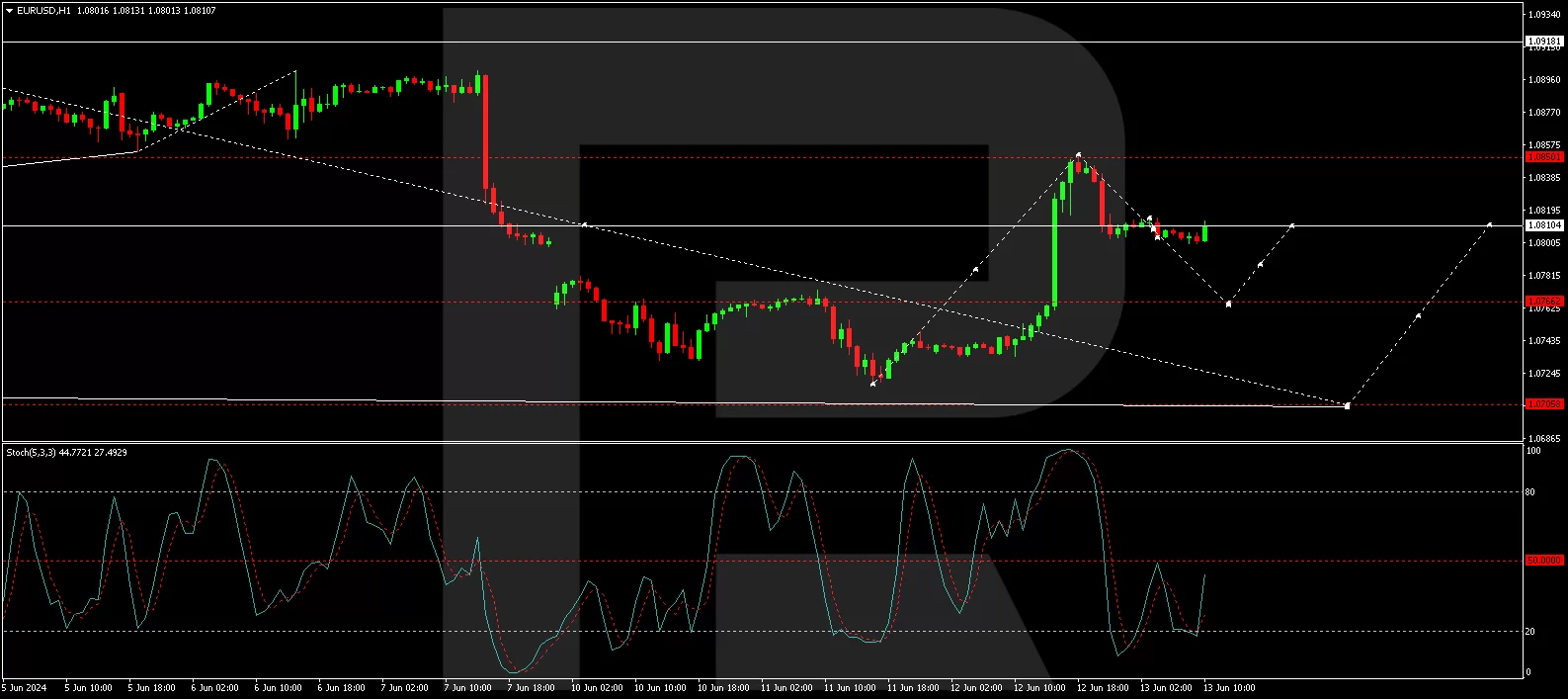
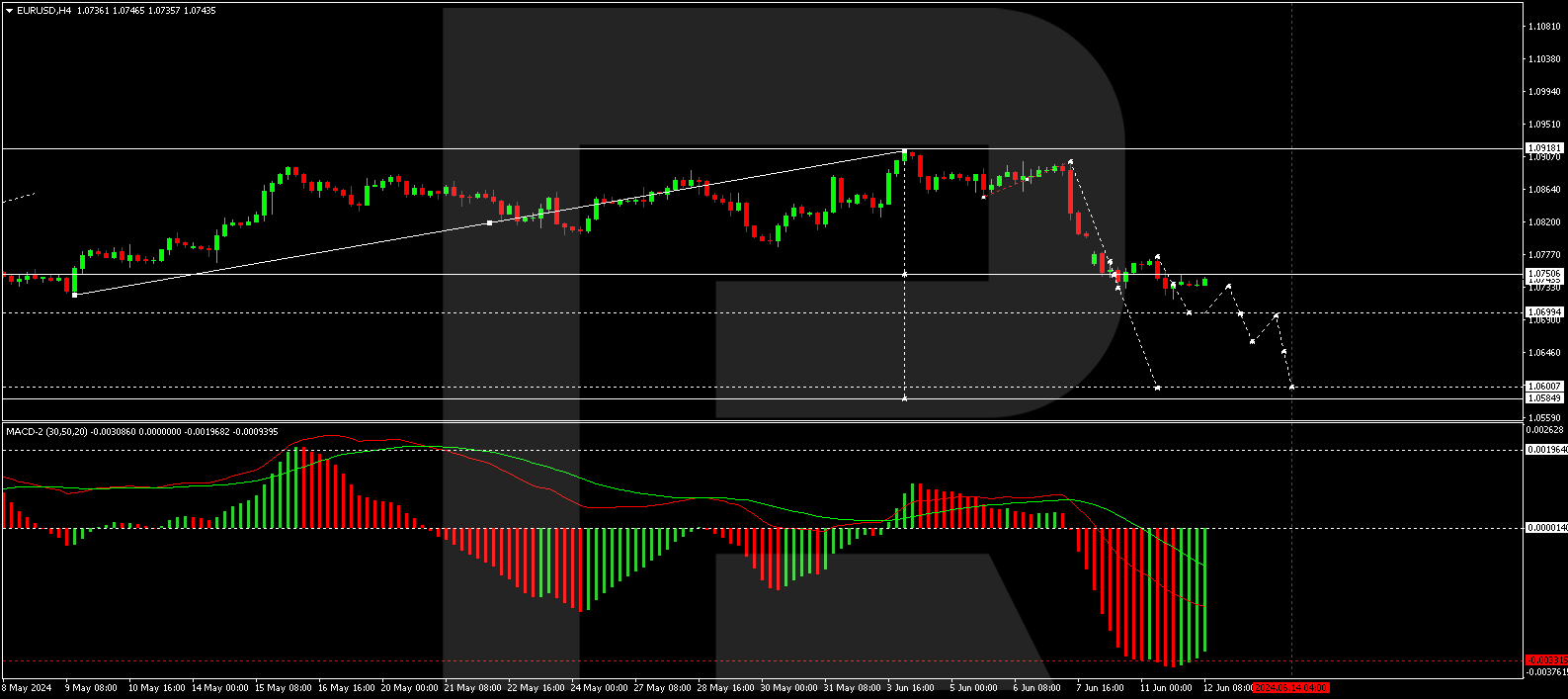
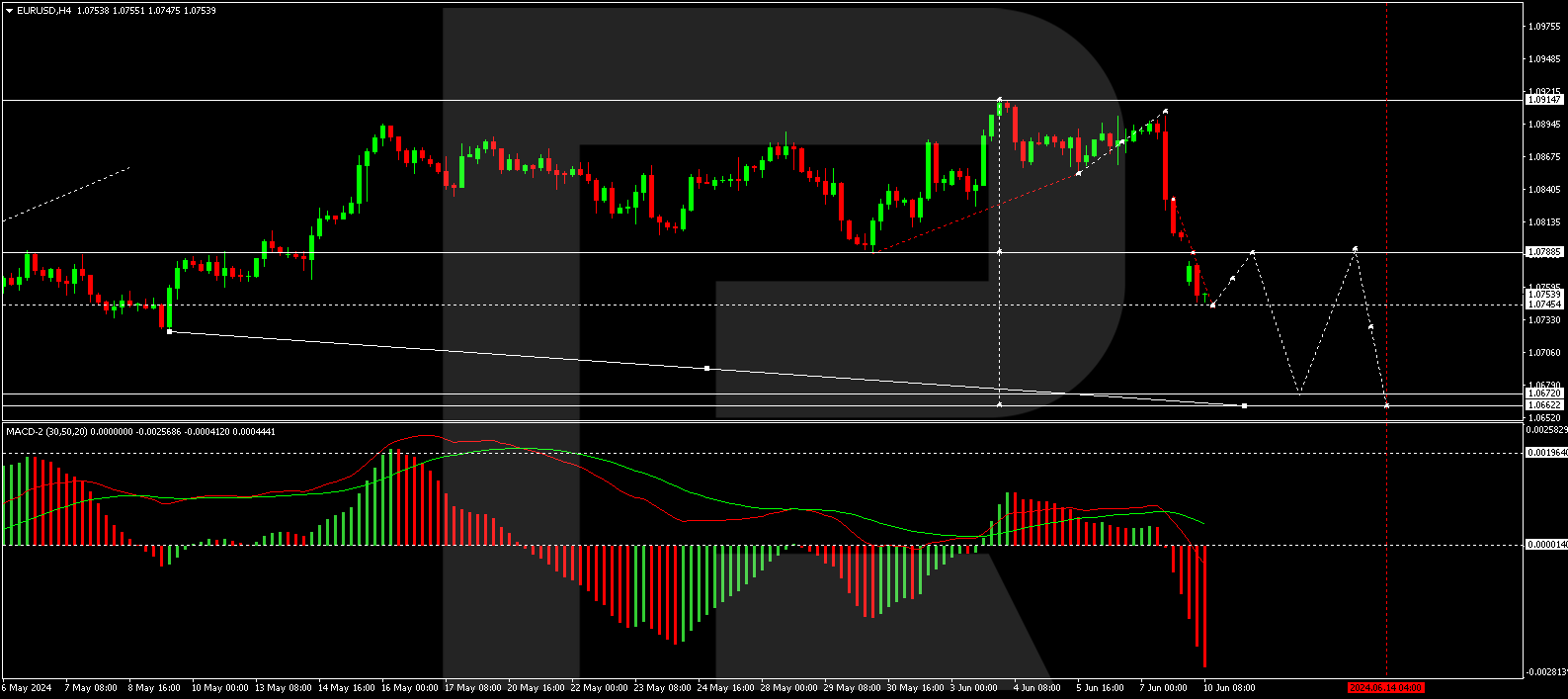
On the H4 chart, the EUR/USD pair formed a consolidation range around 1.0666. A correction to 1.0713 occurred after the market exited the range on the upside. The pair is expected to decline to 1.0660 for a retest from above before potentially developing another growth structure towards 1.0733. The movement from 1.0601 is considered a correction of the last decline wave. After completing this corrective phase, a new downward wave to 1.0585 may begin. This outlook is supported by the MACD indicator, where the signal line is below zero but ascending, while the histograms are at maximums, poised for a decline.
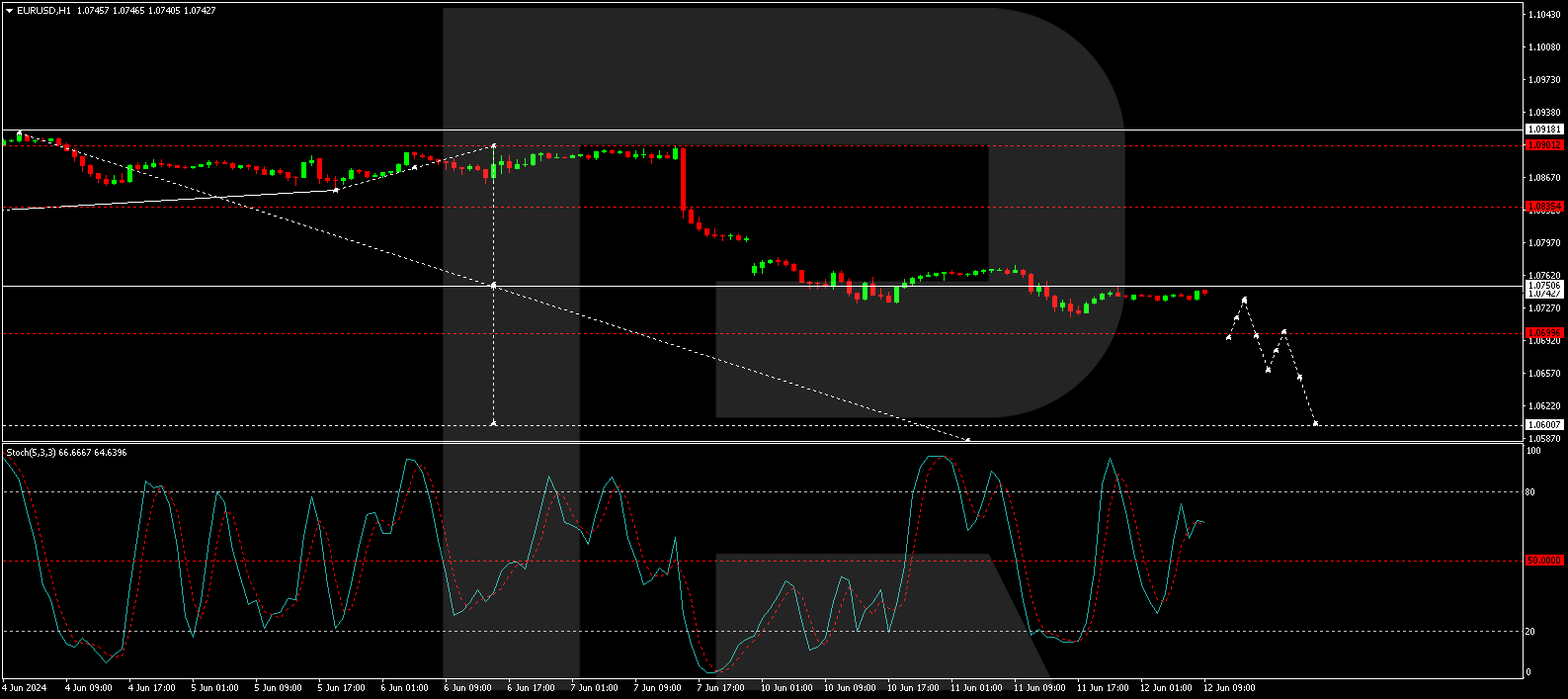
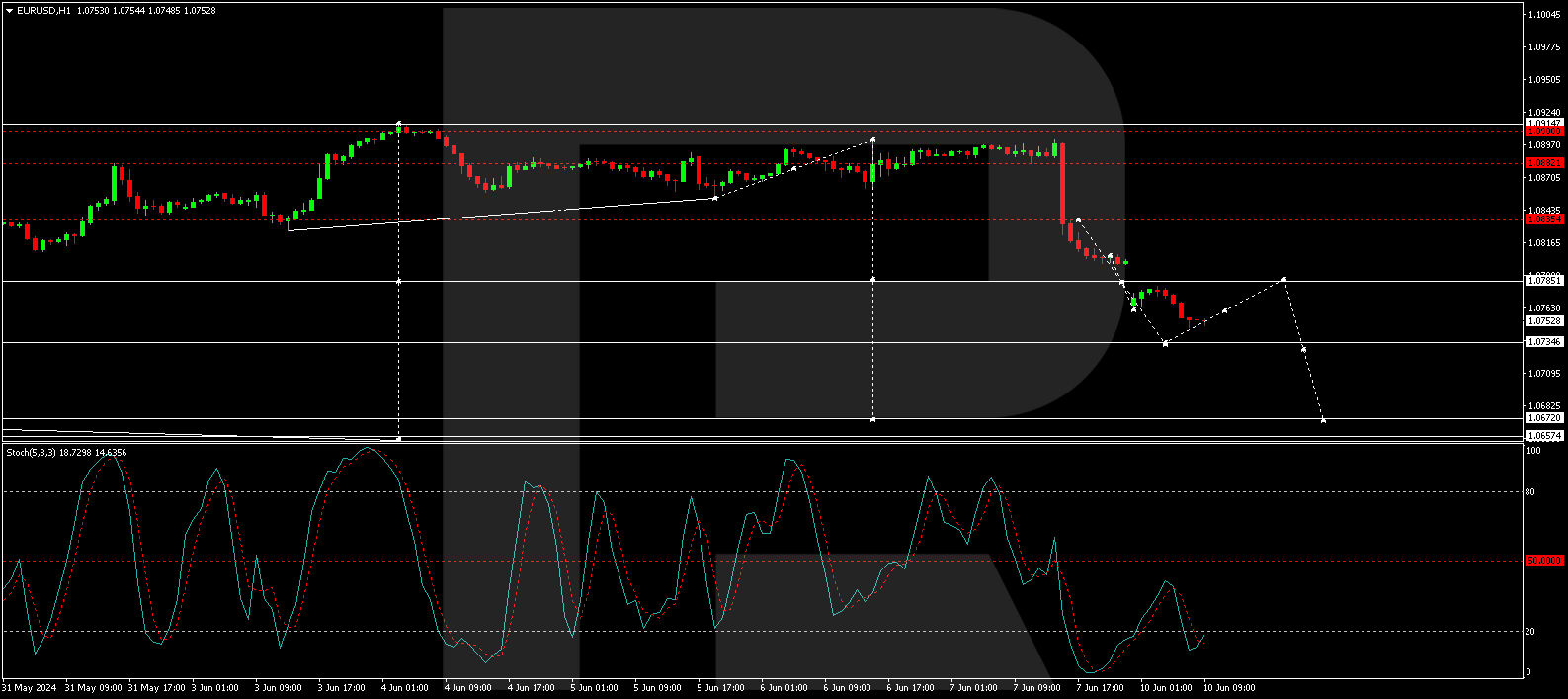
On the H1 chart, after fulfilling the local correction target at 1.0713, a decline to 1.0660 is anticipated. Subsequently, the development of a growth wave to 1.0733, the main correction target, may occur. The Stochastic oscillator, currently below 50, is expected to drop to 20, supporting the potential for further adjustments before any upward movements.
Disclaimer
Any forecasts contained herein are based on the author’s particular opinion. This analysis may not be treated as trading advice. RoboForex bears no responsibility for trading results based on trading recommendations and reviews contained herein.
By JustMarkets
At Monday’s close, the Dow Jones Industrial Average (US30) was up 0.67%, while the S&P 500 Index (US500) added 0.87%. The NASDAQ Technology Index (US100) closed positive 1.11%. The US stock indices rose moderately, with the Dow Jones Industrials Index hitting a 1-week high. Yesterday, reduced geopolitical tensions helped stocks rise, as the exchange of strikes between Iran and Israel may be temporarily halted. Additionally, Nvidia’s (NVDA) 4% gain on Monday helped tech stocks as Nvidia recovered some of the 10% drop from last Friday.
About 180 companies in the S&P 500 (US500), or more than 40% of total capitalization, are scheduled to report earnings this week, including four of the “Magnificent Seven” technology companies: Tesla (TSLA), Alphabet (GOOG), Microsoft (MSFT) and Meta Platforms (META).
Equity markets in Europe mostly went up yesterday. Germany’s DAX (DE40) rose by 0.70%, France’s CAC 40 (FR40) closed up 0.22%, Spain’s IBEX 35 (ES35) jumped by 1.50%, and the UK’s FTSE 100 (UK100) closed positive 1.62%.
The gold price held near $2,300 per ounce on Tuesday, near a three-week low, amid easing fears of widening conflict in the Middle East. Investors scaled back investments in safe-haven assets in favor of riskier ones after Tehran downplayed the significance of a retaliatory Israeli drone strike on Iran aimed at easing tensions.
Turkey, Iraq, Qatar, and the UAE signed a transportation agreement to connect the Persian Gulf to Europe. The memorandum obliges the signatories to create the conditions for the project’s implementation. The project aims to create a 1,200-kilometer road and railroad connecting the Persian Gulf to Turkey via Iraq.
The US approved new sanctions against Iran’s oil sector in the oil market, targeting shippers and refiners of Iranian crude. This led to a slight rise in oil prices on Tuesday. The fundamental and geopolitical situation will keep oil above $80 per barrel in the coming weeks.
Asian markets were predominantly up yesterday. Japan’s Nikkei 225 (JP225) rose by 1.00%, China’s FTSE China A50 (CHA50) decreased by 0.09% for the day, Hong Kong’s Hang Seng (HK50) was up 1.77%, and Australia’s ASX 200 (AU200) was positive 1.08%.
Singapore’s annual inflation rate for March 2024 slowed to 2.7% from 3.4% in the previous month, below market expectations of 3.1%. This is the lowest rate since September 2021, as inflation declined across most sub-indices.
The Australian dollar climbed to $0.645, hitting a one-week high, as investors reacted to April’s solid Purchasing Managers’ Index (PMI) reports. The data showed that private sector growth in Australia increased by the most in 2 years in April as manufacturing activity approached breakeven levels, while service sector activity remained active for the third consecutive month. The latest data supports the view that the Reserve Bank of Australia (RBA) may keep interest rates on hold longer to counter inflationary pressures. Some analysts also suggest that the RBA may raise rates again in the second half of 2024 due to rising activity. Investors are awaiting the country’s inflation data to be released later this week.
The latest PMI data in Japan showed that manufacturing activity was close to stable in April, while service sector activity rose the most in 11 months. Investors look forward to the Bank of Japan’s policy decision later this week. The BOJ is pressured to raise rates again because of steady inflation and a weakening yen. Still, the Central Bank has signaled that it will maintain favorable monetary conditions for some time.
S&P 500 (US500) 5,010.60 +43.37 (+0.87%)
Dow Jones (US30) 38,239.98 +253.58 (+0.67%)
DAX (DE40) 17,860.80 +123.44 (+0.70%)
FTSE 100 (UK100) 8,023.87 +128.02 (+1.62%)
USD Index 106.13 −0.02 (−0.02%)
By JustMarkets
This article reflects a personal opinion and should not be interpreted as an investment advice, and/or offer, and/or a persistent request for carrying out financial transactions, and/or a guarantee, and/or a forecast of future events.
By RoboForex Analytical Department
The AUD/USD pair is experiencing upward momentum for the second consecutive day, reaching a one-week high near 0.6453 on Tuesday. This positive movement comes after a period of rapid decline and is supported by encouraging economic data from Australia.
The latest manufacturing PMI report for April significantly contributed to the Australian dollar’s appreciation. It showed an increase to 49.9 points, up from 47.3 the previous month. This improvement brings the manufacturing sector close to the critical 50.0 threshold, distinguishing between the industry’s growth and contraction. Additionally, the services PMI reported the most robust expansion in the last three months, and the private sector experienced its fastest growth in two years during April.
These robust economic reports not only indicate a resilient economy but also carry pro-inflationary implications. They bolster the outlook that the Reserve Bank of Australia (RBA) may maintain higher interest rates for an extended period to manage inflationary pressures effectively.
Investors will also pay attention to the upcoming release of inflation statistics later in the week, which will provide further insights into the economic factors influencing the RBA’s monetary policy decisions.
Moreover, the Australian dollar’s gains were further supported by a reduction in investor concerns over geopolitical risks in the Middle East, contributing to a more favourable risk environment.
Technical analysis of AUD/USD
On the H4 chart, the AUD/USD pair completed a declining wave to 0.6362. A corrective movement towards 0.6471 is underway. Upon completion of this correction, a continuation of the downward trend towards 0.6300 is anticipated. The MACD indicator supports this bearish outlook despite its signal line being above zero, which typically suggests growth potential.
On the H1 chart, a consolidation range has been formed around 0.6417. A breakout above this range could lead to a rise towards 0.6471. Following this peak, a new downward wave to 0.6363 is expected. Breaking below this level may pave the way to reach 0.6300. The Stochastic oscillator, with its signal line currently below 80 and pointing downwards, confirms this potential downward trajectory.
Disclaimer
Any forecasts contained herein are based on the author’s particular opinion. This analysis may not be treated as trading advice. RoboForex bears no responsibility for trading results based on trading recommendations and reviews contained herein.
By JustMarkets
On Friday, the Dow Jones (US30) Index gained 0.56% (for the week -0.23%), while the S&P 500 (US500) Index fell by 0.88% (for the week -3.54%). The NASDAQ Technology Index (US100) closed negative 2.05% (for the week -6.11%). The S&P 500 (US500) fell to a one-month low, and the NASDAQ (US100) fell to a 2-month low. Weak corporate news and rising geopolitical risks weighed on stocks.
The latest escalation in the Israeli-Iranian conflict (an Israeli drone attack on Isfahan in Iran) caused risk assets to fall sharply across all markets. But Iran later said it had “no immediate plans” to retaliate, hoping to pull both sides back from the brink of full-scale conflict. That helped cushion the decline somewhat at last week’s indices close.
On Friday, Chicago Fed President Goolsbee’s hawkish comments supported the dollar when he said that inflation progress has stalled in 2024. It makes sense to wait and get more clarity before cutting interest rates. So, markets now expect the Central Bank to hold rates steady until September and to make no more than one rate cut this year. That’s an optimistic scenario for the US dollar.
Netflix (NFLX) shares fell more than 8% after the company projected second-quarter revenue below consensus. Demand concerns are weighing on chip stocks after Taiwan Semiconductor Manufacturing Co (TSM), the world’s largest maker of advanced chips, lowered its expectations for semiconductor market growth this year to 2024.
The House of Representatives quickly approved $95 billion in foreign aid for Ukraine, Israel, and other US allies in a rare Saturday session as Democrats and Republicans united after months of stiff resistance from the right over renewed US support to repel a full-scale invasion by Russia.
Recent volatility in the Mexican peso (MXN) caused by rising tensions in the Middle East is no cause for concern over inflation, the governor of the Bank of Mexico (Banxico) said, amid expectations that the central bank will continue to be cautious in its upcoming monetary policy decision. The Mexican peso, considered by many to be a proxy for risk assets, fell the hardest on reports of rising tensions between Israel and Iran, though it later recovered most of that fall. The peso has been the best-performing primary currency over the past 12 months.
Equity markets in Europe were mostly down on Friday. Germany’s DAX (DE40) was down 0.56% (for the week -1.12%), France’s CAC 40 (FR40) closed down 0.01% (for the week -0.36%), Spain’s IBEX 35 (ES35) lost 0.33% (for the week +0.57%), and the UK’s FTSE 100 (UK100) closed positive 0.24% (for the week -1.25%).
On Friday, ECB Governing Council spokesman Simkus said that the Eurozone can afford a less tight monetary policy and that the ECB’s three rate cuts this year align with the baseline. Thus, the European Central Bank intends to change its economic policy stance and cut interest rates soon. According to most ECB voting officials, the likely start date is the next meeting in June.
WTI crude futures fell to $81.5 a barrel on Monday, falling to four-week lows amid easing geopolitical concerns in the Middle East. Iran downplayed apparent Israeli strikes on its territory last week and said it had no plans to retaliate. Nevertheless, investors continued to watch the region. Iran is the third-largest producer in OPEC, and it exports most of its oil to China and other countries outside the US financial system.
Asian markets were mostly up last week. Japan’s Nikkei 225 (JP225) fell by 5.09%, China’s FTSE China A50 (CHA50) was little changed in price for the week, Hong Kong’s Hang Seng (HK50) fell 1.60%, and Australia’s ASX 200 (AU200) was negative 2.84%.
In China, the central bank kept the one-year and five-year lending rates at 3.45% and 3.95%, respectively, amid stronger-than-expected first-quarter GDP data and efforts to stabilize the yuan. On the other hand, both rates are at historic lows, reflecting the government’s concerted efforts to stimulate economic growth amid challenges in the real estate sector and persistent deflationary pressures. Investors now await the Bank of Japan’s policy decision later this week.
In Australia, markets are betting that the central bank will start cutting rates later this year. Investors digested data that the country’s unemployment rate rose to 3.8% in March from 3.7% in February, confirming a dovish view on the country’s monetary policy. Investors now await Australia’s first-quarter and March inflation data this week for more clarity on the policy path.
S&P 500 (US500) 4,967.23 −43.89 (−0.88%)
Dow Jones (US30) 37,986.40 +211.02 (+0.56%)
DAX (DE40) 17,737.36 −100.04 (−0.56%)
FTSE 100 (UK100) 7,895.85 +18.80 (+0.24%)
USD Index 106.12 −0.03 (−0.03%)
By JustMarkets
This article reflects a personal opinion and should not be interpreted as an investment advice, and/or offer, and/or a persistent request for carrying out financial transactions, and/or a guarantee, and/or a forecast of future events.
Home | Blog | COT | Market News | Opinions & Analysis | Economic Calendar | Email Subscribe | Contact Us | Apps Help
Risk Disclosure: Foreign Currency trading and trading on margin carries a high level of risk and can result in loss of part or all of your investment. Due to the level of risk and market volatility, Foreign Currency trading may not be suitable for all investors and you should not invest money you cannot afford to lose. Before deciding to invest in the foreign currency exchange market you should carefully consider your investment objectives, level of experience, and risk appetite. You should be aware of all the risks associated with foreign currency exchange trading, and seek advice from an independent financial advisor should you have any doubts.
All information and opinions on this website are for general informational purposes only and do not constitute investment advice.