Archive for Economics & Fundamentals – Page 13

Markets gripped by geopolitics, uncertainty & Trump

By ForexTime 

  • Risk-heavy week leaves investors on edge
  • Yen is the worst-performing G10 currency week-to-date
  • US Supreme Court scheduled to rule on Trump’s tariffs
  • Gold & Silver rally to fresh all-time highs
  • Bitcoin hits highest level in two-months above $96,000

It’s been a tense week defined by geopolitics, concerns over the Fed’s independence, and anticipation ahead of a US Supreme Court ruling on Trump’s tariffs.

This messy mashup of high-risk events has created a smog of uncertainty, with investors adopting a defensive approach toward risk.

Nevertheless, European shares clawed back some losses this morning after a modest dip in the previous session, but US equity futures are pointing to a shaky open.

Geopolitical flashpoints across the globe, concerning Iran and Ukraine, have dominated headlines, boosting the appetite for safe-haven assets. On top of this, Trump recently threatened 25% tariffs on countries trading with Iran, and as expected, China has threatened to retaliate.

On the trade front, the US Supreme Court is scheduled to rule on the legality of Trump’s tariffs. Prediction markets are giving the administration only a 30% chance of prevailing.

(Source Polymarkets)

Equity markets may experience a relief rally if the court strikes down the tariffs, but gains may be capped by trade policy uncertainty.

In the FX space, the Yen is the worst-performing G10 currency this week amid rising political uncertainty in Japan. The USDJPY is slowly approaching the danger zone, with speculation growing over a potential intervention. With the Fed expected to cut rates twice in 2026 and the BoJ seen hiking twice, this divergence in monetary policy could signal a selloff down the road.

Looking at earnings, JPMorgan’s fourth-quarter results topped consensus on most measures. However, investment-banking fees dropped by 5%, missing the bank’s own guidance. In result, JPMorgan shares tanked over 4% – taking 2026 gains to negative 3.5%. This rocky start to earnings dragged the us equities lower, with the Dow Jones ending almost 1% lower.

Commodities have been a bright spot this week, with both gold and silver hitting fresh all-time highs. Silver has gained over 25% since the start of 2026, adding to the whopping 148% rally seen last year. Gold is lagging, rising 7% this month thanks to heightened geopolitical risk, fears over the Fed’s independence, and bets around lower US rates.

With silver hitting $91.55 this morning, could $100 be on the cards by the end of the month? Prices are trading less than 10% away from this level as of writing.

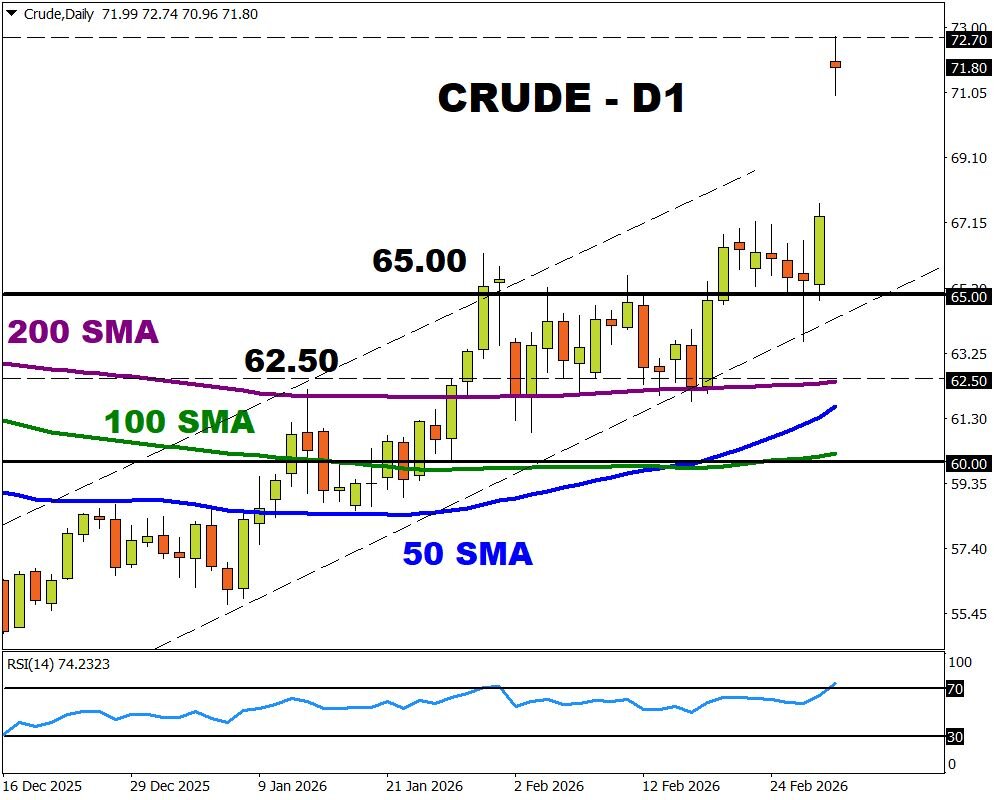
Oil prices slipped on Wednesday after seeing their biggest four-day rally in more than six months. The negative developments in Iran and possible intervention by the United States have fuelled concerns over supply disruptions impacting around 3.3 million bpd of the country’s output. While oil benchmarks are pushing higher, concerns over ongoing oversupply may limit upside gains.

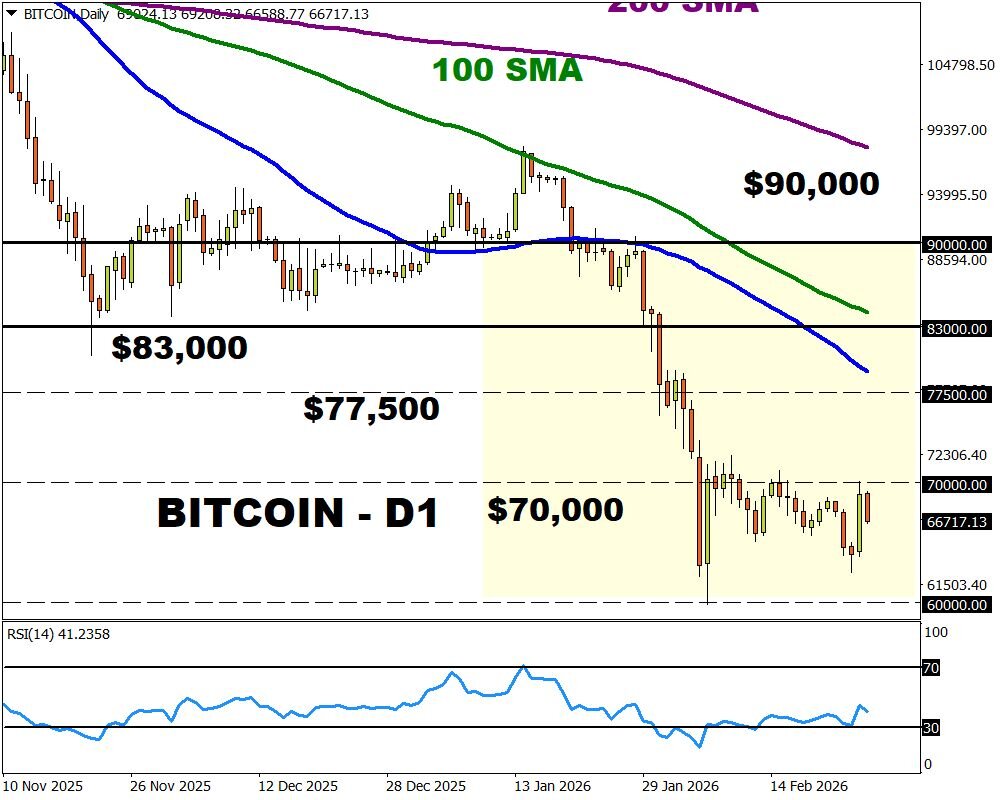
In the crypto space, Bitcoin jumped to a two-month high as prices punched above $96,000. The “OG” crypto drew strength from the latest US inflation report, which rose less than expected, while concerns over the Fed’s independence offered further support. Bitcoin is up over 8% year-to-date, with the next bullish level of interest at $100,000.

Trump


Forex-Time-LogoArticle by ForexTime


ForexTime Ltd (FXTM) is an award winning international online forex broker regulated by CySEC 185/12 www.forextime.com

Trump announces 25% tariffs on countries trading with Iran

By JustMarkets 

The US stock indices managed to recover from an early-morning sell-off on Monday, ending the session higher and setting new records. By the end of Monday, the Dow Jones Index (US30) rose by 0.17%, the S&P 500 (US500) gained 0.16%, and the Nasdaq Technology Index (US100) closed up 0.08%. Initial pressure on the market was linked to reports of a criminal investigation launched against Fed Chair Jerome Powell, which heightened concerns regarding political pressure on the regulator. The banking sector was most notably affected, with shares of major players declining amid discussions of an initiative to cap credit card interest rates. Nevertheless, overall investor sentiment remained positive due to expectations of strong Q4 corporate earnings, primarily from major banks, and hopes for relatively soft inflation data, which supported risk appetite.

On Monday evening, Trump announced the imposition of 25% tariffs on countries trading with Iran, following repeated warnings of potential military action amid mass protests in the country.

The Mexican peso strengthened to 17.91 per dollar, reaching its highest level since July 2024, driven by a combination of external and internal factors. Support for the peso was provided by the Bank of Mexico’s balanced stance. Following the December rate cut, the regulator emphasized that future decisions depend on macroeconomic data, noting that underlying inflationary pressures persist and require caution. The absence of signals regarding rapid policy easing helped stabilize market expectations and maintain the appeal of the Mexican currency.

European equity markets mostly rose on Monday. The German DAX (DE40) climbed 0.57%, the French CAC 40 (FR40) closed down 0.04%, the Spanish IBEX 35 (ES35) rose by 0.14%, and the British FTSE 100 (UK100) finished the day up 0.16%. Large companies in the industrial and financial services sectors continued their positive momentum: Siemens, Airbus, and Deutsche Bank gained between 1% and 4%. Technology stocks also largely rose, despite ongoing skepticism regarding the fundamental profitability of artificial intelligence amid rising capital expenditures.

The Swiss franc (CHF) is holding near highs seen in the early 2010s due to increased demand for safe-haven currencies. The franc was supported by escalating geopolitical tensions, including harsh mutual warnings between the US and Iran, as well as growing uncertainty surrounding international security following discussions of a potential increase in NATO’s military presence in Greenland. On the domestic front, Switzerland’s macroeconomic situation remains stable: recent inflation data reinforced expectations that the SNB will keep rates at zero in the near term, which did not prevent the franc from maintaining its status as one of the key defensive assets.

WTI crude oil prices recovered intraday losses on Monday to close higher. Prices were supported by escalating tensions in Iran, where large-scale protests increased the risk of disruptions in oil production and exports, despite government claims of a stabilizing situation. Potential strikes and threats to energy infrastructure maintain high market volatility. Supply concerns partially offset expectations of increased production in Venezuela following political changes and preparations for the resumption of exports.

US natural gas prices (XNG) rose by more than 5%, climbing above $3.35 per MMBtu and recovering from a drop to multi-week lows. The recovery was triggered by updated weather prognoses indicating the approach of colder temperatures. Market balance factors also provided support. Gas exports remain near record levels, while domestic production edged down from its December peak. An additional positive signal was a deeper-than-seasonal-norm reduction in inventories, which strengthened investor confidence in the improving fundamental market picture.

Asian markets traded higher yesterday. The Japanese Nikkei 225 (JP225) rose by 1.61%, the Chinese FTSE China A50 (CHA50) gained 0.11%, Hong Kong’s Hang Seng (HK50) climbed 1.44%, and the Australian ASX 200 (AU200) posted a positive result of 0.48%.

In Australia, the Westpac–Melbourne Institute Consumer Sentiment Index fell by 1.7% month-on-month in January 2026 to a three-month low of 92.9 points, amid persistent concerns over interest rate hikes. Commodity-related stocks led the gains, as prices surged due to tensions surrounding Iran and concerns over the Federal Reserve’s independence.

S&P 500 (US500) 6,977.27 +10.99 (+0.16%)

Dow Jones (US30) 49,590.20 +86.13 (+0.17%)

DAX (DE40) 25,405.34 +143.70 (+0.57%)

FTSE 100 (UK100) 10,140.70 +16.10 (+0.16%)

USD Index 98.90 -0.24% (-0.24%)

News feed for: 2026.01.13

  • Australia Westpac Consumer Confidence (m/m) at 01:30 (GMT+2); – AUD (MED)
  • US Consumer Price Index (m/m) at 15:30 (GMT+2); – USD, XAU (HIGH)
  • US Home Sales (m/m) at 17:00 (GMT+2). – USD (MED)

By JustMarkets


This article reflects a personal opinion and should not be interpreted as an investment advice, and/or offer, and/or a persistent request for carrying out financial transactions, and/or a guarantee, and/or a forecast of future events.

Stock indices and precious metals continue to rise

By JustMarkets 

The US stock market ended Friday at historic highs as investors reacted to December labor market data and anticipated signals from the Fed. By Friday’s close, the Dow Jones Index (US30) rose by 0.48% (+2.12% for the week). The S&P 500 (US500) gained 0.65% (+1.07% for the week). The technology-heavy Nasdaq (US100) closed higher by 1.02% (+1.16% for the week). Major indices posted steady gains as employment statistics pointed to a slowdown in job creation, while the unemployment rate simultaneously fell to 4.4%, which was perceived as a sign of a resilient but not overheated labor market. Technology companies, primarily semiconductor manufacturers, made the largest contribution to the rally, boosted by optimism surrounding the development of artificial intelligence.

The Canadian dollar (CAD) weakened to the 1.39 level against the US dollar, hitting a one-month low amid a deteriorating labor market, which lowered expectations for further policy tightening by the Bank of Canada. December statistics showed a sharp rise in unemployment to 6.8%, driven by an increase in labor force participation, while moderate employment growth and slowing wage growth indicated a cooling of domestic inflationary pressure and confirmed the sufficient restrictiveness of current rates. Additional pressure on the currency came from the commodities market. Combined, these factors narrowed interest rate differential expectations and strengthened the currency’s downward trend.

The Mexican peso (MXN) traded near the 18 per dollar level, remaining under pressure from a strong US dollar that offset domestic support factors. The published Banxico minutes confirmed a balanced and cautious approach to monetary policy: following the expected rate cut to 7.0%, the regulator emphasized its reliance on incoming data and a lack of intention to accelerate the easing cycle, which served to stabilize market expectations.
European equity markets mostly rose on Friday. The German DAX (DE40) climbed 0.53% (+2.35% for the week), the French CAC 40 (FR40) closed up 1.44% (+1.39% for the week), the Spanish IBEX 35 (ES35) edged down 0.03% (+0.46% for the week), and the British FTSE 100 (UK100) finished up 0.80% (+1.74% for the week).

On Friday, silver (XAG) surged nearly 4% to $80 per ounce, as the slowdown in US job growth bolstered expectations for Fed rate cuts, triggering renewed demand for precious metals after the easing of pressure from indices. This shift reduced pressure on real yields and stimulated the opening of new long positions and the closing of short positions in silver futures.

Platinum prices (XPT) jumped by more than 3%, approaching the $2370 per ounce mark, amid a general rise in precious metal prices and investors’ desire to return to recent record levels. The market was supported by increased demand for safe-haven assets due to intensifying geopolitical tensions. Platinum continued its move toward the December high, maintaining support from both defensive demand and an increased willingness among investors to use precious metals as a risk hedge.

WTI crude oil rose 2.3% on Friday, continuing its recovery from recent declines and ending the week with a 1.5% gain. Prices were supported by escalating geopolitical tensions, primarily due to intensifying protests in Iran, accompanied by reports of casualties and internet shutdowns, raising concerns over potential supply disruptions from a key producer. An additional factor was the ongoing uncertainty surrounding Venezuelan oil exports following tightened US oversight. The geopolitical premium in prices increased, which was also reflected in heightened demand for bullish options, although rising global inventories and threats of oversupply continued to limit further upside potential.

US natural gas (XNG) prices fell sharply by over 5%, dropping below $3.25 per MMBtu, the lowest level since mid-October. The primary downward pressure came from updated weather prognoses indicating a warmer-than-usual winter across much of the country, weakening heating demand expectations for the coming weeks. The weather factor outweighed positive signals from the market balance. LNG exports remain at record levels, and gas deliveries to export terminals in January stayed near historic highs despite a moderate decline in production following the December peak.

Asian markets traded with mixed results last week. The Japanese Nikkei 225 (JP225) rose by 1.82%, the Chinese FTSE China A50 (CHA50) gained 0.58%, Hong Kong’s Hang Seng (HK50) fell by 0.49%, and the Australian ASX 200 (AU200) showed a negative 5-day result of 0.09%.

The offshore yuan strengthened to 6.97 per dollar, hitting a nearly three-year high amid growing confidence in the currency and a notable decrease in hedging costs. Forward contracts allow for locking in rates below the current spot, reflecting the lowest implicit costs since 2022 and stimulating demand for currency risk management instruments. The yuan’s appreciation, exceeding 5% over the past year, is fueled by a combination of external and internal factors, including a weakening dollar, China’s sustained trade surplus, an improving macroeconomic backdrop, and capital inflows ahead of the Lunar New Year. Stronger daily fixings by the People’s Bank of China (PBoC) have also reinforced market expectations that the regulator is not hindering further appreciation of the national currency.

S&P 500 (US500) 6,966.28 +44.82 (+0.65%)

Dow Jones (US30) 49,504.07 +237.96 (+0.48%)

DAX (DE40) 25,261.64 +134.18 (+0.53%)

FTSE 100 (UK100) 10,124.60 +79.91 (+0.80%)

USD Index 99.14 +0.20% (+0.21%)

By JustMarkets


This article reflects a personal opinion and should not be interpreted as an investment advice, and/or offer, and/or a persistent request for carrying out financial transactions, and/or a guarantee, and/or a forecast of future events.

WTI oil prices rose by more than 4%. Silver dropped by 5%

By JustMarkets 

By the end of Thursday, the Dow Jones Index (US30) rose by 0.55%. The S&P 500 Index (US500) gained 0.01%. The Technology Index Nasdaq (US100) closed lower by 0.44%. Investors shifted their focus from technology stocks toward cyclical and defense companies amid ongoing uncertainty regarding the scale and timing of Federal Reserve policy easing, as well as increased attention to the efficiency of capital expenditures in the field of artificial intelligence. The market was pressured by shares of large technology companies focused on AI infrastructure: Nvidia lost 2.2%, Broadcom 3.2%, Micron 3.7%, and Oracle 1.7%. At the same time, the defense sector demonstrated steady growth following President Donald Trump’s statements regarding plans to increase the US military budget to 1.5 trillion dollars in 2027.

According to a consumer expectations survey by the Federal Reserve Bank of New York, median one-year-ahead inflation expectations in the US rose to 3.4% in December 2025, compared to 3.2% in each of the two previous months. In contrast, inflation expectations for three and five years remained unchanged at 3.0%, indicating stable long-term inflation projections. Uncertainty regarding inflation increased across all horizons, pointing to a growing divergence in expectations regarding future prices.

The German DAX (DE40) rose by 0.02%, the French CAC 40 (FR40) closed with an increase of 0.12%, the Spanish Index IBEX 35 (ES35) gained 0.33%, and the British FTSE 100 (UK100) closed lower at 0.04%. European stock markets declined moderately on Thursday, taking a pause after hitting record levels earlier in the week. Sentiment was pressured by uncertainty surrounding the future course of ECB policy and persistent geopolitical risks.

On Thursday, WTI crude oil prices rose by more than 4% and exceeded the 58 dollars per barrel mark, recovering losses from the two previous sessions as the market reassessed short-term supply risks amid a more resilient physical balance in the US. Prices were supported by data showing a 3.8 million barrel reduction in US oil inventories, which significantly exceeded expectations and refuted prognoses of inventory growth, easing concerns about a global supply glut. The rise in quotes was partially limited by an increase in inventories at Cushing, as well as a sharp rise in gasoline and distillate inventories; however, weaker US labor market data supported demand expectations by strengthening the outlook for a more dovish Fed policy.

On Thursday, silver dropped by 5% to 74 dollars per ounce, marking its second consecutive session of decline as investors took a wait-and-see approach ahead of the annual rebalancing of key commodity indices. This is expected to lead to the sale of billions of dollars worth of futures contracts in the coming days. Additional pressure on quotes was exerted by mechanical selling from passive funds adjusting their portfolios to new index weights following silver’s exceptional rally last year. These technical factors intensified the short-term decline despite persistent fundamental demand drivers.

Natural gas prices in the US decreased by approximately 3% to 3.42 dollars/MMBtu amid a moderate increase in daily production and expectations of mild weather for the next two weeks, which is anticipated to limit heating demand below seasonal norms. Although prognosists allow for a brief cold snap and a temporary increase in consumption at the end of January, overall temperatures across the country are predicted to remain above normal values until January 23. Meanwhile, EIA data showed higher actual demand: for the week ending January 2, 114 billion cubic feet of gas were withdrawn from storage, which significantly exceeds both last year’s figure and the five-year average.

Asian markets mostly declined yesterday. The Japanese Nikkei 225 (JP225) fell by 1.63%, the Chinese FTSE China A50 (CHA50) dropped by 1.45%, the Hong Kong Hang Seng (HK50) decreased by 1.17%, and the Australian ASX 200 (AU200) showed a positive result of 0.29% yesterday. On Friday, Chinese stock markets resumed their growth. In December, consumer price inflation accelerated to its highest level in nearly three years, primarily due to rising food prices, which partially masked persistent underlying deflationary pressure in the economy. At the same time, producer prices declined for the 39th consecutive month, although the rate of decline was the smallest since August 2024, which was perceived by the market as a sign of stabilization.

The unemployment rate in Malaysia in November 2025 decreased to 2.9% compared to 3.2% a year earlier, reaching its lowest level since November 2014. The number of unemployed persons decreased by 4.3% in annual terms to 518.4 thousand, marking a nearly six-year low, while employment rose by 3.1% and reached a record 17.09 million people.

S&P 500 (US500) 6,921.46 +0.53 (+0.01%)

Dow Jones (US30) 49,266.11 +270.03 (+0.55%)

DAX (DE40) 25,127.46 +5.20 (+0.021%)

FTSE 100 (UK100) 10,044.69 −3.52 (−0.04%)

USD Index 98.88 +0.19% (+0.19%)

News feed for: 2026.01.09

  • China Consumer Price Index (m/m) at 03:30 (GMT+2); – CHA50, HK50 (MED)
  • China Producer Price Index (m/m) at 03:30 (GMT+2); – CHA50, HK50 (MED)
  • Norway Inflation Rate (m/m) at 09:00 (GMT+2); – NOK (MED)
  • Eurozone Retail Sales (m/m) at 12:00 (GMT+2); – EUR (MED)
  • Canada Unemployment Rate (m/m) at 15:30 (GMT+2); – CAD (HIGH)
  • US Non-Farm Payrolls (m/m) at 15:30 (GMT+2); – USD, XAU (HIGH)
  • US Average Hourly Earnings (m/m) at 15:30 (GMT+2); – USD, XAU (HIGH)
  • US Unemployment Rate (m/m) at 15:30 (GMT+2); – USD, XAU (HIGH)
  • US Michigan Consumer Sentiment (m/m) at 17:00 (GMT+2). – USD (MED)

By JustMarkets


This article reflects a personal opinion and should not be interpreted as an investment advice, and/or offer, and/or a persistent request for carrying out financial transactions, and/or a guarantee, and/or a forecast of future events.

Mixed market sentiment amid geopolitical tensions and economic cooling

By JustMarkets 

On Wednesday, the US stocks closed mixed as investors balanced contradictory macroeconomic signals against expectations of a possible Fed policy easing. By the end of Wednesday, the Dow Jones Index (US30) decreased by 0.94%. The S&P 500 Index (US500) dropped by 0.34%. The Technology Index Nasdaq (US100) closed higher by 0.16%. JOLTS data indicated a notable contraction in job openings and a cooling of labor demand, while the ADP report showed a moderate recovery in private sector hiring, and the growth in the ISM Services PMI confirmed a scenario of a slowing but still resilient economy. At the corporate level, the market was pressured by a decline in banking stocks: JPMorgan Chase and Bank of America shares fell by more than 2%, which was one of the reasons for the Dow’s weakness. At the same time, the technology sector appeared more stable – NVIDIA rose by 1%, and Alphabet gained 2.5%, supporting the Nasdaq.

European stock indices ended Wednesday’s trading with slight declines, taking a pause after the recent strong rally amid the ongoing reassessment of the ECB’s monetary policy prospects. The German DAX (DE40) rose by 0.92%, the French CAC 40 (FR40) closed with a decrease of 0.04%, the Spanish Index IBEX 35 (ES35) fell by 0.29%, and the British FTSE 100 (UK100) closed at negative 0.74%. Recent data showed that Eurozone inflation slowed to 2% in December, as expected, while core inflation fell more than projections, strengthening expectations that the ECB may proceed with rate cuts during the year. Defense companies were among the top gainers amid rising geopolitical tensions related to White House statements regarding Greenland and the US seizure of a Russian tanker that violated the blockade of Venezuela.

On Thursday, silver dropped below the $77 per ounce mark, continuing a correction after the recent rapid rally to historic highs. The weakening of bullish momentum coincided with a strengthening of the US dollar and mixed macroeconomic signals from the US, which failed to provide markets with a clear direction regarding the Federal Reserve’s next steps. Currently, market participants estimate the probability of the Fed holding rates steady at the next meeting at nearly 90%, although expectations for several rate cuts in the second half of the year remain priced in. This combination is curbing demand for precious metals in the short term, increasing investors’ inclination to take profits after the sharp rise in prices.

The US natural gas prices rose by more than 4% to $3.50 per MMBtu, rebounding from a 10-week low reached on January 6, amid a reduction in production and a revision of weather prognoses toward colder conditions and increased heating demand. Average production in the Lower 48 states in early January decreased to 109.0 billion cubic feet per day from the December record of 109.7 billion. Additional market support came from a rise in LNG exports: deliveries to the eight largest export terminals increased to a record 18.6 billion cubic feet per day.

Asian markets traded without a unified dynamic yesterday. The Japanese Nikkei 225 (JP225) fell by 1.06%, the Chinese FTSE China A50 (CHA50) rose by 0.45%, the Hong Kong Hang Seng (HK50) decreased by 0.94%, and the Australian ASX 200 (AU200) showed a positive result of 0.15%. At the start of Thursday’s trading, Hong Kong stocks declined by 1.4%, continuing a fall for the second consecutive session. Pressure was intensified by profit-taking after the market reached a seven-week high earlier in the week, as well as growing caution ahead of Friday’s release of December inflation data from China (CPI and PPI). An additional negative factor was the geopolitical tension following Beijing’s decision to ban the export of dual-use goods to Japan in response to Prime Minister Sanae Takaichi’s statements on Taiwan. However, the decline was partially mitigated by optimistic expectations from Goldman Sachs, which predicts steady growth for Chinese stocks this year due to increased corporate profits related to the development of artificial intelligence.

The New Zealand dollar held near the $0.576 mark, remaining in a sideways range throughout the week as investors balance external risks and domestic monetary expectations. On the external side, sentiment continues to be pressured by geopolitical uncertainty: political events in Venezuela following the removal of Nicolás Maduro, as well as rising tension between China and Japan, maintain a cautious approach to risk currencies, including the NZD. In the domestic context, the position of the Reserve Bank of New Zealand (RBNZ) remains a key anchor for the exchange rate. The regulator signaled that the easing cycle, in which rates were cut by 225 bps, likely concluded last year, while also dispelling expectations for an imminent policy tightening.

S&P 500 (US500) 6,920.93 −23.89 (−0.34%)

Dow Jones (US30) 48,996.08 −466.00 (−0.94%)

DAX (DE40) 25,122.26 +230.06 (+0.92%)

FTSE 100 (UK100) 10,048.21 −74.52 (−0.74%)

USD Index 98.75 +0.17% (+0.17%)

News feed for: 2026.01.08

  • Japan Average Cash Earnings (m/m) at 01:30 (GMT+2); – JPY (MED)
  • Sweden Inflation Rate (m/m) at 09:00 (GMT+2); – SWE (MED)
  • Switzerland Consumer Price Index (m/m) at 09:30 (GMT+2); – CHF (HIGH)
  • Eurozone Producer Price Index (m/m) at 12:00 (GMT+2); – EUR (MED)
  • Eurozone Unemployment Rate (m/m) at 12:00 (GMT+2); – EUR (MED)
  • Mexican Inflation Rate (m/m) at 14:00 (GMT+2); – MXN (MED)
  • Canada Trade Balance (m/m) at 15:30 (GMT+2); – CAD (MED)
  • US Trade Balance (m/m) at 15:30 (GMT+2); – USD (MED)
  • US Initial Jobless Claims (w/w) at 15:30 (GMT+2); – USD (MED)
  • US Natural Gas Storage (w/w) at 17:30 (GMT+2). – XNG (HIGH)

By JustMarkets


This article reflects a personal opinion and should not be interpreted as an investment advice, and/or offer, and/or a persistent request for carrying out financial transactions, and/or a guarantee, and/or a forecast of future events.

Dollar steady ahead of U.S. JOLTS, Oil benchmarks sink

By ForexTime 

  • Risk assets waver on geopolitical risk
  • USDInd steady ahead of JOLT & Friday’s NFP
  • Oil benchmarks ↓ 1% amid global glut fears
  • Bitcoin hovers above $90,000
  • Precious metals wait for fresh directional catalyst 

A sense of caution gripped markets on Wednesday as investors monitored global geopolitical developments.

Equities were headed for their first negative day of 2026, while oil benchmarks slipped after Washington moved to reinforce greater control over Venezuela’s oil industry.

In the FX space, the dollar held steady while precious metals slipped ahead of key US data.

All eyes will be on the U.S. Jolts data on Thursday and NFP report on Friday.

  • Market Expectation: Job openings for November are forecast at 7.7 million, nearly unchanged from October

Surprise Potential:

  • If openings are higher than expected this may reinforce hopes around a hot jobs markets. Rate cuts get pushed further out, likely pushing the USDInd higher.
  • If openings are lower than expected- signals the labor market is softening. Rate-cut bets increase, likely pulling the USDInd lower.

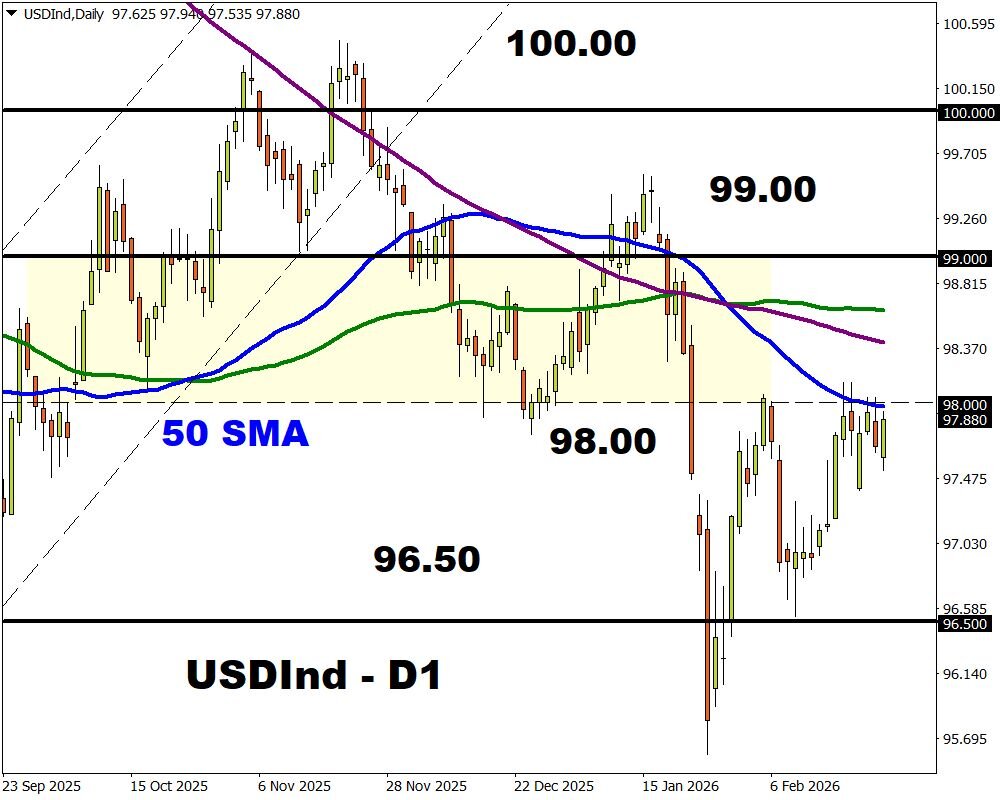
Looking at the charts, the USDInd remains in a range with support at 98.00 and resistance at 99.00.

Brent wobbles above $60

Oil extended losses after Washington moved to reinforce more control over Venezuela’s oil industry.

Trump announced that the U.S. would take and sell 30 to 50 million barrels of “sanctioned oil” currently stuck in tankers and storage. This immediate supply increase weighed on the global commodity, already being pressured by oversupply fears.

Brent is down roughly 0.5% as of writing with support at $60. Weakness below this level may open a path toward $58.50.

Bitcoin waits for fresh catalyst

A graph of stock market AI-generated content may be incorrect.

The CMC Crypto Fear & Greed Index currently sits at 42 (Neutral), reflecting an improvement in sentiment versus recent weeks.

Historically, similar readings have coincided with periods of consolidation and medium-term stabilization.

A fresh directional catalyst may be needed to trigger the next big move.

Major crypto market developments:

Bitcoin has climbed to a three-week high despite the mounting political uncertainty after the US moved to oust Venezuela’s president.

These gains seem to be fuelled by crypto-native firms and an absence of selling by groups including Bitcoin miners and big investment funds.

Nevertheless, prices have been stuck in a tight trading range for weeks with Bitcoin ending 2025 over 6% lower – its first negative year since 2022. In the near term, the trend could be bullish given that investors pumped a whopping $471 million into the 12 US-listed Bitcoin ETFs on January 2, 2026.

Bullish Scenario: A solid daily close above $95,000 may open a path toward $100,000 and higher.

Bearish Scenario: Weakness below $90,000 could see a decline toward $87.500 and $83,000.

Source: https://www.fxtm.com/en/market-analysis/dollar-steady-ahead-of-jolts-oil-benchmarks-sink/


Forex-Time-LogoArticle by ForexTime


ForexTime Ltd (FXTM) is an award winning international online forex broker regulated by CySEC 185/12 www.forextime.com

Stock indices continue to grow despite geopolitics

By JustMarkets

Following Monday’s results, the Dow Jones Index (US30) rose by 1.23%. The S&P 500 Index (US500) gained 0.64%. The Technology Index Nasdaq (US100) closed higher by 0.69%. On Monday, the rally in the US stock market continued, with the energy and financial sectors providing the main support to the indices. Investors perceived the US arrest of the Venezuelan leader more as a potential opportunity for future investment in the country’s oil industry than as a factor for immediate geopolitical escalation. Chevron shares jumped more than 5% due to expectations of the company expanding its presence in Venezuela, while oil refining companies rose on prospects of increased heavy oil supply.

The Canadian dollar (CAD) weakened to 1.38 per US dollar, losing some of its recent gains after reaching its highest level since July. Pressure on the currency intensified due to the strengthening of the dollar caused by the geopolitical situation, specifically the US seizure of the President of Venezuela, which triggered an increase in demand for the dollar and raised concerns about the prospects for Venezuelan oil. Speculation regarding production and an uneven market reaction strengthened doubts about the stability of oil prices, which is a key support factor for the Canadian currency. Furthermore, the slowdown in economic growth in Canada in Q4 weakened the arguments for tight monetary policy, and global oil market expectations for 2026 suggest a supply surplus and moderate demand, further limiting the potential for the Canadian dollar to strengthen.

The Mexican peso (MXN) weakened to a level above 18 per US dollar, as the sharp rise in the dollar caused by US military actions in Venezuela outweighed domestic currency support factors. The increased demand for the dollar triggered pressure on regional currencies, and the easing of the Bank of Mexico policy in late December reduced the yield advantage that had previously supported the peso after strong growth in 2025. This pressure is partially offset by an improvement in the external position and a transition to a current account surplus in mid-2025, which creates a floor for a sharper devaluation.
Equity markets in Europe mostly rose on Monday. The German DAX (DE40) rose by 1.34%, the French CAC 40 (FR40) closed with an increase of 0.20%, the Spanish Index IBEX 35 (ES35) gained 0.70%, and the British FTSE 100 (UK100) closed at a positive 0.54%.

The Swiss franc (CHF) weakened to a level of around 0.795 per US dollar, remaining close to highs not seen since 2011, amid rising geopolitical tensions following the US capture of Venezuelan President Nicolás Maduro. Uncertainty in the global economy related to US trade policy, as well as expectations of further interest rate cuts, intensified demand for safe-haven assets despite the weakness of the franc. Investors remain focused on the upcoming domestic inflation data to be released on January 8: a 0.1% decrease in the Consumer Price Index is expected in monthly terms, with a growth of only 0.1% in annual terms. In December, the Swiss National Bank kept rates at 0%, and most analysts do not expect changes in 2026.

Palladium prices (XPD) rose above 1720 dollars per ounce, approaching a weekly high, amid rising geopolitical tensions in Venezuela following the US capture of President Nicolás Maduro and his wife. The events stimulated demand for precious metals as haven assets and also supported palladium due to its key role in catalytic converters for gasoline engines. Demand is also supported by expectations of the EU easing the ban on internal combustion engines by 2035 while maintaining strict environmental standards, and the launch of palladium futures in China, which increases liquidity and provides hedging opportunities.
Asian markets rose in synchronization yesterday. The Japanese Nikkei 225 (JP225) rose by 2.97%, the Chinese FTSE China A50 (CHA50) gained 1.57%, the Hong Kong Hang Seng (HK50) added 0.03%, and the Australian ASX 200 (AU200) showed a positive result of 0.01%.

On Tuesday, the Australian dollar (AUD) strengthened to 0.672 dollars, remaining near its highest level since October 2024, amid an improvement in global risk sentiment and a weakening of the US dollar. Investor attention is shifting to the publication of Australian inflation data for November, which is expected on Wednesday and is projected to show a moderate slowdown in price pressure. This data could prove key for the next steps of the Reserve Bank of Australia, which had previously allowed for the possibility of a rate hike if inflationary risks persist.

S&P 500 (US500) 6,902.05 +43.58 (+0.64%)

Dow Jones (US30) 48,977.18 +594.79 (+1.23%)

DAX (DE40) 24,868.69 +329.35 (+1.34%)

FTSE 100 (UK100) 10,004.57 +53.43 (+0.54%)

USD Index 98.33 -0.10% (-0.10%)

News feed for: 2026.01.06

  • Australia Services PMI (m/m) at 02:30 (GMT+2); – AUD (MED)
  • Eurozone Services PMI (m/m) at 11:00 (GMT+2); – EUR (MED)
  • UK Services PMI (m/m) at 11:30 (GMT+2); – GBP (MED)
  • German Consumer Price Index (m/m) at 15:00 (GMT+2); – EUR (MED)
  • US Services PMI (m/m) at 16:45 (GMT+2). – USD (MED)

By JustMarkets


This article reflects a personal opinion and should not be interpreted as an investment advice, and/or offer, and/or a persistent request for carrying out financial transactions, and/or a guarantee, and/or a forecast of future events.

Stock indices continue to grow despite geopolitics

By JustMarkets 

Following Monday’s results, the Dow Jones Index (US30) rose by 1.23%. The S&P 500 Index (US500) gained 0.64%. The Technology Index Nasdaq (US100) closed higher by 0.69%. On Monday, the rally in the US stock market continued, with the energy and financial sectors providing the main support to the indices. Investors perceived the US arrest of the Venezuelan leader more as a potential opportunity for future investment in the country’s oil industry than as a factor for immediate geopolitical escalation. Chevron shares jumped more than 5% due to expectations of the company expanding its presence in Venezuela, while oil refining companies rose on prospects of increased heavy oil supply.

The Canadian dollar (CAD) weakened to 1.38 per US dollar, losing some of its recent gains after reaching its highest level since July. Pressure on the currency intensified due to the strengthening of the dollar caused by the geopolitical situation, specifically the US seizure of the President of Venezuela, which triggered an increase in demand for the dollar and raised concerns about the prospects for Venezuelan oil. Speculation regarding production and an uneven market reaction strengthened doubts about the stability of oil prices, which is a key support factor for the Canadian currency. Furthermore, the slowdown in economic growth in Canada in Q4 weakened the arguments for tight monetary policy, and global oil market expectations for 2026 suggest a supply surplus and moderate demand, further limiting the potential for the Canadian dollar to strengthen.

The Mexican peso (MXN) weakened to a level above 18 per US dollar, as the sharp rise in the dollar caused by US military actions in Venezuela outweighed domestic currency support factors. The increased demand for the dollar triggered pressure on regional currencies, and the easing of the Bank of Mexico policy in late December reduced the yield advantage that had previously supported the peso after strong growth in 2025. This pressure is partially offset by an improvement in the external position and a transition to a current account surplus in mid-2025, which creates a floor for a sharper devaluation.
Equity markets in Europe mostly rose on Monday. The German DAX (DE40) rose by 1.34%, the French CAC 40 (FR40) closed with an increase of 0.20%, the Spanish Index IBEX 35 (ES35) gained 0.70%, and the British FTSE 100 (UK100) closed at a positive 0.54%.

The Swiss franc (CHF) weakened to a level of around 0.795 per US dollar, remaining close to highs not seen since 2011, amid rising geopolitical tensions following the US capture of Venezuelan President Nicolás Maduro. Uncertainty in the global economy related to US trade policy, as well as expectations of further interest rate cuts, intensified demand for safe-haven assets despite the weakness of the franc. Investors remain focused on the upcoming domestic inflation data to be released on January 8: a 0.1% decrease in the Consumer Price Index is expected in monthly terms, with a growth of only 0.1% in annual terms. In December, the Swiss National Bank kept rates at 0%, and most analysts do not expect changes in 2026.

Palladium prices (XPD) rose above 1720 dollars per ounce, approaching a weekly high, amid rising geopolitical tensions in Venezuela following the US capture of President Nicolás Maduro and his wife. The events stimulated demand for precious metals as haven assets and also supported palladium due to its key role in catalytic converters for gasoline engines. Demand is also supported by expectations of the EU easing the ban on internal combustion engines by 2035 while maintaining strict environmental standards, and the launch of palladium futures in China, which increases liquidity and provides hedging opportunities.
Asian markets rose in synchronization yesterday. The Japanese Nikkei 225 (JP225) rose by 2.97%, the Chinese FTSE China A50 (CHA50) gained 1.57%, the Hong Kong Hang Seng (HK50) added 0.03%, and the Australian ASX 200 (AU200) showed a positive result of 0.01%.

On Tuesday, the Australian dollar (AUD) strengthened to 0.672 dollars, remaining near its highest level since October 2024, amid an improvement in global risk sentiment and a weakening of the US dollar. Investor attention is shifting to the publication of Australian inflation data for November, which is expected on Wednesday and is projected to show a moderate slowdown in price pressure. This data could prove key for the next steps of the Reserve Bank of Australia, which had previously allowed for the possibility of a rate hike if inflationary risks persist.

S&P 500 (US500) 6,902.05 +43.58 (+0.64%)

Dow Jones (US30) 48,977.18 +594.79 (+1.23%)

DAX (DE40) 24,868.69 +329.35 (+1.34%)

FTSE 100 (UK100) 10,004.57 +53.43 (+0.54%)

USD Index 98.33 -0.10% (-0.10%)

News feed for: 2026.01.06

  • Australia Services PMI (m/m) at 02:30 (GMT+2); – AUD (MED)
  • Eurozone Services PMI (m/m) at 11:00 (GMT+2); – EUR (MED)
  • UK Services PMI (m/m) at 11:30 (GMT+2); – GBP (MED)
  • German Consumer Price Index (m/m) at 15:00 (GMT+2); – EUR (MED)
  • US Services PMI (m/m) at 16:45 (GMT+2). – USD (MED)

By JustMarkets


This article reflects a personal opinion and should not be interpreted as an investment advice, and/or offer, and/or a persistent request for carrying out financial transactions, and/or a guarantee, and/or a forecast of future events.

Can the US ‘run’ Venezuela? Military force can topple a dictator, but it cannot create political authority or legitimacy

By Monica Duffy Toft, Tufts University 

An image circulated over media the weekend of Jan. 3 and 4 was meant to convey dominance: Venezuela’s president, Nicolás Maduro, blindfolded and handcuffed aboard a U.S. naval vessel. Shortly after the operation that seized Maduro and his wife, Cilia Flores, President Donald Trump announced that the United States would now “run” Venezuela until a “safe, proper and judicious transition” could be arranged.

The Trump administration’s move is not an aberration; it reflects a broader trend in U.S. foreign policy I described here some six years ago as “America the Bully.”

Washington increasingly relies on coercion – military, economic and political – not only to deter adversaries but to compel compliance from weaker nations. This may deliver short-term obedience, but it is counterproductive as a strategy for building durable power, which depends on legitimacy and capacity. When coercion is applied to governance, it can harden resistance, narrow diplomatic options and transform local political failures into contests of national pride.

There is no dispute that Maduro’s dictatorship led to Venezuela’s catastrophic collapse. Under his rule, Venezuela’s economy imploded, democratic institutions were hollowed out, criminal networks fused with the state, and millions fled the country – many for the United States.

But removing a leader – even a brutal and incompetent one – is not the same as advancing a legitimate political order.

A man wearing sweatpants and a sweatshirt, in handcuffs and blindfolded.
An image of Venezuelan President Nicolás Maduro after his capture, posted by President Donald Trump and reposted by the White House.
White House X.com account

Force doesn’t equal legitimacy

By declaring its intent to govern Venezuela, the United States is creating a governance trap of its own making – one in which external force is mistakenly treated as a substitute for domestic legitimacy.

I write as a scholar of international security, civil wars and U.S. foreign policy, and as author of “Dying by the Sword,” which examines why states repeatedly reach for military solutions, and why such interventions rarely produce durable peace.

The core finding of that research is straightforward: Force can topple rulers, but it cannot generate political authority.

When violence and what I have described elsewhere as “kinetic diplomacy” become a substitute for full spectrum action – which includes diplomacy, economics and what the late political scientist Joseph Nye called “soft power” – it tends to deepen instability rather than resolve it.

More force, less statecraft

The Venezuela episode reflects this broader shift in how the United States uses its power. My co-author Sidita Kushi and I document this by analyzing detailed data from the new Military Intervention Project. We show that since the end of the Cold War, the United States has sharply increased the frequency of military interventions while systematically underinvesting in diplomacy and other tools of statecraft.

One striking feature of the trends we uncover is that if Americans tended to justify excessive military intervention during the Cold War between 1945–1989 due to the perception that the Soviet Union was an existential threat, what we would expect is far fewer military interventions following the Soviet Union’s 1991 collapse. That has not happened.

Even more striking, the mission profile has changed. Interventions that once aimed at short-term stabilization now routinely expand into prolonged governance and security management, as they did in both Iraq after 2003 and Afghanistan after 2001.

This pattern is reinforced by institutional imbalance. In 2026, for every single dollar the United States invests in the diplomatic “scalpel” of the State Department to prevent conflict, it allocates US$28 to the military “hammer” of the Department of Defense, effectively ensuring that force becomes a first rather than last resort.

“Kinetic diplomacy” – in the Venezuela case, regime change by force – becomes the default not because it is more effective, but because it is the only tool of statecraft immediately available. On Jan. 4, Trump told the Atlantic magazine that if Delcy Rodríguez, the acting leader of Venezuela, “doesn’t do what’s right, she is going to pay a very big price, probably bigger than Maduro.”

Lessons from Afghanistan, Iraq and Libya

The consequences of this imbalance are visible across the past quarter-century.

In Afghanistan, the U.S.-led attempt to engineer authority built on external force alone proved brittle by its very nature. The U.S. had invaded Afghanistan in 2001 to topple the Taliban regime, deemed responsible for the 9/11 terrorist attacks. But the subsequent two decades of foreign-backed state-building collapsed almost instantly once U.S. forces withdrew in 2021. No amount of reconstruction spending could compensate for the absence of a political order rooted in domestic consent.

Following the invasion by the U.S. and surrender of Iraq’s armed forces in 2003, both the U.S. Department of State and the Department of Defense proposed plans for Iraq’s transition to a stable democratic nation. President George W. Bush gave the nod to the Defense Department’s plan.

That plan, unlike the State Department’s, ignored key cultural, social and historical conditions. Instead, it proposed an approach that assumed a credible threat to use coercion, supplemented by private contractors, would prove sufficient to lead to a rapid and effective transition to a democratic Iraq. The United States became responsible not only for security, but also for electricity, water, jobs and political reconciliation – tasks no foreign power can perform without becoming, as the United States did, an object of resistance.

Libya demonstrated a different failure mode. There, intervention by a U.S.-backed NATO force in 2011 and removal of dictator Moammar Gadhafi and his regime were not followed by governance at all. The result was civil war, fragmentation, militia rule and a prolonged struggle over sovereignty and economic development that continues today.

The common thread across all three cases is hubris: the belief that American management – either limited or oppressive – could replace political legitimacy.

Venezuela’s infrastructure is already in ruins. If the United States assumes responsibility for governance, it will be blamed for every blackout, every food shortage and every bureaucratic failure. The liberator will quickly become the occupier.

Costs of ‘running’ a country

Taking on governance in Venezuela would also carry broader strategic costs, even if those costs are not the primary reason the strategy would fail.

A military attack followed by foreign administration is a combination that undermines the principles of sovereignty and nonintervention that underpin the international order the United States claims to support. It complicates alliance diplomacy by forcing partners to reconcile U.S. actions with the very rules they are trying to defend elsewhere.

The United States has historically been strongest when it anchored an open sphere built on collaboration with allies, shared rules and voluntary alignment. Launching a military operation and then assuming responsibility for governance shifts Washington toward a closed, coercive model of power – one that relies on force to establish authority and is prohibitively costly to sustain over time.

These signals are read not only in Berlin, London and Paris. They are watched closely in Taipei, Tokyo and Seoul — and just as carefully in Beijing and Moscow.

When the United States attacks a sovereign state and then claims the right to administer it, it weakens its ability to contest rival arguments that force alone, rather than legitimacy, determines political authority.

Beijing needs only to point to U.S. behavior to argue that great powers rule as they please where they can – an argument that can justify the takeover of Taiwan. Moscow, likewise, can cite such precedent to justify the use of force in its near abroad and not just in Ukraine.

This matters in practice, not theory. The more the United States normalizes unilateral governance, the easier it becomes for rivals to dismiss American appeals to sovereignty as selective and self-serving, and the more difficult it becomes for allies to justify their ties to the U.S.

That erosion of credibility does not produce dramatic rupture, but it steadily narrows the space for cooperation over time and the advancement of U.S. interests and capabilities.

Force is fast. Legitimacy is slow. But legitimacy is the only currency that buys durable peace and stability – both of which remain enduring U.S. interests.

If Washington governs by force in Venezuela, it will repeat the failures of Afghanistan, Iraq and Libya: Power can topple regimes, but it cannot create political authority. Outside rule invites resistance, not stability.The Conversation

About the Author:

Monica Duffy Toft, Professor of International Politics and Director of the Center for Strategic Studies, The Fletcher School, Tufts University

This article is republished from The Conversation under a Creative Commons license. Read the original article.

Investor attention is focused on the commodities market following the situation in Venezuela

By JustMarkets 

The US stocks concluded the first session of the year with gains following volatile trading. At the close of Friday, the Dow Jones (US30) rose by 0.66% (-0.68% for the week). The S&P 500 (US500) gained 0.19% (-1.12% for the week). The technology-heavy Nasdaq (US100) closed lower by 0.17% (-1.89% for the week). The market was supported by a sharp rise in chipmakers following positive corporate news: Nvidia shares rose 2%, Micron gained 10%, and Intel added 7%. Additional drivers included news of the planned IPO of Baidu’s chip division in Hong Kong and rating upgrades for ASML by several asset managers. At the same time, shares of major AI software developers came under pressure: Microsoft, Meta, Amazon, and Palantir declined by 2–5%, reflecting concerns over the return on investment in AI. Tesla lost 2.5% after failing to meet its delivery targets for the fourth quarter.

Equity markets in Europe mostly rose on Friday. The German DAX (DE40) rose by 0.20% (+1.02% for the week), the French CAC 40 (FR40) closed with an increase of 0.56% (+1.06% for the week), the Spanish IBEX 35 (ES35) gained 1.07% (+2.02% for the week), and the British FTSE 100 (UK100) closed up 0.20% (+0.63% for the week).

On Monday, silver appreciated by nearly 4%, rising to around $76 per ounce and continuing the growth of the previous session. The increase in quotes followed the US strikes on Venezuela and the arrest of President Nicolas Maduro over the weekend, which sharply heightened geopolitical risks and triggered a surge in demand for safe-haven assets. President Donald Trump stated on Saturday that the US would “manage” Venezuela until a proper political transition occurs.
WTI crude oil prices dropped below $57 per barrel as investors assessed the consequences of the US strike on Venezuela and the capture of President Nicolas Maduro. Market attention is centered on the potential impact of these events on regional oil supplies, given that Venezuela possesses the world’s largest proven hydrocarbon reserves. At the same time, a number of analysts believe that short-term disruptions will be limited, as Venezuela’s current production is less than 1 million barrels per day – less than 1% of global production.

The US natural gas prices declined by more than 3%, falling to around $3.48 per MMBtu and hitting new lows since late October. Pressure on quotes was exerted by weather prognoses indicating abnormally warm weather in the coming weeks.

Asian markets traded mixed last week. The Japanese Nikkei 225 (JP225) fell by 0.27%, the Chinese FTSE China A50 (CHA50) dropped 0.94%, the Hong Kong Hang Seng (HK50) gained 2.17%, and the Australian ASX 200 (AU200) showed a negative result of 0.64% over the 5-day period.
The New Zealand dollar weakened to the $0.576 area, remaining near a two-week low amid a reassessment of the Reserve Bank of New Zealand’s (RBNZ) monetary policy outlook. The regulator signaled that the easing cycle, in which rates were cut by a total of 225 bps, has likely concluded, while simultaneously cooling expectations for an imminent policy tightening. Comments from RBNZ Governor Anne Breman reinforced this signal, indicating that in the absence of unexpected economic shocks, rates could remain unchanged for an extended period.

On Monday, the Australian dollar fell below the $0.668 level, continuing the decline that began last week amid deteriorating global sentiment due to renewed geopolitical tensions. The currency, sensitive to commodity market dynamics and widely used as an indicator of global risk appetite, came under pressure following the US capture of Venezuelan President Nicolas Maduro.

The offshore yuan weakened slightly below the 6.98 mark per dollar but remained near its highest levels since May 2023 as investors analyzed fresh PMI data for signals on the state of China’s economy. A private survey showed that the composite PMI remained in the growth zone for the seventh consecutive month, although the expansion rate in the services sector slowed to a six-month low. Meanwhile, official statistics published earlier indicated an improvement in the overall picture: the composite PMI rose to a six-month high, manufacturing activity unexpectedly returned to growth, and the services index reached a four-month peak.

S&P 500 (US500) 6,858.47 +12.97 (+0.19%)

Dow Jones (US30) 48,382.39 +319.10 (+0.66%)

DAX (DE40) 24,539.34 +48.93 (+0.20%)

FTSE 100 (UK100 9,951.14 +19.76 (+0.20%)

USD Index 98.43 +0.11% (+0.11%)

News feed for: 2026.01.05

  • Japan Manufacturing PMI (m/m) at 02:30 (GMT+2); – JPY (MED)
  • China RatingDog Services PMI (m/m) at 03:45 (GMT+2); – CHA50, HK50 (MED)
  • Switzerland Retail Sales (m/m) at 08:30 (GMT+2); – CHF (MED)
  • US ISM Manufacturing PMI (m/m) at 17:00 (GMT+2). – USD (MED)

By JustMarkets


This article reflects a personal opinion and should not be interpreted as an investment advice, and/or offer, and/or a persistent request for carrying out financial transactions, and/or a guarantee, and/or a forecast of future events.