Archive for Economics & Fundamentals – Page 106

The Bank of Japan maintained all monetary policy settings. META boosted the tech sector

By JustMarkets

The Nasdaq Technology Index led a rally on Wall Street Thursday as a strong report from parent company Facebook (META) outweighed concerns about slowing US economic growth. As the stock market closed yesterday, the Dow Jones Index (US30) increased by 1.57%, and the S&P 500 Index (US500) added 1.96%. The NASDAQ Technology Index (US100) jumped by 2.43%.

Meta stock soared more than 13% yesterday, hitting its highest in more than a year after the company reported quarterly earnings above estimates and CEO Mark Zuckerberg said artificial intelligence is driving traffic to Facebook and Instagram and boosting ad sales. First-quarter earnings expectations have improved sharply, with analysts forecasting a 2.4% year-over-year drop in S&P 500 companies’ earnings, compared with a 5.1% decline forecast at the start of the reporting season.

The US economic growth slowed more than expected in the first quarter of 2023. GDP data for the quarter showed growth of 1.1% compared to the forecast of 2.0%. The slowdown in GDP growth largely reflected weak inventory investment. Housing investment recorded its eighth consecutive quarterly decline, although the rate of decline slowed considerably from October through December. But the labor market remains resilient. Jobless claims came in at 230,000, less than the projected 247,000.

Equity markets in Europe were mostly up on Thursday. German DAX (DE30) gained 0.03%, French CAC 40 (FR40) added 0.23%, Spanish IBEX 35 (ES35) increased by 0.16%, and British FTSE 100 (UK100) closed yesterday down by 0.27%.

The ECB meeting will be held next week, and the main question is which rate hike the Central Bank of Europe will choose. At the moment, analysts are leaning towards 0.25%. However, it is worth realizing that the probability may change due to the new incoming data. A number of GDP and inflation statistics will be released in Europe today, and the Eurozone core inflation report will be released two days before the meeting next week. Any signs of solid inflation, especially the core indicator, will raise the odds of a 0.5% rate hike at the May meeting.

European commercial real estate investment has fallen to its lowest level in 11 years. Higher interest rates and the economic outlook spook investors. A recent JP Morgan investor survey cited commercial real estate as the most likely cause of the next financial crisis.

Oil prices stabilized Thursday, offsetting some losses from the previous session after OPEC+ indicated it saw no need to cut production further.

Asian markets were also mostly on the rise yesterday. Japan’s Nikkei 225 (JP225) gained 0.15%, China’s FTSE China A50 (CHA50) increased by 1.09%, Hong Kong’s Hang Seng (HK50) gained 0.42%, India’s NIFTY 50 (IND50) added 0.57%, and Australia’s S&P/ASX 200 (AU200) closed negative 0.32%.

Argentina is planning a sharp rate hike to 91% to stop the peso’s decline. Since Argentina’s inflation rate is above 100%, its Central Bank raised its rate last week by 300 basis points to 81%. Argentina, a major global supplier of grain and beef, is struggling with inflation, which topped 104% in March, with analysts predicting that prices will rise about 110-130% this year.

The Chinese yuan is slowly but surely being accepted for more international payments, which analysts say could set the stage for a trading system that runs parallel to the dominant US dollar. In March, there were more cross-border transactions with China in yuan than in dollars, and Argentina said it aims to pay for Chinese goods in yuan rather than dollars regularly.

The Bank of Japan left the interest rate unchanged and also did not change its yield curve control policy and is considering a comprehensive review of past monetary policy easing decisions. The policy report indicates that the abrupt move to roll back quantitative easing could create huge problems for Japan’s regional banks and exacerbate global market conditions. Tokyo’s consumer price index inflation rose more than expected in April, returning to 40-year highs. On an annualized basis, the core CPI rose to 3.5% from 3.2%. Japan’s unemployment rate rose from 2.6% to 2.8%.

S&P 500 (F) (US500) 4,135.35 +79.36 (+1.96%)

Dow Jones (US30)33,826.16 +524.29 (+1.57%)

DAX (DE40) 15,800.45 +4.72 (+0.03%)

FTSE 100 (UK100) 7,831.58 −21.06 (−0.27%)

USD Index 101.52 +0.05 +0.05%

Important events for today:
  • – Japan Tokyo Core CPI (m/m) at 02:30 (GMT+3);
  • – Japan Unemployment Rate (m/m) at 02:30 (GMT+3);
  • – Japan Industrial Production (m/m) at 02:50 (GMT+3);
  • – Japan Retail Sales (m/m) at 02:50 (GMT+3);
  • – Australia Producer Price Index (q/q) at 04:30 (GMT+3);
  • – Japan BoJ Monetary Policy Statement at 06:00 (GMT+3);
  • – Japan BoJ Interest Rate Decision at 06:00 (GMT+3);
  • – Japan BoJ Outlook Report at 06:00 (GMT+3);
  • – Japan BoJ Press Conference at 08:00 (GMT+3);
  • – French GDP (q/q) at 08:30 (GMT+3);
  • – French Consumer Price Index (m/m) at 09:45 (GMT+3);
  • – Spanish GDP (q/q) at 10:00 (GMT+3);
  • – Spanish Consumer Price Index (m/m) at 10:00 (GMT+3);
  • – German Unemployment Rate (m/m) at 10:55 (GMT+3);
  • – German GDP (q/q) at 11:00 (GMT+3);
  • – Switzerland SNB Chairman Thomas Jordan speaks at 11:00 (GMT+3);
  • – Eurozone GDP (q/q) at 11:00 (GMT+3);
  • – German Consumer Price Index (m/m) at 15:00 (GMT+3);
  • – US PCE Price Index (m/m) at 15:30 (GMT+3);
  • – Canada GDP (q/q) at 15:30 (GMT+3);
  • – US Michigan Consumer Sentiment (m/m) at 17:00 (GMT+3).

By JustMarkets


This article reflects a personal opinion and should not be interpreted as an investment advice, and/or offer, and/or a persistent request for carrying out financial transactions, and/or a guarantee, and/or a forecast of future events.

Week Ahead: EURUSD braced for explosive risk cocktail

By ForexTime 

If you thought the last few days were wild for financial markets, then wait until you see what’s in store for the week ahead…

Investors will be served a generous platter of risk investors ranging from pivotal major central bank meetings in the shape of the Reserve Bank of Australia (RBA), Federal Reserve (Fed), and European Central Bank (ECB).

This will be complemented with top-tier data like the US ISM and Friday’s monthly non-farm payrolls report. Another wave of quarterly earnings from the largest economies in the world will top this off, leaving even the hungriest of market players satisfied.

The first trading week of May features these scheduled economic data releases and events:

Monday, May 1

  • May Day holiday: UK, France & China
  • USD: ISM manufacturing

Tuesday, May 2

  • AUD: RBA rate decision
  • EUR: CPI, Eurozone S&P Global manufacturing PMI
  • GBP: UK S&P Global manufacturing PMI
  • USD: US factory orders, revised durable goods

Wednesday, May 3

  • AUD: Australia retail sales
  • NZD: RBNZ financial stability report
  • EUR: Eurozone unemployment
  • USD: Fed rate decision, US ADP payrolls data

Thursday, May 4

  • CNH: China Caixin manufacturing PMI
  • EUR: ECB rate decision
  • USD: US initial jobless claims
  • NQ100_m: Apple Inc (after US markets close)

Friday, May 5

  • CNH: China Caixin services PMI
  • EUR: Eurozone retail sales
  • USD: US April nonfarm payrolls (NFP)

Given the crackerjack list of risk events, investors may feel like a kid in a candy store of volatility and opportunity! Our focus will fall on the world’s most popular traded currency pair which could be heavily influenced by central bank meetings and economic data.

Here are 3 reasons why we’re focusing on the EURUSD for the coming week:

  1. Fed + ECB meeting combo

A central bank combo featuring the Fed and ECB could spark explosive levels of volatility on the EURUSD.

Markets widely expect the Federal Reserve to raise interest rates by 25 basis points on Wednesday, taking the upper band of the Fed funds rates to 5.25%. The key question is whether this will be the final hike that marks the end of the Central Bank’s hiking cycle. Given how annual US inflation cooled for a ninth consecutive period in March and economic growth slowed in Q1, this could strengthen the argument for a cut down the road. If the Fed moves along with a dovish hike, dollar weakness could become a dominant theme in the week ahead.

In regards to the ECB, a 25-basis point hike has been penciled for its Thursday meeting. Stabilizing inflationary pressures continue to support expectations around the central bank shifting into lower gear from 50 basis point hikes. It may be wise to keep a close eye on the euro-inflation data for April which could influence May’s policy decision and beyond. If core inflation remains sticky, this could fuel speculation of the ECB hiking into the summer.

Whatever the outcome of both central bank rate decisions, it will certainly impact the EURUSD.

  1. US April nonfarm payrolls

The NFP may provide fresh clues on what actions the Federal Reserve may take beyond May.

Markets expect the US economy to have created 177,000 jobs in April which is less than the prior month while the unemployment rate is seen holding at 3.5%. A stronger-than-expected US jobs report may support expectations around the Fed keeping US interest rates high for longer – boosting the dollar. However, further evidence of weakening US jobs markets may reinforce bets around the Fed pausing rate hikes, before eventually lowering them. Such a scenario is likely to weaken the dollar – pushing the EURUSD higher.

  1. EURUSD ready to breakout?

Euro bulls have struggled to conquer the 1.1075 level on repeated occasions.

Although the trend remains bullish with prices above the 50 and 100-day Simple Moving Average, bears could strike if prices slip below 1.0950. A daily close below this point could signal a decline towards 1.0910 and 1.0845, respectively. Alternatively, a strong breakout above 1.1075 could inspire an incline toward levels not seen since late March 2022 at 1.1150.

Zooming out to the weekly chart, bulls are clearly in the driving seat. A strong weekly close above 1.1075 may signal a move toward the 200-week SMA near 1.1200. If prices dip back under 1.0900, prices may test 1.0754 and 1.0500, respectively.

At the time of writing Bloomberg’s FX model forecasts a 72% chance that EURUSD will trade within the 1.0827 – 1.1153 range over the upcoming week.


Forex-Time-LogoArticle by ForexTime

ForexTime Ltd (FXTM) is an award winning international online forex broker regulated by CySEC 185/12 www.forextime.com

Market mood positive ahead of US data

By ForexTime 

It has certainly been a busy week for global financial markets thanks key economic data and earnings from some of the largest companies in the world.

Overall sentiment remains supported by upbeat results despite lingering worries about the U.S. banking sector. Stocks in Europe gained this morning after reversing losses while US equity futures are pointing to strong open. Interestingly, the encouraging first-quarter results from Microsoft, Alphabet, and Meta have failed to inspire Nasdaq bulls with the index down 1.5% this week. In the currency space, the dollar is on standby ahead of the US GDP and jobless claims data this afternoon. We see a similar theme on the yen ahead of the Bank of Japan (BoJ) rate decision on Friday, the first with new governor Kazuo Ueda. Looking at commodities, oil is stabilizing while gold seems to be waiting for a fresh fundamental spark.

With the new trading month around the corner, here are some potential setups to watch out for.

DXY to resume downtrend?

The Dollar Index (DXY) remains trapped within a range on the daily charts. Support can be found around the 100.80 regions and resistance at 102.00. A breakout could be on the horizon with the pending US economic data acting as a potential catalyst. Weakness below 100.82 could encourage a decline toward 100.46 and 100.00, respectively. Should prices break above 102.00, this may open the doors toward 103.00.

EURUSD capped below 1.1075?

Euro bulls have struggled to conquer the 1.1075 level on repeated occasions. Although the trend remains bullish, bears could jump back into the scene if prices slip back below 1.1000. Such a development may inspire a steeper decline towards 1.0910 and potentially lower. Should 1.1075 prove to be unreliable resistance, the next key level of interest can be found at 1.1150.

GBPUSD trapped within a range

A breakout could be pending on the GBPUSD. It has been same the old story for the currency pair with prices trading within a very wide range. Support can be found at 1.2380 and resistance around 1.2500. Should prices slip back below 1.2380, the next key level of interest can be found at 1.2200. A breakout above 1.2500 may signal an incline back towards 1.25457.

USDJPY waits on BoJ decision

Where the yen concludes this week may be influenced by the BoJ rate decision on Friday morning. The USDJPY is trading marginally below the 133.70 support level as of writing. Sustained weakness below this level could inspire a selloff towards 132.90. A move back above 133.70 could open the doors back towards 135.00 and 137.00 – where the 200-day SMA resides.

Commodity Spotlight – Gold

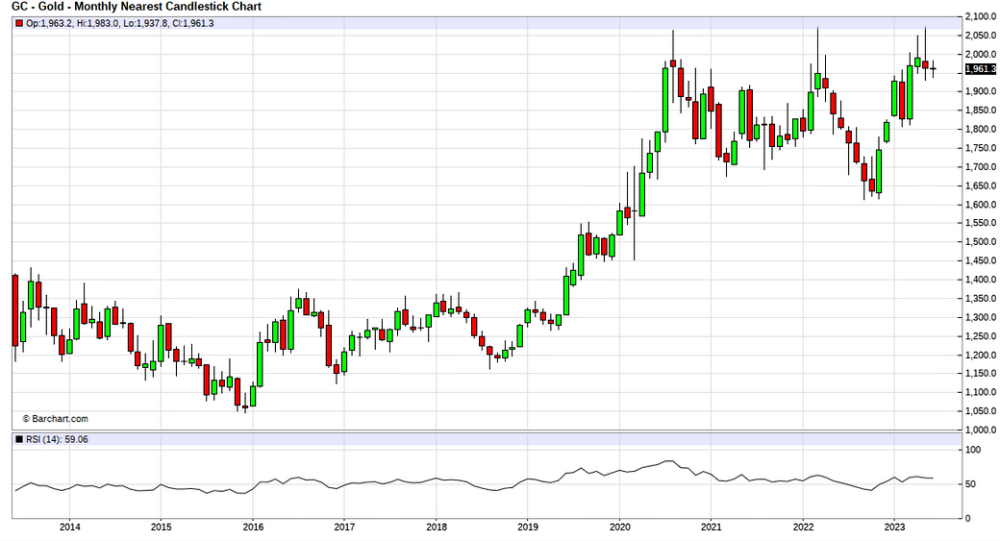
Gold remains trapped within a sticky range. Price action suggests that a fresh catalyst is needed to trigger a bullish or bearish breakout. A strong move above $2000 may inspire a push toward $2032 and $2048. If prices remain below $2000, gold could test $1950 and $1935.


Forex-Time-LogoArticle by ForexTime

ForexTime Ltd (FXTM) is an award winning international online forex broker regulated by CySEC 185/12 www.forextime.com

Cognitive flexibility is essential to navigating a changing world – new research in mice shows how your brain learns new rules

By Vikaas Sohal, University of California, San Francisco and Kathleen Cho, Inserm 

Being flexible and learning to adapt when the world changes is something you practice every day. Whether you run into a new construction site and have to reroute your commute or download a new streaming app and have to relearn how to find your favorite show, changing familiar behaviors in response to new situations is an essential skill.

To make these adaptations, your brain changes its activity patterns within a structure called the prefrontal cortex – an area of the brain critical for cognitive functions such as attention, planning and decision-making. But which specific circuits “tell” the prefrontal cortex to update its activity patterns in order to change behavior have been unknown.

The prefrontal cortex of the brain is involved in executive functions like self-control and decision-making.

We are a team of neuroscientists who study how the brain processes information and what happens when this function is impaired. In our newly published research, we discovered a special class of neurons in the prefrontal cortex that may enable flexible behavior and, when they malfunction, may lead to conditions such as schizophrenia and bipolar disorder.

Inhibitory neurons and learning new rules

Inhibitory neurons dampen the activity of other neurons in the brain. Researchers have traditionally assumed they send their electrical and chemical outputs only to nearby neurons. However, we found a particular class of inhibitory neurons in the prefrontal cortex that communicate across long distances to neurons in the opposite hemisphere of the brain.

We wondered whether these long-range inhibitory connections are involved in coordinating changes in activity patterns across the left and right prefrontal cortex. By doing so, they might provide the critical signals that help you change your behavior at the right moment.

Microscopy image of an interneuron
Interneurons connect other neurons together.
NICHD/McBain Laboratory via Flickr, CC BY-NC-ND

To test the function of these long-range inhibitory connections, we observed mice performing a task that required them to learn a rule to receive a reward and then later adapt to a new rule in order to continue receiving the reward. In this task, mice dug in bowls to find hidden food. Initially, the smell of garlic or the presence of sand within a bowl might indicate the location of the hidden food. The specific cue associated with the reward would later change, forcing the mice to learn a new rule.

We found that silencing the long-range inhibitory connections between the left and right prefrontal cortex caused the mice to get stuck, or perseverate, on one rule and prevented them from learning new ones. They were unable to change gears and learn that the old cue was now meaningless and the new cue signaled food.

Brain waves and flexible behavior

We also made surprising discoveries about how these long-range inhibitory connections create behavioral flexibility. Specifically, they synchronize a set of “brain waves” called gamma oscillations across the two hemispheres. Gamma oscillations are rhythmic fluctuations in brain activity that occur roughly 40 times per second. These fluctuations can be detected during many cognitive functions, such as when performing a task that requires holding information in your memory or making different movements based on what you see on a computer screen.

Though scientists have observed the presence of gamma oscillations for many decades, their function has been controversial. Many researchers think that the synchronization of these rhythmic fluctuations across different brain regions doesn’t serve any useful purpose. Others have speculated that synchronization across different brain regions enhances communication between those regions.

Fluctuations in neural activity manifest as brain waves, or neural oscillations.

We found a completely different potential role for gamma synchrony. When long-range inhibitory connections synchronize gamma oscillations across the left and right prefrontal cortex, they seem to also gate communication between them. When mice learn to disregard a previously established rule that no longer leads to a reward, these connections synchronize gamma oscillations and seem to stop one hemisphere from maintaining unneeded activity patterns in the other. In other words, long-range inhibitory connections seem to stop input from one hemisphere from “getting in the way” of the other when it is trying to learn something new.

For example, the left prefrontal cortex can “remind” the right prefrontal cortex about your usual route to work. But when long-range inhibitory connections synchronize these two areas, they also seem to shut off these reminders and enable new patterns of brain activity corresponding to your new commute to take hold.

Finally, these long-range inhibitory connections also trigger long-lasting effects. Shutting off these connections just once caused mice to have trouble learning new rules several days later. Conversely, rhythmically stimulating these connections to artificially synchronize gamma oscillations can reverse these deficits and restore normal learning.

Cognitive flexibility and schizophrenia

Long-range inhibitory connections play an important role in cognitive flexibility. The inability to appropriately update previously learned rules is one hallmark form of cognitive impairment in psychiatric conditions such as schizophrenia and bipolar disorder.

Research has also seen deficiencies in gamma synchronization and abnormalities in a class of prefrontal inhibitory neurons, which includes the ones we studied, in people with schizophrenia. In this context, our study suggests that treatments that target these long-range inhibitory connections may help improve cognition in people with schizophrenia by synchronizing gamma oscillations.

Many details of how these connections affect brain circuits remain unknown. For example, we do not know exactly which cells within the prefrontal cortex receive input from these long-range inhibitory connections and change their activity patterns to learn new rules. We also do not know whether there are specific molecular pathways that produce the long-lasting changes in neural activity. Answering these questions could reveal how the brain flexibly switches between maintaining and updating old information and potentially lead to new treatments for schizophrenia and other psychiatric conditions.The Conversation

About the Author:

Vikaas Sohal, Professor of Psychiatry, University of California, San Francisco and Kathleen Cho, Principal Investigator in Neuroscience, Inserm

This article is republished from The Conversation under a Creative Commons license. Read the original article.


Gold returned to growth amid rising recession fears. Tech companies reports beat forecasts

By JustMarkets

Stronger-than-expected reports from tech companies Microsoft (MSFT) and Google Alphabet (GOOGL) helped improve investor sentiment in the tech sector. But weak economic data exacerbated recession fears in the world’s largest economy as rising recession risks threaten consumer spending. At the close of the stock market on Wednesday, the Dow Jones Index (US30) decreased by 0.68%, and the S&P 500 Index (US500) fell by 0.38%. The NASDAQ Technology Index (US100) gained 0.47% yesterday.

Shares of Activision Blizzard (ATVI), the largest video game maker, plummeted more than 10% after the UK Competition and Markets Authority (CMA) blocked the acquisition of Activision Blizzard by Microsoft Corporation (MSFT). The regulator fears that the deal could lead to a significant decrease in competition in the markets for game consoles, subscriptions, and cloud computing.

Alphabet (GOOGL) Inc. reported better-than-expected first-quarter results and a $70 billion stock buyback plan. Microsoft Corporation (MSFT) gained 7% after posting quarterly results that beat Wall Street estimates as its Azure cloud business performed better than expected. According to Refinitiv IBES, of 163 S&P 500 companies that reported first-quarter earnings, 79.8% beat analysts’ expectations.

Stock markets in Europe were mostly down Wednesday. German DAX (DE30) decreased by 0.48%, and French CAC 40 (FR40) lost 0.86%, Spanish IBEX35 (ES35) closed at the opening price, British FTSE100 (UK100) closed negative 0.49% yesterday.

The German government raised this year’s economic growth forecast to 0.4% from the previous forecast of 0.2%. Current economic indicators like industrial production, new orders, and business climate point to an economic recovery. Economists expect stagnation in the first quarter, followed by an acceleration in growth. For 2024, the government slightly lowered its growth forecast to plus 1.6% from plus 1.8%. Inflation forecasts have also been adjusted downward to 5.9% for 2023 and 2.7% for 2024. The government expects the unemployment rate to be 5.4% in 2023 and 5.2% in 2024, after 5.3% in 2022.

The US crude oil inventories fell last week by 5.1 million barrels to 460.9 million barrels. But oil continued its downward movement yesterday as recession fears outweighed the US inventory decline. Investors also expressed concern that potential interest rate hikes by central banks may slow economic growth and reduce energy demand in the United States, United Kingdom and the European Union.

Gold and silver prices are rising as US recession fears continue to rise. The US 2-10-year bond yield spreads remain heavily inverted, while US Treasury yields fell sharply yesterday as traders continue to count on a US rate cut later this year.

Asian markets traded flat yesterday. Japan’s Nikkei 225 (JP225) decreased by 0.71%, China’s FTSE China A50 (CHA50) was down by 0.03% for the day, Hong Kong’s Hang Seng (HK50) ended the day up 0.71%, India’s NIFTY 50 (IND50) added 0.25%, and Australia’s S&P/ASX 200 (AU200) closed negative by 0.08% for the day.

Last month the yuan became the most widely used currency for cross-border transactions in China, overtaking the dollar for the first time. Cross-border payments and receipts in yuan rose to a record $549.9 billion in March from $434.5 billion a month earlier. China has long promoted the use of the yuan to settle cross-border transactions as part of efforts to internationalize the use of its currency. The use of the yuan in global trade finance remains low, although it is showing strong growth. SWIFT data showed that the share of the yuan in global foreign exchange trade finance transactions rose to 4.5% in March, while the dollar accounted for 83.71%.

S&P 500 (F) (US500) 4,055.96 −15.67 (−0.38%)

Dow Jones (US30)33,301.87 −228.96 (−0.68%)

DAX (DE40) 15,795.73 −76.40 (−0.48%)

FTSE 100 (UK100) 7,852.64 −38.49 (−0.49%)

USD Index 101.86 +0.51 +0.50%

Important events for today:
  • – US GDP (q/q) at 15:30 (GMT+3);
  • – US Initial Jobless Claims (w/w) at 15:30 (GMT+3);
  • – US Pending Home Sales (m/m) at 17:00 (GMT+3);
  • – Natural Gas Storage (w/w) at 17:30 (GMT+3).

By JustMarkets


This article reflects a personal opinion and should not be interpreted as an investment advice, and/or offer, and/or a persistent request for carrying out financial transactions, and/or a guarantee, and/or a forecast of future events.

Weak consumer confidence reports and declining manufacturing data put negative pressure on stock markets

By ForexTime

The US stock indices fell yesterday amid disappointing consumer confidence data and weak company reports. The Conference Board survey showed that consumer confidence fell to a nine-month low. It should be noted that household consumption is the main driver of US gross domestic product. The US Federal Reserve Richmond’s Manufacturing Index also fell to minus 10 in April, the fourth consecutive month of decline. As the stock market closed on Tuesday, the Dow Jones Index (US30) decreased by 1.10%, and the S&P 500 Index (US500) lost 1.58%. The NASDAQ Technology Index (US100) fell by 1.98% yesterday.

Investor nervousness in the banking sector returned after First Republic Bank (FRC) fell nearly 40%, to a record low, following the release of mixed first-quarter results, which showed deposit levels down $104 billion from a year ago, much more than expected. Meanwhile, United Parcel Service Inc (UPS) reported first-quarter results that fell short of forecasts, and the courier company warned that sales would remain under pressure. The company’s stock was down more than 9%. Shares of PepsiCo Inc (PEP) were up more than 2%. Its quarterly results beat estimates on both the top and bottom lines. Energy stocks, in general, were the biggest drag on the stock market. The energy sector came under pressure from falling oil prices amid concerns about the impact of a potential slowdown in global growth on demand.

Equity markets in Europe were mostly down on Tuesday. German DAX (DE30) gained 0.05%, French CAC40 (FR 40) decreased by 0.56%, Spanish IBEX35 (ES35) fell by 1.18%, and British FTSE100 (UK100) closed down by 0.27% yesterday.

The ECB started cutting its balance sheet in March and is likely to accelerate the pace of so-called quantitative tightening (QT) in July. The ECB holds 4.9 trillion euros in securities for monetary policy purposes, and that amount is expected to shrink by 200 billion euros by the end of 2023.

The Confederation of British Industry’s (CBI) monthly industrial orders indicator remained at minus 20 in April, unchanged from its March value. According to the survey, British factory orders and output declined due to higher inventories of finished goods, highlighting the manufacturing sector’s recent weak performance and pointing to easing inflationary pressures.

A review of more aggressive Fed policy and concerns about a global economic slowdown is forcing investors to buy safe-haven assets such as the dollar and the yen, which negatively affects oil prices. A stronger dollar makes oil more expensive for foreign currency holders. Oil was down by 2% over yesterday. Oil prices are now back in their range where they were trading before the OPEC+ decision to cut production.

Asian markets traded yesterday without a single dynamic. Japan’s Nikkei 225 (JP225) gained 0.09%, China’s FTSE China A50 (CHA50) added 0.43% for the day, Hong Kong’s Hang Seng (HK50) ended the day down by 1.71%, India’s NIFTY 50 (IND50) gained 0.15%, and Australia’s S&P/ASX 200 (AU200) was not trading yesterday due to the holiday.

Japan raised its official import rate for the first time in nine months as a double-digit yen depreciation from a year ago increased the cost of imported goods. Trade data released last week showed that the high cost of coal and petroleum products combined with a 16.5% yen drop from a year ago increased imports by 7.3% in March, pushing Japan’s trade deficit in fiscal 2022 to a record high.

In Australia, the consumer price level rose by 1.4% in the last quarter, but year-over-year inflation declined from 6.8% to 6.3%. The quarterly rise in inflation was largely due to higher spending on health care, education, fuel, and increased spending on recreation. The RBA warned at its last meeting that any signs of tight inflation could lead to further rate hikes.

S&P 500 (F) (US500) 4,071.71 −65.33 (−1.58%)

Dow Jones (US30)33,531.72 −343.68 (−1.01%)

DAX (DE40) 15,872.13 +8.18 (+0.052%)

FTSE 100 (UK100) 7,891.13 −21.07 (−0.27%)

USD Index 101.86 +0.51 +0.50%

Important events for today:
  • – US Building Permits (m/m) at 15:00 (GMT+3);
  • – US CB Consumer Confidence (m/m) at 17:00 (GMT+3);
  • – US New Home Sales (m/m) at 17:00 (GMT+3).
  • – US CB Consumer Confidence (m/m) at 17:00 (GMT+3);
  • – US New Home Sales (m/m) at 17:00 (GMT+3).

Forex-Time-LogoArticle by ForexTime

ForexTime Ltd (FXTM) is an award winning international online forex broker regulated by CySEC 185/12 www.forextime.com

Investors await reports from major technology companies

By JustMarkets

At Monday’s close, the Dow Jones Index (US30) increased by 0.20%, and the S&P 500 (US500) added 0.09%. The NASDAQ Technology Index (US100) fell by 0.29% yesterday. A Federal Reserve Bank of Chicago survey showed that the index, used to estimate economic conditions, declined by 29 points between March and April. This indicates that most respondents are pessimistic about the future. More than half – about 65% – said they expect economic activity to decline over the next 12 months.

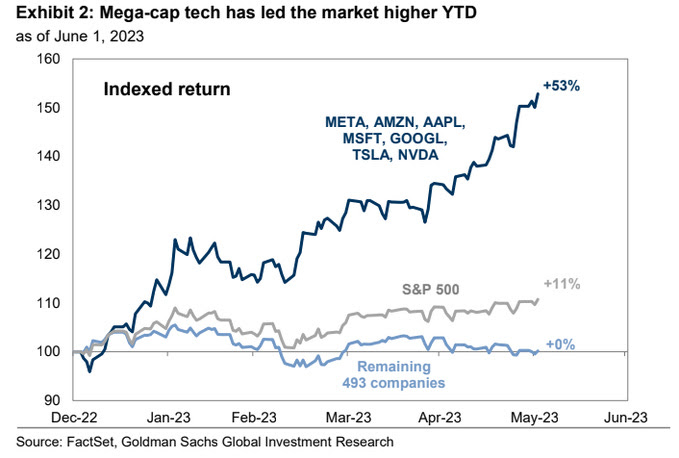
Shares of Tesla Inc fell by 2% after the automaker raised its 2023 capital spending forecast to boost production. Microsoft Corp (MSFT), Alphabet (GOOGL) Inc, Amazon.com Inc (AMZN) and Meta Platforms Inc (META) will report this week. The rally in these stocks has supported Wall Street this year, so investors are concerned about whether growth can continue given the gloomy economic outlook. Traders are concerned that the rally could end as earnings begin to reflect the growing impact of high-interest rates and tightening economic conditions.

Stock markets in Europe were mostly down on Monday. Germany’s DAX (DE30) lost 0.11%, France’s CAC 40 (FR40) fell by 0.04%, Spain’s IBEX35 (ES35) decreased by 0.10%, Britain’s FTSE100 (UK100) closed negative by 0.02% on Monday.

Germany, the largest economy in the Eurozone, managed to avoid a recession this winter. Business sentiment is improving, but manufacturing activity is still stagnant. This is a green flag for the ECB because the better the economy feels, the bolder the monetary policy can be tightened. ECB spokeswoman Schnabel said yesterday that a 50 bp rate hike at the May meeting is still an option. The deciding factor will be Eurozone GDP data this week and inflation data ahead of the May meeting.

UK property owners are becoming more cautious about raising prices. Rightmove stated that real estate sales have returned to pre-pandemic levels. March data showed that the number of homes for sale increased for the second month, and the average time to find a buyer for the property was reduced to 55 days.

The UK oil and gas industry is preparing for a new strike after the British Labor Union announced that more than a thousand workers would begin a two-day strike over wage problems. The 1,300 workers are expected to go on a 48-hour strike beginning Monday. This could disrupt oil and gas production for companies such as BP, CNRI, EnQuest, Harbour, Ithaca, Shell, TAQA and TotalEnergies.

Orders in China for overseas travel during the upcoming May Day holiday indicate a continued recovery in travel to Asian countries. This has increased the optimism of oil traders, who expect an increase in oil demand in Asia’s largest economy.

According to a leading defense think tank, global military spending hit a record high of $2.24 trillion in 2022 as Russia’s invasion of Ukraine triggered a surge in military spending in Europe and the United States. The largest increase in military spending was seen in Europe (+13%). Finland’s military spending increased by 36% and Lithuania’s by 27%. In April, Finland, whose border with Russia is about 1340 km long, became the 31st member of NATO. Sweden, which has avoided military alliances for more than 200 years, also wants to join NATO.

Asian markets traded flat yesterday. Japan’s Nikkei 225 (JP225) gained 0.10%, China’s FTSE China A50 (CHA50) decreased by 1.17% for the day, Hong Kong’s Hang Seng (HK50) ended the day down by 0.58%, India’s NIFTY 50 (IND50) gained 0.68%, and Australia’s S&P/ASX 200 (AU200) closed negative by 0.11%. Losses in US technology stocks spread to the Asian market, as most regional tech stocks are dependent on large US companies.

Bank of Japan Governor Kazuo Ueda said yesterday that the Bank of Japan should maintain monetary easing as trend inflation is still below 2%, and consumer inflation is likely to approach its peak and slow down in the coming months. It is becoming clear that the Bank of Japan will not change the monetary policy setting at its first meeting under the new governor.

S&P 500 (F) (US500) 4,133.52 +3.73 (+0.090%)

Dow Jones (US30)33,875.40 +66.44 (+0.20%)

DAX (DE40) 15,863.95 −17.71 (−0.11%)

FTSE 100 (UK100) 7,912.20 −1.93 (−0.024%)

USD Index 101.38 −0.45 −0.44%

Important events for today:
  • – US Building Permits (m/m) at 15:00 (GMT+3);
  • – US CB Consumer Confidence (m/m) at 17:00 (GMT+3);
  • – US New Home Sales (m/m) at 17:00 (GMT+3).

By JustMarkets


This article reflects a personal opinion and should not be interpreted as an investment advice, and/or offer, and/or a persistent request for carrying out financial transactions, and/or a guarantee, and/or a forecast of future events.

Caution Prevails Ahead Of Big Tech Earnings

By ForexTime 

Most Asian equities flashed red on Tuesday, pressured by losses in Chinese shares as investors evaluated China’s re-opening story in the face of negative economic and geopolitical forces. European futures are pointing to a mixed open with market players guarded ahead of another event-heavy week for financial markets. Some of the largest companies in the world including the four Big Tech titans (Microsoft, Alphabet, Meta and Amazon) will be reporting their results this week. If the corporate earnings paint an overall encouraging picture, this could boost risk sentiment and support equity bulls.  However, a set of disappointing results is likely to enforce renewed pressure on stock markets with the S&P500 and Nasdaq feeling the brunt.

In the currency space, the dollar attempted to stabilise during early trade after slipping in the previous session as more signs of slowing US economic growth cooled Fed hike bets. With markets now pricing in the peak for US interest rates in June, dollar bulls could be running on fumes. Gold drew strength from falling Treasury yields while oil prices steadied after two days of gains.

Dollar bears to hijack the scene?

Repeated signs of cooling price pressures and disappointing US economic data could add more fuel to expectations around the Fed pausing rate hikes and eventually cutting down the road. On Monday, softer US manufacturing data strengthened the argument for the Fed to pause. There are more major releases from the US economy this week including April consumer confidence data, Q1 GDP figures, and most importantly the Fed’s preferred inflation gauge, the Core Personal Consumption Expenditure.

US economic growth in the first quarter is expected to moderate from the 2.6% in the previous quarter while persistent price pressures may be present in Friday’s core PCE report. Ultimately, if the data supports expectations around the Fed taking a pause from rate hikes after May, this may drag the dollar lower.

Looking at the technical picture, the Dollar Index remains under pressure on the daily charts. Weakness below 102.00 could trigger a decline towards 100.79 and 100.00, a level not seen since April 2022.

Commodity Spotlight – Gold

Gold briefly punched above the psychological $2000 level during early trade this morning as falling Treasury yields and dollar weakness sweetened appetite for the precious metal.

Nevertheless, it still remains trapped within a sticky range thanks to the ongoing uncertainty over the Fed’s next move beyond May. With markets now expecting US rates to peak in the summer and a rate cut by December, gold has the thumbs up to push higher in the longer term. Meanwhile, volatility could be the name of the game due to shifting expectations around future Fed policy moves.

Turning to the technicals, price action suggests that a fresh catalyst is needed to trigger a bullish or bearish breakout. A strong move above $2000 may inspire a push towards $2025 and $2048. If prices remain below $2000, gold could test $1950 and $1900.


Forex-Time-LogoArticle by ForexTime

ForexTime Ltd (FXTM) is an award winning international online forex broker regulated by CySEC 185/12 www.forextime.com

Global shipping is under pressure to stop its heavy fuel oil use fast – that’s not simple, but changes are coming

By Don Maier, University of Tennessee 

Most of the clothing and gadgets you buy in stores today were once in shipping containers, sailing across the ocean. Ships carry over 80% of the world’s traded goods. But they have a problem – the majority of them burn heavy sulfur fuel oil, which is a driver of climate change.

While cargo ships’ engines have become more efficient over time, the industry is under growing pressure to eliminate its carbon footprint.

The European Union Parliament this year voted to require an 80% drop in shipping fuels’ greenhouse gas intensity by 2050 and to require shipping lines to pay for the greenhouse gases their ships release. The International Maritime Organization, the United Nations agency that regulates international shipping, also plans to strengthen its climate strategy this summer. The IMO’s current goal is to cut shipping emissions 50% by 2050. President Joe Biden said on April 20, 2023, that the U.S. would push for a new international goal of zero emissions by 2050 instead.

We asked maritime industry researcher Don Maier if the industry can meet those tougher targets.

Why is it so hard for shipping to transition away from fossil fuels?

Economics and the lifespan of ships are two primary reasons.

Most of the big shippers’ fleets are less than 20 years old, but even the newer builds don’t necessarily have the most advanced technology. It takes roughly a year and a half to come out with a new build of a ship, and it will still be based on technology from a few years ago. So, most of the engines still run on fossil fuel oil.

If companies do buy ships that run on alternative fuels, such as hydrogen, methanol and ammonia, they run into another challenge: There are only a few ports so far with the infrastructure to provide those fuels. Without a way to refuel at all the ports that a ship might use, companies will lose their return on investment, so they will keep using the same technology instead.

It isn’t necessarily that the maritime industry doesn’t want to go the direction of cleaner fuels. But their assets – their fleets – were purchased with a long lifespan in mind, and alternative fuels aren’t yet widely available.

Ships are being built that can run on liquefied natural gas (LNG) and methanol, and even hydrogen is coming online. Often these are dual-fuel – ships that can run on either alternative fuels or fossil fuels. But so far, not enough of this type of ship is being ordered for the costs to make financial sense for most builders or buyers.

The costs of alternative fuels, like methanol and hydrogen fuels made with renewable energy (as opposed to being made with natural gas), are also still significantly higher than fuel oil or LNG. But the good news is those costs are starting to decline. As production ramps up, emissions will drop further.

Can tougher regulations and carbon pricing effectively push the industry to change?

A little bit of pressure on the industry can be helpful, but too much, too fast can really make things more disruptive.

Like most industries, shipping lines want standardized rules they can count on not to change next year. Some of these companies have invested millions of dollars in new ships in recent years, and they’re now being told that those ships might not meet the new standards – even though the ships may be almost brand new.

Another concern with the EU’s moves is whether it has a grasp on all the “what if” scenarios. For example, if the EU has stricter rules than other countries, that affects which ships companies can use on European routes. Any vessels that they put on routes to Europe will have to meet those emissions standards. If there’s a greater demand for products in Europe, they may have fewer vessels they could use.

Press the play button or zoom out and use the filters to see where different ship types travel. Created by London-based data visualization studio Kiln and the UCL Energy Institute

I do think the change will be coming soon in the industry, but changes have to make financial sense to the shipping lines and their customers, too.

Economists have estimated that the cost of cutting emissions 50% by 2050 are anywhere from US$1 trillion to, more realistically, over $3 trillion, and full decarbonization would be even higher. Many of those costs will be passed down to charterers, shippers and eventually consumers – meaning you and me.

Are there ways companies can cut emissions now while preparing to upgrade their fleets?

There are a number of options ship companies are using now to lower emissions.

One that has been used for at least 10 years is putting higher quality paint on the hulls, which reduces the friction between the hull and the water. With less friction, the engine isn’t working as hard, which reduces emissions.

Another is slow speed. If ships run at a higher speed, their engines work harder, which means they use more fuel and release more emissions. So shippers will use slow steaming. Most of the time, ships will go slow when they’re close to shore to reduce emissions that cause smog in port cities like Los Angeles. On the open ocean, they will go back to normal speed.

Another option common in the U.S. and Europe is shutting down the ship’s engines while in port and plugging into the port’s electricity. It’s called “cold ironing.” It avoids burning more of the ship’s fuel, which affects air quality. The Ports of Los Angeles and Long Beach, where smog from idling ships has been a health concern, have been a big driver of electrification. It’s also less expensive for shipping companies than burning their fuel while in port.

As simple as those may sound, they have made huge improvements in terms of emissions, but they aren’t enough on their own.

Will a higher goal set by the IMO be enough to pressure the industry to change?

I used to work in shipping, and I know the maritime industry is a very old-school industry from centuries ago. But the industry has invested millions in new ships with the most effective technology available in recent years.

When the IMO began requiring all ships using heavy fuel in global trade to shift to low-sulfur fuel, the industry pivoted to meet the rule, even though retrofits were costly and time consuming. Many shipping lines complied by installing “scrubbers” that essentially filter the ship’s engine, and new ships were built to run on the low-sulfur fuel oil.

Now, the industry is being told the standards are changing again.

All industries want consistency so they can be confident investing in a new technology. The shipping lines will follow what the IMO says. They will push back, but they will still do it. That’s in part because the IMO supports the maritime industry, too.The Conversation

About the Author:

Don Maier, Associate Professor of Business, University of Tennessee

This article is republished from The Conversation under a Creative Commons license. Read the original article.


The Bank of Japan will follow a soft policy course. Most company reports missed estimates

By JustMarkets 

At the close of the US stock market on Thursday, the Dow Jones Index (US30) decreased by 0.33%, and the S&P 500 Index (US500) lost 0.60%. The NASDAQ Technology Index (US100) fell by 0.80% yesterday. Sentiment for risky assets, including stocks, worsened due to recent economic data showing further weakness in manufacturing and an increase in jobless claims. The weaker data exacerbated fears of a deeper economic slowdown at a time when the Federal Reserve continues to be inclined to raise rates further.

FOMC spokeswoman Mester indicated yesterday that she was pleased with the progress made but pointed out that inflation remains too high. In Mester’s view, interest rates should move a little further into restriction territory, and the degree of further tightening depends on economic and monetary policy assessments. Philadelphia Fed President Patrick Harker warned Thursday that US interest rates are likely to rise further and stay that way longer, even if economic activity weakens. The current probability of a 0.25% rate hike at the next Fed meeting is 81%.

Tesla (TSLA) stock is down by 11% after the electric carmaker reported earnings that fell short of Wall Street expectations. The company’s margins declined because of a recent string of price cuts. Concerns about margins intensified after CEO Elon Musk announced further spending cuts to boost sales. Shares of AT&T Inc (T), a major component of the Dow Jones Index, fell more than 10% amid concerns about the company’s ability to meet its forecasts and mixed quarterly results suggesting earnings missed estimates.

Stock markets in Europe were mostly down yesterday. German DAX (DE30) decreased by 0.62%, French CAC 40 (FR40) lost 0.14%, Spanish IBEX 35 (ES35) fell by 0.46%, and British FTSE 100 (UK100) closed Thursday up by 0.05%.

ECB President Christine Lagarde hinted that the ECB would not stop fighting inflation. The March minutes of the ECB’s monetary policy meeting indicated that policymakers have not yet decided on the size of the rate hike at the next meeting, but given the latest Eurozone inflation data, there is a high probability that the ECB will raise the rate by 0.5% in May.

The French government has outlined a plan to accelerate debt reduction, which will require the government to make unpopular spending cuts. The budget deficit will be smaller than previously forecast. But it should be noted that raising the minimum retirement age by two years has greatly reduced support for the current government and strengthened opposition parties that reject budget cuts.

Oil prices fell about $2 a barrel to their lowest level since late March. Fears that a possible recession could reduce demand for fuel, as well as an increase in gasoline inventories in the US, are negative factors for oil prices.

Asian markets traded flat yesterday. Japan’s Nikkei 225 (JP225) gained 0.18%, China’s FTSE China A50 (CHA50) fell by 0.85%, Hong Kong’s Hang Seng (HK50) gained 0.14% on the day, India’s NIFTY 50 (IND50) added 0.03%, while Australian S&P/ASX 200 (AU200) was down by 0.04% on the day.

The Bank of Japan is eyeing the idea of changing its controversial bond yield control policy later this year but is likely to leave policy unchanged at next week’s meeting as it awaits new evidence of sustained wage growth. Kazuo Ueda will hold his first meeting as governor on April 27-28, and his appointment has heightened expectations that the bank will begin to roll back its ultra-soft settings.

S&P 500 (F) (US500) 4,129.79 −24.73 (−0.60%)

Dow Jones (US30)33,786.62 −110.39 (−0.33%)

DAX (DE40) 15,795.97 −99.23 (−0.62%)

FTSE 100 (UK100) 7,902.61 +3.84 (+0.049%)

USD Index 101.82 −0.15 −0.15%

Important events for today:
  • – Australia Manufacturing PMI (m/m) at 02:00 (GMT+3);
  • – Australia Services PMI (m/m) at 02:00 (GMT+3);
  • – Japan National Core Consumer Price Index at 02:30 (GMT+3);
  • – Japan Manufacturing PMI (m/m) at 03:30 (GMT+3);
  • – UK Retail Sales (m/m) at 09:00 (GMT+3);
  • – Eurozone Manufacturing PMI (m/m) at 11:00 (GMT+3);
  • – Eurozone Services PMI (m/m) at 11:00 (GMT+3);
  • – UK Manufacturing PMI (m/m) at 11:30 (GMT+3);
  • – UK Services PMI (m/m) at 11:30 (GMT+3);
  • – Canada Retail Sales (m/m) at 15:30 (GMT+3);
  • – US Manufacturing PMI (m/m) at 16:45 (GMT+3);
  • – US Services PMI (m/m) at 16:45 (GMT+3).

By JustMarkets


This article reflects a personal opinion and should not be interpreted as an investment advice, and/or offer, and/or a persistent request for carrying out financial transactions, and/or a guarantee, and/or a forecast of future events.