Archive for Forex and Currency News – Page 4

EUR/USD Declines: All Market Risks Remain Valid

By Analytical Department RoboForex

EUR/USD fell to 1.1549 on Monday, with the US dollar extending gains from the previous session amid heightened demand for safe-haven assets as the Middle East conflict escalates.

The confrontation between the US and Israel against Iran has entered its fourth week with no signs of de-escalation. Donald Trump has threatened to strike Iran’s energy infrastructure if the Strait of Hormuz is not reopened. Tehran has announced it is prepared to attack key US and Israeli targets in the region in response.

Elevated oil prices continue to fuel inflationary concerns and reduce the likelihood of an imminent Federal Reserve rate cut. Some market participants are even beginning to consider the possibility of a rate hike later this year.

Last week, the Fed held rates steady as expected. Jerome Powell noted that it remains too early to assess the full economic impact of the Iran conflict.

The European Central Bank, the Bank of England, and the Bank of Japan also left rates unchanged but signalled their readiness to tighten policy further should inflationary pressures persist.

Technical Analysis

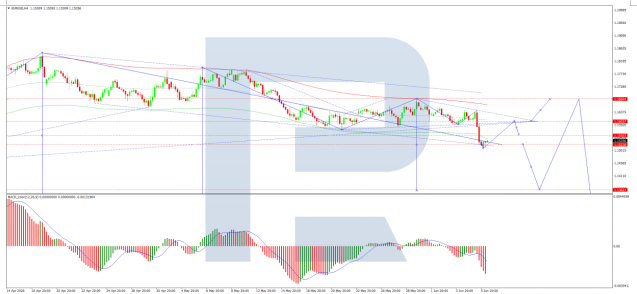
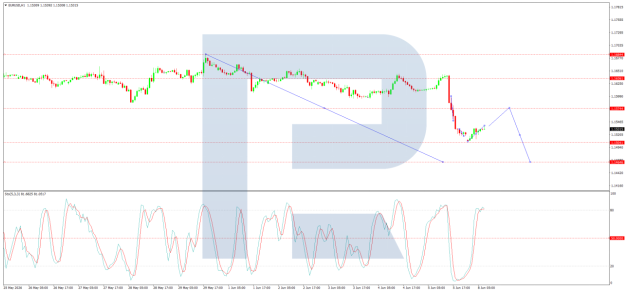
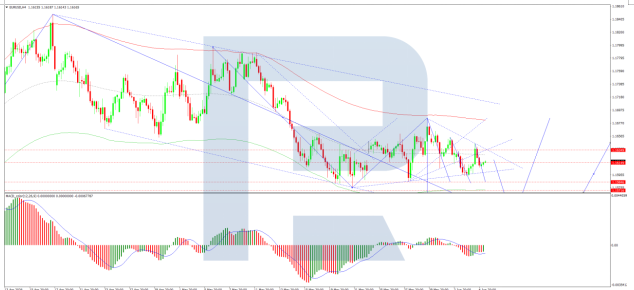
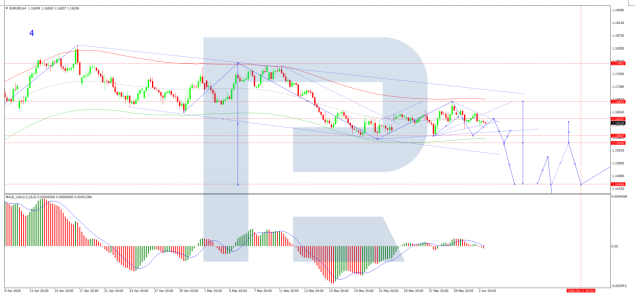
On the H4 chart, EUR/USD is forming a consolidation range around 1.1526. An upside breakout is expected, with a continuation wave towards 1.1647 as a near-term target. Subsequently, a new downward wave is anticipated to 1.1529. Technically, this scenario is confirmed by the MACD indicator – its signal line is above zero and pointing firmly upwards, reflecting ongoing bullish momentum and the potential for the uptrend to continue.

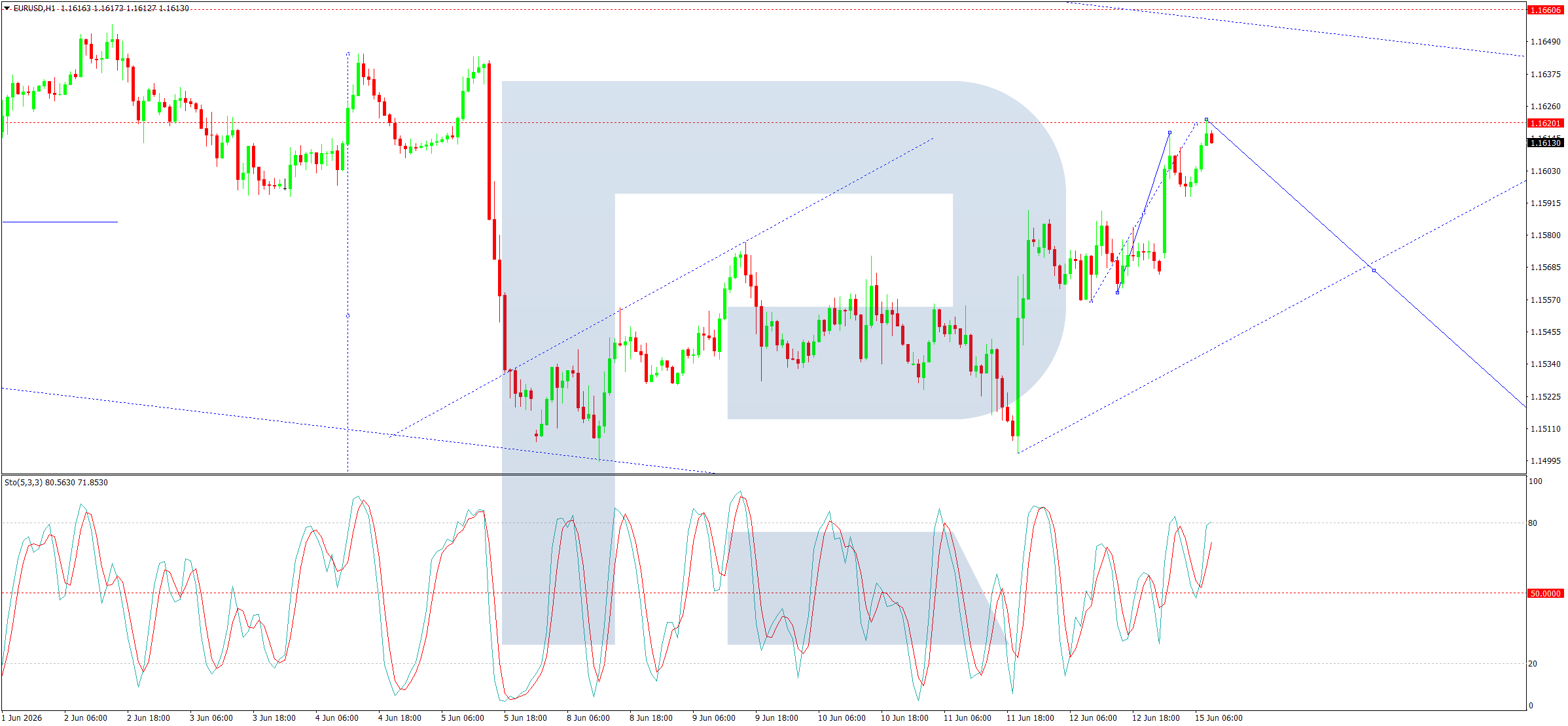
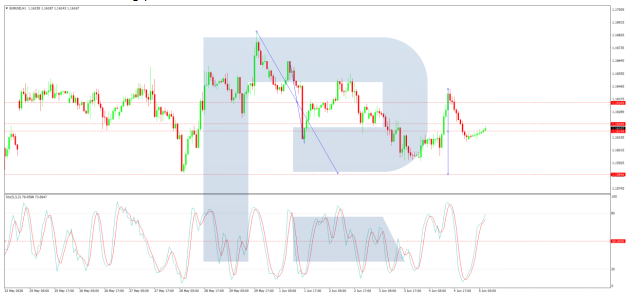
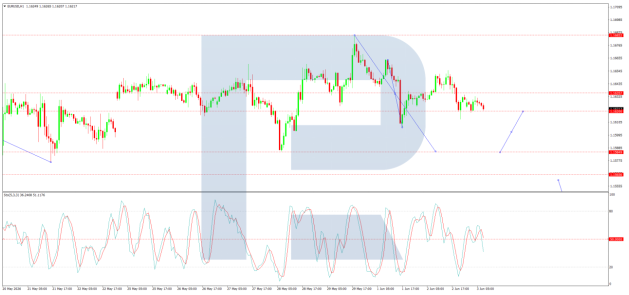
On the H1 chart, the market is forming the structure of the next downward wave towards 1.1499. After reaching this level, a rebound to 1.1556 is expected, with potential for the subsequent growth wave to extend to 1.1647. Technically, this scenario is confirmed by the Stochastic oscillator – its signal line is below 50 and pointing firmly downwards towards 20.

Conclusion

EUR/USD remains under pressure as geopolitical risks in the Middle East continue to drive safe-haven demand for the US dollar. With the conflict entering its fourth week and oil prices remaining elevated, inflationary concerns persist, delaying expectations for Fed rate cuts. Central banks across major economies remain alert, keeping tightening on the table. While technical indicators suggest potential short-term rebound, the broader outlook for the euro remains fragile as market risks show no signs of abating.


Disclaimer

Any forecasts contained herein are based on the author’s particular opinion. This analysis may not be treated as trading advice. RoboForex bears no responsibility for trading results based on trading recommendations and reviews contained herein.

Currency Speculators sharply drop Euro, CAD bets while boosting GBP, CHF & AUD

By InvestMacro | COT | Data Tables | COT Leaders | Downloads | COT Newsletter

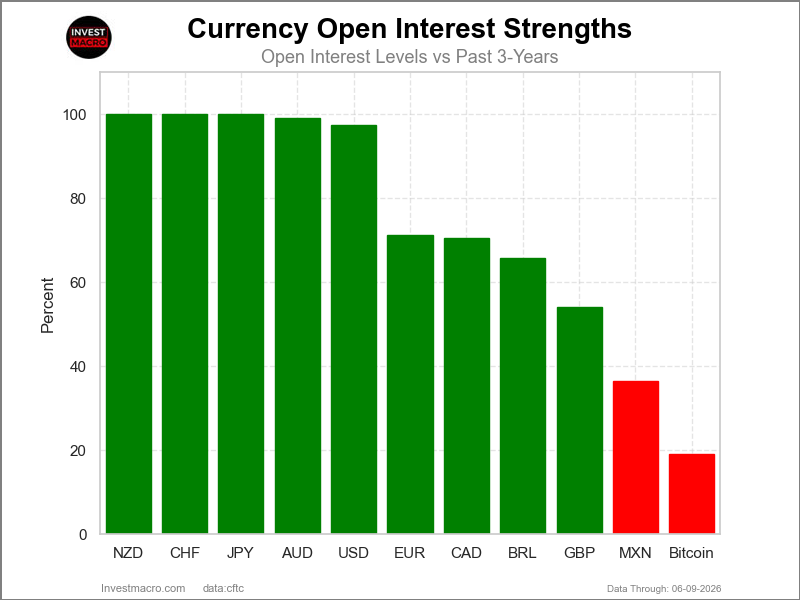
Speculators OI FX Futures COT Chart

Here are the latest charts and statistics for the Commitment of Traders (COT) data published by the Commodities Futures Trading Commission (CFTC).

The latest COT data is updated through Tuesday March 17th and shows a quick view of how large market participants (for-profit speculators and commercial traders) were positioned in the futures markets. All currency positions are in direct relation to the US dollar where, for example, a bet for the euro is a bet that the euro will rise versus the dollar while a bet against the euro will be a bet that the euro will decline versus the dollar.

Weekly Speculator Changes led by GBP, Swiss Franc, Australian & New Zealand Dollars

Speculators Nets FX Futures COT Chart
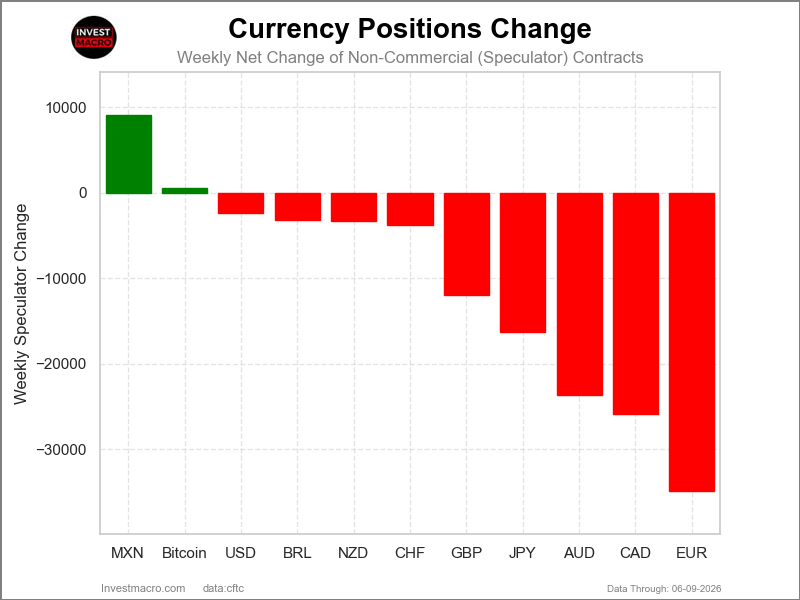
The COT currency market speculator bets were overall slightly higher this week as six out of the eleven currency markets we cover had higher positioning while the other five markets had lower speculator contracts.

Leading the gains for the currency markets was British Pound (18,682 contracts) with the Swiss Franc (15,879 contracts), the Australian Dollar (14,864 contracts), the New Zealand Dollar (14,054 contracts), the US Dollar Index (9,575 contracts) and Bitcoin (471 contracts) also showing a small positive week.

The currencies seeing declines in speculator bets on the week were the EuroFX (-84,012 contracts), the Canadian Dollar (-35,273 contracts), the Japanese Yen (-26,393 contracts), the Mexican Peso (-5,351 contracts) and with the Brazilian Real (-1,711 contracts) also registering lower bets on the week.

Currency Speculators sharply drop Euro, CAD bets while boosting GBP, CHF & AUD

The COT market data for Currencies this week saw a bunch of extremely significant changes in the speculator positioning through Tuesday.

First off, the biggest mover on the week was the Euro, which saw a gigantic drawback in speculative bullish bets by -84,012 contracts. This marks the biggest drawdown for one week in Euro futures history. The Euro position has now fallen for five consecutive weeks, and that has taken off roughly -160,000 contracts from the bullish position, which has now fallen to a paltry +21,132 net contracts this week. This breaks a streak of fifteen consecutive weeks where the net contract position was over 100,000 contracts. In the currency exchange market, the Euro managed to have a gaining week after a couple of strong down weeks and trades right below the psychological 1.1600 resistance level, with support below at the 1.1475 to 1.1500 exchange levels.

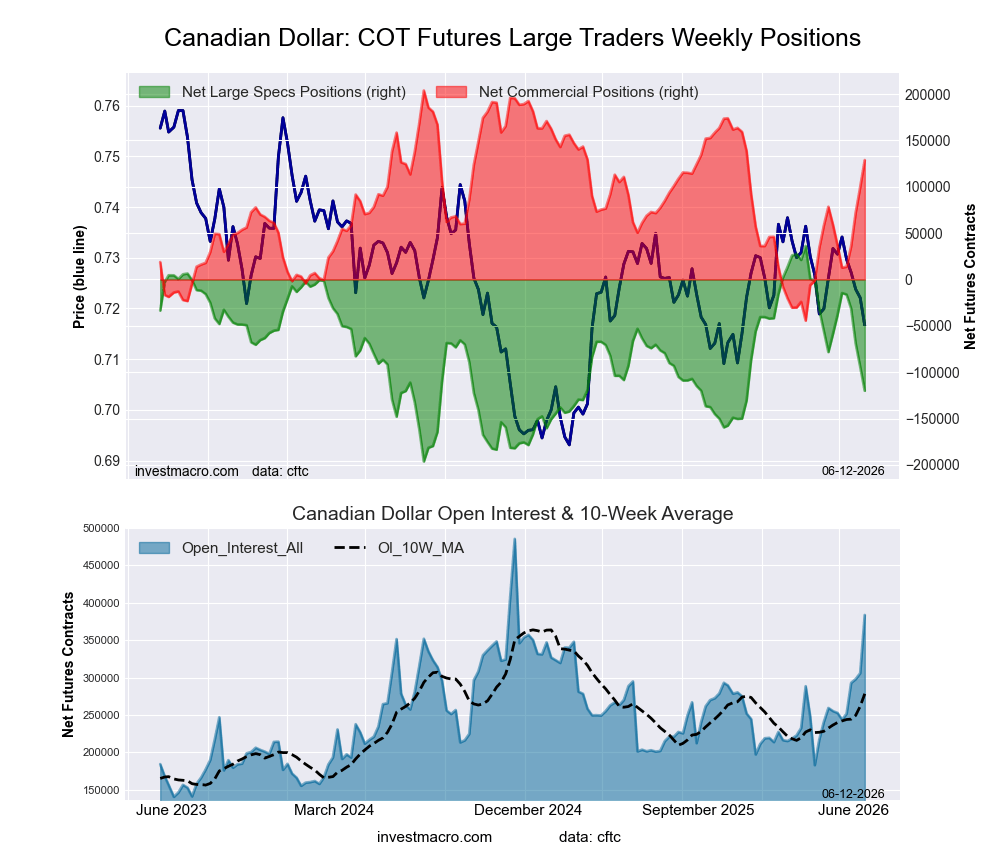
Next up, the Canadian Dollar contracts saw a similar shortfall on the week with a -35,273 net contract decline this week. Unlike the Euro, the Canadian Dollar contracts had been ascending over the past weeks – as speculator contracts had risen in seven out of the previous eight weeks and had pushed the net contract position up to a +36,159 net contract position on March 10th. After this week’s sharp decline, the net position is virtually unchanged at a small +886 net speculator position. The CAD price in the currency markets has been treading water without much direction recently with the CAD ranging between 0.7200 and 0.7400 over the past eight weeks.

On the plus side, the British Pound Sterling saw a strong rise this week after declining in the previous five consecutive weeks. This week’s gain by over +18,000 net contracts was the highest weekly gain out of the past three months dating back to December 16th, 2025. However, the British Pound Sterling net position remains bearish. Overall, this currency speculator position has now been in a continuous bearish position for the past 34 weeks, dating back to July 22nd of 2025. In the Foreign Exchange Markets, the British Pound Sterling against the US Dollar saw a modest rise this week for the first time out of the past four weeks and now trades right around the 1.3300 exchange level. The Pound Sterling has recently been retreating after reaching a high in January around the 1.3870 level.

The Swiss Franc saw strong speculator demand this week with a gain of over +15,000 contracts. The Swiss Franc speculator position is usually a safe haven bid, and you would typically think the speculator position would be super strong. But there has been quite a lot of hedging in the Swiss Franc futures markets, so many of the moves are counterintuitive. However, this week obviously saw some safe haven speculator bids. While the Franchas been super strong in the Exchange Markets against the US Dollar, with the price of the Franc up around 17% higher since the beginning of January 2025. Currently, the Franc against the US Dollar trades at the 1.2797 exchange rate and has been as high as 1.3219 in late January.

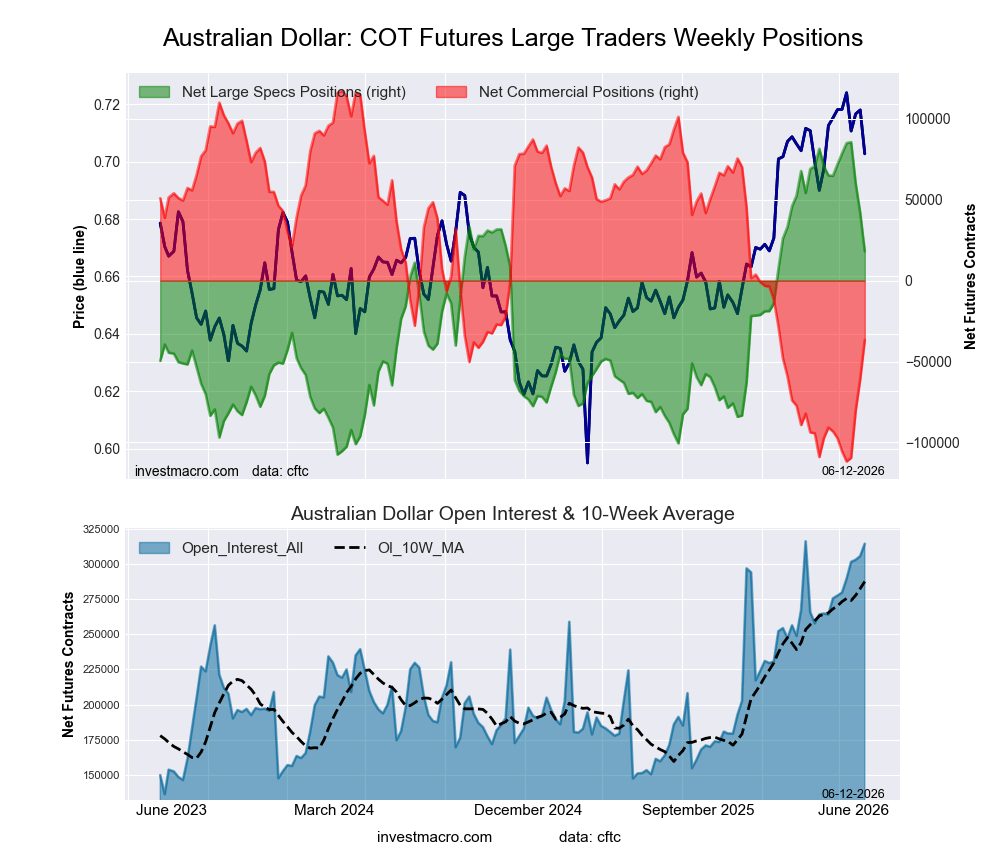
The Australian Dollar, on the other hand, has been traditionally the anti-safe haven or high beta and usually plummets along with weakened speculator sentiment in uncertain times. However, the Australian Dollar continues to see strong speculator inflows. Speculator positions have gained in 15 out of the past 16 weeks, with an inflow of +153,237 net contracts over that time. This has brought the overall speculator position to a bullish level of +69,061 net contracts. This is the highest level for a standing speculator position since 2017, or a difference of about 441 weeks. The Australian Dollar against the US Dollar in the forex market dipped this week but remains trading right at the important psychological support and resistance level of 0.7000.

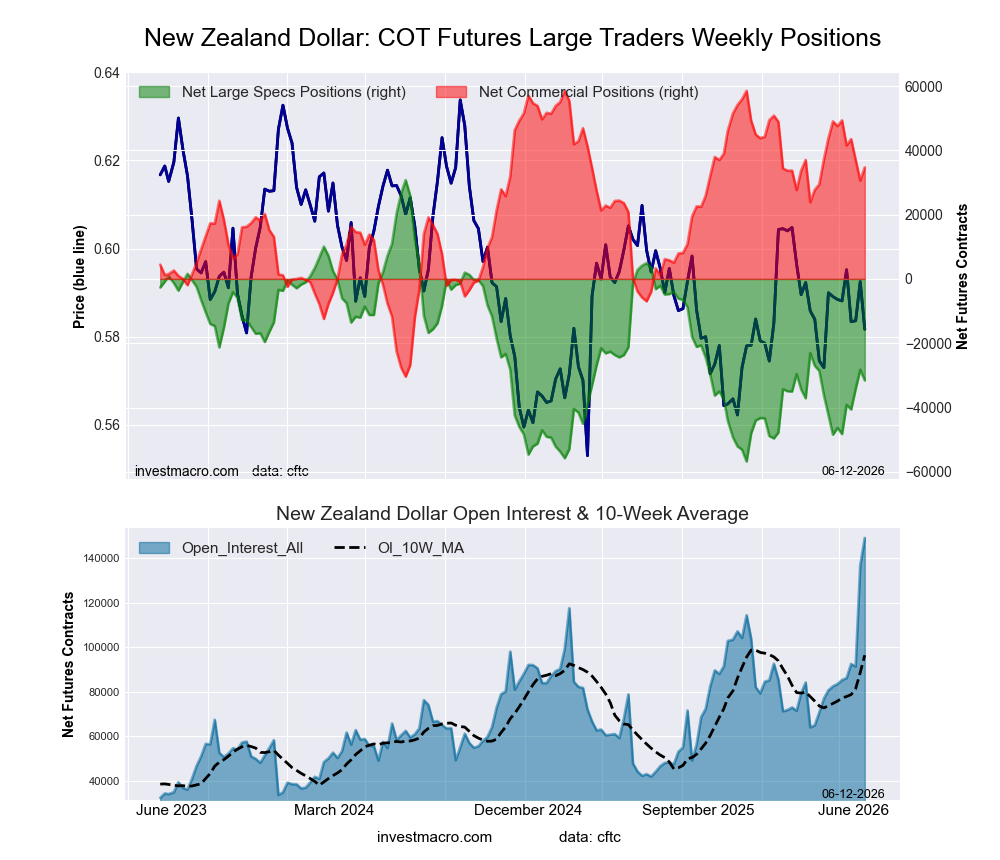
The New Zealand Dollar speculator position also saw strong inflows this week with a weekly gain of 14,054 net contracts. The New Zealand Dollar has been somewhat on a different path than the Australian Dollar, as the overall net position has been bearish for the past 35 weeks, dating back to July 15th, 2025. Over that time, we have seen a few record-breaking bearish positions, with December 9th reaching the highest bearish level on record at -56,781 net contracts. Since that all-time bearish position, the New Zealand Dollar speculator position has shed almost 30,000 contracts, and this week leveled the position at -23,057 net contracts. In the Forex Markets, the New Zealand Dollar against the US Dollar has been in a multi-year downtrend, with prices in January hitting the 200-weekly moving average and fading lower and with the NZD trading currently at 0.5840 exchange levels.

Leading the Currencies market price performances was the Euro and British Pound

Seeing the highest weekly price changes this week was the Euro with a 1.35% increase over the last five days. The British Pound Sterling came in second with a 0.90% change, while the New Zealand Dollar saw a 0.89% gain on the week. Next up, the Mexican Peso was higher by 0.62%, followed by the Australian Dollar which rose by 0.56%. The Swiss Franc was also higher by 0.42% on the week. The Japanese Yen managed to see an uptick by 0.28%, while the Canadian Dollar was virtually unchanged but edged up by 0.04% on the week.

The Brazilian Real dipped by -0.03%, while the US Dollar Index was lower by -0.79%. Bitcoin saw the biggest shortfall in the week with a -1.80% decline.


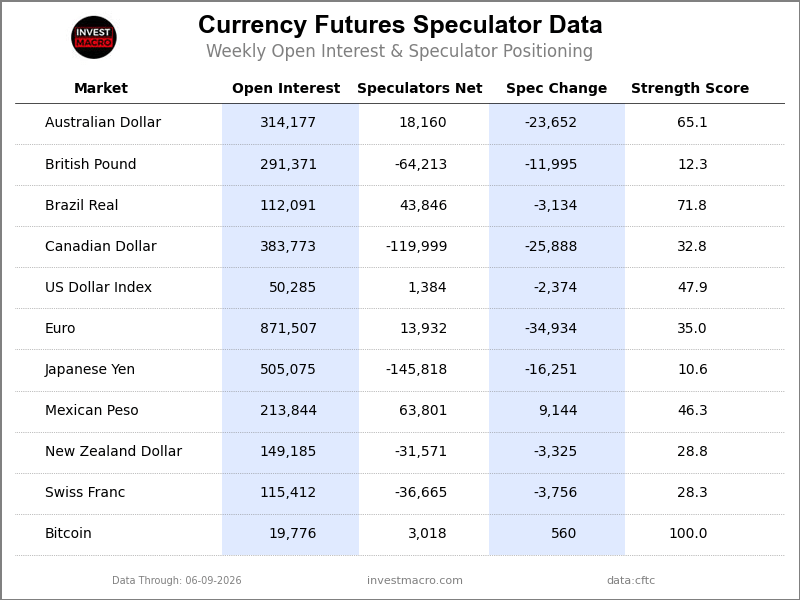
Currencies Data:

Speculators FX Futures COT Data Table
Legend: Open Interest | Speculators Current Net Position | Weekly Specs Change | Specs Strength Score compared to last 3-Years (0-100 range)


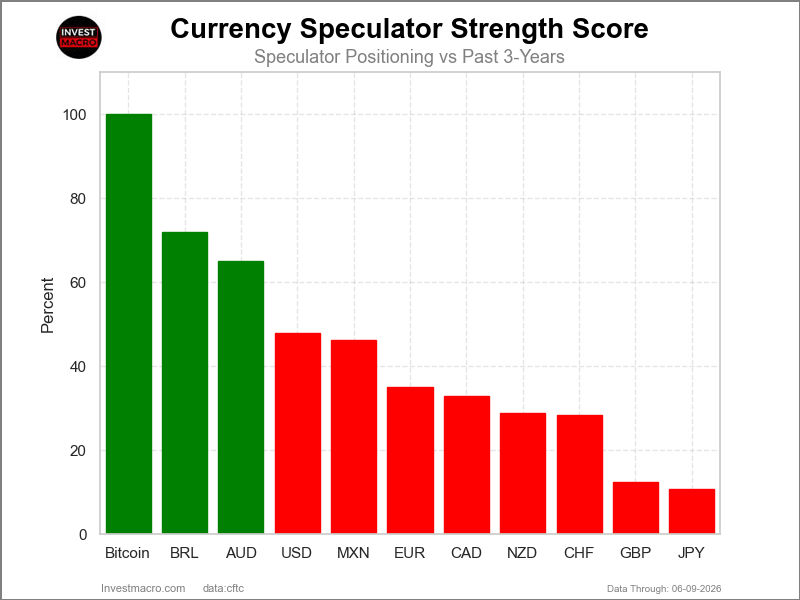
Strength Scores led by Australian Dollar & Bitcoin

Speculators Strength Scores FX Futures COT Chart
COT Strength Scores (a normalized measure of Speculator positions over a 3-Year range, from 0 to 100 where above 80 is Extreme-Bullish and below 20 is Extreme-Bearish) showed that the Australian Dollar (100 percent) and the Bitcoin (90 percent) lead the currency markets this week. The Canadian Dollar (85 percent), Brazilian Real (76 percent) and the US Dollar Index (54 percent) come in as the next highest in the weekly strength scores.

On the downside, the British Pound (12 percent) comes in at the lowest strength levels currently and are in Extreme-Bearish territory (below 20 percent). The next lowest strength scores are the Japanese Yen (32 percent), the EuroFX (37 percent) and the New Zealand Dollar (39 percent).

3-Year Strength Statistics:
US Dollar Index (54.1 percent) vs US Dollar Index previous week (28.3 percent)
EuroFX (36.8 percent) vs EuroFX previous week (68.8 percent)
British Pound Sterling (11.8 percent) vs British Pound Sterling previous week (3.8 percent)
Japanese Yen (32.0 percent) vs Japanese Yen previous week (39.3 percent)
Swiss Franc (49.8 percent) vs Swiss Franc previous week (17.6 percent)
Canadian Dollar (84.8 percent) vs Canadian Dollar previous week (100.0 percent)
Australian Dollar (100.0 percent) vs Australian Dollar previous week (91.6 percent)
New Zealand Dollar (38.5 percent) vs New Zealand Dollar previous week (22.5 percent)
Mexican Peso (49.6 percent) vs Mexican Peso previous week (53.4 percent)
Brazilian Real (75.8 percent) vs Brazilian Real previous week (77.1 percent)
Bitcoin (90.3 percent) vs Bitcoin previous week (80.3 percent)


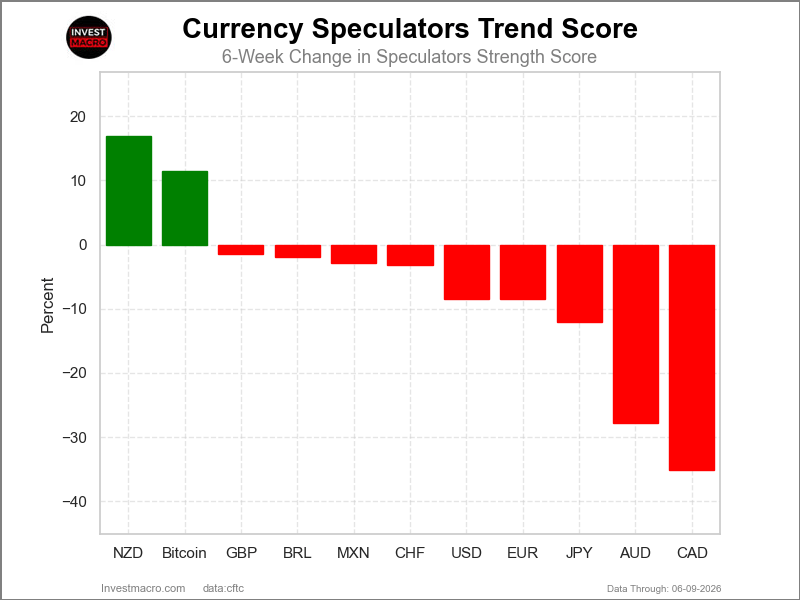
Swiss Franc & Australian Dollar top the 6-Week Strength Trends

Speculators Trends FX Futures COT Chart
COT Strength Score Trends (or move index, calculates the 6-week changes in strength scores) showed that the Swiss Franc (31 percent) and the Australian Dollar (24 percent) lead the past six weeks trends for the currencies. Bitcoin (16 percent), the New Zealand Dollar (13 percent) and the Brazilian Real (13 percent) are the next highest positive movers in the 3-Year trends data.

The EuroFX (-54 percent) leads the downside trend scores currently with the British Pound (-22 percent), Mexican Peso (-16 percent) and the Japanese Yen (-13 percent) following next with lower trend scores.

3-Year Strength Trends:
US Dollar Index (12.3 percent) vs US Dollar Index previous week (-4.0 percent)
EuroFX (-54.1 percent) vs EuroFX previous week (-10.3 percent)
British Pound Sterling (-21.9 percent) vs British Pound Sterling previous week (-28.9 percent)
Japanese Yen (-13.4 percent) vs Japanese Yen previous week (-2.1 percent)
Swiss Franc (31.4 percent) vs Swiss Franc previous week (3.6 percent)
Canadian Dollar (-0.5 percent) vs Canadian Dollar previous week (22.5 percent)
Australian Dollar (24.3 percent) vs Australian Dollar previous week (26.6 percent)
New Zealand Dollar (12.8 percent) vs New Zealand Dollar previous week (12.1 percent)
Mexican Peso (-15.7 percent) vs Mexican Peso previous week (-20.7 percent)
Brazilian Real (13.4 percent) vs Brazilian Real previous week (23.4 percent)
Bitcoin (16.2 percent) vs Bitcoin previous week (13.0 percent)


Individual COT Forex Markets:

US Dollar Index Futures:
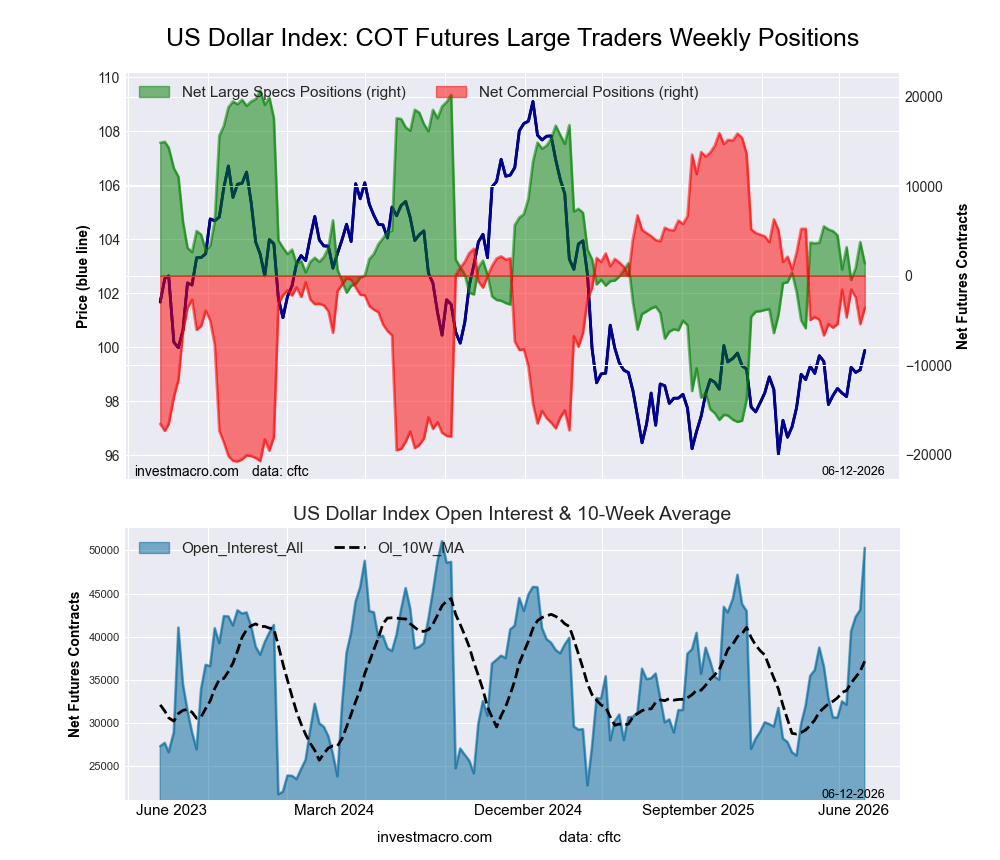
US Dollar Index Forex Futures COT ChartThe US Dollar Index large speculator standing this week resulted in a net position of 3,693 contracts in the data reported through Tuesday. This was a weekly increase of 9,575 contracts from the previous week which had a total of -5,882 net contracts.

This week’s current strength score (the trader positioning range over the past three years, measured from 0 to 100) shows the speculators are currently Bullish with a score of 54.1 percent. The commercials are Bearish with a score of 43.1 percent and the small traders (not shown in chart) are Bullish with a score of 61.1 percent.

Price Trend-Following Model: Weak Downtrend

Our weekly trend-following model classifies the current market price position as: Weak Downtrend.

US DOLLAR INDEX StatisticsSPECULATORSCOMMERCIALSSMALL TRADERS
– Percent of Open Interest Longs:60.425.28.8
– Percent of Open Interest Shorts:50.039.25.3
– Net Position:3,693-4,9571,264
– Gross Longs:21,4268,9323,132
– Gross Shorts:17,73313,8891,868
– Long to Short Ratio:1.2 to 10.6 to 11.7 to 1
NET POSITION TREND:
– Strength Index Score (3 Year Range Pct):54.143.161.1
– Strength Index Reading (3 Year Range):BullishBearishBullish
NET POSITION MOVEMENT INDEX:
– 6-Week Change in Strength Index:12.3-17.733.9


Euro Currency Futures:

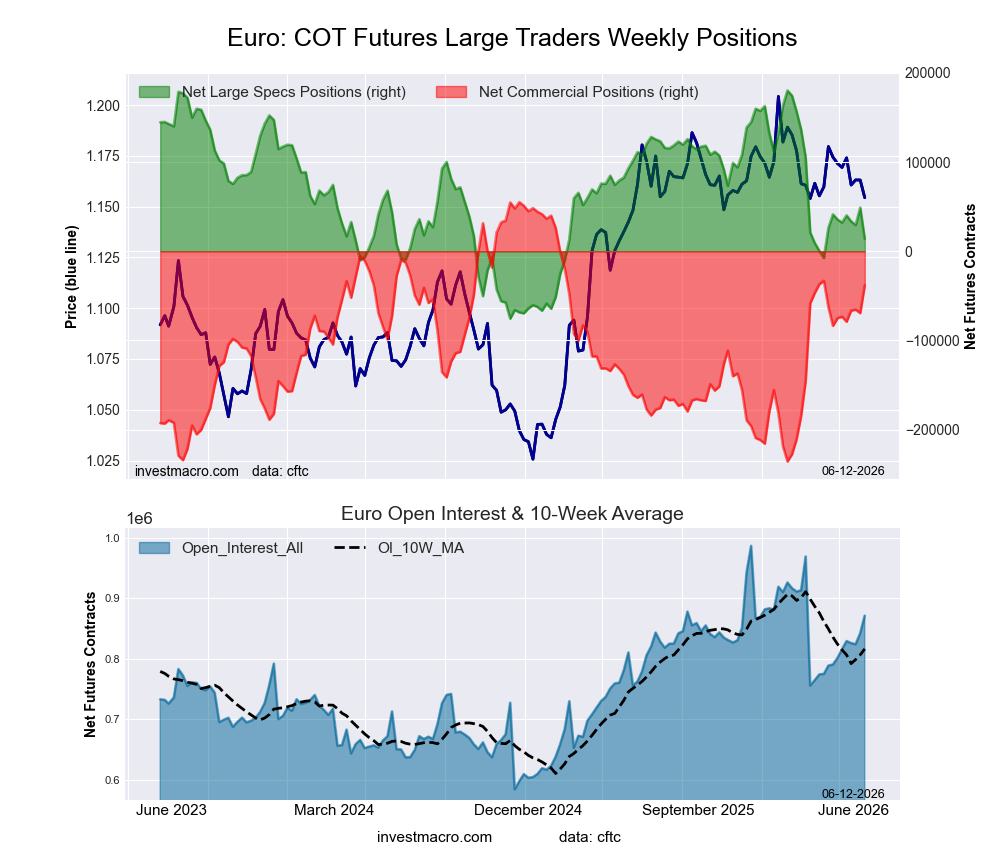
Euro Currency Futures COT ChartThe Euro Currency large speculator standing this week resulted in a net position of 21,132 contracts in the data reported through Tuesday. This was a weekly decline of -84,012 contracts from the previous week which had a total of 105,144 net contracts.

This week’s current strength score (the trader positioning range over the past three years, measured from 0 to 100) shows the speculators are currently Bearish with a score of 36.8 percent. The commercials are Bullish with a score of 61.3 percent and the small traders (not shown in chart) are Bullish with a score of 53.2 percent.

Price Trend-Following Model: Weak Uptrend

Our weekly trend-following model classifies the current market price position as: Weak Uptrend.

EURO Currency StatisticsSPECULATORSCOMMERCIALSSMALL TRADERS
– Percent of Open Interest Longs:28.257.611.3
– Percent of Open Interest Shorts:25.465.36.4
– Net Position:21,132-58,43337,301
– Gross Longs:212,886435,13085,722
– Gross Shorts:191,754493,56348,421
– Long to Short Ratio:1.1 to 10.9 to 11.8 to 1
NET POSITION TREND:
– Strength Index Score (3 Year Range Pct):36.861.353.2
– Strength Index Reading (3 Year Range):BearishBullishBullish
NET POSITION MOVEMENT INDEX:
– 6-Week Change in Strength Index:-54.154.6-37.7


British Pound Sterling Futures:

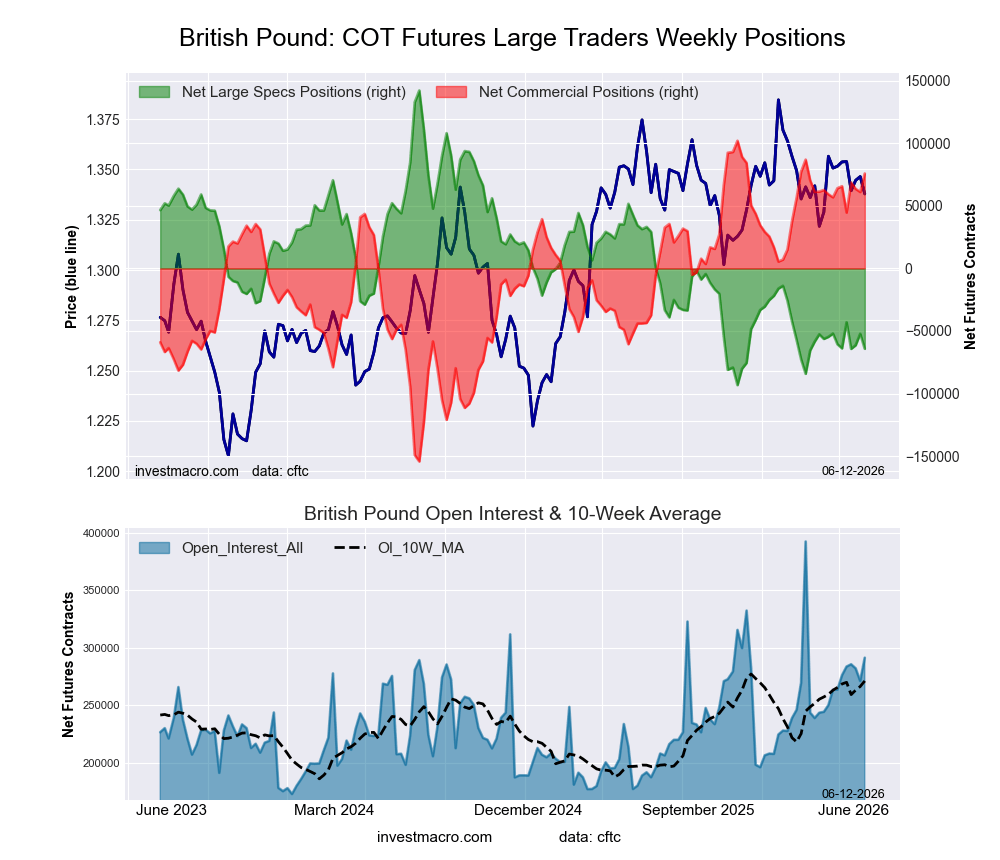
British Pound Sterling Futures COT ChartThe British Pound Sterling large speculator standing this week resulted in a net position of -65,515 contracts in the data reported through Tuesday. This was a weekly rise of 18,682 contracts from the previous week which had a total of -84,197 net contracts.

This week’s current strength score (the trader positioning range over the past three years, measured from 0 to 100) shows the speculators are currently Bearish-Extreme with a score of 11.8 percent. The commercials are Bullish-Extreme with a score of 87.6 percent and the small traders (not shown in chart) are Bearish with a score of 40.7 percent.

Price Trend-Following Model: Weak Uptrend

Our weekly trend-following model classifies the current market price position as: Weak Uptrend.

BRITISH POUND StatisticsSPECULATORSCOMMERCIALSSMALL TRADERS
– Percent of Open Interest Longs:18.270.010.0
– Percent of Open Interest Shorts:45.141.212.0
– Net Position:-65,51570,330-4,815
– Gross Longs:44,293170,50924,456
– Gross Shorts:109,808100,17929,271
– Long to Short Ratio:0.4 to 11.7 to 10.8 to 1
NET POSITION TREND:
– Strength Index Score (3 Year Range Pct):11.887.640.7
– Strength Index Reading (3 Year Range):Bearish-ExtremeBullish-ExtremeBearish
NET POSITION MOVEMENT INDEX:
– 6-Week Change in Strength Index:-21.924.7-30.3


Japanese Yen Futures:

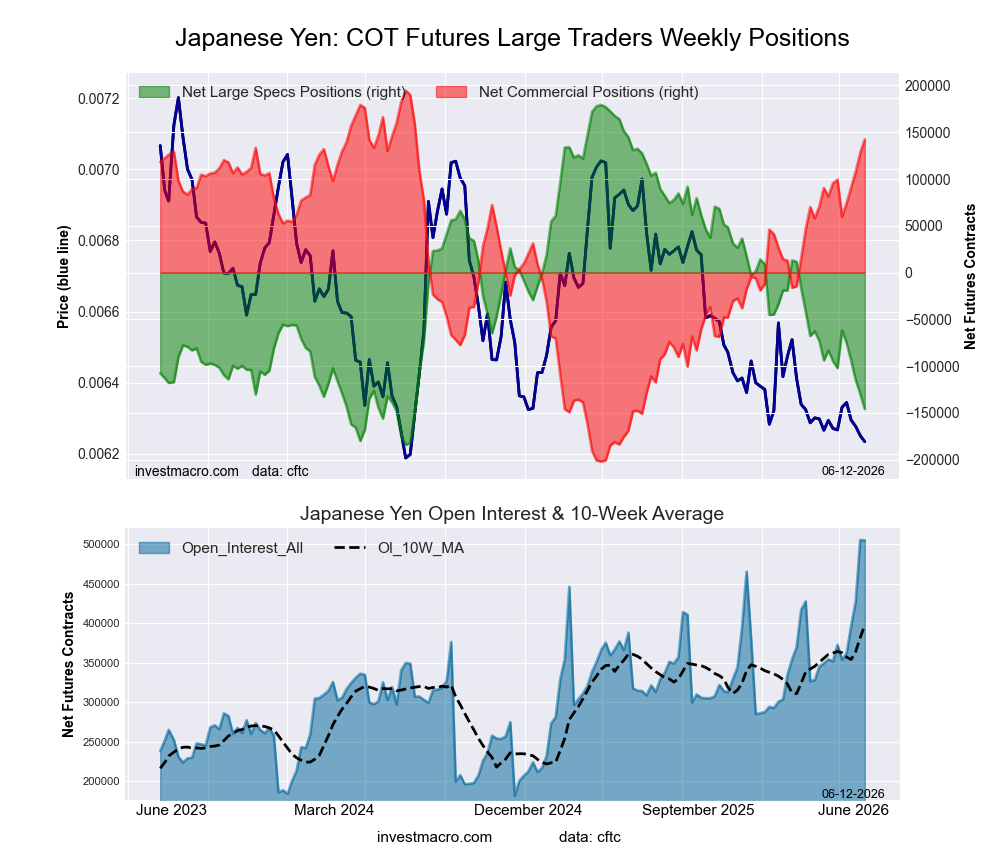
Japanese Yen Forex Futures COT ChartThe Japanese Yen large speculator standing this week resulted in a net position of -67,780 contracts in the data reported through Tuesday. This was a weekly decrease of -26,393 contracts from the previous week which had a total of -41,387 net contracts.

This week’s current strength score (the trader positioning range over the past three years, measured from 0 to 100) shows the speculators are currently Bearish with a score of 32.0 percent. The commercials are Bullish with a score of 68.6 percent and the small traders (not shown in chart) are Bearish with a score of 31.0 percent.

Price Trend-Following Model: Strong Downtrend

Our weekly trend-following model classifies the current market price position as: Strong Downtrend.

JAPANESE YEN StatisticsSPECULATORSCOMMERCIALSSMALL TRADERS
– Percent of Open Interest Longs:32.750.212.1
– Percent of Open Interest Shorts:53.428.812.8
– Net Position:-67,78070,002-2,222
– Gross Longs:106,819163,97539,497
– Gross Shorts:174,59993,97341,719
– Long to Short Ratio:0.6 to 11.7 to 10.9 to 1
NET POSITION TREND:
– Strength Index Score (3 Year Range Pct):32.068.631.0
– Strength Index Reading (3 Year Range):BearishBullishBearish
NET POSITION MOVEMENT INDEX:
– 6-Week Change in Strength Index:-13.414.0-18.2


Swiss Franc Futures:

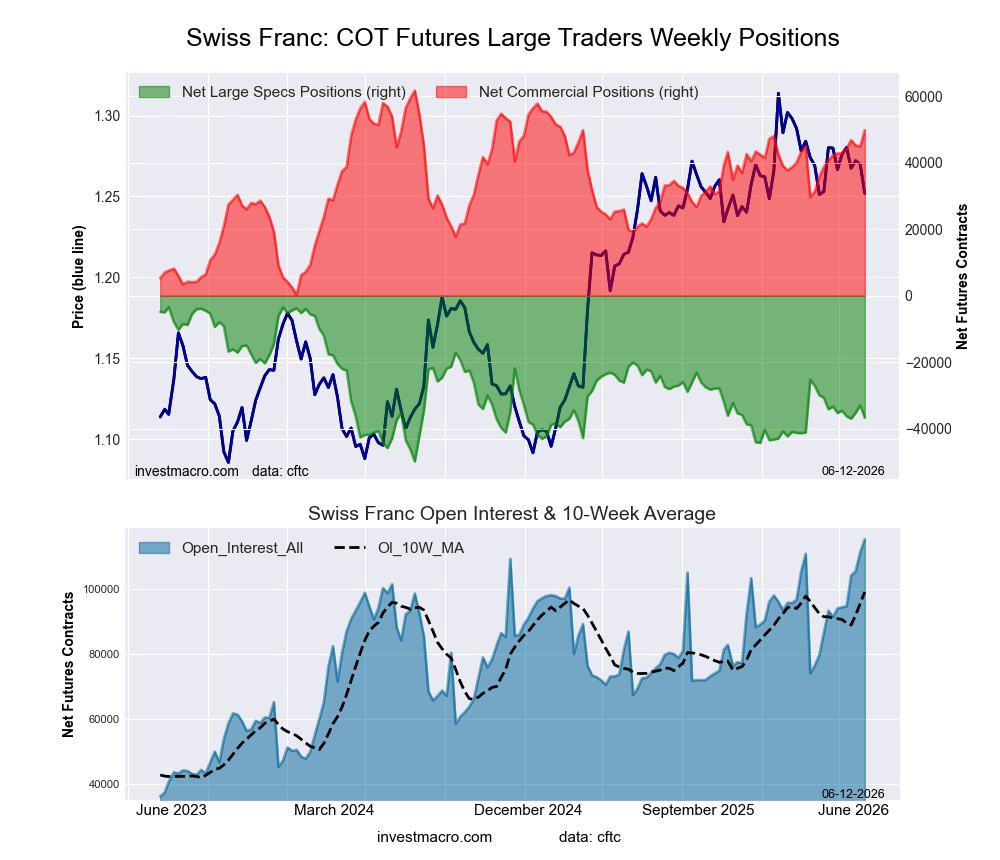
Swiss Franc Forex Futures COT ChartThe Swiss Franc large speculator standing this week resulted in a net position of -25,213 contracts in the data reported through Tuesday. This was a weekly boost of 15,879 contracts from the previous week which had a total of -41,092 net contracts.

This week’s current strength score (the trader positioning range over the past three years, measured from 0 to 100) shows the speculators are currently Bearish with a score of 49.8 percent. The commercials are Bearish with a score of 47.8 percent and the small traders (not shown in chart) are Bullish with a score of 60.2 percent.

Price Trend-Following Model: Uptrend

Our weekly trend-following model classifies the current market price position as: Uptrend.

SWISS FRANC StatisticsSPECULATORSCOMMERCIALSSMALL TRADERS
– Percent of Open Interest Longs:11.071.816.8
– Percent of Open Interest Shorts:45.131.922.8
– Net Position:-25,21329,602-4,389
– Gross Longs:8,17553,23612,475
– Gross Shorts:33,38823,63416,864
– Long to Short Ratio:0.2 to 12.3 to 10.7 to 1
NET POSITION TREND:
– Strength Index Score (3 Year Range Pct):49.847.860.2
– Strength Index Reading (3 Year Range):BearishBearishBullish
NET POSITION MOVEMENT INDEX:
– 6-Week Change in Strength Index:31.4-15.3-25.8


Canadian Dollar Futures:

Canadian Dollar Forex Futures COT ChartThe Canadian Dollar large speculator standing this week resulted in a net position of 886 contracts in the data reported through Tuesday. This was a weekly fall of -35,273 contracts from the previous week which had a total of 36,159 net contracts.

This week’s current strength score (the trader positioning range over the past three years, measured from 0 to 100) shows the speculators are currently Bullish-Extreme with a score of 84.8 percent. The commercials are Bearish-Extreme with a score of 15.4 percent and the small traders (not shown in chart) are Bullish with a score of 60.2 percent.

Price Trend-Following Model: Uptrend

Our weekly trend-following model classifies the current market price position as: Uptrend.

CANADIAN DOLLAR StatisticsSPECULATORSCOMMERCIALSSMALL TRADERS
– Percent of Open Interest Longs:26.858.212.1
– Percent of Open Interest Shorts:26.560.89.9
– Net Position:886-6,2065,320
– Gross Longs:66,507144,31429,911
– Gross Shorts:65,621150,52024,591
– Long to Short Ratio:1.0 to 11.0 to 11.2 to 1
NET POSITION TREND:
– Strength Index Score (3 Year Range Pct):84.815.460.2
– Strength Index Reading (3 Year Range):Bullish-ExtremeBearish-ExtremeBullish
NET POSITION MOVEMENT INDEX:
– 6-Week Change in Strength Index:-0.50.7-1.3


Australian Dollar Futures:

Australian Dollar Forex Futures COT ChartThe Australian Dollar large speculator standing this week resulted in a net position of 69,061 contracts in the data reported through Tuesday. This was a weekly boost of 14,864 contracts from the previous week which had a total of 54,197 net contracts.

This week’s current strength score (the trader positioning range over the past three years, measured from 0 to 100) shows the speculators are currently Bullish-Extreme with a score of 100.0 percent. The commercials are Bearish-Extreme with a score of 0.0 percent and the small traders (not shown in chart) are Bullish-Extreme with a score of 92.8 percent.

Price Trend-Following Model: Uptrend

Our weekly trend-following model classifies the current market price position as: Uptrend.

AUSTRALIAN DOLLAR StatisticsSPECULATORSCOMMERCIALSSMALL TRADERS
– Percent of Open Interest Longs:51.231.515.4
– Percent of Open Interest Shorts:25.266.86.1
– Net Position:69,061-93,77224,711
– Gross Longs:136,07483,76940,933
– Gross Shorts:67,013177,54116,222
– Long to Short Ratio:2.0 to 10.5 to 12.5 to 1
NET POSITION TREND:
– Strength Index Score (3 Year Range Pct):100.00.092.8
– Strength Index Reading (3 Year Range):Bullish-ExtremeBearish-ExtremeBullish-Extreme
NET POSITION MOVEMENT INDEX:
– 6-Week Change in Strength Index:24.3-21.65.9


New Zealand Dollar Futures:

New Zealand Dollar Forex Futures COT ChartThe New Zealand Dollar large speculator standing this week resulted in a net position of -23,057 contracts in the data reported through Tuesday. This was a weekly gain of 14,054 contracts from the previous week which had a total of -37,111 net contracts.

This week’s current strength score (the trader positioning range over the past three years, measured from 0 to 100) shows the speculators are currently Bearish with a score of 38.5 percent. The commercials are Bullish with a score of 61.0 percent and the small traders (not shown in chart) are Bearish with a score of 41.9 percent.

Price Trend-Following Model: Weak Uptrend

Our weekly trend-following model classifies the current market price position as: Weak Uptrend.

NEW ZEALAND DOLLAR StatisticsSPECULATORSCOMMERCIALSSMALL TRADERS
– Percent of Open Interest Longs:17.277.04.8
– Percent of Open Interest Shorts:53.139.76.1
– Net Position:-23,05723,860-803
– Gross Longs:10,99849,3173,090
– Gross Shorts:34,05525,4573,893
– Long to Short Ratio:0.3 to 11.9 to 10.8 to 1
NET POSITION TREND:
– Strength Index Score (3 Year Range Pct):38.561.041.9
– Strength Index Reading (3 Year Range):BearishBullishBearish
NET POSITION MOVEMENT INDEX:
– 6-Week Change in Strength Index:12.8-11.8-9.4


Mexican Peso Futures:

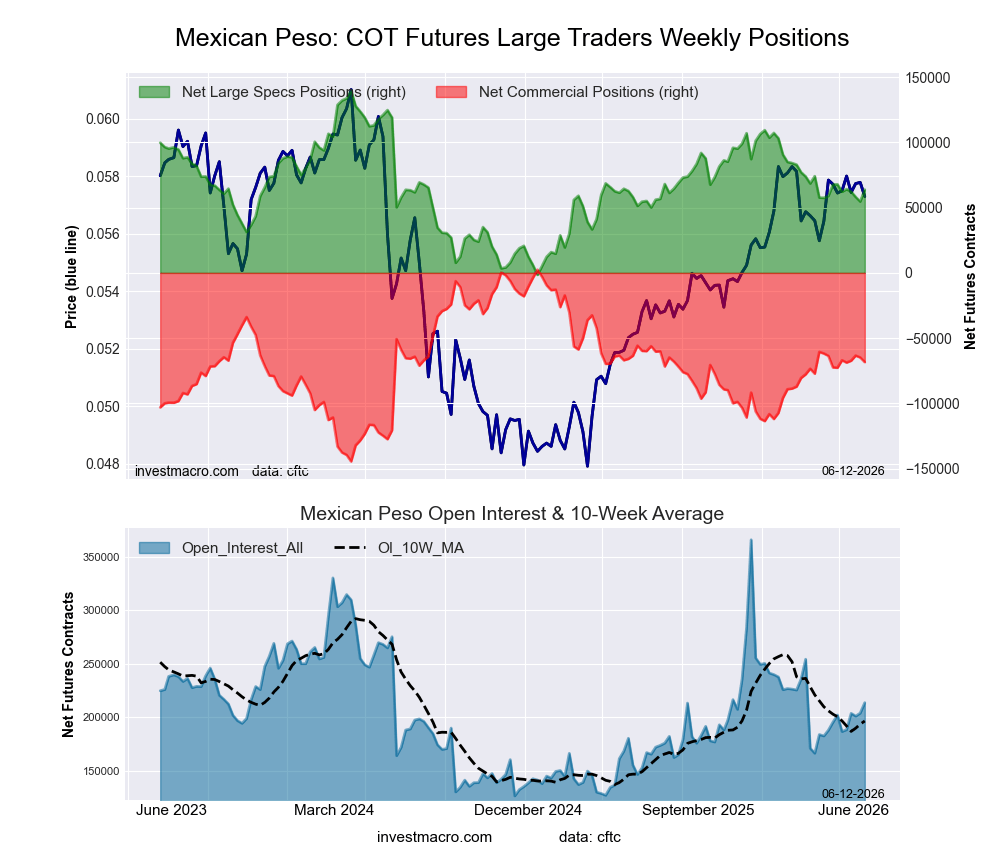
Mexican Peso Futures COT ChartThe Mexican Peso large speculator standing this week resulted in a net position of 68,460 contracts in the data reported through Tuesday. This was a weekly decline of -5,351 contracts from the previous week which had a total of 73,811 net contracts.

This week’s current strength score (the trader positioning range over the past three years, measured from 0 to 100) shows the speculators are currently Bearish with a score of 49.6 percent. The commercials are Bearish with a score of 48.3 percent and the small traders (not shown in chart) are Bullish with a score of 50.4 percent.

Price Trend-Following Model: Weak Uptrend

Our weekly trend-following model classifies the current market price position as: Weak Uptrend.

MEXICAN PESO StatisticsSPECULATORSCOMMERCIALSSMALL TRADERS
– Percent of Open Interest Longs:53.142.53.5
– Percent of Open Interest Shorts:13.285.40.6
– Net Position:68,460-73,4404,980
– Gross Longs:90,99772,8215,994
– Gross Shorts:22,537146,2611,014
– Long to Short Ratio:4.0 to 10.5 to 15.9 to 1
NET POSITION TREND:
– Strength Index Score (3 Year Range Pct):49.648.350.4
– Strength Index Reading (3 Year Range):BearishBearishBullish
NET POSITION MOVEMENT INDEX:
– 6-Week Change in Strength Index:-15.715.2-1.3


Brazilian Real Futures:

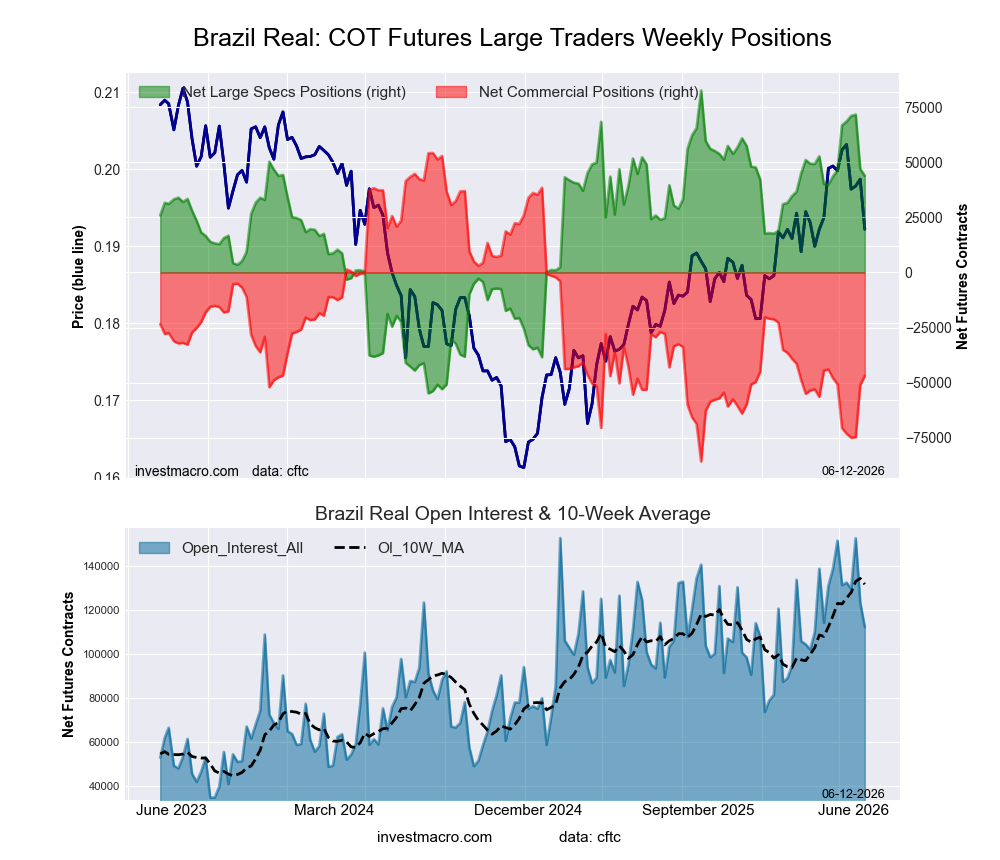
Brazil Real Futures COT ChartThe Brazilian Real large speculator standing this week resulted in a net position of 49,317 contracts in the data reported through Tuesday. This was a weekly fall of -1,711 contracts from the previous week which had a total of 51,028 net contracts.

This week’s current strength score (the trader positioning range over the past three years, measured from 0 to 100) shows the speculators are currently Bullish with a score of 75.8 percent. The commercials are Bearish with a score of 23.1 percent and the small traders (not shown in chart) are Bearish with a score of 44.5 percent.

Price Trend-Following Model: Uptrend

Our weekly trend-following model classifies the current market price position as: Uptrend.

BRAZIL REAL StatisticsSPECULATORSCOMMERCIALSSMALL TRADERS
– Percent of Open Interest Longs:69.924.55.0
– Percent of Open Interest Shorts:21.577.00.9
– Net Position:49,317-53,5174,200
– Gross Longs:71,25525,0065,124
– Gross Shorts:21,93878,523924
– Long to Short Ratio:3.2 to 10.3 to 15.5 to 1
NET POSITION TREND:
– Strength Index Score (3 Year Range Pct):75.823.144.5
– Strength Index Reading (3 Year Range):BullishBearishBearish
NET POSITION MOVEMENT INDEX:
– 6-Week Change in Strength Index:13.4-13.10.2


Bitcoin Futures:

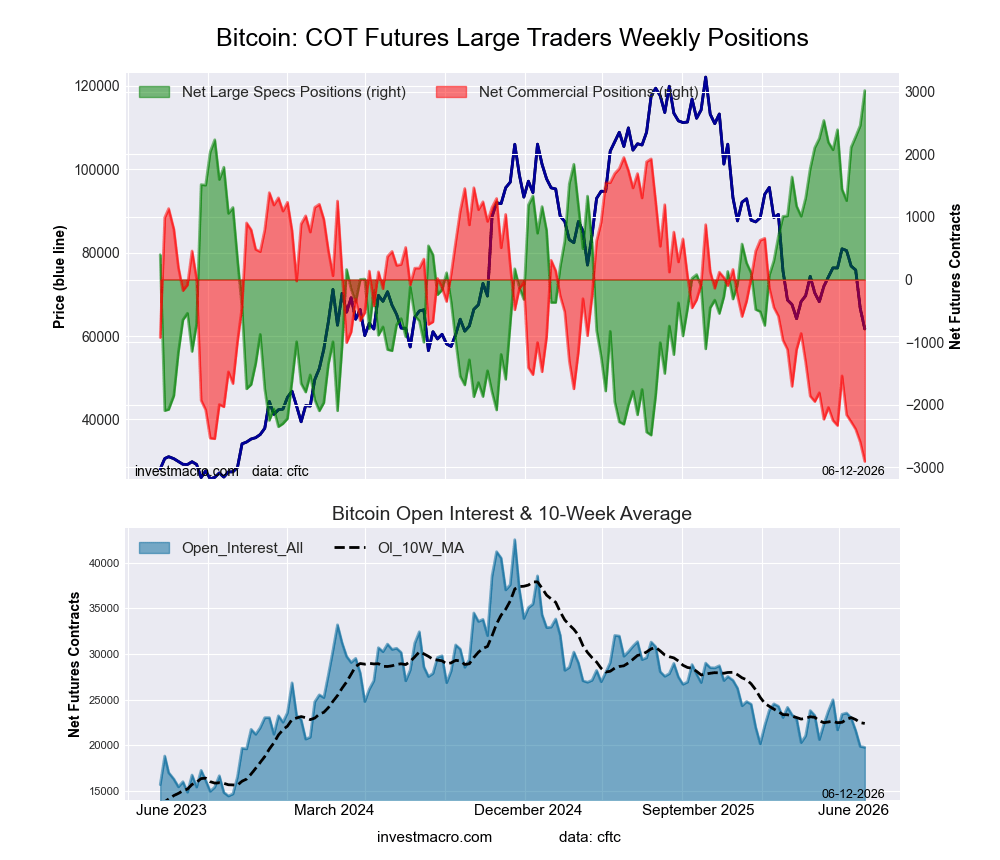
Bitcoin Crypto Futures COT ChartThe Bitcoin large speculator standing this week resulted in a net position of 1,773 contracts in the data reported through Tuesday. This was a weekly rise of 471 contracts from the previous week which had a total of 1,302 net contracts.

This week’s current strength score (the trader positioning range over the past three years, measured from 0 to 100) shows the speculators are currently Bullish-Extreme with a score of 90.3 percent. The commercials are Bearish-Extreme with a score of 15.2 percent and the small traders (not shown in chart) are Bearish with a score of 41.9 percent.

Price Trend-Following Model: Downtrend

Our weekly trend-following model classifies the current market price position as: Downtrend.

BITCOIN StatisticsSPECULATORSCOMMERCIALSSMALL TRADERS
– Percent of Open Interest Longs:70.31.65.2
– Percent of Open Interest Shorts:62.99.44.9
– Net Position:1,773-1,86289
– Gross Longs:16,7413791,246
– Gross Shorts:14,9682,2411,157
– Long to Short Ratio:1.1 to 10.2 to 11.1 to 1
NET POSITION TREND:
– Strength Index Score (3 Year Range Pct):90.315.241.9
– Strength Index Reading (3 Year Range):Bullish-ExtremeBearish-ExtremeBearish
NET POSITION MOVEMENT INDEX:
– 6-Week Change in Strength Index:16.2-19.96.7


Article By InvestMacroReceive our weekly COT Reports by Email

*COT Report: The COT data, released weekly to the public each Friday, is updated through the most recent Tuesday (data is 3 days old) and shows a quick view of how large speculators or non-commercials (for-profit traders) were positioned in the futures markets.

The CFTC categorizes trader positions according to commercial hedgers (traders who use futures contracts for hedging as part of the business), non-commercials (large traders who speculate to realize trading profits) and nonreportable traders (usually small traders/speculators) as well as their open interest (contracts open in the market at time of reporting).See CFTC criteria here.

All information and opinions on this website and contained in this article are for general informational purposes only and do not constitute investment advice.

GBP/USD Appreciates BoE Pause: Now Focus Shifts to Geopolitics

By Analytical Department RoboForex

GBP/USD rose during the previous session and is now correcting to 1.3403. The pound responded positively to the Bank of England’s decision to keep interest rates unchanged, with market attention focused on the regulator’s guidance on how the Iran conflict might influence future policy.

The Monetary Policy Committee voted unanimously for a pause (9-0), a notable shift from February’s more divided 5-4 alignment. Some members have acknowledged the possibility of future rate hikes. The BoE has adopted a wait-and-see approach amid significant uncertainty.

While the rate pause was widely anticipated, market expectations have shifted markedly. Until recently, rate cuts were priced in, but rising oil prices amid the Iran conflict have increased inflationary risks and tilted sentiment towards a more hawkish policy stance.

The BoE estimates that inflation could accelerate to 3.5% in the coming quarters and highlighted the risk that inflation expectations could become entrenched in the economy. At the same time, signs of an economic slowdown persist, which could restrain price increases, though the primary risk now centres on inflation.

Additional labour market data revealed a slowdown in wage growth to its lowest rate since late 2020. Unemployment remains at 5.2%, with employment showing signs of stabilisation. Under normal circumstances, such data might support softer rhetoric; however, the current geopolitical environment and elevated energy prices have pushed inflation risks to the forefront.

Overall, the BoE’s stance remains cautious. While the rate pause continues, the scope for policy easing is diminishing, limiting the pound’s upside potential.

Technical Analysis

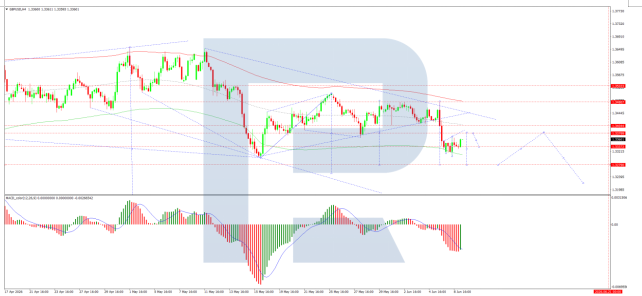
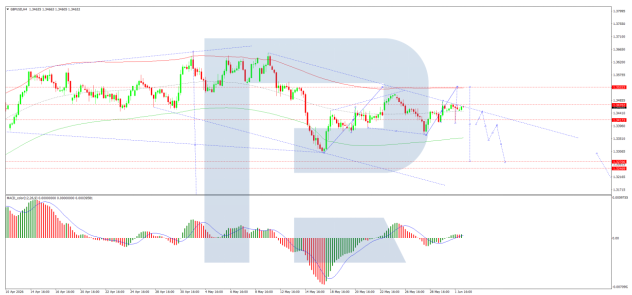
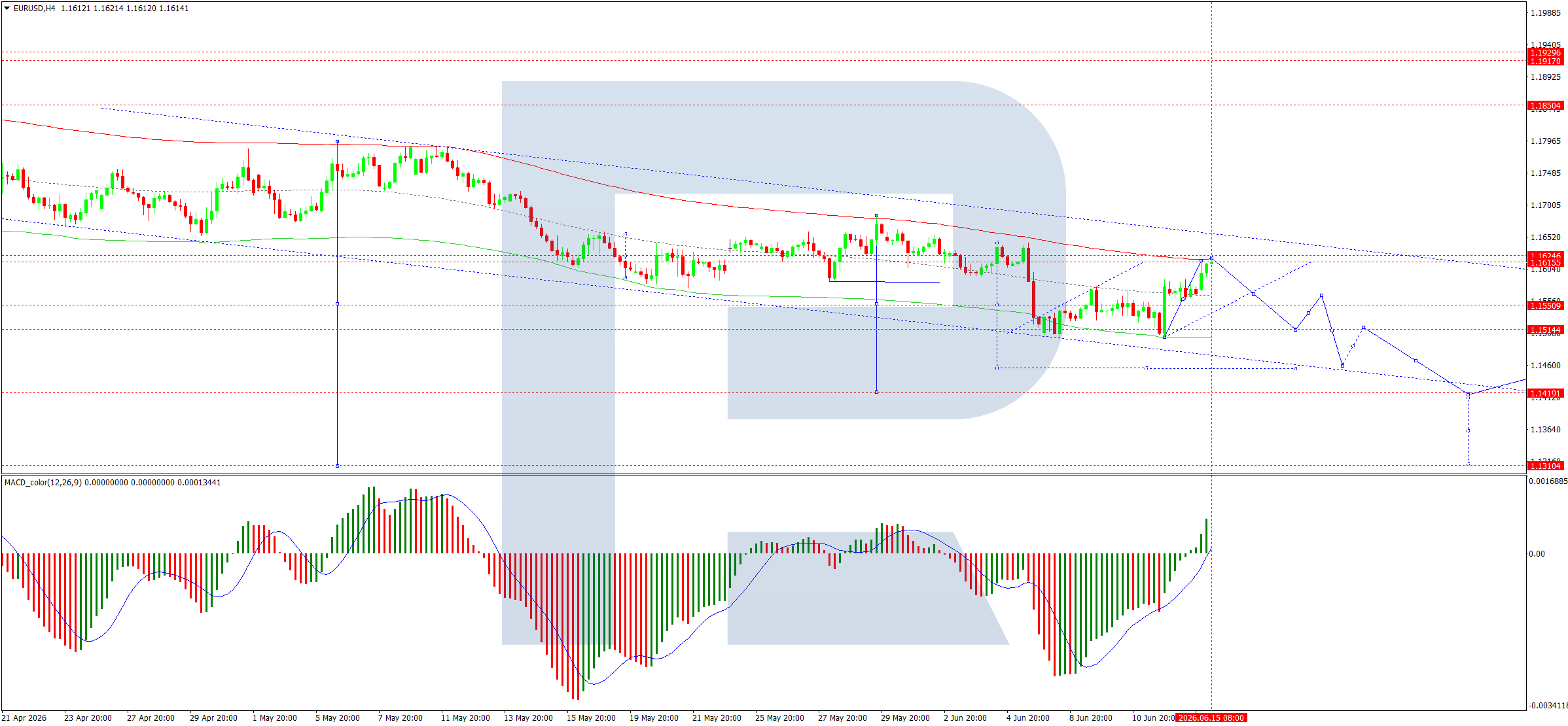
On the H4 GBP/USD chart, the market is forming a broad consolidation range around 1.3354, currently extending up to 1.3467. A decline to 1.3333 is expected in the near term, with a new consolidation range likely to form following this correction. An upside breakout would pave the way for a continuation wave towards 1.3494, while a downside breakout would suggest further movement towards 1.3133. Technically, this scenario is confirmed by the MACD indicator, whose signal line is above zero and pointing firmly upwards.

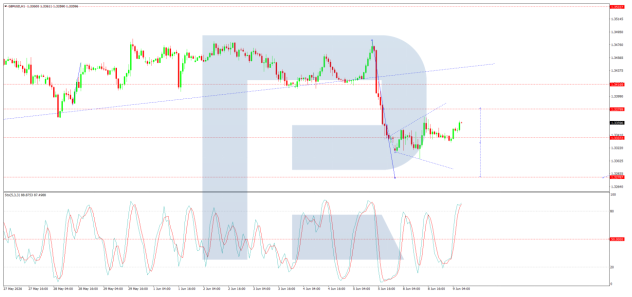
On the H1 chart, the market has formed a compact consolidation range around 1.3424. A downside breakout has initiated a wave structure extending to 1.3333. Should this level be breached, further downside towards 1.3125 is possible. Conversely, an upside breakout from the range could trigger a growth wave towards 1.3494. Technically, this scenario is confirmed by the Stochastic oscillator, with its signal line below 80 and pointing firmly downwards towards 20.

Conclusion

GBP/USD’s positive reaction to the BoE’s unanimous hold reflects market recognition that rising inflation risks – driven by geopolitical tensions and higher energy prices – are narrowing the path to policy easing. While the Bank’s cautious stance and the unanimous vote provide some support for sterling, the shift from rate-cut expectations to potential rate hikes has recalibrated market sentiment. With geopolitical developments now taking centre stage and technical indicators pointing to further consolidation, sterling’s near-term direction will likely hinge on whether inflation concerns continue to outweigh signs of domestic economic slowdown.


Disclaimer

Any forecasts contained herein are based on the author’s particular opinion. This analysis may not be treated as trading advice. RoboForex bears no responsibility for trading results based on trading recommendations and reviews contained herein.

EUR/USD Awaits Fed Decision

By Analytical Department RoboForex

EUR/USD is consolidating near 1.1532 on Wednesday, with markets adopting a wait-and-see stance ahead of the Federal Reserve’s decision.

The Fed is widely expected to keep rates unchanged. Investor attention will focus on Jerome Powell’s comments, particularly on how oil market volatility may influence the policy outlook.

Rising energy prices are increasing inflation risks, while labour market signals remain mixed and offer little guidance on rates. Markets do not expect policy easing before September or October and are currently pricing in just one rate cut before year-end.

Geopolitical tensions continue to weigh on sentiment. Iran is intensifying attacks on the region’s energy infrastructure, while US allies have not supported Donald Trump’s call to ensure shipping security through the Strait of Hormuz.

Technical Analysis

On the H4 chart, EUR/USD is forming a consolidation range around 1.1536. A move higher towards 1.1600 is expected as a near-term target, followed by a potential pullback to 1.1539. Technically, the MACD supports this scenario: its signal line remains below zero but is pointing firmly upwards, indicating building bullish momentum.

On the H1 chart, the pair is developing the next upward leg towards 1.1596. After reaching this level, a decline to 1.1530 is expected, followed by a renewed advance towards 1.1650. The Stochastic oscillator confirms this structure, with its signal line above 50 and rising towards 80.

Conclusion

EUR/USD remains in a holding pattern ahead of the Federal Reserve’s decision, with markets awaiting Powell’s assessment of how oil market volatility may shape the policy path. With only one rate cut now priced in before year-end and Middle East tensions showing no signs of easing, the dollar’s near-term direction will depend on whether the Fed signals patience or heightened concern over inflation. Technical indicators point to scope for a short-term rebound, though the broader trend will be determined by the tone of Wednesday’s announcement.


Disclaimer

Any forecasts contained herein are based on the author’s particular opinion. This analysis may not be treated as trading advice. RoboForex bears no responsibility for trading results based on trading recommendations and reviews contained herein.

GBP/USD Pauses Ahead of Bank of England Rate Decision

By Analytical Department RoboForex

GBP/USD is holding near 1.3315 on Tuesday. The pound posted a modest gain the previous day but remains close to three-month lows amid ongoing uncertainty over the impact of the Middle East conflict on the global economy and inflation. Investors continue to favour the US dollar as a key safe-haven asset.

Since the onset of the conflict involving Iran, the dollar has been the primary beneficiary of safe-haven demand, outperforming gold, government bonds, and currencies such as the Swiss franc. Meanwhile, the pound has shown relative resilience compared with several other currencies: over the past three weeks, it has declined by approximately 1.7%, while the yen and euro have lost around 2.0% and 3.0%, respectively. This relative strength is partly due to the UK’s lower dependence on energy imports and its higher interest rate environment.

The key event of the week is the Bank of England’s meeting on Thursday, where the rate is expected to remain unchanged at 3.75%. Markets are currently pricing in just one rate cut before year-end, marking a notable shift from the two cuts anticipated prior to the conflict’s escalation.

Attention will also turn to UK labour market data, which points to a gradual cooling in employment and a slowdown in wage growth. Against this backdrop, with persistent inflationary pressure and rising energy prices, the pound may face further headwinds if macroeconomic conditions continue to deteriorate.

Technical Analysis

On the H4 GBP/USD chart, the market is forming a broad consolidation range around 1.3283, currently extending to 1.3333. A decline to 1.3260 is expected in the near term, after which a new consolidation range is likely to form. An upside breakout would pave the way for a continuation wave towards 1.3360, while a downside breakout would suggest further movement towards 1.3133. Technically, this scenario is confirmed by the MACD indicator, whose signal line is below the zero level and pointing sharply upwards.

On the H1 chart, the market has formed a compact consolidation range around 1.3315. A downside breakout has initiated a wave structure extending to 1.3260. Should this level be breached, further downside towards 1.3125 is likely. Conversely, an upside breakout from the range could trigger a growth wave towards 1.3350. Technically, this scenario is confirmed by the Stochastic oscillator, with its signal line above the 80 level and pointing sharply downwards.

Conclusion

GBP/USD remains in a holding pattern ahead of Thursday’s Bank of England decision, with the pound showing relative resilience compared with other major currencies despite lingering near three-month lows. The dollar continues to dominate as the preferred safe-haven asset amid ongoing Middle East tensions, while shifting rate expectations – from two cuts to just one – reflect the complex inflation dynamics facing policymakers. With UK labour data showing signs of cooling and energy prices remaining elevated, the BoE’s tone on Thursday will be crucial in determining whether sterling can break out of its current consolidation range or extend its recent losses.


Disclaimer

Any forecasts contained herein are based on the author’s particular opinion. This analysis may not be treated as trading advice. RoboForex bears no responsibility for trading results based on trading recommendations and reviews contained herein.

USD/JPY at Highest Since July 2024: Market Awaits BoJ Intervention

By Analytical Department RoboForex

USD/JPY rose to 159.29 on Friday, marking one of the weakest levels for the Japanese yen since July 2024. The yen’s decline is heightening market concerns about possible intervention by authorities in the foreign exchange market.

Bank of Japan Governor Kazuo Ueda warned that a weak yen could exacerbate imported inflation amid rising oil prices. According to him, this may accelerate the BoJ’s transition towards normalising monetary policy.

Ueda also noted that exchange rate fluctuations are now having a more pronounced impact on inflation than in the past, increasing their significance for policy decisions.

Oil prices surged following a pledge by Iran’s new Supreme Leader, Mojtaba Khamenei, to maintain the effective closure of the Strait of Hormuz. Tehran is intensifying attacks on oil and transport infrastructure across the region.

There is no sign of de-escalation in the Middle East conflict. Tough rhetoric from both Tehran and Washington indicates that the confrontation involving Iran remains far from resolution as it enters its second week.

Technical Analysis

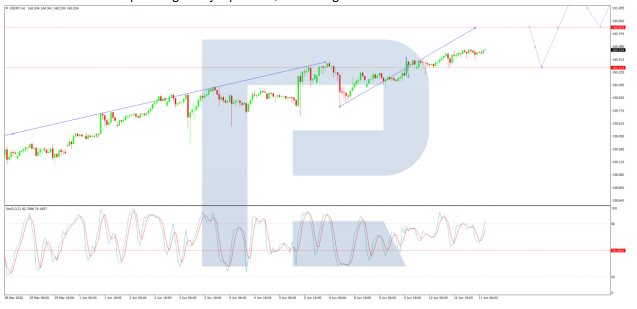
On the H4 USD/JPY chart, the market is forming a consolidation range around 159.12, currently extending to 159.60. A decline to test 159.20 from above is expected today, followed by a possible growth wave towards 159.88.

Technically, this scenario is confirmed by the MACD indicator, whose signal line is high above zero and pointing firmly upwards.

On the H1 chart, USD/JPY is forming a growth wave targeting 159.88, with a possible extension to 160.00. Thereafter, a downward correction is likely towards at least 158.55.

Technically, this scenario is supported by the Stochastic oscillator, whose signal line is above 80 and continuing to trend upwards.

Conclusion

USD/JPY has surged to multi-month highs amid a weakening yen, driven by rising oil prices and evolving expectations for BoJ policy. Governor Ueda’s remarks suggest that currency weakness may accelerate the Bank’s policy normalisation, though speculation over intervention continues to grow. With geopolitical tensions in the Middle East showing no signs of easing, and technical indicators pointing to further near-term upside, the pair appears poised to test the psychologically significant 160.00 level. However, verbal warnings from Japanese officials could amplify volatility.


Disclaimer

Any forecasts contained herein are based on the author’s particular opinion. This analysis may not be treated as trading advice. RoboForex bears no responsibility for trading results based on trading recommendations and reviews contained herein.

GBP/USD Managed to Rise, but Pressure Factors Remain in Place

By Analytical Department RoboForex

GBP/USD rose to 1.3450 on Wednesday. Expectations of de-escalation in the Middle East supported the pound, as lower oil prices reduced inflationary risks for the British economy, which is heavily dependent on energy imports.

Despite this localised strengthening, investors continue to monitor the development of the conflict between the United States, Israel and Iran closely. Its consequences could significantly affect the global economy. The situation remains uncertain: US President Donald Trump has suggested the war could end soon, but Iran’s Islamic Revolutionary Guard Corps stated that oil shipments through the Strait of Hormuz will not resume while attacks by the United States and Israel continue.

Amid these external risks, investors are also revising expectations for UK monetary policy. On average, a Bank of England interest rate cut in the second quarter is now considered possible.

Domestic factors continue to weigh on the pound. Weak economic statistics and political uncertainty in the UK maintain downside risks for the currency. An additional source of tension may be the local elections, scheduled to take place in two months.

Technical Analysis

On the H4 GBP/USD chart, the market is forming a wide consolidation range around the 1.3382 level, currently extending up to 1.3474. A decline to 1.3384 is expected in the near term. Following the completion of this correction, the formation of a new consolidation range is likely. An upside breakout would open potential for a continuation wave to 1.3515, while a downside breakout would suggest further movement towards 1.3133. Technically, this scenario is confirmed by the MACD indicator, whose signal line is above the zero level and pointing strictly upwards.

On the H1 chart, the market has formed a compact consolidation range around the 1.3434 level. A downside breakout would initiate a wave structure extending to 1.3382. Should this level be breached, further downside potential towards 1.3125 would open. Conversely, an upside breakout from the range could trigger a growth wave to the 1.3515 level. Technically, this scenario is supported by the Stochastic oscillator, with its signal line above the 50 level and pointing strictly upwards.

Conclusion

GBP/USD has found temporary relief amid hopes for Middle East de-escalation, which has helped moderate oil prices and ease inflationary concerns for the UK. However, the underlying picture remains uncertain, with geopolitical risks, domestic economic weakness, and political tensions continuing to cloud the outlook. While technical indicators suggest potential for further upside in the near term, the broader trend will likely depend on whether geopolitical conditions stabilise and whether the Bank of England signals a clearer policy direction.


Disclaimer

Any forecasts contained herein are based on the author’s particular opinion. This analysis may not be treated as trading advice. RoboForex bears no responsibility for trading results based on trading recommendations and reviews contained herein.

EUR/USD in Turbulence: Market Questions When Conflict Over Iran Will End

By Analytical Department RoboForex

EUR/USD is trading around 1.1608 on Tuesday. The US dollar attempted to recover from a sharp intraday decline the previous day, which had been driven by expectations of a faster resolution to the conflict involving Iran, temporarily reducing demand for the dollar as a safe-haven asset.

US President Donald Trump stated that the military operation in Iran is nearing completion and is progressing faster than initial estimates, which had suggested a duration of four to five weeks. He also announced plans to reduce oil sanctions and deploy US Navy ships to escort tankers through the Strait of Hormuz in an effort to contain rising oil prices.

Previously, the dollar had strengthened significantly due to safe-haven demand. The escalation of the Middle East conflict and rising energy prices had intensified fears of prolonged economic disruption and a fresh wave of inflation.

Investor attention is now shifting to macroeconomic statistics from the United States. The February consumer price index (CPI) is scheduled for release on Wednesday, followed by the January PCE index on Friday. Market participants believe these data points will not yet fully capture the conflict’s impact on inflation expectations.

Technical Analysis

On the H4 chart of EUR/USD, the market is forming a consolidation range around the 1.1588 level. An upward wave is expected, with a continuation towards the 1.1668 level. Thereafter, the beginning of a new downward wave within the broader trend is anticipated, targeting 1.1419 as a local objective. Technically, this scenario is confirmed by the MACD indicator, whose signal line remains below zero and is pointing strictly downwards, reflecting sustained bearish momentum with potential for further downside.

On the H1 chart, the market is forming the structure of the next growth wave towards the 1.1668 level. After reaching this level, a decline to 1.1419 is expected, followed by the initiation of a new growth wave to 1.1650. Technically, this scenario is supported by the Stochastic oscillator, with its signal line below 50 and pointing strictly upwards towards the 80 level.

Conclusion

EUR/USD remains highly sensitive to geopolitical developments, with signals of a potential de-escalation in the Iran conflict temporarily weighing on the dollar’s safe-haven appeal. However, the broader technical picture suggests any upside may be limited, with bearish momentum likely to reassert itself once the current corrective wave completes. Upcoming US inflation data will provide crucial clues about whether recent energy price increases are beginning to filter through to consumer prices, potentially influencing Fed policy expectations.


Disclaimer

Any forecasts contained herein are based on the author’s particular opinion. This analysis may not be treated as trading advice. RoboForex bears no responsibility for trading results based on trading recommendations and reviews contained herein.

Currency Speculator Positions see AUD, BRL Bets rise. Yen, Euro Bets drop

By InvestMacro

Speculators OI FX Futures COT Chart

Here are the latest charts and statistics for the Commitment of Traders (COT) data published by the Commodities Futures Trading Commission (CFTC).

The latest COT data is updated through Tuesday March 3rd and shows a quick view of how large market participants (for-profit speculators and commercial traders) were positioned in the futures markets. All currency positions are in direct relation to the US dollar where, for example, a bet for the euro is a bet that the euro will rise versus the dollar while a bet against the euro will be a bet that the euro will decline versus the dollar.

Weekly Speculator Changes led by Australian Dollar & Brazilian Real

Speculators Nets FX Futures COT Chart

Open Interest Strength Levels show where current Open Futures Contracts are highest and lowest (higher interest can fuel trends and setup for more potential moves & vice versa) for currency markets.

The COT currency market speculator bets were overall lower this week as just two out of the eleven currency markets we cover had higher positioning while the other nine markets had lower speculator contracts.

Leading the gains for the currency markets was the Australian Dollar (15,118 contracts) with the Brazilian Real (8,296 contracts) also having a positive week.

The currencies seeing declines in speculator bets on the week were the Japanese Yen (-28,114 contracts), the EuroFX (-20,358 contracts), the British Pound (-15,614 contracts), the Canadian Dollar (-6,528 contracts), Mexican Peso (-5,837 contracts), the New Zealand Dollar (-4,767 contracts), the US Dollar Index (-3,200 contracts), Bitcoin (-161 contracts) and with the Swiss Franc (-97 contracts) also registering lower bets on the week.

Weekly Currency Speculator Positions see AUD, BRL bets rise. Yen, Euro bets drop

The Australian Dollar speculator position continued to surge higher this week. It rose over 15,000 contracts and is now higher for the fourteenth consecutive week. Over these last 14 weeks, speculators have added 151,938 net contracts to the Aussie position. This has taken the overall position from highly bearish in November to a total of +67,762 contracts this week and the current positioning continues to be at its highest levels since 2017. In the currency spot market, however, with the Iran war breaking out this week, the Aussie dipped this week after touching its highest levels since 2023 in previous weeks. The Aussie made a bearish doji candlestick on the weekly charts and has been overbought for many weeks on the weekly Relative Strength Index (RSI) indicator. The Australian Dollar has not traditionally been a safe haven currency—actually the opposite, so caution is warranted going forward with this currency.

The Brazilian Real was the next highest gainer this week with a rise of over 8,000 contracts. The Real now has been up in seven out of the past eight weeks for an eight-week gain of 27,353 net contracts. The Real position currently sits at a +44,970 contract net position, which is the highest level since December. In the currency spot market, the Real saw a strong dip (-2.63%) this week after a recent strong run that had brought the BRL to the highest level since 2024 against the US Dollar. The Real is also not considered a safe haven currency, so this currency also bears watching.

The Japanese Yen was the biggest loser on the week in terms of speculator changes in positions. The Yen lost -28,114 contracts this week and fell for a second consecutive week. This has pulled the Yen back into an overall negative or bearish territory with a total net position, as of Tuesday, at -16,575 contracts. In the forex market, the Yen has typically been a safe haven currency but did not receive safe haven flows this week as the currency fell by over 1%. It continued to lose ground to the US Dollar for the third consecutive week as the USD/JPY trades at the 157.82 exchange rate in the spot currency markets, which is a historically strong rate for the US Dollar versus the Yen.

The Euro positions also took a strong hit this week, and the Euro positioning has now dropped for three consecutive weeks with a total of -43,807 net contracts taken off the bullish position. Overall, the Euro currency has been in a strong speculative bullish position, with the position being over +100,000 contracts for fourteen consecutive weeks and for thirty-four out of the past thirty-eight weeks dating back to June 2025. In the currency spot market this week, the Euro fell by almost 2% as the Iran war raged, and the Euro closed at 1.1605. Just about six weeks ago, the Euro touched a high of 1.2110 against the US Dollar but has now dipped back into its range from 1.15 to about 1.19 that the currency has traded in since June.

The US Dollar Index speculator positions fell for a second straight week this week and continue to be in an smallish overall net bearish position at -4,989 contracts. However, in the Forex market, the US Dollar Index started to see some strength as the week grew on, and the US Dollar is a traditional safe haven currency (along with the Swiss Franc and the Japanese Yen). The speculator data is through Tuesday and the speculator contracts may see an abrupt shift next week as the war drags on. Currently, the US Dollar Index trades at the 98.98 level, which is its highest close in about six weeks and there is the 100.00 psychological price level waiting above to test on further gains.

Bitcoin and the US Dollar Index lead Price Performance this week

Bitcoin saw a bit of a rebound this week with a 3.81% gain and led in the weekly price performances. The US Dollar Index was higher this week by 1.52% and received safe haven bids due to the Iran war. The Canadian Dollar was higher by 0.36% and undoubtedly received some strength off of the oil price going higher.

On the downside, the British Pound Sterling was lower by -0.71% followed by the Swiss Franc which fell by -1.13%. The Japanese Yen was next with a -1.19% shortfall while the Australian Dollar was lower by -1.35% and the New Zealand Dollar was lower by -1.69%. The Euro dropped a little less than 2% with a -1.84% 5-day decline. The Brazilian Real had a sharp decline at -2.63% and the Mexican Peso was the biggest loser on the week with a -3.28% decrease.


Currencies Data:

Speculators FX Futures COT Data Table
Legend: Open Interest | Speculators Current Net Position | Weekly Specs Change | Specs Strength Score compared to last 3-Years (0-100 range)


Strength Scores led by Australian Dollar & Canadian Dollar

Speculators Strength Scores FX Futures COT Chart
COT Strength Scores (a normalized measure of Speculator positions over a 3-Year range, from 0 to 100 where above 80 is Extreme-Bullish and below 20 is Extreme-Bearish) showed that the Australian Dollar (100 percent) and the Canadian Dollar (97 percent) lead the currency markets this week. The EuroFX (81 percent), Bitcoin (74 percent) and the Brazilian Real (73 percent) come in as the next highest in the weekly strength scores.

On the downside, the British Pound (9 percent) and the Swiss Franc (17 percent) come in at the lowest strength levels currently and are in Extreme-Bearish territory (below 20 percent). The next lowest strength scores are the New Zealand Dollar (26 percent) and the US Dollar Index (31 percent).

3-Year Strength Statistics:
US Dollar Index (30.7 percent) vs US Dollar Index previous week (39.3 percent)
EuroFX (80.7 percent) vs EuroFX previous week (88.5 percent)
British Pound Sterling (8.7 percent) vs British Pound Sterling previous week (15.4 percent)
Japanese Yen (46.1 percent) vs Japanese Yen previous week (53.9 percent)
Swiss Franc (17.2 percent) vs Swiss Franc previous week (17.4 percent)
Canadian Dollar (97.1 percent) vs Canadian Dollar previous week (100.0 percent)
Australian Dollar (100.0 percent) vs Australian Dollar previous week (91.4 percent)
New Zealand Dollar (25.6 percent) vs New Zealand Dollar previous week (31.1 percent)
Mexican Peso (55.6 percent) vs Mexican Peso previous week (59.8 percent)
Brazilian Real (72.7 percent) vs Brazilian Real previous week (66.6 percent)
Bitcoin (74.1 percent) vs Bitcoin previous week (77.5 percent)


Australian Dollar & Canadian Dollar top the 6-Week Strength Trends

Speculators Trends FX Futures COT Chart
COT Strength Score Trends (or move index, calculates the 6-week changes in strength scores) showed that the Australian Dollar (47 percent) and the Canadian Dollar (28 percent) lead the past six weeks trends for the currencies. The Brazilian Real (20 percent), the New Zealand Dollar (17 percent) and Bitcoin (15 percent) are the next highest positive movers in the 3-Year trends data.

The British Pound (-22 percent) leads the downside trend scores currently with the Mexican Peso (-21 percent) following next with lower trend scores.

3-Year Strength Trends:
US Dollar Index (3.9 percent) vs US Dollar Index previous week (5.2 percent)
EuroFX (9.4 percent) vs EuroFX previous week (9.2 percent)
British Pound Sterling (-21.5 percent) vs British Pound Sterling previous week (-13.5 percent)
Japanese Yen (7.8 percent) vs Japanese Yen previous week (15.6 percent)
Swiss Franc (3.9 percent) vs Swiss Franc previous week (4.5 percent)
Canadian Dollar (28.1 percent) vs Canadian Dollar previous week (31.2 percent)
Australian Dollar (46.6 percent) vs Australian Dollar previous week (40.8 percent)
New Zealand Dollar (17.5 percent) vs New Zealand Dollar previous week (22.0 percent)
Mexican Peso (-21.3 percent) vs Mexican Peso previous week (-14.6 percent)
Brazilian Real (19.9 percent) vs Brazilian Real previous week (13.7 percent)
Bitcoin (15.1 percent) vs Bitcoin previous week (23.4 percent)


Individual COT Forex Markets:

US Dollar Index Futures:

US Dollar Index Forex Futures COT ChartThe US Dollar Index large speculator standing this week equaled a net position of -4,989 contracts in the data reported through Tuesday. This was a weekly decline of -3,200 contracts from the previous week which had a total of -1,789 net contracts.

This week’s current strength score (the trader positioning range over the past three years, measured from 0 to 100) shows the speculators are currently Bearish with a score of 30.7 percent. The commercials are Bullish with a score of 70.8 percent and the small traders (not shown in chart) are Bearish with a score of 34.9 percent.

Price Trend-Following Model: Weak Downtrend

Our weekly trend-following model classifies the current market price position as: Weak Downtrend.

US DOLLAR INDEX StatisticsSPECULATORSCOMMERCIALSSMALL TRADERS
– Percent of Open Interest Longs:50.429.711.8
– Percent of Open Interest Shorts:67.112.212.5
– Net Position:-4,9895,223-234
– Gross Longs:15,0618,8823,513
– Gross Shorts:20,0503,6593,747
– Long to Short Ratio:0.8 to 12.4 to 10.9 to 1
NET POSITION TREND:
– Strength Index Score (3 Year Range Pct):30.770.834.9
– Strength Index Reading (3 Year Range):BearishBullishBearish
NET POSITION MOVEMENT INDEX:
– 6-Week Change in Strength Index:3.9-2.9-6.1


Euro Currency Futures:

Euro Currency Futures COT ChartThe Euro Currency large speculator standing this week equaled a net position of 136,498 contracts in the data reported through Tuesday. This was a weekly reduction of -20,358 contracts from the previous week which had a total of 156,856 net contracts.

This week’s current strength score (the trader positioning range over the past three years, measured from 0 to 100) shows the speculators are currently Bullish-Extreme with a score of 80.7 percent. The commercials are Bearish-Extreme with a score of 18.3 percent and the small traders (not shown in chart) are Bullish with a score of 76.0 percent.

Price Trend-Following Model: Weak Uptrend

Our weekly trend-following model classifies the current market price position as: Weak Uptrend.

EURO Currency StatisticsSPECULATORSCOMMERCIALSSMALL TRADERS
– Percent of Open Interest Longs:32.353.210.1
– Percent of Open Interest Shorts:17.373.44.8
– Net Position:136,498-184,59348,095
– Gross Longs:294,586485,71391,926
– Gross Shorts:158,088670,30643,831
– Long to Short Ratio:1.9 to 10.7 to 12.1 to 1
NET POSITION TREND:
– Strength Index Score (3 Year Range Pct):80.718.376.0
– Strength Index Reading (3 Year Range):Bullish-ExtremeBearish-ExtremeBullish
NET POSITION MOVEMENT INDEX:
– 6-Week Change in Strength Index:9.4-9.98.8


British Pound Sterling Futures:

British Pound Sterling Futures COT ChartThe British Pound Sterling large speculator standing this week equaled a net position of -72,686 contracts in the data reported through Tuesday. This was a weekly decrease of -15,614 contracts from the previous week which had a total of -57,072 net contracts.

This week’s current strength score (the trader positioning range over the past three years, measured from 0 to 100) shows the speculators are currently Bearish-Extreme with a score of 8.7 percent. The commercials are Bullish-Extreme with a score of 90.4 percent and the small traders (not shown in chart) are Bearish with a score of 41.2 percent.

Price Trend-Following Model: Weak Uptrend

Our weekly trend-following model classifies the current market price position as: Weak Uptrend.

BRITISH POUND StatisticsSPECULATORSCOMMERCIALSSMALL TRADERS
– Percent of Open Interest Longs:22.160.59.6
– Percent of Open Interest Shorts:49.031.811.4
– Net Position:-72,68677,305-4,619
– Gross Longs:59,499163,15626,010
– Gross Shorts:132,18585,85130,629
– Long to Short Ratio:0.5 to 11.9 to 10.8 to 1
NET POSITION TREND:
– Strength Index Score (3 Year Range Pct):8.790.441.2
– Strength Index Reading (3 Year Range):Bearish-ExtremeBullish-ExtremeBearish
NET POSITION MOVEMENT INDEX:
– 6-Week Change in Strength Index:-21.523.5-24.7


Japanese Yen Futures:

Japanese Yen Forex Futures COT ChartThe Japanese Yen large speculator standing this week equaled a net position of -16,575 contracts in the data reported through Tuesday. This was a weekly decline of -28,114 contracts from the previous week which had a total of 11,539 net contracts.

This week’s current strength score (the trader positioning range over the past three years, measured from 0 to 100) shows the speculators are currently Bearish with a score of 46.1 percent. The commercials are Bullish with a score of 54.7 percent and the small traders (not shown in chart) are Bearish with a score of 40.8 percent.

Price Trend-Following Model: Strong Downtrend

Our weekly trend-following model classifies the current market price position as: Strong Downtrend.

JAPANESE YEN StatisticsSPECULATORSCOMMERCIALSSMALL TRADERS
– Percent of Open Interest Longs:32.444.69.5
– Percent of Open Interest Shorts:36.341.09.1
– Net Position:-16,57515,0071,568
– Gross Longs:134,945186,02739,530
– Gross Shorts:151,520171,02037,962
– Long to Short Ratio:0.9 to 11.1 to 11.0 to 1
NET POSITION TREND:
– Strength Index Score (3 Year Range Pct):46.154.740.8
– Strength Index Reading (3 Year Range):BearishBullishBearish
NET POSITION MOVEMENT INDEX:
– 6-Week Change in Strength Index:7.8-6.6-5.5


Swiss Franc Futures:

Swiss Franc Forex Futures COT ChartThe Swiss Franc large speculator standing this week equaled a net position of -41,283 contracts in the data reported through Tuesday. This was a weekly fall of -97 contracts from the previous week which had a total of -41,186 net contracts.

This week’s current strength score (the trader positioning range over the past three years, measured from 0 to 100) shows the speculators are currently Bearish-Extreme with a score of 17.2 percent. The commercials are Bullish with a score of 70.0 percent and the small traders (not shown in chart) are Bullish with a score of 70.3 percent.

Price Trend-Following Model: Uptrend

Our weekly trend-following model classifies the current market price position as: Uptrend.

SWISS FRANC StatisticsSPECULATORSCOMMERCIALSSMALL TRADERS
– Percent of Open Interest Longs:11.868.614.6
– Percent of Open Interest Shorts:50.927.616.5
– Net Position:-41,28343,280-1,997
– Gross Longs:12,39072,32415,357
– Gross Shorts:53,67329,04417,354
– Long to Short Ratio:0.2 to 12.5 to 10.9 to 1
NET POSITION TREND:
– Strength Index Score (3 Year Range Pct):17.270.070.3
– Strength Index Reading (3 Year Range):Bearish-ExtremeBullishBullish
NET POSITION MOVEMENT INDEX:
– 6-Week Change in Strength Index:3.9-7.611.7


Canadian Dollar Futures:

Canadian Dollar Forex Futures COT ChartThe Canadian Dollar large speculator standing this week equaled a net position of 21,050 contracts in the data reported through Tuesday. This was a weekly decline of -6,528 contracts from the previous week which had a total of 27,578 net contracts.

This week’s current strength score (the trader positioning range over the past three years, measured from 0 to 100) shows the speculators are currently Bullish-Extreme with a score of 97.1 percent. The commercials are Bearish-Extreme with a score of 2.7 percent and the small traders (not shown in chart) are Bullish with a score of 53.7 percent.

Price Trend-Following Model: Strong Uptrend

Our weekly trend-following model classifies the current market price position as: Strong Uptrend.

CANADIAN DOLLAR StatisticsSPECULATORSCOMMERCIALSSMALL TRADERS
– Percent of Open Interest Longs:40.443.512.9
– Percent of Open Interest Shorts:31.453.811.6
– Net Position:21,050-24,0563,006
– Gross Longs:94,008101,02930,071
– Gross Shorts:72,958125,08527,065
– Long to Short Ratio:1.3 to 10.8 to 11.1 to 1
NET POSITION TREND:
– Strength Index Score (3 Year Range Pct):97.12.753.7
– Strength Index Reading (3 Year Range):Bullish-ExtremeBearish-ExtremeBullish
NET POSITION MOVEMENT INDEX:
– 6-Week Change in Strength Index:28.1-29.920.1


Australian Dollar Futures:

Australian Dollar Forex Futures COT ChartThe Australian Dollar large speculator standing this week equaled a net position of 67,762 contracts in the data reported through Tuesday. This was a weekly increase of 15,118 contracts from the previous week which had a total of 52,644 net contracts.

This week’s current strength score (the trader positioning range over the past three years, measured from 0 to 100) shows the speculators are currently Bullish-Extreme with a score of 100.0 percent. The commercials are Bearish-Extreme with a score of 0.0 percent and the small traders (not shown in chart) are Bullish-Extreme with a score of 85.9 percent.

Price Trend-Following Model: Uptrend

Our weekly trend-following model classifies the current market price position as: Uptrend.

AUSTRALIAN DOLLAR StatisticsSPECULATORSCOMMERCIALSSMALL TRADERS
– Percent of Open Interest Longs:51.127.315.2
– Percent of Open Interest Shorts:25.760.77.1
– Net Position:67,762-89,24921,487
– Gross Longs:136,51572,99140,551
– Gross Shorts:68,753162,24019,064
– Long to Short Ratio:2.0 to 10.4 to 12.1 to 1
NET POSITION TREND:
– Strength Index Score (3 Year Range Pct):100.00.085.9
– Strength Index Reading (3 Year Range):Bullish-ExtremeBearish-ExtremeBullish-Extreme
NET POSITION MOVEMENT INDEX:
– 6-Week Change in Strength Index:46.6-37.5-9.2


New Zealand Dollar Futures:

New Zealand Dollar Forex Futures COT ChartThe New Zealand Dollar large speculator standing this week equaled a net position of -34,334 contracts in the data reported through Tuesday. This was a weekly lowering of -4,767 contracts from the previous week which had a total of -29,567 net contracts.

This week’s current strength score (the trader positioning range over the past three years, measured from 0 to 100) shows the speculators are currently Bearish with a score of 25.6 percent. The commercials are Bullish with a score of 72.0 percent and the small traders (not shown in chart) are Bullish with a score of 60.7 percent.

Price Trend-Following Model: Weak Uptrend

Our weekly trend-following model classifies the current market price position as: Weak Uptrend.

NEW ZEALAND DOLLAR StatisticsSPECULATORSCOMMERCIALSSMALL TRADERS
– Percent of Open Interest Longs:16.669.65.5
– Percent of Open Interest Shorts:59.827.24.7
– Net Position:-34,33433,689645
– Gross Longs:13,17655,3244,396
– Gross Shorts:47,51021,6353,751
– Long to Short Ratio:0.3 to 12.6 to 11.2 to 1
NET POSITION TREND:
– Strength Index Score (3 Year Range Pct):25.672.060.7
– Strength Index Reading (3 Year Range):BearishBullishBullish
NET POSITION MOVEMENT INDEX:
– 6-Week Change in Strength Index:17.5-19.224.0


Mexican Peso Futures:

Mexican Peso Futures COT ChartThe Mexican Peso large speculator standing this week equaled a net position of 77,043 contracts in the data reported through Tuesday. This was a weekly decline of -5,837 contracts from the previous week which had a total of 82,880 net contracts.

This week’s current strength score (the trader positioning range over the past three years, measured from 0 to 100) shows the speculators are currently Bullish with a score of 55.6 percent. The commercials are Bearish with a score of 43.5 percent and the small traders (not shown in chart) are Bearish with a score of 42.0 percent.

Price Trend-Following Model: Uptrend

Our weekly trend-following model classifies the current market price position as: Uptrend.

MEXICAN PESO StatisticsSPECULATORSCOMMERCIALSSMALL TRADERS
– Percent of Open Interest Longs:53.638.02.5
– Percent of Open Interest Shorts:21.072.11.0
– Net Position:77,043-80,5163,473
– Gross Longs:126,53189,6365,852
– Gross Shorts:49,488170,1522,379
– Long to Short Ratio:2.6 to 10.5 to 12.5 to 1
NET POSITION TREND:
– Strength Index Score (3 Year Range Pct):55.643.542.0
– Strength Index Reading (3 Year Range):BullishBearishBearish
NET POSITION MOVEMENT INDEX:
– 6-Week Change in Strength Index:-21.321.4-7.3


Brazilian Real Futures:

Brazil Real Futures COT ChartThe Brazilian Real large speculator standing this week equaled a net position of 44,970 contracts in the data reported through Tuesday. This was a weekly advance of 8,296 contracts from the previous week which had a total of 36,674 net contracts.

This week’s current strength score (the trader positioning range over the past three years, measured from 0 to 100) shows the speculators are currently Bullish with a score of 72.7 percent. The commercials are Bearish with a score of 26.4 percent and the small traders (not shown in chart) are Bearish with a score of 42.4 percent.

Price Trend-Following Model: Uptrend

Our weekly trend-following model classifies the current market price position as: Uptrend.

BRAZIL REAL StatisticsSPECULATORSCOMMERCIALSSMALL TRADERS
– Percent of Open Interest Longs:67.427.54.5
– Percent of Open Interest Shorts:24.973.60.9
– Net Position:44,970-48,7933,823
– Gross Longs:71,26729,0324,810
– Gross Shorts:26,29777,825987
– Long to Short Ratio:2.7 to 10.4 to 14.9 to 1
NET POSITION TREND:
– Strength Index Score (3 Year Range Pct):72.726.442.4
– Strength Index Reading (3 Year Range):BullishBearishBearish
NET POSITION MOVEMENT INDEX:
– 6-Week Change in Strength Index:19.9-19.71.1


Bitcoin Futures:

Bitcoin Crypto Futures COT ChartThe Bitcoin large speculator standing this week equaled a net position of 1,011 contracts in the data reported through Tuesday. This was a weekly fall of -161 contracts from the previous week which had a total of 1,172 net contracts.

This week’s current strength score (the trader positioning range over the past three years, measured from 0 to 100) shows the speculators are currently Bullish with a score of 74.1 percent. The commercials are Bearish with a score of 37.4 percent and the small traders (not shown in chart) are Bearish with a score of 29.6 percent.

Price Trend-Following Model: Strong Downtrend

Our weekly trend-following model classifies the current market price position as: Strong Downtrend.

BITCOIN StatisticsSPECULATORSCOMMERCIALSSMALL TRADERS
– Percent of Open Interest Longs:76.83.75.7
– Percent of Open Interest Shorts:71.87.96.4
– Net Position:1,011-862-149
– Gross Longs:15,5857511,149
– Gross Shorts:14,5741,6131,298
– Long to Short Ratio:1.1 to 10.5 to 10.9 to 1
NET POSITION TREND:
– Strength Index Score (3 Year Range Pct):74.137.429.6
– Strength Index Reading (3 Year Range):BullishBearishBearish
NET POSITION MOVEMENT INDEX:
– 6-Week Change in Strength Index:15.1-9.3-15.3


Article By InvestMacroReceive our weekly COT Newsletter

*COT Report: The COT data, released weekly to the public each Friday, is updated through the most recent Tuesday (data is 3 days old) and shows a quick view of how large speculators or non-commercials (for-profit traders) were positioned in the futures markets.

The CFTC categorizes trader positions according to commercial hedgers (traders who use futures contracts for hedging as part of the business), non-commercials (large traders who speculate to realize trading profits) and nonreportable traders (usually small traders/speculators) as well as their open interest (contracts open in the market at time of reporting). See CFTC criteria here.

Week Ahead: Dollar set to tighten grip on FX throne?

By ForexTime 

  • FXTM’s USDInd ↑ 2% MTD 
  • Dollar best performing G10 currency MTD
  • Geopolitical risk + US CPI combo = fresh volatility?
  • Over past year US CPI decision triggered moves of ↑ 0.2% & ↓ 0.6% 
  • Technical levels: 98.00, 99.00 and 100.00

Global markets have been thrown into turmoil due to the deepening conflict in the Middle East.

As the confrontation between the US, Israel and Iran rages on, investor sentiment remains fragile with fears intensifying of a wider conflict in the region.

Mounting geopolitical risk and top-tier data could provide fresh trading opportunities in the week ahead:

Monday, 9th March

  • CN50: China PPI, CPI
  • EUR: Germany industrial production
  • TWN: Taiwan trade

Tuesday, 10th March

  • AUD: Australia Westpac consumer confidence
  • JPY: Japan GDP, money stock
  • EUR: EU finance ministers meet in Brussels to discuss policy
  • ZAR: South Africa GDP
  • Saudi Aramco earnings.

Wednesday, 11th March

  • EUR: Germany CPI
  • JPY: Japan PPI
  • USDInd: US CPI, federal budget balance

Thursday, 12th March

  • ZAR: South Africa manufacturing production
  • USDInd: US housing starts, trade, initial jobless claims
  • GBP: BOE Governor Andrew Bailey speech


Friday, 13th June

  • CAD: Canada unemployment
  • EUR: Eurozone industrial production
  • NZD: New Zealand BusinessNZ manufacturing PMI
  • GBP: UK industrial production, trade balance
  • USDInd: US consumer income, PCE price index, GDP, University of Michigan consumer sentiment

The spotlight shines on FXTM’s USDInd which has surged on safe haven flows as investors scrambled to price in the chaos.

Note: FXTM’s USDInd measures how the dollar performs against a basket of six different G10 currencies, including the Euro, British Pound, Japanese Yen, and Canadian dollar, Swedish krona & Swiss franc.

Here is how they are weighted:

  • Euro: 57.6%
  • JPY: 13.6%
  • GBP: 11.9%
  • CAD: 9.1%
  • SEK: 4.2%
  • CHF: 3.6%

Geopolitical conflict and key US data could spell fresh volatility for the USDInd.

Here are 4 reasons why:

1.  US-Israel war with Iran

The ongoing US-Israeli offensive against Iran has jolted financial markets, sparking a wave of risk aversion.

This has sent investors sprinting toward safe-haven destinations, including the US dollar.

  • Should the situation worsen and risk spilling over into a wider conflict, the dollar may be boosted further by safe-haven flows.
  • Signs of easing tensions may boost the market mood, weakening the dollar as appetite for safe-haven assets cools.

2. US CPI + PCE combo

The latest US inflation reports are likely to shape expectations around the Fed’s future policy moves.

  • Wednesday 11th March – US Feb CPI
  • CPI year-on-year (Feb 2025 vs. Feb 2026) to rise 2.5%

———————————————————————————————————

  • Friday 13th March – US Jan PCE – Fed’s preferred inflation gauge
  • Core PCE year-on-year to rise 3.1% from 3.0%.

This week alone, aggressively rising energy prices have raised inflationary fears – forcing markets to push back against bets around lower US rates.

  • The USDInd could jump if the incoming inflation reports reveal signs of rising price pressures.
  • Any signs of cooling prices pressures may support the argument around lower US rates.

Over the past 12 months, the US CPI has triggered upside moves on the USDInd of as much as 0.2% or declines of 0.6% in a 6-hour window post-release.

Traders are currently pricing a 60% chance that the Fed cuts rates at least twice in 2025.

3.  Europe data dump

A string of key data across Europe including, German industrial production and CPI could influence sentiment toward the European economy and the Euro.

It is worth noting that the EUR makes up roughly 58% of the USDInd weight.

  • Stronger than expected data from Europe may weigh on the USDInd as the euro appreciates.
  • Disappointing data from Europe could boost the USDInd as the euro weakens.

4. Technical forces

FXTM’s USDInd is pushing higher on the daily charts. However, the Relative Strength Index is close to 70 – signalling that prices are nearly overbought.

  •  A solid breakout and weekly close above 99.00 could signal a move back toward 100.00 and 100.50.
  •  Sustained weakness below 99.00 could see price decline back toward the 200-day SMA and the 50-day SMA at 98.00.


Forex-Time-LogoArticle by ForexTime


ForexTime Ltd (FXTM) is an award winning international online forex broker regulated by CySEC 185/12 www.forextime.com