Archive for Forex and Currency News – Page 149

Intraday Market Analysis – USD Seeks Support

By Orbex

GBPUSD attempts to rebound

GBPUSD

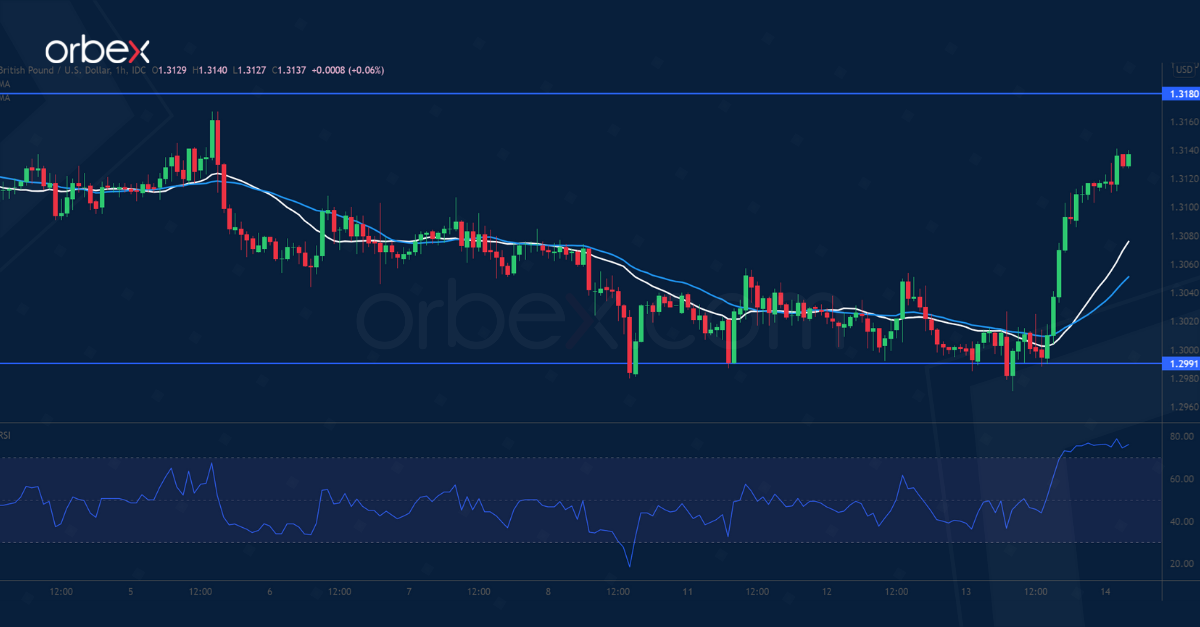
The US dollar went sideways as February’s PCE fell short of expectations. The pair met stiff selling pressure around 1.3300, a supply zone next to the 30-day moving average.

A break below 1.3120 may have cast doubt on the viability of the previous rebound after short-term buyers rushed to the exit. 1.3220 is now a fresh resistance and buyers’ failure to lift these offers could send the pound into a deeper correction.

Price action may revisit the psychological level of 1.3000 if it drops below 1.3070.

NZDUSD sees a limited pullback

NZDUSD

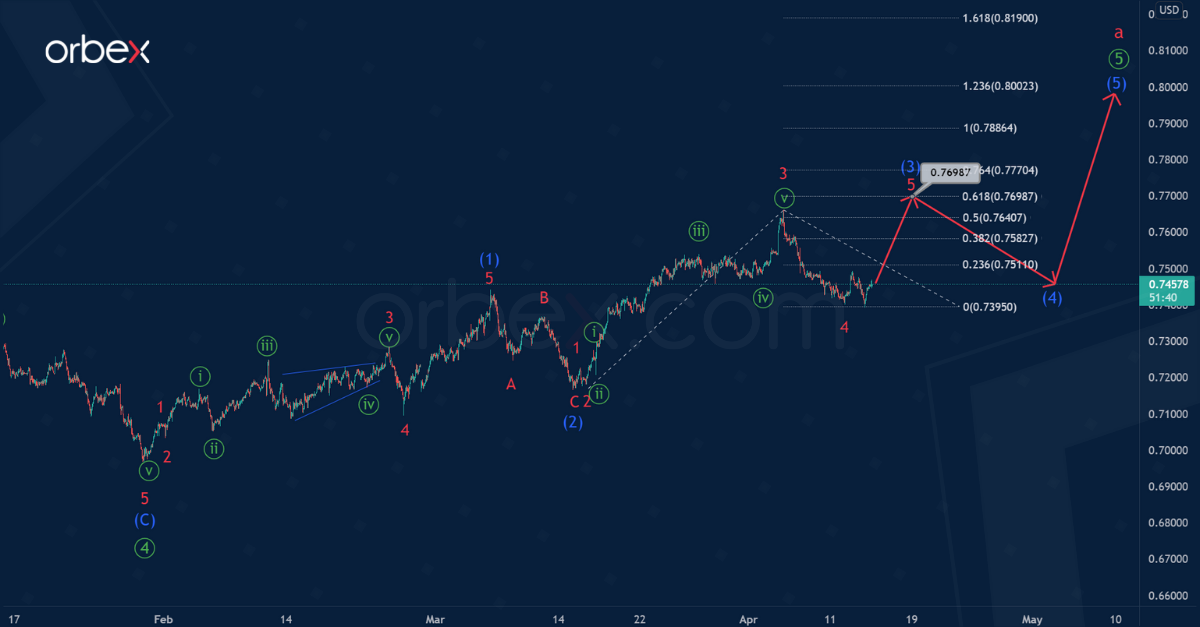
The New Zealand dollar falls back as risk appetite subdues. The pair hit resistance under the psychological level of 0.7000 after it broke to a new high.

The RSI’s overbought condition in this supply zone led buyers to take profit, driving the kiwi lower momentarily. Trend followers may see the retracement as a buying opportunity.

Sentiment would stay bullish as long as the pair is above the previous low at 0.6880. A bearish breakout may dent short-term optimism and send the kiwi to 0.6790.

US 30 keeps high ground

US 30

The Dow Jones 30 retreats on profit-taking as the first quarter draws to an end. A bullish MA cross on the daily chart suggests that the rebound is picking up steam.

The index hit resistance around 35400 and went horizontal, allowing the bulls to take a breather. Buyers may find relief as the RSI tanks into the oversold area.

A rebound would propel the Dow to February’s high at 35870, where a bullish breakout could resume the uptrend in the medium term. The demand area between 34350 and 34580 is an important level.


Orbex-LogoArticle by Orbex

Orbex is a fully licensed broker that was established in 2011. Founded with a mission to serve its traders responsibly and provides traders with access to the world’s largest and most liquid financial markets. www.orbex.com

The Analytical Overview of the Main Currency Pairs on 2022.04.01

by JustForex

The EUR/USD currency pair

Technical indicators of the currency pair:
  • Prev Open: 1.1155
  • Prev Close: 1.1065
  • % chg. over the last day: -0.90 %

The number of new jobless claims in the US was 202,000, while analysts expected 196,000. In February, US household spending increased by 0.2%, while a 0.5% growth was expected. As for personal income, it increased by 0.5%, as expected. If incomes grow faster than expenses, this is a good sign for the economy, especially for stock indices. But a negative factor for the dollar index. In February, Eurozone unemployment fell to 6.8% from 6.9%. Eurozone inflation data will be released today. Analysts forecast inflation to rise from 5.9% to 6.6% year on year. Reducing unemployment along with rising inflation are prerequisites for the monetary policy tightening on the part of the ECB.

Trading recommendations
  • Support levels: 1.1037, 1.1017, 1.0963, 1.0917, 1.0887, 1.0823, 1.0633
  • Resistance levels: 1.1149, 1.1196, 1.1291

From the technical point of view, the trend on the EUR/USD currency pair on the hourly time frame has changed to bullish. At the moment, the price has corrected and is trading between the moving averages. The MACD indicator is in the negative zone. Under such market conditions, it is better to look for buy trades on intraday timeframes from the support level of 1.1037. Sell trades should be considered from the resistance level of 1.1149, but only after the additional confirmation.

Alternative scenario: if the price breaks down through the 1.1017 support level and fixes below, the uptrend will likely be broken.

EUR/USD
News feed for 2022.04.01:
  • – French Manufacturing PMI (m/m) at 10:50 (GMT+3);
  • – German Manufacturing PMI (m/m) at 10:55 (GMT+3);
  • – Eurozone Manufacturing PMI (m/m) at 11:00 (GMT+3);
  • – Eurozone Consumer Price Index (m/m) at 12:00 (GMT+3);
  • – US Nonfarm Payrolls (m/m) at 15:30 (GMT+3);
  • – US Unemployment Rate (m/m) at 15:30 (GMT+3);
  • – US ISM Manufacturing PMI (m/m) at 17:00 (GMT+3).

The GBP/USD currency pair

Technical indicators of the currency pair:
  • Prev Open: 1.3129
  • Prev Close: 1.3142
  • % chg. over the last day: +0.10%

The news that the US intends to release up to 180 million barrels of oil from its strategic reserves in six months is a negative factor for the British pound, as the pound is directly correlated with Brent oil quotes, which in turn is highly correlated with the US WTI oil quotes. Given the Fed’s aggressive policies, the British pound could lose much of its position if the Bank of England does not continue to raise interest rates. Currently, the Bank of England has decided to suspend monetary policy tightening.

Trading recommendations
  • Support levels: 1.3117, 1.3074, 1.3015, 1.2989, 1.2863
  • Resistance levels: 1.3161, 1.3244, 1.3274

On the hourly time frame, the GBP/USD currency pair trend is bullish. The price movement pattern is beginning to show a flat structure. The MACD indicator became inactive. Under such market conditions, buy trades should be considered from the support level of 1.3117, but better with confirmation. Sell deals should be considered from the resistance level of 1.3244, but only with short targets.

Alternative scenario: if the price breaks down through the 1.3074 support level and fixes below, the mid-term uptrend will likely be broken.

GBP/USD
News feed for 2022.04.01:
  • – UK Manufacturing PMI (m/m) at 11:30 (GMT+3).

The USD/JPY currency pair

Technical indicators of the currency pair:
  • Prev Open: 121.84
  • Prev Close: 121.69
  • % chg. over the last day: -0.12%

The fundamental picture for the Japanese Yen remains unchanged. The monetary policy of the Bank of Japan is now “ultra-soft” and is aimed at decreasing the national currency rate (USD/JPY growth). Due to the Сentral Bank of Japan’s work in the debt market, the Japanese Yen is now temporarily strengthening. However, the mid-term outlook remains unchanged – analysts see a continuation of the uptrend, as the monetary policy of the US and Japanese central banks are now diametrically opposed.

Trading recommendations
  • Support levels: 120.88, 119.52, 117.72
  • Resistance levels: 122.83, 123.44,125.22

The medium-term trend on the USD/JPY currency pair is bullish. The price corrected to the moving averages. The MACD indicator has become positive. Under such market conditions, it is best to look for buy deals, expecting the continuation of the uptrend. First of all, it is worth considering the support level of 120.88, but with additional confirmation. For sell deals, a resistance level of 122.83 or 123.44 may be considered, but only after the sellers’ initiative.

Alternative scenario: If the price fixes below 119.52, the uptrend will likely be broken.

USD/JPY
News feed for 2022.04.01:
  • – Japan Final Manufacturing PMI (m/m) at 03:30 (GMT+3).

The USD/CAD currency pair

Technical indicators of the currency pair:
  • Prev Open: 1.2479
  • Prev Close: 1.2505
  • % chg. over the last day: +0.21%

The Canadian dollar is a commodity currency and is highly dependent on the movement of oil prices and the dollar index. OPEC+ will stick to its current plan to increase oil production, as OPEC+ ministers see a balanced oil market and increased volatility through the geopolitics. The next OPEC+ ministerial meeting will take place on May 5. After OPEC+ did not raise its production plan, the US said it would release a record 1 million barrels of oil a day from its strategic reserve for six months. This move will limit the rise in oil prices, which in combination with the rise in the dollar index may lead to an increase in the USD/CAD currency pair. The only thing that can prevent this is the monetary policy of the Central Bank of Canada, which, like the Fed, is preparing for a tightening.

Trading recommendations
  • Support levels: 1.2486, 1.2453
  • Resistance levels: 1.2563, 1.2655, 1.2713, 1.2754, 1.2851

In terms of technical analysis, the USD/CAD currency pair trend is bearish. The MACD indicator has become inactive, but the pressure on buyers remains. Trade only with short targets, since on the USD/CAD currency pair fundamentally, there are no prerequisites for the medium-term trend, as the dollar index in the medium term also has the support of the Fed. Under such market conditions, it is better to look for buy trades on the lower timeframes from the support level of 1.2486, but it is better with additional confirmation. For sell deals, it is better to consider the resistance level of 1.2563.

Alternative scenario: if the price breaks through and consolidates above 1.2654, the downtrend will likely be broken.

USD/CAD
News feed for 2022.04.01:
  • – Canada Manufacturing PMI (m/m) at 16:30 (GMT+3).

by JustForex


This article reflects a personal opinion and should not be interpreted as an investment advice, and/or offer, and/or a persistent request for carrying out financial transactions, and/or a guarantee, and/or a forecast of future events.

The US announced a record release of its oil reserves, inflation in Europe at record levels

by JustForex

On Thursday, global stock indices fell amid fears of recession, and Russia’s invasion of Ukraine boosted sales. Oil prices fell more than $6 after the US announced a record release of its strategic reserves. The Dow Jones index (US30) decreased by 1.56% yesterday, the S&P 500 index (US500) lost 1.57%, and the NASDAQ technology index (US100) fell by 1.54%. Analysts see a stock market downturn over the next two quarters as record inflation in the US forces the Fed to aggressively raise interest rates, which will eventually lead to higher government bond yields, the rising dollar index, and lower stock indices. Investors need to balance their portfolios.

“The inverted Treasury yield curve is one of the signals that future US stock earnings will be disappointing,” said Nicholas Colas, co-founder of DataTrek Research. The inversion of the US yield curve is seen as a reliable signal that a recession may follow within a year or two.

The economic slowdown, rising inventories, declining demand, and lower household purchasing power will further reduce inflationary pressures in the second half of the year. As a result, the Fed will stop aggressively raising rates. Therefore, the new portfolio purchase agreement should be considered at the end of the third or beginning of the fourth quarter of 2022, but not earlier.

On Wednesday, European stock markets were mostly decreasing. Yesterday, German DAX (DE30) fell by 1.31%, French CAC 40 (FR40) lost 1.21%, Spanish IBEX 35 (ES35) decreased by 1.23%, British FTSE 100 (UK100) lost 0.83%. Following the negative inflation data from Spain and Germany, inflation data also showed a record price increase in France in March and increased to 7% year on year in Italy. Inflation data for the Eurozone will be released today. Analysts forecast an increase in inflation from 5.9% to 6.6% year on year. Reducing unemployment along with rising inflation are prerequisites for tightening the ECB monetary policy.

The US Treasury Department is considering imposing sanctions on any individuals or organizations involved in the aerospace, maritime, and electronic sectors of the Russian economy.

Russia has banned entry to high-ranking EU and US officials responding to sanctions.

Putin said he had signed a decree on the rules of gas trade with unfriendly countries. They will have to open ruble accounts in Russian banks. Existing gas supply contracts will be terminated if buyers from unfriendly countries do not comply with the new payment terms. The new rules will take effect on April 1. Existing contracts for the purchase of Russian gas will be terminated if buyers refuse to pay in rubles. The UK, France, and Germany have already indicated that they are not going to pay in rubles for gas. Gas prices in Europe have accelerated and jumped up to almost $1450.

At the end of the meeting, OPEC+ will adhere to its existing plan to increase oil production. OPEC+ ministers see a balanced oil market, and the volatility is increased due to geopolitics. The next meeting of OPEC+ ministers will take place on May 5. After OPEC+ did not raise its production plan, the US said it would release 1 million barrels of oil daily from its strategic reserve for six months. In total, it is planned to release up to 180 million barrels over six months, which, if implemented, will be the largest release from the reserve since its creation in 1975. This step will limit the rise in oil prices.

Gold is rising again, but investors should be aware that gold is inversely correlated to government bond yields, the movement of which depends on the Fed’s monetary policy. As the Fed hikes rates aggressively this year, the dollar index and the government bond yields will rise, and gold and silver prices will fall. The current rise in gold is speculative amid rising inflation in the US and Europe.

The Russian ruble strengthened for the ninth session in a row, trading at about 83 rubles per dollar, while stocks jumped due to the removal of some restrictions on short-selling. The ruble’s exchange rate dynamics are currently created artificially. The currency, which was in free circulation until the end of February, is now governed by capital control, a ban on the purchase of cash dollars and euros, and other administrative measures. Analysts are confident that the Central Bank of Russia will not be able to maintain such a course for long.

Asian markets traded in negative territory yesterday. Japan’s Nikkei 225 (JP225) decreased by 0.73%, Hong Kong’s Hang Seng (HK50) lost 1.06%, and Australia’s S&P/ASX 200 (AU200) ended the day down by 0.20%. China has decided to restrict visas for some US officials in response to US visa restrictions for some Chinese officials. Shares of Chinese company Baidu plummeted 7.5% due to the threat of delisting. The SEC warned Baidu of delisting from US stock exchanges due to audit data. A curfew has been imposed in Sri Lanka after protests over the economic crisis turned violent. Hundreds of protesters gathered near the president’s private residence in the Colombo suburb late Thursday night and were dispersed by police using tear gas and water cannons.

Main market quotes:

S&P 500 (F) (US500) 4,530.41 -72.04 (-1.57%)

Dow Jones (US30) 34,678.35 -550.46 (-1.56%)

DAX (DE40) 14,414.75 -191.30 (-1.31%)

FTSE 100 (UK100) 7,515.68 -63.07 (-0.83%)

USD Index 98.37 +0.58 (+0.59%)

Important events for today:
  • – Japan Final Manufacturing PMI (m/m) at 03:30 (GMT+3);
  • – China Caixin Manufacturing PMI (m/m) at 04:45 (GMT+3);
  • – Switzerland Consumer Price Index (m/m) at 10:30 (GMT+3);
  • – French Manufacturing PMI (m/m) at 10:50 (GMT+3);
  • – German Manufacturing PMI (m/m) at 10:55 (GMT+3);
  • – Eurozone Manufacturing PMI (m/m) at 11:00 (GMT+3);
  • – UK Manufacturing PMI (m/m) at 11:30 (GMT+3);
  • – Eurozone Consumer Price Index (m/m) at 12:00 (GMT+3);
  • – US Nonfarm Payrolls (m/m) at 15:30 (GMT+3);
  • – US Unemployment Rate (m/m) at 15:30 (GMT+3);
  • – Canada Manufacturing PMI (m/m) at 16:30 (GMT+3);
  • – US ISM Manufacturing PMI (m/m) at 17:00 (GMT+3).

by JustForex


This article reflects a personal opinion and should not be interpreted as an investment advice, and/or offer, and/or a persistent request for carrying out financial transactions, and/or a guarantee, and/or a forecast of future events.

Japanese Candlesticks Analysis 31.03.2022 (EURUSD, USDJPY, EURGBP)

Article By RoboForex.com

EURUSD, “Euro vs US Dollar”

As we can see in the H4 chart, the asset has formed a Shooting Star reversal pattern close to the resistance area. At the moment, EURUSD is reversing in the form of a new descending impulse. In this case, the downside target may be at 1.1115. However, an alternative scenario implies that the price may grow to reach 1.1250 and continue the downtrend without any corrections towards the support level.

EURUSD
Risk Warning: the result of previous trading operations do not guarantee the same results in the future

USDJPY, “US Dollar vs Japanese Yen”

As we can see in the H4 chart, USDJPY has formed a Harami pattern not far from the resistance level. At the moment, the asset may reverse and start a new descending impulse. In this case, the downside correctional target may be at 121.00. At the same time, an opposite scenario implies that the price may grow to reach 124.50 without testing the support area.

USDJPY
Risk Warning: the result of previous trading operations do not guarantee the same results in the future

EURGBP, “Euro vs Great Britain Pound”

As we can see in the H4 chart, after forming a Hammer reversal pattern near the support area, EURGBP is reversing and may start another ascending wave. In this case, the upside target may be at 0.8545. Later, the market may test the resistance level, break it, and continue the ascending tendency. Still, there might be an alternative scenario, according to which the asset may correct to reach 0.8475 first and then resume trading upwards.

EURGBP

Article By RoboForex.com

Attention!
Forecasts presented in this section only reflect the author’s private opinion and should not be considered as guidance for trading. RoboForex LP bears no responsibility for trading results based on trading recommendations described in these analytical reviews.

Murrey Math Lines 31.03.2022 (USDCHF, GOLD)

Article By RoboForex.com

USDCHF, “US Dollar vs Swiss Franc”

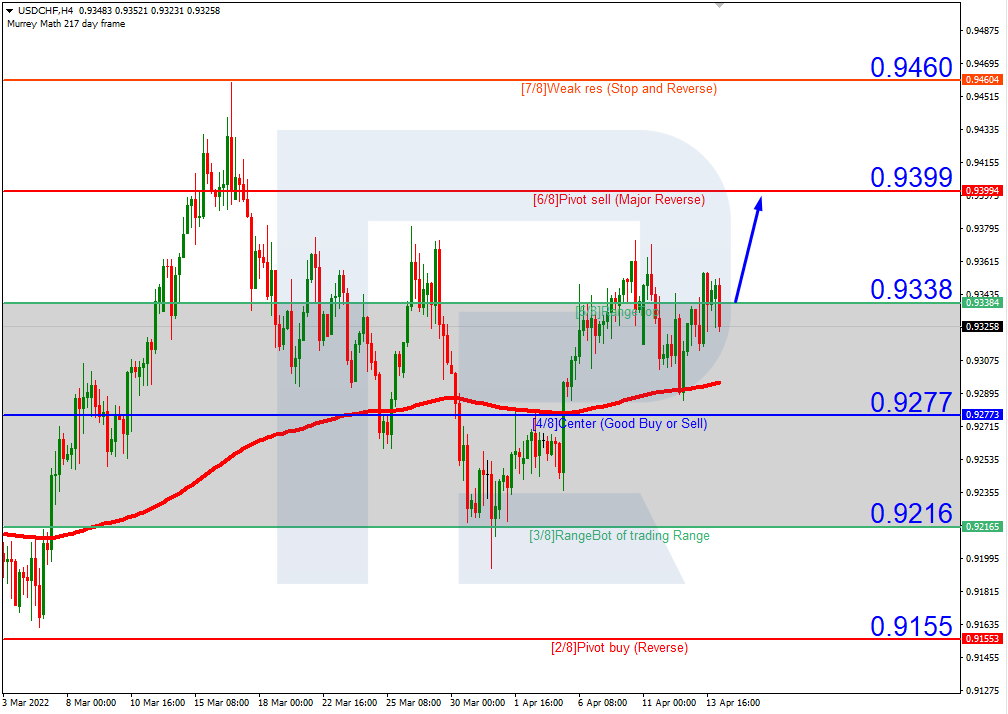
In the H4 chart, after breaking the 200-day Moving Average, USDCHF is trading below it to indicate a possible descending tendency. In this case, the price is expected to break 3/8 and then continue falling to reach the support at 2/8. However, this scenario may be cancelled if the price breaks the resistance at 4/8 to the upside. After that, the instrument may reverse and grow towards 5/8.

USDCHFH4
Risk Warning: the result of previous trading operations do not guarantee the same results in the future

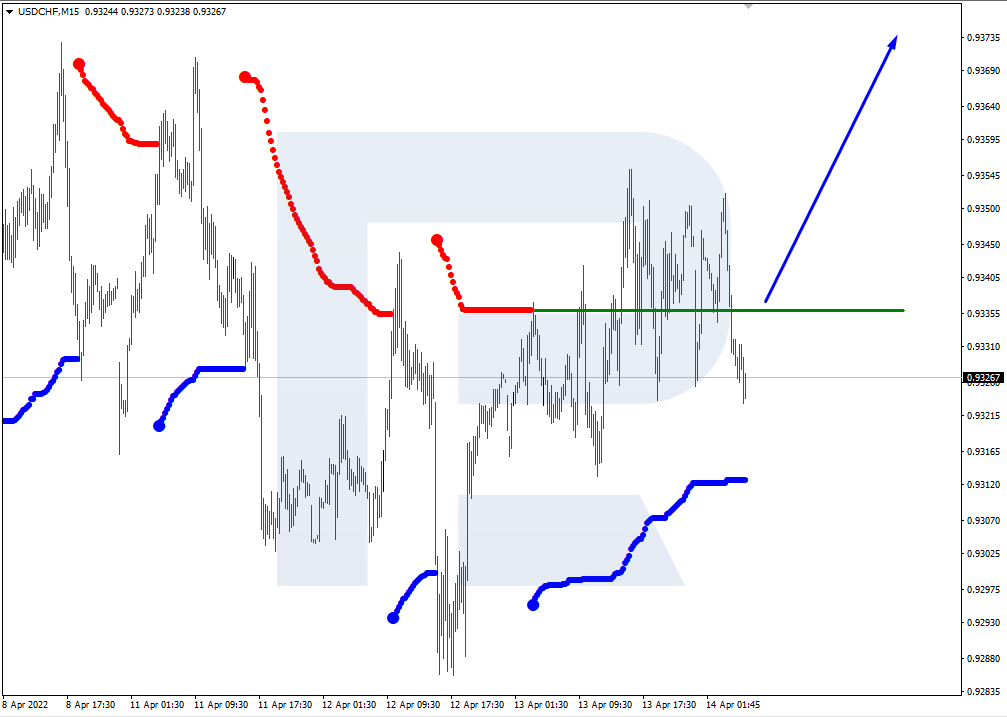
As we can see in the M15 chart, the pair has broken the downside line of the VoltyChannel indicator and, as a result, may continue trading downwards.

USDCHF_M15
Risk Warning: the result of previous trading operations do not guarantee the same results in the future

XAUUSD, “Gold vs US Dollar”

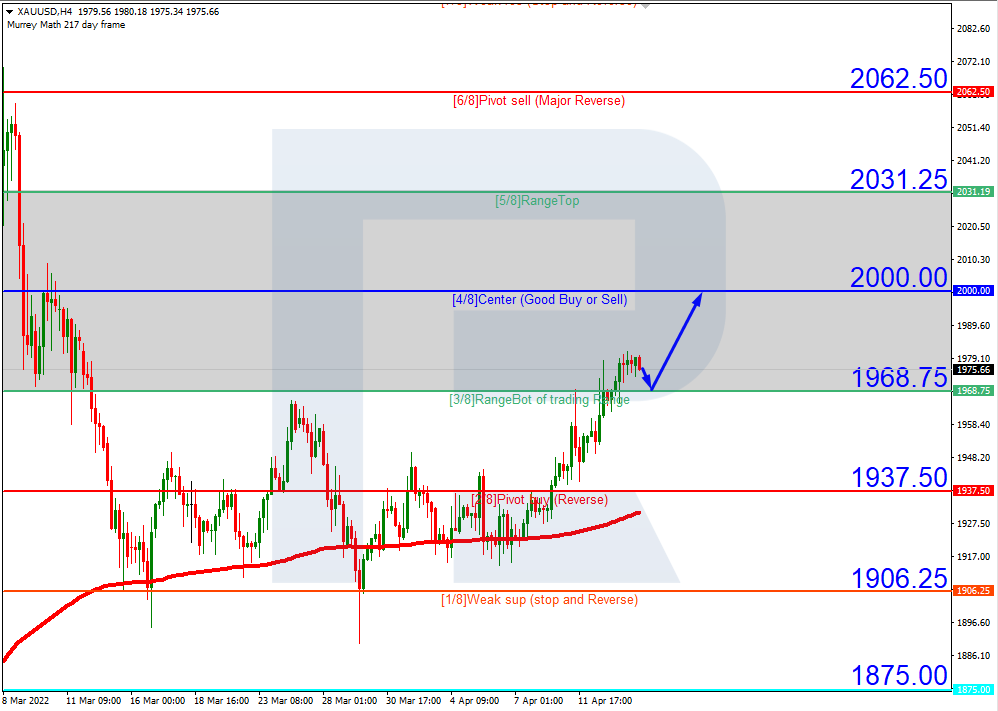
As we can see in the H4 chart, XAUUSD is trading above the 200-day Moving Average, thus indicating a further ascending tendency. In this case, the price is expected to break 7/8 and continue moving upwards to reach the resistance at 8/8. However, this scenario may no longer be valid if the price breaks the support at 6/8 to the downside. After that, the instrument may reverse and form a new descending wave towards 5/8.

XAUUSD_H4
Risk Warning: the result of previous trading operations do not guarantee the same results in the future

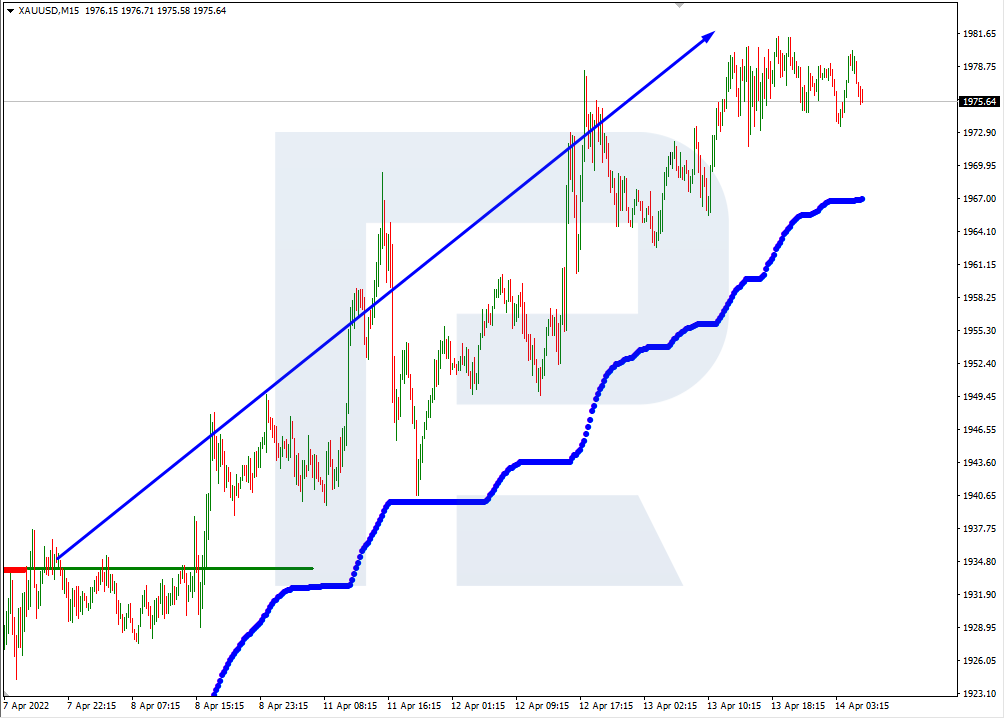
In the M15 chart, the pair may break the upside line of the VoltyChannel indicator and, as a result, continue growing.

XAUUSD_M15
Risk Warning: the result of previous trading operations do not guarantee the same results in the future

Article By RoboForex.com

Attention!
Forecasts presented in this section only reflect the author’s private opinion and should not be considered as guidance for trading. RoboForex LP bears no responsibility for trading results based on trading recommendations described in these analytical reviews.

The Analytical Overview of the Main Currency Pairs on 2022.03.31

by JustForex

The EUR/USD currency pair

Technical indicators of the currency pair:
  • Prev Open: 1.1086
  • Prev Close: 1.1157
  • % chg. over the last day: +0.64%

Spain’s consumer price index jumped from 7.6% to 9.8% year on year. This is the highest value in 30 years. Inflation if Germany rose in March to its highest level in more than 40 years due to higher prices for natural gas and oil products. The annual consumer price index was 7.3% against 5.1% in February. Such a jump in inflation in the EU countries may force the ECB to reconsider its monetary policy towards tightening. That is why the European currency is reacting higher as investors are already considering a tightening scenario. The higher the interest rates, the stronger the national exchange rate.

Trading recommendations
  • Support levels: 1.1136, 1.1037, 1.1017, 1.0963, 1.0917, 1.0887, 1.0823, 1.0633
  • Resistance levels: 1.1196, 1.1291

From the technical point of view, the EUR/USD currency pair trend on the hourly time frame has changed to bullish. The price confidently broke through the priority change level and consolidated above the moving averages. The MACD indicator is in the positive zone, the buyers’ pressure has intensified. Under such market conditions, it is better to look for buy trades on intraday timeframes from the support levels of 1.1037 or 1.1018 around the moving averages. Sell trades should be considered from the support level of 1.1196, but only after a false breakout and only with short targets.

Alternative scenario: if the price breaks down through the 1.1017 support level and fixes below, the uptrend will likely be broken.

EUR/USD
News feed for 2022.03.31:
  • – German Retail Sales at 09:00 (GMT+3);
  • – German Unemployment Rate (m/m) at 10:55 (GMT+3);
  • – Eurozone Unemployment Rate (m/m) at 12:00 (GMT+3);
  • – US Initial Jobless Claims (w/w) at 15:30 (GMT+3);
  • – US Core PCE Price Index (m/m) at 15:30 (GMT+3);
  • – US FOMC Member Williams Speech at 16:00 (GMT+3);
  • – US Chicago PMI (m/m) at 16:45 (GMT+3);
  • – US Natural Gas Storage (w/w) at 17:30 (GMT+3).

The GBP/USD currency pair

Technical indicators of the currency pair:
  • Prev Open: 1.3083
  • Prev Close: 1.3135
  • % chg. over the last day: +0.39%

UK GDP grew by 1.3% in Q4, a growth of 1% was expected. But economic indicators now have little effect on the economy. Geopolitics and the health of the dollar index came out on top. And as geopolitical tensions persist in Eastern Europe and the US Federal Reserve intends to aggressively tighten monetary policy, these factors combine to hurt the British pound.

Trading recommendations
  • Support levels: 1.3117, 1.3074, 1.3015, 1.2989, 1.2863
  • Resistance levels: 1.3181, 1.3244, 1.3274

On the hourly time frame, the GBP/USD currency pair trend is bullish. The price movement pattern starts to show a flat structure. The MACD indicator became inactive. Under such market conditions, buy trades should be considered from the support level of 1.3117, but better with confirmation. For sell deals, it is better to consider the resistance level of 1.3161, but only with short targets.

Alternative scenario: if the price breaks down through the 1.3074 support level and fixes below, the mid-term uptrend will likely be broken.

GBP/USD
News feed for 2022.03.31:
  • – UK GDP (q/q) at 09:00 (GMT+3).

The USD/JPY currency pair

Technical indicators of the currency pair:
  • Prev Open: 122.87
  • Prev Close: 121.82
  • % chg. over the last day: -0.86%

The monetary policy of the Bank of Japan is now “ultra-soft” and is aimed at decreasing the national currency rate (USD/JPY growth). But against the backdrop of the dollar index, and also thanks to the work of the Central Bank of Japan on the debt market, the Japanese yen is now temporarily strengthening. The medium-term forecast remains unchanged – analysts see a continuation of the uptrend.

Trading recommendations
  • Support levels: 120.88, 119.52, 117.72
  • Resistance levels: 122.83, 123.44,125.22

The medium-term trend on the USD/JPY currency pair is bullish. But amid the decline in the dollar index, the price began a corrective movement. The MACD indicator has become negative. Under such market conditions, it is best to look for buy deals, expecting the continuation of the uptrend. First of all, it is worth considering the support level of 120.88, but with additional confirmation. For sell deals, a resistance level of 122.83 or 123.44 may be considered, but only after the sellers’ initiative.

Alternative scenario: If the price fixes below 119.52, the uptrend will likely be broken.

USD/JPY
News feed for 2022.03.31:
  • – Japan Industrial Production (m/m) at 02:50 (GMT+3).

The USD/CAD currency pair

Technical indicators of the currency pair:
  • Prev Open: 1.2491
  • Prev Close: 1.2481
  • % chg. over the last day: -0.08%

The Canadian dollar is a commodity currency and is highly dependent on the movement of oil prices and the dollar index. The weekly drop-in crude oil inventories were accompanied by the release of almost the same amount of oil from the US reserves, which led to a slight decrease in oil prices yesterday. As a result, the USD/CAD pair jumped yesterday, despite a decline in the dollar index. OPEC+ producing countries will meet today. However, analysts do not expect anything substantial from this meeting and are confident that OPEC+ will not increase oil production since high oil prices are beneficial to almost all producing countries except the US.

Trading recommendations
  • Support levels: 1.2453
  • Resistance levels: 1.2563, 1.2655, 1.2713, 1.2754, 1.2851

In terms of technical analysis, the USD/CAD currency pair trend is bearish. The MACD indicator has become positive. The buyer’s pressure has increased. Trade only with short targets, since on the USD/CAD currency pair fundamentally, there are no prerequisites for the medium-term trend, as the dollar index in the medium-term also has the support of the Fed. Under such market conditions, it is better to look for buy trades on the lower timeframes from the support level of 1.2453, but it is better with additional confirmation. For sell deals, it is better to consider the resistance level of 1.2563.

Alternative scenario: if the price breaks through and consolidates above 1.2654, the downtrend will likely be broken.

USD/CAD
News feed for 2022.03.31:
  • – OPEC+ Meeting at 13:00 (GMT+3);
  • – Canada GDP (m/m) at 15:30 (GMT+3).

by JustForex


This article reflects a personal opinion and should not be interpreted as an investment advice, and/or offer, and/or a persistent request for carrying out financial transactions, and/or a guarantee, and/or a forecast of future events.

Amid record inflation in Europe, investors expect ECB to tighten policy

by JustForex

In April, private-sector job growth was surprisingly positive, but fourth-quarter GDP was revised down unexpectedly by a tenth of a percentage point. Investors also continue to monitor the US debt market. Yield spreads on 10- and 2-year Treasury bonds continue to show inversion, raising serious concerns about an impending recession. The Federal Reserve may be tightening policy too aggressively in the near term, and analyst houses are already predicting the next three 0.5% interest rate hikes.

“Given the state of the economy, inflation at its highest level in 40 years, and an unemployment rate close to a record low, it is appropriate to move quickly to neutral policy,” Kansas City Fed President Esther George said on Wednesday. Thomas Barkin, Head of the Federal Reserve Bank of Richmond, said he was ready to raise rates by half a point at the next meeting.

US indices decreased yesterday. The Dow Jones (US30) lost 0.19%, the S&P 500 (US500) fell by 0.63%, and the NASDAQ technology index (US100) decreased by 1.21%.

On Wednesday, European stock markets were mostly down, losing some of the gains of the previous session amid skepticism about the likely success of the latest peace talks between Ukraine and Russia. German DAX (DE30) decreased by 1.45% yesterday, French CAC 40 (FR40) lost 0.74%, Spanish IBEX 35 (ES35) decreased by 0.74%, and only British FTSE 100 (UK100) added 0.55%. Inflation in Germany increased in March to its highest level in more than 40 years due to higher prices for natural gas and oil products. The annual consumer price index was 7.3% compared to 5.1% in February. Such a jump in inflation in the EU countries may force the ECB to reconsider its monetary policy towards tightening. Now in Europe, there is a sale of European short-term bonds. This means that investors are already betting that higher-than-expected inflation will force the European Central Bank to raise interest rates. But despite rising inflation, Germany is preparing to cut Russian gas supplies by activating the first phase of its national contingency plan. The composite index of business and consumer confidence in the Eurozone fell to 108.5 from 113.9 in March, according to the European Commission.

The weekly drop-in crude oil inventories were accompanied by the release of almost the same amount of oil from the US Strategic Oil Reserves. The United States and its allies plan to impose new sanctions on more sectors of the Russian economy, including military supply chains. The OPEC+ countries will meet today. According to several sources, major oil producers are likely to stick to their planned target of increasing production by about 432,000 bpd.

Asian markets traded without a single trade yesterday. Japan’s Nikkei 225 (JP225) decreased by 0.80%, Hong Kong’s Hang Seng (HK50) added 1.39%, and Australia’s S&P/ASX 200 (AU200) increased by 0.67%. China’s manufacturing PMI fell to 49.5 points in March from 50.2 points the previous month, according to the State Bureau of Statistics (SBS). A PMI value above 50 points indicates an increase in activity in the sector, while a lower value indicates a weakening of activity. In Australia, building permits increased by 43.5% month-over-month, while private sector lending increased by 0.6% month-over-month in February.

Analysts say global stock indices are bracing for the worst quarter in 2 years as Russia’s invasion of Ukraine puts upward pressure on commodity prices, forcing the global central banks to revise their monetary policy.

Main market quotes:

S&P 500 (F) (US500) 4,602.45 -29.15 (-0.63%)

Dow Jones (US30) 35,228.81 -65.38 (-0.19%)

DAX (DE40) 14,606.05 -214.28 (-1.45%)

FTSE 100 (UK100) 7,578.75 +41.50 (+0.55%)

USD Index 97.83 -0.58 (-0.59%)

Important events for today:
  • – Japan Industrial Production (m/m) at 02:50 (GMT+3);
  • – China Manufacturing PMI (m/m) at 04:30 (GMT+3);
  • – China Non-Manufacturing PMI (m/m) at 04:30 (GMT+3);
  • – UK GDP (q/q) at 09:00 (GMT+3);
  • – German Retail Sales at 09:00 (GMT+3);
  • – German Unemployment Rate (m/m) at 10:55 (GMT+3);
  • – Eurozone Unemployment Rate (m/m) at 12:00 (GMT+3);
  • – OPEC+ Meeting at 13:00 (GMT+3);
  • – Canada GDP (m/m) at 15:30 (GMT+3);
  • – US Initial Jobless Claims (w/w) at 15:30 (GMT+3);
  • – US Core PCE Price Index (m/m) at 15:30 (GMT+3);
  • – US FOMC Member Williams Speech at 16:00 (GMT+3);
  • – US Chicago PMI (m/m) at 16:45 (GMT+3);
  • – US Natural Gas Storage (w/w) at 17:30 (GMT+3).

by JustForex


This article reflects a personal opinion and should not be interpreted as an investment advice, and/or offer, and/or a persistent request for carrying out financial transactions, and/or a guarantee, and/or a forecast of future events.

Putin’s roubles-for-gas demand is no serious threat to US dollar reserve status – here’s why

By Kim Kaivanto, Lancaster University 

President Vladimir Putin’s demand that “unfriendly countries” henceforth pay for Russian gas in roubles has had several immediate effects. With the Europeans given one week to switch to paying in the Russian currency, it has driven up the price of natural gas, making it more expensive for them to maintain the sanctions regime.

The rouble has strengthened against the US dollar since the announcement from ₽107 to ₽99. And if European nations accede to Russia’s terms, the demand for roubles will increase and accordingly further strengthen the currency’s value in the foreign exchange market.

The moves put pressure on European countries to backslide on enforcing financial sanctions, since using roubles would presumably force them to buy the currency from sanctioned Russian banks. And it can be seen as a ploy to split Germany and Italy off from the sanctions alliance, since they are particularly dependent on Russian gas.

The early indications are that divide and rule may not be working: the Germans have announced they will reduce their dependency on Russian gas to as little as 10% (compared to over 50% today) by summer 2024. But since Russia is implicitly threatening to cut off Europe’s gas supply immediately unless it starts paying in roubles, the more pressing question is what the ramifications look like today.

Natural gas price (UK spot, pence/therm)

UK natural gas price chart
Trading Economics

It is not clear that Russia can legally change the terms of existing long-term gas-supply contracts with a unilateral announcement. The existing contracts already stipulate the currency in which payment is to be settled (currently Gazprom, which dominates Russian supply to Europe, settles 58% of its European gas sales in euros, 39% in US dollars, and 3% in pounds sterling). Accordingly, German economy minister Robert Habeck has said that the roubles-for-gas demand amounts to breach of contract.

If European countries choose to argue this change, there are legal avenues for resolving the dispute as stipulated in each contract (the legal jurisdiction, and the court or dispute resolution arrangements). The trouble is that none may be viable in practice.

Between 2005 and 2010 a series of gas disputes between Russia and Ukraine were ultimately resolved by the Arbitration Institute of the Stockholm Chamber of Commerce (SCC) in Sweden. But given that Russia has included all EU member states on its list of 48 “unfriendly states”, it is questionable whether it would accept Swedish SCC arbitration as independent now. The same goes for the UK and Switzerland, which are also world centres for arbitration and dispute resolution. Hence the dispute is probably not going to be resolved via legal argument.

The threat to the dollar

This latest demand from Russia is unprecedented. Even during the cold war, the Soviet Union did nothing to interrupt gas supplies to Europe. Perhaps this is why Putin added that this demand only concerns the currency of payment, and that contractual volumes and prices will continue to be honoured.

The demand can be seen as an extension of Russia’s attempt (along with China) to “de-dollarise” its economy, which has been ongoing since western countries introduced sanctions on Russia over Crimea in 2014. This has included increasingly trading with countries such as India and China in either euros or local currencies; reducing central bank holdings of US dollar reserves; and cutting dollar assets out of its national sovereign wealth fund. China has meanwhile developed an international payments messaging system called CIPS, which is a way of avoiding using the western Swift system.

China and Russia are uncomfortable with the prevailing reserve-currency status of the US dollar, which means it is the main currency used in international trade and held by central banks. Important commodities such as oil, and global services such as air transport, are priced in the American currency. It also makes it cheaper for the US to borrow on international financial markets, giving it an advantage over other countries.

Crucially, the US can impose economic sanctions on almost all trade settled in dollars. They do this by ordering so-called correspondent banks that hold accounts at the Federal Reserve not to transact with, say, their Russian counterparts. This cuts off one of the main ways of obtaining the US dollars necessary to participate in international trade.

Another issue is that it is easy and relatively cheap for countries around the world to borrow in dollars, but if the value of the dollar relative to other countries rises, the borrower’s debts become worth more in their own currency. The dollar is liable to rise when, for example, the Federal Reserve decides to put up interest rates, so countries with dollar-denominated debts are at the mercy of US monetary policy.

Russia’s de-dollarisation push has not been entirely unsuccessful. The share of its trade denominated in euros rose above 50% for the first time in the first quarter of 2020. The Europeans themselves have not been against trading more with the Russians in euros: the fact that Gazprom’s European supply contract is majority-denominated in euros can be credited to Putin’s de-dollarisation drive. This has helped to achieve a modest increase in Russia’s share of euro-denominated trade with the EU overall.

Meanwhile, the Saudis have been negotiating with the Chinese about potentially pricing their oil trading in yuan instead of dollars. As Saudi’s largest oil customer, that would take another bite out of the dollar’s importance as the reserve currency.

Having said all that, the big picture is that de-dollarisation by Russia and China has had only a modest effect on the US dollar’s dominant position. The dollar continues to be used in nearly nine in every ten forex transactions. It makes up the vast majority of all global export invoicing, and nearly three-fifths of all central bank reserves across the world.

So while Russia’s latest move is certainly part of a wider strategy that has had some success, we are nowhere near a tipping point. Even if the Europeans end up buying Russian gas in roubles for a while, that is not going to fundamentally change how the world economy works.The Conversation

About the Author:

Kim Kaivanto, Senior Lecturer in Economics, Lancaster University

This article is republished from The Conversation under a Creative Commons license. Read the original article.


DXY Double Zigzag To Complete Cycle Wave Z

By Orbex

DXY

The current DXY structure hints at the development of a large triple zigzag w-x-y-x-z of the cycle degree.

The intervening wave x ended, in a triple Ⓦ-Ⓧ-Ⓨ-Ⓧ-Ⓩ zigzag of the primary degree formation.

At the time of writing, a cycle actionary wave z is under construction. The internal structure of the wave z suggests a double Ⓦ-Ⓧ-Ⓨ zigzag. The first two parts of the double zigzag look fully complete. The primary wave Ⓨ is still in the process of development. It could take the form of a double zigzag (W)-(X)-(Y) of the intermediate degree.

Bulls can continue to push the price to the level of 101.972. The target is determined using the Fibonacci extension tool. At the specified level, wave z will be at 100% of the previous actionary wave y.

DXY

Alternatively, the cycle actionary wave y was longer than in the main variant and has the form of a primary triple zigzag. At the time of writing, it has ended.

In the near future, the market will continue to move in a downward direction, building a cycle intervening wave x. It will most likely take the form of a primary double zigzag.

Finally, prices could fall to the level of 97.10, where wave x will be at 23.6% of wave y.


Orbex-LogoArticle by Orbex

Orbex is a fully licensed broker that was established in 2011. Founded with a mission to serve its traders responsibly and provides traders with access to the world’s largest and most liquid financial markets. www.orbex.com

Murrey Math Lines 30.03.2022 (USDJPY, USDCAD)

Article By RoboForex.com

USDJPY, “US Dollar vs. Japanese Yen”

In the H4 chart, USDJPY is trading above the 200-day Moving Average, thus indicating a possible ascending tendency. In this case, the price is expected to break 6/8 and then continue growing and reach the resistance at 7/8. However, this scenario may no longer be valid if the price breaks the support at 5/8 to the downside. After that, the instrument may correct down to 4/8.

USDJPYH4
Risk Warning: the result of previous trading operations do not guarantee the same results in the future

As we can see in the M15 chart, the upside line of the VoltyChannel indicator is pretty far away from the price, that’s why the pair may continue trading upwards only after breaking 6/8 in the H4 chart.

USDJPY_M15
Risk Warning: the result of previous trading operations do not guarantee the same results in the future

USDCAD, “US Dollar vs Canadian Dollar”

As we can see in the H4 chart, USDCAD is trading below the 200-day Moving Average to indicate a possible descending tendency. In this case, the price is expected to continue falling towards the support at -1/8. Still, this scenario may no longer be valid if the price breaks the resistance at 1/8 to the upside. After that, the instrument may reverse and move upwards to reach 3/8.

USDCAD_H4
Risk Warning: the result of previous trading operations do not guarantee the same results in the future

In the M15 chart, the pair may break the downside line of the VoltyChannel indicator and, as a result, continue trading downwards.

USDCAD_M15

Article By RoboForex.com

Attention!
Forecasts presented in this section only reflect the author’s private opinion and should not be considered as guidance for trading. RoboForex LP bears no responsibility for trading results based on trading recommendations described in these analytical reviews.