As global bonds soar at the quickest pace since the 2008 financial crisis, investors need to review their investment portfolios to ensure they are on track for risk tolerance and return objectives.
This is the call-to-action warning from Nigel Green, the CEO of one of the world’s largest independent financial advisory, asset management and fintech organizations, as sovereign and corporate debt has hit 4.9% this month, the most since it surged 6.2% in December 2008, according to Bloomberg.
He comments: “This rapid jump is attributed to growing speculation that central banks, led by the US Federal Reserve, have largely concluded their interest rate hiking cycles.
“The expectation of stable or lower interest rates is prompting investors to seek the relative safety and yield offered by bonds.”
For global investors, the soaring bond market presents both challenges and opportunities.
“Those with significant allocations to fixed-income securities are reaping the benefits of capital appreciation as bond prices rise inversely to yields.
“However, the flip side is the potential for diminishing future returns as yields trend lower. Investors must carefully reassess their fixed-income portfolios to ensure they align with their risk tolerance and return objectives in this shifting environment.”
The bond market rally also has implications for equity markets and overall risk appetite.
Nigel Green says: “As interest rates stabilise or decline, the appeal of higher-yielding assets, such as dividend-paying stocks, will rise. Conversely, sectors that traditionally perform well in a rising rate environment, such as financials, could face headwinds.”
Against this backdrop, investors also face the ongoing challenge of the ‘search for yield.’
With traditional safe-haven assets offering lower returns, “there’s legitimate reason to explore riskier investments in pursuit of higher yields,” says the deVere Group CEO.
Two officials from the US central bank, who were consistently calling for higher interest rates to curb inflation last year, indicated on Tuesday that they are now happy to hold interest rates steady. This strengthens expectations that the Fed’s current hiking agenda is finished.
Many experts also believe that central banks in the UK and eurozone, and elsewhere, could also be done with hiking rates for now.
“The current surge in global bonds, reminiscent of the 2008 financial crisis, signals a significant shift in the monetary policy landscape. For investors around the world, this trend requires a careful reassessment of investment strategies across asset classes,” he concludes.
About:
deVere Group is one of the world’s largest independent advisors of specialist global financial solutions to international, local mass affluent, and high-net-worth clients. It has a network of more than 70 offices across the world, over 80,000 clients and $12bn under advisement.
At Tuesday’s close, the Dow Jones Index (US30) increased by 0.24%, while the S&P 500 Index (US500) was up by 0.10%. The NASDAQ Technology Index (US100) closed positively by 0.29% on Tuesday. Meanwhile, the Dow Jones Industrials (US30) index rose to a 3-month-high. Stocks rose on Tuesday thanks to dovish comments from Fed spokesman Waller, which lowered the 10-year T-note yield and reinforced expectations that the Fed has stopped raising interest rates. At the same time, the likelihood of a rate cut from the US Fed starting in May-June 2024 is increasing. Fed funds futures suggest about 85 bps of cumulative interest rate cuts by December 2024.
Economic news from the US on Tuesday was mixed for the dollar. On the bearish side, the Richmond Fed’s November manufacturing survey fell from 8 to 5. In addition, the Conference Board’s US Consumer Confidence Index for November rose by 2.9 to 102.0, stronger than expectations of 101.0. Today, the US will release its GDP report for the quarter. The data is expected to be revised upward, which could temporarily support the dollar and put pressure on stock indices.
Warren Buffett confidant Charlie Munger died Tuesday at the age of 99. Munger would have turned 100 on January 1. Despite a well-developed succession plan at the conglomerate, analysts believe such a man will be impossible to replace.
Equity markets in Europe traded yesterday without any dynamics. Germany’s DAX (DE40) rose by 0.16%, France’s CAC 40 (FR40) fell by 0.21% on Tuesday, Spain’s IBEX 35 (ES35) jumped by 0.70%, and the UK’s FTSE 100 (UK100) closed negative by 0.07%.
Germany will release inflation data today. Consumer prices are expected to fall from 3.8% to 3.5% y/y. Lower inflationary pressures may have a negative impact on the euro as it will weaken the ECB’s hawkish rhetoric on inflation.
The representative of the ECB Governing Council and President of the Bundesbank Nagel said yesterday that it is premature for the ECB to discuss interest rate cuts. This complements ECB chief Lagarde’s words on Friday that the ECB has done enough, and now is the time to keep rates at current levels and analyze economic data.
Oil rose on Wednesday amid investor caution ahead of a crucial OPEC+ meeting to decide production policy in the coming months, while supply disruptions caused by a storm in the Black Sea supported prices. OPEC+ will hold an online meeting of ministers on Thursday to discuss production targets for 2024 after the meeting was postponed from November 26. According to some OPEC+ sources, the talks will be difficult, and it is possible that countries may not be able to agree on further production cuts. This would be a negative signal for oil.
Asian markets were mostly down yesterday. Japan’s Nikkei 225 (JP225) decreased by 0.12% for the day, China’s FTSE China A50 (CHA50) was down by 0.96%, Hong Kong’s Hang Seng (HK50) fell by 0.98%, and Australia’s ASX 200 (AU200) was up by 0.29%.
The Central Bank of New Zealand (RBNZ) left the money rate unchanged at 5.5% on Wednesday but noted that inflation remains too high and that further policy tightening may be needed if price pressures do not ease. The “hawkish” tone of the statement surprised many in the market, leading to a rise in the New Zealand dollar and bond yields. The new center-right government said Wednesday it will begin the legislative process to return the central bank to a single mandate for inflation targeting. The change would remove the requirement for the RBNZ to consider employment levels when setting the money rate and focus solely on inflation.
Australian inflation fell more than expected in October as commodity prices fell and core inflation also declined, confirming the central bank’s decision to leave interest rates unchanged next week. Data from the Australian Bureau of Statistics on Wednesday showed the inflation rate fell to 4.9% (5.2% expected) from 5.6% annually. However, financial markets still believe the RBA will maintain its hawkish rhetoric in December. The probability of a further rate hike to 4.60% in the first half of next year is around 50%.
Bank of Japan board spokesman Adachi said it was premature to discuss an exit from negative interest rates, suggesting it could take all next year to determine whether wages will rise enough to abandon ultra-loose monetary policy. The remarks by Adachi, who is considered one of the board’s dovish policymakers, came amid growing market expectations on Wednesday that the BoJ could take short-term interest rates out of negative territory as early as January.
Main market quotes:
S&P 500 (US500) 4,554.89 +4.46 (+0.098%)
Dow Jones (US30) 35,416.98 +83.51 (+0.24%)
DAX (DE40) 15,992.67 +26.30 (+0.16%)
FTSE 100 (UK100) 7,455.24 −5.46 (−0.073%)
USD index 102.74 −0.46 (−0.45%)
Important events for today:
– Australia Consumer Price Index (m/m) at 02:30 (GMT+2);
– RBNZ Interest Rate Decision at 03:00 (GMT+2);
– RBNZ Monetary Policy Statement at 03:00 (GMT+2);
– RBNZ Press Conference at 04:00 (GMT+2);
– German Consumer Price Index (m/m) at 15:00 (GMT+2);
This article reflects a personal opinion and should not be interpreted as an investment advice, and/or offer, and/or a persistent request for carrying out financial transactions, and/or a guarantee, and/or a forecast of future events.
More than half of investors plan to increase their ESG-orientated investments in 2024, reveals a new global survey from deVere Group, one of the world’s largest independent financial advisory, asset management and fintech organizations.
The 800+ clients polled from deVere Group, which writes business in more than 70 countries globally, illuminate a strong trend in the investment landscape: 56% of investors are gearing up to increase their allocations to Environmental, Social, and Governance (ESG) investments next year.
The findings are published as more than 70,000 political and business leaders, diplomats, financiers, and activists are flying to Dubai to talk about ways to avoid environmental disaster due to climate change at COP28, the annual international climate summit convened by the United Nations.
Of the survey, deVere Group CEO and Founder Nigel Green comments: “The surge in ESG-oriented investments is not just a statistical blip; it mirrors a fundamental shift in investor mindset.
“People are increasingly drawn to ESG investments for a multitude of reasons, spanning ethical considerations to financial prudence.”
“Investors are increasingly aware that their capital can be a force for positive change. ESG investments allow them to channel funds towards companies that actively contribute to a sustainable and socially responsible future.
“Far from being a sacrifice for moral high ground, ESG investments are proving to be financially astute.
“Numerous studies suggest that companies with high ESG scores tend to outperform the market; and Reuters has reported that ESG positive funds outperformed globally over 5 years.”
Not only are companies with high ESG ratings often better positioned to weather market volatility and capitalise on emerging opportunities, ESG factors are increasingly recognized as critical elements in risk assessment.
“Companies with robust environmental, social, and governance practices are better equipped to navigate regulatory changes, reputational risks, and operational challenges. Investors are, therefore, drawn to ESG investments as a means of fortifying their portfolios against unforeseen risks,” notes the deVere CEO.
Governments and regulatory bodies worldwide are also embracing sustainability measures.
“Unsurprisingly, investors are keen on future-proofing their portfolios by aligning with these shifting regulatory requirements. ESG investments position portfolios to thrive in a world where sustainable practices are not just a preference but a regulatory imperative.”
The deVere Group poll highlighting that in 2024 more than half of investors plan to increase their ESG-focused holdings bucks the trend since over the last year.
For four consecutive quarters, the market has seen outflows from ESG funds in both the US and Europe, and elsewhere, amid rising energy prices and political backlash.
“Awareness among investors about ESG has been increasing in recent years. But we should work harder to ensure it is consistently at the heart of investment decision-making,” says Nigel Green.
“Climate change is a key defining issue of our time. It will be a critical determinant in long-term financial returns, and the highest net economic benefit is reducing the impact of climate change.”
He concludes: “This survey reflects a broader shift in investor consciousness – a realization that investing in a sustainable future is not only ethical, but also a savvy financial strategy.
“As we navigate the complexities of the contemporary investment landscape and an intensifying climate crisis, ESG-focused investments emerge not only as a path to profitability but as a commitment to building a better world.”
About:
deVere Group is one of the world’s largest independent advisors of specialist global financial solutions to international, local mass affluent, and high-net-worth clients. It has a network of more than 70 offices across the world, over 80,000 clients and $12bn under advisement.
At Monday’s stock market close, the Dow Jones Industrial Average (US30) was down by 0.16%, while the S&P 500 Index (US500) was down by 0.20%. The NASDAQ Technology Index (US100) closed negative 0.07% on Monday.
Monday’s US economic news was weaker than expected and was bearish for both the dollar and the broad equity market. October new home sales fell by 5.6% m/m to 679.000, which was weaker than expectations of 721.000. In addition, the Dallas Fed’s November forecast for overall business activity in the manufacturing sector unexpectedly fell by 0.7 to a 4-month low of minus 19.9, which was weaker than expectations for an increase to minus 16.0. In terms of technical analysis, a divergence has formed in the US stock indices, indicating an impending correction.
Shopify (SHOP) shares rose by more than 3% yesterday after the company reported that merchants set a Black Friday record with sales totaling $4.1 billion. Adobe Analytics (ADBE) raised its Cyber Monday sales forecast to $12.4 billion from an initial forecast of $12 billion after reporting that US shoppers spent a record $9.8 billion online on Black Friday. Additionally, Salesforce Inc. (CRM) data showed that US online sales on Black Friday were up by 9% year-over-year.
As of today, markets are forecasting a 6% probability of a 25 bps rate hike at the next FOMC meeting on December 12-13 and a 12% probability of a 25 bps rate hike at the January 30-31, 2024 FOMC meeting. Markets also factor in a 15% probability of a minus 25 bps rate cut at the March 19-20, 2024 FOMC meeting and a 57% probability of the same 25 bps rate cut at the April 30-May 1, 2024 FOMC meeting.
The Canadian dollar gained bullish momentum, helped by a better-than-expected retail sales report and a rebound in risk sentiment in the broader market. Canadian retail sales for September rose by 0.6% m/m vs. expectations of 0.0% and a previous decline of 0.1%. Retail sales, excluding automakers, rose by 0.2% vs. a previous decline of 0.2%. The Canadian dollar is a commodity currency and is well positioned for further strength if OPEC+ countries agree this week on additional production cuts.
Equity markets in Europe were mostly down yesterday. Germany’s DAX (DE40) was down by 0.39%, France’s CAC 40 (FR40) decreased by 0.37% on Monday, Spain’s IBEX 35 (ES35) fell by 0.03%, and the UK’s FTSE 100 (UK100) closed negative 0.37%.
Bank of England Governor Andrew Bailey suggested that an interest rate cut is unlikely in the foreseeable future and warned that the second half of the fight against inflation will be hard work. Officials, including chief economist Huw Pill, have emphasized the risk of continued domestic price pressures, as seen in indicators such as wage growth and service sector inflation. As recently as early last week, markets were leaning towards a rate cut next June as the economic outlook deteriorated. Now, they are not considering a rate cut from the current 5.25% until August 2024.
Crude oil prices settled at mixed levels on Monday. Disagreements among OPEC+ representatives over oil production levels have caused the group to postpone this Thursday’s meeting and are weighing on oil prices. Saudi Arabia, which has unilaterally cut oil production by 1.0 million bpd since July, is now asking other OPEC+ members to lower oil production levels, which has prompted a backlash from some African oil producers, including Angola and Nigeria. OPEC+ delegates have said they are moving toward a compromise but have yet to reach an agreement.
Asian markets were mostly down yesterday. Japan’s Nikkei 225 (JP225) was down by 0.53% for the day, China’s FTSE China A50 (CHA50) lost 1.57%, Hong Kong’s Hang Seng (HK50) fell by 0.20% on Monday, and Australia’s ASX 200 (AU200) was negative 0.76%.
Falling retail sales in Australia have raised hopes of weaker inflation, which may prompt the Reserve Bank to take a less hawkish stance. RBA Governor Michele Bullock said Australian inflation is largely replicating overseas trends and that the bank needs to be more cautious in raising rates to reduce price pressures.
Hong Kong’s exports rose last month for the first time in more than a year on improved trade with mainland China, lending some optimism to the financial hub’s economic outlook. Overseas shipments rose by 1.4% year-on-year to HK $379.9 billion ($48.8 billion) in October. This marked the first month of export growth since April 2022. Imports rose by 2.6% year-on-year to HK $405.6 billion. This was the first increase since June 2022. The trade deficit amounted to HK $25.8 billion. Hong Kong recently downgraded its economic growth forecast for this year, indicating that the financial center still faces tough times amid a faltering post-pandemic recovery. Gross domestic product is expected to grow by 3.2% in 2023, down from the previous forecast that saw the economy growing between 4% and 5%.
Main market quotes:
S&P 500 (US500) 4,550.42 −8.92 (−0.20%)
Dow Jones (US30) 35,333.40 −56.75 (−0.16%)
DAX (DE40) 15,966.37 −63.12 (−0.39%)
FTSE 100 (UK100) 7,460.70 −27.50 (−0.37%)
USD index 103.19 −0.21 (−0.20%)
Important events for today:
– Australia Retail Sales (m/m) at 02:30 (GMT+2);
– Japan BoJ Core CPI (m/m) at 07:00 (GMT+2);
– US CB Consumer Confidence (m/m) at 17:00 (GMT+2);
– US FOMC Member Bowman Speaks at 17:45 (GMT+2);
– Eurozone ECB President Lagarde Speaks (m/m) at 18:00 (GMT+2);
This article reflects a personal opinion and should not be interpreted as an investment advice, and/or offer, and/or a persistent request for carrying out financial transactions, and/or a guarantee, and/or a forecast of future events.
At the close of the stock market on Friday, the Dow Jones Index (US30) increased by 0.33% (+1.22% for the week), while the S&P 500 Index (US500) added 0.06% (+1.10% for the week). The NASDAQ Technology Index (US100) closed Friday negative by 0.11% (+1.06% for the week).
Economic news from the US had a negative impact on the dollar on Friday after S&P reported that activity in the US manufacturing sector contracted more than expected in November, but activity in the service sector increased more than expected in November. The S&P US Manufacturing PMI for November fell by 0.6 to 49.4, weaker than expectations of 49.9. However, the Services PMI for November unexpectedly rose by 0.2 to a 4-month high of 50.8, which was better than expectations of a decline to 50.3. The dollar’s 0.52% decline provided indirect support for the stock. But Nvidia’s (NVDA) drop on Friday had a negative impact on the broad technology sector. The company told customers in China that it is delaying the launch of a new artificial intelligence chip until the first quarter of next year. Apple’s stock price also fell by nearly 1% after Counterpoint Research data showed that iPhone sales in China from October 30 to November 12 fell by 4% from a year ago.
Bank of America said EPFR Global data showed inflows into global equity funds totaled about $49 billion in the two weeks through November 21, the largest in 2 years. This suggests that hedge funds and investors continue to invest in the market with the expectation that the rally will continue into December.
Equity markets in Europe were mostly up on Friday. The German DAX (DE40) gained 0.22% (+0.72% for the week), the French CAC 40 (FR40) gained 0.20% (+0.70% for the week), the Spanish IBEX 35 (ES35) jumped by 0.42% (+1.91% for the week), the British FTSE 100 (UK100) closed positive by 0.06% (-0.21% for the week). European indices were supported by a rally in the Euro Stoxx 50 to a 3-month high after ECB President Lagarde said ECB policymakers may suspend the policy tightening campaign. ECB President Lagarde said on Friday that the central bank has already done enough, and the ECB is now at a stage where it can pause and assess the consequences of tightening its policy. ECB Governing Council spokesman Villeroy de Gallo also complemented Lagarde, saying, “Excluding surprises, I don’t think the ECB will raise interest rates again.”
British consumers have become more optimistic about the outlook for the economy and their personal finances this month, but their sentiment remains far from pre-crisis levels. GfK’s benchmark consumer confidence index rose to minus 24 in November from October’s three-month low of minus 30.
Gulf stock markets ended Sunday lower amid Friday’s drop in oil prices, although Saudi Arabia’s index was ahead of the trend. Oil, a catalyst for Gulf financial markets, fell on Friday as the release of some hostages in Gaza reduced geopolitical risk in the Middle East. OPEC+ countries moved closer to a compromise with African oil producers on production levels for 2024 after disagreements over those targets forced the oil-producing group to postpone a key meeting. The market also expects Saudi Arabia to extend an additional voluntary production cut of 1 million bpd that expires at the end of December.
Asian markets were mostly down last week. Japan’s Nikkei 225 (JP225) gained 0.84% for the week, China’s FTSE China A50 (CHA50) declined by 0.65% over 5 trading days, Hong Kong’s Hang Seng (HK50) ended the week down by 0.38%, and Australia’s ASX 200 (AU200) ended the week negative by 0.12%. On Monday, most Asian stocks fell on weak cues from China. Recent data showed that China’s largest economic engine remains under pressure, leading investors to become impatient for more stimulus measures from Beijing.
Friday’s consumer price news in Japan showed that price pressures remain above the Bank of Japan’s 2.0% target level, which could prompt the central bank to exit ultra-soft monetary policy sooner than expected. Activity in Japan’s manufacturing sector contracted this month at the sharpest pace in 9 months, dovish for BoJ policy. Japan’s index of leading indicators for September was revised upward by 0.2 to 108.9 from the previously announced reading of 108.7. Jibun Bank’s PMI for Japan’s manufacturing sector for November fell by 0.6 to 48.1, the sharpest contraction in 9 months.
S&P 500 (US500) 4,559.34 +2.72 (+0.06%)
Dow Jones (US30) 35,390.15 +117.12 (+0.33%)
DAX (DE40) 16,029.49 +34.76 (+0.22%)
FTSE 100 (UK100) 7,488.20 +4.62 (+0.06%)
USD index 103.42 −0.51 (−0.49%)
News feed for 2023.11.27:
– US Building Permits (m/m) at 15:00 (GMT+2);
– Eurozone ECB President Lagarde Speaks (m/m) at 16:00 (GMT+2);
This article reflects a personal opinion and should not be interpreted as an investment advice, and/or offer, and/or a persistent request for carrying out financial transactions, and/or a guarantee, and/or a forecast of future events.
China will be a more attractive investment destination for global investors in 2024 despite the economic warning signs, predicts the CEO and founder of one of the world’s largest independent financial advisory, asset management and fintech organizations.
The bullish predictions from Nigel Green of deVere Group come as Beijing on Thursday confirmed additional financial support for China’s beleaguered property market and developers, including hard-hit Country Garden.
Shenzhen, China’s main industrial hub, has also unveiled new homebuying measures to further support the critical market.
It also comes as Reuters exclusively reports that government advisors are to recommend 2024 growth targets of 4.5-5.5%.
The deVere CEO says: “The marked slowdown of the world’s second-largest economy, home to 1.4 billion people, has been a huge international narrative for the last two years.
“China’s share of the global economy has dropped by 1.4% in this period – the largest drop since the 1960s.
“This matters for not only China but the rest of the world as it’s the largest trading partner of 140 countries and regions globally.”
Much of the focus has been on the downturn of the country’s property market, which makes up a considerable proportion of the economy, and the demographic and unemployment challenges that the economy faces.
But the economic red flags are beginning to flash less brightly say some experts and this will not go unnoticed by global investors.
“The property sector’s drag on China GDP has shrunk from 4% in 2022 to currently less than 2%,” says Nigel Green.
“In addition, Beijing’s further support of the market announced on Thursday shows it is committed to contributing to stability, boosting liquidity, preventing systemic risks, and avoiding contagion.
“Against this backdrop of the government’s increasingly proactive policies, such as stimulus measures and targeted reforms, it is likely that China will again become a more attractive destination for global investors.”
There are other ‘pull factors’ involved too which are expected to be zoomed in upon next year.
“Investors, including multinationals, have shunned the world’s second-largest economy in the last couple of years, but this could change again as the fundamentals come back into focus,” notes the deVere CEO.
“China is transitioning from an export economy to a consumption one that, ultimately, will be more sustainable. Indeed, the country’s burgeoning middle class could create the largest consumption market in the world in the next decade.
“As China moves up the value chain, it is directly acquiring more and more foreign brands, market networks and technologies that will further strengthen its position for global investors.”
He continues: “There’s still enormous potential for infrastructure growth, as its urbanization strategy is still in its infancy and the scope is massive.
“Plus, the reform of state-owned companies could blow apart monopolies and create major investment opportunities.”
The deVere Group chief executive also stresses that China is the world leader in sectors of “the fourth industrial revolution, including clean energy, electric vehicles and industrial robots.”
The Chinese government’s debt could also be noted as a positive. China’s debt to GDP ratio is about 110%, compared to the Japanese and US governments which are around 260% and 120%, respectively.
“China continues to face serious challenges, but the economic woes are starting to look less stark than they have over the last two years as Beijing appears to be becoming increasingly proactive on the essential property sector.
“This is likely to draw the attention of investors in 2024,” concludes Nigel Green.
About:
deVere Group is one of the world’s largest independent advisors of specialist global financial solutions to international, local mass affluent, and high-net-worth clients. It has a network of more than 70 offices across the world, over 80,000 clients and $12bn under advisement.
How can anyone decide on the best course of action in a world full of unknowns?
There are few better examples of this challenge than the COVID-19 pandemic, when officials fervently compared potential outcomes as they weighed options like whether to implement lockdowns or require masks in schools. The main tools they used to compare these futures were epidemic models.
But often, models included numerous unstated assumptions and considered only one scenario – for instance, that lockdowns would continue. Chosen scenarios were rarely consistent across models. All this variability made it difficult to compare models, because it’s unclear whether the differences between them were due to different starting assumptions or scientific disagreement.
In response, we came together with colleagues to found the U.S. COVID-19 Scenario Modeling Hub in December 2020. We provide real-time, long-term projections in the U.S. for use by federal agencies such as the Centers for Disease Control and Prevention, local health authorities and the public. We work directly with public health officials to identify which possible futures, or scenarios, would be most helpful to consider as they set policy, and we convene multiple independent modeling teams to make projections of public health outcomes for each scenario. Crucially, having multiple teams address the same question allows us to better envision what could possibly happen in the future.
Since its inception, the Scenario Modeling Hub has generated 17 rounds of projections of COVID-19 cases, hospitalizations and deaths in the U.S. across varying stages of the pandemic. In a recent study published in the journal Nature Communications, we looked back at all these projections and evaluated how well they matched the reality that unfolded. This work provided insights about when and what kinds of model projections are most trustworthy – and most importantly supported our strategy of combining multiple models into one ensemble.
Collecting projections from multiple independent models provides a fuller picture of possible futures − as in this graph of potential hospitalizations − and allows researchers to generate an ensemble. COVID-19 Scenario Modeling Hub, CC BY-ND
Multiple models are better than just one
A founding principle of our Scenario Modeling Hub is that multiple models are more reliable than one.
From tomorrow’s temperature on your weather app to predictions of interest rates in the next few months, you likely use the combined results of multiple models all the time. Especially in times like the COVID-19 pandemic when uncertainty abounds, combining projections from multiple models into an ensemble provides a fuller picture of what could happen in the future. Ensembles have become ubiquitous in many fields, primarily because they work.
Our analysis of this approach with COVID-19 models resoundingly showed the strong performance of the Scenario Modeling Hub ensemble. Not only did the ensemble give us more accurate predictions of what could happen in the future overall, it was substantially more consistent than any individual model throughout the different stages of the pandemic. When one model failed, another performed well, and by taking into account results from all of these varying models, the ensemble emerged as more accurate and more reliable.
Researchers have previously shown performance benefits of ensembles for short-term forecasts of influenza, dengue and SARS-CoV-2. But our recent study is one of the first times researchers have tested this effect for long-term projections of alternative scenarios.
A ‘hub’ makes multimodel projections possible
While scientists know combining multiple models into an ensemble improves predictions, it can be tricky to put an ensemble together. For example, in order for an ensemble to be meaningful, model outputs and key assumptions need to be standardized. If one model assumes a new COVID-19 variant will gain steam and another model does not, they will come up with vastly different results. Likewise, a model that projects cases and one that projects hospitalizations would not provide comparable results.
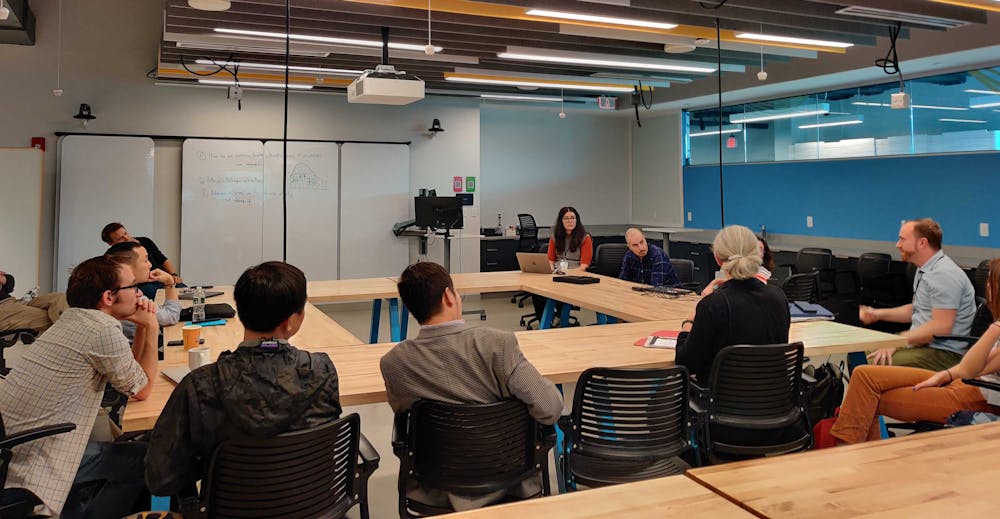
Meeting frequently helps multiple modeling teams stay on the same page. Matteo Chinazzi, CC BY-ND
Many of these challenges are overcome by convening as a “hub.” Our modeling teams meet weekly to make sure we’re all on the same page about the scenarios we model. This way, any differences in what individual models project are the result of things researchers truly do not know. Retaining this scientific disagreement is essential; the success of the Scenario Modeling Hub ensemble arises because each modeling team takes a different approach.
At our hub we work together to design our scenarios strategically and in close collaboration with public health officials. By projecting outcomes under specific scenarios, we can estimate the impact of particular interventions, like vaccination.
For example, a scenario with higher vaccine uptake can be compared with a scenario with current vaccination rates to understand how many lives could potentially be saved. Our projections have informed recommendations of COVID-19 vaccines for children and bivalent boosters for all age groups, both in 2022 and 2023.
In other cases, we design scenarios to explore the effects of important unknowns, such as the impact of a new variant – known or hypothetical. These types of scenarios can help individuals and institutions know what they might be up against in the future and plan accordingly.
Although the hub process requires substantial time and resources, our results showed that the effort has clear payoffs: The information we generate together is more reliable than the information we could generate alone.
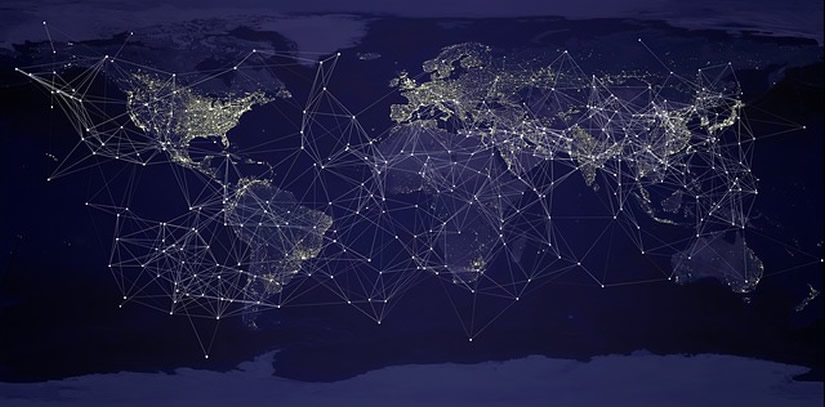
The sum is greater than the parts when researchers build an ensemble from multiple coordinated but independent models. Matteo Chinazzi, CC BY-ND
Past reliability, confidence for future
Because Scenario Modeling Hub projections can inform real public health decisions, it is essential that we provide the best possible information. Holding ourselves accountable in retrospective evaluations not only allows us to identify places where the models and the scenarios can be improved, but also helps us build trust with the people who rely on our projections.
Our hub has expanded to produce scenario projections for influenza, and we are introducing projections of respiratory syncytial virus, or RSV. And encouragingly, other groups abroad, particularly in the EU, are replicating our setup.
Scientists around the world can take the hub-based approach that we’ve shown improves reliability during the COVID-19 pandemic and use it to support a comprehensive public health response to important pathogen threats.
In December 2001, Argentina experienced one of the most dramatic moments in its history. The collapse of convertibility – the monetary stabilisation plan that established parity between the dollar and the peso – brought tens of thousands of people onto the streets to protest against the government’s confiscation of their money, the “corralito”.
Almost 22 years later, the Argentinian population seems to have finally found a figure who could effectively express the “let them all go” slogan that marked that December.
Javier Milei, a far-right economist and founder of the La Libertad Avanza (LLA) party, was elected president of Argentina by defeating Peronist Sergio Massa in the second round held last Sunday.
The more than ten-point lead between Milei and Massa once again called into question the credibility of the polling institutes, which had been predicting a tight race defined by narrow margins. However, there were signs this picture was wrong since the first round. In the first round of voting in October, the sum of the votes given to Milei and Patrícia Bullrich already exceeded Massa’s vote by around 15%.
Victory in 20 of the country’s 23 provinces
In the end, Milei managed to retain more than 80% of Bullrich’s votes and expanded his electoral base by more than 324,000 votes compared to the right-wing’s performance in the first round. The result was a resounding victory, with Milei beating Massa in 20 of the country’s 23 provinces, as well as the federal capital, Buenos Aires. In traditional anti-Peronist strongholds, such as Mendoza, the difference was over 40%, but Milei won in five of the eight provinces currently governed by Peronism.
Understanding the reasons behind this situation is an endeavour that will last for some years. In a preliminary analysis, the results can be read as the expected end of an atypical electoral cycle in which a society punished by a decade of economic stagnation and various failed stabilisation plans decided to punish the traditional political forces. In other words, faced with the rejection of known formulas, the unknown was embraced.
The striking fact is that this discontent has found its main representative in Javier Milei. Milei is an aggressive figure, visibly unprepared, without firm social foundations and who has become known more for idiosyncrasies than for the defence of a project or a track record in politics.
Extreme and rabid campaigning
Milei ran a campaign in his image and likeness: histrionic, extreme and angry, symbolised by the chainsaw with which he sought – metaphorically, one hopes – to destroy the “caste”, the expression by which he referred to the country’s politicians. To this, he added half a dozen slogans (“dollarisation”, “freedom”, “end the Central Bank”), about which little explanation was given, and built the successful campaign that took him to the Casa Rosada.
Understanding this phenomenon requires consideration of transformations underway in Argentine society, ranging from the changes wrought by communication in the internet age to the advance of job insecurity and the marginalisation of large parts of the population from markets and formal state protection networks.
In this sense, it must be recognised that Milei has shown a greater ability to read the current situation than his opponents. He understood that fatigue with the government would not be represented in gradual formulas, as proposed by the coalition Juntos por el Cambio, and made room for accepting a shock therapy proposal.
In this respect, the proposal to dollarise the economy proved a smart electoral move, as it won over younger voters, who have no memory of the collapse of the 1990s and feel the direct impact of a stagnant economy just as they enter the labour market.
Whilst it is necessary to broaden the effort to understand the roots of this result, it is also necessary to reflect on its implications moving forward.
‘Change needs to be drastic, with no middle ground’
Milei himself seems to be aware that his agenda is less feasible than he made it out to be during the campaign. During his victory speech, Milei made no reference to dollarisation or the abolition of the Central Bank, but he made it clear the path he intends to follow is one of shock therapy. He stated: “The changes we need are drastic. There is no room for gradualism, there is no room for middle ground.”
Implementing this shock agenda represents a politically very complex operation. Passing laws and projects that require a qualified majority will require agreements with sectors of Peronism, but the challenge doesn’t end there. The adoption of shock therapy tends to produce very costly effects in terms of employment and income, which could unleash waves of protests that could jeopardise the country’s already difficult governability.
In this context, Milei’s political sustainability will depend on building a network of support that goes beyond votes in the House and Senate and makes a name for itself on the streets.
Will Milei be restrained?
To what extent Milei will be able to make these articulations without losing his anti-system legitimacy is unknown.
Another open question, and a potentially more serious one, concerns the impact of Milei’s presidency on Argentina’s democratic institutions. At the moment, there seems to be an expectation in the country’s traditional circles that the president-elect will be moderate, restrained by the weight of the office, and that his virulent tone is more a candidate’s speech than an expression of temperament.
However, one of the lessons to be learned from the experiences of Donald Trump and Jair Bolsonaro in Brazil is that expectations of moderation are frustrated by far-right politicians. The notion that the Republican Party or the armed forces would contain Trump and Bolsonaro, respectively, was not only wrong, but what we saw was a radicalisation of these actors, who mostly adhered to the authoritarian projects of their leaders.
Authoritarian DNA
To deny the authoritarian DNA of Milei’s project, as the traditional Argentinian right has done, is to close one’s eyes to the obvious in order to avoid facing one’s own contradictions. In the campaign committee, posters with Milei’s face were accompanied by the phrase “the only solution”.
Now, if a figure claims to be the only solution to the country’s problems, all those who oppose that solution automatically become part of the problem.
How the new Argentine president intends to deal with this scenario is something we’ll soon find out, but the clues offered by Milei and Argentine history suggest that the vibrant capacity for mobilisation that distinguishes Argentine society may be more necessary than ever.
Yanis Varoufakis grew up during the Greek dictatorship of 1967-1974. He later became an economics professor and was briefly Greek finance minister in 2015.
His late father, a chemical engineer in a steel plant, instilled in his son a critical appreciation of how technology drives social change. He also instilled him with a belief that capitalism and genuine freedom were antithetical – a leftist politics that made his father a political prisoner for several years during the “junta”, as they called it.
In 1993, when he first got the internet, Varoufakis’s father posed a “killer question” to his son: “now computers speak to each other, will this network make capitalism impossible to overthrow? Or might it finally reveal its Achilles heel?”
Varoufakis has been mulling it over ever since.
Though, sadly, it is now too late to explain to his father in person, Varoufakis’s new book Technofeudalism: What Killed Capitalism answers the question in the form of an extended reflection addressed to his father.
“Achilles heel” was on the right track. In his striking response, Varoufakis argues that we no longer live in a capitalist society; capitalism has morphed into a “technologically advanced form of feudalism”.
Review: Technofeudalism: What Killed Capitalism – Yanis Varoufakis (Bodley Head)
Rent over profit
Traditional capitalists are people who can use capital – defined as “anything that can be used to produce saleable goods” (such as factories, machinery, raw materials, money) – to coerce workers and generate income in the form of profits. Such capitalists are clearly still flourishing, but Varoufakis argues they are not driving the economy in the way they used to.
many feudal relations remained intact, but capitalist relations had begun to dominate. Today, capitalist relations remain intact, but techno-feudalist relations have begun to overtake them.
Traditional capitalists, he proposes, have become “vassal capitalists”. They are subordinate and dependent on a new breed of “lords” – the Big Tech companies – who generate enormous wealth via new digital platforms. A new form of algorithmic capital has evolved – what Varoufakis calls “cloud capital” – and it has displaced “capitalism’s two pillars: markets and profits”.
Markets have been “replaced by digital trading platforms which look like, but are not, markets”. The moment you enter amazon.com “you exit capitalism” and enter something that resembles a “feudal fief”: a digital world belonging to one man and his algorithm, which determines what products you will see and what products you won’t see.
If you are a seller, the platform will determine how you can sell and which customers you can approach. The terms in which you interact, share information and trade are dictated by an “algo” that “works for [Jeff Bezos’] bottom line”.
The capitalists who rely on this mode of selling are granted access to the digital estate by its virtual landowners, the Big Tech companies. And if “vassal capitalists” don’t abide by the laws of the estate, they are kicked out – removed from Apple’s App Store or Google’s search index – with disastrous consequences for their business.
Access to the “digital fief” comes at the cost of exorbitant rents. Varoufakis notes that many third-party developers on the Apple store, for example, pay 30% “on all their revenues”, while Amazon charges its sellers “35% of revenues”. This, he argues, is like a medieval feudal lord sending round the sheriff to collect a large chunk of his serfs’ produce because he owns the estate and everything within it.
This is not extracting profit through the production or provision of goods and services, as these platforms are not a “service” in the sense in which the term is used in economics. They are extracting rents in the form of the huge cuts they take from the capitalists on their platforms.
There is “no disinterested invisible hand of the market” here. The Big Tech platforms are exempted from free-market competition. Their owners – “cloudalists” – increase their wealth and power at a dizzying pace with each click, exploiting a new form of rent-seeking made possible by the new algorithmically structured digital platforms. Parasitic on capitalist production, they are now dominating it.
Cloud serfs
But something even more transformative has happened, Varoufakis argues.
Even though most of us are regularly interacting with capitalists and earning wages via our labour, now, for the first time in history, all of us contribute to “the wealth and power of the new ruling class” through our “unpaid labour”.
Every time we use our cloud-linked devices – smartphones, laptops, Alexa, Google Assistant, Siri – we replenish the capital of the Big Tech cloudalists. This in turn increases their capacity to generate more wealth. How? We train their algorithms, which train us, to train them, and so on, in a feedback loop whose goal is to shape our desires and behaviour. They are “selling things to us while selling our attention to others”.
This interaction, Varoufakis insists, is not taking place as any kind of market exchange, such as wages being paid by a capitalist to a group of workers. In this interaction, we are all high-tech “cloud serfs”.
The new advertising men of the postwar world, portrayed in the series Mad Men (Yanis is clearly a fan), thought television was amazing because of its power to deliver audiences to advertisers. They could innovate “attention-grabbing” ways of “manufacturing” consumer desires – and it was delivered free-to-air!
But, Varoufakis emphasises, the ad men of the previous century could never have imagined the development of something like Amazon’s Alexa: a digital network learning “at lightning speed”, via the input of millions of people, how to train us. It is shaping our desires and behaviours in a process of perpetual reinforcement. Our experience and reality are increasingly algorithmically curated. And due to the incredible ease and utility, the information is all freely given.
So the “cloud capital” we are generating for them all the time increases their capacity to generate yet more wealth, and thus increases their power – something we have only begun to realise. Approximately 80% of the income of traditional capitalist conglomerates go to salaries and wages, according to Varoufakis, while Big Tech’s workers, in contrast, collect “less than 1% of their firms’ revenues”.
Quantitative easing
So how did this dystopian turn happen without us really noticing the change? Varoufakis’s story is detailed, but he emphasises two main drivers.
First, the “internet commons” of Web 1.0 transformed into Web 2.0, privatised by American and Chinese Big Tech.
Second, the colossal sums of central bank money that were supposed to refloat our economies in the aftermath of the 2008 Global Financial Crisis (GFC) – a process known as “quantitative easing” – were lent out to big business. Coupled with “austerity” economics for the many, this “murder[ed] investment” and led to what Varoufakis calls “gilded stagnation”.
Much of the central bank money, particularly following another round of quantitative easing during the COVID pandemic, made its way to the Big Tech companies. Their share prices soared to astronomical levels.
The “world of money” was decoupled from the “real economy” where most of us live and work. In an environment where profit became “optional”, loss-making Big Tech companies run by “intrepid and talented entrepreneurs” chose to build up their cloud capital.
So along with markets being steadily replaced by digital platforms, central bank money displaced private profits as the fuel that “fire[s] the global economy’s engine”. Intended by G7 central bankers and their presidents and prime ministers to “save capitalism”, it has unintentionally helped finance the emergence of a new form of capital (cloud capital) and a “new ruling class”.
The ‘world of finance’, argues Yanis Varoufakis, has decoupled from the ‘real economy’ Markus Spiske/Unsplash
GFC: the turning point
So why was the GFC such a pivotal point? Varoufakis has a lot to say. Here’s a brief sketch. (Bear with me!)
Crucial changes had taken place in our economies since the rise of large corporations in industry and banking, which grew ever bigger over the course of the 20th century, eventually becoming global in scale.
The Bretton Woods international financial system – designed to prevent the “greed-fuelled recklessness” that led to the 1929 crash, the Great Depression and a world war – was abolished in 1971. From the 1970s, economies were progressively deregulated and free-market policies were increasingly enthusiastically practised, leading to a new “financialised” version of capitalism.
This was facilitated by the suppression of workers’ wages and bargaining power. The weakened state was progressively captured by lobbyists for the interests of big business. And the hegemony of the US dollar in the global system led to a “tsunami” of dollars pouring back into US markets from Europe, Japan, and later China, “[enriching] America’s ruling class, despite its [large trade] deficit”.
By the new millennium, this had led to an orgy of speculation and, by 2007, the financiers, using “computer-generated complexity” to obscure the “gargantuan risks”, had “placed bets worth ten times more than humanity’s total income”.
The new version of capitalism was failing. But it had grown to such scale and in such a complex, integrated “globalised” way that the banks and insurance companies were “too big to fail”. Their collapse in 2008 would have taken down the US banking system, and the rest of the world with it. Their hubris was thus “rewarded with massive state bailouts”.
What could have happened, as in Sweden in the 1990s, was to “kick out” the bankers, nationalise the banks, appoint new directors and, years later, sell them to new owners – thus saving the banks, but not the bankers.
What happened instead was that bankers, handed large bailouts, did not direct the money to where it was most needed. Neither punished nor chastened, they sent it straight to Wall Street. And there it stayed. Combined with the profits sent to Wall Street from the rest of the world, it eventually caused an “everything rally” that went on for over a decade.
This ultimately helped fuel the development of the cloud capital that has overtaken capitalism. And every time we use our devices, we contribute to its value. The more we transact via platforms, the further we move away from an economic system primarily driven by markets and profits, and the more power concentrates “in the hands of even fewer individuals” – a “tiny band of multi-billionaires residing mostly in California or Shanghai”.
A tech-driven economic revolution
Varoufakis suggests his theory helps us better understand extreme wealth inequalities, the “atrophied democracies” and “poisoned politics” of the West, geopolitics (he interprets the United States and China as two rival “super cloud fiefs”), the stalling of the green energy revolution, and more.
For Varoufakis, we are not just living through a tech revolution, but a tech-driven economic revolution. He challenges us to come to terms with just what has happened to our economies – and our societies – in the era of Big Tech and Big Finance.
The first decades of the 21st century have brought challenges that we are still struggling to come to grips with. One thing is for sure – we have no hope of improving things without properly understanding our predicament.
This book is a welcome contribution towards that task. A technofeudalist age, Varoufakis argues, is not inevitable. Despite the difficulties we face, we have the agency to reject “techno dystopia” and structure our institutions in ways that more meaningfully embody freedom and democracy.
Towards the end of Technofeudalism, Varoufakis canvasses some proposals, drawn from his earlier book Another Now (2020), for how to address these issues. These include ending the cloudalists faux “free service” model and replacing it with a universal micro-payment model, instituting a Bill of Digital Rights, and using digital technology to “democratise companies” (with decisions being taken collectively by “employee-shareholders”).
Varoufakis also proposes to “democratise money”. This plan would involve central banks issuing digital wallets, a universal basic income, reconfiguring “the central bank’s ledger” in the direction of a “common payment and savings system”, and abolishing the current capacity of private banks to “create money”.
The proposals are pretty radical, but I think Varoukais would say they are as radical as the times require them to be.
As of November 2023, sports betting is legal in some form in 38 states and Washington, D.C. Further, 26 states allow sports betting online. Bills have been introduced – and some recently passed – in more states. These states include Vermont, Missouri and North Carolina. Thanks to technology, sports betting is now accessible beyond casinos. Anyone can access it online and on their smartphone.
Sports betting is also becoming more accessible on college campuses. A New York Times investigation found that sports betting companies and universities have essentially “Caesarized” college life. That is to say, they’ve made campuses resemble elements of the world famous casinos by introducing online gambling to students.
College betting scandals shine light on campus wagering.
These profits have driven increased advertising. Some estimate that total advertising through all media channels could approach $3 billion annually. This includes social media platforms like TikTok, where young adults are more likely to see ads for gambling. A study in the United Kingdom found that 72% of 18- to 24-year-olds have seen gambling ads through social media.
While advertisers reportedly focus on young adults of legal age, research suggests that children under 18 are also being exposed to advertising related to gambling. The intensity of advertising activity on social media has raised concerns and brought scrutiny. Earlier this year, for example, prosecutors in the Massachusetts attorney general’s office expressed concern that sports betting and other gambling might spread quickly through college campuses as a result of advertising.
Why college students are at greater risk of gambling addiction
Gambling addiction affects people from all backgrounds and across all ages, but it is an even bigger threat to college students. Adolescents of college age are uniquely likely to engage in impulsive or risky behaviors because of a variety of developmental factors, leaving them more susceptible to take bigger risks and experience adverse consequences.
It’s no secret that drinking alcohol is prevalent on college campuses, and this can increase the likelihood of other risk-taking behaviors such as gambling. Like other addictive behaviors, gambling can stimulate the reward centers of the brain, which makes it more difficult to stop even if someone is building up losses.
What colleges and universities can do to help
If you’re worried a student in your life might have a gambling problem, the Mayo Clinic describes signs to look for. These include restlessness or irritability when attempting to stop or reduce gambling, gambling more when feeling distressed, and lying to hide gambling or financial losses from it. Gamblers Anonymous provides a 20-question, self-diagnostic questionnaire to help people identify problems or compulsive gambling.
For more resources, organizations like the Gateway Foundation offer information and support to help someone with a gambling problem. Immediate help is available at the national problem gambling helpline, 1-800-GAMBLER. The National Council on Problem Gaming has lists of resources within each state that can provide more local support and assistance.
At the Miami University Institute for Responsible Gaming, Lottery and Sport, my colleagues and I are working to ensure that the recent dramatic expansion of legalized gaming is matched by effective guidance for policymakers and leaders within higher education. Many institutions, like the University of Oregon, have begun to acknowledge that widespread legalized sports betting and gambling can affect their students. A comprehensive and coordinated approach is required to protect them from harm.
There are resources available to help institutions, such as the “get set before you bet” initiative adopted by the University of Colorado, Boulder and others. This gives students practical tips to follow if they are going to gamble, such as setting time and money limits before they start.
Ensuring there are clear policies on gambling and making sure they align with alcohol policies. United Educators provides examples of how institutions can create effective policies and support student wellness, like Arizona State’s policy. Theirs prohibits legal and illegal gambling at any event related to ASU and reinforces that alcohol possession, consumption or inebriation is illegal for all students under 21.
Promoting awareness of addiction as a mental health disorder and making resources for getting help available to students.
Ensuring those who work in campus counseling and health services are familiar with gambling addiction and prepared to support students struggling with addiction or problem behavior. Providers should also be aware that multiple addictions can be present, enhancing the challenges to management and recovery.
Surveying student attitudes toward gambling to track changes in attitudes, behaviors and norms.
With various sports championships, including in baseball, football and college basketball, taking place throughout the academic year, there’s no shortage of occasions for universities to check in with students about sports betting on campus. Gambling addiction is treatable, but preventing it from the start is the best solution.







 The sum is greater than the parts when researchers build an ensemble from multiple coordinated but independent models.