
Archive for Economics & Fundamentals – Page 54

The Analytical Overview of the Main Currency Pairs on The Bank of Canada cut the rate by 0.25%. Oil continues to fall in price

By JustMarkets

At Wednesday’s close, the Dow Jones (US30) Index was up 0.09%, while the S&P 500 (US500) Index fell 0.16% and hit a 2-week low. The NASDAQ Technology Index (US100) closed negative 0.30% and hit a 3-week low. Stocks on Wednesday initially recovered from early losses and headed higher after the 10-year T-note yield fell to a 2-week low after the July JOLTS report on US job openings fell more than expected to a 3-year low. The weak JOLTS report boosted hopes that the Fed would cut interest rates by 50 bps at the September 17–18 FOMC meeting. However, stocks gave up their gains after the release of the Fed’s Beige Book on Wednesday afternoon, which raised fears of a recessionary economy. The Fed’s Beige Book said the number of Fed districts reporting low or declining activity rose to nine from five in the previous period. Employers were more selective in hiring and less inclined to expand, citing concerns about demand and an uncertain economic outlook.

The Bank of Canada (BoC) decided on a 25 bps rate cut, which was widely expected, citing growing economic concerns amid inflation approaching the Central Bank’s 2% target. Preliminary data points to downside risks to third-quarter growth in the Bank’s July estimates, while the labor market remains stagnant, with unemployment holding at 6.4%, hinting at further rate cuts in upcoming meetings. However, amid the lack of surprises, Macklem noted that sustained price pressures in the housing and services sectors continue to support high inflation, which is seen as hawkish for the Bank of Canada going forward.

Equity markets in Europe were down yesterday. Germany’s DAX (DE40) fell by 0.83%, France’s CAC 40 (FR40) closed down 0.98%, Spain’s IBEX 35 (ES35) lost 0.58% and the UK’s FTSE 100 (UK100) closed down 0.35%.

Factory orders in Germany rose 2.9% in July 2024 from the previous month, beating market prognoses, which had expected a 1.5% fall, following an upwardly revised 4.6% rise in the previous month. It was the second consecutive month of growth, driven by strong orders for airplanes, ships, and trains (86.5%). Orders for electrical equipment also grew strongly (18.6%).

Switzerland’s unemployment rate rose to a seasonally unadjusted 2.4% in August 2024, up from 2.3% in the previous four months. The number of unemployed rose by 3,638 from a month earlier to a six-month high of 111,354.

WTI crude oil prices were trading near $69.6 a barrel on Thursday, remaining near the lowest level in eight months after a recent strong sell-off. Recent pressure on oil prices has been driven by oversupply concerns, with OPEC planning to increase production and a potential deal between Libya’s rival governments to restart oil production. Meanwhile, API data showed a significant drop of 7.4 million barrels in US crude inventories last week, much larger than the expected 0.9 million barrel decline.

Asian markets were predominantly down yesterday. Japan’s Nikkei 225 (JP225) was down 4.24%, China’s FTSE China A50 (CHA50) decreased by 0.70%, Hong Kong’s Hang Seng (HK50) was down 1.10%, and Australia’s ASX 200 (AU200) was positive 1.88%.

Thailand’s annual inflation rate for August 2024 fell to a fourth-month low of 0.35% from 0.83% in the previous month and came in below market expectations of 0.4%, remaining outside the Central Bank’s target range of 1–3%. Meanwhile, core inflation, which excludes volatile items such as food and energy prices, rose to 0.62% in August from the previous reading of 0.52%, exceeding market expectations of 0.55%.

Governor Michele Bullock said in a statement that the Reserve Bank of Australia (RBA) aims to balance lowering inflation in a reasonable time frame and preserve as much of the gains in the labor market as possible. She added that the country’s inflation rate has fallen significantly since its peak but remains above the midpoint of the 2–3% target, with core inflation, measured by a trimmed average, at 3.9% in June. It is expected to return to the target range by the end of next year and approach the median in 2026.

The Reserve Bank of New Zealand (RBNZ) cut the official money rate last month, the first move since tightening policy in the post-pandemic period in an attempt to curb inflation. Investors are confident the Central Bank will continue easing policy at its next meeting in October, with a 37% chance of a 50 basis point rate cut.

S&P 500 (US500) 5,520.07 −8.86 (−0.16%)

Dow Jones (US30) 40,974.97 +38.04 (+0.093%)

DAX (DE40) 18,591.85 −155.26 (−0.83%)

FTSE 100 (UK100) 8,269.60 −28.86 (−0.35%)

USD Index 101.31 −0.51 (−0.50%)

News feed for: 2024.09.05

  • Australia Trade Balance (m/m) at 04:30 (GMT+3);
  • Australia RBA Gov Bullock Speaks at 05:00 (GMT+3);
  • Switzerland Unemployment Rate (m/m) at 08:45 (GMT+3);
  • Eurozone Retail Sales (m/m) at 12:00 (GMT+3);
  • US ADP Non-Farm Employment Change (m/m) at 15:15 (GMT+3);
  • US Initial Jobless Claims (w/w) at 15:30 (GMT+3);
  • US ISM Services PMI (m/m) at 17:00 (GMT+3);
  • US Natural Gas Storage (w/w) at 17:30 (GMT+3);
  • US Crude Oil Reserves (w/w) at 18:00 (GMT+3).

By JustMarkets


This article reflects a personal opinion and should not be interpreted as an investment advice, and/or offer, and/or a persistent request for carrying out financial transactions, and/or a guarantee, and/or a forecast of future events.


Oil fell to the lowest level of the year. Stock indices are under pressure from weak economic data

By JustMarkets

At the end of Tuesday, the Dow Jones Index (US30) decreased by 1.51%, while the S&P 500 Index (US500) fell 2.12%. The NASDAQ Technology Index (US100) closed yesterday negative 3.26%. Stocks fell sharply on Tuesday, with the S&P 500 Index (US500) hitting a 2-week low and the Nasdaq 100 Index hitting a 2-week low. Tuesday’s drop in chip company stocks had a negative impact on the overall market. Stocks were also hurt by Tuesday’s weaker-than-expected manufacturing activity and construction spending reports from the ISM.

The ISM manufacturing index for August rose by 0.4 to 47.2, weaker than expectations of 47.5. The ISM Services Price Sub-Index for August unexpectedly rose by 1.1 to 54.0 versus expectations of a decline to 52.0, which was hawkish for Fed policy. US construction spending for July unexpectedly fell by 0.3% m/m, weaker than expectations for a 0.1% m/m rise and the biggest decline in a year. Markets rate the odds of a 25 bps rate cut at the September 17-18 FOMC meeting at 100% and a 50 bps rate cut at that meeting at 38%.

Boeing (BA) shares are down more than 7% after Wells Fargo Securities downgraded the stock with a $119 price target. Visa (V) shares closed higher by more than 1% after BNP Paribas Exane upgraded the stock to “improved” from “neutral” with a $325 price target.

Canada’s GDP grew at a 2.1% annualized rate in the second quarter of 2024, the highest rate since the first quarter of 2023. The figure beat the previous quarter’s revised 1.8% growth and expectations of 1.6% growth, easing fears of stagnation and reducing the likelihood of aggressive monetary policy easing by the Bank of Canada. The Bank of Canada will hold a monetary policy meeting today. Canadian overnight index swaps (OIS) indicate that the Bank of Canada (BoC) will cut rates by 0.25% to 4.25% today, and markets now expect two more rate cuts this year after September. There is a 15% chance of a more substantial 50 bps rate cut. A rate cut could hurt the Canadian currency against other currencies.

Equity markets in Europe were declining yesterday. Germany’s DAX (DE40) fell by 0.97%, France’s CAC 40 (FR40) closed down 0.93%, Spain’s IBEX 35 (ES35) lost 1.02%, and the UK’s FTSE 100 (UK100) closed down 0.78%.

The S&P Eurozone Manufacturing PMI for August was revised upward by 0.2 to 45.8 from the previously reported 45.6. German retail sales for May fell by 1.1% year over year, weaker than expectations of 0.7% year over year. Swaps discount the odds of a 25 bps ECB rate cut at the September 12 meeting to 99%.

WTI crude oil prices fell more than 4% below $71/bbl on Tuesday, the lowest since early January, as weak demand amplified the impact of relatively ample supply. New data from China added to concerns that economic growth in one of the world’s biggest oil consumers is unlikely to recover this year, with key indicators of domestic factory demand falling more than expected in August. In the US, data from the EIA showed US oil consumption in June fell to its lowest seasonal level since 2020. Meanwhile, OPEC signaled it would follow earlier signals to increase OPEC+ production in the fourth quarter, offsetting lower production from Libya.

Asian markets were predominantly down yesterday. Japan’s Nikkei 225 (JP225) decreased by 0.04%, China’s FTSE China A50 (CHA50) was down 0.22%, Hong Kong’s Hang Seng (HK50) lost 0.23% and Australia’s ASX 200 (AU200) was positive 0.08%.

Australia’s economy grew by 0.2% quarter-on-quarter in the second quarter of 2024, holding steady in the third quarter and falling short of market forecasts of 0.3%. This was the 11th period of quarterly growth, but the pace remained the slowest in the past five quarters.

S&P 500 (US500) 5,528.93 −119.47 (−2.12%)

Dow Jones (US30) 40,936.93 −626.15 (−1.51%)

DAX (DE40) 18,747.11 −183.74 (−0.97%)

FTSE 100 (UK100) 8,298.46 −65.38 (−0.78%)

USD index 101.75 +0.10 (+0.10%)

Important events today:
  • – Australia GDP (q/q) at 04:30 (GMT+3);
  • – German Services PMI (m/m) at 10:55 (GMT+3);
  • – Eurozone Services PMI (m/m) at 11:00 (GMT+3);
  • – UK Services PMI (m/m) at 11:30 (GMT+3);
  • – Eurozone Producer Price Index (m/m) at 12:00 (GMT+3);
  • – Canada Trade Balance (m/m) at 15:30 (GMT+3);
  • – US Trade Balance (m/m) at 15:30 (GMT+3);
  • – Canada BoC Interest Rate Decision at 16:45 (GMT+3);
  • – Canada BoC Rate Statement at 16:45 (GMT+3);
  • – US JOLTs Job Openings (m/m) at 17:00 (GMT+3);
  • – Canada BoC Press Conference at 17:30 (GMT+3).

By JustMarkets


This article reflects a personal opinion and should not be interpreted as an investment advice, and/or offer, and/or a persistent request for carrying out financial transactions, and/or a guarantee, and/or a forecast of future events.

Natural gas rises amid rising demand. The manufacturing sector in Australia and China shows a decline

By JustMarkets

The American stock market did not trade yesterday due to the bank holiday.

Equity markets in Europe traded yesterday without a single dynamics. German DAX (DE40) rose by 0.13%, French CAC 40 (FR40) closed with an increase of 0.20%, Spanish IBEX 35 (ES35) fell by 0.06%, British FTSE 100 (UK100) closed at negative 0.15%.

Quotes of ASML and SAP added almost 1% each. Meanwhile, Volkswagen rebounded from early losses to close 1.4% higher, sharply outperforming losses at other automakers after announcing new cost-cutting measures and that it did not rule out closing plants in Germany. On the data side, the Eurozone and domestic manufacturing PMIs for August were revised slightly higher from preliminary estimates but still pointed to a continued contraction in factory activity.

WTI crude oil prices are holding below $74 a barrel on Tuesday after strong selling pressure in recent sessions, weakened by rising expectations of increased supply. OPEC recently announced plans to increase production, with the eight OPEC+ members expected to increase output by 180,000 bpd.

The US natural gas (XNG/USD) prices rose to $2.2 per MMBtu amid new signs of robust demand for gas requiring cooling. The Midwest experienced record-high temperatures over the weekend, and more than 60 million people received heat warnings, boosting demand for air conditioning. Meanwhile, investors continued to assess domestic gas supplies this year after a slowdown in LNG exports.

Asian markets traded flat yesterday. Japan’s Nikkei 225 (JP225) was up 0.14%, China’s FTSE China A50 (CHA50) was down 1.33%, Hong Kong’s Hang Seng (HK50) lost 1.65%, while Australia’s ASX 200 (AU200) was positive 0.22%.

The Australian dollar fell as low as $0.675, hitting a more than one-week low, as lower iron ore and other commodity prices pressured the currency as the country’s economy relies heavily on commodity exports. Investors also digested data that government spending was the main driver of economic growth last quarter, indicating potential weakness in the economy. In addition, Australia’s manufacturing sector continued to contract in August as high borrowing costs and weak demand weighed on new orders.

The offshore yuan depreciated to 7.12 per dollar, extending its fall from the previous session, as mixed PMI data in China fueled expectations of further stimulus measures. With traders now firmly expecting a Fed rate cut in September, they believe this could give the People’s Bank of China the opportunity to ease monetary policy without triggering capital outflows. The latest official data showed that Chinese manufacturing activity contracted sharply in August, the sharpest decline since February, while service sector activity rose slightly from an eight-month low.

S&P 500 (US500) 5,648.40 0 (0%)

Dow Jones (US30) 41,563.08 0 (0%)

DAX (DE40) 18,930.85 +23.93 (+0.13%)

FTSE 100 (UK100) 8,363.84 −12.79 (−0.15%)

USD Index 101.64 −0.05 (−0.05%)

Important events today:
  • – Switzerland Consumer Price Index (m/m) at 09:30 (GMT+3);
  • – Switzerland GDP (m/m) at 10:00 (GMT+3);
  • – Canada Manufacturing PMI (m/m) at 16:30 (GMT+3);
  • – US ISM Manufacturing PMI (m/m) at 17:00 (GMT+3).

By JustMarkets


This article reflects a personal opinion and should not be interpreted as an investment advice, and/or offer, and/or a persistent request for carrying out financial transactions, and/or a guarantee, and/or a forecast of future events.

Week Ahead: US jobs report to spark market frenzy again?

By ForexTime

  • Economists predict August jobless rate will ease back down to 4.2%
  • Lowered recession risks should mean slower Fed rate cuts
  • Sturdier jobs market could boost gold, US stock indexes to new record highs
  • Repeat of manic volatility from July NFP could deliver massive trading opportunities once more


Remember the market turmoil from the previous US jobs report?

Released back on August 2nd, the July US unemployment rate rose to 4.3% – its highest since 2021!

The spike in the US jobless rate triggered fears that the Federal Reserve may be too late to prevent a recession in the world’s largest economy.

The July unemployment rate figure also officially triggered the “Sahm rule” – a historically accurate predictor of US recessions.

Such heightened recession fears triggered wild swings across global financial markets.


On August 2nd, 2024:

  • US dollar fell 1.16%: its biggest one-day drop so far in 2024
  • The S&P 500 index (tracked by FXTM’s US500) fell by 1.84% – its 3rd largest single-day decline so far this year.
  • Gold only fell by 0.12%, once again exhibiting its virtues as a safe haven asset.

Recall also how the previous US jobs report then triggered the violent unwinding of the Yen carry trade, with the Bank of Japan set to hike interest rates against the Fed that may have to cut US interest rates at a faster clip.

The following Monday, August 5th, the S&P 500 fell 3% on to record its biggest one-day drop since 2022!


Although the markets have since found relative calm, the volatility from not too long ago is sure to frame the minds of investors and traders worldwide during the upcoming week’s events:

Monday, September 2

  • CNH: China manufacturing PMI
  • TWN index: Taiwan manufacturing PMI
  • AUD: Australia inflation
  • US markets closed

Tuesday, September 3

  • CHF: Switzerland CPI; 2Q GDP
  • EU50 index: Eurozone retail sales
  • RUS2000 index: US ISM manufacturing

Wednesday, September 4

  • AUD: Australia 2Q GDP; composite and services PMIs (final)
  • CN50 index: China services and composite PMIs
  • EU50 index: Eurozone PPI; services and composite PMIs (final)
  • US400 index: Fed Beige Book; US factory orders
  • CAD: Bank of Canada rate decision

Thursday, September 5

  • AUD: Australia trade balance
  • SG20 index: Singapore retail sales
  • TWN index: Taiwan CPI and PPI
  • EUR: Eurozone retail sales; Germany factory orders, construction PMI
  • USD index: US weekly initial jobless claims; ADP employment

Friday, September 6

  • EUR: Eurozone 2Q GDP and employment (final); Germany July industrial production and trade balance
  • CAD: Canada unemployment, composite and services PMIs
  • US500 index: US nonfarm payrolls

NOTE: The US nonfarm payrolls (NFP) report is typically released on the first Friday of each month.


How have major assets reacted historically to the US jobs report?

In the 6 hours following the NFP releases from the past 12 months:

  • USDInd: The US dollar index has risen by as much as 0.9% (2 Feb 24) or fallen by as much as 0.8% (2 Aug 2024).
  • XAUUSD: Gold has risen by as much as 1.3% (5 Apr 24) or fallen by as much as 1.3% (8 Dec 23)
  • S&P 500: This benchmark stock index, tracked by FXTM’s US500 index, has risen by as much as 2% (6 Oct 23) or fallen by as much as 0.7% (5 Apr and 2 Aug 2024)

Ultimately, the markets reactions this time round will be determined by the official numbers released at 12:30 PM GMT on Friday, as they pertain to the size of the Fed rate cut in September.


What are the market forecasts for the August NFP report?

Here’s what economists are forecasting for the August US nonfarm payrolls report that’ll be released on September 6th:

  • 165,000 new jobs added in August (higher than the 114,000 added in July)
  • Unemployment rate: 4.2% (lower than July’s 4.3% shocker)
  • Average hourly earnings ticked up by 10 basis points from July’s 0.2% month-on-month and 3.6% year-on-year figures.


As mentioned at the start of this article, much of the focus is set to fall on the unemployment rate, which had reached its highest level (4.3%) since 2021 and fulfilled the “Sahm rule” criteria for a US recession.

Also, this incoming US jobs report has taken on increased significance, following Fed Chair Jerome Powell’s commentary out of Jackson Hole last Friday, August 23rd:

“We do not seek or welcome further cooling in labor market conditions”.

Chair Powell also said that the “time has come” for the Fed to start cutting interest rates, likely at the next FOMC meeting in mid-September, while stating that the slowdown in US hiring has been “unmistakable”.

In short, this upcoming US jobs report is set to heavily influence the Fed’s decision on how much to cut interest rates at its mid-September FOMC meeting.


Potential scenarios:

  • If the unemployment rate does ease lower to 4.2%, which allays recession fears while allowing the Fed to proceed with just a 25-basis point rate cut in September, that could see:

    – US500 index on course for a new record high at 5678 or higher

    US Dollar index (USDInd) to test resistance around its 21-day simple moving average (SMA)

    – Gold on course for a new record high above the existing all-time peak of $2531.75


  • If the unemployment rate does stay elevated at 4.3% or higher, which once again stokes recession fears while forcing the Fed into a larger 50-basis point rate cut in September, that could see:

    US500 dragged down to the 5,500 psychological level, testing its 50-day simple moving average (SMA) for support.

    – US Dollar index (USDInd) plummeting to the 100.00 mark, confirming its recent “death cross” (50-day SMA crossed below the 200-day SMA on August 26th)

    Gold dragged briefly into sub-$2500 level to test its 21-day simple moving average (SMA) for support before rebounding back towards its all-time peak of $2531.75.


NOTE: All levels cited above, and the charts below, are published prior to release of another keenly watched event, the US PCE Deflators – the Fed’s preferred inflation gauge – due 12:30PM today (Friday, August 30th).


US500 index (S&P 500):

S&P 500


USDInd (US dollar index)

USDInd DXY dollar index


XAUUSD (Gold)

XAUUSD gold


Forex-Time-LogoArticle by ForexTime

ForexTime Ltd (FXTM) is an award winning international online forex broker regulated by CySEC 185/12 www.forextime.com

Wage growth in the Eurozone is slowing. US GDP growth did not help the broad market to close in plus

By JustMarkets

At Thursday’s close, the Dow Jones Index (US30) was up 0.59%, while the S&P 500 Index (US500) closed at its opening price. The NASDAQ Technology Index (US100) closed negative 0.23%. The Dow Jones (US30) rose on signs that the economy continues to expand after US second quarter GDP was revised upward. However, the general market’s gains were capped by a drop in Nvidia (NVDA), which came under pressure despite reporting better-than-expected second-quarter earnings.

The US real gross domestic product (GDP) rose by 3.0% year-over-year in the second quarter of 2024, up from 2.8% in the initial estimate and 1.4% in the first quarter. The upward revision was mainly due to an increase in consumer spending (2.9 % vs. 2.3 % in the previous estimate).

Employment figures in the Federal Reserve Bank’s fresh regional surveys highlighted risks to the US labor market, prompting the Central Bank to cut interest rates. August indexes in each of the five recently released regional manufacturing reports show factory job declines and service sector employment figures are settling down. Markets rate the odds of a 25 bps rate cut at the September 17–18 FOMC meeting at 100% and a 50 bps rate cut at 34%.

Equity markets in Europe were mostly up yesterday. Germany’s DAX (DE40) rose by 0.69%, France’s CAC 40 (FR40) closed 0.84% higher, Spain’s IBEX 35 (ES35) added 0.23%, and the UK’s FTSE 100 (UK100) gained 0.43%.

Wage growth for workers in the Eurozone — a key driver of inflation — will slow sharply in 2025 and 2026, according to Philip Lane, chief economist at the European Central Bank. The second half of this year will still see “abundant wage growth,” Lane said at a conference Thursday in Frankfurt, citing the ECB’s own wage dynamics tracker. But, he said, “catch-up has already peaked,” and growth will be much slower in the next two years. Lane’s comments came on the day of the publication of inflation reports in Germany and Spain. Germany’s harmonized annual inflation rate (HICP) fell to 2% in August from 2.6% in July, the lowest since March 2021. Spain’s harmonized inflation rate also fell to 2.4% in August from 2.9% in July, the lowest since August 2023 and below the estimated 2.5%. The data strengthens the ECB’s case for another rate cut on September 12.

WTI crude oil prices rose nearly 2% to around $76 a barrel on Thursday, mainly due to strong economic data from the US and supply disruptions in Libya. The US economy posted slightly stronger growth in the second quarter, boosting investor confidence. Meanwhile, Libya suspended operations at five key export terminals, cutting oil production by more than half and jeopardizing a significant reduction in global supply.

Asian markets were predominantly down yesterday. Japan’s Nikkei 225 (JP225) is down 0.02%, China’s FTSE China A50 (CHA50) decreased by 0.77%, Hong Kong’s Hang Seng (HK50) is up 0.53%, and Australia’s ASX 200 (AU200) is down 0.33%.

Japan’s government raised its monthly assessment of the economy for the first time in 15 months, citing signs of a recovery in consumption. In its August report on Thursday, the Cabinet said the economy is recovering at a moderate pace, with only parts of the economy stalling. The government raised its estimate of consumer spending for the first time in a year, noting the resilience of spending on goods. The government also revised its estimate of housing construction upward for the first time in two years. The improving economic conditions are a tailwind for the ruling Liberal Democratic Party, which faces a leadership contest next month. A snap general election could follow soon after the selection of Japan’s new prime minister. So far, more than 10 names have been put forward as potential candidates.

The New Zealand dollar rose to USD 0.626 after data on improving consumer confidence in the country came out. The ANZ Consumer Confidence Index rose to 92.2 in August from 87.9 in the previous month, although it remained well below the average level over the past decade. The data came a day after ANZ Bank revealed that business confidence rose to its highest level in a decade, briefly pushing the local currency to $0.629. On the monetary policy front, the Reserve Bank of New Zealand has already begun its easing cycle this month and outlined further cuts.

S&P 500 (US500) 5,591.96 −0.22 (−0.0039%)

Dow Jones (US30) 41,335.05 +243.63 (+0.59%)

DAX (DE40) 18,912.57 +130.28 (+0.69%)

FTSE 100 (UK100) 8,379.64 +35.79 (+0.43%)

USD Index 101.38 +0.29 (+0.28%)

Important events today:
  • – Japan Tokyo Core CPI (m/m) at 02:30 (GMT+3);
  • – Japan Unemployment Rate (m/m) at 02:30 (GMT+3);
  • – Japan Retail Sales (m/m) at 02:50 (GMT+3);
  • – Australia Retail Sales (m/m) at 04:30 (GMT+3);
  • – German Retail Sales (m/m) at 09:00 (GMT+3);
  • – Switzerland KOF Leading Indicators (m/m) at 10:00 (GMT+3);
  • – German Unemployment Rate (m/m) at 10:55 (GMT+3);
  • – Eurozone Consumer Price Index (m/m) at 12:00 (GMT+3);
  • – Eurozone Unemployment Rate (m/m) at 12:00 (GMT+3);
  • – US PCE Price Index (m/m) at 15:30 (GMT+3);
  • – Canada GDP (m/m) at 15:30 (GMT+3);
  • – US Chicago PMI (m/m) at 16:45 (GMT+3);
  • – US Michigan Consumer Expectations (m/m) at 17:00 (GMT+3).

By JustMarkets


This article reflects a personal opinion and should not be interpreted as an investment advice, and/or offer, and/or a persistent request for carrying out financial transactions, and/or a guarantee, and/or a forecast of future events.
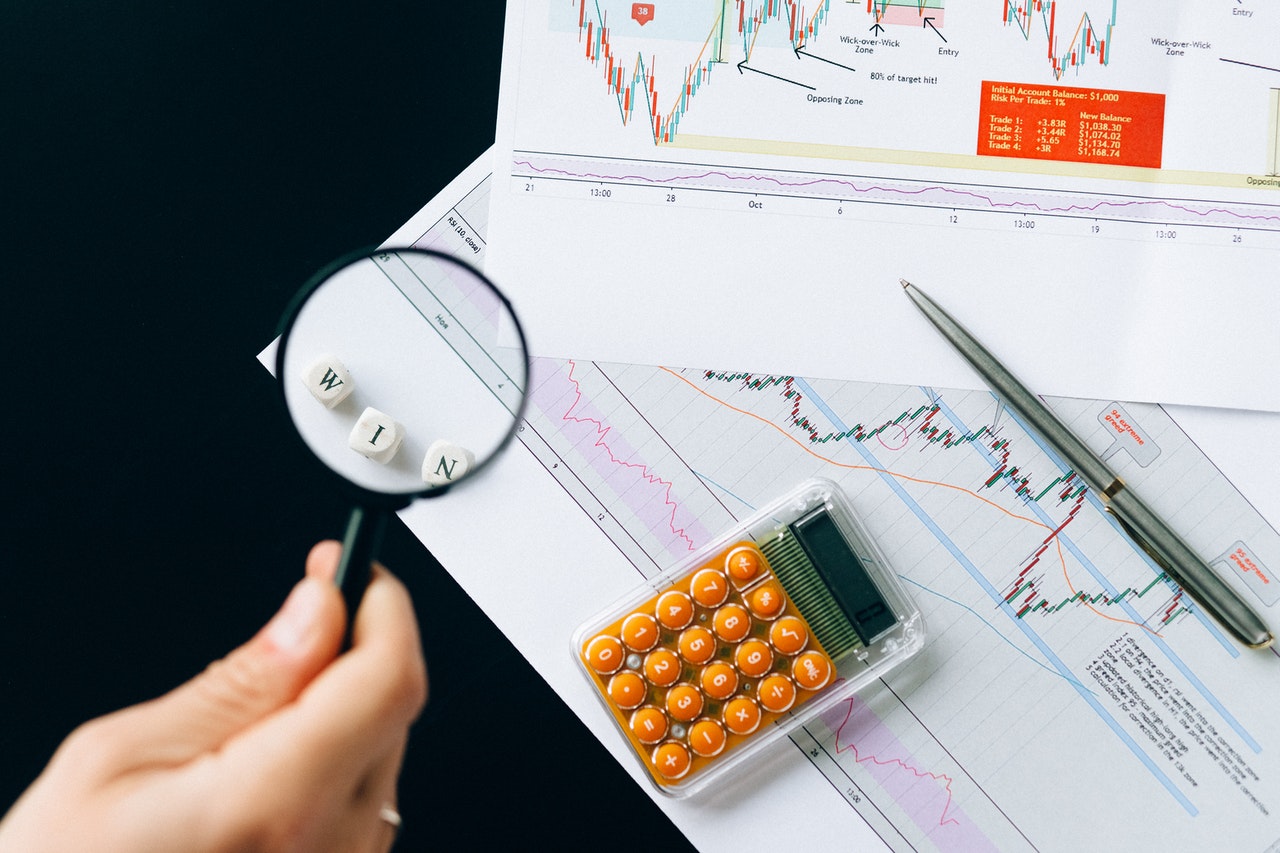
Nvidia’s good report did not impress investors. The Bank of Japan intends to keep raising rates

By JustMarkets

At Wednesday’s close, the Dow Jones (US30) was down 0.39%, while the S&P 500 (US500) decreased by 0.60%. The NASDAQ Technology Index (US100) closed negative 1.12%. The US stocks fell on Wednesday as investors awaited Nvidia’s much-anticipated earnings report. All sectors were down, with the tech sector declining as Nvidia shares fell 2.6% in the main session. After the close of trading, Nvidia reported earnings that beat expectations and contained a positive outlook for the current quarter but failed to impress investors, causing the stock price to fall 7% after the bell.

Swap prices reflect the consensus for the Central Bank to cut rates by around 100bps in the three remaining decisions this year. Nevertheless, signs of resilience in US growth, most recently evidenced by a surge in durable goods orders, have raised doubts about the extent of overall rate cuts in the coming easing cycle.

Equity markets in Europe were mostly up yesterday. Germany’s DAX (DE40) rose by 0.54%, France’s CAC 40 (FR40) closed 0.16% higher, Spain’s IBEX 35 (ES35) added 0.05%, and the UK’s FTSE 100 (UK100) fell 0.02%.

The ECB left rates unchanged at its last meeting but opened the door for a possible rate cut at its next meeting in September. Since then, data has generally been cooler than expected, leading markets to suggest up to three rate cuts before the end of the year. With the ECB only scheduled to meet three more times, this means a rate cut at each meeting.

WTI crude oil prices fell 1.3% to $74.5 a barrel on Wednesday, extending a 2.4% drop from the previous session, impacted by a smaller-than-expected decline in US crude inventories and ongoing demand concerns in China. Major banks revised their price estimates downward, citing economic concerns in key markets like China and a shift to electric vehicles reducing fuel consumption. In Europe, diesel demand is projected to fall below pre-pandemic levels due to a downturn in production and changes in vehicle fleets. These negative factors are putting downward pressure on prices. The latest EIA report showed a modest 0.846 million barrel decline in US crude oil inventories last week, falling short of the expected 3 million barrel decline.

Asian markets traded flat yesterday. Japan’s Nikkei 225 (JP225) added 0.22%, China’s FTSE China A50 (CHA50) was down 1.04%, Hong Kong’s Hang Seng (HK50) lost 1.02%, and Australia’s ASX 200 (AU200) closed at its opening price.

Deputy Governor Ryozo Himino said the Bank of Japan will raise interest rates as long as inflation moves in line with the bank’s prognoses, signaling the Central Bank’s unchanged stance despite the turmoil in financial markets earlier this month.

S&P 500 (US500) 5,592.20 −33.60 (−0.60%)

Dow Jones (US30) 41,091.42 −159.08 (−0.39%)

DAX (DE40) 18,782.29 +100.48 (+0.54%)

FTSE 100 (UK100) 8,343.85 −1.61 (−0.019%)

USD Index 101.11 +0.56 (+0.55%)

Important events today:
  • – US FOMC Member Bostic Speaks at 01:00 (GMT+3);
  • – German Consumer Price Index (m/m) at 15:00 (GMT+3);
  • – US Initial Jobless Claims (w/w) at 15:30 (GMT+3);
  • – US GDP (q/q) at 15:30 (GMT+3);
  • – US Pending Home Sales (m/m) at 17:00 (GMT+3);
  • – US Natural Gas Storage (w/w) at 17:30 (GMT+3);
  • – Switzerland SNB Chairman Jordan Speaks at 19:00 (GMT+3);
  • – US FOMC Member Bostic Speaks at 22:30 (GMT+3).

By JustMarkets


This article reflects a personal opinion and should not be interpreted as an investment advice, and/or offer, and/or a persistent request for carrying out financial transactions, and/or a guarantee, and/or a forecast of future events.

What is mental imagery? Brain researchers explain the pictures in your mind and why they’re useful

By Lynne Gauthier, UMass Lowell and Jiabin Shen, UMass Lowell 

Curious Kids is a series for children of all ages. If you have a question you’d like an expert to answer, send it to [email protected].


Why are some people able to visualize scenarios in their minds, with colors and details, and some people are not? – Luiza, age 14, Goiânia, Brazil


Imagine you are in a soccer match, and it’s tied. Each team will begin taking penalty kicks. The crowd is roaring, and whether or not your team wins the game depends on your ability to hit the shot. As you imagine this scene, are you able to picture the scenario with colors and details?

Scientists are hard at work trying to understand why some people can visualize these kinds of scenarios more easily than others can. Even the same person can be better or worse at picturing things in their mind at different times.

As neuroscientists in the fields of physical therapy and psychology, we think about the ways people use mental imagery. Here is what researchers do know so far.

The brain and mental imagery

Mental imagery is the ability to visualize things and scenarios in your mind, without actual physical input.

For example, when you think about your best friends, you may automatically picture their faces in your head without actually seeing them in front of you. When you daydream about an upcoming vacation, you may see yourself on the sunny beach.

People who dream about taking a penalty kick could visualize themselves like they are watching a video of it in their mind. They may even experience the smell of the turf or hear the sounds that fans would make.

Scientists believe your primary visual cortex, located in the back of your brain, is involved in internal visualization. This is the same part of the brain that processes visual information from the eyes and that lets you see the world around you.

An image of a brain. The primary and secondary visual cortices in the back of the brain are highlighted.
The visual cortex influences both visual and mental imagery.
Coxer via Wikimedia Commons

Another brain region, located in the very front of the brain, also contributes to mental imagery. This structure, called the prefrontal cortex, is in charge of executive functions – a group of high-level mental skills that allow you to concentrate, plan, organize and reason.

A diagram of the human brain with the prefrontal cortex highlighted at the front.
The prefrontal cortex controls executive functions.
The National Institute of Mental Health via Wikimedia Commons

Scientists have found such skills to be, at least to some extent, related to one’s mental imagery ability. If someone is good at holding and manipulating large amounts of information in mind, this person can play with things like numbers or images in their mind on the go.

Experiencing and remembering

Most of the same brain areas are active both while you’re actually experiencing an event and also when you’re visualizing it from a memory in your head. For example, when you behold the beauty of the Grand Canyon, your brain creates a memory of the image. But that memory is not simply stored in a single place in the brain. It’s created when thousands of brain cells across different parts of the brain fire together. Later, when a sound, smell or image triggers the memory, this network of brain cells fires together again, and you may picture the Grand Canyon in your head as clearly as if it were in front of you.

Benefits of mental imagery

The ability to mentally visualize can be helpful.

Notice the look of concentration on a gymnast’s face before competition. The athlete is likely visualizing themselves executing a perfect rings routine in their mind. This visualization activates the same brain regions as when they physically perform on the rings, building their confidence and priming their brain for better success.

Athletes can use visualization to help them acquire skills more quickly and with less wear and tear on their bodies. Engineers and mechanics can use visualization to help them fix or design things.

Mental visualization can also help people relearn how to move their bodies after a brain injury. However, with additional practice, those who do not use visualization will eventually catch up.

Nature-nurture interactions

All is not lost if you have difficulty visualizing. It is possible that the ability to visualize in your mind is a combined effect of both how your individual brain works and your life experiences.

For example, taxi drivers in London need to navigate very complicated streets and, scientists found, experience changes to their brain structures over the course of their careers. In particular, they develop larger hippocampuses, a brain structure related to memory. Scientists believe that the training the taxi drivers went through – having to visualize a map of complex streets across London in daily driving – made them better at mental imagery via changes in their hippocampus.

And watching someone else do a physical action activates the same brain areas as creating your own internal mental imagery. If you want to be able to do something, watching a video of someone else doing it can be just as helpful as visualizing yourself doing it in your head. So even if you struggle with mental visualization, there are still ways to reap its benefits.


Hello, curious kids! Do you have a question you’d like an expert to answer? Ask an adult to send your question to [email protected]. Please tell us your name, age and the city where you live.

And since curiosity has no age limit – adults, let us know what you’re wondering, too. We won’t be able to answer every question, but we will do our best.The Conversation

About the Authors:

Lynne Gauthier, Associate Professor of Physical Therapy and Kinesiology, UMass Lowell and Jiabin Shen, Assistant Professor of Psychology, UMass Lowell

This article is republished from The Conversation under a Creative Commons license. Read the original article.

Australia’s inflation is falling at a slower pace than RBA expected. ECB may cut rates at the next two meetings

By JustMarkets

At Tuesday’s close, the Dow Jones (US30) Index was up 0.02%, while the S&P 500 (US500) Index was up 0.16%. The NASDAQ Technology Index (US100) closed positive 0.16%.

The Fed will almost certainly cut rates on September 18, which Powell signaled in Jackson Hole and which other officials have since effectively confirmed. The only questions now are whether the easing cycle will start at 25- or 50-basis points and how much policy easing will occur in the coming months. At Jackson Hole, Powell made essentially two turns. The first, as expected, was his clear signal of an imminent rate cut. The second, perhaps less expected, was his equally clear emphasis that unemployment, not inflation, is now the number one determinant of upcoming policy decisions.

Equity markets in Europe were mostly up yesterday. Germany’s DAX (DE40) rose by 0.35%, France’s CAC 40 (FR40) closed down 0.32%, Spain’s IBEX 35 (ES35) added 0.55%, and the UK’s FTSE 100 (UK100) gained 0.21%. Germany’s DAX Index held early gains and closed 0.3% higher at 18,682 on Tuesday, resuming its strong momentum and recovering from a slight dip in the previous session. This was despite the GfK Consumer Confidence Index unexpectedly falling to its lowest level since May, underscoring the weak sentiment in the German economy after yesterday’s poor Ifo results.

The European Central Bank may gradually cut interest rates if inflation continues to fall, but more data is needed to decide on a September cut, Dutch policymaker Klaas Knot said Tuesday. With just two weeks to go until the ECB’s next meeting, a growing number of policymakers favor another rate cut in September, and many say the real debate is over whether another cut in October should follow the move.

Libya has announced a complete shutdown of its oil fields amid political conflict and ongoing regional tensions. The cessation of production and exports from Libya, one of the largest oil producers, has heightened fears of tightening global supply. Potentially, this could provide fuel for higher oil prices. WTI crude prices rose to $76 a barrel on Wednesday after losing more than 2% in the previous session, led by a decline in US oil inventories. API data showed a 3.4 million barrel decline in inventories for the week ended August 23, beating market expectations for a 3.0 million barrel decline.

Asian markets traded flat yesterday. Japan’s Nikkei 225 (JP225) added 0.47%, China’s FTSE China A50 (CHA50) was down 0.03%, Hong Kong’s Hang Seng (HK50) was up 0.43%, and Australia’s ASX 200 (AU200) was negative 0.16%.

The Australian dollar climbed above $0.68, hitting its highest level this year, as better-than-expected inflation data for the month reinforced hawkish sentiment towards the Reserve Bank of Australia’s (RBA) monetary policy. The data showed Australia’s monthly Consumer Price Index came in at 3.5% for the year, slowing from June’s 3.8% rise but above estimates of 3.4%. Minutes from the RBA’s last meeting showed that policymakers considered raising interest rates to curb inflation but ultimately decided to stay on hold. RBA head Michele Bullock also recently said that despite signs of weakening inflation, it was “premature” to consider cutting rates.

S&P 500 (US500) 5,625.80 +8.96 (+0.16%)

Dow Jones (US30) 41,250.50 +9.98 (+0.024%)

DAX (DE40) 18,681.81 +64.79 (+0.35%)

FTSE 100 (UK100) 8,345.46 +17.68 (+0.21%)

USD Index 100.76 +0.20 (+0.20%)

Important events today:
  • – Australia Consumer Price Index (m/m) at 04:30 (GMT+3);
  • – German GfK German Consumer Climate (m/m) at 09:00 (GMT+3);
  • – US Crude Oil Reserves (w/w) at 17:30 (GMT+3).

By JustMarkets


This article reflects a personal opinion and should not be interpreted as an investment advice, and/or offer, and/or a persistent request for carrying out financial transactions, and/or a guarantee, and/or a forecast of future events.

From thoughts to words: How AI deciphers neural signals to help a man with ALS speak

By Nicholas Card, University of California, Davis 

Brain-computer interfaces are a groundbreaking technology that can help paralyzed people regain functions they’ve lost, like moving a hand. These devices record signals from the brain and decipher the user’s intended action, bypassing damaged or degraded nerves that would normally transmit those brain signals to control muscles.

Since 2006, demonstrations of brain-computer interfaces in humans have primarily focused on restoring arm and hand movements by enabling people to control computer cursors or robotic arms. Recently, researchers have begun developing speech brain-computer interfaces to restore communication for people who cannot speak.

As the user attempts to talk, these brain-computer interfaces record the person’s unique brain signals associated with attempted muscle movements for speaking and then translate them into words. These words can then be displayed as text on a screen or spoken aloud using text-to-speech software.

I’m a reseacher in the Neuroprosthetics Lab at the University of California, Davis, which is part of the BrainGate2 clinical trial. My colleagues and I recently demonstrated a speech brain-computer interface that deciphers the attempted speech of a man with ALS, or amyotrophic lateral sclerosis, also known as Lou Gehrig’s disease. The interface converts neural signals into text with over 97% accuracy. Key to our system is a set of artificial intelligence language models – artificial neural networks that help interpret natural ones.

Casey Harrell, who has ALS, works with a brain-computer interface to turn his thoughts into words.
Nicholas Card

Recording brain signals

The first step in our speech brain-computer interface is recording brain signals. There are several sources of brain signals, some of which require surgery to record. Surgically implanted recording devices can capture high-quality brain signals because they are placed closer to neurons, resulting in stronger signals with less interference. These neural recording devices include grids of electrodes placed on the brain’s surface or electrodes implanted directly into brain tissue.

In our study, we used electrode arrays surgically placed in the speech motor cortex, the part of the brain that controls muscles related to speech, of the participant, Casey Harrell. We recorded neural activity from 256 electrodes as Harrell attempted to speak.

A small square device with an array of spikes on the bottom and a bundle of wires on the top
An array of 64 electrodes that embed into brain tissue records neural signals.
UC Davis Health

Decoding brain signals

The next challenge is relating the complex brain signals to the words the user is trying to say.

One approach is to map neural activity patterns directly to spoken words. This method requires recording brain signals corresponding to each word multiple times to identify the average relationship between neural activity and specific words. While this strategy works well for small vocabularies, as demonstrated in a 2021 study with a 50-word vocabulary, it becomes impractical for larger ones. Imagine asking the brain-computer interface user to try to say every word in the dictionary multiple times – it could take months, and it still wouldn’t work for new words.

Instead, we use an alternative strategy: mapping brain signals to phonemes, the basic units of sound that make up words. In English, there are 39 phonemes, including ch, er, oo, pl and sh, that can be combined to form any word. We can measure the neural activity associated with every phoneme multiple times just by asking the participant to read a few sentences aloud. By accurately mapping neural activity to phonemes, we can assemble them into any English word, even ones the system wasn’t explicitly trained with.

To map brain signals to phonemes, we use advanced machine learning models. These models are particularly well-suited for this task due to their ability to find patterns in large amounts of complex data that would be impossible for humans to discern. Think of these models as super-smart listeners that can pick out important information from noisy brain signals, much like you might focus on a conversation in a crowded room. Using these models, we were able to decipher phoneme sequences during attempted speech with over 90% accuracy.

The brain-computer interface uses a clone of Casey Harrell’s voice to read aloud the text it deciphers from his neural activity.

From phonemes to words

Once we have the deciphered phoneme sequences, we need to convert them into words and sentences. This is challenging, especially if the deciphered phoneme sequence isn’t perfectly accurate. To solve this puzzle, we use two complementary types of machine learning language models.

The first is n-gram language models, which predict which word is most likely to follow a set of n words. We trained a 5-gram, or five-word, language model on millions of sentences to predict the likelihood of a word based on the previous four words, capturing local context and common phrases. For example, after “I am very good,” it might suggest “today” as more likely than “potato”. Using this model, we convert our phoneme sequences into the 100 most likely word sequences, each with an associated probability.

The second is large language models, which power AI chatbots and also predict which words most likely follow others. We use large language models to refine our choices. These models, trained on vast amounts of diverse text, have a broader understanding of language structure and meaning. They help us determine which of our 100 candidate sentences makes the most sense in a wider context.

By carefully balancing probabilities from the n-gram model, the large language model and our initial phoneme predictions, we can make a highly educated guess about what the brain-computer interface user is trying to say. This multistep process allows us to handle the uncertainties in phoneme decoding and produce coherent, contextually appropriate sentences.

Diagram showing a man, his brain, wires and a computer screen
How the UC Davis speech brain-computer interface deciphers neural activity and turns them into words.
UC Davis Health

Real-world benefits

In practice, this speech decoding strategy has been remarkably successful. We’ve enabled Casey Harrell, a man with ALS, to “speak” with over 97% accuracy using just his thoughts. This breakthrough allows him to easily converse with his family and friends for the first time in years, all in the comfort of his own home.

Speech brain-computer interfaces represent a significant step forward in restoring communication. As we continue to refine these devices, they hold the promise of giving a voice to those who have lost the ability to speak, reconnecting them with their loved ones and the world around them.

However, challenges remain, such as making the technology more accessible, portable and durable over years of use. Despite these hurdles, speech brain-computer interfaces are a powerful example of how science and technology can come together to solve complex problems and dramatically improve people’s lives.The Conversation

About the Author:

Nicholas Card, Postdoctoral Fellow of Neuroscience and Neuroengineering, University of California, Davis

This article is republished from The Conversation under a Creative Commons license. Read the original article.

A third of the world’s population lacks internet connectivity − airborne communications stations could change that

By Mohamed-Slim Alouini, King Abdullah University of Science and Technology and Mariette DiChristina, Boston University 

About one-third of the global population, around 3 billion people, don’t have access to the internet or have poor connections because of infrastructure limitations, economic disparities and geographic isolation.

Today’s satellites and ground-based networks leave communications gaps where, because of geography, setting up traditional ground-based communications equipment would be too expensive.

High-altitude platform stations – telecommunications equipment positioned high in the air, on uncrewed balloons, airships, gliders and airplanes – could increase social and economic equality by filling internet connectivity gaps in ground and satellite coverage. This could allow more people to participate fully in the digital age.

One of us, Mohamed-Slim Alouini, is an electrical engineer who contributed to an experiment that showed it is possible to provide high data rates and ubiquitous 5G coverage from the stratosphere. The stratosphere is the second lowest layer of the atmosphere, ranging from 4 to 30 miles above the Earth. Commercial planes usually fly in the lower part of the stratosphere. The experiment measured signals between platform stations and users on the ground in three scenarios: a person staying in one place, a person driving a car and a person operating a boat.

My colleagues measured how strong the signal is in relation to interference and background noise levels. This is one of the measures of network reliability. The results showed that the platform stations can support high-data-rate applications such as streaming 4K resolution videos and can cover 15 to 20 times the area of standard terrestrial towers.

Early attempts by Facebook and Google to commercially deploy platform stations were unsuccessful. But recent investments, technological improvements and interest from traditional aviation companies and specialized aerospace startups may change the equation.

The goal is global connectivity, a cause that brought the platform stations idea recognition in the World Economic Forum’s 2024 Top 10 Emerging Technologies report. The international industry initiative HAPS Alliance, which includes academic partners, is also pushing toward that goal.

An experimental aircraft like this solar-powered airship could someday play a role in providing internet access to rural areas or disaster zones.
Thales Alenia Space via Wikimedia Commons, CC BY-SA

Fast, cost effective, flexible

Platform stations would be faster, more cost effective and more flexible than satellite-based systems.

Because they keep communications equipment closer to Earth than satellites, the stations could offer stronger, higher-capacity signals. This would enable real-time communications speedy enough to communicate with standard smartphones, high-resolution capabilities for imaging tasks and greater sensitivity for sensing applications. They transmit data via free-space optics, or light beams, and large-scale antenna array systems, which can send large amounts of data quickly.

Satellites can be vulnerable to eavesdropping or jamming when their orbits bring them over adversarial countries. But platform stations remain within the airspace of a single country, which reduces that risk.

High-altitude platform stations are also easier to put in place than satellites, which have high launch and maintenance costs. And the regulatory requirements and compliance procedures required to secure spots in the stratosphere are likely to be simpler than the complex international laws governing satellite orbits. Platform stations are also easier to upgrade, so improvements could be deployed more quickly.

Platform stations are also potentially less polluting than satellite mega-constellations because satellites burn up upon reentry and can release harmful metals into the atmosphere, while platform stations can be powered by clean energy sources such as solar and green hydrogen.

The key challenges to practical platform stations are increasing the amount of time they can stay aloft to months at a time, boosting green onboard power and improving reliability – especially during automated takeoff and landing through the lower turbulent layers of the atmosphere.

Diagram showing a rural area with a river running through it and airships providing communications lines. Circular insets show a mobile user, internet of things devices and satellite.
A network of interconnected high-altitude platform stations could connect mobile users and Internet of Things devices in rural areas.

Beyond satellites

Platform stations could play a critical role in emergency and humanitarian situations by supporting relief efforts when ground-based networks are damaged or inoperative.

The stations could also connect Internet of Things (IoT) devices and sensors in remote settings to better monitor the environment and manage resources.

In agriculture, the stations could use imaging and sensing technologies to help farmers monitor crop health, soil conditions and water resources.

Their capability for high-resolution imaging could also support navigation and mapping activities crucial for cartography, urban planning and disaster response.

The stations could also do double duty by carrying instruments for atmospheric monitoring, climate studies and remote sensing of Earth’s surface features, vegetation and oceans.

From balloons to airplanes

Platform stations could be based on different types of aircraft.

Balloons offer stable, long-duration operation at high altitudes and can be tethered or free-floating. Airships, also known as dirigibles or blimps, use lighter-than-air gases and are larger and more maneuverable than balloons. They’re especially well suited for surveillance, communications and research.

Gliders and powered aircraft can be controlled more precisely than balloons, which are sensitive to variations in wind speed. In addition, powered aircraft, which include drones and fixed-wing airplanes, can provide electricity to communication equipment, sensors and cameras.

Next-generation power

Platform stations could make use of diverse power sources, including increasingly lightweight and efficient solar cells, high-energy-density batteries, green hydrogen internal combustion engines, green hydrogen fuel cells, which are now at the testing stage, and eventually, laser beam powering from ground- or space-based solar stations.

The evolution of lightweight aircraft designs coupled with advancements in high-efficiency motors and propellers enable planes to fly longer and carry heavier payloads. These cutting-edge lightweight planes could lead to platform stations capable of maneuvering in the stratosphere for extended periods.

Meanwhile, improvements in stratospheric weather models and atmospheric models make it easier to predict and simulate the conditions under which the platform stations would operate.

Bridging the global digital divide

Commerical deployment of platform stations, at least for post-disaster or emergency situations, could be in place by the end of the decade. For instance, a consortium in Japan, a country with remote mountainous and island communities, has earmarked US$100 million for solar-powered, high-altitude platform stations.

Platform stations could bridge the digital divide by increasing access to critical services such as education and health care, providing new economic opportunities and improving emergency response and environmental monitoring. As advances in technology continue to drive their evolution, platform stations are set to play a crucial role in a more inclusive and resilient digital future.The Conversation

About the Authors:

Mohamed-Slim Alouini, Distinguished Professor of Electrical and Computer Engineering, King Abdullah University of Science and Technology and Mariette DiChristina, Dean and Professor of the Practice in Journalism, College of Communication, Boston University

This article is republished from The Conversation under a Creative Commons license. Read the original article.