Archive for Economics & Fundamentals – Page 2

Signs of economic instability emerge in Oakland County, one of Michigan’s wealthiest

By Grigoris Argeros, Eastern Michigan University and Jordyn Gerwig, Eastern Michigan University 

Oakland County, home to nearly 1.3 million residents, ranks among Michigan’s wealthiest counties.

But that description does not tell the whole story.

Since 2020, Oakland County’s population and income have grown steadily. Over the same period, Wayne County’s population declined, and Macomb County experienced slower growth.

Oakland County also has higher incomes overall. Median household income is about US$97,760 in Oakland County, compared with $77,837 in Macomb County and $60,539 in Wayne County.

Some of Oakland’s communities, such as Birmingham and Bloomfield Hills, rank among the most affluent in the tri-county Detroit metro region, with rapidly increasing home prices. Homes in these communities can sell for well over $1 million. Residents here have generally better health outcomes and have remained at the top of the socioeconomic ladder over time. The median household income is $153,510 in Birmingham and $189,942 in Bloomfield Hills.

However, median household incomes can be misleading and mask important differences within the county. Prosperity is not evenly shared, a sign of long-standing economic inequality.

My sociology research focuses on neighborhood and socioeconomic change in American cities. To see where and how divides are emerging, it is necessary to look beyond overall averages and focus on communities within individual counties. Let’s see what we find when we look deeper into the communities in Oakland County.

Oakland County is known for its affluence, but some of its communities are experiencing changes in socioeconomic status.
Notorious4life (talk) (Uploads), CC0, via Wikimedia Commons

Measuring inequality

To do that analysis, I used an index of neighborhood socioeconomic status, developed by geographer Joe Darden and political scientist Sameh Kamel. Darden is known for his research on residential segregation and neighborhood inequality in the Detroit region.

Urban researchers and public health scholars use this index to compare neighborhood conditions within and across metropolitan regions and to examine how inequality is distributed.

The index uses census data to combine measures of income, education, housing and employment into a single score ranging from 0 to 100. Higher scores indicate higher socioeconomic position. Like any composite index, it summarizes complex social conditions into a single measure and cannot capture every difference between communities.

Oakland County’s wealth isn’t evenly shared

On this index, Oakland County’s communities are spread across the full socioeconomic range rather than clustering entirely at the top.

In 2023 about 61% fell into the highest socioeconomic tier. The rest were divided between the middle and lowest tiers.

Communities such as Birmingham, Bloomfield Hills, Troy and Rochester Hills remain relatively well-off, with some of the highest scores on the county’s socioeconomic index.

Cities such as Pontiac, along with suburbs such as Oak Park, Hazel Park and Madison Heights, fall in the county’s lowest socioeconomic tier with some of the lowest scores on the index.

Pockets of socioeconomic change

About 80% of communities in Oakland county remained in the same tier between 2010 and 2023.

Socioeconomic stability was strongest at the top: 9 in 10 high-tier communities stayed there.

But the rest of the county tells a different story.

Several communities outside the top tier changed position over time. Wixom and Keego Harbor moved up from the lowest tier into the middle, while Oxford and Rose townships rose from the middle tier into the highest.

Addison, Brandon and White Lake townships shifted from the highest tier into the middle, while Holly township moved from the middle tier into the lowest.

Wealth gaps point to growing disadvantage

These differences point to a growing socioeconomic divide within one of Michigan’s wealthiest counties, similar to trends in other parts of the U.S.

Understanding these divides is key to making sense of the region’s broader challenges, from rising housing costs to differences in job opportunities across metropolitan Detroit.

Communities with a low socioeconomic score have higher poverty and unemployment rates, lower median household income and fewer residents with a college degree or higher. Higher-tier communities show the opposite pattern, with lower poverty and unemployment, higher incomes, higher educational attainment and much higher home values.

The middle tier includes communities such as Ferndale, Auburn Hills, Waterford Township, South Lyon and Wixom. As a group, middle-tier communities resemble the county’s wealthiest areas on some indicators – such as unemployment and homeownership. On others, especially poverty, they remain closer to lower-income places.

A key distinction, however, is the continuing gap between the middle and the top. Middle-tier communities have lower incomes, fewer college graduates and far lower home values than higher-tier communities. The typical home in a middle-tier place is worth about $259,000, compared with more than $405,000 in the highest tier. The gap in median home values leads to significant differences in family wealth, which in turn affects retirement savings, the ability to pay for college and the financial cushion available during economic downturns.

These differences suggest that Oakland County’s stratification is not limited to a divide between struggling areas and wealthy ones. Instead, even its middle-tier communities lag behind the county’s most affluent places, especially when it comes to education and wealth. The divide, therefore, runs not only between the bottom and the top but also between the middle and the most advantaged communities.

How does Oakland compare with nearby counties?

In Oakland County, movement was evenly split, with 10% of communities moving up and 10% moving down, suggesting that gains and losses occurred at roughly the same rate.

In Macomb County, 13% of communities moved up, while 4% moved down. Wayne County showed the least change overall, with about 91% of communities remaining in the same tier between 2010 and 2023. This may be due to decades of economic hardship that have made it more unlikely for communities there to move in either direction.

Oakland County remains one of Michigan’s wealthiest counties. But its communities are not all moving in the same direction. Understanding these differences will be important as the region plans for the future.The Conversation

About the Author:

Grigoris Argeros, Professor of Sociology, Eastern Michigan University and Jordyn Gerwig, Graduate Assistant, Eastern Michigan University

This article is republished from The Conversation under a Creative Commons license. Read the original article.


The situation in the Strait of Hormuz remains uncertain

By JustMarkets 

By the end of the day, the Dow Jones Index (US30) rose by 1.79% (weekly result +3.62%). The S&P 500 Index (US500) increased by 1.20% (weekly result +4.70%). The Tech Index NASDAQ (US100) closed higher on Friday by 1.29% (weekly result +6.40%).

The outlook for the US economy in the near future will be closely tied to the dynamics of relations between the United States and Iran. Donald Trump’s statement that Tehran agreed to suspend its nuclear program and halt attacks in the Strait of Hormuz became a powerful signal for markets, strengthening hopes for a rapid stabilization of energy prices. In monetary policy, attention will focus on the congressional testimony of Kevin Warsh, the nominee for the position of Federal Reserve Chair. His stance on the optimal size of the Fed’s balance sheet may become a key benchmark for the bond market.

On Friday, the Canadian dollar (CAD) fell to 1.36 per US dollar. The main driver of the decline was the sharp drop in global oil prices, which plunged 12% to 82 dollars. The rapid correction in the energy market occurred after official confirmation that the Strait of Hormuz is fully open for commercial shipping. For Canada, as a major commodity exporter, such a decline in export revenues traditionally results in a weaker national currency. Additional pressure on the loonie came from shifting market expectations regarding monetary policy. De‑escalation of the Middle East conflict eased fears of an inflation shock, prompting investors to revise their predictions towards an earlier rate cut by the Bank of Canada.

Germany’s DAX (DE40) rose by 2.27% (weekly +4.84%), France’s CAC 40 (FR40) closed up 1.97% (weekly +3.02%), Spain’s IBEX 35 (ES35) gained 2.18% (weekly +2.66%), and the UK’s FTSE 100 (UK100) closed the session up 0.73% (weekly +0.62%). The catalyst for such strong optimism was Tehran’s official announcement of the full resumption of shipping in the Strait of Hormuz. Investors interpreted this as real confirmation of Donald Trump’s statement that the active phase of the conflict is nearing its end, significantly reducing the geopolitical risk premium.

This week, the Eurozone will focus on preliminary PMI business‑activity indices for the Eurozone, Germany, France, and the United Kingdom. Analysts expect a broad decline in indicators, pointing to a cooling business cycle and a possible shift toward recessionary scenarios in both manufacturing and services. Germany’s leading indicators are of particular concern. The ZEW economic sentiment index is expected to fall to a yearly low, while the Ifo Business Climate Index is projected to hit its weakest level since February 2025. These data, along with the upcoming producer‑price index (PPI), may increase pressure on the ECB to reconsider its tight monetary policy.

On Friday, the energy market experienced a massive collapse: WTI crude futures plunged more than 10%, falling below 84 dollars per barrel. This drop pushed prices to a five‑week low and was a direct reaction to the foreign minister’s statement that the Strait of Hormuz is fully open to commercial vessels during the ceasefire, effectively removing the threat of a global energy collapse that had weighed on the market for the past month and a half. But on Monday at the open, oil prices surged again. Panic was triggered by reports that US Navy forces seized an Iranian cargo ship by force. The vessel ignored an order to stop while exiting the strait, leading to an armed clash. In response, Iran struck vessels in the region and officially declared the restoration of full control over the Strait of Hormuz.

The silver (XNG) market showed impressive dynamics: prices jumped 5%, reaching 82 dollars per ounce. Investors enthusiastically welcomed the news that the Strait of Hormuz would remain fully open to commercial vessels during the ten‑day ceasefire. However, the situation remains highly uncertain. Donald Trump confirmed that the US naval blockade will remain in place until a final peace agreement is signed, maintaining a certain risk premium in the market.

In Asia, Japan’s Nikkei 225 (JP225) rose by 3.64% for the week, China’s FTSE China A50 (CHA50) increased by 2.20%, Hong Kong’s Hang Seng (HK50) closed the week up 1.76%, and Australia’s ASX 200 (AU200) gained 0.39%.

The PBOC officially confirmed the preservation of benchmark lending rates (LPR) at current levels. This decision marked the eleventh consecutive maintenance of the status quo, fully in line with analysts’ expectations. The Chinese regulator continues to follow a policy of “moderate easing,” balancing the need to support domestic growth with the need to protect the national currency from excessive volatility amid global instability.

This week in monetary policy, decisions by Bank Indonesia and the Central Bank of the Philippines will come into focus. Against the backdrop of global volatility and regional inflation dynamics, their actions will serve as an important signal for investors regarding the resilience of emerging‑market currencies.

S&P 500 (US500) 7,126.06 +84.78 (+1.20%)

Dow Jones (US30) 49,447.43 +868.71 (+1.79%)

DAX (DE40) 24,702.24 +547.77 (+2.27%)

FTSE 100 (UK100) 10,667.63 +77.64 (+0.73%)

USD Index 98.23 +0.01 (+0.01%)

News feed for: 2026.04.20

  • New Zealand Trade Balance (q/q) at 01:45 (GMT+3) – NZD (MED)
  • China PBoC Loan Prime Rate (m/m) at 04:15 (GMT+3) – CHA50, HK50 (MED)
  • Canada Consumer Price Index (m/m) at 15:30 (GMT+3) – CAD (HIGH)
  • Eurozone ECB President Lagarde Speaks at 19:40 (GMT+3) – EUR (LOW)

By JustMarkets


This article reflects a personal opinion and should not be interpreted as an investment advice, and/or offer, and/or a persistent request for carrying out financial transactions, and/or a guarantee, and/or a forecast of future events.


The CHF exchange rate has reached a 15‑year high – the SNB signaled readiness for active currency interventions

By JustMarkets 

On Thursday, the US stock market maintained positive dynamics. By the end of the day, the Dow Jones Index (US30) rose by 0.24%. The S&P 500 Index (US500) increased by 0.26%. The Tech Index NASDAQ (US100) closed higher by 0.36%. The leading positions were held by the energy, commodities, and real estate sectors. In the corporate sector, attention was focused on the start of earnings season. Shares of Bank of New York Mellon rose by 1.3% thanks to strong financial results, while PepsiCo shares added a modest 0.3% after publishing a report that exceeded analysts’ expectations for profit and revenue.

On Thursday, European stocks traded without a unified trend. By the end of the day, Germany’s DAX (DE40) rose by 0.36%, France’s CAC 40 (FR40) closed down by 0.14%, Spain’s IBEX 35 (ES35) fell by 0.53%, and the UK’s FTSE 100 (UK100) closed the session up by 0.29%. According to the minutes of the March meeting, the ECB leadership noted that the Middle East conflict has become a key source of uncertainty, creating a classic monetary‑policy trap: simultaneous risks of accelerating inflation and economic stagnation. Despite this, the regulator remains confident in its ability to manage volatility, noting that the current situation may either drag on or find an unexpected diplomatic solution in the coming months. Although short‑term inflation expectations were significantly revised upward, the ECB’s strategic goal remains unchanged – stabilizing prices at 2% in the medium term. Board members agreed that in such high geopolitical turbulence, the most reasonable tactic is to avoid long‑term commitments.

The Swiss franc (CHF) strengthened to 0.78 per US dollar, reaching its highest level in nearly 15 years. The internal agenda of the SNB remains cautious. The published minutes of the March meeting emphasize that the regulator sees the Middle East conflict as a serious threat to price stability. The main risk for the SNB is excessive strengthening of the national currency caused by capital inflows into “safe havens.” An overly strong franc may trigger deflationary pressure and harm Swiss exporters. In this regard, the SNB leadership confirmed its readiness for active currency interventions. The regulator intends to closely monitor market dynamics and, if necessary, intervene by selling francs to prevent its sharp and excessive appreciation.

WTI oil prices rose by 4%, surpassing 95 dollars per barrel. The sharp rise in prices was triggered by a wave of skepticism regarding the success of the diplomatic process between the US and Iran. While earlier the market hoped for a comprehensive agreement and a quick reopening of the Strait of Hormuz, the focus has now shifted to a less ambitious scenario – the signing of a temporary memorandum aimed only at preventing a new escalation of hostilities. Against the backdrop of geopolitical uncertainty, the market largely ignored news of a ten‑day ceasefire between Israel and Lebanon.

An additional bullish factor came from fresh data from the US Energy Information Administration. After a long period of accumulation, US crude‑oil inventories unexpectedly fell by 9.13 million barrels. This figure shocked analysts, who had expected a symbolic increase of 154 thousand barrels. Such a significant drop in inventories, combined with reduced imports and strong gasoline demand, confirms tightening supply in the physical market.

The US natural‑gas prices (XNG) rose to 2.657 dollars per MMBtu, although quotes still remain near the lows of autumn 2024. The main driver of the local rise was a sharp decline in average daily production, which in recent days fell to a ten‑week low of 108 billion cubic feet. Alongside falling production, high activity is observed in the export sector. Gas flows to US LNG terminals in April increased to 18.9 billion cubic feet per day, approaching historical records. This factor, along with expectations of moderate demand growth in the next two weeks, is preventing prices from falling.

In Asia, Japan’s Nikkei 225 (JP225) rose sharply by 2.38% during the session, China’s FTSE China A50 (CHA50) increased by 1.19%, Hong Kong’s Hang Seng (HK50) closed up by 1.72%, and Australia’s ASX 200 (AU200) fell by 0.26%.

The New Zealand dollar (NZD) fell to 0.588 US dollars, reacting to domestic economic data that softened expectations of an immediate interest‑rate hike. The main pressure factor was slowing food inflation: in March, food prices (which account for nearly one‑fifth of the consumer basket) rose by 3.4% year‑on‑year compared to 4.5% in February. This is the lowest reading in the past year, indicating a gradual cooling of price pressure. Alongside slowing inflation, a decline in consumer activity was recorded. Monthly growth in core electronic‑card spending slowed by half, from 1.4% to 0.7%. The combination of these factors gives the RBNZ temporary breathing room, reducing the need for emergency monetary tightening in the near term.

According to preliminary data, in the first quarter of 2026, Malaysia’s economy grew by 5.3% year‑on‑year. Although the figure remains relatively high, it indicates a noticeable cooling of economic activity compared to the strong 6.3% growth recorded in the fourth quarter of 2025. The slowdown affected most key sectors. This was especially evident in services, the most important sector of the economy, where growth fell from 6.3% to 5.4%. Alongside slowing growth, inflationary pressure is increasing. The annual inflation rate in March 2026 accelerated to 1.7% compared to 1.4% in February. This figure matched market expectations and became the highest in more than a year (since January 2025).

S&P 500 (US500) 7,041.28 +18.33 (+0.26%)

Dow Jones (US30) 48,578.72 +115.00 (+0.24%)

DAX (DE40) 24,154.47 +87.77 (+0.36%)

FTSE 100 (UK100) 10,589.99 +30.41 (+0.29%)

USD Index 98.22 +0.16 (+0.16%)

News feed for: 2026.04.17

  • Eurozone Trade Balance (m/m) at 12:00 (GMT+3) – EUR (LOW)

By JustMarkets


This article reflects a personal opinion and should not be interpreted as an investment advice, and/or offer, and/or a persistent request for carrying out financial transactions, and/or a guarantee, and/or a forecast of future events.

A strong labor market supports the Australian dollar. China’s economy continues to show resilience

By JustMarkets 

On Wednesday, the US stock market continued its upward rally. By the end of the day, the Dow Jones Index (US30) fell by 0.15%. The S&P 500 Index (US500) rose by 0.80%. The Tech Index Nasdaq (US100) closed higher by 1.40%. A powerful growth driver came from artificial‑intelligence news: Broadcom shares rose more than 3%, and Meta shares gained nearly 2% amid a deal to deploy specialized 1‑gigawatt AI chips. Investors paid special attention to Tesla shares, which surged more than 7%. Shareholder optimism was driven by updated vehicle software and Elon Musk’s statements about significant progress in developing the advanced AI5 chip. Alongside the tech sector, the financial sector also showed strong growth: Morgan Stanley shares jumped more than 5% thanks to record revenue, and Bank of America shares added 2.5% after a strong quarterly profit report. Geopolitical news also supported overall market sentiment. Donald Trump’s statement that the active phase of the conflict with Iran is nearing its end, combined with the diplomatic mission of Pakistan’s Chief of General Staff in Tehran, strengthened hopes for a long‑term ceasefire.

The Mexican peso (MXN) strengthened to 17.27 per dollar, reaching its highest level since late February. The main driver of growth was a combination of global optimism and strong domestic economic indicators. Investors are attracted by high real yields: with a base interest rate of 6.75% and inflation at 4.59%, Mexican assets remain highly sought after. Tight monetary policy combined with slowing consumer‑price growth creates a favorable environment for carry‑trade strategies.

On Wednesday, European stocks mostly declined. By the end of the day, Germany’s DAX (DE40) rose by 0.09%, France’s CAC 40 (FR40) closed down 0.64%, Spain’s IBEX 35 (ES35) fell by 0.55%, and the UK’s FTSE 100 (UK100) closed the session down 0.47%. The main pressure on the tech sector came from ASML Holding shares, which fell more than 4%. Despite an optimistic full‑year sales outlook, investors were disappointed by the company’s short‑term expectations: second‑quarter revenue is projected at 8.4-9 billion euros, below analysts’ consensus. Although hopes for extending the two‑week ceasefire remain, current financial reports from major European corporations still reflect the real damage caused by regional instability.

Silver prices (XAG) surpassed 80 dollars per ounce, approaching monthly highs. The main driver of growth was investor optimism regarding a possible resumption of diplomatic dialogue between Washington and Tehran. However, even with the current rise, silver prices remain nearly 15% below levels recorded before the conflict began. This indicates that the market has only partially recovered from the initial geopolitical shock.

On Wednesday, WTI oil futures held near 92 dollars per barrel, and high market volatility is likely to persist – traders are closely monitoring developments in the Middle East, trying to identify signs of de‑escalation and a possible resumption of shipping through the Strait of Hormuz.
In Asia, Japan’s Nikkei 225 (JP225) rose by 0.44% during the session, China’s FTSE China A50 (CHA50) increased by 0.19%, Hong Kong’s Hang Seng (HK50) closed up 0.29%, and Australia’s ASX 200 (AU200) gained 0.09%.

China’s economy showed unexpected resilience in the first quarter of 2026, posting 5.0% year‑on‑year growth. This result not only exceeded market expectations (4.8%) but also marked a noticeable acceleration after the minimal 4.5% recorded at the end of last year. Beijing managed to effectively cushion the impact of the Middle East conflict through accumulated strategic oil reserves, diversification of energy sources, and strict state control over prices, which prevented shock volatility in the domestic market. The industrial sector remains the main driver, showing growth above the outlook’s levels. At the same time, the consumer sector signals weakness: retail sales fell short of expectations, and the unemployment rate jumped to its highest level in 13 months. This indicates that domestic demand remains fragile. The external trade balance also shifted: March saw a sharp slowdown in exports alongside a spike in imports, likely linked to rising logistics and raw‑material costs.

The Australian dollar (AUD) broke through the psychologically important level of 0.70 US dollars, reaching its highest point in nearly four years. The currency’s rise was supported by strong domestic labor‑market data: in March, the unemployment rate held at 4.3%, and the employment increase of 17.9 thousand was entirely driven by full‑time job creation. This confirms the resilience of Australia’s economy to external shocks. The Reserve Bank of Australia’s (RBA) hawkish rhetoric became the second key factor strengthening the aussie. Deputy Governor Andrew Hauser expressed doubt that current interest rates are restrictive enough to contain inflation, which is being fueled by high oil prices. His remarks about possible further tightening forced the market to revise projections: most economists now expect a third consecutive rate hike in May to 4.35%.

S&P 500 (US500) 7,022.95 +55.57 (+0.80%)

Dow Jones (US30) 48,463.72 −72.27 (−0.15%)

DAX (DE40) 24,066.70 +22.48 (+0.09%)

FTSE 100 (UK100) 10,559.58 −49.48 (−0.47%)

USD Index 98.08 −0.04 (−0.04%)

News feed for: 2026.04.16

  • Australia Unemployment Rate (m/m) at 04:30 (GMT+3) – AUD (HIGH)
  • China GDP (q/q) at 05:00 (GMT+3) – CHA50, HK50 (MED)
  • China Industrial Production m/m) at 05:00 (GMT+3) – CHA50, HK50 (MED)
  • China Unemployment Rate (m/m) at 05:00 (GMT+3) – CHA50, HK50 (MED)
  • China Retail Sales (m/m) at 05:00 (GMT+3) – CHA50, HK50 (MED)
  • UK GDP (m/m) at 09:00 (GMT+3) – GBP (MED)
  • UK Trade Balance (m/m) at 09:00 (GMT+3) – GBP (MED)
  • Switzerland SNB Monetary Policy Meeting Minutes at 10:30 (GMT+3) – CHF (MED)
  • Eurozone Inflation Rate (w/w) at 12:00 (GMT+3) – EUR (MED)
  • Eurozone ECB Monetary Policy Meeting Accounts at 14:30 (GMT+3) – EUR (MED)
  • US Initial Jobless Claims (w/w) at 15:30 (GMT+3) – USD (MED)
  • US Philadelphia Fed Manufacturing Index (m/m) at 15:30 (GMT+3) – USD (LOW)
  • US Industrial Production (m/m) at 16:15 (GMT+3) – USD (MED)
  • US Natural Gas Storage (w/w) at 17:30 (GMT+3) – XNG (HIGH)

By JustMarkets


This article reflects a personal opinion and should not be interpreted as an investment advice, and/or offer, and/or a persistent request for carrying out financial transactions, and/or a guarantee, and/or a forecast of future events.

The IMF has lowered its global economic growth expectations. The Chinese yuan continues to strengthen

By JustMarkets 

On Tuesday, the US stock market showed positive dynamics for the second session in a row. By the end of the day, the Dow Jones Index (US30) rose by 0.66%. The S&P 500 Index (US500) increased by 1.18%. The Technology Index NASDAQ (US100) closed higher by 1.96%. The main driver of optimism was hopes for the resumption of diplomatic dialogue between Washington and Tehran, which could lead to de‑escalation of the conflict and the lifting of the blockade of the Strait of Hormuz. The main inflow of capital was concentrated in the communication services and consumer‑goods sectors, while energy companies were among the underperformers due to falling oil prices.

The IMF revised its expectations for global economic development in 2026, lowering the growth outlook to 3.1%. This is 0.2 percentage points below previous estimates and is attributed to the negative impact of the prolonged conflict in the Middle East. At the same time, the prediction for 2027 remained unchanged at 3.2%. IMF experts emphasize that the current energy crisis caused by the confrontation with Iran is comparable in scale to the oil shock of 1974, although the modern economic system has a higher degree of resilience.

On Tuesday, the European stock market closed in the green. By the end of the day, Germany’s DAX (DE40) rose by 1.27%, France’s CAC 40 (FR40) closed up 1.12%, Spain’s IBEX 35 (ES35) gained 1.46%, and the UK’s FTSE 100 (UK100) closed the trading session up 0.25%. The positive dynamics were driven by hopes for de‑escalation of the Middle East conflict: reports emerged about a possible return of US and Iranian delegations to the negotiating table in Islamabad as early as this week. An additional factor that made the market question the long‑term viability of strict measures was criticism of the maritime blockade of Iranian ports from Saudi Arabia and China, which cast doubt on the effectiveness and sustainability of such restrictions. Siemens shares led the gainers, rising more than 4%.

On Tuesday, WTI oil prices showed a sharp decline, falling more than 7% lower to below 92 dollars per barrel, the lowest level in the past three weeks. Donald Trump allowed for the resumption of negotiations in Pakistan within the next two days, and Tehran expressed readiness to temporarily suspend restrictions in the Strait of Hormuz to facilitate the diplomatic process. These developments outweighed concerns related to the officially imposed maritime blockade of Iranian exports by the United States. At the same time, IEA experts expressed serious concern about the long‑term outlook for the market. According to the agency, the prolonged confrontation threatens to completely offset global oil‑demand growth this year, potentially leading to the first annual decline in consumption since the pandemic.

In Asia, Japan’s Nikkei 225 (JP225) fell by 0.74% for the trading week, China’s FTSE China A50 (CHA50) rose by 0.30%, Hong Kong’s Hang Seng (HK50) closed down 0.90% yesterday, and Australia’s ASX 200 (AU200) declined by 0.39%.

On Wednesday, the offshore yuan traded near 6.81 per dollar, holding close to its highest levels in the past three years. The strengthening of the Chinese currency is driven by a combination of domestic economic success and a favorable external environment. According to the current prognosis, China’s GDP will grow by 4.8% year‑on‑year in the first quarter of 2026. This indicates a gradual recovery of activity after slowing to 4.5% at the end of last year, when indicators reached their lowest point since the post‑pandemic reopening of the economy.

Notably, Beijing has managed to minimize the negative consequences of the Middle East conflict. Thanks to consistent efforts toward energy independence and diversification of resource supplies, the impact of geopolitical instability on domestic prices and production remains limited.

S&P 500 (US500) 6,967.38 +81.14 (+1.18%)

Dow Jones (US30) 48,535.99 +317.74 (+0.66%)

DAX (DE40) 24,044.22 +301.78 (+1.27%)

FTSE 100 (UK100) 10,609.06 +26.10 (+0.25%)

USD Index 98.11 −0.26 (−0.27%)

News feed for: 2026.04.15

  • Eurozone Industrial Production (m/m) at 12:00 (GMT+3) – EUR (LOW)
  • US NY Empire State Manufacturing Index (m/m) at 15:30 (GMT+3) – USD (MED)
  • US Crude Oil Reserves (w/w) at 17:30 (GMT+3) – WTI (HIGH)
  • Switzerland SNB Chairman Schlegel Speaks at 20:00 (GMT+3) – CHF (MED)
  • New Zealand RNBZ Gov Breman Speaks at 20:00 (GMT+3) – NZD (MED)
  • UK BOE Gov Bailey Speaks at 21:00 (GMT+3) – GBP (MED)
  • Eurozone ECB President Lagarde Speaks at 22:30 (GMT+3) – EUR (MED)

By JustMarkets


This article reflects a personal opinion and should not be interpreted as an investment advice, and/or offer, and/or a persistent request for carrying out financial transactions, and/or a guarantee, and/or a forecast of future events.

China’s trade balance data disappoints investors. Bitcoin reaches a one‑month high

By JustMarkets 

Monday ended with gains in the US stock market. By the end of the day, the Dow Jones (US30) rose by 0.63%. The S&P 500 (US500) gained 1.02%. The tech‑heavy NASDAQ (US100) closed up 1.06%. Investor optimism was driven by a correction in oil prices and a decline in bond yields amid hopes for diplomatic progress between Washington and Tehran. Despite the failure of Sunday’s negotiations and Donald Trump’s announcement of a blockade on Iranian exports, his subsequent statement that Iran was willing to resume dialogue calmed the market. The main driver of growth was the technology sector, where Oracle shares surged 12%.

Bitcoin (BTC) surpassed the 74,000‑dollar mark, reaching a four‑week high. The digital assets’ positive momentum is linked to investors returning to risk‑on strategies amid signals of a possible resumption of dialogue between Washington and Tehran. Analysts highlight Bitcoin’s strong resilience: it has gained more than 10% since the start of the conflict, outperforming many traditional assets. However, experts believe that a full‑scale rally requires regulatory clarity. SEC Commissioner Hester Peirce expressed support for establishing a stable regulatory framework for crypto brokers – a signal the industry interpreted as a step toward broader institutional acceptance of digital assets.

On Monday, European stock markets closed in the red, although indices managed to recover part of their intraday losses by the close. Germany’s DAX (DE40) fell by 0.26%, France’s CAC 40 (FR40) declined by 0.29%, Spain’s IBEX 35 (ES35) dropped by 0.99%, and the UK’s FTSE 100 (UK100) closed down 0.17%. The main source of concern was Donald Trump’s announcement that the US Navy had begun enforcing a blockade of the Strait of Hormuz, following the failure of diplomatic efforts in Islamabad. This reignited fears of an oil shortage. Beyond geopolitics, markets also reacted to major political shifts within the EU following Hungary’s election results. Péter Magyar’s victory marked the end of Viktor Orbán’s 16‑year tenure, a development seen as strengthening the position of pro‑EU forces.

Platinum prices (XPT) surged to a four‑week high, reaching 2,100 dollars per ounce. The rise in precious metals was driven by signs of potential de‑escalation in the Middle East: Washington and Tehran signaled readiness to return to negotiations. However, despite the current rally, platinum remains under pressure from declining industrial demand. The automotive sector continues to reduce purchases of the metal due to the global shift toward electric vehicles, which do not require catalytic converters.

WTI crude oil prices stabilized near 98 dollars per barrel, posting a gain of less than 2%. Notably, early in the session, prices had jumped as much as 9%, but the market cooled after signals of a possible resumption of dialogue between Washington and Tehran. According to the latest OPEC+ report, the alliance’s daily output fell by 7.9 million barrels in March due to shipping disruptions in the strait. The supply deficit was partially eased by news from Saudi Arabia: the kingdom reported the restoration of production at the Manifa oil field and full capacity of the East–West pipeline, which provides access to the Red Sea.
In Asia, Japan’s Nikkei 225 (JP225) fell by 0.74% for the week, China’s FTSE China A50 (CHA50) rose by 0.30%, Hong Kong’s Hang Seng (HK50) closed down 0.90%, and Australia’s ASX 200 (AU200) declined by 0.39%.

On Tuesday, China’s 10‑year government bond yield fell to a six‑week low of 1.78%, marking its third consecutive day of decline. The main driver was weak trade data: annual export growth slowed to 2.5% (a five‑month low), totaling 321.03 billion dollars. At the same time, imports surged by 27.8%, the fastest pace since autumn 2021, reaching 511.3 billion dollars. This sharp imbalance reduced the trade surplus to 51.13 billion dollars, nearly half of last year’s figure and significantly below analyst expectations.

The Australian dollar (AUD) stabilized at 0.709 USD, holding near a four‑week high. The currency was supported by hopes for de‑escalation between Washington and Tehran as well as signals from the Reserve Bank of Australia. Deputy Governor Andrew Hauser expressed concern that inflation remains above the 2-3% target range and that current interest rates may not be high enough to contain price growth, especially given elevated oil prices. His comments pushed the probability of a rate hike at the May meeting from 69% to 72%, although the final decision will depend on upcoming labor‑market and consumer‑activity data.

S&P 500 (US500) 6,886.24 +69.35 (+1.02%)

Dow Jones (US30) 48,218.25 +301.68 (+0.63%)

DAX (DE40) 23,742.44 −61.51 (−0.26%)

FTSE 100 (UK100) 10,582.96 −17.57 (−0.17%)

USD Index 98.43 −0.22 (−0.22%)

News feed for: 2026.04.14

  • Australia Westpac Consumer Confidence (m/m) at 03:30 (GMT+3) – AUD (LOW)
  • Australia NAB Business Confidence (m/m) at 04:30 (GMT+3) – AUD (MED)
  • China Trade Balance (q/q) at 06:00 (GMT+3) – CHA50, HK50 (MED)
  • Sweden Inflation Rate (m/m) at 09:00 (GMT+3) – SEK (MED)
  • US Producer Price Index (m/m) at 15:30 (GMT+3) – USD (HIGH)

By JustMarkets


This article reflects a personal opinion and should not be interpreted as an investment advice, and/or offer, and/or a persistent request for carrying out financial transactions, and/or a guarantee, and/or a forecast of future events.
Geopolitics remains at the center of investor attention

By JustMarkets

By the end of the day, the Dow Jones (US30) fell by 0.56% (weekly result +3.11%). The S&P 500 (US500) declined by 0.11% (weekly result +3.48%). The tech‑heavy NASDAQ (US100) closed Friday up 0.14% (weekly result +4.03%). The upcoming week will be a moment of truth for the US market, as the geopolitical agenda collides with the hard numbers of corporate reality. Vice President J.D. Vance conducts difficult negotiations in Islamabad, attempting to turn the fragile ceasefire into a stable agreement on the Strait of Hormuz. Wall Street is preparing for the start of earnings season. Reports from major banks, including JPMorgan Chase, Goldman Sachs, and Morgan Stanley, will show how well the financial sector has adapted to high volatility and interest rates that the Federal Reserve continues to hold at restrictive levels.

Investors are particularly concerned about the upcoming Producer Price Index (PPI) data. The Headline Index is expected to jump 1.2% month‑over‑month, confirming that the energy shock from the Middle East conflict is already filtering through production chains. Attention to the tech sector will peak at the end of the week when TSMC and Netflix release their earnings. These reports will serve as a litmus test for global semiconductor demand and consumer confidence amid inflationary pressure.

However, the situation remains extremely tense following the diplomatic marathon in Islamabad. Direct negotiations between the US delegation led by Vice President J.D. Vance and Iranian officials ended without a breakthrough. Tehran continues to maintain the blockade of the Strait of Hormuz, which has already caused unprecedented disruptions in global oil and gas supplies. Adding fuel to the fire is Donald Trump’s tough rhetoric, warning of new fees for ships in the region – effectively turning the strait into a “toll corridor” under Iran’s control.

On Friday, the Canadian dollar (CAD) weakened slightly, falling 0.16% to 1.38 per US dollar. The main pressure on the loonie came from a combination of geopolitical calm and disappointing domestic data. Although the unemployment rate stabilized at 6.7%, analysts note that this was driven more by a decline in labor‑force participation than by genuine hiring momentum.

The Mexican peso (MXN) ended the trading week with a 0.3% gain, closing at 17.31 per dollar, reaffirming its status as one of the most resilient emerging‑market currencies. The primary driver of the peso’s strength remains the carry‑trade strategy. The large interest‑rate differential between Banxico and the US Federal Reserve makes the peso highly attractive to investors seeking yield in an environment of relative stability.

By the end of the day, Germany’s DAX (DE40) slipped by 0.01% (weekly +3.79%), France’s CAC 40 (FR40) rose by 0.17% (weekly +4.85%), Spain’s IBEX 35 (ES35) gained 0.55% (weekly +5.12%), and the UK’s FTSE 100 (UK100) closed down 0.03% (weekly +2.95%). This week, Europe’s main event will be the release of the final March inflation data, which will confirm the Eurozone’s transition into an energy‑shock phase. Inflation in Germany and the UK is expected to reflect a sharp rise in costs caused by the closure of the Strait of Hormuz and oil‑price volatility. Wholesale‑price data in Germany will serve as a leading indicator of how quickly the LNG shortage will spill into retail markets in the coming months. Alongside inflation reports, markets will assess the resilience of the real economy through February trade balance and industrial‑production data – both under scrutiny due to the impact of the 10% US tariffs imposed by the Trump administration.

On Europe’s political map, the central event is the parliamentary election in Hungary. Investors are awaiting the outcome of the contest between Viktor Orbán and opposition leader Péter Magyar, whose TISZA party, according to recent polls, has a chance to strip the ruling government of its majority. The result will determine whether Hungary retains its veto power on key EU policy issues or whether the architecture of European unity undergoes radical change.

In Asia, Japan’s Nikkei 225 (JP225) rose by 6.99% for the week, China’s FTSE China A50 (CHA50) gained 2.77%, Hong Kong’s Hang Seng (HK50) closed the week up 0.01%, and Australia’s ASX 200 (AU200) climbed 3.17%. This week, investor attention in the Asia‑Pacific region will focus on China, where a batch of macroeconomic data is expected to confirm the resilience of the world’s second‑largest economy. GDP growth for Q1 2026 is outlooked to accelerate to 5.0%, an important signal amid global instability. Despite expected slowdowns in retail sales and industrial production in March, a substantial trade surplus of 112 billion dollars and strong credit expansion (up to 3.4 trillion yuan) indicate that Beijing continues to successfully stimulate both domestic and external growth drivers. In Australia, the focus shifts to the labor market, where a stable unemployment rate of 4.3% and ongoing job creation support expectations of another RBA rate hike as early as May.

S&P 500 (US500) 6,816.89 −7.77 (−0.11%)

Dow Jones (US30) 23,803.95 −3.04 (−0.013%)

DAX (DE40) 23,803.95 −3.04 (−0.013%)

FTSE 100 (UK100) 10,600.53 −2.95 (−0.03%)

USD Index 98.70 −0.12 (−0.12%)

News feed for: 2026.04.13

  • US Existing Home Sales (m/m) at 17:00 (GMT+3) – USD (MED)

By JustMarkets


This article reflects a personal opinion and should not be interpreted as an investment advice, and/or offer, and/or a persistent request for carrying out financial transactions, and/or a guarantee, and/or a forecast of future events.

Marathon talks, zero results…

By ForexTime

  • US-Iran peace talks fail
  • Oil benchmarks rally on supply fears
  • Dollar gains amid safe-haven flows
  • US30 may be rocked by big bank earnings
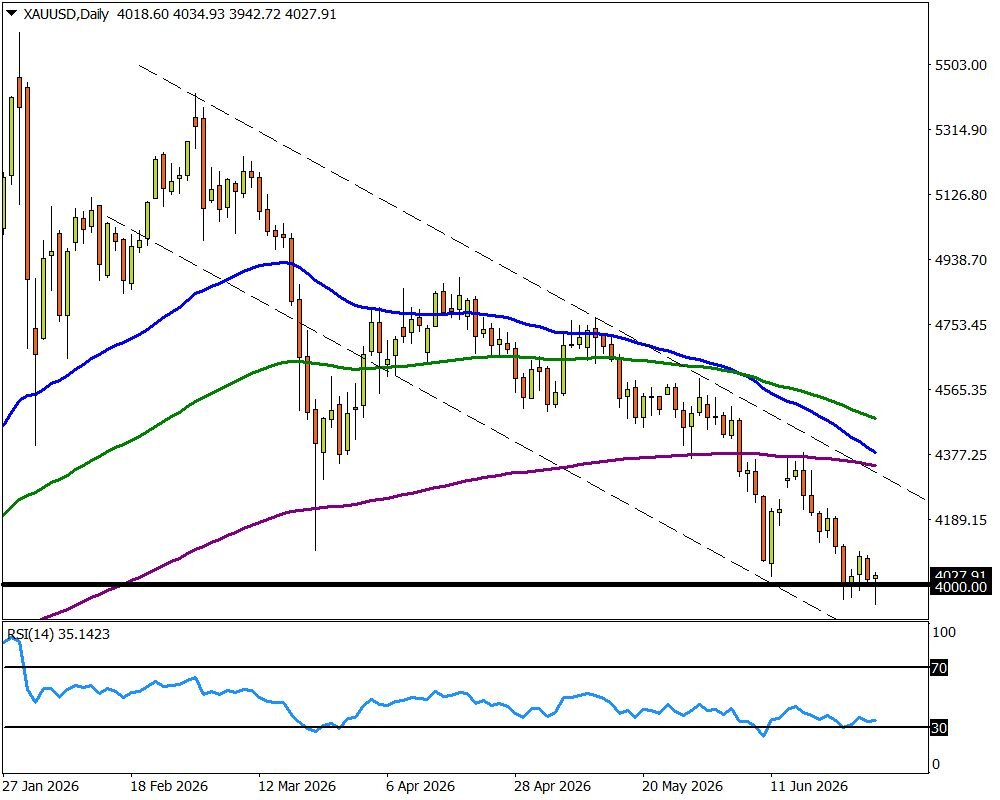
  • Time for gold to resume decline?

Over the weekend, US-Iran peace talks concluded without a resolution after 21 hours of negotiations.

Both sides were unable to agree on issues like Iran’s nuclear program or its control of the Strait of Hormuz.

This failure is poised to erode market sentiment and boost oil benchmarks amid rising geopolitical risk premiums.

And such was reflected on Sunday when markets opened with sharp gaps from Friday’s close.

  • WTI: ↑ 10%
  • BRENT: ↑ 8%
  • USDInd: ↑ 1%
  • XAUUSD: ↓ 2%
  • XAGUSD: ↓ 4%

Note: Gains shown represent the gap from Friday’s close. 

What next?

The failure to reach a deal represents a major element of uncertainty for markets.

However, Iran’s foreign ministry left the door open to further talks, so all is not lost.

This could translate into heightened volatility across global markets due to the fragile and sensitive sentiment.

Update on the Hormuz

Shipping flows through the Strait of Hormuz operated at minimal levels on Sunday before Trump vowed to begin a full naval blockage on Monday.

A full blockade of the strait will add further pressure to global oil markets.

Note: US to impose Iran shipping blockade from 10 a.m. ET Monday.

—————————————————————————-

US30 braces for big bank earnings

DID YOU KNOW:

FXTM’s US30 has gained over 3% since the start of April.

WHY?

Last week, US equities saw their biggest weekly gain in 2026 as investors evaluated economic data and a fragile truce between US-Iran.

HOWEVER

Recent gains may be relinquished due to weekend talks ending without a deal.

WHAT COULD MOVE US30 THIS WEEK?

All eyes will be on big bank earnings and speeches by Fed officials.

Q1 earnings season unofficially kicks off on Monday, led by the biggest US banks.

  • Monday 13th: Goldman Sachs
  • Tuesday 14th: JPMorgan, Citigroup, Wells Fargo, Blackrock
  • Wednesday 15th: Bank of America

US banks are expected to post record trading revenues thanks to conflict-induced market volatility.

Note: Goldman Sachs and JPMorgan account for almost 16% of the US30 weight.

  • Markets are forecasting a 2.8% move, either Up or Down, for Goldman Sachs stocks post-earnings.
  • Markets are forecasting a 3.1% move, either Up or Down, for JPMorgan Chase stocks post-earnings

POTENTIAL SCENARIOS

BULLISH: A solid move above 48,000 may trigger an incline toward 49,000 and 50,000.

BEARISH: Weakness below 48,000 could see a move toward the 200-day SMA at 47,000 and 46,000.


Forex-Time-LogoArticle by ForexTime


ForexTime Ltd (FXTM) is an award winning international online forex broker regulated by CySEC 185/12 www.forextime.com

Oil prices have once again approached 100 dollars per barrel

By JustMarkets 

By the end of the day, the Dow Jones (US30) rose by 0.52%. The S&P 500 (US500) gained 0.62%. The tech‑heavy NASDAQ (US100) closed up 0.72%. The main driver of optimism was news that Israel is willing to consider negotiations with Lebanon. This eased investor fears of the entire region being dragged into a full‑scale war and allowed markets to enter a phase of confident consolidation near recent highs. Despite the positive sentiment on Wall Street, the overall atmosphere remains tense. Oil prices, once again surging toward 100 dollars per barrel, serve as a constant reminder that the Strait of Hormuz is still at risk of a complete blockade.

On Thursday, European stock Indices closed in the red, giving back part of Wednesday’s record rally. By the end of the day, Germany’s DAX (DE40) fell by 1.14%, France’s CAC 40 (FR40) declined by 0.22%, Spain’s IBEX 35 (ES35) slipped by 0.15%, and the UK’s FTSE 100 (UK100) closed down 0.05%. The shift in sentiment came after reports that the two‑week ceasefire between the US and Iran had already begun to crack. Tehran accused Washington of violating the terms of the truce, reigniting fears of renewed attacks on tankers in the Persian Gulf and a prolonged energy shortage.

Silver prices posted a strong rally, reaching 74.5 dollars per ounce. This rise reflected investor reaction to the critical instability of the 14‑day ceasefire between the US and Iran. Amid the renewed disruption in the Strait of Hormuz and a sharp spike in oil prices to 99 dollars, silver regained its appeal as a safe‑haven asset. An additional driver was the weakening US dollar, which made precious metals more attractive for holders of other currencies.

The oil market was hit by a new wave of volatility: WTI prices jumped nearly 5%, reaching 99 dollars per barrel. This sharp rise almost erased the previous day’s optimism and followed reports that the two‑week ceasefire announced by Donald Trump was on the verge of collapse. Traders reacted instantly to news of increased military activity near the Strait of Hormuz and delays in tanker traffic, which brought the risk premium back into the market. Prices also received fundamental support from OPEC+, which reaffirmed its commitment to production cuts, and from fresh US data showing an unexpected decline in commercial crude inventories.

On Friday, US natural‑gas prices held at 2.67 dollars per MMBtu, the lowest level in a year and a half. While the oil market is shaken by uncertainty in the Middle East, the US gas sector shows remarkable resilience. The main pressure on prices comes from domestic fundamentals: oversupply and unseasonably warm weather, which meteorologists expect to persist across most of the US at least until April 24. The latest EIA report confirmed bearish concerns: gas inventories rose by 50 billion cubic feet for the week, exceeding market expectations.

In Asia, Japan’s Nikkei 225 (JP225) fell by 0.73%, China’s FTSE China A50 (CHA50) declined by 0.61%, Hong Kong’s Hang Seng (HK50) dropped by 0.54%, while Australia’s ASX 200 (AU200) gained 0.24%.

The Australian dollar confidently held above 0.707 USD, reaching a three‑week high. The currency is on track for its strongest weekly gain since mid‑January, supported by a temporary improvement in global risk appetite following the announcement of the two‑week ceasefire. Since the aussie is traditionally viewed as a barometer of global market sentiment, the decline in demand for the safe‑haven US dollar and hopes for de‑escalation in the Middle East provided strong support. Despite the optimism, the backdrop remains extremely tense due to the situation in the Strait of Hormuz. If direct negotiations with the Iranian delegation fail and the blockade persists, global supply chains could be hit hard – instantly cooling demand for risk assets such as the Australian dollar.

S&P 500 (US500) 6,824.66 +41.85 (+0.62%)

Dow Jones (US30) 48,185.80 +275.88 (+0.58%)

DAX (DE40) 23,806.99 −273.64 (−1.14%)

FTSE 100 (UK100) 10,603.48 −5.40 (−0.05%)

USD Index 98.83 −0.31 (−0.31%)

News feed for: 2026.04.10

  • Japan Producer Price Index (m/m) at 02:50 (GMT+3) – JPY (MED)
  • China Consumer Price Index (q/q) at 04:30 (GMT+3) – CHA50, HK50 (MED)
  • China Producer Price Index (q/q) at 04:30 (GMT+3) – CHA50, HK50 (MED)
  • Norway Inflation Rate (m/m) at 09:00 (GMT+3) – NOK (MED)
  • Canada Unemployment Rate (m/m) at 15:30 (GMT+3) – CAD (MED)
  • US Consumer Price Index (m/m) at 15:30 (GMT+3) – USD, XAU (HIGH)
  • US Michigan Consumer Sentiment (m/m) at 17:00 (GMT+3) – USD (MED)

By JustMarkets


This article reflects a personal opinion and should not be interpreted as an investment advice, and/or offer, and/or a persistent request for carrying out financial transactions, and/or a guarantee, and/or a forecast of future events.
Water conservation works, but climate change is outpacing it: Phoenix, Denver and Las Vegas offer a glimpse of the future

By Renee Obringer, Penn State and Dave White, Arizona State University 

When a drought turns into an urban water crisis, a city’s first step is often to limit lawn watering and launch a campaign to encourage everyone to conserve. It might raise water-use rates or offer incentives for installing low-flow devices.

While demand management techniques like these have had a lot of success in reducing water use, our new research suggests that they may not be effective enough in the face of climate change.

We looked at three cities in the Colorado River Basin – Phoenix, Las Vegas and Denver – to understand what each could do to increase demand management amid water shortages and how far those methods could go as temperatures rise and the Colorado River’s flow weakens.

The results suggest the region needs to be thinking about bigger solutions.

Colorado River states’ immediate challenge

The Colorado River provides drinking water to nearly 40 million people and irrigation for over 5.5 million acres of cropland. But it has experienced a significant drop in water availability in recent decades due in part to rising demand for water and a long-running megadrought in the Southwest.

To ensure that water is shared across boundaries, the seven states within the basin agreed to the Colorado River Compact in 1922, setting limits on water withdrawals from the river. Since then, the region has adopted additional rules, agreements and policies, collectively termed the “Law of the River.” But despite this compact, which the states are renegotiating in 2026, the basin’s water supply is shrinking.

Research shows that the region is likely to experience more intense, frequent droughts that last longer due to climate change, putting the water supplies for farms, people and energy systems at risk.

As researchers who study the impact of climate change on water systems, we wanted to see if demand management techniques could help under these intensifying conditions.

Getting people involved can change attitudes

Many demand management policies are reactive and only go into effect when sources run low.

These reactive policies can be successful during the scarcity period, but there is often a rebound effect: Water consumption can actually increase afterward.

We integrated survey data with a computer model of water availability and demonstrated that there can be long-term benefits to the local water supply if communities encourage positive attitudes toward conservation.

The survey focused on how people think about water conservation and climate change, drawing on a large body of research that shows people who care about the environment often take eco-friendly actions. Building off these ideas, we segmented the population into groups that shared similar views on water conservation and found that a large proportion of residents supported water conservation but weren’t actively participating in conservation programs within their communities.

We then used the computer model to explore how changing attitudes, and subsequent conservation behavior, could affect water supplies under climate change.

When participatory demand management works

Our research shows that individual actions, when implemented by a lot of people, can measurably improve water supplies’ reliability.

A great example of the benefits of long-term behavioral changes is Las Vegas.

Las Vegas is in many ways viewed as a city of excess; however, since 2002, the city has reduced its per-capita water use by nearly 60%, even as the population grew by more than 50%. It reached these savings through efforts to reduce seasonal irrigation, replace water-intensive landscaping and require new developments to be sustainable, along with the treatment and reuse of wastewater. Today, Las Vegas recycles nearly all of the water used indoors and returns it to Lake Mead.

Phoenix, another desert city, also runs successful conservation programs. These programs focus on converting grass lawns to desert-friendly landscaping and encouraging owners to fix leaks and install smart meters and low-flow devices. These programs led to a 20% reduction in water use over 20 years, while the population grew by about 40%.

Demand management is not always enough

These cities have shown that demand management can work, but there are limits on how much these techniques can do as water supplies dry up.

When we added projections of future climate change to our model, we found that conditions could lead to so little water being available that these demand management methods won’t be able to keep up.

In other words, climate change may create situations where water supplies are still severely limited, even after people reduced their consumption by up to 25%.

For example, under a plausible, moderately high emissions scenario, Phoenix’s available surface water supply was forecast to drop below the historical average by 2060. Even when we simulated higher participation in conservation programs, there was no noticeable change in the water availability, suggesting that any savings from reducing demand were counteracted by losses from upstream flow reductions. Encouraging people to use less water is a start, but there is a limit to how much people can conserve.

We found similar results in Denver under a moderate emissions scenario and in Las Vegas under a moderately high emissions scenario, indicating that even moderate climate change could lead to extreme scarcity conditions that are not manageable through demand-side changes alone.

What else cities can do

In these cases, it may be necessary to find other creative water sources, such as water reuse, desalination or limiting consumption in other sectors, such as agriculture or energy, to maintain the municipal supply.

These solutions, however, take time and money to implement. Desalination is incredibly expensive. A recently built desalination plant in Carlsbad, California, cost US$1 billion – four times the initial estimate.

Other solutions, such as reducing agricultural water use, require significant buy-in from local farmers and could result in producing less food.

Reducing the water consumed for electricity generation would require significant investment in renewable energy technologies that have lower water requirements than fossil fuels and nuclear energy.

While large-scale solutions like water reuse systems and desalination can be expensive, these costs might be necessary to maintain adequate water supply in the region, because simply encouraging people to use less won’t be enough.The Conversation

About the Authors:

Renee Obringer, Assistant Professor in the Earth and Environmental Systems Institute, Penn State and Dave White, Director of the Global Institute of Sustainability and Innovation, Arizona State University

This article is republished from The Conversation under a Creative Commons license. Read the original article.