Archive for Economics & Fundamentals – Page 115

Fed’s Powell warns of higher rates, investors urged not to forget other metrics

By George Prior

Federal Reserve Chair Jerome Powell’s high-stakes appearance before Congress should act as a reminder to investors to consider other metrics besides inflation and interest rates, says the CEO and founder of one of the world’s largest independent financial advisory, asset management and fintech organizations.

The observation from deVere Group’s Nigel Green follows the US central bank chief telling lawmakers on Tuesday that it will likely raise interest rates more than expected amid strong economic data and that it is prepared to move more aggressively if the “totality” of fresh reports suggests stronger measures are needed to tame inflation.

In a hearing before the Senate Banking Committee, Mr Powell said: “The latest economic data have come in stronger than expected, which suggests that the ultimate level of interest rates is likely to be higher than previously anticipated… If the totality of the data were to indicate that faster tightening is warranted, we would be prepared to increase the pace of rate hikes.”

Following the hearing, Nigel Green noted: “Investors were looking for clues from Powell as to whether he favours another 25-basis point rate increase at the next Federal Open Market Committee meeting, or if he might consider a heftier 50-basis point increase.

“The Fed chair was perhaps more hawkish than many analysts had expected, and stocks tumbled after he warned that interest rates could remain higher for longer.”

He continues: “Despite the hawkish tone, when in the decision-making process, I remind investors that even though there’s still a way to go, we’re likely closer than we have been to getting back to the central bank’s target and would urge them to focus more on earnings and margin than on inflation and interest rate news.

“If you’re serious about building wealth, you should be looking at sectors and companies that can maintain margin despite inflation and interest rate hikes.

“Margin is an often overlooked yet important metric for investors to consider when evaluating investment opportunities. It can provide insight into the company’s profitability, efficiency, and competitive advantages, and can impact investor sentiment and stock prices.”

In this environment of higher rates for longer than had previously been anticipated, some companies are going to find it difficult to maintain margin and, as we have recently seen, are failing to report earnings as had been expected.

“In other words, if costs are going up firms can’t maintain margin, so that company is unlikely to be a good investment until things change,” noted the deVere CEO in a recent media note.

He identified four key sectors that he expects to be resilient in this current environment.

“We’re looking at sectors that can maintain margin, despite inflation and interest rate hikes. These include healthcare, luxury goods, energy and agriculture.

“Healthcare is a robust sector as people will always need to stay healthy – this has come into focus more than ever since the pandemic. Also, despite wider market volatility, there’s strong earnings potential due to ageing populations and other demographic changes. Plus, healthcare is becoming increasingly tech-driven, which offers fresh opportunities.”

He went on to say: “Luxury goods can maintain margin due to the inherent aspirational ‘elite and exclusive’ aspect of the sector.

“We’ll look at energy because there’s a shortage of energy in the world right now.

“Agriculture is another one as populations in emerging markets around the world are eating more meat. As they eat more meat, there needs to be more grain produced.”

As ever, it’s critical that investors ensure their portfolios are suitably diversified across asset classes, sectors, currencies and regions so as to make the most of the considerable opportunities that will inevitably present themselves.

Following Powell’s appearance on Capitol Hill on Tuesday, Nigel Green concludes: “Of course, investors shouldn’t dismiss the Fed’s signals about future rate hikes, but they must also consider other investment metrics too, in particular, margin.”

About:

deVere Group is one of the world’s largest independent advisors of specialist global financial solutions to international, local mass affluent, and high-net-worth clients.  It has a network of more than 70 offices across the world, over 80,000 clients and $12bn under advisement

The RBA raised the interest rate by 0.25%. The ECB is set for a rate hike above the 4% level

By JustMarkets

The US Treasury yields rose yesterday ahead of Powell’s speech to Congress, which could give clues as to the US Federal Reserve’s future monetary policy. Investors and funds are starting to hedge and close their trades after the good rally in the last days of last week. At the close of the stock market on Monday, the Dow Jones (US30) increased by 0.12%, and the S&P 500 (US500) added 0.07%. The NASDAQ Technology Index (US100) decreased by 0.11%.

The US Federal Reserve Chairman Jerome Powell will address Congress today to present the central bank’s semiannual monetary policy report. He will address the Senate on Tuesday and the House of Representatives on Wednesday. His comments will be scrutinized for hints about whether a broader rate hike is being considered this month after recent data pointing to solid inflation. Powell’s hawkish bias could trigger a sell-off in the stock market in favor of the dollar index as a defensive asset. Conversely, any hint from Powell that the US Fed is abandoning its hawkish stance could cause Treasury yields to fall further, pushing the dollar index down and the stock indices up.

Shares of Apple (AAPL) jumped about 2% after Goldman Sachs issued a “buy” recommendation on the stock, citing the tech giant’s strong position in services. Meanwhile, shares of Tesla (TSLA) fell more than 2% after the electric-car maker cut prices in the US for the second time this year to boost demand. Tesla also suffered from Morgan Stanley ruling out the electric carmaker as a “better choice” in favor of Ferrari. Morgan Stanley raised its target Ferrari NV (RACE) price to $310 a share.

Stock markets in Europe were mostly up Monday. Germany’s DAX (DE30) added 0.48%, France’s CAC 40 (FR40) gained 0.34%, Spain’s IBEX 35 (ES35) jumped by 0.49%, Britain’s FTSE 100 (UK100) closed yesterday down by 0.22%.

The European Central Bank should raise interest rates by 50 basis points at each of the next four meetings as inflation remains resilient, said Robert Holzmann, head of the Austrian central bank. Holzmann is considered the ECB’s most hawkish spokesman. The four steps advocated by Holzmann would raise the deposit rate to 4.5%, well above the current projected rate of 4%. Holzmann also urged the ECB to accelerate the reduction of the bank’s balance sheet by stopping full reinvestment in its Pandemic Emergency Purchase Program (PEPP). All debt maturing in the PEPP scheme must now be fully reinvested in the market until 2024.

Asian markets were also mostly up yesterday. Japan’s Nikkei 225 (JP225) jumped by 1.11%, China’s FTSE China A50 (CHA50) fell by 0.80%, Hong Kong’s Hang Seng (HK50) ended the day up 0.17%, India’s NIFTY 50 (IND50) added 0.67%, and Australia’s S&P/ASX 200 (AU200) ended the positive by 0.62%.

China set its GDP growth target for this year at about 5%, lower than last year’s target of about 5.5%. Last week’s stronger-than-expected data on activity in China’s manufacturing and service sectors point to an economic recovery. Given that China is Australia’s largest export market, any improvement in China’s growth outlook could improve Australia’s growth prospects.

The Reserve Bank of Australia raised its benchmark interest rate by 25 basis points. The rate rose from 3.35% to 3.6%. The monetary policy statement indicates that the RBA is leaving the door open for further increases. The move was expected as inflation rose to its highest level in three decades last quarter, and there are still no signs of inflationary pressures easing.

The Bank of Japan has set the discount rate at 0.10% and remains in control of the yield curve (YCC), targeting a range of 0.50% near zero for Japanese government bonds (JGBs) for up to 10 years. The 10-year JGB trades steadily near the upper bound of 0.50%, forcing the BoJ to intervene frequently. Incoming Bank of Japan (BoJ) Governor Kazuo Ueda clarified last week that he would take the same stance as outgoing Governor Haruhiko Kuroda. The BoJ will meet this week, where current governor Haruhiko Kuroda will speak for the last time in office.

S&P 500 (F) (US500) 4,048.42 +2.78 (+0.069%)

Dow Jones (US30)33,431.44 +40.47 (+0.12%)

DAX (DE40) 15,653.58 +75.19 (+0.48%)

FTSE 100 (UK100) 7,929.79 −17.32 (−0.22%)

USD Index 104.53 −0.50 (−0.48%)

Important events for today:
  • – Australia Retail Sales (m/m) at 02:30 (GMT+2);
  • – China Trade Balance (m/m) at 05:00 (GMT+2);
  • – Australia RBA Interest Rate Decision (m/m) at 05:30 (GMT+2);
  • – Australia RBA Rate Statement (m/m) at 05:30 (GMT+2);
  • – Switzerland Unemployment Rate (m/m) at 08:45 (GMT+2);
  • – US Fed Chair Jerome Powell Testifies at 17:00 (GMT+2);
  • – Switzerland SNB Chairman Jordan speaks at 20:30 (GMT+2);
  • – Australia RBA Gov Lowe speaks at 23:55 (GMT+2).

By JustMarkets


This article reflects a personal opinion and should not be interpreted as an investment advice, and/or offer, and/or a persistent request for carrying out financial transactions, and/or a guarantee, and/or a forecast of future events.

Volatile Week Ahead As Risk Events Eyed

By ForexTime 

The next few days could be wild and incredibly volatile for financial markets thanks to key central banks meetings, a semi-annual Congress appearance from Jerome Powell, and the latest US jobs data.

Asian shares edged higher on Tuesday morning following the mixed cues from Wall Street overnight as investors geared up for this week’s key risk events and economic releases. US and European futures seem to be pointing to a mixed open, with all attention directed towards commentary from Fed Chair Jerome Powell later today. In the FX space, the dollar remained subdued offering more space for G10 currencies to retaliate. Gold remains shaky this morning, and could be exposed to more pain if Powell strikes a hawkish tone later today.

In other news, the Reserve Bank of Australia hiked interest rates to the highest level in over 10 years. As expected, the central bank announced a 25-basis point hike, taking the cash rate to 3.6%. However, the RBA signaled a pause in its tightening cycle which triggered a selloff in the aussie. Taking a quick look at the technical picture, the AUDUSD remains under pressure on the daily charts with prices pressing against the 0.6700 support level. A solid bearish breakout beyond this level may open a path toward 0.6600.

Big week for USD as Powell and NFP eyed

It has been a choppy affair for the dollar over the past few days due to the absence of a fresh fundamental spark. But upcoming events could inject fresh life into the currency and set the tone for March.

Later today, Fed Chair Powell provides his semi-annual report to the Senate Banking Committee. Any hints around the Fed veering away from 25bp hikes in future meetings have the potential to move markets. The central bank head will address the House Financial Services Committee on Wednesday and is expected to reiterate a similar message. If Powell sounds hawkish, this could essentially revive dollar strength and rate hike bets. Alternatively, a dovish-sounding Powell may temper expectations around rates staying higher for longer, resulting in dollar weakness.

Before the main course and potential market shaker on Friday in the form of the NFP jobs data, investors will be served appetisers in the form of the ADP’s monthly report and the weekly initial jobless claims. Market sentiment could receive a slight boost if these reports exceed forecasts.

All eyes will be on the US jobs report at the end of the week, which is expected to show that the US added 215,00 jobs in February compared to the blowout 517,000 seen in January. Ultimately, another robust jobs report may reinforce expectations around the Fed holding rates higher for longer, in turn supporting dollar bulls. If the NFP report disappoints, this may raise questions about the dollar’s renewed strength, especially if rate hike bets cool.

Commodity spotlight – Gold

After bagging its best week since mid-January, gold has kicked off the new week on a shaky note.

The next few days promise to be eventful for the precious metal as investors brace for Powell’s Testimony and US economic data including the highly anticipated NFP. Price action suggests that gold bulls could be back in town. However, the risk events over the next few days may determine whether the current momentum results in a more pronounced bullish reversal or simply a dead cat bounce. A hawkish-sounding Powell coupled with another strong jobs report could spell nothing but trouble for gold. Alternatively, a cautious Powell and disappointing jobs report could keep the party going for gold bugs.

Taking a quick look at the technical picture, a strong daily close above the 50-day SMA around $1870 could encourage a move toward $1880 and $1900, respectively. Sustained weakness could open a path back towards $1845, $1825, and $1800.


Forex-Time-LogoArticle by ForexTime

ForexTime Ltd (FXTM) is an award winning international online forex broker regulated by CySEC 185/12 www.forextime.com

The ECB will remain hawkish until the summer. UAE plans to exit OPEC

By JustMarkets

The recent string of strong economic data has caused investors to rethink how much more Fed tightening is needed to slow the economy significantly. Investors have begun to realize that the Fed will stop raising rates probably before early summer, and the current price levels in the stock market are a great opportunity to buy or average portfolios. This caused the indices to rise sharply at the end of last week. At the close of the stock market on Friday, the Dow Jones Index (US30) increased by 1.17% (+1.47% for the week), and the S&P 500 (US500) added 1.61% (+1.33% for the week). The NASDAQ Technology Index (US100) jumped by 1.97% on Friday (+1.49% for the week). The S&P 500 (US500) broke a three-week losing streak, and the Dow Jones Industrial Average (US30) posted its first weekly gain since late January.

The fourth-quarter reporting season is coming to a close, and all but seven companies in the S&P 500 have reported. According to Refinitiv, results for the quarter beat consensus forecasts 68% of the time.

Federal Reserve Bank of Richmond President Thomas Barkin said Friday that he could envision a scenario in which the central bank would raise the US benchmark interest rate to a range of 5.5%-5.75%. Barkin also added that inflation might cool faster than he expects, implying a shallower rate trajectory. But it is more likely that inflation will persist, requiring the Fed to do more. That said, the policymaker does not expect a rate cut before the end of 2023.

(DE30) gained 1.64% (+1.48% for the week), French CAC 40 (FR40) added 0.88% (+1.48% for the week), Spanish IBEX 35 (ES35) jumped by 0.47% (+2.29% for the week), British FTSE 100 (UK100) closed on Friday with 0.04% (+0.87% for the week).

The latest Eurozone inflation report showed that price pressures remain persistently high in the single block, especially for core inflation. The ECB will meet in mid-March to announce its next 50bp interest rate hike. And this scenario is already almost entirely factored into prices. Several ECB policymakers have recently warned that ECB rate hikes should continue until core inflation turns around. With the head of the ECB expecting core inflation to remain high through the summer, there is a high probability that the ECB will undertake another 0.5% rate hike at its May meeting.

On Friday, the Wall Street Journal reported that there is an internal debate in the United Arab Emirates over the prospect of leaving OPEC. The UAE’s decision to leave the Organization of Petroleum Exporting Countries would reduce the group’s authority to set oil prices, which account for nearly 38% of global production. The Emirates produces more than 3 million barrels a day and is OPEC’s third-largest oil producer. Analysts say oil prices are likely to be in the $75 to $80 a barrel range.

Saudi Arabia raised oil prices for Asia and Europe for April. The reason is rising demand from China, the world’s biggest oil importer. Aramco sells about 60% of its crude supply to Asia, mostly under long-term contracts whose prices are reviewed monthly. China, Japan, South Korea, and India are the biggest buyers. According to some experts, as the heat approaches, demand will only increase, which, given the current supply, could push oil prices back up to $100 a barrel.

Asian markets mostly declined last week. Japan’s Nikkei 225 (JP225) jumped by 2.21% over the week, China’s FTSE China A50 (CHA50) gained 1.90%, Hong Kong’s Hang Seng (HK50) jumped by 3.77%, India’s NIFTY 50 (IND50) added 0.89%, and Australia’s S&P/ASX 200 (AU200) was negative by 0.32%.

China maintained its language on Taiwan in its annual report to the country’s legislature, suggesting that President Xi Jinping maintains his policy on the self-governing island even as global tensions rise. “We must promote the peaceful development of relations on both sides of the Taiwan Strait and advance the process of China’s peaceful reunification,” Premier Li Keqiang said in a work report to the National People’s Congress. On the one hand, this is great news for the de-escalation of relations between China and Taiwan along with the United States. On the other hand, at the same time, China has increased defense spending by 7.2%, which contrasts slightly with plans to resolve things diplomatically. But it should be noted that since Russia’s invasion of Ukraine, the world has begun “military reform” – almost all countries have begun to increase military budgets, especially European countries.

For its part, the Biden administration is close to tightening regulations on some foreign investments by US companies in order to limit China’s ability to acquire technology that could improve its military power. This is another attempt by the White House to hit China’s military and technology sectors at a time of increasingly strained relations between the world’s two largest economies.

In the commodities market, futures on natural gas (+18.37%), platinum (+8.37%), gasoline (+6.76%), sugar (+6.41%), palladium (+5.06%), WTI oil (+4.63%), Brent oil (+3.42%), copper (+3.01%), silver (+2.76%) and gold (+2.51%) showed the biggest gains last week. Futures on orange juice (-8.82%), coffee (-5.06%), and wheat (-1.84%) showed the biggest drop.

S&P 500 (F) (US500) 4,045.64 +64.29 (+1.61%)

Dow Jones (US30)33,390.97 +387.40 (+1.17%)

DAX (DE40) 15,578.39 +250.75 (+1.64%)

FTSE 100 (UK100) 7,947.11 +3.07  (+0.039%)

USD Index 104.53 -0.50 (-0.48%)

Important events for today:
  • – Switzerland Consumer Price Index (m/m) at 09:30 (GMT+2);
  • – UK Construction PMI (m/m) at 11:30 (GMT+2);
  • – Eurozone Retail Sales (m/m) at 12:00 (GMT+2);
  • – Canada Ivey PMI (m/m) at 17:00 (GMT+2).

By JustMarkets


This article reflects a personal opinion and should not be interpreted as an investment advice, and/or offer, and/or a persistent request for carrying out financial transactions, and/or a guarantee, and/or a forecast of future events.

The Fed will not return to aggressive rate hikes. Inflation in the Eurozone is rising again

By JustMarkets

The US Treasury bond yields fell sharply yesterday after Atlanta Federal Reserve President Rafael Bostic ruled out a return to more aggressive Fed rate hikes and said the central bank would suspend its tightening efforts by mid to late summer. This brought optimism back to the stock market. As the stock market closed Thursday, the Dow Jones Index (US30) increased by 1.05%, and the S&P 500 Index (US500) added 0.76%. The NASDAQ Technology Index (US100) closed positive by 0.73%.

According to the US Department of Labor, initial jobless claims fell by 2,000 to 190,000 last week. Separate data showed that labor costs per unit rose 3.2% year-over-year in the fourth quarter, nearly three times the preliminary estimate. The figures underscore the steady strength of the labor market.

Wells Fargo has pushed back its US recession forecast and now expects an economic slowdown in the second half of the year and expects interest rates to remain high for an extended period.

Macy’s (M) reported quarterly earnings that beat expectations, sending the department store chain’s stock up more than 10%.

Stock markets in Europe were mostly up yesterday. German DAX (DE30) gained 0.15%, French CAC 40 (FR40) jumped by 0.69%, Spanish IBEX 35 (ES35) added 0.02%, and British FTSE 100 (UK100) closed yesterday with a 0.37% gain.

The latest Eurozone inflation data showed that inflationary pressures remain elevated. The annualized consumer price index fell from 8.6% to 8.5%, but core inflation (excluding food and energy prices) unexpectedly rose from 5.3% to 5.6%. ECB meeting minutes on Thursday showed that the central bank would continue to raise interest rates after its March meeting. Analysts are currently forecasting a 0.5% ECB rate hike both at the March meeting and in May and another final 0.25% hike in June.

Oil prices rose Thursday, helped by signs of a strong economic recovery in China, the biggest importer of crude oil, and easing fears of aggressive rate hikes in the United States.

As the Federal Open Market Committee (FOMC) nears a peak in interest rates this summer, investors are starting to invest in gold. Gold is inversely correlated to government bond yields, which rise as interest rates rise. Therefore, a peak in rates would end the uptrend in yields, which would return fundamental support to the precious metals.

Asian markets were mostly down yesterday. Japan’s Nikkei 225 (JP225) decreased by 0.06% for the day, China’s FTSE China A50 (CHA50) fell by 0.32%, Hong Kong’s Hang Seng (HK50) was down by 0.92% for the day, India’s NIFTY 50 (IND50) lost 0.74%, and Australia’s S&P/ASX 200 (AU200) was positive by 0.05%.

Japanese bond yields remain high as the Bank of Japan is unwilling to change its soft monetary policy. Incoming BOJ Governor Kazuo Ueda said that now might not be the time to abandon current monetary policy given the current economic circumstances, a sign that the BoJ plans to stick with large-scale quantitative easing for the foreseeable future without making major adjustments to yield curve controls. The latest economic data showed that Tokyo’s core inflation rate fell from 4.3% to 3.3% year-over-year, and the unemployment rate also showed a decline from 2.5% to 2.4%. Such macro statistics are good for the BoJ in terms of maintaining stimulus.

S&P 500 (F) (US500) 3,981.35 +29.96 (+0.76%)

Dow Jones (US30)33,003.57 +341.73 (+1.05%)

DAX (DE40) 115,327.64 +22.62 (+0.15%)

FTSE 100 (UK100) 7,944.04 +29.11 (+0.37%)

USD Index 104.42 −0.45 (−0.43%)

Important events for today:
  • – Japan Tokyo Core CPI (m/m) at 01:30 (GMT+2);
  • – Japan Unemployment Rate (m/m) at 01:30 (GMT+2);
  • – Japan Services PMI (m/m) at 01:30 (GMT+2);
  • – German Services PMI (m/m) at 10:55 (GMT+2);
  • – Eurozone Services PMI (m/m) at 11:00 (GMT+2);
  • – UK Services PMI (m/m) at 11:30 (GMT+2);
  • – Eurozone Producer Price Index (m/m) at 12:00 (GMT+2);
  • – Canada Building Permits (m/m) at 15:30 (GMT+2);
  • – US ISM Services PMI (m/m) at 17:00 (GMT+2).

By JustMarkets


This article reflects a personal opinion and should not be interpreted as an investment advice, and/or offer, and/or a persistent request for carrying out financial transactions, and/or a guarantee, and/or a forecast of future events.

$1 trillion in the shade – the annual profits multinational corporations shift to tax havens continues to climb and climb

By Ludvig Wier, University of Copenhagen and Gabriel Zucman, University of California, Berkeley 

CC BY-NC-ND

About a decade ago, the world’s biggest economies agreed to crack down on multinational corporations’ abusive use of tax havens. This resulted in a 15-point action plan that aimed to curb practices that shielded a large chunk of corporate profits from tax authorities.

But, according to our estimates, it hasn’t worked. Instead of reining in the use of tax havens – countries such as the Bahamas and Cayman Islands with very low or no effective tax rates – the problem has only gotten worse.

By our reckoning, corporations shifted nearly US$1 trillion in profits earned outside of their home countries to tax havens in 2019, up from $616 billion in 2015, the year before the global tax haven plan was implemented by the group of 20 leading economies, also known as the G-20.

In a new study, we measured the excessive profits reported in tax havens that cannot be explained by ordinary economic activity such as employees, factories and research in that country. Our findings – which you can explore in more detail along with the data and an interactive map in our public database – show a striking pattern of artificial shifting of paper profits to tax havens by corporations, which has been relentless since the 1980s.

Global crackdown

The current effort to curb the legal corporate practice of using tax havens to avoid paying taxes began in June 2012, when world leaders at the G-20 meeting in Los Cabos, Mexico, agreed on the need to do something.

The Organization for Economic Cooperation and Development, a group of 37 democracies with market-based economies, developed a plan that consisted of 15 tangible actions it believed would significantly limit abusive corporate tax practices. These included creating a single set of international tax rules and cracking down on harmful tax practices.

In 2015, the G-20 adopted the plan officially, and implementation began across the world the following year.

In addition, following leaks like the Panama Papers and Paradise Papers – which shed light on dodgy corporate tax practices – public outrage led governments in the U.S. and Europe to initiate their own efforts to lower the incentive to shift profits to tax havens.

Profit-shifting soars

Our research shows all these efforts appear to have had little impact.

We found that the world’s biggest multinational businesses shifted 37% of the profits – or $969 billion – they earned in other countries (outside the headquarter country) to tax havens in 2019, up from about 20% in 2012 when G-20 leaders met in Los Cabos and agreed to crack down. The figure was less than 2% back in the 1970s. The main reasons for the large increase were the growth of the tax avoidance industry in the 1980s and U.S. policies that made it easier to shift profits from high-tax countries to tax havens.

We also estimate that the amount of corporate taxes lost as a result reached 10% of total corporate revenue in 2019, up from less than 0.1% in the 1970s.

In 2019, the total government tax loss globally was $250 billion. U.S. multinational corporations alone accounted for about half of that, followed by the U.K. and Germany.

Global minimum tax

How do policymakers fix this?

So far, the world as a whole has been trying to solve this problem by cutting or scrapping corporate taxes, albeit in a very gradual way. In the past 40 years, the global effective corporate tax rate has fallen from 23% to 17%. At the same time, governments have relied more heavily on consumption taxes, which are regressive and tend to increase income inequality.

But the root cause of profit-shifting is the incentives involved, such as generous or lenient corporate tax rates in other countries. If countries could agree on a global minimum corporate tax rate of, say, 20%, the problem of profit-shifting would, in our estimation, largely disappear, as tax havens would simply cease to exist.

This type of mechanism is exactly what more than 130 countries signed onto in 2021, with implementation of a 15% minimum tax set to begin in 2024 in the EU, U.K., Japan, Indonesia and many other countries. While the Biden administration has helped spearhead the global effort to implement the tax, the U.S. has notably not been able to get legislation through Congress.

Our research suggests implementing this type of tax reform is necessary to reverse the shift of ever-greater amounts of corporate profits going to tax havens – instead of being taxed by the governments where they operate and create value.The Conversation

About the Author:

Ludvig Wier, External Lecturer of Economics, University of Copenhagen and Gabriel Zucman, Associate Professor of Economics, University of California, Berkeley

This article is republished from The Conversation under a Creative Commons license. Read the original article.


The Year of Living Dangerously – Global Economic Prospects at a Turning Point

By Dan Steinbock

The year 2023 represents a turning point. If economic realities guide global prospects, it will be a positive turnaround. If geopolitics will continue to penalize economic prospects, a negative inflection point is more likely.

Recently, Kristalina Georgieva, Managing Director of the International Monetary Fund (IMF), suggested that the year 2023 could “represent a turning point, with inflation declining and growth bottoming out.” She based the prediction on economic assumptions. Unfortunately, we no longer live under an economic status quo.

Since the mid-2010s and the advanced economies’ trade protectionism, sanctions and militarization, geopolitics has driven global prospects, as it did in the interwar period. As long as these underlying conditions prevail, so will persistent inflation.

The year 2023 could represent a turning point. Not the kind Georgieva had in mind – but a negative reversal.

Poor economies driving global growth

While the latest IMF projections show global growth slowing to 2.9 percent this year, the IMF anticipates a modest rebound to 3.1 percent in 2024. But it is the emerging and developing economies that are providing the momentum.

In 2021-24, the share of global growth by the largest emerging and developing economies will climb from 63 to over 80 percent. Accordingly, the share of the advanced economies will almost halve to less than 20 percent (Figure 1).

Figure 1 Global growth, 2021-E2024

Source: IMF


Starting from a low base, India’s GDP is still barely an eighth relative to the US and its growth is now slowing from the 7% growth projected to 6.8% in the 2023/24 fiscal year, as the global slowdown is likely to hurt exports. However, China’s GDP is already three-fourths of that of the US and this year growth in the mainland (5.8-6.5%) could prove almost as fast as that of India (6.0-6.8%).

Together, China and India are likely to account for almost a third of global growth in 2023, as the major advanced economies are coping with recessionary conditions. Furthermore, the share of emerging and developing economies of global growth will progressively increase, whereas that of advanced economies will continue to fall as secular stagnation is spreading among them.

The Fed as a global risk

Global economic prospects have been further penalized by the US Federal Reserve’s ill-advised monetary policies, particularly since fall 2021. After years of easy money and rounds of quantitative easing, the Fed misread the market signals after mid-2021, when inflation started to climb rapidly, and Fed chairman Jerome Powell downplayed the threat of soaring prices calling them “transitionary.”

It was a fatal policy mistake, which a year ago led to my warning that US inflation was the global risk of 2022. With the onset of the proxy war only a month later, I predicted that the world economy would have to cope with the risk of stagflationary recession, compounded by energy and food inflation. The rest, as they say, is history.

In its February 2023 meeting, the Fed raised the interest rate to 4.5-4.8 percent, pushing borrowing costs to the highest since 2007. Recently, Powell warned of more rate hikes and seems to be aiming at a rate of 5.25 to 5.5 percent, thus flirting with a recession.

Rather than transitionary, inflation has proved sticky and persistent. Thanks to America’s central role of the US in the world economy, what happens in America won’t stay in America.

Rich economies’ geopolitics penalizes global growth

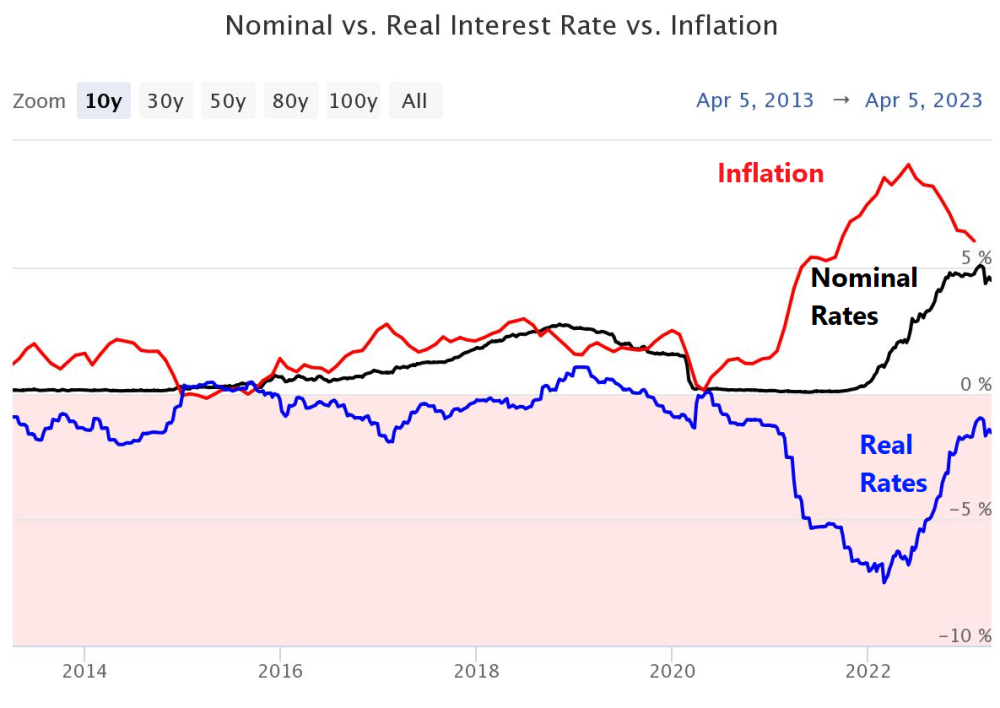
Recently, US stocks sank to their lowest levels in a month, with the S&P 500 Index dropping under 4000. Despite interest rate at almost 5 percent, the inflation rate, which soared close to 10 percent in summer 2022, slowed only to 6.4 percent in January.

After the US hit its $31.4 trillion debt limit set by Congress, Treasury Secretary Janet Yellen warned that a failure to make payments that are due “would undoubtedly cause a recession in the US economy and could cause a global financial crisis.” New debt limit can be enacted, but not without unsustainable debt-taking.

In January, euro area bank lending fell again amid downturn, while cash and liquid deposits declined for the first time ever, thanks to rapid rate hikes by the European Central Bank (ECB). The ECB analysts stressed that the euro area has “ shown remarkable economic resilience to the effects of the war [in Ukraine].” But that resilience is elusive because it’s also based on massive debt-taking.

Consumer price inflation was revised slightly higher to 8.6 percent year-on-year in January. That’s significantly below the peak of 11.1 percent in November, yet remains far above the ECB’s target of 2.0 percent. It is likely to result in half a percentage hike at the Bank’s mid-March meeting.

In Japan, inflation was negative until fall 2021. By January, it soared to 4.2 percent; the biggest increase since September 1981. Core inflation has been well above the Bank of Japan’s (BOJ) 2% target for nine months in a row. This is largely attributable to continued increases in the cost of fuel and raw materials. Hence, the market’s rising concern about global bond market spillovers if and when the BOJ’s new chief Kazuo Ueda will hike interest rates (Figure 2).

Figure 2 Inflation and interest rates: US, euro area, Japan, and China

Source: Tradingeconomics, Difference Group


China’s rebound offsets the Fed’s risks

When Chinese policymakers began to prepare the reopening of the world’s second-largest economy, many international observers warned it would unleash inflationary headwinds. But numbers do not back up the story.

China’s annual inflation rate rose to only 2.1 percent in January. Expectedly, prices of food jumped and those of non-food gained further on the back of the Lunar New Year festival and the removal of pandemic measures. Nonetheless, the inflation rate remains only half relative to Japan, a third to the US and a fifth compared to the euro area. 

At the eve of the Two Sessions, Chinese leaders pledged stronger growth. Recovery is taking hold and economic activity picking up pace with the country’s reopening. China’s GDP growth could soar to 5.5 to 6 percent in 2023, or over 6 percent on a quarter-to-quarter basis.

Internally, China’s emphasis on social policies promoting a moderately prosperous society supports rising purchasing power among new middle-income groups. External risks have been in part reduced by the misguided US trade wars and protectionism, which have compelled Chinese policy authorities to stress the importance of self-sufficiency. Spillovers will be significant in those economies that participate in China’s huge Belt and Road Initiative (BRI), and the Regional Comprehensive Economic Partnership (RCEP), the vast new trade bloc.

Global growth engines, without voice

The US, the euro area and Japan are struggling with secular stagnation and exporting runaway inflation. By contrast, China’s growth is accelerating while inflation remains in check. Its reopening could lift global GDP up to a stunning 1 percent in 2023.

Large emerging and developing economies are today’s global growth engines. Currently, their share of global growth exceeds 80 percent. While cyclical recession will end in the major advanced economies, their secular stagnation has barely begun. In the coming decade, the growth gap between the rich and poor economies won’t go away. It is positioned to deepen.

With broadening secular stagnation, the long-run economic growth in the major advanced economies will approach zero. Perhaps that’s why they are now so eager to use geopolitics and military muscle.

 About the Author:

Dr. Dan Steinbock is an internationally recognized strategist of the multipolar world and the founder of Difference Group. He has served at the India, China and America Institute (USA), Shanghai Institutes for International Studies (China) and the EU Center (Singapore). For more, see https://www.differencegroup.net


The original commentary was released by China-US Focus on March 1, 2023.


Fed policymakers are again considering a rate hike to the 0.5% step. The ECB began to cut its balance sheet

By JustMarkets

According to ISM, the US Manufacturing Activity Index rose from 47.4 to 47.7 in February, slightly below expectations of 48.0. To understand what this index shows – any value above 50 signals growth in the sector, while values below this threshold indicate a contraction. The US manufacturing activity index has remained in falling territory for the fourth consecutive month, a sign that the economic outlook is challenging amid persistently high inflation and rapidly rising interest rates. While the manufacturing sector has been in recession since last November, the jump in prices suggests that inflation is likely to remain resilient in the coming months, raising the risk that the Fed could raise its final rate in its efforts to restore price stability. That could mean a 50 basis point interest rate hike at the March FOMC meeting, which would be a bullish catalyst for the US dollar and a bearish catalyst for stock indices.

As the stock market closed Tuesday, the Dow Jones Index (US30) increased by 0.02%, while the S&P 500 Index (US500) fell by 0.47%. The NASDAQ Technology Index (US100) closed negative by 0.66%.

Rafael Bostic, president of the Federal Reserve Bank of Atlanta, called for further interest rate hikes above 5% to get inflation back to the Central Bank’s target level. “I think we will need to raise the federal funds rate to 5-5.25% and leave it at that level until 2024,” Bostick said. Fed funds futures show that the final rate will reach the 5.5%-5.75% range by September 2023. Monthly labor market data and consumer price data in the coming days will help investors gauge the trajectory of rates ahead of the March 21-22 meeting.

Equity markets in Europe mostly fell yesterday. German DAX (DE30) decreased by 0.39%, French CAC 40 (FR40) fell by 0.46%, Spanish IBEX 35 (ES35) lost 0.82%, and British FTSE 100 (UK100) closed on the plus side by 0.49%.

The annual inflation rate in Germany remained at 8.7%, the same level as in January, according to the federal statistical agency Destatis. Pressure on prices also remains in other leading eurozone economies. Eurostat will release Eurozone inflation data today. Analysts forecast that overall inflation will fall from 8.6% to 8.3%, while core inflation will remain at an annualized rate of 5.3%.

Bank of France Governor François Villeroy de Galleau said Wednesday in Paris that the ECB’s final rate should be reached no later than September. At the moment, the ECB’s final rate is expected to be 4.0%. Since yesterday, the ECB has started to reduce its balance sheet by an average of 15 billion euros a month. At the same time, Bundesbank President Nagel called for accelerating the pace of balance sheet reduction in the second half of the year.

British Prime Minister Rishi Sunak reached an agreement with the European Union on the status of Northern Ireland, which is expected to open more trade after Brexit between the EU and the United Kingdom.

Oil rises as record US oil exports offset rising inventories. The US crude exports reached a record 5.629 million barrels, with crude inventories up 1.2 million barrels in the last week. Another factor that supported oil price sentiment was China’s production data, which came in above expectations for January and served as an indicator of energy demand from the world’s largest crude oil importer.

Asian markets were rising yesterday. Japan’s Nikkei 225 (JP225) gained 0.26% on the day, China’s FTSE China A50 (CHA50) gained 1.36%, Hong Kong’s Hang Seng (HK50) jumped by 4.21% on the day, India’s NIFTY 50 (IND50) added 0.85%, and Australia’s S&P/ASX 200 (AU200) was positive by 0.09%.

China’s industrial sectors, as well as the service sector, are showing steady growth, which gives hope that the significant lifting of Covid restrictions has seriously boosted China’s economic move.

S&P 500 (F) (US500) 3,951.39 −18.76 (−0.47%)

Dow Jones (US30)32,661.84 +5.14 (+0.016%)

DAX (DE40) 15,305.02 −60.12 (−0.39%)

FTSE 100 (UK100) 7,914.93 +38.65 (+0.49%)

USD Index 104.42 −0.45 (−0.43%)

Important events for today:
  • – Eurozone Consumer Price Index (m/m) at 12:00 (GMT+2);
  • – Eurozone Unemployment Rate (m/m) at 12:00 (GMT+2);
  • – Eurozone ECB Monetary Policy Statement (m/m) at 14:30 (GMT+2);
  • – US Initial Jobless Claims (w/w) at 15:30 (GMT+2);
  • – US Natural Gas Storage (w/w) at 17:30 (GMT+2);
  • – US FOMC member Waller Speaks at 23:00 (GMT+2).

By JustMarkets


This article reflects a personal opinion and should not be interpreted as an investment advice, and/or offer, and/or a persistent request for carrying out financial transactions, and/or a guarantee, and/or a forecast of future events.

The US stock indices remain under pressure. Inflation is on the rise in Europe

By JustMarkets

The US CB consumer confidence index declined for the second month in a row, a sign that Americans are becoming more pessimistic about economic prospects amid persistently high inflation and rapidly rising interest rates. Looking at the individual components of the report, the current situation index, based on business and labor market assessments, rose to 152.8 from 151.1. Still, the expectation indicator, which tracks short-term income prospects, the business environment, and job opportunities, fell sharply to 69.7 from 76.00. Over the past few weeks, markets have overestimated the Fed’s monetary policy outlook upward because of solid economic data, but expectations could soon change if falling confidence causes a significant decline in consumer spending.

As the stock market closed on Tuesday, the Dow Jones Index (US30) decreased by 0.71%, and the S&P 500 Index (US500) lost 0.30%. NASDAQ Technology Index (US100) closed negative by 0.10%. Economists say the US stock indices seem overvalued based on current rates. Therefore, the path of least resistance is likely to be further reductions. Monetary policy operates with a long and variable lag, so the outlook may continue to deteriorate as the Fed’s cumulative tightening affects the real economy.

Equity markets in Europe were mostly down yesterday. Germany’s DAX (DE30) decreased by 0.11%, France’s CAC 40 (FR40) lost 0.38%, Spain’s IBEX 35 (ES35) added 0.90%, Britain’s FTSE 100 (UK100) closed down by 0.74%.

The latest data showed that inflation in Europe is starting to accelerate again. In France, the consumer price index rose from 6% to 6.2% y/y. In Spain, CPI also jumped from 5.9% to 6.1% year-on-year. Inflationary pressures remain, which means the ECB will probably not slow down the pace of tightening. The main inflation figure for the Eurozone will be published tomorrow.

British Prime Minister Rishi Sunak expressed his optimism about the new version of the Northern Ireland Protocol. This deal will regulate the flow of goods from England to Northern Ireland. The new version proposes a green band for goods remaining in Northern Ireland and a red band for goods destined for Ireland, the EU, and the rest of the EU, which will naturally be subject to stricter inspections.

Despite the rise in gold in the last two days, analysts are confident that the jump in government bond yields will prevent gold and silver from showing a significant and lasting recovery. The precious metals are protective assets at a time of rising inflation but not at a time of monetary tightening.

In the oil market, the strong rebound in US inventories in the previous weeks continues to constrain the rise in oil prices. Investors are also worried about lower demand due to falling economic activity in the face of higher global interest rates imposed to fight inflation. On Tuesday, the US sold an additional 26 million barrels of crude oil from its Strategic Petroleum Reserve.

Asian markets traded flat yesterday. Japan’s Nikkei 225 (JP225) gained 0.08% on the day, China’s FTSE China A50 (CHA50) gained 0.39%, Hong Kong’s Hang Seng (HK50) ended the day down by 0.79%, India’s NIFTY 50 (IND50) fell by 0.51%, and Australia’s S&P/ASX 200 (AU200) was positive by 0.47%.

Recent comments from the new deputy governor of the Bank of Japan, Shinya Uchida, and the current candidate for governor of the Bank of Japan, Kazuo Ueda, set a “dovish” tone in the testimony before the upper house of the Japanese parliament. These comments put an end to rumors that the new BOJ management will change monetary policy in the near future. As for economic data from Japan: Industrial production showed its first decline in 3 months, with output falling by 4.9% m/m in January. Retail sales increased by 1.9% m/m, with clothing and automobiles making the largest contribution.

S&P 500 (F) (US500) 3,970.15 −12.09 (−0.30%)

Dow Jones (US30)32,656.70 −232.39 (−0.71%)

DAX (DE40) 15,365.14 −16.29 (−0.11%)

FTSE 100 (UK100) 7,876.28 −58.83 (−0.74%)

USD Index 104.95 +0.28 (+0.27%)

Important events for today:
  • – Australia GDP (q/q) at 02:30 (GMT+2);
  • – Australia Consumer Price Index (m/m) at 02:30 (GMT+2);
  • – Japan Manufacturing PMI (m/m) at 02:30 (GMT+2);
  • – China Manufacturing PMI (m/m) at 03:30 (GMT+2);
  • – China Non-Manufacturing PMI (m/m) at 03:30 (GMT+2);
  • – German Retail Sales (m/m) at 09:00 (GMT+2);
  • – Switzerland Retail Sales (m/m) at 09:30 (GMT+2);
  • – Switzerland Manufacturing PMI (m/m) at 10:30 (GMT+2);
  • – German Manufacturing PMI (m/m) at 10:55 (GMT+2);
  • – German Unemployment Rate (m/m) at 10:55 (GMT+2);
  • – Eurozone Manufacturing PMI (m/m) at 11:00 (GMT+2);
  • – UK Manufacturing PMI (m/m) at 11:30 (GMT+2);
  • – UK BoE Gov Bailey Speaks at 12:00 (GMT+2);
  • – Canada Manufacturing PMI (m/m) at 16:30 (GMT+2);
  • – US ISM Manufacturing PMI (m/m) at 17:00 (GMT+2);
  • – US Crude Oil Reserves (w/w) at 17:30 (GMT+2).

By JustMarkets


This article reflects a personal opinion and should not be interpreted as an investment advice, and/or offer, and/or a persistent request for carrying out financial transactions, and/or a guarantee, and/or a forecast of future events.

Risk Sentiment Wavers On Fed Fears

By ForexTime

Asian shares were a mixed bag on Tuesday as fears over rising U.S. interest rates hit overall sentiment in the region. European futures are pointing to a positive open this morning, tracking the modest gains on Wall Street overnight. However, a sense of caution continues to linger across financial markets as concerns over further interest rate hikes cap risk appetite. In the FX space, the dollar stabilised during earlier trade appreciating against every single G10 currency. Gold remains shaky, vulnerable, and heading for its worst month since mid-2021 thanks to a hawkish Fed. After sliding roughly 1% in the previous session, oil prices have inched up today amid hopes of a strong economic rebound in China brightening the demand outlook.

Overnight, Australian retail sales rebounded in January, growing 1.9% which beat market expectations of a 1.5% rise. The data suggests that households are still spending despite rising interest rates and soaring inflation. Such a development could place more pressure on the RBA to remain hawkish, fuelling fears around the growth outlook. It is worth keeping in mind that concerns remain elevated over strong price pressures and slowing economic growth in the face of rising interest rates. The aussie has weakened against every G10 currency this month, shedding over 5% against the dollar. Prices in AUDUSD are under pressure with a breakdown below 0.6700 opening the doors to lower levels.

Dollar dominates in February

It has been a positive month for the dollar, halting a run of four straight months of declines.

Incredibly positive jobs data, sticky inflation figures, and hawkish comments from Fed officials have injected the dollar with renewed confidence. As market expectations intensified over US rates remaining higher for longer, this boosted buying sentiment towards the dollar. The peak, terminal rate for Fed funds is now near 5.40%, up from around 4.90% in January.  The key question is whether the positive momentum will roll over into the new month when we get fresh rate decisions from all the major central banks, including the FOMC meeting on March 22. Given how the dollar remains highly data dependent, there could be more volatility in the coming weeks.

Looking at the technical picture, the Dollar Index (DXY) remains bullish on the daily charts as there have been a series of higher highs and higher lows, giving us a bullish price channel. Should 104.30 prove to be reliable support, prices could test the next key level of interest at 105.50.

Commodity spotlight – Gold

It has been a rough month for gold with the precious metal losing over 6% of its value, as at the time of writing. This would be its worst month since mid-2021.

Gold has stood little chance against an appreciating dollar and rising Treasury yields as expectations have intensified over the Fed keeping rates higher for longer. With Fed hawks currently in a position of power, this could signal further downside for gold in the short to medium term.

Looking at the precious metal from a technical view, the bearish engulfing candlestick pattern on the monthly timeframe could signal a decline below $1800. It is worth keeping in mind that the 200-day Simple Moving Average can be found just below this psychological support level at $1776.


Forex-Time-LogoArticle by ForexTime

ForexTime Ltd (FXTM) is an award winning international online forex broker regulated by CySEC 185/12 www.forextime.com