Archive for Economics & Fundamentals – Page 109

Carmakers are mistaken if they think chip shortages are over – they need to reinvent themselves while there’s time

By Howard Yu, International Institute for Management Development (IMD) 

Finally, carmakers got a break. Those in the UK boosted their output by over 13% in February as supply-chain pressures subsided, especially the persistent global shortage in microchips, also known as semiconductors. This “signals an industry on the road to recovery”, declared UK motoring trade association the SMMT. Well, up to a point.

Early in the pandemic, carmakers slashed sales forecasts as demand for cars evaporated, falling 47% in US and 80% in Europe in the first couple of months of lockdowns. Carmakers couldn’t see how sales could rebound quickly, which was a reasonable assumption at the time. In an industry where everyone has their own version of lean or just-in-time manufacturing, where unsold inventories are seen as tantamount to incompetence, they quickly scaled back orders from their supply chain.

Car parts suppliers such as Bosch and Continental reacted by scaling back their production – and naturally, their own suppliers, such as NXP and Infineon, also reduced their forecasts. These second-order effects went deep into the supply chain, eventually converging on the great and mighty semiconductor manufacturer in Taiwan, TSMC (Taiwan Semiconductor Manufacturing Company).

A modern car can easily contain more than 3,000 microchips. These control brakes, doors, airbags and windscreen wipers; they even support advanced functions like driver assistance and navigation control. Chipsets are like golden screws.

Yet obviously, many other industries depend on chips too. At the same time as carmakers were reducing their orders, manufacturers of gadgets such as games consoles, TVs and home appliances were seeing orders surging as consumers were forced to stay at home. They increased their chip requirements, and TSMC was more than happy to oblige.

It then became apparent to carmakers later in 2020 that they had overreacted. But by the time they woke up to this and ramped up orders, it was too late. TSMC was running all of its factories at maximum capacity to meet the surge in gadget demand, and there were no more chips available for carmakers.

As a result of this global semiconductor scarcity, worldwide vehicle production was approximately 11 million units, or about 12%, lower in 2021 than it would otherwise have been.

What carmakers got wrong

No one could have predicted the outbreak of COVID. Nor could anyone have foreseen the ramifications on the supply chain as the virus receded. Still, every executive in the car industry knows the importance of computing power in a modern car. A car is a supercomputer on wheels, they’ll say. And yet they didn’t treat chipsets as a critical area. In other words, they were happy to let their suppliers worry about chip requirements and not have any direct involvement with chipmakers.

Why? Because chips don’t involve mechanical engineering. From the boardroom to the shop floor, carmakers generally focus on final assembly. Chipset design and fabrication is one of many things that gets outsourced.

So during the pandemic, most carmakers had little choice but to perfect the art of triaging their chips: for example, General Motors hoarded them for expensive models, temporarily shutting down factories that produce lower-priced sedans.

Others instead removed features from vehicles that rely on microprocessors. BMW did away with parking assistance and even touchscreen capabilities in various models. It also withdrew semi-autonomous driving functionality from the X3, its top-selling model. Mercedes-Benz eliminated features such as high-end audio and wireless phone-charging from a number of vehicles.

The future threat

Car production is now increasing as the high pandemic demand for chips for household gadgets has fallen away. Still, it would be unwise to conclude that things are back to normal. Demand for chips is likely to look so different in future as we see the rollout of technologies like AI, the internet of things, and 5G/6G.

Major chipmakers are boosting capacity to meet this extra demand, with big new US facilities in the offing, for example. Yet it will take time for this to come on stream, and it’s still difficult to predict whether it will meet demand.

New product categories can appear unexpectedly, in a similar way to how bitcoin mining suddenly led to unforeseen chip demand. As Professor Rakesh Kumar in the Electrical and Computer Engineering department at the University of Illinois observes: “The exact nature, speed and magnitude of the increase in demand is still unknown.”

As we saw during the pandemic, chip factories also typically run close to maximum capacity, leaving production extremely susceptible to disruptions. Natural disasters like earthquakes and floods can cause problems, as can accidents such as fires and power outages. In March 2021, for instance, a fire at a Renesas Electronics chip factory in Japan caused a significant disruption to supplies over and above the pandemic-related problems. Geopolitical or military tensions, including those between the US and China, could also affect production in future.
The implication is clear: carmakers must cultivate in-house expertise in this area. Rather than relying on suppliers or their sub-suppliers for semiconductors, they need to directly engage with chipmakers and do the relevant designs in-house. For example, Ford announced a collaboration with US chipmaker GlobalFoundries in 2021 to create chips for its vehicles while exploring the prospect of expanding domestic chip production.

This approach is already common practice among newer, more self-sufficient carmakers such as Tesla and China’s BYD and NIO, who all have extensive operations dedicated to designing or even producing their own chipsets.

These changes will not be easy. Yet the cost of clinging to the status quo will far outweigh the difficulties in the transition. For any company dependent on semiconductors, their resilience and future success hinge on getting this right. The correct response to the end of the pandemic is not to say “back to normal” but “never again”.The Conversation

About the Author:

Howard Yu, Professor of Management and Innovation, International Institute for Management Development (IMD)

This article is republished from The Conversation under a Creative Commons license. Read the original article.

 

Why Britain’s new CPTPP trade deal will not make up for Brexit

By Terence Huw Edwards, Loughborough University and Mustapha Douch, The University of Edinburgh 

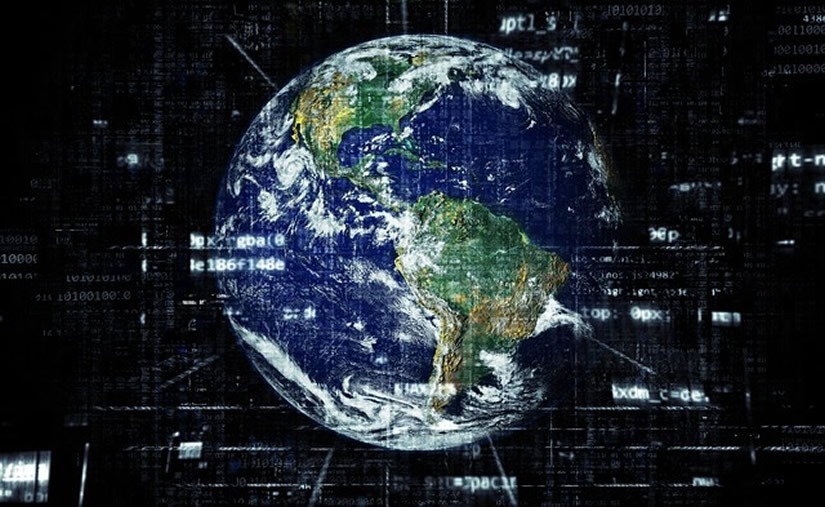
The UK recently announced that it will join the Comprehensive and Progressive Agreement for Trans-Pacific Partnership (CPTPP), giving British businesses access to the 11 other members of the Indo-Pacific trade bloc and bringing its combined GDP to £11 trillion.

Some commentators have suggested the deal could make up for Brexit. It’s been called “a momentous economic and strategic moment” that “kills off any likelihood that it [the UK] will ever rejoin the EU customs union or single market”. Shanker Singham of think tank the Institute of Economic Affairs has even said: “it’s no exaggeration to say that CPTPP+UK is an equivalent economic power to the EU-28-UK”, comparing it to a trade deal between the UK and EU members.

UK business and trade secretary Kemi Badenoch echoed such sentiments, telling Times Radio:

We’ve left the EU so we need to look at what to do in order to grow the UK economy and not keep talking about a vote from seven years ago.

The problem with this fanfare is that the government’s own economic analysis of the benefits of joining this bloc is underwhelming. There is an estimated gain to the UK of 0.08% of GDP – this is just a 50th of the OBR’s estimate of what Brexit has cost the UK economy to date. Even for those that are sceptical about models and forecasts, that is an enormous difference in magnitude.

Of course, the CPTPP is expected to offer the UK some real gains. It certainly provides significant potential opportunities for some individual exporters. But the estimated gains for Britain overall are very small.

The main reason for this is that, apart from Japan, the major players of the global economy are not in the CPTPP. The US withdrew from the Trans Pacific Partnership (the CPTPP is what the remaining members formed without it). And China started negotiations to join in 2022, but current geopolitics now make its entry highly improbable. India was never involved.

In addition, the UK already has free trade agreements with nine out of the 11 members. The remaining two, Malaysia and Brunei, are controversial due to environmental threats from palm oil production to rainforests and orangutans.

Britain’s existing trade agreements with CPTPP members

A table listing the existing British trade agreements with CPTPP members.
Author provided using GDP data from the World Bank and trade data from UN Comtrade.

And despite the widespread public perception of the Asia-Pacific area as a hub of future growth, the performance and prospects of the CPTPP members are a mixed bag. The largest member, Japan, is arguably in long-term decline, as is Brunei, while just three members (Vietnam, Singapore and New Zealand had average growth in the last decade above 3% annually.

Finally, distance really does matter in trade. All the CPTPP members are thousands of miles from the UK, which explains their relatively small shares in UK trade at present.

container-ship

Some benefits of CPTPP

While all of these points pour cold water on the suggested gains, there are some potential benefits from the CPTPP agreement, which allows for mutual recognition of certain standards. This includes patents and some relaxation of sanitary and phytosanitary rules on food items.

However, agreements over standards will involve the UK submitting to international CPTPP courts on these issues. This sits uncomfortably with many of the “sovereignty” objections to the European Court of Justice in relation to Brexit (largely from many of those who have extolled the CPTPP). It’s also notable that out of the nine agreements with CPTPP members that existed before the UK signed this deal, all but two are rollovers of previous EU deals.

But a trade deal with the CPTPP is worth more to the UK than separate deals with each member due to requirements around “rules of origin”, which determine the national source of a product. When a product contains inputs from more than one country, a series of separate free trade agreements may not eliminate tariffs. But if all the relevant countries are members of a single free trade agreement, then rules of origin on inputs from other members cease to be a problem (although there might be some issues if some members do not police the requirements properly).

Not the ideal agreement

While these benefits should be recognised, we should also acknowledge that the CPTPP is not the ideal agreement for Britain. As stated above, distance really does matter in trade – this is overwhelmingly accepted by modern trade economists.

Research shows that the rate at which trade declines with distance has barely changed over more than a century. This might seem strange because transport costs have fallen over time. But, as transport and communications have improved, firms have outsourced much of their production to complex supply chains that often cross national borders many times, with “just-in-time” supply schedules to keep down the costs of holding large stocks.

This means that, while trade everywhere has grown, there is still a big premium for trading (many times) across borders between contiguous countries. It is exactly this type of trade which benefits most from big comprehensive trade agreements that simplify rules of origin and regulatory paperwork.

This suggests that, while some elements of the the CPTPP offer benefits to the UK, it is unlikely to boost its trade in the way it does between countries around the Pacific Rim. For this sort of boost, the UK really needs to look towards its own neighbours. Of course, this is just the sort of agreement that Badenoch seems reluctant to discuss.The Conversation

About the Author:

Terence Huw Edwards, Senior Lecturer in Economics, Loughborough University and Mustapha Douch, Assistant Professor in Economics, The University of Edinburgh

This article is republished from The Conversation under a Creative Commons license. Read the original article.

Haruhiko Kuroda leaves the Bank of Japan. Global financial markets are closed today due to the Good Friday holiday

By JustMarkets

At the close of the stock market on Thursday, the Dow Jones Index (US30) increased by 0.01%, and the S&P 500 Index (US500) added 0.36%. The NASDAQ Technology Index (US100) gained 0.76% yesterday.

Weekly jobless claims in the US are falling. Initial jobless claims fell by 18,000 in the last week from 246,000, exceeding economists’ forecast of 200,000 applications and reinforcing expectations of a cooling labor market. An important monthly labor market report will be released today, namely the change in nonfarm payrolls. Analysts forecast that the US economy will add 238,000 jobs in March after an increase of 311,000 in February. The unemployment rate is forecast to remain at a low of 3.6%. With low liquidity due to the closure of other financial exchanges in Asia and Europe (Good Friday holiday), this report could cause a significant spike in volatility.

The Federal Reserve should stick to raising interest rates to reduce inflation while the labor market remains strong, given the high probability that recent financial stresses will continue to ease and in the absence of a marked tightening of credit conditions, St Louis Fed President James Bullard said on Thursday. Bullard previously said he had raised his estimate of how high the Fed’s benchmark overnight interest rate should rise by the end of 2023 to a range of 5.50%-5.75%.

Equity markets in Europe were mostly up yesterday. German DAX (DE30) gained 0.50%, French CAC 40 (FR40) added 0.12%, Spanish IBEX 35 (ES35) increased by 0.67%, and British FTSE 100 (UK100) closed with a 1.03% gain.

ECB spokesman Philip Lane said yesterday that if the ECB’s economic outlook remains unchanged by the May meeting (4 May), a rate hike would be appropriate. His comments followed a stronger-than-expected rise in industrial production in Germany in February, which, combined with strong business activity data on Wednesday, made the eurozone economy avoid recession in the first quarter. Analysts are now forecasting a 0.25% interest rate hike at each of the next 2 ECB meetings.

Natural gas futures resumed their downtrend, closing the current week down almost 10%. Natural gas is down for the 4th week in 5. The monthly contract has once again fallen below the key support level of $2, with new lows likely in the coming days. Natural gas storage in the US fell only slightly last week as cooler-than-normal weather led to sustained demand for heating. According to the EIA, the storage volume is now 32% higher than a year ago and nearly 20% higher than the five-year average.

Asian markets traded flat yesterday. Japan’s Nikkei 225 (JP225) decreased by 1.10%, China’s FTSE China A50 (CHA50) fell by 0.58%, and Hong Kong’s Hang Seng (HK50) added 0.01%, India’s NIFTY 50 (IND50) increased by 0.24%, and Australia’s S&P/ASX 200 (AU200) ended the day down by 0.31%.

Haruhiko Kuroda will hold his last press conference as head of Japan’s central bank today, ending a decade of soft monetary policy. Shock therapy was one of the key features of Kuroda’s monetary experiment, under which the Bank of Japan rolled out a massive asset purchase program in 2013.

Today is a Good Friday holiday. Most financial exchanges will be closed. Only the US futures and forex exchanges will be open part-time.

S&P 500 (F) (US500) 4,105.00 +14.62 (+0.36%)

Dow Jones (US30)33,485.29 +2.57 (+0.0077%)

DAX (DE40) 15,597.89 +77.72 (+0.50%)

FTSE 100 (UK100) 7,741.56 +78.62 (+1.03%)

USD Index 101.90 +0.05 (+0.04%)

Important events for today:
  • – US Nonfarm Payrolls (m/m) at 15:30 (GMT+3);
  • – US Unemployment Rate (m/m) at 15:30 (GMT+3).

By JustMarkets


This article reflects a personal opinion and should not be interpreted as an investment advice, and/or offer, and/or a persistent request for carrying out financial transactions, and/or a guarantee, and/or a forecast of future events.

Gold has reasons to rise further. Chinese business activity recovers

By JustMarkets

In the United States, the ISM manufacturing and services business activity index fell short of expectations in March, indicating a clear deterioration in demand conditions. If the business activity does not recover soon, layoffs could accelerate in the coming months, exacerbating labor market problems and pushing the country into a painful recession. The ADP National Employment report showed that US private employers hired far fewer workers than expected in March, adding to the signs of a cooling labor market after Tuesday’s weak jobs data. Stock indices are once again under pressure. As the stock market closed Wednesday, the Dow Jones Index (US30) increased by 0.24%, while the S&P 500 Index (US500) fell by 0.25%. The NASDAQ Technology Index (US100) lost 1.07% yesterday.

Cleveland Fed President Loretta Mester said Wednesday that it is too early to tell if the Fed needs to raise the benchmark rate at its next policy meeting in early May. The US interest rate futures markets currently estimate a 60.5% chance that the Fed will leave rates unchanged at its next meeting.

Recent Bloomberg research has unexpectedly shown that the biggest “short” in the banking industry in the world is not in Switzerland or Silicon Valley in the US but in the relatively quiet financial center of Canada. In recent weeks, sellers have increased their bearish positions against Toronto-Dominion Bank, Canada’s second-largest lender, with $3.7 billion in total capital, more than BNP Paribas (BNPP) and Bank of America (BAC). There is little indication that the Canadian lender has any liquidity problems. But analysts point to concerns about TD’s exposure to the domestic housing slowdown, as well as its ties to the US market through its stake in Charles Schwab (SCHW) and its planned acquisition of a regional US bank.

Equity markets in Europe traded flat on Tuesday. German DAX (DE30) decreased by 0.53%, French CAC 40 (FR40) lost 0.39%, Spanish IBEX 35 (ES35) gained 0.35%, and British FTSE 100 (UK100) was up by 0.37% yesterday.

According to analysts, the ECB will continue to tighten monetary policy with no signs of any disinflationary process, discounting energy and commodity prices and the fact that inflation is increasingly dependent on demand. Two more interest rate hikes of 0.25% at each meeting are currently expected.

In the precious metals market, the situation has not changed. Falling government bond yields, caused by the dovish review of the Fed’s monetary policy course, will continue to act as a tailwind for gold and silver. The US Treasury curve has shifted sharply downward since mid-March following the turmoil in the US banking sector, and recent macro data have reinforced investors’ views that the US economy is in trouble.

The weekly US inventory report on Wednesday showed that the government has again cut reserves to boost market supply and limit fuel price spikes. Clearly, there is a standoff between the US and OPEC+ countries. The Biden administration has relied heavily on reserves since late 2021 to offset limited inventories and lower black gold prices. In turn, OPEC+ countries are cutting production to create shortages and allow oil prices to continue their upward rally.

Asian markets traded flat yesterday. Japan’s Nikkei 225 (JP225) decreased by 1.07%, China’s FTSE China A50 (CHA50) and Hong Kong’s Hang Seng (HK50) did not trade yesterday, India’s NIFTY 50 (IND50) gained 0.77%, and Australia’s S&P/ASX 200 (AU200) ended the day negative by 0.09%.

The latest Caixin report showed that service sector activity in China grew at its fastest pace in 2.5 years in March, thanks to solid new orders, new job creation, and a post-pandemic recovery. The Caixin Global Services Purchasing Managers’ Index (PMI) rose to 57.8 in March from 55.0 in February, increasing for the third straight month. The 50-point mark separates expansion and contraction in activity.

India’s Central Bank left the interest rate unchanged at 6.5%. This was a surprise, as analysts had expected a 0.25% increase. But the Reserve Bank of India said it was ready to act against inflation if further conditions warranted.

S&P 500 (F) (US500) 4,090.38 −10.22 (−0.25%)

Dow Jones (US30)33,402.38 −198.77 (−0.59%)

DAX (DE40) 15,520.17 −83.30 (−0.53%)

FTSE 100 (UK100) 7,662.94 +28.42 (+0.37%)

USD Index 101.94 +0.35 (+0.34%)

Important events for today:
  • – Australia Trade Balance (m/m) at 04:30 (GMT+3);
  • – China Caixin Manufacturing PMI (m/m) at 04:45 (GMT+3);
  • – China Caixin Services PMI (m/m) at 04:45 (GMT+3);
  • – Indian Interest Rate Decision at 07:30 (GMT+3);
  • – Switzerland Unemployment Rate (m/m) at 08:45 (GMT+3);
  • – US Natural Gas Storage (w/w) at 17:30 (GMT+3).
  • – German Industrial Production (m/m) at 09:00 (GMT+3);
  • – UK Construction PMI (m/m) at 11:30 (GMT+3);
  • – US Initial Jobless Claims (w/w) at 15:30 (GMT+3);
  • – Canada Unemployment Rate (m/m) at 15:30 (GMT+3);
  • – Canada Ivey PMI (m/m) at 17:00 (GMT+3);

By JustMarkets


This article reflects a personal opinion and should not be interpreted as an investment advice, and/or offer, and/or a persistent request for carrying out financial transactions, and/or a guarantee, and/or a forecast of future events.

Can this former CEO fix the World Bank and solve the world’s climate finance and debt crises as the institution’s next president?

By Rachel Kyte, Tufts University 

Over the past two years, a drumbeat of calls for reforming the World Bank has pushed its way onto the front pages of major newspapers and the agenda of heads of state.

Many low- and middle-income countries – the population the World Bank is tasked with helping – are falling deeper into debt and facing growing costs as the impacts of climate change increase in severity. A chorus of critics accuse the World Bank of failing to evolve to meet the crises.

The job of leading that reform is now almost certain to fall to Ajay Banga, an Indian American businessman and former CEO of Mastercard who was nominated by President Joe Biden to replace resigning World Bank President David Malpass. Nominations closed on March 29, 2023, with Banga the only candidate.

There is no shortage of advice for what Banga and the World Bank need to do.

The G-20 recently issued a report urging the World Bank and the other multilateral development banks to loosen their lending restrictions to get more money flowing to countries in need. A commission led by economists Nicholas Stern and Vera Songwe called for a rapid, sustained investment push that prioritizes transitioning to cleaner energy, achieving the U.N. sustainable development goals and meeting the needs of increasingly vulnerable countries.

African ministers of finance will soon come out with their own “to do” list for the World Bank, and India’s minister of finance just pulled together an expert group to consider World Bank reform.

Banga will walk into the job with these and many other to-do lists. Yet he will inherit a corporate culture that makes the World Bank Group too inwardly focused and too slow to respond.

I have worked for the World Bank Group and with it from the outside. I see four key roles – four “C’s” – that Banga will need to master from the outset. From his track record and his reputation for deep thoughtfulness, I am confident that he can.

1) Act as a CEO and get the entire World Bank Group house in order.

The World Bank Group is a conglomerate with four balance sheets, three cultures and four executive boards, plus a dispute resolution arm.

Lending to low- and middle-income countries is just part of its role. The World Bank Group also provides technical assistance across all areas of economic development and invests in and provides risk insurance to encourage companies to invest in projects and places they might otherwise consider too risky. Its ability to mobilize private-sector finance and stretch every dollar is crucial for meeting the world’s development and climate adaptation and mitigation needs.

How the World Bank operates.

Banga will need to set clear goals for each part of the World Bank Group and get them working more effectively to help the world achieve its goals.

2) Assume the mantle of collaborator in chief to take on the debt and climate crises.

Many of the World Bank Group’s client countries are facing both mounting debt and rising costs from climate change.

The high cost of borrowing can hamper developing countries’ ability to invest in needed infrastructure to grow and protect their economies, and they fear being locked out of global trade as the United States’ green subsidies in the Inflation Reduction Act and Europe’s border carbon tax may make it more difficult for them to compete.

The solutions to cascading problems like these cannot be managed by one institution. However, the current multilateral development bank system – the World Bank Group and the regional development banks – is disjointed at best and competitive at worst.

In the past, the leaders of the development banks, the International Monetary Fund and the World Trade Organization have cooperated, more or less, depending on crises and personalities, and can move fast when they need to.

During the global financial crisis of 2008 and 2009, for example, the then-heads of the World Bank and the WTO hurried to develop trade finance facilities to support banks in developing countries as capital fled to the U.S. and Europe. It took intense diplomacy to push wealthy countries and institutions to get money out the door to shore up businesses and trade. Success was measured not in months but in days.

The new president of the World Bank will need to support more radical collaboration among development financial institutions, including pooling capital and talent, to help respond quickly to countries’ needs.

It won’t be easy. Institutional rivalries run deep. But with budgets tight, there is growing clarity that there is no choice – the capital that is already in the system is the closest at hand and can be deployed to better effect if the institutions are willing to adapt.

3) Be a convener.

Overhauling how international finance works will require everyone to be on board – development banks, central banks, regulators, investment banks, pension funds, insurance companies and private equity.

Banga and International Monetary Fund Managing Director Kristalina Georgieva can settle institutional differences and present a coordinated face to private investors and the major lending countries, including China – which has emerged as the biggest holder of developing country debt – to speed up support to struggling countries.

On other issues, such as nature-based solutions to climate change, building resilience and economic inclusion, the World Bank Group can bring its significant resources and skills, including data analysis, to global conversations that it has been painfully absent from for the past four years.

4) Be a champion for the most vulnerable.

The world’s most vulnerable people are the World Bank Group’s ultimate beneficiaries. For those living on the front line of biodiversity loss and climate impacts, such as extreme heat, drought and flooding, the current international financial system is proving inadequate.

The World Bank Group’s management incentives are still too oriented to lending approved by the board, not the outcomes of that lending, advice and assistance.

Throughout its history, World Bank leaders have been able to make rapid changes to better help vulnerable countries when they stay close to the needs of their ultimate beneficiaries and the goals that the world has set.

The next president faces turbulent times. Banga’s careful listening on his campaign tour signals that he understands the complexity. It’s an extraordinary moment in the history of the institution, with sky-high expectations of what one leader needs to do.

This article was updated March 30, 2023, with the announcement that Banga is the only candidate for World Bank president.The Conversation

About the Author:

Rachel Kyte, Dean of the Fletcher School, Tufts University

This article is republished from The Conversation under a Creative Commons license. Read the original article.

The RBNZ unexpectedly raised its rate by 0.5%. The US labor market is starting to show signs of slowing

By JustMarkets

According to the monthly JOLTS report, the number of job openings, a measure of labor demand, fell by 632,000 to 9.9 million in February, the lowest since May 2021. This is a direct sign of a slowing labor market, reinforcing investors’ bets that the Federal Reserve will end its tightening cycle and fueling recession fears. The US factory orders also declined for the second straight month, a 0.7% decrease in February after falling by 2.1% in January. The Dow Jones Index (US30) decreased by 0.59%, and the S&P 500 Index (US500) lost 0.59% at the close of the stock market on Tuesday. The NASDAQ Technology Index (US100) fell by 0.52% yesterday.

Analysts believe that if bad economic data is added to the banking crisis plus rising oil supply costs, there is a better chance of a rate cut later this year. On Tuesday, the interest rate futures market estimated a 50% chance of a 25-bp rate hike in May. Although on Monday, that probability was more than 65%.

Northcoast Research downgraded Boeing Co. (BA) from neutral amid concerns that engine maker CFM International won’t be able to supply enough engines for the aircraft maker, limiting its growth. Lockheed Martin Corporation (LMT) said Monday that the US Army has a multi-year contract to produce joint air-to-ground missiles (JAGM) and HELLFIRE missiles. The contract is worth $4.5 billion. In March, President Joe Biden requested $842 billion for the Pentagon and $44 billion for defense-related programs. The 2024 budget proposal is $28 billion more than last year.

Stock markets in Europe traded flat Tuesday. German DAX (DE30) gained 0.14%, French CAC 40 (FR40) lost 0.01%, Spanish IBEX 35 (ES35) gained 0.29%, and British FTSE 100 (UK100) closed yesterday down by 0.50%.

Huw Pill, the chief economist of the Bank of England, said that officials might have to raise interest rates even if inflation declines in order to prevent price increases caused by the attempts of households and companies to regain lost income. For her part, Bank of England policymaker Silvana Tenreyro laid out the case for lower interest rates. The politician believes that as the bank rate moves further into restrictive territory, a softer stance is needed to achieve the inflation target in the medium term. Inflation in the UK surprised economists as it stubbornly remained above 10%, five times the Bank of England’s target. Inflation is expected to fall sharply from its current level of 10.4% in the coming months due to lower energy prices and base effects.

On Tuesday, the two-year US Treasury bond yield, which generally reflects interest rate expectations, fell 12 basis points (bps) to 3.86%. With gold and silver inversely correlated to the dollar index and government bond yields, precious metal prices skyrocket. Meanwhile, gold is on track to renew its all-time high.

Asian markets were mostly up yesterday. Japan’s Nikkei 225 (JP225) gained 0.35%, China’s FTSE China A50 (CHA50) wasn’t traded, Hong Kong’s Hang Seng (HK50) ended the day down by 0.66%, India’s NIFTY 50 (IND50) was flat, and Australia’s S&P/ASX 200 (AU200) ended the day up by 0.18%.

The RBNZ unexpectedly raised the rate by 50 basis points to 5.25%, saying that inflation is still too high. The RBNZ rate is now higher than that of the US Fed. The central bank of New Zealand was one of the first central banks in the world to take action against rising inflation after COVID-19 and has raised rates by a combined 500 basis points since mid-2021. The central bank said the country’s economic growth is expected to slow until 2023 amid weakening global demand for exports, slowing local consumption, and monetary policy, which is now entering a restricted zone. Further monetary policy will depend on new data.

S&P 500 (F) (US500) 4,100.60 −23.91 (−0.58%)

Dow Jones (US30)33,402.38 −198.77 (−0.59%)

DAX (DE40) 15,603.47 +22.55 (+0.14%)

FTSE 100 (UK100) 7,634.52 −38.48 (−0.50%)

USD Index 101.56 −0.53 (−0.52%)

Important events for today:
  • – New Zealand RBNZ Interest Rate Decision at 05:00 (GMT+3);
  • – New Zealand RBNZ Rate Statement at 05:00 (GMT+3);
  • – Australia RBA Governor Lowe Speaks at 05:30 (GMT+3);
  • – German Services (m/m) PMI at 10:55 (GMT+3);
  • – Eurozone Services (m/m) PMI at 11:00 (GMT+3);
  • – UK Services PMI (m/m) at 11:30 (GMT+3);
  • – US ADP Nonfarm Employment Change (m/m) at 15:15 (GMT+3);
  • – Canada Trade Balance (m/m) at 15:30 (GMT+3);
  • – US Trade Balance (m/m) at 15:30 (GMT+3);
  • – US ISM Services PMI (m/m) at 17:00 (GMT+3);
  • – US Crude Oil Reserves (w/w) at 17:30 (GMT+3).

By JustMarkets

This article reflects a personal opinion and should not be interpreted as an investment advice, and/or offer, and/or a persistent request for carrying out financial transactions, and/or a guarantee, and/or a forecast of future events.

Investors hoping Xi and Macron secure better business ties between China and EU

By George Prior

Global investors are “desperate for signs” that China’s Xi and France’s Macron can secure better business ties between China and the EU during the French President’s three-day visit to Beijing and Guangzhou.

The assessment from Nigel Green, CEO of deVere Group, one of the world’s largest independent financial advisory, asset management and fintech organisations, comes as a state visit by Emmanuel Macron to China kicked off on Wednesday.

He will have extended face time with Xi, and after formal meetings in Beijing on Thursday, which will also include European Commission President Ursula von der Leyen, the two national leaders will head to the southern city of Guangzhou.

Key themes said to be planned for discussion will be the Ukraine war, the climate crisis, renewable energy, and travel following the lifting of zero-Covid regulations by Beijing.

Nigel Green comments: “Geopolitical issues are at the top of the agenda for Macron’s visit to Xi in China.

“But as many top business leaders from France have also been invited along, and because Macron will meet with Chinese investors in Guangzhou, there are hopes that international trading relations will also be a major priority.

“Global investors are desperate for signs that Xi and Macron can secure better business ties between China and the EU.”

The EU is already China’s largest trading partner, and China is the EU’s second-largest trading partner.

In January 2021, the trade deficit was €14.6 billion. It reached a high of €36.0 billion in September 2022 before falling to €27.4 billion in December 2022.

Recent developments have “reignited” global investors’ interest in the world’s second largest economy.

“The break-up of Alibaba, the Chinese mega-conglomerate, in the last couple of weeks is, we believe, the start of a wave of enormous opportunities in China for investors from around the world,” says the deVere CEO.

“It represents the end of Beijing-led regulatory crackdowns on various sectors, including tech, real estate and education, which have deterred foreign investors from China in the last few years.”

He continues: “The cooling of corporate crackdowns, and Beijing seemingly becoming more pro-private enterprise, also coincides with the re-opening of the world’s second largest economy following years of Covid restrictions and as the Chinese currency, the yuan, becomes more dominant in international finance.”

Russia’s Vladimir Putin has recently stated that his country is now in favour of using the Chinese yuan for oil settlements, rather than the US dollar.  It’s also been reported that Saudi Arabia is in talks with Beijing to use the Chinese currency, instead of the dollar for oil trades.

“Global investors are increasingly bullish on China and financial markets around the world are hoping for indicators of a strengthening relationship between the European Union (EU) and China during this important state visit,” confirms Nigel Green.

“A stronger relationship would lead to increased trade and investment between the two regions, creating new opportunities for businesses and investors in both regions, leading to access to new markets, and increased profitability and growth.”

“Stronger ties would also reduce uncertainty in financial markets, meaning a more stable and predictable environment for investors.”

He concludes: “Global investors will be carefully analysing the words and actions of Xi and Macron over the next few days in order to seize opportunities and sidestep potential risks.”

About:

deVere Group is one of the world’s largest independent advisors of specialist global financial solutions to international, local mass affluent, and high-net-worth clients.  It has a network of more than 70 offices across the world, over 80,000 clients and $12bn under advisement.

Rising oil prices could trigger a new wave of inflation. The RBA kept interest rates unchanged

By JustMarkets

The US stock indices were mostly up on Monday as energy stocks rose on higher oil prices after the Organization of the Petroleum Exporting Countries and its allies (OPEC+) unexpectedly cut oil production by 1 million BPD. As the stock market closed Monday, the Dow Jones Index (US30) increased by 0.98%, and the S&P 500 Index (US500) added 0.37%. Technology Index NASDAQ (US100) lost 0.27% yesterday.

In the US, the ISM manufacturing activity index fell to 46.3 in March from 47.7 a month earlier, while the pay-per-view price index fell to 49.2 from 51.3, indicating that the disinflationary trend in the commodities sector also remains unchanged.

Elon Musk believes that interest rate hikes by the Federal Reserve will hurt companies and provoke an economic downturn. The head of Twitter agreed with the opinion of his longtime friend, venture capitalist David Sachs, who pointed out that further Fed interest rate increases could hit banks, commercial real estate, and national debts. According to Sachs, the first stage of the crisis has already begun, with the second and third stages still to come.

Stock markets in Europe were trading Monday without a single dynamic. German DAX (DE30) decreased by 0.31%, and French CAC 40 (FR40) added 0.32%, Spanish IBEX 35 (ES35) was down by 0.81%, British FTSE 100 (UK100) closed yesterday up by 0.54%.

European business activity data showed no significant changes over the last month. Most industries are in contraction territory, and as long as the ECB raises interest rates and tightens the screws on the banking sector, the situation is unlikely to improve anytime soon.

Gold is back to the $2000 an-ounce mark. Gold has a lot of fundamentals for strengthening right now. The banking crisis, the impending recession in the US and Europe, and falling government bond yields on the soon-to-be-completed tightening cycle. In addition, the sanctioning countries are actively getting rid of dollar reserves, increasing gold reserves. There are all preconditions for the continuation of the medium-term upward movement.

Due to voluntary cuts in oil production by OPEC countries, oil prices posted their biggest one-day gain of the year. The US West Texas Intermediate (WTI) ended Monday trading at $80.42, plus 6.3% for the day. Brent closed at $84.93, also plus 6.3% for the day. Traders and analysts are already analyzing what the Federal Reserve will do in terms of raising rates to counter the new inflationary pressure that is almost inevitable because of OPEC’s inflated oil price. Analysts are predicting a further rise in quotes, up to $90-100 per barrel.

Asian markets were mostly on the rise yesterday. Japan’s Nikkei 225 (JP225) gained 0.52%, China’s FTSE China A50 (CHA50) decreased by 0.16%, Hong Kong’s Hang Seng (HK50) gained 0.04%, India’s NIFTY 50 (IND50) gained 0.22%, and Australia’s S&P/ASX 200 (AU200) increased by 0.63% on the day.

The Reserve Bank of Australia (RBA) kept interest rates at 3.6%, signaling a pause in its rate hike cycle. The bank said it wanted to see the full effect of the rate hike and assess Australia’s economic prospects while noting that inflation has probably peaked. But with inflation still well above the bank’s target range of 2% to 3%, the RBA warned that further monetary tightening might be needed.

The Reserve Bank of New Zealand will hold its monetary policy meeting tomorrow. Investors expect a 0.25% rate hike with a hint of an end to the tightening cycle. New Zealand’s GDP fell by 0.6% in the last quarter of 2022, more than the RBNZ forecast in its last report. Meanwhile, GDP growth and inflation are expected to be negative in the first half of 2023 due to disruptions from hurricanes on the North Island.

According to analysts, the Monetary Authority of Singapore (MAS) is likely to tighten monetary policy this month amid continuing price pressures. It should be noted that instead of interest rates, MAS manages policy by allowing the local dollar to rise or fall against the currencies of its major trading partners within an undisclosed range known as the Nominal Effective Exchange Rate of the Singapore dollar. The Reserve Bank of India is also set to meet later this week and is expected to raise interest rates.

S&P 500 (F) (US500) 4,124.51 +15.20 (+0.37%)

Dow Jones (US30)33,601.15 +327.00 (+0.98%)

DAX (DE40) 15,580.92 −47.92 (−0.31%)

FTSE 100 (UK100) 7,673.00 +41.26 (+0.54%)

USD Index 102.04 −0.36 (−0.45%)

Important events for today:
  • – Australia RBA Interest Rate Decision at 07:30 (GMT+3);
  • – Australia RBA Rate Statement at 07:30 (GMT+3);
  • – Canada Building Permits (m/m) at 15:30 (GMT+3);
  • – US JOLTs Job Openings (m/m) at 17:00 (GMT+3).

By JustMarkets


This article reflects a personal opinion and should not be interpreted as an investment advice, and/or offer, and/or a persistent request for carrying out financial transactions, and/or a guarantee, and/or a forecast of future events.

Lula and the world: what to expect from the new Brazilian foreign policy

By Guilherme Casarões, São Paulo School of Business Administration (FGV/EAESP) 

Brazilian president Luiz Inácio Lula da Silva was scheduled to visit his Chinese counterpart Xi Jinping at the end of March. Beijing would have been Lula’s fourth international destination in less than 100 days in office.

Lula had to cancel his trip, which was set to include 200 business people, after catching pneumonia but it is now expected to take place in April or May. His administration had hoped the China visit would alleviate political pressure at home.

Since returning to the presidency (his previous term was 2003-2010), Lula has already been to visit partners in the South American trade bloc Mercosur, Argentina and Uruguay, and recently flew to Washington DC for conversations with US president Joe Biden and members of the Democratic party over infrastructure investments, trade and climate change.

Globetrotting seems like quite an effort for a 77-year-old, third-term president who faces a deeply divided society. But Lula does it with a smile on his face. Since he first took office 20 years ago, the former metalworker has risen to the challenge of international diplomacy as a natural negotiator with political charm.

Building political legitimacy

As Lula kicks off his third term, foreign policy will be a tool for building his own domestic political legitimacy. His reputation currently appears to be greater abroad than at home.

Always a determined player on the international stage, Lula’s administration spearheaded the construction of Unasur, a South American organisation set up to offset US economic and political power in the region. He also forged several alliances in the developing world.

Although Lula left office in 2010 with an impressive 83% approval rating, much of his political capital waned in the years that followed. This was largely thanks to his successor Dilma Rousseff’s pitiful economic performance and to the mounting accusations of graft against top figures in his Workers’ party.

But despite being indicted and imprisoned for corruption in early 2018 (at which point his domestic popularity plummeted), the admiration of foreign figures has endured. Some even visited Lula in prison, protesting what they called political persecution of the former president.

So, at the age of 77 – and with health problems – a big diplomatic play might be his best bet of leaving a presidential legacy.

Challenges of a new world order

But Brazil’s capacity as a meaningful international player will depend on the administration’s ability to navigate a world that is fundamentally different from the one of the early 2000s.

The country is not in its best shape, either. In the years following Lula’s first two terms, Brazil went through a decade of decline, introspection and isolation.

Much of this is down to his immediate predecessor, Jair Bolsonaro. On Bolsonaro’s watch, Brazil ranked second, at 700,000 recorded deaths, in total COVID fatalities. Massive areas of rainforest were burned, and the lands of the Yanomami indigenous people were devastated by large amounts of mining.

So, while Lula must capitalise on any residual international popularity to relaunch Brazil as a global player, he has a lot to do to restore his own country’s economy and to heal the wounds of a divided society.

Lula’s first task internationally – a tough challenge – is to strike a balance in his relationships with Washington and Beijing, Brazil’s two foremost partners. So far, his new administration’s even-handed strategy has worked fine. But if tensions between Joe Biden and Xi Jinping lead to further political instability – or if a Republican with a zero-sum approach to China gets elected in 2024, Brazil could find itself in a difficult position.

Lula has attempted to anticipate these problems by offering to broker peace between Russia and Ukraine. It was a way to dodge criticism by western powers, who wanted Brazil to engage in military assistance to the Ukrainian government – while still preserving Brazil’s longstanding ties with Russia.

Lula’s take on the war is part of what researchers have dubbed “active non-alignment”. It is part of a broader Latin American strategy to safeguard policy space and instruments for national development strategies in an increasingly polarised international order. By offering itself as a high-profile mediator, Brazil wants to maintain trade and cooperation with all sides in the conflict.

Lula’s balancing trick

But Russian-Ukrainian peace appears to be a long way off – and it will hardly come via mediators from the developing world. If Lula wants to create a legacy, he needs to build on Brazil’s preexisting capacity, in both multilateral and regional terms.

One possible way is to restore Brazil’s activism at the United Nations. He must also reestablish cooperation in issues as diverse as climate change, biodiversity, indigenous rights, vaccines, food security and development.

Another way is to rebuild South American integration. Regional organisations such as Mercosur and Unasur could help bolster global supply chains in critical sectors like energy and food that have been disrupted by the war in Ukraine. To do so, Brazil must reclaim its role as the continent’s centre of economic gravity.

But there is an obstacle: Venezuelan president Nicolás Maduro. A persistent political, economic and humanitarian crisis in Venezuela has exposed the dangers of left-wing authoritarianism. Lula is one of the few leaders who have open channels with Maduro and may be able to help the country work towards a national reconciliation.

The question is whether Lula wants to get involved. Unlike left-wing leaders who recently rose to power in Chile and Colombia, Lula and the Workers’ party have been unapologetically sympathetic towards dictators such as Venezuela’s Maduro and Nicaragua’s Daniel Ortega.

Overcoming the Brazilian left’s outdated views on authoritarian socialism and anti-imperialism may be as daunting a challenge for the Lula administration as leaving a sound diplomatic legacy. But both steps are necessary if Lula really wants to make a difference in the region – and the world.The Conversation

About the Author:

Guilherme Casarões, Professor of Political Science, São Paulo School of Business Administration (FGV/EAESP)

This article is republished from The Conversation under a Creative Commons license. Read the original article.

Markets Stabilise After Surprise OPEC+ Cut

By ForexTime

European shares were painted green on Tuesday even as oil prices extended gains following the unexpected production cuts from OPEC+ on Sunday. However, a sense of caution lingered in the air with US equity futures pointing to a mixed open amid the prospects of higher oil prices fueling fears of higher inflation. In the currency space, the dollar found itself pressured by weak economic data and expectations around the Fed potentially pivoting down the road. Gold struggled for direction while WTI crude ventured towards $81 after surging more than 6% in the previous session.

The next few days promise to be eventful for financial markets thanks to the latest developments concerning OPEC+, with more volatility expected despite the holiday-shortened week. Investors will be presented with key economic data from major economies, speeches by financial heavyweights, and the US jobs report on Friday. The spike in oil prices and renewed fears around rising inflation are likely to spice things up, together with thin liquidity on Friday which could result in whippy price action across the board.

In overnight news, the Reserve Bank of Australia (RBA) left its key interest rate unchanged in April marking its first pause since lifting rates in May 2022.  However, the RBA left the door open to future rate hikes in the future to ensure that inflation returned to target. Markets responded by sending the Australian dollar lower across the board.

Are Oil bulls back in town?

Oil prices have certainly kicked off the new quarter on a solid note.

The global commodity extended gains this morning after surging over 6% on Monday following the OPEC+ shock decision to cut production over the weekend. Given how this announcement came just a day after OPEC members indicated that they would keep production policy unchanged, the cartel completely caught markets off-guard. OPEC+ decided to lower oil output by over 1 million barrels per day starting in May as a “precautionary measure” aimed at promoting market stability. Nevertheless, the prospects of higher oil prices in the face of tighter supply could spark fears around rising inflation. In the meantime, WTI has staged a sharp rebound and is currently approaching resistance around $82. A strong breakout and weekly close above this point could open the door toward $90.

All eyes on the NFP report

Friday’s March nonfarm payrolls (NFP) report could play in role in determining whether the Federal Reserve raises interest rates by 25 basis points in May. Expectations are rising over rates reaching their peak with the chances of another 25-basis point move in May currently priced at 67%, according to Fed funds futures. The US economy is projected to have created 240,000 jobs in March with the unemployment rate unchanged at 3.6% and average hourly earnings rising 4.3% year-on-year. A stronger-than-expected report is likely to feed expectations around the Fed cautiously raising interest rates while paying attention to the US banking sector. Alternatively, further signs of a weakening labour markets may fuel speculation around the Fed pausing its rate hikes, before cutting them into the latter part of the year. It will be interesting to see how the Fed reacts to the latest developments concerning OPEC+ and whether this will invite hawks back into the scene.

The dollar has kicked off Q2 on a negative note with the Dollar Index extending losses on Tuesday. Prices remain under pressure with downside momentum potentially taking the DXY towards 101.50 in the short term.

Commodity Spotlight – Gold

Gold struggled for direction Tuesday as oil prices hijacked the spotlight.

It feels like the precious metal could be waiting for a fresh fundamental spark and this could come in the form of the US jobs report on Friday. A stronger-than-expected US jobs report may be bad news for zero-yielding gold, as markets evaluate the possibility of the Fed raising interest rates further. Alternatively, a disappointing NFP report could feed speculation around the Fed pivoting, ultimately supporting gold bulls. Looking at the technical picture, gold has found itself back within a choppy range with support at $1950 and resistance at $2000. Prices are likely to range until a weekly close is achieved above or below the identified support or resistance levels.


Forex-Time-LogoArticle by ForexTime

ForexTime Ltd (FXTM) is an award winning international online forex broker regulated by CySEC 185/12 www.forextime.com