
By RoboForex Analytical Department
The USDJPY pair declined to 160.13 on Tuesday after two highly volatile trading sessions. Investors remain focused on the Bank of Japan’s latest policy meeting.
The regulator raised its key interest rate by 25 basis points to 1.0%, the highest level since 1995. This move is intended to help contain inflation and support the national currency, which has remained under pressure for most of the year.
In recent weeks, the yen has been actively used in carry trade operations: investors borrowed funds in the low-yielding Japanese currency and invested them in higher-yielding assets. This increased pressure on the JPY despite the Bank of Japan’s gradual policy tightening and repeated currency interventions by Tokyo.
The main reason behind the yen’s weakness remains the significant interest rate gap between Japan and the US. As long as US rates remain substantially higher than Japanese rates, the dollar retains a structural advantage.
The market is also closely watching developments in the Middle East.
Free Reports:
 Download Our Metatrader 4 Indicators – Put Our Free MetaTrader 4 Custom Indicators on your charts when you join our Weekly Newsletter
 Get our Weekly Commitment of Traders Reports - See where the biggest traders (Hedge Funds and Commercial Hedgers) are positioned in the futures markets on a weekly basis.
Investors expect the US and Iran to sign an agreement in Switzerland at the end of the week. If the deal is reached and leads to the reopening of the Strait of Hormuz, it could ease tensions in global markets and reduce demand for safe-haven assets, including the US dollar.
USDJPY Technical Analysis
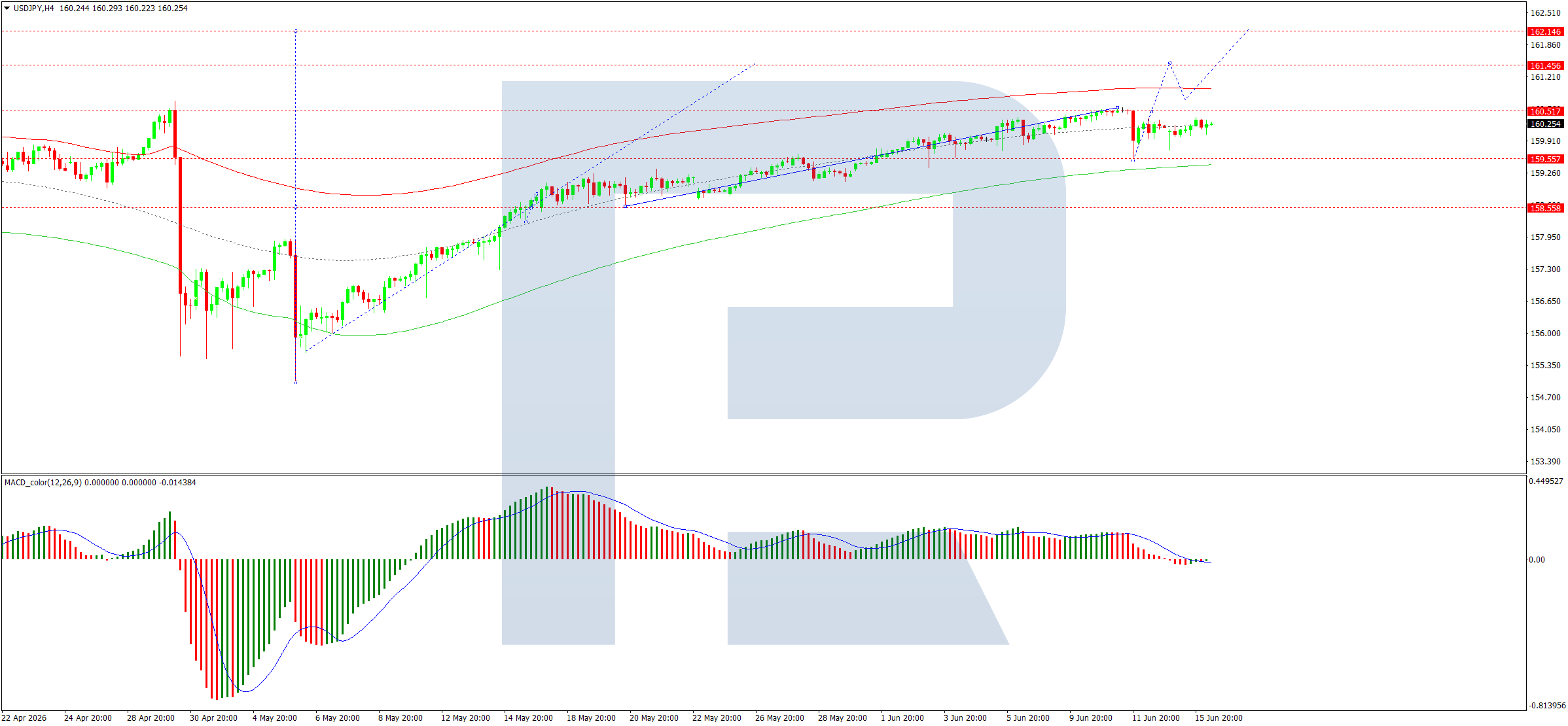
On the H4 chart, USDJPY has formed a consolidation range around 160.20. After breaking upwards, the pair is developing a growth wave structure towards 161.50. Today, we expect this target to be reached, followed by a decline towards 160.30. Technically, this scenario is confirmed by the MACD indicator: its signal line is above zero and pointing firmly upwards, reflecting potential for the continuation of the growth wave.
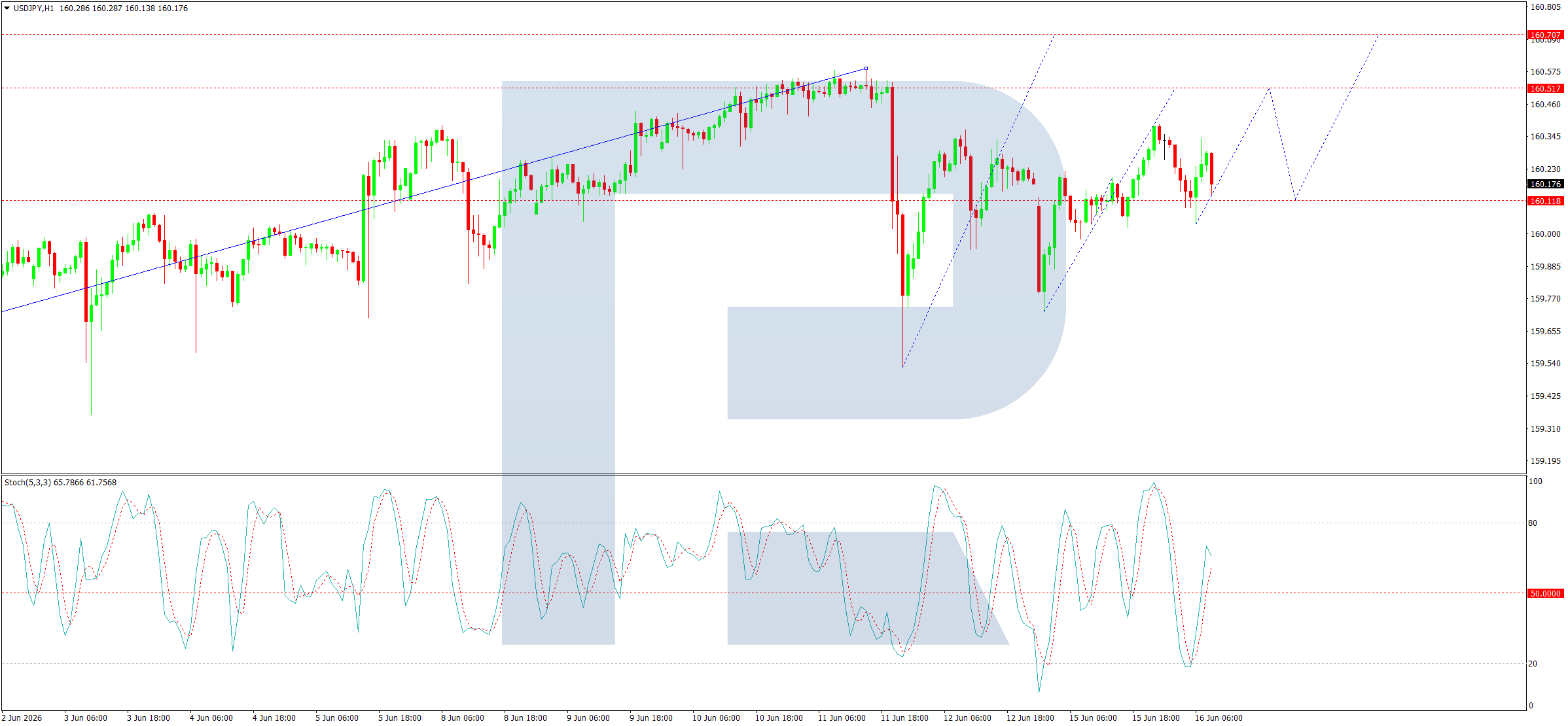
On the H1 chart, the market is forming a growth structure towards 160.51. After that, a correction towards 160.20 may be considered. The pair is then expected to rise towards 160.70, with the potential to continue the trend towards 161.50.
This scenario is supported by the Stochastic oscillator: its signal line is above 50 and moving firmly upwards towards 80, indicating that short-term upside potential remains intact.
Disclaimer
Any forecasts contained herein are based on the author’s particular opinion. This analysis may not be treated as trading advice. RoboForex bears no responsibility for trading results based on trading recommendations and reviews contained herein.

- The US Tech sector hit by sell‑off. Oil prices decline on renewed negotiations Jul 28, 2026
- Gold Declines, Focus on Fed and Falling Oil Prices Jul 28, 2026
- This week will be one of the most crowded for central‑bank meetings Jul 27, 2026
- EUR/USD Ahead of a Key Week: Holding Near Lows Jul 27, 2026
- COT Metals Charts: Weekly Speculator Changes led by Copper Jul 26, 2026
- COT Bonds Charts: Speculator Bets led by SOFR 3-Months & 5-Year Bonds Jul 26, 2026
- COT Energy Charts: Weekly Speculator Bets led by WTI Crude & Natural Gas Jul 26, 2026
- COT Soft Commodities Charts: Weekly Speculator Bets led by Corn & Soybeans Jul 26, 2026
- The US introduces new import tariffs for 60 countries. Brent crude surpasses $100 per barrel Jul 24, 2026
- USD/JPY Breaks Records: Nothing Slows the Yen’s Decline Jul 24, 2026
