
By RoboForex Analytical Department
The New Zealand dollar has plummeted to a five-month low, with the NZD/USD pair touching the 0.5890 mark. This decline was triggered by the release of robust American retail sales data, which raised concerns that the Federal Reserve might delay interest rate cuts expected in 2024.
The prevailing expectation in the stock market is that the Fed will begin its monetary policy easing cycle in September, diverging from the earlier forecast of June. This expectation adjustment has bolstered the US dollar’s position, exerting additional pressure on other currencies.
The Reserve Bank of New Zealand (RBNZ) has maintained its interest rate steady for six consecutive meetings, including a neutral stance in its April meeting. The central bank’s primary objectives are alleviating production capacity pressures and mitigating inflation’s economic impact. Despite signs of weakening economic activity, New Zealand’s annual inflation rate dropped to 4.7% in the quarter ending December – the lowest since Q2 2021. However, inflation remains significantly above the RBNZ’s 1-3% target range.
There are indications that the New Zealand economy entered a technical recession in Q3 2023, with more recent data still awaited.
Technical analysis of NZD/USD
Free Reports:
 Download Our Metatrader 4 Indicators – Put Our Free MetaTrader 4 Custom Indicators on your charts when you join our Weekly Newsletter
 Get our Weekly Commitment of Traders Reports - See where the biggest traders (Hedge Funds and Commercial Hedgers) are positioned in the futures markets on a weekly basis.
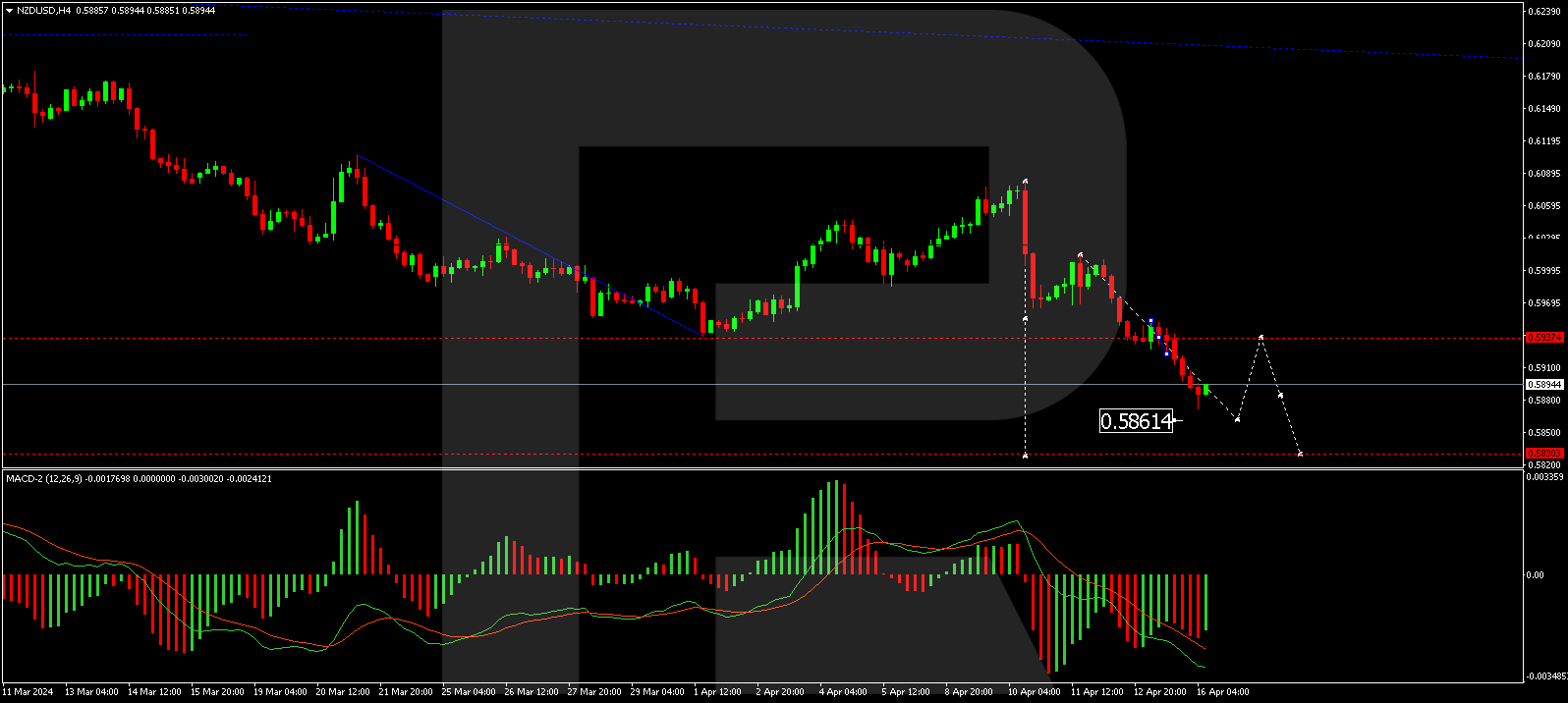
The H4 chart of NZD/USD shows that a consolidation range was established around the 0.5937 level, followed by a downward move to 0.5872. A corrective move back to 0.5900 is possible (testing from below), after which a further decline to 0.5830 is anticipated. This bearish scenario is supported by the MACD indicator, with its signal line positioned below zero and pointing downwards.
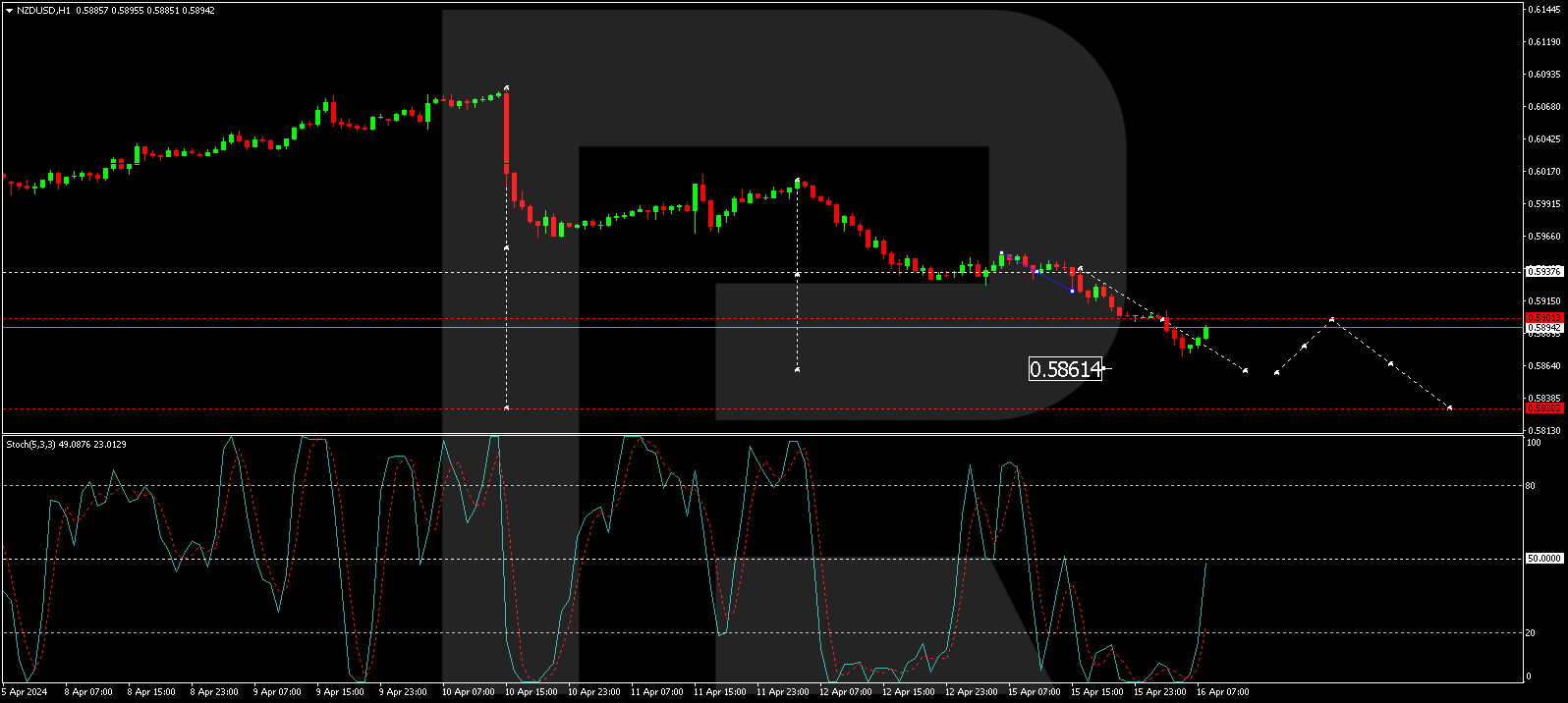
On the H1 chart, the NZD/USD pair continues its downward trajectory towards 0.5854. After completing the decline to 0.5872, a corrective movement to 0.5900 is likely. Subsequently, a new downward phase could target 0.5854, potentially extending towards 0.5830. This outlook is confirmed by the Stochastic oscillator, currently below 20, with an expected rise to 50, indicating the potential for a temporary corrective upswing before continuing the downward trend.
Disclaimer
Any forecasts contained herein are based on the author’s particular opinion. This analysis may not be treated as trading advice. RoboForex bears no responsibility for trading results based on trading recommendations and reviews contained herein.

- Geopolitical and macroeconomic conditions continue to pressure market sentiment Jul 20, 2026
- USD/JPY Poised to Continue Gains as Expensive Oil and Lack of Support Weigh on Yen Jul 20, 2026
- COT Metals Charts: Weekly Speculator Bets led by Copper & Steel Jul 18, 2026
- COT Bonds Charts: Weekly Speculator Bets led by 2-Year, SOFR 3M & 5-Year Bonds Jul 18, 2026
- COT Energy Charts: Weekly Speculator Bets led by Brent Oil & Heating Oil Jul 18, 2026
- COT Soft Commodities Charts: Weekly Speculator Bets led by Wheat, Corn & Soybean Meal Jul 18, 2026
- The Bank of Canada kept its interest rate unchanged. Platinum prices reached a three‑week high Jul 16, 2026
- Stock indices rose after the release of US inflation data. China’s GDP slowed sharply Jul 15, 2026
- GBP/USD Awaits Political News: What Will Happen Next Jul 15, 2026
- USD/JPY Holds at Highs: Pressure Lingers on Yen Jul 14, 2026
