Archive for Economics & Fundamentals – Page 9

RBA may hike rates as early as May. Natural gas prices plunge to a 4-month low

By JustMarkets 

The US stock market demonstrated growth on Tuesday. By the close of trading, the Dow Jones (US30) rose by 0.76%, the S&P 500 (US500) gained 0.77%, and the technology-heavy Nasdaq (US100) closed higher by 1.09%. The main driver of optimism was a shift in the perception of risks associated with artificial intelligence: investors moved from fears regarding the displacement of traditional software to a realization of AI’s potential as a powerful supplement to existing business processes. The true victor of the day was AMD, whose shares soared by 8.8% (peaking at a 14% gain) following the announcement of a massive contract with Meta. This deal, bolstered by warrants for Meta to purchase AMD shares, confirms AMD’s status as a serious competitor to Nvidia.

Equity markets in Europe mostly declined on Tuesday. The German DAX (DE40) edged down by 0.02%, the French CAC 40 (FR40) closed up 0.26%, the Spanish IBEX 35 (ES35) dropped 0.54%, and the British FTSE 100 (UK100) closed at negative 0.04%. After a sharp fall the day before, the market entered a phase of cautious anticipation. Traders attempted to ignore the negative backdrop surrounding the AI sector, drawing optimism from the strong news out of Meta and awaiting tomorrow’s Nvidia report, which will be a defining moment for European tech stocks.

WTI oil prices recovered to $66.20 per barrel on Wednesday, breaking a two-day decline. The market has paused in anticipation of the third round of nuclear negotiations in Geneva: positive signals from Tehran regarding a readiness for a deal are clashing with Donald Trump’s harsh rhetoric. The primary factor of uncertainty remains security in the Strait of Hormuz, as any diplomatic failure threatens the transit of 20% of the world’s oil supply. Additional pressure on quotes is exerted by the implementation of the US 10% tariff. Traders fear that an escalation of trade wars and a possible hike in duties to 15% will slow global economic growth, inevitably leading to a drop in energy demand.

Silver prices (XAG) declined by nearly 1%, reaching $87.50 per ounce. Mass liquidation of assets on Chinese exchanges outweighed the global demand for safe-haven assets that arose amid the introduction of US 15% tariffs and expectations regarding the nuclear talks with Iran. The silver market remains in a correction phase following the shock collapse of 38% at the beginning of the month.

The US natural gas prices (XNG) fell below the $3 per MMBtu mark on Tuesday, reaching their lowest level since October. The primary factor for the decline was updated weather prognoses from NOAA, indicating abnormally high temperatures in the Western and Central states through the end of February. Weakening heating demand at the end of the winter season forced traders to reassess the likelihood of a fuel deficit, resulting in a sharp sell-off.

Asian markets traded with mixed dynamics yesterday. The Japanese Nikkei 225 (JP225) rose by 0.87%, the Chinese FTSE China A50 (CHA50) showed a modest gain of 0.14%, the Hong Kong Hang Seng (HK50) fell by 1.82%, and the Australian ASX 200 (AU200) showed a negative result of 0.04%.
The economy of Hong Kong demonstrated robust growth of 3.8% in the fourth quarter of 2025, marking its best performance in two years. Strengthening business confidence amid real estate market stabilization and the active implementation of AI technologies allowed the year to close with total GDP growth of 3.5%, significantly exceeding the 2024 result (2.6%). For 2026, growth rates are projected to remain in the range of 3.3-3.6%, provided that external trade frictions do not exert a critical impact on the logistics hub.

The Australian dollar (AUD) strengthened to 0.70 USD on Wednesday, reacting to unexpectedly high inflation data. The January figure of 3.8% (against projections of 3.7%) and an increase in core inflation to 3.4% confirmed market fears: price pressure in Australia remains persistent. Amid historically low unemployment and strong wage growth, these figures make the RBA the most “hawkish” among major central banks. Markets now see a 70% probability of a rate hike to 4.1% as early as May, with the prospect of another move in November.

S&P 500 (US500) 6,890.07 +52.32 (+0.77%)

Dow Jones (US30) 49,174.50 +370.44 (+0.76%)

DAX (DE40) 24,986.25 −5.72 (−0.02%)

FTSE 100 (UK100) 10,680.59 −4.15 (−0.04%)

USD Index 97.87 +0.16% (+0.16%)

News feed for: 2026.02.25

  • Australia Consumer Price Index (m/m) at 02:30 (GMT+2); – AUD (HIGH)
  • German GDP (q/q) at 09:00 (GMT+2); – EUR (MED)
  • German GfK Consumer Confidence (m/m) at 09:00 (GMT+2); – EUR (LOW)
  • Hong Kong Inflation Rate (m/m) at 10:30 (GMT+2); – HKD (MED)
  • Australia RBA Gov Bullock Speaks at 10:40 (GMT+2); – AUD (LOW)
  • Eurozone Consumer Price Index (m/m) at 12:00 (GMT+2); – EUR (MED)
  • US Crude Oil Reserves (w/w) at 17:30 (GMT+2). – WTI (HIGH)

By JustMarkets


This article reflects a personal opinion and should not be interpreted as an investment advice, and/or offer, and/or a persistent request for carrying out financial transactions, and/or a guarantee, and/or a forecast of future events.

Supreme Court rules against Trump’s emergency tariffs – but leaves key questions unanswered

By Kent Jones, Babson College 

President Donald Trump’s economic agenda took a major hit when the Supreme Court struck down many of his most sweeping tariffs. While Trump has options to restore some of the tariffs, he’s losing his most powerful tool to impose them almost at will as a bargaining chip with other countries.

In a 6-3 decision on Feb. 20, 2026, the court ruled that Trump’s use of the International Emergency Economic Powers Act of 1977 to unilaterally impose tariffs on other countries was unconstitutional. Since January 2025, Trump has used the act to impose tariffs on nearly every other country.

As a trade economist, I wasn’t particularly surprised by the ruling. In the oral arguments, several justices were openly skeptical about the president’s ability to claim virtually unlimited powers to set tariffs without specific congressional language to authorize them. While the ruling answers some questions about the legality of Trump’s tariffs, it leaves many others unanswered.

What are the tariffs the court ruled against?

The tariffs that the court ruled are illegal include the “reciprocal” tariffs Trump imposed to match the value of trade barriers set by other countries. They ranged from 34% on China to a baseline of 10% for the rest of the world.

They also include a 25% tariff on some goods from Canada, China and Mexico over those countries’ supposed failure to curb the flow of fentanyl into the U.S.

By striking down these tariffs, the Supreme Court will presumably force U.S. tariff schedules to revert to the status quo before they were imposed on April 2, 2025, or “liberation day,” as Trump called it.

Why did the Supreme Court rule against the tariffs?

Most of the tariffs Trump has imposed used the International Emergency Economic Powers Act to provide legal justification. While the law allows the president to respond to economic emergencies with measures such as embargoes and asset seizures, it does not specifically authorize the use of tariffs imposed unilaterally.

This was a major point made in the Supreme Court decision. In every other statute available to the president to use tariffs, there is specific language stating the way in which tariffs can be imposed, language that is absent in the International Emergency Economic Powers Act statute.

The majority decision, in which the court’s liberal justices were joined by three of its conservatives, determined that the president overreached his powers to set tariffs, based on Article 1, Section 8, of the U.S Constitution. Any delegation of tariff-making powers in an emergency to the president must be consistent with this provision.

It is also noteworthy that Trump openly declared that one of the benefits of the tariffs was how much revenue they bring in. But the majority decision noted that this represented an unauthorized presidential power to tax, which is also governed by the Article 1, Section 8, provision that assigns this power exclusively to Congress.

What does this mean for Trump’s trade policy?

Trump used the International Emergency Economic Powers Act tariffs as leverage to negotiate numerous bilateral deals with U.S. trading partners. Now that the tariffs have been declared unconstitutional, many countries may demand that the deals be renegotiated.

The decision does not cover all of the administration’s tariffs, including national security tariffs imposed under Section 232 for specific industries such as autos, steel and aluminum, and Section 301, a statute that allows the president to impose tariffs against individual countries if they have imposed unfair or discriminatory trade actions against the U.S. This covers some of the tariffs on imports from China.

What other options does Trump have to achieve similar results?

Trump has often used or threatened to use International Emergency Economic Powers Act tariffs for political reasons, including against Brazil over its prosecution of a former president, Mexico over immigration and Canada over its plans to sign a trade deal with China, and other reasons.

The Supreme Court decision will make it more difficult for Trump to use tariffs and tariff threats in that way. One outcome is that constitutional limits the justices set on presidential tariff-making powers should constrain the justification of tariffs for political reasons.

The main avenues for new tariffs in response to the Supreme Court decision are sections 232 and 301. The president could potentially try to get Congress to pass new legislation expanding his tariff powers, but that seems unlikely in an election year.

However, it is important to understand that he chose to use the International Emergency Economic Powers Act as the mainspring of his trade policy because he interpreted it as providing him with full discretion in the unlimited power to impose tariffs without further congressional constraints.

In order to impose similar tariffs under Section 232, for example, each tariff order must be focused on a single industry, and the Commerce Department must issue a report documenting the emergency as it applies to that industry. Presumably, Trump will be preparing to use Section 232 for a large numbers of industries in addition to those currently covered by that statute.

For at least some of the countries with which Trump has already negotiated bilateral trade deals, many of their exports would not be covered by Section 232 tariffs, hence the likelihood that those countries will demand a renegotiation.

Will US companies get refunds for the tariffs they’ve already paid?

The Supreme Court decision appears not to address the question of tariff rebates, but many companies have already indicated that they will demand them.

In principle, any U.S. company in possession of tariff receipts documenting their payment of tariffs would be eligible for a refund if the Supreme Court approves this remedy.

What are the political consequences of this decision?

Since public opinion about Trump’s tariffs is already negative, the president will have to deal with a likely backlash against any attempts to replace the rejected tariffs with new ones.

It will be interesting to see how Republicans in Congress react to Trump’s tariff strategy in view of the upcoming midterm elections. For example, Republicans from states that border Canada may push back against further efforts to curb trade with their northern neighbor.

This may impose a further constraint on Trump’s tariff policy.The Conversation

About the Author:

Kent Jones, Professor Emeritus, Economics, Babson College

This article is republished from The Conversation under a Creative Commons license. Read the original article.

Supreme Court delivers Trump a heavy tariff blow

By ForexTime 

  • Supreme Court strikes down Trump’s tariffs 6-3
  • Trump announces new global tariffs of up to 15%
  • USD set for big week due to high-risk events
  • Precious metals rally on risk-off mode

After the Supreme Court ruled against Trump’s tariffs on Friday, he fought back, announcing new global tariffs of 10% – which were hiked to 15% over the weekend.

This development has certainly opened a can of worms:

  • The $175 billion problem – The US government may have to refund ~$175 billion in duties already collected. *Note: Polymarket are forecasting a 20% chance*
  • Fiscal woes – Tariffs were projected to bring in trillions of dollars over the course of Trump’s term and beyond. With this gone, the fiscal outlook deteriorated further.
  •  Existing trade deals – Senior US officials have also urged that Trump’s defeat won’t unravel deals negotiated with trade partners…

Renewed global trade uncertainty could spell trouble for US equities while supporting safe-haven assets.

Markets kicked off Sunday evening with price gaps from Friday’s close as investors reacted to the weekend turmoil.

  • USDInd: -0.3%
  •  XAUUSD: +1%
  • XAGUSD: +3%


USDInd set for rollercoaster week?

DID YOU KNOW:

FXTM’s USDInd has gained roughly 1% month-to-date with prices lingering below 98.00.

WHAT COULD MOVE USDInd THIS WEEK:

It could be a pivotal week for the greenback thanks to a triple risk cocktail revolving around Trump.

  • Trump’s tariff chaos: A renewed sense of uncertainty over global trade following the Supreme Court’s decision and the ramifications it may have on the US economy could hit the dollar.
  • Trump’s State of the Union address: On Tuesday, President Trump will deliver the first State of the Union address of his second term. Any comments on the economy, immigration, and foreign policy may shake the greenback.
  • Trump’s threat to strike Iran: The United States and Iran are to hold the next round of nuclear talks in Geneva on Thursday after tensions escalated in recent days. Whatever the outcome of the talks may impact the US dollar.

Beyond these high-impact events, top US data and speeches by various Fed officials could add to the overall volatility.

POTENTIAL SCENARIOS:

  • BULLISH: A strong daily close above 98.00 may open a path toward the 200-day SMA, 100-day SMA and 99.00.
  • BEARISH: Weakness below 98.00 could signal a decline toward 97.00 and 96.50.


Forex-Time-LogoArticle by ForexTime


ForexTime Ltd (FXTM) is an award winning international online forex broker regulated by CySEC 185/12 www.forextime.com

EU and India begin freezing trade dialogues with the US over Trump’s new tariff initiative

By JustMarkets 

On Monday, February 23, the US stock market was hit by a wave of sell-offs, resulting in a deep decline across major indices. By the end of trading, the Dow Jones (US30) fell by 1.66%, the S&P 500 (US500) dropped 1.04%, and the Nasdaq (US100) closed 1.13% lower. The primary pressure on the market came from a sharp shift in White House trade policy: after the Supreme Court blocked previous duties, Donald Trump utilized the rare mechanism of Section 122 of the Trade Act of 1974, setting a global tariff at 15%. Investors fear that this measure, which remains in effect for 150 days without Congressional approval, will trigger full-scale trade wars, a concern already confirmed by the European Parliament’s decision to suspend work on a trade agreement with the US.

In parallel with political risks, the technology sector was struck by fears regarding the disruptive impact of artificial intelligence on established business models. IBM shares plummeted 13.1% as a reaction to Anthropic’s launch of new Claude Code tools capable of automating the modernization of legacy code (COBOL), threatening a significant portion of IBM’s consulting and mainframe business. Similar dynamics were observed in the financial sector: American Express shares fell 7.2% after the publication of a sensational report by Citrini Research, which predicts massive white-collar job cuts due to AI implementation, inevitably leading to a decline in consumer spending and transaction volumes.

On Monday, the Canadian dollar (CAD) declined to the 1.37 mark against the US dollar, holding near monthly lows. The currency’s dynamics reflect the market’s attempt to balance the sharp tightening of US trade policy against weakening domestic inflation expectations. Short-term optimism sparked by the US Supreme Court’s decision to overturn previous duties was entirely neutralized by Donald Trump’s retaliatory move. On the commodities front, even a moderate strengthening of oil prices failed to support the “loonie.” Renewed protectionist risks and the threat of a large-scale trade confrontation with its largest partner outweigh any positive signals from the energy market.

The Mexican peso (MXN) weakened to 17.27 per US dollar, retreating from its mid-2024 peaks under the pressure of a new wave of American protectionism. The main factor for the decline was Donald Trump’s decision to invoke Section 122 of the Trade Act to introduce a 15% global tariff. This step, taken by bypassing the Supreme Court’s decision, creates serious risks for Mexico’s export model, as the 150-day tariff period could become a tool for heavy pressure on Mexico City regarding migration and security issues. Despite positive macroeconomic data from Mexico itself, where Q4 2025 GDP grew by 0.9% thanks to service sector resilience and industrial recovery, investors prefer to exit the peso.

Equity markets in Europe mostly declined on Monday. The German DAX (DE40) fell by 1.06%, the French CAC 40 (FR40) closed down 0.22%, the Spanish IBEX 35 (ES35) rose by 0.56%, and the British FTSE 100 (UK100) closed at negative 0.02%. The German market demonstrated weaker dynamics compared to other European platforms as investors reacted painfully to Donald Trump’s new tariff initiative. The situation is exacerbated by legal confusion. The European Parliament’s decision to freeze the ratification of the trade agreement with Washington until March triggered mass sell-offs in the Eurozone’s export-oriented industries. Investors are redistributing capital toward less volatile assets while awaiting official clarifications from Washington regarding the fate of existing transatlantic agreements.

WTI oil prices traded around $66.50 per barrel on Monday, holding near six-month highs. The market is in a state of tense anticipation, balancing signals of a possible diplomatic detente against threats of new trade barriers. Traders’ primary focus is on the meeting in Geneva at the end of the week, where the Iranian Foreign Minister and US Ambassador Steve Witkoff will attempt to find a way out of the nuclear impasse. Optimistic statements from Tehran regarding a reachable compromise have somewhat calmed investors; however, the risk of failed negotiations is still priced into current quotes.

Asian markets traded with mixed dynamics last week. The Japanese Nikkei 225 (JP225) and the Chinese FTSE China A50 (CHA50) did not trade yesterday, the Hong Kong Hang Seng (HK50) rose by 2.53%, and the Australian ASX 200 (AU200) showed a negative result of 0.61%. Market sentiment is largely defined by uncertainty surrounding Washington’s tariff policy. Donald Trump’s decision to introduce a 15% global tariff in response to the Supreme Court verdict and his threats against countries “playing games” with trade agreements are forcing investors to seek refuge in Chinese and Hong Kong protective government assets. Trump’s new flat rate may actually reduce the overall tariff burden on Chinese exports compared to previous “emergency” duties, which is preventing the market from entering a state of panic selling.

The yield on China’s 10-year government bonds decreased to 1.79% on Tuesday, February 24, returning to three-month lows. The return of investors after the Lunar New Year celebrations took place in an atmosphere of caution, caused by both external trade shocks and Beijing’s restrained stance. The People’s Bank of China (PBoC) maintained its Loan Prime Rates (LPR) for the ninth consecutive time at 3.0% for one-year and 3.5% for five-year loans, confirming that authorities do not plan aggressive policy easing in the near term, preferring targeted support measures for specific sectors.

Also in the spotlight were sensational reports from Japanese media regarding hidden mechanisms for supporting the yen. It was revealed that in January, the US authorities, on their own initiative, conducted “rate checks”, a procedure that usually precedes actual currency interventions. This operation was led by US Treasury Secretary Scott Bessent. Washington took this step without an official request from Tokyo, fearing that the political vacuum and volatility ahead of the recent general elections in Japan (held on February 8) could destabilize not only the Yen but also the global bond market.

S&P 500 (US500) 6,837.75 −71.76 (−1.04%)

Dow Jones (US30) 48,804.06 −821.91 (−1.66%)

DAX (DE40) 24,991.97 −268.72 (−1.06%)

FTSE 100 (UK100) 10,684.74 −2.15 (−0.02%)

USD Index 97.72 −0.08% (−0.08%)

News feed for: 2026.02.24

  • China PBoC Loan Prime Rate at 03:00 (GMT+2); – CHA50, HK50 (HIGH)
  • UK Monetary Policy Report Hearings at 16:15 (GMT+2); – GBP (LOW)
  • US CB Consumer Confidence (m/m) at 17:00 (GMT+2). – USD (MED)

By JustMarkets


This article reflects a personal opinion and should not be interpreted as an investment advice, and/or offer, and/or a persistent request for carrying out financial transactions, and/or a guarantee, and/or a forecast of future events.

Supreme Court rules Trump administration’s reciprocal tariffs unlawful

By JustMarkets 

On Friday, trading on the US stock market ended with gains. By the end of Friday, the Dow Jones Index (US30) jumped by 0.47% (+0.38% for the week). The S&P 500 Index (US500) rose by 0.69% (+1.10% for the week). The technology-heavy Nasdaq Index (US100) closed higher by 0.87% (+1.42% for the week). The positive dynamics were triggered by a Supreme Court decision that ruled the Trump administration’s reciprocal tariffs unlawful, sparking hopes for the return of approximately $175 billion to companies. Despite weak GDP data (+1.4%) and the President’s immediate promise to introduce a new 10% global tariff via executive order, investors focused on the short-term legal triumph. In the short term, traders are forced to balance optimism from court rulings against new regulatory risks that continue to pressure long-term yield expectations.

On Friday, the Canadian dollar (CAD) declined to the 1.37 level against the US dollar, hitting a monthly low amid strengthening US bonds and a correction in the energy market. Despite the positive momentum from the US Supreme Court decision overturning global trade tariffs, Canada’s national currency came under pressure due to the widening yield gap with US assets. The Fed’s hawkish stance, supported by PCE inflation data at 3%, contrasts with the wait-and-see tactics of the Bank of Canada (BoC), which is holding the rate at 2.25% while the Domestic Consumer Price Index slows to 2.6%.

The Mexican peso (MXN) demonstrated a confident rally, strengthening past the 17.15 per dollar mark, its best performance in a year and a half. The main driver of optimism was the US Supreme Court decision, which annulled the Trump administration’s global tariffs, thereby eliminating a critical risk for Mexico’s export sector. Investors remain focused on the policy of the Bank of Mexico (Banxico), whose strategy of maintaining high interest rates continues to provide significant support to the peso amid fading trade uncertainty.

On Monday, the price of Bitcoin (BTC) dropped below $65,000, reaching its lowest level in more than two weeks. Pressure on the market intensified amid renewed concerns surrounding US tariff policy, which triggered volatility in global markets. Recently, Bitcoin and the broader digital asset market have shown weak dynamics compared to other asset classes.

Equity markets in Europe mostly rose on Friday. The German DAX (DE40) increased by 0.87% (+1.09% for the week), the French CAC 40 (FR40) closed up 1.39% (+2.31% for the week), the Spanish IBEX 35 (ES35) gained 0.94% (+2.47% for the week), and the British FTSE 100 (UK100) closed at positive 0.56% (+2.30% for the week). European stock indices started the week with a decline amid intensifying trade confrontation with the US. Investors are reacting to Donald Trump’s decision to raise the announced global levy from 10% to 15%, the maximum level allowed under the 1974 law, after the US Supreme Court blocked his previous protectionist executive orders. The EU’s reaction was immediate: Brussels called on Washington to respect previously reached agreements and threatened to freeze the ratification of current trade agreements until legal clarifications are received from the American side. Despite assurances from US officials about maintaining the status quo for key partners, supply chain uncertainty is driving traders out of risky assets.

WTI oil prices ended the week with a confident gain of 5%, stabilizing around $66 per barrel. The main catalyst for the rally was a sharp increase in geopolitical risks: Donald Trump’s ultimatum to Iran and a massive buildup of the US military presence in the Middle East sparked fears regarding the stability of supplies through the Strait of Hormuz. Since Iran accounts for about 3% of global production, a potential conflict threatens significant volumes of crude, forcing investors to price in a high risk premium. Traders continue to closely monitor Tehran’s 15-day deadline, expecting further volatility depending on the outcome of nuclear negotiations.

US natural gas (XNG) prices ended Friday’s trading with a sharp jump above $3.1 per MMBtu, gaining more than 4% amid expected cold weather in the Northeast. Despite this local spike, quotes showed negative dynamics for the full week, losing about 4% in value. The main pressure on the market is exerted by a significant increase in production across the Lower 48 states, which in February closely approached the historical highs of December, reaching 108.7 billion cubic feet per day, offsetting concerns about supply shortages. Even maintaining record LNG export volumes cannot fully compensate for excessive domestic production and subdued heating demand, which limits the potential for a long-term price recovery.

Asian markets traded with mixed dynamics last week. The Japanese Nikkei 225 (JP225) declined by 0.68% over the trading week, the Chinese FTSE China A50 (CHA50) did not trade due to the Lunar New Year celebrations, the Hong Kong Hang Seng (HK50) depreciated by 3.06% during the short week, and the Australian ASX 200 (AU200) showed a positive result of 1.52% over the 5 days.

The Hong Kong Hang Seng Index showed an impressive 2.4% gain at Monday’s opening, reaching 27,056 points. Optimism swept through all sectors amid expectations for the reopening of mainland China markets after the Lunar New Year holiday. Investors interpreted Trump’s new 15% tariff as a measure that could unexpectedly play into Beijing’s hands by strengthening China’s position in global trade alliances. The Hong Kong market is currently acting as a leading indicator, pricing in a scenario where pragmatism in US-China relations outweighs tariff threats.

S&P 500 (US500) 6,909.51 +47.62 (+0.69%)

Dow Jones (US30) 49,625.97 +230.81 (+0.47%)

DAX (DE40) 25,260.69 +217.12 +(0.87%)

FTSE 100 (UK100) 10,686.89 +59.85 (+0.56%)

USD Index 97.79 −0.14% (−0.14%)

News feed for: 2026.02.23

  • Singapore Inflation Rate (m/m) at 07:00 (GMT+2); – SGD (MED)
  • German Ifo Business Climate (m/m) at 11:00 (GMT+2); – EUR (MED)
  • Mexico GDP (q/q) at 14:00 (GMT+2); – MXN (MED)
  • Eurozone ECB President Lagarde Speaks at 19:30 (GMT+2). – EUR (MED)

By JustMarkets


This article reflects a personal opinion and should not be interpreted as an investment advice, and/or offer, and/or a persistent request for carrying out financial transactions, and/or a guarantee, and/or a forecast of future events.

Oil prices continue to rise amid escalating geopolitical tensions

By JustMarkets 

On Thursday, trading on the US stock market concluded with a decline. By the end of the day, the Dow Jones index (US30) fell by 0.54%. The S&P 500 (US500) declined by 0.28%. The tech-heavy Nasdaq (US100) closed lower by 0.41%. The catalyst for profit-taking was the FOMC minutes, which pointed to the risk of prolonged deflation and the permissibility of additional policy tightening, heightening investor caution. Against this backdrop, long-term government bond yields rose. Rising commodity prices supported the energy sector, while banking stocks came under pressure.

European markets ended the day with a drop. Germany’s DAX (DE40) declined by 0.93%, France’s CAC 40 (FR40) closed down 0.36%, Spain’s IBEX 35 (ES35) fell by 0.99%, and the UK’s FTSE 100 (UK100) closed at negative 0.55%. Within the European region, investor sentiment is dictated by potential reshuffles in the financial leadership. Reports of a likely early resignation of Christine Lagarde as head of the ECB, as well as the resignation of Bank of France Governor François Villeroy de Galhau in June 2026, are creating a backdrop of political uncertainty. Despite the personnel rumors, a stable inflation level in the Eurozone suggests that the regulator will keep current monetary policy parameters unchanged until the end of this year.

WTI oil quotes closed in on the $66.5 per barrel mark, hitting half-year highs amid a sharp escalation of geopolitical tensions. The primary driver of growth is the risk of a large-scale military conflict between the US and Iran, fueled by statements regarding a potential forceful operation and Israel’s demands for a change in Tehran’s political course. The situation is exacerbated by a narrowing diplomatic space for maneuver and the potential threat of a blockade of the Strait of Hormuz, which is a key artery for one-third of the world’s maritime hydrocarbon exports. In parallel with foreign policy factors, price support came from unexpected data from the US Department of Energy, which recorded a rapid drop in domestic crude reserves by 9 million barrels. This significant decline in inventories during the second week of February completely refuted conservative analyst prognoses that had expected a moderate market surplus.

Natural gas prices (XNG) in the US stabilized around $3.0 per MMBtu, holding near four-month lows amid a noticeable weakening of the market balance. A key downward factor is the active recovery of production in the Lower 48 states, which in February approached historic highs, reaching 108.7 billion cubic feet per day (bcf/d). Despite continued LNG exports at record levels, total supply confidently covers current system requirements, neutralizing concerns regarding resource shortages. EIA data confirms that the rate of inventory decline is trailing both last year’s figures and the five-year averages. Although the current volume of reserves remains 6% below the norm, experts expect this gap to be fully eliminated by the beginning of March. The combination of excess production and expected warming deprives quotes of growth incentives, consolidating the downward trend in the gas segment.

Asian markets traded mostly higher yesterday. Japan’s Nikkei 225 (JP225) rose by 0.57%, China’s FTSE China A50 (CHA50) did not trade due to Lunar New Year celebrations, Hong Kong’s Hang Seng (HK50) also did not trade, and Australia’s ASX 200 (AU200) showed a positive result of 0.88%.
The New Zealand dollar (NZD) showed a notable weakness, settling at a four-week low near the $0.595 level. Pressure on the currency was exerted by the rhetoric of the new head of the Reserve Bank of New Zealand (RBNZ), Anna Breman, who, after maintaining the base rate at 2.25%, signaled no rush to tighten monetary conditions. Although inflation at the end of 2025 slightly exceeded the target range, reaching 3.1%, the regulator expressed confidence in its return to the 2% target within the year without aggressive intervention. A revision of investor expectations led to a sharp drop in the probability of a rate hike in the coming months: the chances of an increase in September plunged from 68% to 40%.

Bank Indonesia (BI) in February 2026 maintained its benchmark interest rate at 4.75%, which was fully in line with analyst projections. This decision by the regulator was dictated by the need to stabilize the national currency, which is under pressure near historic lows due to risks of sovereign rating downgrades by Moody’s and MSCI. Against a backdrop of global financial volatility, the central bank aims to keep inflation within the target corridor and ensure the sustainability of economic growth.

S&P 500 (US500) 66,861.89 −19.42 (−0.28%)

Dow Jones (US30) 49,395.16 −267.50 (−0.54%)

DAX (DE40) 25,043.57 −234.64 (−0.93%)

FTSE 100 (UK100) 10,627.04 −59.14 (−0.55%)

USD Index 97.84 +0.14% (+0.14%)

News feed for: 2026.02.20

  • Australia Manufacturing PMI (m/m) at 00:00 (GMT+2); – AUD (MED)
  • Australia Services PMI (m/m) at 00:00 (GMT+2); – AUD (MED)
  • Japan Inflation Rate (m/m) at 01:30 (GMT+2); – JPY (HIGH)
  • Japan Manufacturing PMI (m/m) at 02:30 (GMT+2); – JPY (MED)
  • Japan Services PMI (m/m) at 02:30 (GMT+2); – JPY (MED)
  • UK Retail Sales (m/m) at 09:00 (GMT+2); – GBP (MED)
  • Eurozone Manufacturing PMI (m/m) at 11:00 (GMT+2); – EUR (MED)
  • Eurozone Services PMI (m/m) at 11:00 (GMT+2); – EUR (MED)
  • UK Manufacturing PMI (m/m) at 11:30 (GMT+2); – GBP (MED)
  • UK Services PMI (m/m) at 11:30 (GMT+2); – GBP (MED)
  • Canada Retail Sales (m/m) at 15:30 (GMT+2); – CAD (MED)
  • US PCE Price Index (m/m) at 15:30 (GMT+2); – USD (HIGH)
  • US GDP (m/m) at 15:30 (GMT+2); – USD (HIGH)
  • US Manufacturing PMI (m/m) at 16:45 (GMT+2); – USD (MED)
  • US Services PMI (m/m) at 16:45 (GMT+2); – USD (MED)
  • US New Home Sales (m/m) at 17:00 (GMT+2). – USD (LOW)

By JustMarkets


This article reflects a personal opinion and should not be interpreted as an investment advice, and/or offer, and/or a persistent request for carrying out financial transactions, and/or a guarantee, and/or a forecast of future events.
Week In Review: Brent rallies, hawkish Fed minutes, US PCE in focus

By ForexTime 

  • Mixed week for equities due to lack of catalyst
  • Brent hits $71 on geopolitical risk
  • Hawkish Fed minutes hit rate cut bets
  • Gold on standby ahead of US PCE

It has been a relatively quiet week for markets due to the absence of any significant fundamental drivers.

US equities got off to a slow start due to the public holiday on Monday, while Chinese markets were closed all week thanks to the Lunar New Year. Lingering worries over the outlook for artificial intelligence promoted some volatility, but this was nothing special compared to previous weeks.

Yesterday evening, the Fed minutes showed several officials suggesting the central bank may need to raise rates if inflation remains stubbornly high. With only two dissenters favoring a cut and no indications of further easing, this shaved Fed cut bets for 2026.

Before the meeting, traders were pricing a 50% chance of three Fed cuts this year; this figure had dipped to under 30%.

In response, the dollar gained with FXTM’s DXY punching above 97.70.

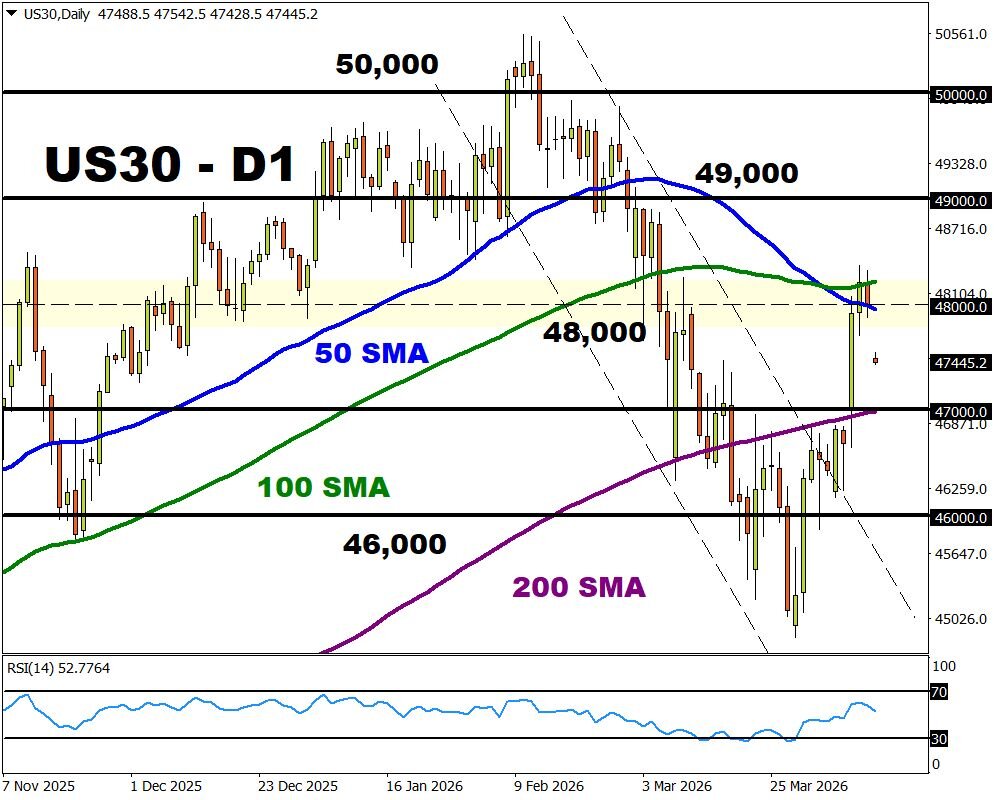
Prices are turning bullish on the daily charts with a solid breakout above 98.00, opening a path toward the 200-day and 10-day SMA.

Looking at commodities, oil extended its biggest daily jump since October amid mounting geopolitical risk. Growing concerns around the US and Iran sinking deeper into a fresh conflict sparked fears around supply.

Brent touched $71 a barrel on Wednesday after rallying over 4% on Wednesday. Oil benchmarks have gained over 15% year-to-date, with the risk of conflict pushing prices higher.

Indeed, a potential war in the region that pumps about a third of the world’s oil could result in major supply disruptions – boosting oil prices.

It’s been a flat week for gold with prices hovering around $5000. The precious metal seems to be waiting for the incoming US PCE/GDP combo which may shape Fed cut bets. A strong breakout above $5000 may open a path toward $5100. Weakness below $5000 could see prices test $4900.


Forex-Time-LogoArticle by ForexTime


ForexTime Ltd (FXTM) is an award winning international online forex broker regulated by CySEC 185/12 www.forextime.com

European indices hit new highs. Oil prices jump 4%

By JustMarkets 

On Wednesday, trading on the US stock market concluded with moderate gains. By the end of the day, the Dow Jones index (US30) rose by 0.23%. The S&P 500 (US500) climbed by 0.56%. The tech-heavy Nasdaq (US100) closed higher by 0.80%. The minutes from the January FOMC meeting revealed a divergence of positions within the US Federal Reserve regarding the future rate trajectory. Some participants allow for a resumption of federal funds rate cuts if inflation slows further, while others insist on maintaining current policy parameters for an extended period, and some do not rule out tightening in the event of persistently elevated price pressure. At the same time, the majority noted a decrease in risks to the labor market but highlighted lingering threats from inflation. The overall tone of the document emphasizes a cautious approach and the dependence of future decisions on incoming macro data.

European markets ended Tuesday with gains. Germany’s DAX (DE40) rose by 1.12%, France’s CAC 40 (FR40) closed up 0.81%, Spain’s IBEX 35 (ES35) gained 1.35%, and the UK’s FTSE 100 (UK100) closed up 1.23%. The French CAC 40 Index hit a new all-time high at 8,429 points amid slowing inflation and steady demand for defense and financial stocks. Annual price growth in France fell to 0.3% in January, a low since late 2020, which bolstered expectations that the ECB will maintain a dovish course. The British FTSE 100 also reached a record high, exceeding 10,691 points, as UK inflation slowed to 3%, its lowest level since March 2025. Lower prices for fuel, airfare, food, and education fueled expectations of Bank of England policy easing, supporting demand for equities.

WTI prices jumped by more than 4%, exceeding $65 per barrel and hitting monthly highs amid supply tightening and strengthening demand in Asia. According to the International Energy Agency, winter disruptions and export restrictions reduced global production by approximately 1.2 million barrels per day in January, while active purchasing from China and India further tightened available volumes on international markets. Geopolitical tensions in the Middle East and risks to shipping through the Strait of Hormuz added to the risk premium.

Palladium (XPD) prices exceeded $1,700, reaching a weekly high amid a general strengthening of platinum group metals despite a strong dollar. Prices were further supported by signals from China, where new measures to stabilize the automotive sector are intended to offset a sharp drop in sales in January. Expectations of an automotive market recovery are boosting demand prognoses for palladium, which is widely used in catalytic converters.
Asian markets traded mostly higher yesterday. Japan’s Nikkei 225 (JP225) rose by 1.02%, China’s FTSE China A50 (CHA50) will not trade for the entire week due to Lunar New Year celebrations, Hong Kong’s Hang Seng (HK50) also did not trade yesterday, and Australia’s ASX 200 (AU200) showed a positive result of 0.54%.

The Australian dollar (AUD) strengthened to 0.706, holding near three-year highs on the back of resilient employment data. Unemployment remained at 4.1% in January, a seven-month low, while the number of employed persons increased by 17.8k, confirming labor market tightness and strengthening the case for further Reserve Bank of Australia (RBA) policy tightening. Markets increased the probability of a rate hike to 4.10% in May to approximately 77%, although most analysts still expect a pause in March. Since the beginning of the year, the currency has gained more than 5.5%, becoming one of the strongest in the G10 group.

The New Zealand dollar (NZD) recovered to 0.597 after a sharp drop the previous day caused by a dovish signal from the Reserve Bank of New Zealand (RBNZ). At the first meeting chaired by Anna Breman, the regulator kept the rate at 2.25% and signaled that supportive policy would remain as inflation is expected to return to the midpoint of the target range within the year. While the possibility of a rate hike later this year remains, it will depend on actual economic dynamics and is not yet fully priced in. Following the decision, the market adjusted expectations, shifting the likely timing of tightening closer to the end of 2026.

S&P 500 (US500) 6,881.32 +38.10 (+0.56%)

Dow Jones (US30) 49,663.03 +129.84 (+0.26%)

DAX (DE40) 25,278.21 +279.81 (+1.12%)

FTSE 100 (UK100) 10,686.18 +130.01 (+1.23%)

USD Index 97.73 +0.57% (+0.59%)

News feed for: 2026.02.19

  • Australia Unemployment Rate (m/m) at 02:30 (GMT+2); – AUD (HIGH)
  • Indonesia BI Interest Rate Decision at 09:30 (GMT+2); – IDR (MED)
  • Canada Trade Balance (m/m) at 15:30 (GMT+2); – CAD (MED)
  • US Trade Balance (m/m) at 15:30 (GMT+2); – USD (MED)
  • US Initial Jobless Claims (w/w) at 15:30 (GMT+2); – USD (MED)
  • US Natural Gas Reserves (w/w) at 17:30 (GMT+2); – XNG (HIGH)
  • US Crude Oil Reserves (w/w) at 19:00 (GMT+2); – WTI (HIGH)
  • New Zealand Trade Balance (q/q) at 23:45 (GMT+2). – NZD (MED)

By JustMarkets


This article reflects a personal opinion and should not be interpreted as an investment advice, and/or offer, and/or a persistent request for carrying out financial transactions, and/or a guarantee, and/or a forecast of future events.

RBNZ holds rates as expected and confirms dovish stance. Inflation declines in Canada

By JustMarkets 

On Tuesday, trading on the US stock market concluded with moderate gains. By the end of the day, the Dow Jones Index (US30) rose by 0.07%. The S&P 500 (US500) climbed by 0.10%. The tech-heavy Nasdaq (US100) closed higher by 0.14%. The financial sector outperformed the broader market: shares of JPMorgan Chase and Citigroup strengthened following statements from FOMC representatives regarding the likely maintenance of tight policy, which supports expectations for net interest margins. Investors are now awaiting the publication of the regulator’s minutes and core PCE inflation data to assess the sustainability of the disinflationary trend.

The Canadian dollar (CAD) weakened to 1.367 per US dollar, retreating from a 16-month high reached in late January amid slowing inflation and deteriorating foreign trade conditions. Consumer price growth slowed to 2.3% in January, while the Bank of Canada’s (BoC) core indicator dropped to 2.4%. This reinforced expectations of a pause in policy tightening at a rate of 2.25% and narrowed the yield differential that had previously supported the currency. Additional pressure is coming from the commodities factor: oil quotes are being held back amid discussions within OPEC+ regarding a potential production increase starting in April.

European markets ended the day with gains. Germany’s DAX (DE40) rose by 0.80%, France’s CAC 40 (FR40) closed up 0.54%, Spain’s IBEX 35 (ES35) gained 0.60%, and the UK’s FTSE 100 (UK100) closed up 0.79%. The German DAX 40 closed Tuesday at 24,998 points, a one-week high, reflecting improved sentiment across European trading floors.

WTI oil prices held above $62 per barrel, breaking the recent decline as markets assessed the outcome of negotiations between the US and Iran regarding the nuclear program. Tehran reported reaching a general understanding on key points of a potential deal, while the American side announced the continuation of dialogue in Geneva. However, uncertainty remains: Iran temporarily restricted shipping in the Strait of Hormuz due to military exercises, and the US dispatched a second aircraft carrier to the region.

Platinum (XPT) prices dropped to approximately $2,000 per ounce, hitting a two-month low amid a general decline in the precious metals segment and reduced trading activity due to holidays in Asia and the US. Despite the slowdown in US inflation, which bolstered expectations of Fed rate cuts later this year, investors remain cautious ahead of the release of new data and the regulator’s minutes.

Natural gas (XNG) prices in the US fell by 5% to approximately $3.07 per MMBtu, hitting a low since October. Pressure on quotes was intensified by near-record production volumes and prognoses of warmer weather through early March, which weakens heating demand and allows for the accumulation of large inventories in storage. Average production in the Lower 48 states rose to 108.5 billion cubic feet per day (bcf/d) in February, up from 106.3 billion in January, with daily figures recently hitting 111 billion bcf/d, approaching historic highs. Additional market support comes from rising exports to LNG terminals, which increased to 18.6 bcf/d in February and could surpass the December record.

Asian markets traded without a uniform trend yesterday. Japan’s Nikkei 225 (JP225) declined by 0.42%, China’s FTSE China A50 (CHA50) will not trade for the entire week due to Lunar New Year celebrations, Hong Kong’s Hang Seng (HK50) also did not trade yesterday, and Australia’s ASX 200 (AU200) showed a positive result of 0.24%.

The New Zealand dollar (NZD) declined to $0.601 following the Reserve Bank of New Zealand’s (RBNZ) decision to maintain the key rate and confirm a dovish policy stance. The regulator signaled that supportive conditions will remain in the near term, and further steps will be gradual as the economy strengthens and inflation returns to the target level. Meanwhile, updated expectations allow for a possible 25 bp rate hike as early as the end of the year – significantly earlier than previous guidance for 2027.

S&P 500 (US500) 6,843.24 +7.07 (+0.10%)

Dow Jones (US30) 49,533.19 +32.26 (+0.07)

DAX (DE40) 24,998.40 +197.49 (+0.80%)

FTSE 100 (UK100) 10,556.17 +82.48 (+0.79%)

USD Index 97.16 +0.24% (+0.25%)

News feed for: 2026.02.18

  • Japan Trade Balance (m/m) at 01:50 (GMT+2); – JPY (LOW)
  • Australia Wage Price Index (m/m) at 02:30 (GMT+2); – AUD (MED)
  • New Zealand RNBZ Interest Rate Decision at 03:00 (GMT+2); – NZD (HIGH)
  • New Zealand RNBZ Monetary Policy Statement at 03:00 (GMT+2); – NZD (HIGH)
  • New Zealand RNBZ Press Conference at 04:00 (GMT+2); – NZD (MED)
  • UK Inflation Rate (m/m) at 09:00 (GMT+2); – GBP (HIGH)
  • US Durable Goods Orders (m/m) at 15:30 (GMT+2); – USD (MED)
  • US Building Permits (m/m) at 15:30 (GMT+2); – USD (LOW)
  • US Industrial Production (m/m) at 16:15 (GMT+2); – USD (LOW)
  • US FOMC Meeting Minutes at 21:00 (GMT+2). – USD (HIGH)

By JustMarkets


This article reflects a personal opinion and should not be interpreted as an investment advice, and/or offer, and/or a persistent request for carrying out financial transactions, and/or a guarantee, and/or a forecast of future events.

RBA minutes provide no clear guidance. Markets watch second round of US-Iran talks

By JustMarkets 

There was no trading on the US stock market on Monday.

European markets ended Monday mixed, maintaining the subdued momentum of the previous week as investors assessed the impact of a strong euro and expectations that benchmark rates will remain unchanged. Germany’s DAX (DE40) declined by 0.46%, France’s CAC 40 (FR40) closed up 0.06%, Spain’s IBEX 35 (ES35) gained 0.99%, and the UK’s FTSE 100 (UK100) closed up 0.26%. Trading activity was low due to holidays in North America and China.

The Swiss franc (CHF) traded around 0.77 per US dollar, remaining near historic highs amid expectations that the Swiss National Bank (SNB) will maintain a loose monetary policy in the near term. Safe-haven demand continues to provide additional support to the currency, though its influence has diminished slightly of late. Preliminary Q4 GDP data showed economic growth of 0.2% following a 0.5% contraction in Q3. This points to the relative resilience of the Swiss economy even under external pressure, including the 39% tariffs imposed by the Donald Trump administration.

On Tuesday, silver (XAG) fell by more than 2% to drop below $76 per ounce, continuing a three-week correction amid low liquidity due to holiday closures in China, Hong Kong, and several other Asian countries. The speculative surge in January, largely driven by Chinese traders, has been replaced by a sharp reversal, prompting regulators to take measures to mitigate market risks. After reaching record levels above $120 in late January, prices fell toward $64 early this month due to the closing of leveraged positions and forced asset liquidations.

West Texas Intermediate (WTI) crude oil prices fluctuated near $63 per barrel on Monday following two consecutive weeks of declines. Markets are monitoring the second round of negotiations between the US and Iran amid an increased US military presence in the region and tough rhetoric from Donald Trump. Iran, for its part, has signaled a readiness to make concessions on its nuclear program in exchange for sanctions relief. Despite the geopolitics, pressure on prices persists due to oversupply. OPEC+ nations are discussing a potential production increase in April, while the International Energy Agency confirmed its projections of a significant oil surplus in 2026 and lowered its estimate for global demand growth.

Asian markets traded without a uniform trend last week. Japan’s Nikkei 225 (JP225) fell by 0.24%, China’s FTSE China A50 (CHA50) will not trade for the entire week due to Lunar New Year celebrations, Hong Kong’s Hang Seng (HK50) rose by 0.52%, and Australia’s ASX 200 (AU200) showed a positive result of 0.22%.

On Tuesday, the Australian dollar (AUD) fell toward $0.70 after the publication of the Reserve Bank of Australia (RBA) meeting minutes, which provided no clear guidance on the future interest rate trajectory. The regulator emphasized that future decisions will depend on incoming data and the balance of risks, noting that without further tightening, inflation could remain above the 2-3% target range for longer. Markets are now awaiting Q4 wage data and the January labor market report to assess the outlook for inflation and RBA policy.

S&P 500 (US500) 6,836.17 0 (0%)

Dow Jones (US30) 49,500.93 0 (0%)

DAX (DE40) 24,800.91 −113.97 (−0.46%)

FTSE 100 (UK100) 10,473.69 +27.34 (+0.26%)

USD Index 97.07 +0.16% (+0.16%)

News feed for: 2026.02.17

  • Australia RBA Meeting Minutes at 02:30 (GMT+2); – AUD (MED)
  • German Inflation Rate (m/m) at 09:00 (GMT+2); – EUR (MED)
  • UK Claimant Count Change (m/m) at 09:00 (GMT+2); – GBP (HIGH)
  • UK Average Earnings Index (m/m) at 09:00 (GMT+2); – GBP (HIGH)
  • UK Unemployment Rate (m/m) at 09:00 (GMT+2); – GBP (HIGH)
  • Eurozone ZEW Economic Sentiment (m/m) at 12:00 (GMT+2); – EUR (MED)
  • Canada Consumer Price Index (m/m) at 15:30 (GMT+2); – CAD (HIGH)
  • New Zealand Producer Price Index (q/q) at 23:45 (GMT+2). – NZD (MED)

By JustMarkets


This article reflects a personal opinion and should not be interpreted as an investment advice, and/or offer, and/or a persistent request for carrying out financial transactions, and/or a guarantee, and/or a forecast of future events.