Archive for Economics & Fundamentals – Page 18

Why higher tariffs on Canadian lumber may not be enough to stimulate long-term investments in US forestry

By Andrew Muhammad, University of Tennessee and Adam Taylor, University of Tennessee 

Lumber, especially softwood lumber like pine and spruce, is critical to U.S. home construction. Its availability and price directly affect housing costs and broader economic activity in the building sector. The U.S. imports about 40% of the softwood lumber the nation uses each year, more than 80% of that from Canada.

President Donald Trump says that the U.S. has the capacity to meet 95% of softwood lumber demand and directed federal officials to update policies and regulatory guidelines to expand domestic timber harvesting and curb the arrival of foreign lumber.

On Sept. 29, 2025, he announced new tariffs on imported timber and wood products, including an additional 10% tariff on Canadian lumber. Those were added to 35% tariffs imposed on Canadian lumber in August. It was the latest phase in a long-standing dispute over the supply of lumber to builders in the U.S., which dates back to the 1980s, when U.S. producers began arguing that Canadian companies were benefiting from unfair subsidies from their government. Starting on Oct. 15, Canadian softwood lumber imports could face tariffs exceeding 45%.

As researchers studying the forestry sector and international trade, we recognize that the U.S. has ample forest resources. But replacing imports with domestic lumber isn’t as simple as it sounds.

There are differences in tree species and quality, and U.S. lumber often comes at a higher cost, even with tariffs on imports. Challenges like limited labor and manufacturing capacity require long-term investments, which temporary tariffs and uncertain trade policies often fail to encourage. In addition, the amount of lumber imported tends to mirror the boom-and-bust cycles of housing construction, a dynamic that tariffs alone are unlikely to change.

Trump’s moves

To boost U.S. logging, in March, Trump issued an executive order telling the departments of Interior and Agriculture to ease what he called “heavy-handed” regulations on timber harvesting. The executive order and a follow-up memo from Agriculture Secretary Brooke Rollins do not spell out specifics, but officials say more details are in the works that will simplify the timber harvesting process, with the goal of boosting domestic timber production by 25%.

That same month, Trump ordered the Commerce Department to assess how imports of timber, lumber and related wood products affect U.S. national security.

While that assessment was underway, in July, the Commerce Department published findings from a trade review of 2023 Canadian lumber imports. That inquiry alleged that Canadian companies were selling lumber to the U.S. at unfairly low prices, potentially leaving U.S. producers with lower sales or depressed prices. That finding was cited as the basis for the 35% August tariff announcement.

In its national security investigation initiated in March, the Commerce Department concluded that an overreliance on imported wood products means “the United States may be unable to meet demands for wood products that are crucial to the national defense and critical infrastructure.” The September tariff announcement is based on those findings.

Canadian lumber in the US market

In 1991, the U.S. imported 11.5 billion board feet (27 million cubic meters) of Canadian lumber. Those imports rose to a high of 22 billion board feet (52 million cubic meters) by 2005.

But as housing construction declined – especially during the Great Recession from 2007 to 2009 – imports dropped sharply, to less than 8.4 billion board feet (20 million cubic meters) in 2009. The current volume has not recovered to prerecession levels, rising only to 12 billion board feet (28 million cubic meters) in 2024.

The value of Canadian lumber has also fluctuated. Historically, prices for Canadian lumber have averaged about US$330 per thousand board feet ($140 per cubic meter). During and after the COVID-19 pandemic, import prices soared to almost $800 per thousand board feet ($340 per cubic meter). But since peaking in 2021 and 2022, prices have dropped significantly to $436 per thousand board feet ($185 per cubic meter) by 2024.

In total, in 2024, the U.S. imported more than $11 billion in forest and wood products from Canada. Softwood lumber accounted for almost half of that.

Lumber and housing

As personal income rises and populations grow, people seek to build new homes. As new home construction – called “housing starts” in economic data – increases, so does demand for softwood lumber to build those homes. And when housing starts slow, so does lumber demand.

For instance, housing starts fell during the Great Recession. They declined from a January 2006 peak of 2.3 million to less than 500,000 in January 2009 – a decrease of nearly 80%. In that same period, imports of Canadian lumber fell by more than 60%. Domestic softwood lumber production fell by more than 40%.

Both domestic and imported lumber prices can directly influence the overall cost of building homes, which in turn affects housing affordability. That said, lumber used for framing usually accounts for less than 10% of the total cost to build a new home. The effects of tariffs on new home construction may be significantly less than other factors, such as rising labor costs.

There are different kinds of wood commonly used in building lumber.

A matter of choice

The U.S. has a lot of potential lumber available. Especially in the South, the inventory of harvestable lumber has grown significantly over many years.

However, the types of wood available in the U.S. are not always the same as what’s available from Canadian imports. For framing, contractors may prefer spruce, northern pines and fir, naturally abundant in Canada, because they are lighter and less likely to warp than southern yellow pine, which is abundant in the southern U.S. Southern yellow pine is more commonly used to make utility poles and preservative-treated lumber for outdoor construction projects, such as decks.

Lumber from Idaho, eastern Oregon and eastern Washington, however, does share characteristics with Canadian species and could take the place of at least some Canadian lumber.

As the Trump administration seeks to boost domestic lumber, buyers will be looking not only at where their lumber came from, but what it costs and what type of lumber is best for what they need to accomplish.The Conversation

About the Authors:

Andrew Muhammad, Professor of Agriculture and Resource Economics, University of Tennessee and Adam Taylor, Professor of Natural Resources, University of Tennessee

This article is republished from The Conversation under a Creative Commons license. Read the original article.


Strong corporate reports support stock indices. EU countries supported a plan to phase out imports of Russian oil and gas

By JustMarkets 

By the end of Monday, the Dow Jones Index (US30) had grown by 1.12%. The S&P 500 Index (US500) rose by 1.07%. The technological Nasdaq index (US100) closed higher by 1.30%. On Monday, US stock indices closed with notable gains amid optimism surrounding upcoming corporate reports and a new wave of support for the banking sector, while investors continued to assess the prospects for easing trade restrictions between the US and China. The S&P 500 and Dow Jones reached new historical highs.

Wells Fargo and Citigroup jumped by 3.3% and 2.3% respectively, and other major banks also strengthened noticeably as investors reassessed the credit stress risks that had been pressuring the sector since the beginning of the month. Apple’s stock rose by 4.4%, setting a new historical high amid signals of high iPhone 17 sales in the US and China.

European stock markets went mostly up on Monday. Germany’s DAX (DE40) grew by 1.80%, France’s CAC 40 (FR40) closed higher by 0.39%, Spain’s IBEX35 Index (ES35) rose by 1.46%, and the UK’s FTSE 100 (UK100) closed up 0.52%. European stocks in the financial and defense sectors showed strong growth, but BNP Paribas dropped sharply after a US court ruling. BNP Paribas plummeted by 7.7% after a US court ordered the bank to pay $20.75 million in connection with alleged ties to war crimes in Sudan.

On Monday, EU energy ministers supported a plan to phase out imports of Russian oil and gas by January 2028. The bill must still be negotiated with the European Parliament before final adoption. The goal of the initiative is to reduce Russia’s energy revenues, which help finance its war against Ukraine. Russia currently supplies about 12% of the EU’s gas, whereas the share was 45% before the 2022 invasion. Among the countries that still import Russian gas are Hungary, France, and Belgium.

On Tuesday, WTI oil prices continued to fall for the second consecutive session. Market pressure was intensified by fears of a global supply surplus and uncertainty surrounding the upcoming trade negotiations between the US and China. The volume of oil in marine transit rose to a record 1.24 billion barrels, indicating a worsening supply-demand imbalance and supporting bearish sentiment.

Asian markets rose steadily yesterday. Japan’s Nikkei 225 (JP225) grew by 3.37%, China’s FTSE China A50 (CHA50) rose by 0.74%, Hong Kong’s Hang Seng (HK50) was up by 2.42%, and Australia’s ASX 200 (AU200) showed a positive result of 0.41%. Positive sentiment was supported by a strong rally in US futures after President Donald Trump stated that he might lower tariffs on Chinese goods if Beijing took reciprocal steps, including resuming purchases of US soybeans. Optimism was reinforced by expectations of additional stimulus from Chinese authorities following the release of Q3 GDP data, which showed growth of 4.8%  the lowest in a year. This week, China’s political leadership is holding meetings to prepare a new Five-Year Plan ahead of the December Politburo and Central Economic Work Conference meetings. The seasonally adjusted unemployment rate in Hong Kong rose to 3.9%. Looking ahead, authorities expect that certain sectors will continue to face labor market difficulties due to structural changes in the economy and external risks.

On Tuesday, the Australian dollar broke its two-day rally, despite optimism fueled by a breakthrough in the trade agreement between the US and Australia. The two countries recently signed a critical minerals partnership.

The New Zealand dollar fell on Tuesday, losing its gains from the previous session amid expectations of further rate cuts by the Reserve Bank of New Zealand. Although third-quarter inflation data showed price growth reaching a yearly maximum of 3%, which is at the upper limit of the RBNZ’s target range, the bank’s preferred inflation indicator remained at its lowest level since the beginning of 2021, and other core indicators also point to restrained price pressure. Futures swaps fully price in a 25 basis point rate cut in November.

S&P 500 (US500) 6,735.13 +71.12 (+1.07%)

Dow Jones (US30) 46,706.58 +515.97 (+1.12%)

DAX (DE40) 24,258.80 +427.81 (+1.80%)

FTSE 100 (UK100) 9,403.57 +49.00 (+0.52%)

USD Index 98.59 +0.16 (+0.16%)

News feed for: 2025.10.21

  • New Zealand Trade Balance (q/q) at 00:45 (GMT+3);
  • Switzerland Trade Balance (m/m) at 09:00 (GMT+3);
  • Eurozone ECB President Lagarde Speaks at 14:00 (GMT+3);
  • Canada Consumer Price Index (m/m) at 15:30 (GMT+3);
  • China Communist Party Fourth Plenum (All Day).

By JustMarkets


This article reflects a personal opinion and should not be interpreted as an investment advice, and/or offer, and/or a persistent request for carrying out financial transactions, and/or a guarantee, and/or a forecast of future events.

EUR/USD Under Downward Pressure

By RoboForex Analytical Department

The euro is facing sustained selling pressure, primarily driven by a robust US dollar. The greenback is being bolstered by rising Treasury yields and fading market expectations for an early start to the Federal Reserve’s easing cycle.

Further weighing on the single currency are disappointing macroeconomic releases from Germany, coupled with ongoing uncertainty over US–EU trade disputes, which have been reignited by new initiatives from the Trump administration.

Additionally, investors are beginning to price in fiscal risks within the eurozone, fuelled by budgetary disagreements involving Italy and France. Collectively, these factors create an unfavourable backdrop for the euro in the near term.

Technical Analysis: EUR/USD

H4 Chart:

On the H4 chart, EUR/USD has been forming a broad consolidation range around the 1.1656 level. The pair is currently trading below this pivot, with initial bearish targets at 1.1606 and 1.1568. A retest of the range’s upper boundary towards 1.1733 remains a possibility. However, a decisive break below the current consolidation would open the potential for a deeper decline towards 1.1488, with a subsequent extension to 1.1400. This bearish technical picture is confirmed by the MACD indicator, whose signal line, while above zero, is pointing decisively downwards, indicating that bearish momentum is prevailing.

H1 Chart:

The H1 chart shows the pair breaking downwards from a tight consolidation around 1.1655. This move signals the likely completion of a corrective phase and the start of a fresh leg lower. The initial downside target is at least 1.1584. This view is supported by the Stochastic oscillator, whose signal line is below 50 and is holding near the 20 level, reflecting strong near-term bearish momentum.

Conclusion

The fundamental and technical outlook for EUR/USD both point to further downside. While a technical correction is always possible, the path of least resistance appears lower, with key support levels at 1.1584 and 1.1488 in focus.


Disclaimer:

Any forecasts contained herein are based on the author’s particular opinion. This analysis may not be treated as trading advice. RoboForex bears no responsibility for trading results based on trading recommendations and reviews contained herein.

The US stocks rise on easing trade tensions. Bitcoin falls amid new wave of risk in global markets

By JustMarkets 

US indices finished Friday’s trading session higher, with investors reacting positively to statements from President Donald Trump that eased concerns about a further escalation of the US-China trade conflict. The Dow Jones Index (US30) rose by 0.52% (weekly gain of +1.08%). The S&P 500 Index (US500) gained 0.53% (weekly gain of +0.63%). The technology-heavy Nasdaq Index (US100) closed up 0.65% (weekly gain of +0.78%). Trump stated that his proposed 100% tariffs on Chinese goods would be a temporary measure, while simultaneously accusing Beijing of increasing trade tensions. He also confirmed that a meeting with Chinese President Xi Jinping is “most likely to happen at the end of the month,” which market participants viewed as a potential step toward de-escalation. Additional support was provided by the recovery in regional bank stocks after a sharp drop the day before.

On Friday, Bitcoin fell to around $106,000, reaching its lowest level since early July, amid a new wave of risk aversion across global markets. Investor sentiment worsened following new signs of credit stress among US regional banks, which reignited fears of a possible banking crisis similar to the events of 2023 when the Federal Reserve intervened to stabilize the financial system. The market is also under pressure from escalating US-China trade tensions, a protracted US government shutdown, and rising budget concerns, all of which reduce risk appetite among traders.

European stock markets mostly declined on Friday. Germany’s DAX (DE40) fell by 1.82% (weekly loss of -2.22%), France’s CAC 40 (FR40) closed down 0.18% (weekly gain of +2.70%), Spain’s IBEX35 Index (ES35) dropped by 0.29% (weekly gain of +0.43%), and the UK’s FTSE 100 (UK100) closed negative 0.86% (weekly loss of -0.77%). In September 2025, the annual inflation rate in the Eurozone was 2.2%, slightly above the 2.0% recorded in the previous three months and just above the European Central Bank’s (ECB) target. Services inflation continued to rise, climbing from 3.1% in August to 3.2%. The rise in the core measure indicates persistent domestic inflationary pressure, which will compel the ECB to maintain rates for the next few months. On Friday, S&P Global Ratings unexpectedly downgraded France’s credit rating by one notch, from AA- to A+, and assigned a negative outlook, citing increased political uncertainty.

WTI crude oil prices rose by 0.1% on Friday. Despite the small daily gain, this marked the third consecutive week of decline, resulting in a nearly 3% weekly drop amid oversupply concerns and geopolitical uncertainty. Fears of rising supply intensified after the International Energy Agency (IEA) expected an increase in the global oil surplus by 2026, and US data showed a sharp rise in inventories over the past week. US production hit a record 13.636 million barrels per day, and demand for storage in key logistics hubs increased significantly. This indicates that market participants expect the supply surplus to persist and potentially pressure prices in the near term.

Silver (XAG/USD) retreated from record highs amid improved investor sentiment. On Friday, silver prices fell by more than 4%. The pressure on quotes came from improved risk appetite after President Donald Trump attempted to mitigate concerns about the US-China trade confrontation. Despite the correction, silver ended the week up by more than 3%, marking its ninth consecutive positive week. The metal had previously been supported by concerns over the stability of the US financial system, triggered by credit fraud scandals in regional banks, which spurred demand for safe-haven assets. Meanwhile, a liquidity crisis in the London silver market caused a deficit in physical supplies, amplifying global demand and forcing some investment funds to temporarily halt the inflow of funds into their silver ETFs.

The US natural gas prices (XNG/USD) rose by nearly 3%, surpassing the $3 per million British thermal units (MMBtu) level. However, despite the daily recovery, the price declined for the second consecutive week. Pressure on quotes remains due to expectations of mild weather and high gas inventories, which offset the effect of reduced production and near-record LNG export levels. Higher production in previous months allowed companies to build up reserves, which now exceed the five-year average by approximately 4%.

Asian markets traded mixed last week. Japan’s Nikkei 225 (JP225) fell by 1.91%, China’s FTSE China A50 (CHA50) rose by 0.19%, Hong Kong’s Hang Seng (HK50) dropped by 1.51%, and Australia’s ASX 200 (AU200) recorded a positive result of 0.85%.

A key vote to elect a new Prime Minister is scheduled in the Japanese parliament on Tuesday. Takaichi, the leader of the Liberal Democratic Party (LDP), is negotiating with the right-wing Japan Innovation Party (Ishin) after breaking a more than two-decade partnership with the Komeito party in early October. On Friday, LDP leadership stated that negotiations for a potential coalition are progressing with substantial headway, increasing the chances of forming a stable government. Takaichi previously opposed raising interest rates by the Bank of Japan, and he is expected to maintain this stance as the new Prime Minister, which could influence the country’s monetary policy and negatively impact the dynamics of the yen.

S&P 500 (US500) 6,664.01 +34.94 (+0.53%)

Dow Jones (US30) 46,190.61 +238.37 (+0.52%)

DAX (DE40) 23,830.99 −441.20 (−1.82%)

FTSE 100 (UK100) 9,354.57 −81.52 (−0.86%)

USD Index 98.54 +0.21 (+0.21%)

News feed for: 2025.10.20

  • New Zealand Consumer Price Index (q/q) at 00:45 (GMT+3);
  • China PBoC Loan Prime Rate (m/m) at 04:00 (GMT+3);
  • China GDP (q/q) at 05:00 (GMT+3);
  • China Industrial Production (y/y) at 05:00 (GMT+3);
  • China Retail Sales (y/y) at 05:00 (GMT+3);
  • China Unemployment Rate (m/m) at 05:00 (GMT+3);
  • Canada BOC Business Outlook Survey at 17:30 (GMT+3);
  • China Communist Party Fourth Plenum (All Day).

By JustMarkets


This article reflects a personal opinion and should not be interpreted as an investment advice, and/or offer, and/or a persistent request for carrying out financial transactions, and/or a guarantee, and/or a forecast of future events.
The US government shutdown extended until at least Monday. Silver prices hit new records

By JustMarkets 

As of Thursday, the Dow Jones Index (US30) fell by 0.65%, the S&P 500 (US500) dropped by 0.63%, and the tech-heavy Nasdaq (US100) closed down 0.47%. The ongoing US government shutdown continues to weigh on market sentiment and delay the release of key economic reports. The US Senate failed for the 10th time to pass a government funding bill, extending the shutdown at least until Monday.

The Mexican peso appreciated to 18.40 per US dollar. The currency’s rise is linked to growing expectations of monetary easing by the Federal Reserve, following recent comments from Chair Jerome Powell indicating signs of labor market weakness. These signals have weakened support for the dollar and narrowed the gap between US and Mexican monetary policies. Domestically, Mexico’s inflation accelerated to 3.76% in September, remaining within Banxico’s target range, reinforcing confidence that the central bank can continue its easing cycle.

On Thursday, European indices posted gains: Germany’s DAX (DE40) rose by 0.38%, France’s CAC 40 (FR40) closed up 1.38%, Spain’s IBEX35 (ES35) gained 0.48%, and the UK’s FTSE 100 (UK100) ended 0.12% higher. The market was supported by reduced political uncertainty in France after the government survived a no-confidence vote.

WTI crude fell to $57.5 per barrel on Thursday, marking a five-month low. The decline was driven by stronger-than-expected growth in US oil inventories, which rose by 3.524 million barrels, intensifying concerns about weakening global demand amid ongoing US-China trade tensions.

Silver prices (XAG/USD) are trading at record highs above $54 per ounce. The metal is supported by rising gold prices and a tightening global supply amid growing market instability. Elevated geopolitical risks and concerns over rising government spending and debt are also driving capital flows into safe-haven assets like silver.

Asian markets mostly rose on Thursday: Japan’s Nikkei 225 (JP225) gained 1.27%, China’s FTSE China A50 (CHA50) rose 0.81%, Hong Kong’s Hang Seng (HK50) dipped 0.09%, and Australia’s ASX 200 (AU200) posted a 0.76% gain.

Pressure on the Hang Seng came from declines in tech, consumer, and real estate stocks. Investors remain cautious ahead of the 4th Plenary Session of the CPC Central Committee, scheduled for October 20–23, where the new five-year development plan for 2026–2030 is expected to be unveiled. Asian indices largely ignored comments from US Treasury Secretary Scott Bessent, who suggested the US may extend its pause on tariffs against Chinese goods by more than three months if China eases export restrictions on rare earth metals.

Bank of Japan (BoJ) Governor Kazuo Ueda stated Thursday that the central bank will carefully analyze a wide range of data, including insights from his visit to Washington, before deciding on a potential interest rate hike in October. On Japan’s domestic political front, the Liberal Democratic Party (LDP) and the Constitutional Democratic Party (CDP) reached a preliminary agreement to hold a parliamentary vote on October 21 to elect a new prime minister.

S&P 500 (US500) 6,629.07 −41.99 (−0.63%)

Dow Jones (US30) 45,952.24 −301.07 (−0.65%)

DAX (DE40) 24,272.19 +90.82 (+0.38%)

FTSE 100 (UK100) 9,436.09 +11.34 (+0.12%)

USD Index 98.34 −0.46 (−0.46%)

News feed for: 2025.10.17

  • Eurozone Consumer Price Index (m/m) at 12:00 (GMT+3).

By JustMarkets


This article reflects a personal opinion and should not be interpreted as an investment advice, and/or offer, and/or a persistent request for carrying out financial transactions, and/or a guarantee, and/or a forecast of future events.
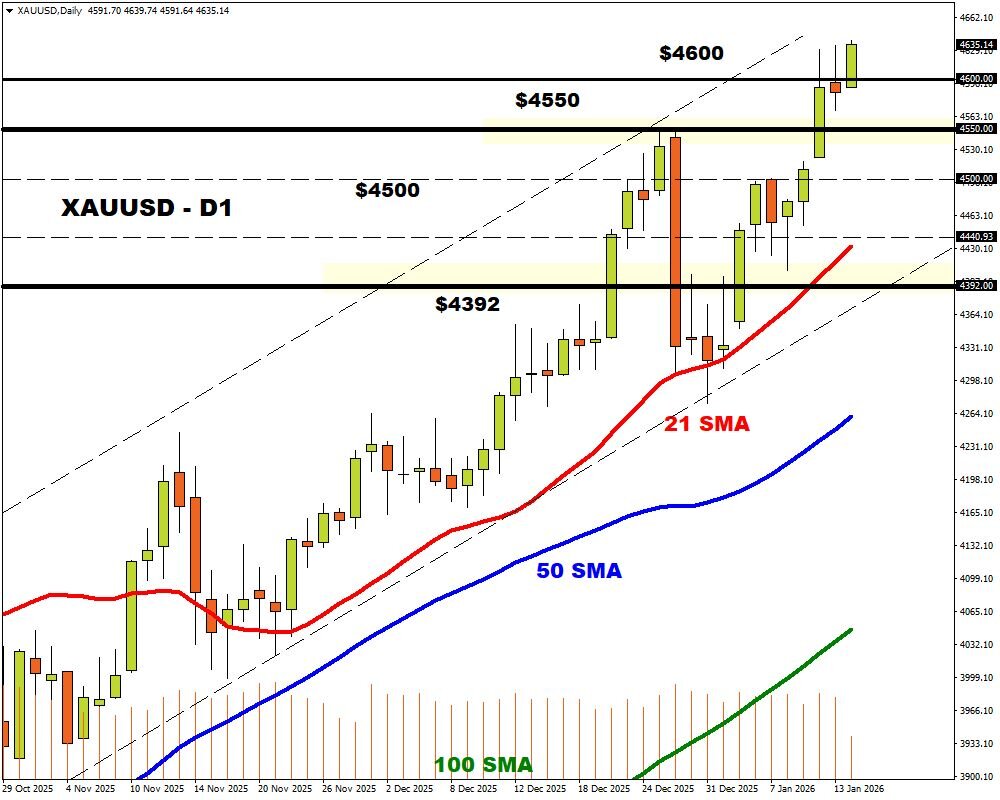
Australia’s labor market is cooling. The Canadian dollar is depreciating under the influence of falling oil prices

By JustMarkets 

At the close on Wednesday, the Dow Jones Index (US30) fell by 0.04%. The S&P 500 Index (US500) rose by 0.40%. The Technological Nasdaq Index (US100) closed higher by 0.66%. US stocks finished a volatile session on Wednesday mostly higher, despite lingering trade tensions between the US and China and a protracted government shutdown. Morgan Stanley shares hit a record high, climbing by 4.7%, and Bank of America rose by 4.4% after both banks exceeded third-quarter profit expectations due to robust deal-making.

In mid-October, the Canadian dollar depreciated to a six-month low, falling to 1.4 per US dollar, influenced by declining oil prices, slowing domestic data growth, and expectations of Bank of Canada interest rate cuts. Oil prices, Canada’s largest export, dropped to a five-month low amid persistent US-China trade tensions, rising supply, and an expected increase in US inventories, fueling fears of oversupply and weakening demand, and stripping the currency of key support.

European indices traded mixed on Wednesday. Germany’s DAX (DE40) fell by 0.23%, France’s CAC 40 (FR40) closed with a gain of 1.99%, Spain’s IBEX35 Index (ES35) dropped by 0.10%, and the UK’s FTSE 100 (UK100) closed negative 0.30%. Industrial production in the Eurozone contracted by 1.2% in August 2025 compared to the previous month, a reversal from the upwardly revised 0.5% growth in July, and slightly exceeding market expectations, which had predicted a 1.6% drop. Sweden’s annual inflation rate fell to 0.9% in September 2025 from a six-month high of 1.1% in August, confirming preliminary estimates and remaining below the 2% target set by the Riksbank. Meanwhile, the CPI with a fixed interest rate (CPIF) – the Riksbank’s preferred measure of inflation – rose to 3.1% year-on-year in September, slightly easing from the 3.2% growth in August, which was the highest since January 2024.

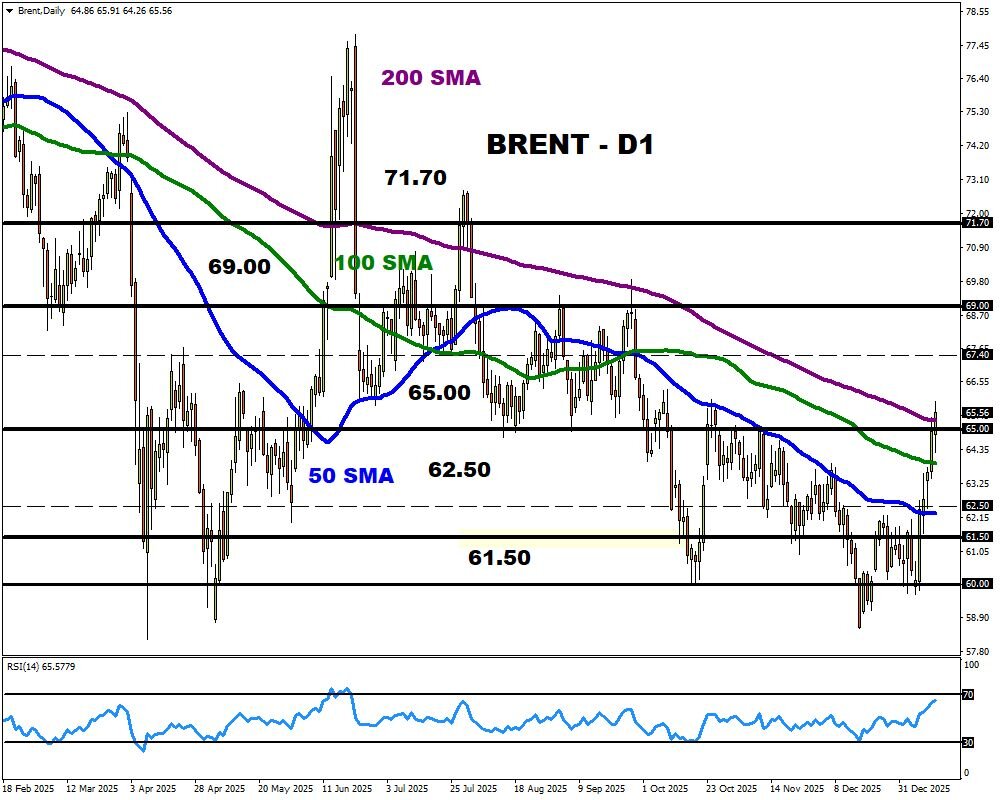
WTI crude oil prices fell by 0.7% to reach $58.3 a barrel on Wednesday, extending losses for a second day and hovering near a five-month low, as persistent US-China trade tensions and increasing supply concerns weigh on sentiment. The International Energy Agency warned that the global oil market could see a surplus of up to 4 million barrels per day in 2026, intensifying worries about sluggish demand. Expectations of another weekly rise in US crude oil inventories amplified signs of oversupply, which could mark the third consecutive week of inventory growth. Traders are now awaiting official US inventory data for clearer demand signals as the market continues to absorb returning OPEC+ production.

Asian markets were mostly higher yesterday. Japan’s Nikkei 225 (JP225) rose by 1.76%, China’s FTSE China A50 (CHA50) gained 1.77%, Hong Kong’s Hang Seng (HK50) rose by 1.84%, and Australia’s ASX 200 (AU200) showed a positive result of 1.03%.

The Australian dollar weakened below $0.650 on Thursday, reversing the previous session’s gains, after a weaker employment report revived expectations of an RBA rate cut. The Australian Bureau of Statistics reported that the unemployment rate rose more than expected to 4.5%, the highest level in almost four years, while employment increased by only 14,900 people, falling short of the 20,000 prognosis. This data signals a further softening of the labor market, strengthening bets that the Reserve Bank (RBA) may resume cutting rates as early as next month. Investors now price in a 71% chance of policy easing, compared to 40% before the data release. Attention now turns to third-quarter inflation data.

S&P 500 (US500) 6,671.06 +26.75 (+0.40%)

Dow Jones (US30) 46,253.31 −17.15 (−0.04%)

DAX (DE40) 24,181.37 −55.57 (−0.23%)

FTSE 100 (UK100) 9,424.75 −28.02 (−0.30%)

USD Index 98.69 −0.36 (−0.36%)

News feed for: 2025.10.16

  • Australia Unemployment Rate (m/m) at 03:30 (GMT+3);
  • UK GDP (m/m) at 09:00 (GMT+3);
  • UK Industrial Production (m/m) at 09:00 (GMT+3);
  • UK Trade Balance (m/m) at 09:00 (GMT+3);
  • Eurozone Trade Balance (m/m) at 12:00 (GMT+3);
  • US Philadelphia Fed Manufacturing Index (m/m) at 15:30 (GMT+3);
  • US Natural Gas Storage (w/w) at 17:30 (GMT+3);
  • US Crude Oil Reserves (w/w) at 18:00 (GMT+3);
  • Eurozone ECB President Lagarde Speech at 19:00 (GMT+3);
  • Canada BoC Macklem Speech at 20:30 (GMT+3).

By JustMarkets


This article reflects a personal opinion and should not be interpreted as an investment advice, and/or offer, and/or a persistent request for carrying out financial transactions, and/or a guarantee, and/or a forecast of future events.
Industrial facilities owned by profitable companies release more of their toxic waste into the environment

By Mahelet G Fikru, Missouri University of Science and Technology and Jennifer Brodmann, California State University, Dominguez Hills 

How much pollution a facility engaged in production or resource extraction emits isn’t just based on its location, its industry or the type of work it does. That’s what our team of environmental and financial economists found when we examined how corporate characteristics shape pollution emissions.

Pollution emissions rates also vary with specific characteristics of the company that owns the facility – such as how many patents it holds, how profitable it is and how many employees it has, according to an analysis we have conducted of corporate pollution data.

We found that industrial and mining facilities owned by profitable companies with relatively few patents and fewer employees tend to release higher proportions of their toxic waste into the environment – into the air, into water or onto soil.

By contrast, industrial sites owned by unprofitable companies with higher levels of innovation and more personnel tend to handle higher proportions of their toxic waste in more environmentally responsible ways, such as processing them into nontoxic forms or recycling them, or burning them to generate energy.

Corporations publish their pollution data

A 1986 federal law requires companies that are in certain industries, employ more than 10 people and make, use or process significant amounts of certain toxic or dangerous chemicals to tell the government where those chemicals go after the company is done with them.

That data is collected by the U.S. Environmental Protection Agency in a database called the Toxics Release Inventory. That data includes information about the companies, their facilities and locations, and what they do with their waste chemicals.

The goal is not only to inform the public about which dangerous chemicals are being used in their communities, but also to encourage companies to use cleaner methods and handle their waste in ways that are more environmentally responsible.

Overall, U.S. companies reported releasing to the environment 3.3 billion pounds of toxic chemicals (1.5 billion kg) in 2023, a 21% decrease from 2014. The decline reflects increased waste management, adoption of pollution prevention and cleaner technologies, in addition to the fact that disclosure requirements motivate companies to reduce releases.

The 2023 releases came from over 21,600 industrial facilities in all 50 states and various U.S. territories, including Puerto Rico, the U.S. Virgin Islands, Guam and American Samoa. One-fifth of the facilities reporting toxic releases in 2023 were in Texas, Ohio and California.

What kinds of businesses release toxic pollution?

Metal mining, chemical manufacturing, primary metals, natural gas processing and electric utilities represent the top five polluting industrial sectors in the U.S. Combined, businesses in those sectors accounted for 78% of the toxic chemicals released in 2023.

Research has found that, often, higher levels of toxic chemical releases come from industrial facilities in less populated, economically disadvantaged, rural or minority communities.

But geography and population are not the whole story. Even within the same area, some facilities pollute a lot less than others. Our inquiry into the differences between those facilities has found that corporate characteristics matter a lot – such as operational size, innovative capacity and financial strength.

In our analysis, we combined the data companies reported to the EPA about toxic chemical releases with financial information on those companies and ZIP-code level geographic and demographic data. We found that corporate characteristics like profitability, employment size and number of patents are more strongly connected with toxic chemical releases than a community’s population density, minority-group percentage or household income.

We looked at what percentage of its toxic chemical waste a facility or mine released to the environment versus how much it treated, recycled or incinerated.

The average facility in our sample, which included 1,976 facilities owned by companies for which financial data is available, released about 39% of its toxic chemical waste to the environment, whether to air, water or land – with the remaining 61% of it managed through recycling, treatment or energy recovery either on-site or off-site.

But facilities in different industries have different release rates. For example, about 99% of toxic chemicals from coal mines are released to the environment, compared with 81% for natural gas extraction, recovery and processing; 25% for power-generating electric utilities; and less than 3% for electrical equipment manufacturers.

The role of innovation

One corporate attribute we examined was innovation, which we measured by counting corporations’ patent families, which are groups of patent documents related to the same invention, even if they are filed in different countries. We found that companies with more patent families tend to release less of their toxic waste to the environment.

Specifically, facilities owned by the top 25% of companies, when rated by innovation, released an average of 32.5% of their toxic waste to the environment, which is 8 percentage points lower than the average of facilities owned by the remaining companies in the sample.

We hypothesize that innovation may give firms a competitive advantage that also enables them to adopt cleaner production technologies or invest in more environmentally conscious methods of handling waste containing toxic chemicals, thereby preventing toxic chemicals from being directly released to the environment.

Size and profitability matter, too

We also looked at companies’ size – in terms of number of employees – and their profitability, to see how those connected with pollution rates at the facilities the company owns.

We found that larger companies, those with more than 19,000 employees, own facilities that release an average of 31% of their toxic chemical waste to the environment. By contrast, facilities owned by midsized companies, from 1,000 to 19,000 workers, release 45%, on average. Those owned by smaller companies, with less than 1,000 employees, release an average of 42% of their toxic chemical waste to the environment.

An important note is that those larger companies, which are more likely to have multiple locations, often own facilities that handle larger volumes of chemicals. So even if they release smaller proportions of their toxic waste to the environment, that may still add up to larger quantities.

We also found that industrial facilities owned by profitable firms have higher average rates of releasing toxic chemicals to the environment than those owned by unprofitable companies.

Facilities owned by companies with positive net income, according to their income statements obtained from PitchBook, a company that collects data on corporations, released an average of 40% of their toxic-chemical-containing wastes to the environment. Facilities owned by companies with negative net income released an average of 31% of their toxic chemical waste to the environment. To us, that indicates that financially strong companies are not necessarily more environmentally responsible. That may be evidence that profitable firms make money in part by contaminating the environment rather than paying for pollution prevention or cleanup.

Our analysis shows that geography and demographics alone do not fully account for industries’ and facilities’ differing levels of pollution. Corporate characteristics are also key factors in how toxic waste is handled and disposed of.The Conversation

About the Authors:

Mahelet G Fikru, Professor of Economics, Missouri University of Science and Technology and Jennifer Brodmann, Associate Professor of Accounting, Finance and Economics, California State University, Dominguez Hills

This article is republished from The Conversation under a Creative Commons license. Read the original article.

How this year’s Nobel winners changed the thinking on economic growth

By Antonio Navas, University of Sheffield 

What makes some countries rich and others poor? Is there any action a country can take to improve living standards for its citizens? Economists have wondered about this for centuries. If the answer to the second question is yes, then the impact on people’s lives could be staggering.

This year’s Sveriges Riksbank Prize in Economic Sciences (commonly known as the Nobel prize for economics) has gone to three researchers who have provided answers to these questions: Philippe Aghion, Peter Howitt and Joel Mokyr.

For most of human history, economic stagnation has been the norm – modern economic growth is very recent from a historical point of view. This year’s winners have been honoured for their contributions towards explaining how to achieve sustained economic growth.

At the beginning of the 1980s, theories around economic growth were largely dominated by the works of American economist Robert Solow. An important conclusion emerged: in the long-run, per-capita income growth is determined by technological progress.

Solow’s framework, however, did not explain how technology accumulates over time, nor the role of institutions and policies in boosting it. As such, the theory can neither explain why countries grow differently for sustained periods nor what kind of policies could help a country improve its long-run growth performance.

It’s possible to argue that technological innovation comes from the work of scientists, who are motivated less by money than the rest of society might be. As such, there would be little that countries could do to intervene – technological innovations would be the result of the scientists’ own interests and motivations.

But that thinking changed with the emergence of endogenous growth theory, which aims to explain which forces drive innovation. This includes the works of Paul Romer, Nobel prizewinner in 2018, as well as this year’s winners Aghion and Howitt.

These three authors advocate for theories in which technological progress ultimately derives from firms trying to create new products (Romer) or improve the quality of existing products (Aghion and Howitt). For firms to try to break new ground, they need to have the right incentives.

Creative destruction

While Romer recognises the importance of intellectual property rights to reward firms financially for creating new products, the framework of Aghion and Howitt outlines the importance of something known as “creative destruction”.

This is where innovation results from a battle between firms trying to get the best-quality products to meet consumer needs. In their framework, a new innovation means the displacement of an existing one.

In their basic model, protecting intellectual property is important in order to reward firms for innovating. But at the same time, innovations do not come from leaders but from new entrants to the industry. Incumbents do not have the same incentive to innovate because it will not improve their position in the sector. Consequently, too much protection generates barriers to entry and may slow growth.

But what is less explored in their work is the idea that each innovation brings winners (consumers and innovative firms) and losers (firms and workers under the old, displaced technology). These tensions could shape a country’s destiny in terms of growth – as other works have pointed out, the owners of the old technology may try to block innovation.

This is where Mokyr complements these works perfectly by providing a historical context. Mokyr’s work focuses on the origins of the Industrial Revolution and also the history of technological progress from ancient times until today.

Mokyr noted that while scientific discoveries were behind technological progress, a scientific discovery was not a guarantee of technological advances.

It was only when the modern world started to apply the knowledge discovered by scientists to problems that would improve people’s lives that humans saw sustained growth. In Mokyr’s book The Gifts of Athena, he argues that the Enlightenment was behind the change in scientists’ motivations.

illustrated headshots of the 2025 nobel prizewinners in economics.
The 2025 winners Joel Mokyr, Philippe Aghion and Peter Howitt.
Ill. Niklas Elmehed © Nobel Prize Outreach

In Mokyr’s works, for growth to be sustained it is vital that knowledge flows and accumulates. This was the spirit embedded in the Industrial Revolution and it’s what fostered the creation of the institution I am working in – the University of Sheffield, which enjoyed financial support from the steel industry in the 19th century.

Mokyr’s later works emphasise the key role of a culture of knowledge in order for growth to improve living standards. As such, openness to new ideas becomes crucial.

Similarly, Aghion and Howitt’s framework has become a standard tool in economics. It has been used to explore many important questions for human wellbeing: the relationship between competition and innovation, unemployment and growth, growth and income inequality, and globalisation, among many other topics.

Analysis using their framework still has an impact on our lives today. It is present in policy debates around big data, artificial intelligence and green innovation. And Mokyr’s analysis of how knowledge accumulates poses a central question around what countries can do to encourage an innovation ecosystem and improve the lives of their citizens.

But this year’s prize is also a warning about the consequences of damaging the engines of growth. Scientists collaborating with firms to advance living standards is the ultimate elixir for growth. Undermining science, globalisation and competition might not be the right recipe.The Conversation

About the Author:

Antonio Navas, Senior Lecturer in Economics, University of Sheffield

This article is republished from The Conversation under a Creative Commons license. Read the original article.


Oil prices continue to fall. Platinum narrows its price gap with gold

By JustMarkets 

The Dow Jones Index (US30) closed up 0.42% on Tuesday. The S&P 500 Index (US500) declined by 0.20%. The technological Nasdaq Index (US100) closed lower by 0.69%. Speaking at the NABE meeting in Philadelphia, Fed Chair Jerome Powell acknowledged that economic activity was somewhat stronger than expected but warned of rising risks to employment. The Chair also indicated that the Federal Reserve could complete the reduction of its balance sheet in the coming months, noting that liquidity conditions are gradually tightening. He warned that procrastination risks increasing the impact of tariffs and potential job cuts, and the recent lack of key data has added uncertainty to the policy outlook.

The IMF expects a slowdown in global economic growth to 3.2% in 2025 and 3.1% in 2026, compared to 3.3% in 2024, as the world economy adapts to conditions of increased protectionism and fragmentation, according to the latest “World Economic Outlook” (WEO) report. By country, US economic growth is expected to be 2.0% in 2025 and 2.1% in 2026, while China’s economic growth rate will slow to 4.8% and 4.2%, respectively. Eurozone economic growth will be 1.2% in 2025 and 1.1% in 2026, the UK’s 1.3% in both years, and Japan’s 1.1% and 0.6%. Meanwhile, global inflation is expected to continue to decline, although trends will vary across countries: it will remain above target in the US, with risks skewed to the upside, while remaining subdued in other countries.

European indices traded mixed on Tuesday. Germany’s DAX (DE40) fell by 0.62%, France’s CAC 40 (FR 40) closed down by 0.18%, Spain’s IBEX35 Index (ES35) rose by 0.29%, and the UK’s FTSE 100 (UK100) closed up 0.10%. In France, Prime Minister Sébastien Lecornu announced plans to suspend pension reform this autumn, partially yielding to the demands of the Socialists, whose support is crucial for the government’s survival. On the corporate front, German parts manufacturer Continental showed a drop of more than 4%, following losses by the French company Michelin after the latter cut its outlook. It was followed by Siemens, which fell 3.2% after Morgan Stanley downgraded the company’s stock rating to “equal-weight” from “overweight”.

WTI crude oil prices fell 1.3% to reach $58.7 per barrel on Tuesday, recovering slightly after hitting a five-month low earlier in the session, as escalating US-China tensions and a bearish prognosis from the International Energy Agency weighed on sentiment. Beijing announced sanctions against five US-linked subsidiaries of South Korean shipbuilder Hanwha Ocean and hinted at further retaliation after Washington imposed new trade restrictions, increasing market uncertainty. The IEA expects a record global oil surplus in 2026 of nearly 4 million barrels per day, 18% higher than the previous outlook, as OPEC+ ramps up production and output from rivals continues to grow.

Platinum (XPT/USD) held above $1640 per ounce, nearing a 12-year high, supported by favorable market fundamentals and escalating US-China trade tensions. Platinum is regaining share in luxury jewelry as its price gap with gold narrows. Steady industrial demand persists for catalysts in gasoline cars, in refining, and the chemical industry. Demand for a “safe-haven currency” increased amid plans by the US and China to impose additional port fees on shipping companies starting Tuesday.

Asian markets were mostly down yesterday. Japan’s Nikkei 225 (JP225) fell by 2.58%, China’s FTSE China A50 (CHA50) decreased by 0.72%, Hong Kong’s Hang Seng (HK50) was down 1.73%, while Australia’s ASX 200 (AU200) showed a positive result of 0.19%.

On Wednesday, the offshore yuan rose to 7.12 per dollar, breaking a three-day losing streak, as the People’s Bank of China reaffirmed its commitment to maintaining currency stability. The central bank continued to set the daily yuan reference rate significantly above market expectations, aiming to mitigate the broader economic and geopolitical fallout from escalating US-China trade tensions. On the economic front, the latest inflation data indicated continued weakness, reflected in persistent deflationary pressure.

The Australian dollar strengthened to around $0.650, recovering some of the previous session’s losses, as investors assessed comments from an RBA official who indicated the probability of higher-than-expected inflation. Markets now estimate the probability of a rate cut at the November 4 meeting as roughly equal, and the probability of a December cut at about 60%, down from the previous 70%. Attention now turns to labor market data to be released later this week.

The New Zealand dollar rose to $0.572 but remained near the six-month low reached in the previous session, as investors digested statements from Reserve Bank of New Zealand Chief Economist Paul Conway. Conway noted that the current Official Cash Rate of 2.5% is at the lower end of the central bank’s neutral range but emphasized that the central bank remains open to further policy easing if necessary. He added that policymakers prefer to wait for economic data before making a decision. Additional pressure on the currency came from renewed US-China tensions, which introduced new uncertainty to global markets and dampened risk appetite.

S&P 500 (US500) 6,641.51 −13.21 (−0.20%)

Dow Jones (US30) 46,262.69 +195.11 (+0.42%)

DAX (DE40) 24,236.94 −150.99 (−0.62%)

FTSE 100 (UK100) 9,452.77 +9.90 (+0.10%)

USD Index 99.03 −0.24 (−0.24%)

News feed for: 2025.10.15

  • China Inflation Rate (m/m) at 04:30 (GMT+3);
  • Sweden Inflation Rate (m/m) at 09:00 (GMT+3);
  • Eurozone Industrial Production (m/m) at 12:00 (GMT+3);
  • US Empire State Manufacturing Index (m/m) at 15:30 (GMT+3);
  • Australia RBA Gov Bullock Speech at 22:45 (GMT+3).

By JustMarkets


This article reflects a personal opinion and should not be interpreted as an investment advice, and/or offer, and/or a persistent request for carrying out financial transactions, and/or a guarantee, and/or a forecast of future events.
Investors focus shifts to Q3 earnings. Silver sets all-time high since 1980

By JustMarkets 

Yesterday, the Dow Jones (US30) fell by 0.52% on Thursday. The S&P 500 (US500) dropped by 0.28%. The tech-heavy Nasdaq (US100) closed 0.08% lower. Market sentiment worsened due to a government shutdown, which delayed the release of key economic data. This caused investor focus to shift to the upcoming third-quarter earnings reports, offering insight into the state of the economy, and to AI-driven growth. Shares of Apple, Alphabet, Tesla, and Walmart all lost more than -0.7%, while PepsiCo rose by 4.2% after reporting higher-than-expected revenue and profit. Delta Air Lines jumped 4.3% on optimistic guidance, Nvidia added 1.8% after the US approved billions of dollars in chip exports to the UAE, and Costco climbed 3.1% on strong September sales.

The Canadian dollar weakened to a level above 1.400 per US dollar, hitting its lowest level since early April amid a stronger dollar and lower oil prices. In Canada, attention turns to Friday’s official September jobs report, which is expected to show further labor market softening with the unemployment rate rising from 7.1% to 7.2%. This data could provide new insight into the Bank of Canada’s rate-change prospects.

Mexico’s annual inflation accelerated for the second consecutive month, reaching 3.76% in September 2025, up from 3.57% in August, though still within the central bank’s 2-4% target range. Analysts had anticipated a slightly higher figure of 3.79%. Every month, consumer prices rose by 0.23% after a 0.06% increase in August, compared to market estimates of 0.27%.

European equity markets were mostly down yesterday. Germany’s DAX (DE40) gained 0.06%, France’s CAC 40 (FR 40) closed down 0.23%, Spain’s IBEX35 (ES35) fell by 0.60%, and the UK’s FTSE 100 (UK100) closed down 0.41% on Thursday. European stocks fell from record highs on Thursday. European banks lost over 1%, driven mainly by the drop in HSBC, whose shares fell by 4.5% after announcing a proposal to privatize its 63% owned Hong Kong subsidiary, Hang Seng Bank. Luxury and consumer goods stocks also took a hit: Ferrari plunged 15% after slashing its full-year and 2030 forecasts and cutting its electric vehicle sales targets, while LVMH, Hermès, and L’Oréal fell 2.6%, 2.2%, and 1.7%, respectively. Today, the focus was on France as President Macron pledged to name a new Prime Minister within 48 hours following the resignation of Sebastien Lecornu, amid calls to avoid appointing another centrist ally.

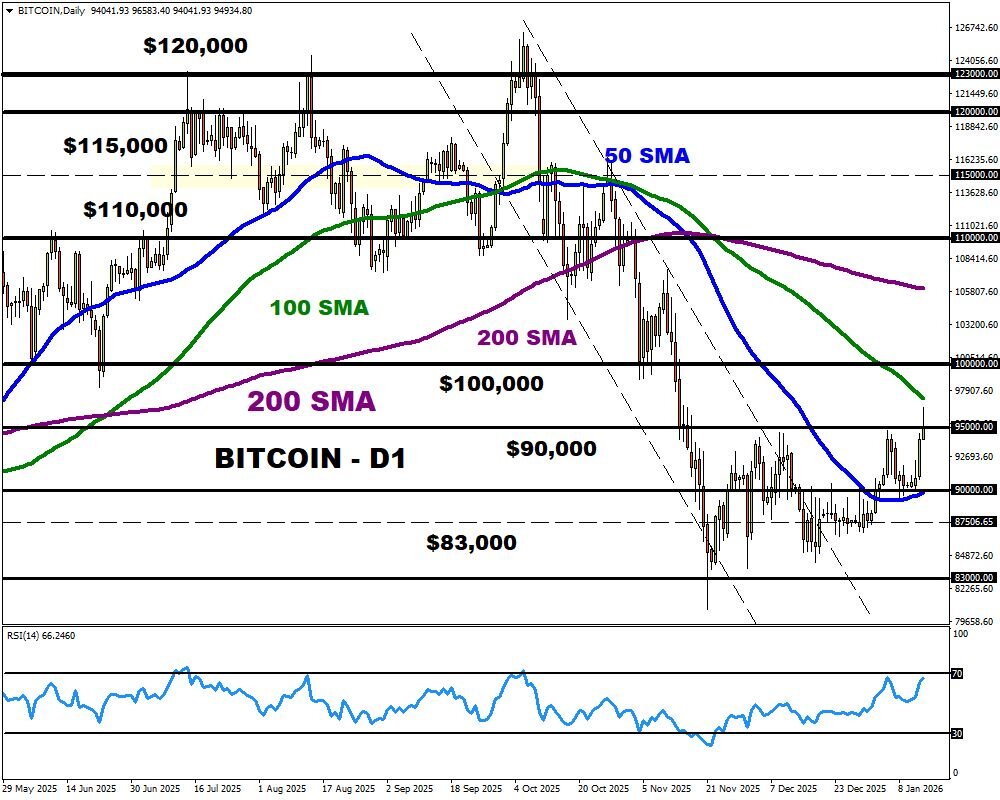
The spot price of silver jumped more than 4% to a record high of $51 per ounce, surpassing the previous peak recorded during the Hunt brothers’ market squeeze in 1980, as strong safe-haven demand met limited supply. The precious metal has surged over 70% this year, outperforming gold. This surge is driven by concerns over US financial risks, the possibility of interest rate cuts, questions about the Federal Reserve’s independence, and unsustainable levels of global deficits and debt. A shortage of freely available silver in the London market is providing further support for prices.

The US natural gas prices dropped to around $3.3 per million British thermal units (MMBtu), retreating from an 11-week high following a larger-than-expected inventory build. The US Energy Information Administration reported a storage injection of 80 billion cubic feet (bcf) for the week ending October 3rd, exceeding the forecast of 77 bcf and slightly above last year’s 78 bcf, though below the five-year average of 94 bcf.

Asian markets were mostly up yesterday. Japan’s Nikkei 225 (JP225) rose by 1.77%, China’s FTSE China A50 (CHA50) gained 0.85%, Hong Kong’s Hang Seng (HK50) declined 0.29%, and Australia’s ASX 200 (AU200) posted a positive result of 0.25%.

The Australian economy is performing well with inflation within the central bank’s target range (2-3%) and the labor market remaining resilient, Governor Michele Bullock told a parliamentary committee on Friday. Household consumption is growing, offsetting weaker government demand and supporting growth. Last month, the Reserve Bank left interest rates at 3.6% after three cuts since February. Bullock noted that services inflation remains “sticky” and highlighted global uncertainty, including US protectionist policies, geopolitical tensions, and slowing Chinese demand. However, the worst-case scenarios for tariffs have not materialized.

S&P 500 (US500) 6,735.11 −18.61 (−0.28%)

Dow Jones (US30) 46,358.42 −243.36 (−0.52%)

DAX (DE40) 24,611.25 +14.12 (+0.06%)

FTSE 100 (UK100) 9,509.40 −39.47 (−0.41%)

USD index 99.40 +0.49 (+0.49%)

News feed for: 2025.10.10

  • Japan Producer Price Index (m/m) at 02:50 (GMT+3);
  • Norway Inflation Rate (m/m) at 09:00 (GMT+3);
  • US Nonfarm Payrolls (m/m) at 15:30 (GMT+3) (Tentative);
  • US Unemployment Rate (m/m) at 15:30 (GMT+3) (Tentative);
  • Canada Unemployment Rate (m/m) at 15:30 (GMT+3);
  • US Michigan Consumer Sentiment (m/m) at 17:00 (GMT+3);

By JustMarkets


This article reflects a personal opinion and should not be interpreted as an investment advice, and/or offer, and/or a persistent request for carrying out financial transactions, and/or a guarantee, and/or a forecast of future events.