Archive for Economics & Fundamentals – Page 139

Oil prices continue to fall. The ECB is going to raise interest rates by 0.75%

By JustForex

Despite the fact that the Federal Reserve officials reiterated the need to tighten monetary policy to curb inflation, US indices were trading in positive territory on Wednesday. The technology sector, which has been under pressure in recent days, was also supported by lower Treasury yields. At the close of the stock market yesterday, the Dow Jones Index (US30) increased by 1.40% and the S&P 500 Index (US500) added 1.83%. The NASDAQ Technology Index (US100) jumped by 2.14% on Wednesday.

Fed Vice President Lael Brainard said Wednesday that monetary policy should be restrictive for some time, adding that the central bank would need to see several months of low inflation figures to see if inflation is slowing.

Shares of Apple Inc. rose modestly after the introduction of a slew of new products, including the iPhone 14, the iPhone 14+, the top models of the iPhone 14 Pro, and the larger iPhone 14 Max. Analysts say Apple’s new phone will cause a strong update cycle, as many iPhone buyers haven’t updated their phones in years.

Meanwhile, Twitter shares added more than 5% after a Delaware court rejected Elon Musk’s request to delay a lawsuit that Twitter had launched to prevent the billionaire from backing out of a deal to buy the social network.

The Bank of Canada held its fourth consecutive interest rate hike in an effort to lower inflation from a four-year high. Policymakers led by Governor Tiff Macklem raised the benchmark overnight rate by 75 basis points to 3.25% on Wednesday, giving Canada’s Central Bank the highest interest rate among major advanced economies.

Equity markets in Europe traded flat yesterday. German DAX (DE30) gained 0.53%, French CAC 40 (FR40) added 0.02%, Spanish IBEX 35 (ES35) increased by 0.17%, British FTSE 100 (UK100) closed on Tuesday down 0.86%.

The ECB will hold its monetary policy meeting today, where analysts expect to see an excessive interest rate hike of 0.75%. Taking into consideration yesterday’s EUR strengthening, there is a good reason to believe that investors are already buying European currency in the expectation that the ECB will hold an uncharacteristic aggressive rate hike. But according to analysts, irrespective of the euro reaction direction on Thursday, there is a high probability that the effect on the currency rate will be temporary. This is because EUR/USD has been reacting weakly to ECB rate expectations lately, as the energy crisis continues to shape the dynamics of the pair.

According to analysts, the energy crisis in Europe will only worsen this winter as rising fuel prices reduce consumer demand and force factories to cut production or close, which is a very bad scenario for Europe.

Oil prices fell by 5% yesterday. Analysts see the following reasons for the drop in oil prices in recent days: the twenty-year high of the dollar, which increased the cost of buying crude oil for other currencies; growing quarantine measures in China; concerns about the third consecutive 75 basis point increase in rates by the US Federal Reserve at a meeting on September 21; G7 efforts to limit Russia’s selling price of oil in order to deprive Moscow of the maximum revenue it seeks from energy exports to finance its war against Ukraine; the finish line in negotiations over the Iran nuclear deal, which could potentially return hundreds of thousands of barrels of Iranian oil to the world market.

“There are fears that an angry Putin will stop all oil and gas supplies to Europe to teach the West and the world a lesson for trying to unite against Mother Russia,” said John Kilduff, a partner at the New York-based energy hedge fund Again Capital.

Gas prices in Europe decreased by 14%. Gas prices are down amid reports that European gas storage facilities are filling ahead of schedule.

Asian markets were trading lower yesterday. Japan’s Nikkei 225 (JP225) decreased by 0.71% yesterday, Hong Kong’s Hang Seng (HK50) lost 0.83%, and Australia’s S&P/ASX 200 (AU200) was 1.42% lower by the end of the day.


The Japanese currency keeps losing ground, and the reason for that is not only the interest rate differences between the Bank of Japan and other central banks. Another problem for the yen is the change in the trade balance. The country used to have a constant trade surplus, but with energy prices skyrocketing and Japan importing most of its energy from abroad, it is facing a trade deficit. Combined with the ban on tourists visiting the island, demand for the yen dropped sharply.

Australia’s index fell at the opening market on Thursday after data showed the country’s trade balance contracted more than expected in July.

S&P 500 (F) (US500)  3,979.87 +71.68 (+1.83%)

Dow Jones (US30) 31,581.28  +435.98 (+1.40%)

DAX (DE40) 12,871.44 12,915.97 (+0.35%)

FTSE 100 (UK100)  7,237.83 −62.61 (−0.86%)

USD Index 109.55 −0.66 (−0.60%)

Important events for today:
  • – Japan GDP (q/q) at 02:50 (GMT+3);
  • – Australia RBA Governor Lowe Speaks at 06:05 (GMT+3);
  • – Switzerland Unemployment Rate (m/m) at 08:45 (GMT+3);
  • – Eurozone Marginal Lending Facility (m/m) at 15:15 (GMT+3);
  • – Eurozone ECB Monetary Policy Statement (m/m) at 15:15 (GMT+3);
  • – Eurozone ECB Interest Rate Decision (m/m) at 15:15 (GMT+3);
  • – US Initial Jobless Claims (w/w) at 15:30 (GMT+3);
  • – Eurozone ECB Press Conference at 15:45 (GMT+3);
  • – US Fed Chair Powell Speaks at 16:10 (GMT+3);
  • – Eurozone ECB President Lagarde Speaks at 17:15 (GMT+3);
  • – US Natural Gas Storage (w/w) at 17:30 (GMT+3);
  • – US Crude Oil Reserves (w/w) at 18:00 (GMT+3).

By JustForex


This article reflects a personal opinion and should not be interpreted as an investment advice, and/or offer, and/or a persistent request for carrying out financial transactions, and/or a guarantee, and/or a forecast of future events.

China reported a falling trade balance. EU insists on the introduction of taxes on the income of energy companies

By JustForex

The US service sector PMI Index rose to a four-month high on higher demand. The index of business activity and new orders rose to the highest levels in a year, reflecting both continued changes in purchasing habits and solid wage growth. The dollar index and Treasury yields increased sharply amid the data, with the 10-year Treasury yields rising to a new three-month high. At the close of the stock market yesterday, the Dow Jones Index (US30) decreased by 0.54%, and the S&P 500 Index (US500) fell by 0.40%. The NASDAQ Technology Index (US100) lost 0.74% on Tuesday.

According to the latest PMI survey, global manufacturing declined in August for the first time since June 2020. The decline, while very modest, reflects an increasingly widespread deterioration in manufacturing and demand conditions across both sectors and regions. Companies are also taking a more cautious approach to controlling costs and employment as the economic climate worsens. CentralBbanks are raising interest rates amid an economic slowdown that, while bearing fruit in terms of lower inflation, increases the risk of a deepening global downturn and possible recession.

The White House confirmed that the United States will not list Russia as a sponsor of terrorism. This is the final decision.

Equity markets in Europe traded without a single dynamic yesterday. German DAX (DE30) gained 0.87%, French CAC 40 (FR40) added 0.19%, Spanish IBEX 35 (ES35) was 0.26% lower, British FTSE 100 (UK100) closed on Tuesday with a 0.18% gain.

The new British Prime Minister Liz Truss outlined her top three priorities: growing the economy by cutting taxes, taking action on energy bills, and strengthening the NHS (National Health Service).

German energy giant Uniper warned Tuesday that the worst is yet to come for Europe, as worries about Russian gas supplies to Europe in the fall and winter continue to drive up prices.

The EU is pushing for national taxes on energy companies’ inflated profits to counter what European Commission President Ursula von der Leyen called “astronomical” energy bills. The planned taxes, to be discussed by EU energy ministers on Friday, would target both fossil fuel producers and low-carbon energy companies that have made super profits thanks to artificially inflated electricity prices.

The European Commission approved a proposal to suspend the visa facilitation agreement with Russia completely as of September 12.

According to the IEA, global coal consumption will rise to a record high in the near future, even though coal remains the dirtiest fuel of all the major fossil fuels. Already, global coal prices are trading at unusually high levels.

Asian markets traded flat yesterday. Japan’s Nikkei 225 (JP225) gained 0.03% yesterday, Hong Kong’s Hang Seng (HK50) ended yesterday down 0.12%, and Australia’s S&P/ASX 200 (AU200) fell by 0.38% yesterday.

Australia’s annual GDP at the end of July was 3.6% instead of the expected 3.4%. Quarterly GDP grew by 0.9% from the previous value of +0.8%. Australian stock index ASX 200 gained slightly on this news.

China’s trade balance for August was 535.91 billion yuan, compared to the expected 504.85 billion yuan, and 682.69 billion yuan last year. Exports jumped by 11.8% last month against an expected 15.7%. The country’s imports grew by 4.6% against the expected 8.7%. Markets treated the data as negative as exports and imports missed the expectations.

S&P 500 (F) (US500) 3,908.55 −15.71 (−0.40%)

Dow Jones (US30) 31,148.07 −170.37 (−0.54%)

DAX (DE40) 12,871.44 +110.66 (+0.87%)

FTSE 100 (UK100) 7,300.443 +13.01 (+0.18%)

USD Index 110.243 +0.71 (+0.64%)

Important events for today:
  • – Australia GDP (q/q) at 04:30 (GMT+3);
  • – German Industrial Production (m/m) at 09:00 (GMT+3);
  • – UK BoE Monetary Policy Report (m/m) at 12:00 (GMT+3);
  • – UK BoE Gov Bailey Speaks (m/m) at 12:00 (GMT+3);
  • – Eurozone GDP (q/q) at 12:00 (GMT+3);
  • – Canada BoC Interest Rate Decision (m/m) at 17:00 (GMT+3);
  • – Canada BoC Rate Statement (m/m) at 17:00 (GMT+3);
  • – Canada Ivey PMI (m/m) at 17:00 (GMT+3);
  • – US FOMC Member Mester Speaks (m/m) at 17:00 (GMT+3);
  • – US FOMC Member Brainard Speaks (m/m) at 19:35 (GMT+3).

By JustForex


This article reflects a personal opinion and should not be interpreted as an investment advice, and/or offer, and/or a persistent request for carrying out financial transactions, and/or a guarantee, and/or a forecast of future events.

The RBA expectedly raised the interest rate by 0.5%. The UK has chosen a new prime minister

By JustForex

The US stock indices did not trade yesterday due to the banking holiday in the United States.

Equity markets in Europe were mostly down yesterday. German DAX (DE30) decreased by 2.22%, French CAC 40 (FR40) was 1.20% lower, Spanish IBEX 35 (ES35) lost 0.88%, British FTSE 100 (UK100) added 0.09% on Monday.

Germany’s trade surplus narrowed to 5.4 billion euros ($5.4 billion) from 6.2 billion euros in June as exports fell by 2.1% and imports fell by 1.5%, the statistics office said. Germany plans to completely stop gas supplies from Russia in December 2022. The German chancellor believes that Russia cannot be considered a reliable energy supplier because it has long violated its contractual obligations. The leaders of Germany’s government coalition parties agreed on a third $65 billion bailout package for citizens due to high energy prices.

The Eurozone Services PMI Index fell from 50.2 to 49.8. A value below 50 is seen as a pre-recession indicator. The biggest drop of the leading economies was observed in Spain (53.8→50.6) and Germany (48.2→47.7). France (51.0→51.2) and Italy (48.4→50.5) showed an increase in business activity.

Liz Truss won a majority of votes in the second round and became the third female prime minister of Great Britain. She will officially take office on Tuesday after Johnson submitted his resignation petition to Queen Elizabeth II. Investors are now watching to see what steps the new UK government will take to reduce the negative effects of rising prices and energy bills. Truss has promised a “bold plan” for tax cuts and an energy crisis

The European Union may introduce a “price ceiling” on Russian gas, European Commission head Ursula von der Leyen said. The Council of Europe will soon come up with this initiative.

According to the results of the first half of 2022,China has become one of the largest buyers of Russian gas. LNG shipments from Russia to China increased by 63%, exceeding Chinese domestic demand.

The meeting of OPEC and non-OPEC countries noted the negative impact of volatility and declining liquidity on the current oil market and the need to maintain market stability and its effective functioning. Following yesterday’s meeting of OPEC+ countries, the main oil-producing countries agreed to cut production by 100 thousand barrels per day starting from October. This may give a temporary bullish momentum to oil quotes.

Asian markets traded flat yesterday. Japan’s Nikkei 225 (JP225) decreased by 0.11% yesterday, Hong Kong’s Hang Seng (HK50) was down 1.16%, and Australia’s S&P/ASX 200 (AU200) added 0.34% by the end of the day.

The People’s Bank of China cut the required reserve ratio of foreign currency deposits that banks must keep with the Сentral Bank. Theoretically, this should stop the trend of the yuan weakening.

The Reserve Bank of Australia raised its interest rate by 50 basis points to 2.35%. The RBA predicts inflation will continue to rise in the coming months, peaking at the end of the year. The RBA predicts inflation will be around 7.75% in 2022, just above 4% in 2023, and around 3% in 2024

S&P 500 (F) (US500) 3,924.26 −42.59 (−1.07%)

Dow Jones (US30) 31,318.44 −337.98 (−1.07%)

DAX (DE40) 12,760.78 −289.49 (−2.22%)

FTSE 100 (UK100) 7,287.43 +6.24 (+0.09%)

USD Index 109.83 +0.30 (+0.27%)

Important events for today:
  • – Australia RBA Interest Rate Decision (m/m) at 07:30 (GMT+3);
  • – Australia RBA Rate Statement (m/m) at 07:30 (GMT+3);
  • – UK Construction PMI (m/m) at 11:30 (GMT+3);
  • – US ISM Service PMI (m/m) at 17:00 (GMT+3).

By JustForex


This article reflects a personal opinion and should not be interpreted as an investment advice, and/or offer, and/or a persistent request for carrying out financial transactions, and/or a guarantee, and/or a forecast of future events.

Markets mixed, central banks and energy shock in focus

By ForexTime

Market sentiment lacked conviction on Tuesday morning despite the Chinese government pledging more efforts to support economic growth. Asian shares were mixed as investors braced for the return of traders from across the pond. US markets were closed yesterday due to the Labor Day holiday, but the Dow and S&P 500 futures are signaling a positive open this afternoon. In Europe, shares tumbled in the previous session thanks to the region’s worsening energy crisis with stock futures pointing to a negative open this morning.

In the currency space, the mighty dollar hit a fresh 20-year high yesterday while the euro sank to levels not seen in two decades. Sterling made fresh cycle lows a few hours before Liz Truss was formally announced as the new Prime Minister of the UK. Looking at commodities, oil bulls were injected with fresh confidence after OPEC+ decided to cut production by 100,000 barrels per day in October to boost prices. With so much already going and more high-risk events in the pipeline, this promises to be an eventful week for markets.

Most importantly, the fierce war against inflation is set to continue with central banks ready for battle. Earlier this morning, the Reserve Bank of Australia hiked interest rates by another 50-basis points to 2.35%, its highest since early 2015. The aussie weakened following the move with prices trading around 0.6780 as of writing. The Bank of Canada rate decision will be on Wednesday and all eyes then turn to the European Central Bank meeting the following day.

Will ECB hawks deliver?

Much attention will be directed towards the ECB meeting later this week. The central bank is expected to fire a monetary bazooka in the form of a 75-basis point rate increase. Indeed, with inflation hitting a record high in August at 9.1%, the central bank needs to employ all tools to tame rampant prices.

It is worth keeping in mind that the Eurozone economy faces the growing risk of recession due to the unsavoury combination of conflict on its borders, rising price pressures, and an energy shock. The latest development concerning Russia’s Gazprom has worsened matters, exposing the economy to downside risks and fueling inflationary pressures as gas prices soar.

According to Bloomberg, traders are predicting a 73% probability of a 75-basis point rate hike in September. If the ECB joins the “jumbo rate hike club” and strikes a hawkish tone, this could open the doors to more supersized hikes in the future. While this could inspire euro bulls, the upside may be capped by the gloomy outlook for the Eurozone. If the ECB catches markets off guard with a 50-basis point hike and strikes a dovish tone, this may send the euro tumbling back towards 0.9900 and below.

What next for the pound?

Sterling tumbled to fresh lows on Monday, as investor confidence continued to deteriorate over the UK economic outlook. Since then, the pound has enjoyed a relief rally, but it is certainly not out of the woods yet. With Liz Truss formally announced as the new Prime Minister after a protracted leadership contest, investors will be keeping a close eye on the government’s next steps in dealing with the current challenges, primarily the soaring rise in energy bills.

Looking at the technical picture, cable is under pressure on the daily charts, but a technical rebound could be in the making. A strong move above 1.1600 could encourage a push towards 1.1760 before bears re-enter the scene.

Commodity spotlight – Oil

Oil prices have received a boost after OPEC+ agreed on Monday to cut supply in an effort to boost prices. This decision was made despite calls from western governments fighting to tame inflation in the face of a growing energy crisis across the world. The cartel will cut production by 100,000 barrels a day from October. Although this was seen as a small cut, it was more symbolic and sent a message to the west that OPEC+ will defend oil prices if needed.

Talking technicals, Brent crude could challenge the 200-day simple moving average at $98.82 if $96 gives way. A move back above the August high at $103.23 may be required to change the longer-term trend.


Forex-Time-LogoArticle by ForexTime

ForexTime Ltd (FXTM) is an award winning international online forex broker regulated by CySEC 185/12 www.forextime.com

Europe’s energy crisis intensifies again. Britain chooses a new prime minister

By JustForex

The US stock indices ended the week lower on Friday, as early gains amid a report on Nonfarm Payrolls were overshadowed by worries about the energy crisis in Europe. The US economy added 315,000 jobs in August, still a solid indicator showing that the economy remains resilient despite rising interest rates, high inflation, and sluggish consumer spending. Friday’s government report also showed that the unemployment rate rose to 3.7% from a low of 3.5%. Analysts believe the decline in US job gains in August may help the Fed’s fight against inflation. At the close of trading on Friday the Dow Jones index (US30) decreased by 1.07% (-2.70% for the week) and the S& P 500 (US500) lost 1.07% (-2.73% for the week). The Technology Sector Index NASDAQ (US100) fell by 0.31% (-1.06% for the week).

Equity markets in Europe were mostly up on Friday. German DAX (DE30) gained 3.33% (+1.65% for the week), French CAC 40 (FR40) jumped by 2.21% (-0.51% for the week), Spanish IBEX 35 (ES35) added 1.62% (-0.48% for the week) and British FTSE 100 (UK100) closed the day up 1.86% (-2.65% for the week).

The UK lagged behind India to become the world’s sixth-largest economy, dealing another blow to the government in London, which has been struggling with a steep drop in the cost of living. Britain’s fall in the international rankings is not a pleasant backdrop for the new prime minister. British Foreign Secretary Liz Truss said Sunday that she would take immediate action in her first week in office to address rising energy bills and increased energy supplies if appointed prime minister. Truss said she would bravely fight the falling economy, repeating her promise to stimulate growth to fix a long list of problems. The Sunday Times newspaper, citing insiders at the Treasury Department, said the cost of Truss’ plan would easily exceed 100 billion pounds ($115 billion), most of which would be added to government borrowing. The winner with the most Conservative votes will be announced on Monday, and the next day the new prime minister will meet with Queen Elizabeth and ask her to form a government.

Oil prices declined over the summer amid uncertainty about demand prospects due to China’s COVID-19 restraint and as central banks around the world raised interest rates to combat rising inflation, affecting the global economic outlook. The Organization of Petroleum Exporting Countries and its allies, including Russia, are scheduled to meet Monday. Energy traders will be paying close attention to the event, especially after Saudi Arabia raised the possibility of production cuts. OPEC+ last week revised its market balances for this year and now sees demand lagging supply by 400,000 BPD versus the 900,000 BPD previously projected. The producer group expects a market deficit of 300,000 BPD in the baseline scenario for 2023.

This week, the escalating energy dispute between Russia and the West will draw investors’ attention. Moscow has closed its main gas pipeline to Germany for an indefinite period. The closure of the Nord Stream pipeline, which Russia says will last as long as it takes to make repairs, has exacerbated fears of a winter gas shortage that could lead to a recession in major economies and lead to energy rationing. Europe accused Russia of using energy as a weapon in what Moscow called an “economic war” with the West following Russia’s invasion of Ukraine. Moscow blamed Western sanctions and technical problems for supply disruptions.

Asian markets traded lower last week. Japan’s Nikkei 225 (JP225) decreased by 1.81% for the week, Hong Kong’s Hang Seng (HK50) was down by 2.55% for the week, and Australia’s S& P/ASX 200 (AU200) closed down by 3.88% for the week.

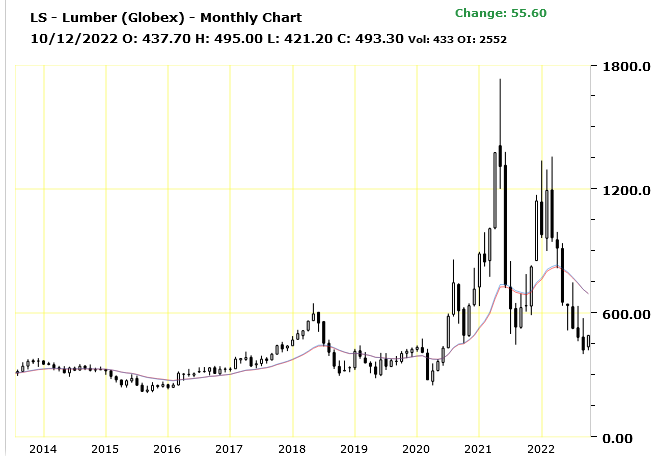
In the commodities market, orange juice futures showed the largest rise in price by the end of the week (+5.44%). Futures on gasoline (-13.73%), cotton (-12.3%), copper (-8.01%), Brent oil (-7.63%), WTI oil (-6.24%), palladium (-4.71%), lumber (-4.65%), silver (-4.46%), coffee (-4.14%), natural gas (-3.96%), and soybeans (-2.84%) showed the biggest drop.

S&P 500 (F) (US500) 3,924.26 −42.59 (−1.07%)

Dow Jones (US30) 31,318.44 −337.98 (−1.07%)

DAX (DE40) 13,050.27 +420.0 (+3.33%)

FTSE 100 (UK100) 7,281.19 +132.69 (+1.86%)

USD Index 109.61 -0.08 (-0.07%)

Important events for today:
  • – Japan Service PMI (m/m) at 03:30 (GMT+3);
  • – Australia Retail Sales (m/m) at 04:30 (GMT+3);
  • – Switzerland GDP (q/q) at 10:00 (GMT+3);
  • – Spanish Service PMI (m/m) at 10:15 (GMT+3);
  • – Italian Service PMI (m/m) at 10:45 (GMT+3);
  • – French Service PMI (m/m) at 10:50 (GMT+3);
  • – German Service PMI (m/m) at 10:55 (GMT+3);
  • – Eurozone Service PMI (m/m) at 11:00 (GMT+3);
  • – UK Service PMI (m/m) at 11:30 (GMT+3);
  • – Eurozone Retail Sales (m/m) at 12:00 (GMT+3);
  • – OPEC+ Meeting (m/m) at 13:00 (GMT+3).

By JustForex


This article reflects a personal opinion and should not be interpreted as an investment advice, and/or offer, and/or a persistent request for carrying out financial transactions, and/or a guarantee, and/or a forecast of future events.

The global risk of weaponization in semiconductors

By Dan Steinbock

– On August 9, President Biden signed the CHIPS Act. It is a prelude in an effort to weaponize the global IT supply chains.

In international media, the CHIPS and Science Act of 2022 is portrayed as a $52 billion package aiming to boost semiconductor manufacturing in the United States. But the underlying strategic objective is geopolitical.

Today Asia dominates global semiconductor manufacturing. Though a top exporter, US semiconductor industry no longer controls the global supply chains. However, it still accounts for over 80% of the world’s chip design equipment, 50% of intellectual property for chip designs, and half of the globe’s chip manufacturing equipment.

To dominate the semiconductors, which enable advanced military technology, the Biden team seeks to restore the past US superiority in global semiconductors.

The problem is that no single nation can any longer control entire supply chains. Hence, the effort to weaponize the system, to “counter” China.

Forcing semiconductor giants to pick sides

Currently, the US, Taiwan, South Korea and Japan supply most of the world’s semiconductors, whereas China represents the highest demand in the industry. The Biden administration would like to keep it that way.

In order to restore the US’ supremacy, the Biden administration needs to neutralize future rivals. That’s the likely reason why Washington is also considering restricting U.S. chipmaking equipment from being exported to Chinese memory chip makers.

Such restrictions are designed to hurt China and its progress in advanced technology. But they would also harm South Korea’s Samsung and SK Hynix, which have memory chip operations in China. Japanese semiconductor rivals were derailed already in the 1980s trade wars.

Unsurprisingly, Chinese critics of the “CHIP-4 alliance” call it a “hongmen Banquet”; a well-known Chinese expression for a feast that’s set up as a trap for the invitees.

Ambivalent “allies” divided

At present, six US-headquartered or foreign-owned semiconductor companies have 20 fabrication facilities (“fabs”) in America. South Korean Samsung is building a $17 billion fab in Texas, while the Taiwan Semiconductor Manufacturing Company (TSMC) is investing $12 billion on a plant in Arizona. The real costs are likely to prove far higher, as they have already affirmed.

Reportedly, the CHIPS Act would bar recipients of U.S. government funds from expanding or upgrading their advanced chip capacity in China, which has led South Korean firms to review their Chinese operations. That leaves Taiwan.

Hence, the recent Taiwan visit by the US House Speaker Nancy Pelosi, for which the way was paved by the Taiwan lobby (TECRO); Pelosi’s generous supporter that also helped to push through the recent $5 billion weapons sales deal to Taiwan.

In Taiwan, Pelosi insisted on a meeting with TSMC’s CEO Mark Liu, the largest contract chip maker. Reportedly, she said she hopes TSMC will side with the US.

In the long term, US and some of its allies hope to undermine Taiwan’s dominance in semiconductors, however. Effectively, such goals were initiated by the Obama administration, codified by the Trump White House and are now being executed by the Biden team.

Weaponizing semiconductors replaces competitiveness with geopolitics

In the 1980s, US technology giants pressed the Reagan administration to battle the Japanese competitors. By contrast, Trump and Biden administrations are pushing the reluctant US semiconductor giants to fight China.

The US-Sino ties soured and bilateral disputes escalated in July 2018, when the Trump administration imposed 25% tariffs on semiconductors imported from China, causing significant damage in the US industry. And as companies like Huawei bypassed US suppliers buying semiconductors from Taiwan and South Korea, the tariffs failed to have the desired effect. That’s why the White House is now trying to use an alliance to command the full semiconductor ecosystem.

In early 2021, the Biden administration signaled it planned to move ahead with a Trump administration-proposed rule to “secure” the information-technology (IT) supply chains. That allowed the Department of Commerce to monitor the transactions of governments, including those of China. Reportedly, it is part of the effort to weaponize the global IT ecosystem.

The activities of Eric Schmidt, ex-CEO of Google and financier of Obama, Clinton and Biden campaigns, reflects the new semiconductor geopolitics. Prior to his advisory role in artificial intelligence, Schmidt headed Pentagon’s advisory board to link Silicon Valley with Pentagon. “The US and its allies,” Schmidt urged, “should utilize targeted export controls on high-end semiconductor manufacturing equipment … to protect existing technical advantages and slow the advancement of China’s semiconductor industry.”

Such are the behind-the-façade strategic objectives.

Geopolitics derails supply chains, consumer welfare and innovation

The semiconductor debacles first intensified with the US-Japan trade wars of the 1980s. Eventually, Japan, heavily dependent on the US military, agreed to “voluntary restrictions” on contested export products, bilateral concessions, sky-high US tariffs, de facto currency revaluation, and structural reforms opening the Japanese market to the US.

As a result, Japan lost its mantle of world leader in microchips. Secular stagnation ensued soon thereafter. This precedent obviously makes executive teams uneasy in both South Korea and Taiwan.

Weaponization of the global semiconductor supply chains by any one country would be disastrous to the ecosystem. It would replace industry competition with geopolitical dicta. It would undermine consumer welfare. And it would derail innovation.

About the Author:

Dr. Dan Steinbock is an internationally recognized strategist of the multipolar world and the founder of Difference Group. He has served at the India, China and America Institute (USA), Shanghai Institutes for International Studies (China) and the EU Center (Singapore). For more, see https://www.differencegroup.net

The original version was published by China Daily on August 29, 2022


The probability of a 0.75% interest rate hike by the ECB increased to 80%

By JustForex

At the close of the US stock market yesterday, the Dow Jones index (US30) added 0.46%. The S&P 500 Index (US500) increased by 0.30%. The NASDAQ Technology Index (US100) lost 0.26%

The ISM Manufacturing Index was 52.8 in August, unchanged from July and beating the consensus forecast of 51.9. Expectations for a third straight 75 basis point rate hike in the US at the Fed’s September 20-21 meeting are rising on solid economic data, with Fed funds futures indicating a 77.1% chance of such an increase. Market attention now turns to the August US Nonfarm Payrolls report, which will be one of the key reports ahead of the Fed meeting. Although the US economy contracted in the first half of the year, the robust labor market defies talk of a recession and encourages the Federal Reserve to keep raising rates.

According to Swiss investment bank UBS, the likelihood of a recession in the US economy over the next year has risen to 60%. Earlier the probability of recession was 40%. Such a forecast was given by the bank based on 3 recession indicators monitored: macroeconomic data, the U.S. Treasury bond yield curve, and credit data.

European stock indices started September weak, falling to a seven-week low amid growing concerns over slowing economic growth, aggressive interest rate hikes, and record-high inflation. German DAX (DE30) fell yesterday by 1.60%, French CAC 40 (FR40) was down by 1.48%, Spanish IBEX 35 (ES35) lost 1.02%, British FTSE 100 (UK100) closed 1.05% lower. Manufacturing activity in the Eurozone declined slightly over the last month, but the decline was mainly due to a sharp drop in activity in Italy. In Germany, France, and Spain manufacturing activity rose in August, but figures are near the median level of 50. German retail sales rose unexpectedly in July, up 1.9% from the previous month, as online retailing and the food sector showed a recovery. Markets are estimating a roughly 80% chance of a 75 basis point rate hike by the European Central Bank next week, up from just over a 50% chance a day earlier.

New lockdowns in China, triggered by COVID-19 concerns, extended the sell-off in oil for a third straight day, increasing the probability that US crude may fall below $85 a barrel for the first time since late January. OPEC+ countries will meet on September 5. If OPEC+ does not announce any cuts at that time, oil prices could continue to fall due to concerns about seasonally weak demand in the fall. Adding to the uncertainty is the resurgence of the US-Iran nuclear deal, which Iran is very much seeking, and Israel strongly opposes. At stake is the potential lifting of US sanctions on Iranian oil, which could add up to a million barrels per day to the global crude oil export market.

Asian markets traded lower yesterday. Japan’s Nikkei 225 (JP225) was down by 1.53%, Hong Kong’s Hang Seng (HK50) ended the day down by 1.79%, and Australia’s S&P/ASX 200 (AU200) closed at 2.02%.

South China’s Shenzhen technology center tightened restrictions against COVID-19, as the number of cases continues to rise. Large events and indoor entertainment have been suspended for three days. Manufacturing activity in Asia plummeted in August, as China’s COVID-19 restrictions and cost pressures continue to hurt business.

S&P 500 (F) (US500) 3,966.85 −31.16 (−0.30%)

Dow Jones (US30) 31,656.42 +145.99 (−0.46%)

DAX (DE40) 12,630.23 -204.73 (−1.60%)

FTSE 100 (UK100) 7,148.50 −135.65 (−1.86%)

USD Index 109.63 +0.93 (+0.86%)

Important events for today:
  • – Switzerland Unemployment Rate (m/m) at 09:30 (GMT+3);
  • – Eurozone Producer Price Index (m/m) at 12:00 (GMT+3);
  • – US Nonfarm Payrolls (m/m) at 15:30 (GMT+3);
  • – US Unemployment Rate (m/m) at 15:30 (GMT+3).

By JustForex


This article reflects a personal opinion and should not be interpreted as an investment advice, and/or offer, and/or a persistent request for carrying out financial transactions, and/or a guarantee, and/or a forecast of future events.

Week Ahead: OPEC+, ECB may surprise markets

By ForexTime

Markets generally dislike uncertainty.

Yet, that doesn’t stop traders and investors from trying to price in what they think is likely to happen in their view.

And if the official outcome doesn’t pan out according to market expectations, that usually triggers major volatility in prices, as positions are swiftly unwound.

With all that in mind, brace for potential surprises out of the OPEC+ and ECB meetings in the coming week, held alongside these major economic data releases and events:

Monday, September 5

  • JPY: Japan August services and composite PMIs (final)
  • AUD: Australia August inflation, services and composite PMIs (final)
  • CNH: China August Caixin services, composite PMIs
  • EUR: Eurozone July retail sales, August services and composite PMIs (final)
  • Brent: OPEC+ meeting
  • GBP: New UK Prime Minister to be announced
  • US markets closed for Labor Day

Tuesday, September 6

  • AUD: Reserve Bank of Australia policy decision
  • EUR: Germany July factory orders

Wednesday, September 7

  • AUD: Australia 2Q GDP
  • CNH: China August external trade
  • EUR: Eurozone 2Q GDP (final), Germany July industrial production
  • GBP: Bank of England Governor Andrew Bailey to appear before Treasury Committee
  • CAD: Bank of Canada rate decision
  • USD: Fed Beige Book, Cleveland Fed President Loretta Mester speech
  • Apple’s “Far Out” event: latest iPhone and Apple watch release

Thursday, September 8

  • JPY: Japan 2Q GDP (final)
  • AUD: Australia July external trade, RBA Governor Philip Lowe speech
  • EUR: European Central Bank rate decision
  • USD: US weekly jobless claims
  • USD: Fed Speak – Fed Chair Jerome Powell, Chicago Fed President Charles Evans, Federal Reserve Bank of Minneapolis President Neel Kashkari
  • US crude: EIA weekly oil inventory report

Friday, September 9

  • CNH: China August CPI and PPI
  • CAD: Canada August unemployment


Brent oil has plunged below the psychologically-important $100/bbl mark this week, halving its year-to-date gains down to 28% at the time of writing.

Oil prices have been dragged lower by the risk-off mood across markets, amid concerns that global demand for the commodity is being eroded by the wave of policy tightening around the world.

The lockdown in Chengdu has further dampened the demand outlook, while the greenback’s recent surge also weighed on this dollar-denominated commodity.


In the lead up to the coming week’s OPEC+ meeting, the alliance’s de facto leader, Saudi Arabia, had floated the idea of triggering a supply cut, which would be in stark contrast to the series of gradual output hikes as OPEC+ restored supplies that were shuttered since the pandemic.

Markets are mostly expecting OPEC+ to keep its production levels steady come Monday.

Should OPEC+ indeed tighten the oil taps, such a surprisingly swift pivot may trigger a knee-jerk surge in Brent prices, although the move is likelier to shore up support for oil prices around the $100/bbl mark.


ECB to join “supersized” rate hike club?

The European Central Bank (ECB) is also due to make its next rate decision on Thursday.

With the headline CPI climbing to a new record, registering a 9.1% year-on-year growth in August, there clearly is a case for the ECB to step up its rate-hiking game.

At the time of writing, markets are pricing in an 86% chance that the ECB will trigger a “supersized” 75-basis point hike next week.

That would be larger than July’s 50bps hike, and also three times bigger than the traditional 25bps rate adjustments per policy meeting adopted by major central bankers.

While a 75bps ECB hike may help shore up immediate support for the euro, the shared currency remains weighed down by the souring outlook for the Eurozone.

Amid an energy crisis that’s at risk of worsening, more of such larger-than-usual rate hikes would only ramp up the risk of a recession for the Eurozone economy.

However, should the ECB surprise markets by triggering a relatively-dovish 50bps hike, that could open the 0.99 floor below EURUSD.

Overall, markets remain bearish on the euro’s prospects, with markets predicting a greater-than-even chance (51.3%) that EURUSD could fall to as low as 0.986 in the coming week.


Forex-Time-LogoArticle by ForexTime

ForexTime Ltd (FXTM) is an award winning international online forex broker regulated by CySEC 185/12 www.forextime.com

Global inflation continues to rise. EU countries are one step away from closing tourist visas for Russians

By JustForex

At the close of the US stock exchange yesterday, the Dow Jones Index (US30) fell by 0.88% (monthly result-3.93%). S&P 500 Index (US500) lost 0.78%(-3.97% for the month). The NASDAQ Technology Index (US100) was down by 0.12% (monthly result-0.15%). Cleveland Federal Reserve President Loretta Mester said Wednesday that the Fed would need to raise the federal funds rate to just above 4% by early next year and hold it at that level for a while.

The jobs data from the Labor Department will be released on Friday. It is expected to show that the nonfarm payrolls report will show an increase of 300,000 as July saw an increase of 528,000. Another strong report is likely to further reinforce expectations that the Fed will continue its excessive rate hikes after three consecutive 75 basis point hikes.

Canadian GDP for the second quarter showed that the economy grew by 3.3% annually versus an expected 4.4%. The inflation component was also 3.3% versus expected 3.1%.

European stocks were mostly down on Wednesday. German DAX (DE30) fell yesterday by 0.97% (monthly result – 4.78%), French CAC 40 (FR40) lost 1.37% (monthly result- 4.84%), Spanish IBEX 35 (ES35) lost 1.17% (monthly result -2.46%), British FTSE 100 (UK100) closed the day with negative 1.05% (monthly result -1.74%).

Inflation in the Eurozone reached  9.1% annually (the forecast was9.0%, the previous month -8.9%). In Italy, inflation hit a 37-year high of 8.4%. Consumer prices continue to rise due to a surge in energy prices. In contrast to the US, Europe has not yet been able to cope with this problem. As a result, ECB policymakers have started talking about a possible ECB rate hike of 0.75% at the September 8 meeting. Nevertheless, after August’s inflation data came as no surprise, the ECB may opt for another 50 basis point increase

According to Fitch Ratings, global inflation continued to rise in the second quarter of 2022, even though the quarter began at already significantly higher interest rates. The monthly data shows that the pressure continues to intensify in the third quarter of 2022.

In the second quarter of 2022, France’s GDP grew by 0.5% QoQ after negative 0.2% in the first quarter of 2022.

Britons are preparing for a recession, and consumers are doing everything they can to save money. With rising inflationary pressures, businesses will undoubtedly also tightly control spending and profit margins where possible., Thus,a wave of layoffs and rising unemployment may also join the energy crisis. But there is one positive factor – the cost-of-living crisis and the rising cost of credit have put the brakes on British house prices as the demand has fallen sharply.

“I don’t remember 1943 German tourists traveling, for example to Britain or other countries of the world for leisure purposes,” Polish Prime Minister Mateusz Morawiecki said yesterday. The EU countries are actively discussing the closure of tourist visas for Russians.

Also, yesterday the EU decided not to recognize Russian passports issued in the seized Ukrainian territories.

Oil prices continued to fall on Wednesday amid investor fears that the global economy may slow down further due to renewed restrictions in China. There are fears that demand will collapse as interest rates rise and inflation fears engulf global economies. The Joint Technical Committee of the Organization of the Petroleum Exporting Countries (OPEC) and allies, collectively called OPEC+, said it now sees a surplus of 900,000 BPD of oil this year, 100,000 BPD more than predicted a month earlier. Some OPEC+ members are calling for production cuts to stop oil prices from falling. The group’s next meeting is on September 5.

Asian markets traded flat yesterday. Japan’s Nikkei 225 (JP225) was down by 0.34% (-0.65% for the month), Hong Kong’s Hang Seng (HK50) was up 0.03% (-1.05% for the month), and Australia’s S&P/ASX 200 (AU200) closed at 0.16% (-1.97% for the month).

S&P 500 (F) (US500) 3,955.00 −31.16 (−0.78%)

Dow Jones (US30) 31,510.43 −280.44 (−0.88%)

DAX (DE40) 12,834.96 +126.18 (+0.97%)

FTSE 100 (UK100) 7,284.15−77.48 (−1.05%)

USD Index 108.69 −0.09 (−0.08%)

Important events for today:
  • – Japan Manufacturing PMI (m/m) at 03:30 (GMT+3);
  • – China Caixin Manufacturing PMI (m/m) at 04:45 (GMT+3);
  • – German Retail Sales (m/m) at 09:00 (GMT+3);
  • – Switzerland Retail Sales (m/m) at 09:30 (GMT+3);
  • – Switzerland Consumer Price Index (m/m) at 09:30 (GMT+3);
  • – Spanish Manufacturing PMI (m/m) at 10:15 (GMT+3);
  • – Italian Manufacturing PMI (m/m) at 10:45 (GMT+3);
  • – French Manufacturing PMI (m/m) at 10:50 (GMT+3);
  • – German Manufacturing PMI (m/m) at 10:55 (GMT+3);
  • – Eurozone Manufacturing PMI (m/m) at 11:30 (GMT+3);
  • – UK Manufacturing PMI (m/m) at 11:30 (GMT+3);
  • – Eurozone Unemployment Rate (m/m) at 12:00 (GMT+3);
  • – Canada Building Permits (m/m) at  5:30 (GMT+3);
  • – Canada Manufacturing PMI (m/m) at 16:45 (GMT+3);
  • – US ISM Manufacturing PMI (m/m) at 17:00 (GMT+3);
  • – US ISM Manufacturing PMI (m/m) at 17:00 (GMT+3);
  • – US Natural Gas Storage (w/w) at 17:30 (GMT+3).

By JustForex


This article reflects a personal opinion and should not be interpreted as an investment advice, and/or offer, and/or a persistent request for carrying out financial transactions, and/or a guarantee, and/or a forecast of future events.

Another coronavirus outbreak in China. In Germany, inflation is at 50-year highs

By JustForex

Major Wall Street indices fell on Tuesday as a surge in US job openings pointed to a strong labor market, adding to concerns about the Federal Reserve’s aggressive approach to lowering inflation. At the stock market’s close, the Dow Jones Index (US30) decreased by 0.96%, and the S&P 500 (US500) fell by 1.10%. The NASDAQ Technology Index (US100) was down by 1.12% yesterday. Traders raised their rates for the third straight 75 basis point increase in September to 76.5% from 70%. All investors are now focused on the Nonfarm Payroll data for August, which will be released on Friday.

European stocks were mostly down on Tuesday. German DAX (DE30) gained 0.53% yesterday, French CAC 40 (FR40) decreased by 0.19%, Spanish IBEX 35 (ES35) lost 0.12%, British FTSE 100 (UK100) was by 0.88% lower.

Inflation in Germany in August rose to 7.9% in annual terms, returning to the historical maximum recorded in May, which is the highest level in almost 50 years. Judging by the regional components of inflation, the biggest contributors to the rise in consumer prices come from rising gas and electricity prices, food prices, and higher prices for vacation tours. For the ECB, an increase in overall inflation in Germany will further fuel an internal debate about a more aggressive interest rate hike at the next meeting.

Carrefour’s CEO said French consumers are abandoning fish, buying cheaper meat, and rejecting organic products to save money on purchases. All the fault of high inflation, forcing consumers to save on food. Inflation has risen to record levels in major economies over the past year because of tight supply chains after COVID-19 and, more recently, soaring energy prices after Russia invaded Ukraine in February. France has shifted the cost of high inflation off consumers more aggressively than other eurozone countries, curbing gas and electricity prices and boosting revenues by raising wages for civil servants and pensioners, as well as through subsidies for the poor.

In Switzerland, the KOF economic barometer fell by 4.0 points in August and now stands at 86.5. This is well below the long-term average. Accordingly, the outlook for the Swiss economy in the near future seems less encouraging. The decline is primarily due to personal consumption, but negative signals come from the manufacturing and construction sectors.

Germany proposes to suspend the visa facilitation agreement with Russia. The Netherlands favors a complete ban on tourist visas for Russians.

Iran and the United States have reached an agreement on a nuclear deal, and it will be officially announced in the next two to three weeks, a former IAEA official told Iran International. The details of the agreement, as well as the IAEA official’s identity, are unknown, but the news triggered a wave of sales in the oil market. Oil fell by $6 yesterday. Analysts believe that with inflation approaching double-digit territory in many of the world’s biggest economies, that could prompt the US and European central banks to resort to more aggressive interest rate hikes, which could slow economic growth and affect fuel demand. Last week, Saudi Arabia raised the possibility of OPEC+ production cuts, which sources said could coincide with a resumption of supply from Iran if it closes a nuclear deal with the West. With most producers already operating at or above full capacity and signs that the global economy may be slowing, some supply cuts are becoming more likely in the coming months.

Asian markets traded flat yesterday. Japan’s Nikkei 225 (JP225) gained 1.14%, Hong Kong’s Hang Seng (HK50) ended the day down by 0.37%, and Australia’s S&P/ASX 200 (AU200) closed at plus by 0.47%.

The Taiwanese military fired warning shots at a Chinese drone that flew over an island controlled by Taiwan. The situation in the region remains tense.

On Tuesday, August 30, several major Chinese cities tightened restrictions due to a new outbreak of COVID-19. Authorities have redoubled efforts to contain the coronavirus ahead of a key meeting of the ruling Communist Party this year. Nearly 4 million people in Hebei province, which surrounds Beijing, have been ordered to stay home for the rest of the week.

S&P 500 (F) (US500) 3,986.16 −44.45 (−1.10%)

Dow Jones (US30) 31,790.87 −308.12 (−0.96%)

DAX (DE40) 12,961.14 +68.15 (+0.53%)

FTSE 100 (UK100) 7,361.63 −65.68 (−0.88%)

USD Index 108.78 −0.06 (−0.06%)

Important events for today:
  • – Japan Industrial Production (m/m) at 02:50 (GMT+3);
  • – Japan Retail Sales (m/m) at 02:50 (GMT+3);
  • – New Zealand ANZ Business Confidence (m/m) at 04:00 (GMT+3);
  • – China Manufacturing PMI (m/m) at 04:30 (GMT+3);
  • – China Non-Manufacturing PMI (m/m) at 04:30 (GMT+3);
  • – French Consumer Price Index (m/m) at 09:45 (GMT+3);
  • – French GDP (q/q) at 09:45 (GMT+3);
  • – German Unemployment Rate (m/m) at 10:55 (GMT+3);
  • – Italian Consumer Price Index (m/m) at 12:00 (GMT+3);
  • – Eurozone Consumer Price Index (m/m) at 12:00 (GMT+3);
  • – US FOMC Member Mester Speaks at 15:00 (GMT+3);
  • – US ADP Non-Farm Employment Change (m/m) at 15:15 (GMT+3);
  • – Canada GDP (q/q) at 15:30 (GMT+3);
  • – US Chicago PMI (m/m) at 16:45 (GMT+3);
  • – US Crude Oil Reserves (w/w) at 17:30 (GMT+3).

By JustForex


This article reflects a personal opinion and should not be interpreted as an investment advice, and/or offer, and/or a persistent request for carrying out financial transactions, and/or a guarantee, and/or a forecast of future events.