Archive for Economics & Fundamentals – Page 135

Hurricane Ian capped 2 weeks of extreme storms around the globe: Here’s what’s known about how climate change fuels tropical cyclones

By Mathew Barlow, UMass Lowell and Suzana J. Camargo, Columbia University 

When Hurricane Ian hit Florida, it was one of the United States’ most powerful hurricanes on record, and it followed a two-week string of massive, devastating storms around the world.

A few days earlier in the Philippines, Typhoon Noru gave new meaning to rapid intensification when it blew up from a tropical storm with 50 mph winds to a Category 5 monster with 155 mph winds the next day. Hurricane Fiona flooded Puerto Rico, then became Canada’s most intense storm on record. Typhoon Merbok gained strength over a warm Pacific Ocean and tore up over 1,000 miles of the Alaska coast.

Major storms hit from the Philippines in the western Pacific to the Canary Islands in the eastern Atlantic, to Japan and Florida in the middle latitudes and western Alaska and the Canadian Maritimes in the high latitudes.

A lot of people are asking about the role rising global temperatures play in storms like these. It’s not always a simple answer.

Record-setting cyclones in late September 2022.
Mathew Barlow

It is clear that climate change increases the upper limit on hurricane strength and rain rate and that it also raises the average sea level and therefore storm surge. The influence on the total number of hurricanes is currently uncertain, as are other aspects. But, as hurricanes occur, we expect more of them to be major storms. Hurricane Ian and other recent storms, including the 2020 Atlantic season, provide a picture of what that can look like.

Our research has focused on hurricanes, climate change and the water cycle for years. Here’s what scientists know so far.

Rainfall: Temperature has a clear influence

The temperature of both the ocean and atmosphere are critical to hurricane development.

Hurricanes are powered by the release of heat when water that evaporates from the ocean’s surface condenses into the storm’s rain.

A warmer ocean produces more evaporation, which means more water is available to the atmosphere. A warmer atmosphere can hold more water, which allows more rain. More rain means more heat is released, and more heat released means stronger winds.

Simplified cross section of a hurricane.
Mathew Barlow

These are basic physical properties of the climate system, and this simplicity lends a great deal of confidence to scientists’ expectations for storm conditions as the planet warms. The potential for greater evaporation and higher rain rates is true in general for all types of storms, on land or sea.

That basic physical understanding, confirmed in computer simulations of these storms in current and future climates, as well as recent events, leads to high confidence that rainfall rates in hurricanes increase by at least 7% per degree of warming.

Storm strength and rapid intensification

Scientists also have high confidence that wind speeds will increase in a warming climate and that the proportion of storms that intensify into powerful Category 4 or 5 storms will increase. Similar to rainfall rates, increases in intensity are based on the physics of extreme rainfall events.

Damage is exponentially related to wind speed, so more intense storms can have a bigger impact on lives and economies. The damage potential from a Category 4 storm with 150 mph winds, like Ian at landfall, is roughly 256 times that of a category 1 storm with 75 mph winds.

Hurricane Ian’s water vapor on Sept. 28, 2022, meant heavy rainfall for large parts of Florida.
NOAA

Whether warming causes storms to intensify more rapidly is an active area of research, with some models offering evidence that this will probably happen. One of the challenges is that the world has limited reliable historical data for detecting long-term trends. Atlantic hurricane observations go back to the 1800s, but they’re only considered reliable globally since the 1980s, with satellite coverage.

That said, there is already some evidence that an increase in rapid intensification is distinguishable in the Atlantic.

Within the last two weeks of September 2022, both Noru and Ian exhibited rapid intensification. In the case of Ian, successful forecasts of rapid intensification were issued several days in advance, when the storm was still a tropical depression. They exemplify the significant progress in intensity forecasts in the past few years, although improvements are not uniform.

There is some indication that, on average, the location where storms reach their maximum intensity is moving poleward. This would have important implications for the location of the storms’ main impacts. However, it is still not clear that this trend will continue in the future.

Storm surge: Two important influences

Storm surge – the rise in water at a coast caused by a storm – is related to a number of factors including storm speed, storm size, wind direction and coastal sea bottom topography. Climate change could have at least two important influences.

Stronger storms increase the potential for higher surge, and rising temperatures are causing sea level to rise, which increases the water height, so the storm surge is now higher than before in relation to the land. As a result, there is high confidence for an increase in the potential for higher storm surges.

Speed of movement and potential for stalling

The speed of the storm can be an important factor in total rainfall amounts at a given location: A slower-moving storm, like Hurricane Harvey in 2017, provides a longer period of time for rain to accumulate.

There are indications of a global slowdown in hurricane speed, but the quality of historical data limits understanding at this point, and the possible mechanisms are not yet understood.

Frequency of storms in the future is less clear

How the number of hurricanes that form each year may change is another major question that is not well understood.

There is no definitive theory explaining the number of storms in the current climate, or how it will change in the future.

Besides having the right environmental conditions to fuel a storm, the storm has to form from a disturbance in the atmosphere. There is currently a debate in the scientific community about the role of these pre-storm disturbances in determining the number of storms in the current and future climates.

Natural climate variations, such as El Niño and La Niña, also have a substantial impact on whether and where hurricanes develop. How they and other natural variations will change in the future and influence future hurricane activity is a topic of active research.

How much did climate change influence Ian?

Scientists conduct attribution studies on individual storms to gauge how much global warming likely affected them, and those studies are currently underway for Ian.

However, individual attribution studies are not needed to be certain that the storm occurred in an environment that human-caused climate change made more favorable for a stronger, rainier and higher-surge disaster. Human activities will continue to increase the odds for even worse storms, year over year, unless rapid and dramatic reductions in greenhouse gas emissions are undertaken.The Conversation

About the Author:

Mathew Barlow, Professor of Climate Science, UMass Lowell and Suzana J. Camargo, Lamont Research Professor of Ocean and Climate Physics, Columbia University

This article is republished from The Conversation under a Creative Commons license. Read the original article.

The big reason Florida insurance companies are failing isn’t just hurricane risk – it’s fraud and lawsuits

By Shahid S. Hamid, Florida International University 

Hurricane Ian’s widespread damage is another disaster for Florida’s already shaky insurance industry. Even though home insurance rates in Florida are nearly triple the national average, insurers have been losing money. Six have failed since January 2022. Now, insured losses from Ian are estimated to exceed US$40 billion

Hurricane risk might seem like the obvious problem, but there is a more insidious driver in this financial train wreck.

Finance professor Shahid Hamid, who directs the Laboratory for Insurance at Florida International University, explained how Florida’s insurance market got this bad – and how the state’s insurer of last resort, Citizens Property Insurance, now carrying more than 1 million policies, can weather the storm.

What’s making it so hard for Florida insurers to survive?

Florida’s insurance rates have almost doubled in the past five years, yet insurance companies are still losing money for three main reasons.

One is the rising hurricane risk. Hurricanes Matthew (2016), Irma (2017) and Michael (2018) were all destructive. But a lot of Florida’s hurricane damage is from water, which is covered by the National Flood Insurance Program, rather than by private property insurance.

Another reason is that reinsurance pricing is going up – that’s insurance for insurance companies to help when claims spike.

But the biggest single reason is the “assignment of benefits” problem, involving contractors after a storm. It’s partly fraud and partly taking advantage of loose regulation and court decisions that have affected insurance companies.

It generally looks like this: Contractors will knock on doors and say they can get the homeowner a new roof. The cost of a new roof is maybe $20,000-$30,000. So, the contractor inspects the roof. Often, there isn’t really that much damage. The contractor promises to take care of everything if the homeowner assigns over their insurance benefit. The contractors can then claim whatever they want from the insurance company without needing the homeowner’s consent.

If the insurance company determines the damage wasn’t actually covered, the contractor sues.

So insurance companies are stuck either fighting the lawsuit or settling. Either way, it’s costly.

Other lawsuits may involve homeowners who don’t have flood insurance. Only about 14% of Florida homeowners pay for flood insurance, which is mostly available through the federal National Flood Insurance Program. Some without flood insurance will file damage claims with their property insurance company, arguing that wind caused the problem.

How widespread of a problem are these lawsuits?

Overall, the numbers are pretty striking.

About 9% of homeowner property claims nationwide are filed in Florida, yet 79% of lawsuits related to property claims are filed there.

The legal cost in 2019 was over $3 billion for insurance companies just fighting these lawsuits, and that’s all going to be passed on to homeowners in higher costs.

Insurance companies had a more than $1 billion underwriting loss in 2020 and again in 2021. Even with premiums going up so much, they’re still losing money in Florida because of this. And that’s part of the reason so many companies are deciding to leave.

Assignment of benefits is likely more prevalent in Florida than most other states because there is more opportunity from all the roof damage from hurricanes. The state’s regulation is also relatively weak. This may eventually be fixed by the legislature, but that takes time and groups are lobbying against change. It took a long time to pass a law saying the attorney fee has to be capped.

How bad is the situation for insurers?

We’ve seen about a dozen companies be declared insolvent or leave since early 2020. At least six dropped out this year alone.

Thirty more are on the Florida Office of Insurance Regulation’s watch list. About 17 of those are likely to be or have been downgraded from A rating, meaning they’re no longer considered to be in good financial health.

Chart show increasing losses for Florida's domestic property insurers in the past five years
Based on a Florida Office of Insurance Regulation chart

The ratings downgrades have consequences for the real estate market. To get a loan from the federal mortgage lenders Freddie Mac and Fannie Mae, you have to have insurance. But if an insurance company is downgraded to below A, Freddie Mac and Fannie Mae won’t accept it. Florida established a $2 billion reinsurance fund in May 2022 that can help smaller insurance companies in situations like this. If they get downgraded, the reinsurance can act like co-signing the loan so the mortgage lenders will accept it.

But it’s a very fragile market.

Ian could be one of the costliest hurricanes in Florida history. I’ve seen estimates of $40 billion to $60 billion in losses. I wouldn’t be surprised if some of those companies on the watch list leave after this storm. That will put more pressure on Citizens Property Insurance, the state’s insurer of last resort.

Some headlines suggest that Florida’s insurer of last resort is also in trouble. Is it really at risk, and what would that mean for residents?

Citizens is not facing collapse, per se. The problem with Citizens is that its policy numbers typically swell after a crisis because as other insurers go out of business, their policies shift to Citizens. It sells off those policies to smaller companies, then another crisis comes along and its policy numbers rise again.

Three years ago, Citizens had half a million policies. Now, it has twice that. All these insurance companies that left in the last two years, their policies have been migrated to Citizens.

Ian will be costly, but Citizens is flush with cash right now because it had a lot of premium increases and built up its reserves.

Citizens also has a lot of backstops.

It has the Florida Hurricane Catastrophe Fund, established in the 1990s after Hurricane Andrew. It’s like reinsurance, but it’s tax-exempt so it can build reserves faster. Once a trigger is reached, Citizens can go to the catastrophe fund and get reimbursed.

More importantly, if Citizens runs out of money, it has the authority to impose a surcharge on everyone’s policies – not just its own policies, but insurance policies across Florida. It can also impose surcharges on some other types of insurance, such as life insurance and auto insurance. After Hurricane Wilma in 2005, Citizens imposed a 1% surcharge on all homeowner policies.

Those surcharges can bail Citizens out to some degree. But if payouts are in the tens of billions of dollars in losses, it will probably also get a bailout from the state.

So, I’m not as worried for Citizens. Homeowners will need help, though, especially if they’re uninsured. I expect Congress will approve some special funding, as it did in the past for hurricanes like Katrina and Sandy, to provide financial aid for residents and communities.The Conversation

About the Author:

Shahid S. Hamid, Professor of Finance, Florida International University

This article is republished from The Conversation under a Creative Commons license. Read the original article.

What are tactical nuclear weapons? An international security expert explains and assesses what they mean for the war in Ukraine

By Nina Srinivasan Rathbun, USC Dornsife College of Letters, Arts and Sciences 

Tactical nuclear weapons have burst onto the international stage as Russian President Vladimir Putin, facing battlefield losses in eastern Ukraine, has threatened that Russia will “make use of all weapon systems available to us” if Russia’s territorial integrity is threatened. Putin has characterized the war in Ukraine as an existential battle against the West, which he said wants to weaken, divide and destroy Russia.

U.S. President Joe Biden criticized Putin’s overt nuclear threats against Europe. Meanwhile, NATO Secretary-General Jens Stoltenberg downplayed the threat, saying Putin “knows very well that a nuclear war should never be fought and cannot be won.” This is not the first time Putin has invoked nuclear weapons in an attempt to deter NATO.

I am an international security scholar who has worked on and researched nuclear restraint, nonproliferation and costly signaling theory applied to international relations for two decades. Russia’s large arsenal of tactical nuclear weapons, which are not governed by international treaties, and Putin’s doctrine of threatening their use have raised tensions, but tactical nuclear weapons are not simply another type of battlefield weapon.

Tactical by the numbers

Tactical nuclear weapons, sometimes called battlefield or nonstrategic nuclear weapons, were designed to be used on the battlefield – for example, to counter overwhelming conventional forces like large formations of infantry and armor. They are smaller than strategic nuclear weapons like the warheads carried on intercontinental ballistic missiles.

While experts disagree about precise definitions of tactical nuclear weapons, lower explosive yields, measured in kilotons, and shorter-range delivery vehicles are commonly identified characteristics. Tactical nuclear weapons vary in yields from fractions of 1 kiloton to about 50 kilotons, compared with strategic nuclear weapons, which have yields that range from about 100 kilotons to over a megaton, though much more powerful warheads were developed during the Cold War.

For reference, the atomic bomb dropped on Hiroshima was 15 kilotons, so some tactical nuclear weapons are capable of causing widespread destruction. The largest conventional bomb, the Mother of All Bombs or MOAB, that the U.S. has dropped has a 0.011-kiloton yield.

Delivery systems for tactical nuclear weapons also tend to have shorter ranges, typically under 310 miles (500 kilometers) compared with strategic nuclear weapons, which are typically designed to cross continents.

Because low-yield nuclear weapons’ explosive force is not much greater than that of increasingly powerful conventional weapons, the U.S. military has reduced its reliance on them. Most of its remaining stockpile, about 150 B61 gravity bombs, is deployed in Europe. The U.K. and France have completely eliminated their tactical stockpiles. Pakistan, China, India, Israel and North Korea all have several types of tactical nuclear weaponry.

Russia has retained more tactical nuclear weapons, estimated to be around 2,000, and relied more heavily on them in its nuclear strategy than the U.S. has, mostly due to Russia’s less advanced conventional weaponry and capabilities.

Russia’s tactical nuclear weapons can be deployed by ships, planes and ground forces. Most are deployed on air-to-surface missiles, short-range ballistic missiles, gravity bombs and depth charges delivered by medium-range and tactical bombers, or naval anti-ship and anti-submarine torpedoes. These missiles are mostly held in reserve in central depots in Russia.

Russia has updated its delivery systems to be able to carry either nuclear or conventional bombs. There is heightened concern over these dual capability delivery systems because Russia has used many of these short-range missile systems, particularly the Iskander-M, to bombard Ukraine.

Russia’s Iskander-M mobile short-range ballistic missile can carry conventional or nuclear warheads. Russia has used the missile with conventional warheads in the war in Ukraine.

Tactical nuclear weapons are substantially more destructive than their conventional counterparts even at the same explosive energy. Nuclear explosions are more powerful by factors of 10 million to 100 million than chemical explosions, and leave deadly radiation fallout that would contaminate air, soil, water and food supplies, similar to the disastrous Chernobyl nuclear reactor meltdown in 1986. The interactive simulation site NUKEMAP by Alex Wellerstein depicts the multiple effects of nuclear explosions at various yields.

Can any nuke be tactical?

Unlike strategic nuclear weapons, tactical weapons are not focused on mutually assured destruction through overwhelming retaliation or nuclear umbrella deterrence to protect allies. While tactical nuclear weapons have not been included in arms control agreements, medium-range weapons were included in the now-defunct Intermediate-range Nuclear Forces treaty (1987-2018), which reduced nuclear weapons in Europe.

Both the U.S. and Russia reduced their total nuclear arsenals from about 19,000 and 35,000 respectively at the end of the Cold War to about 3,700 and 4,480 as of January 2022. Russia’s reluctance to negotiate over its nonstrategic nuclear weapons has stymied further nuclear arms control efforts.

The fundamental question is whether tactical nuclear weapons are more “useable” and therefore could potentially trigger a full-scale nuclear war. Their development was part of an effort to overcome concerns that because large-scale nuclear attacks were widely seen as unthinkable, strategic nuclear weapons were losing their value as a deterrent to war between the superpowers. The nuclear powers would be more likely to use tactical nuclear weapons, in theory, and so the weapons would bolster a nation’s nuclear deterrence.

Yet, any use of tactical nuclear weapons would invoke defensive nuclear strategies. In fact, then-Secretary of Defense James Mattis notably stated in 2018: “I do not think there is any such thing as a tactical nuclear weapon. Any nuclear weapon use any time is a strategic game changer.”

This documentary explores how the risk of nuclear war has changed – and possibly increased – since the end of the Cold War.

The U.S. has criticized Russia’s nuclear strategy of escalate to de-escalate, in which tactical nuclear weapons could be used to deter a widening of the war to include NATO.

While there is disagreement among experts, Russian and U.S. nuclear strategies focus on deterrence, and so involve large-scale retaliatory nuclear attacks in the face of any first-nuclear weapon use. This means that Russia’s threat to use nuclear weapons as a deterrent to conventional war is threatening an action that would, under nuclear warfare doctrine, invite a retaliatory nuclear strike if aimed at the U.S. or NATO.

Nukes and Ukraine

I believe Russian use of tactical nuclear weapons in Ukraine would not achieve any military goal. It would contaminate the territory that Russia claims as part of its historic empire and possibly drift into Russia itself. It would increase the likelihood of direct NATO intervention and destroy Russia’s image in the world.

Putin aims to deter Ukraine’s continued successes in regaining territory by preemptively annexing regions in the east of the country after holding staged referendums. He could then declare that Russia would use nuclear weapons to defend the new territory as though the existence of the Russian state were threatened. But I believe this claim stretches Russia’s nuclear strategy beyond belief.

Putin has explicitly claimed that his threat to use tactical nuclear weapons is not a bluff precisely because, from a strategic standpoint, using them is not credible.The Conversation

About the Author:

Nina Srinivasan Rathbun, Professor of International Relations, USC Dornsife College of Letters, Arts and Sciences

This article is republished from The Conversation under a Creative Commons license. Read the original article.

The RBNZ raised the interest rate by 50 bps. Stock indices rise as economic indicators fall

By JustForex

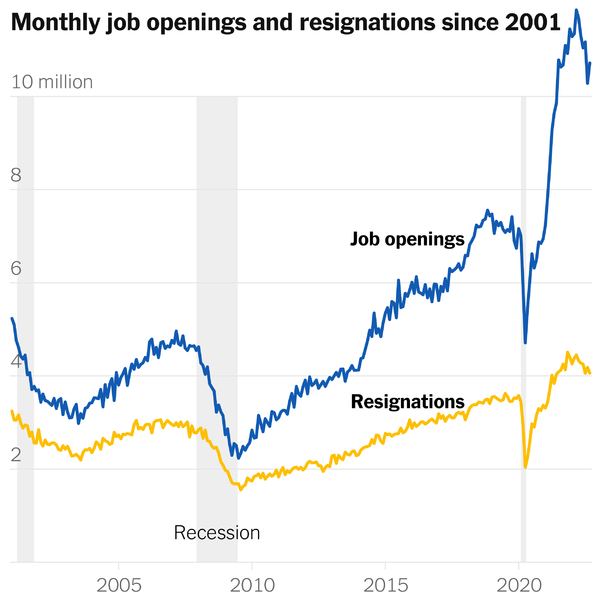
The US Bureau of Labor Statistics (BLS) reported on Tuesday that job openings fell from 11.17 million to 10.05 million during August. On the one hand, the news is negative. Still, on the other hand, investors have begun to wonder if the slowdown seen in the US economy will cause the Federal Reserve to adjust its rate hike trajectory and be less aggressive. The real estate market is already in recession, manufacturing activity is slowing, and the labor market has shown signs of weakness. This caused the dollar and US government bond yields to pull back sharply, allowing the stock market to rise substantially.

At the close of the stock market yesterday, the Dow Jones Index (US30) increased by 2.80%, and the S&P 500 Index (US500) added 3.06%. The NASDAQ Technology Index (US100) jumped by 2.69% on Tuesday.

Monetary and fiscal policies in advanced economies, including continued interest rate hikes, could push the world into a global recession and stagnation, the UN Trade and Development said. The global recession has the potential to cause more damage than the 2008 financial crisis and the Covid-19 shock in 2020. Developing countries in Asia and Africa could bear the brunt of the impending recession, according to the report. If central banks continue to raise interest rates without using other tools and without considering supply-side economics, the desired soft landing is unlikely.

The Global Manufacturing PMI fell into contractionary territory (below the 50 level) for the first time since 2020. The Core Index fell from 50.3 in August to 49.8 in September. The report points to a worsening manufacturing trend in the coming months amid an intensifying downturn in global trade flows, reduced demand related to the ongoing cost-of-living crisis, and growing economic uncertainty about the outlook.

Reuters reported that billionaire Elon Musk plans to realize his initial $44 billion bid to privatize Twitter Inc.

Stock markets in Europe were mostly rising yesterday. Germany’s DAX (DE30) gained 3.78%, France’s CAC 40 (FR40) added 4.24%, Spain’s IBEX 35 (ES35) jumped by 3.14%, Britain’s FTSE 100 (UK100) closed up 2.57% yesterday.

Fiscal changes in the UK had a rather broad impact on global risk attitude and probably contributed to the recovery of risky assets and bonds. But according to analysts, European assets still have a long way to go to restore market positioning, given the energy crisis and geopolitical events. Experts remain skeptical about Europe and believe the recent recovery in sentiment is temporary.

There will be an important OPEC+ meeting today. According to preliminary information, the OPEC+ countries will consider cutting the quota by 1-2 million barrels per day in order to support oil prices. Yesterday, the price of “black gold” jumped by 3% on these rumors. If OPEC+ countries cut production, this step will sharply reduce supply in the oil market. For his part, Kuwait Oil Minister said yesterday that OPEC+ would make a suitable decision to guarantee energy supplies and serve the interests of producers and consumers.

Asian markets traded higher yesterday. Japan’s Nikkei 225 (JP225) gained 2.96%, Hong Kong’s Hang Seng (HK50) did not trade, and Australia’s S&P/ASX 200 (AU200) ended the day up 3.75%.

The Central Bank of New Zealand (RBNZ) raised its interest rate by 0.5% but considered a 0.75% increase. The RBNZ raised interest rates for the eighth time in a row, bringing the interest rate to 3.5%, the highest among major economies. The meeting minutes said that inflation is currently too high and employment is above the maximum sustainable level. RBNZ Governor Adrian Orr noted that their tightening cycle has become “very mature,” although “there is still some work to be done.” The RBNZ expects its OCR rate to be 3.7% by December, and with only one meeting left this year, the RBNZ is very likely to raise the rate by 0.25% at the end of the year.

S&P 500 (F) (US500) 3,791.05 +112.62 (+3.06%)

Dow Jones (US30) 30,316.98 +826.09 (+2.80%)

DAX (DE40) 12,670.48 +461.00 (+3.78%)

FTSE 100 (UK100) 7,086.46 +177.70 (+2.57%)

USD Index 110.15 -1.60 (-1.43%)

Important events for today:
  • – Australia Retail Sales (m/m) at 03:30 (GMT+3);
  • – Japan Services PMI (m/m) at 03:30 (GMT+3);
  • – New Zealand Interest Rate Decision at 04:00 (GMT+3);
  • – New Zealand RBNZ Rate Statement at 04:00 (GMT+3);
  • – Eurozone Services PMI (m/m) at 11:00 (GMT+3);
  • – UK Services PMI (m/m) at 11:30 (GMT+3);
  • – OPEC+ Meeting at 13:00 (GMT+3);
  • – US ISM Services PMI (m/m) at 17:00 (GMT+3);
  • – US Crude Oil Reserves (w/w) at 17:30 (GMT+3).

By JustForex


This article reflects a personal opinion and should not be interpreted as an investment advice, and/or offer, and/or a persistent request for carrying out financial transactions, and/or a guarantee, and/or a forecast of future events.

Capping Russia’s oil profits could keep oil flowing to global markets at a reasonable cost while slashing Putin’s war funding

By Amitrajeet A. Batabyal, Rochester Institute of Technology 

The world as we know it cannot function without oil, giving oil-producing countries an advantage economists call market power. Nations that produce oil are able to set the price, while countries that rely on oil have little choice but to buy it at prices determined by the seller.

While this asymmetry in market power generally favors the seller, in response to the war in Ukraine, a group of global oil buyers are trying to leverage their economic purchasing power to weaken Russia’s strength as a major global oil producer. The European Union and the United States have both imposed bans on the purchase of Russian oil. In solidarity, other nations like Australia and Canada have also decided to not purchase Russian oil anymore.

Now, the G-7 countries – a group of democracies including the United States that try to coordinate global policy – are developing a price cap they hope nations will agree to when paying for Russian oil to further limit Russia’s profits and shrink the income stream that fuels its war with Ukraine. Can a price cap make a difference? And if so, how?

Oil as an economic engine

Given that it is not possible for the world to completely wean itself off Russian oil, the G-7 recently announced that it is planning to cap the price of Russian oil beginning in December 2022. Its goal is to get more nations to join the G-7 price cap scheme.

Tankers in the foreground of an industrial landscape. Billowing emissions from smokestacks rise in the air.
European Union sanctions will prohibit Russian oil exports from international shipping lanes and ports.
Chris LeBoutillier for Unsplash, CC BY-SA

The economics of a price cap can be quite straightforward. The escalating costs of an apartment in New York, for example, demonstrate how rent control – a price cap policy – protects renters from the rising cost of housing. When the market rental price, which equates the demand for apartments with its supply, is too high, a price cap below the market rental rate ensures that the price of an apartment cannot legally be higher than the cap.

Squeezing Russian oil profits

Led by U.S. Treasury Secretary Janet Yellen, the G-7 nations in July 2022 decided to cap the price of oil sold by Russia, a policy that is planned to go into effect on Dec. 5. Since this cap would be executed in an international setting with different rules and regulations and with nations whose interests are not always aligned, the success of a price cap is not guaranteed. Even so, the leaders of the G-7 agree that a cap policy is needed to decelerate, if not stop, the Russian war machine.

A man stands in a doorway of a residential building that has been bombed. Rubble blocks his way.
Shelling continued in the town of Toretsk in the Donetsk region in late September 2022 as Russia moved to annex portions of Ukraine.
Anatolie Stepanov via Getty Images, CC BY-ND

In addition to ensuring Putin’s war funding is reduced, a cap may help preclude an even higher spike of oil prices. The European Union’s sixth sanctions package is set to ban all Russian crude imports by sea – also set to begin Dec. 5, 2022 – and all refined oil products starting on Feb. 5, 2023. Because the world economy will have relatively little time to adjust to these hard cutoff dates, they are likely to lead to enormous oil price hikes that could cause great suffering in the European Union, the United States and other nations.

If capped at the right level – a little above Russia’s cost of producing oil, estimated at US$40 per barrel – and periodically monitored, then Russia will likely act in its own interest and legally sell oil at the capped price. Potential buyers would not run afoul of Western sanctions if oil is purchased at the capped price, helping to limit dramatic upticks in the price. This is how the price cap concept is supposed to work. Yet a few things could go wrong.

Chief among these is the behavior of nations that are not party to the G-7 cap. China and India, for instance, could decide that they will pay no heed to the cap and simply continue to do business with Russia as they have in the recent past.

But economic forces are likely to make China and India behave consistent with the cap policy.

Since oil can always be purchased at the capped price, China and India have an incentive to reduce their oil expenditures by obtaining even larger discounts from Russia to continue to buy its oil. Since Russia is desperate to find markets for its oil, to continue to do business in these large markets, President Vladimir Putin either has to sell his oil at the capped price or at a negotiated discount. Either way, the intention of the cap, to reduce oil revenues flowing to Putin, will be met.

Some nations might be able to undermine the cap because it would be difficult to enforce. Privately held companies in the business of shipping and financing Russian oil may continue to sell oil to buyers. Such entities, because of the risk of running afoul of Western sanctions, are likely to do so after demanding a cut from any oil sales, and this will, once again, have the impact of cutting into Putin’s profits.

Other forces may help maintain a cap

Another consideration for businesses that ignore the cap is that 90% of maritime insurance is based in Britain and the EU. Such firms will not be able to do legal business with Russian entities or those promoting its interests as determined by the international cap enforcement criteria. Based on my research, I believe that not many buyers will continue to do business with Russia when most seaports, ocean shipping lanes and oil tankers are off-limits to Russian oil because of the terms stipulated in the European Union’s sixth sanctions package.

Putin claims that he will not sell Russian oil to nations participating in the cap program. Based on my research, this is difficult to believe given how dependent the Russian economy is on oil revenue.

Russia’s economy is in poor shape. By one measure, its war with Ukraine is costing about $1 billion per day. Such high costs, in concert with Western sanctions, will continue to have an adverse impact on Russia’s economy. To continue his “special military operation” in Ukraine, Putin urgently needs more revenue.

Oil sales are Russia’s principal revenue source. Perhaps the price cap will pressure Russia to choose selling oil over waging war.The Conversation

About the Author:

Amitrajeet A. Batabyal, Distinguished Professor, Arthur J. Gosnell Professor of Economics, & Interim Head, Department of Sustainability, Rochester Institute of Technology

This article is republished from The Conversation under a Creative Commons license. Read the original article.

Truss and Kwarteng’s U-turn will not be enough to calm markets

By George Prior

The UK government’s humiliating U-turn on the higher tax rate reforms will not be enough to calm turbulent financial markets, warns the CEO of one of the world’s largest financial advisory, asset management and fintech organizations.

The warning from Nigel Green of deVere Group comes as it is reported that the Chancellor, Kwasi Kwarteng, plans to bring forward his medium-term fiscal plan announcement to this month.

The deVere CEO says: “Mr Kwarteng’s bringing forward of the plan to this month rather than November 23 underscores just how badly the so-called mini budget was received by financial markets.

“Having the announcement sooner rather than later is the right thing to do, as the longer the markets wait for proof that the government’s fiscal agenda is sound, the higher the risk of turbulence.

“However, the bringing forward of the announcement and the scrapping of plans to axe the 45p tax rate stinks of desperation.”

He continues: “The forthcoming amendments to the reckless mini budget that we know already are unlikely to calm markets in a significant way.

“Sterling did regain some ground higher against the dollar and gilt yields fell on the scrapping of the 45p rate announcement, but the pound will remain under pressure and high bond yields remain of serious concern.

“Investors’ trust in UK plc has had a hole blown through it.”

Last week, Nigel Green noted that markets now know where the weakness lies. He added: “If they don’t budge, they will have blown up the UK mortgage market, UK pensions, amongst others, and eventually this could spread to impact the wider global financial markets which themselves are sitting on thin ice as liquidity disappears.”

“Prime Minister Liz Truss and her Chancellor Kwasi Kwarteng have created a loop of doom.

He concludes: “There will be some relief that the UK government finally seems to be listening somewhat.

“However, the modified plans do not go nearly far enough to ease markets and regain economic trust and confidence.”

About:

deVere Group is one of the world’s largest independent advisors of specialist global financial solutions to international, local mass affluent, and high-net-worth clients.  It has a network of more than 70 offices across the world, over 80,000 clients and $12bn under advisement.


The RBA raised the rate by 0.25% instead of 0.5%. The US stock indices rebounded from September lows.

By JustForex

The US stocks rose on the first trading day of October after a challenging September. The Dow Jones (US30) and S&P 500 (US500) indices experienced their worst months since March 2020 and were dangerously close to their June lows. As the stock market closed yesterday, the Dow Jones Index (US30) increased by 0.79%, and the S&P 500 Index (US500) added 2.59%. The Technology Index NASDAQ (US100) gained 2.91% on Monday.

Shares of Apple, Microsoft, and Google pushed the tech sector up. But Tesla shares fell more than 8.5% as the company reported third-quarter deliveries that fell short of Wall Street’s expectations.

Analysts believe that even though the long-term trend points to lower prices, fresh quarterly flows could rebound from current levels. At the same time, experts pointed out that higher US Treasury bond yields continue to discourage investors from risky assets.

Equity markets in Europe mostly rose yesterday. German DAX (DE30) gained 0.76%, French CAC 40 (FR40) added 0.55%, Spanish IBEX 35 (ES35) jumped by 1.29%, British FTSE 100 (UK100) closed yesterday with 0.22% gain.

In Switzerland, the Consumer Price Index in September 2022 decreased by 0.2% compared to the previous month. In annual terms, inflation fell from 3.5% to 3.3%. The Swiss and Canadian economies are currently among the most resilient in an environment of rising interest rates and high energy prices.

The Business Activity Index in the manufacturing sectors across Europe continues to decline. The biggest declines are in Germany (48.3→47.8), Spain (49.9→49.0), and France (47.8→47.7). Italy has a small gain (48.0→48.3), but the Eurozone Manufacturing PMI index has fallen from 48.5 to 48.4. A value below 50 for the third consecutive month indicates that the Eurozone economy is, de facto, already in recession. The main problem for the Eurozone is still high inflation, which is accompanied by rising electricity and gas prices, forcing companies to economize and cut production.

Oil prices rose on Monday. The OPEC+ meeting, which begins Wednesday, could well lead to a production cut of one million barrels a day, pushing oil traders to buy. Technically, oil is pointing to further declines, so OPEC+ countries are serious about getting prices back above $90 a barrel by cutting.

Asian markets traded flat yesterday. Japan’s Nikkei 225 (JP225) gained +1.07%, Hong Kong’s Hang Seng (HK50) ended yesterday down by 0.83%, and Australia’s S&P/ASX 200 (AU200) ended the day down by 0.27%.

The Central Bank of Australia (RBA) raised its interest rate by 0.25%, which came as a surprise since the expectation was a 0.5% increase. The accompanying statement said that the RBA decided to raise the monetary rate by 25 basis points this month as it reassessed the outlook for inflation and economic growth in Australia. The central CPI inflation forecast is about 7.75% in 2022, just over 4% in 2023, and about 3% in 2024. That said, further rate increases are expected in the coming months.

The Reserve Bank (RBNZ) is set to raise the official interest rate (OCR) for the eighth consecutive time tomorrow. Analysts are forecasting another 50 basis point increase in the OCR to 3.5%, the highest level since mid-2015. On the other hand, if the RBNZ raises the rate by 0.25% tomorrow instead of 0.5%, as the RBA did today, it would be a great precedent for other central banks, including the US Fed, to become less aggressive, and would also indicate that we are close to the end of the rate hike cycle.

S&P 500 (F) (US500) 3,678.43 +92.81 (+2.59%)

Dow Jones (US30) 29,490.36 +764.85 (+2.66%)

DAX (DE40) 12,209.48  +95.12 (+0.79%)

FTSE 100 (UK100) 6,908.76 +14.95 (+0.22%)

USD Index 111.71 -0.41 (-0.37%)

Important events for today:
  • – Japan Tokyo Core CP (m/m) at 02:30 (GMT+3);
  • – Australia RBA Interest Rate Decision (m/m) at 06:30 (GMT+3);
  • – Australia RBA Rate Statement (m/m) at 06:30 (GMT+3);
  • – US FOMC Member Williams Speaks (m/m) at 16:00 (GMT+3);
  • – US FOMC Member Mester Speaks (m/m) at 16:15 (GMT+3);
  • – US JOLTs Job Openings (m/m) at 17:00 (GMT+3);
  • – Eurozone ECB President Lagarde Speaks (m/m) at 18:00 (GMT+3).

By JustForex


This article reflects a personal opinion and should not be interpreted as an investment advice, and/or offer, and/or a persistent request for carrying out financial transactions, and/or a guarantee, and/or a forecast of future events.

Global Sentiment Improves But Caution Lingers

By ForexTime

European markets flashed green on Tuesday, building on the previous session’s strong start to the final quarter of the year, as weakening US economic data raised hopes of a less aggressive stance by the Fed on rates. US futures are pointing to a higher open with the positive momentum from Europe potentially finding its way into Wall Street. Global equities could be offered further support if soft economic data fuels speculation around doves infiltrating central banks across the globe.

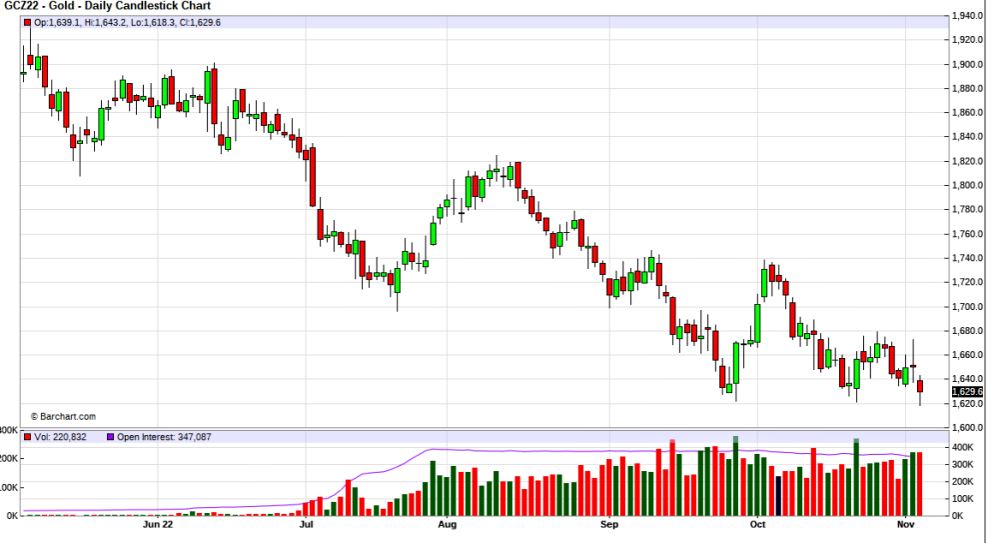
In the currency space, king dollar extended losses this morning as U.S Treasury yields dipped with the risk-on sentiment and softer US data. After clawing its way out of the abyss last week, sterling continues to recover, hitting a two-week high at 1.1430 this morning before paring back. A weaker dollar gave gold bugs the thumbs up to conquer $1700 while oil prices remain steady ahead of the OPEC + meeting on Wednesday.

In other news, Australia’s Reserve Bank surprised markets by raising interest rates by a smaller than expected 25 basis points this morning. Although the central bank had flagged in the past a possible slowdown in the pace of hikes, this surprise move sends an important message about the size of future hikes.

Despite the improving market sentiment, a sense of caution continues to linger in the air as investors brace for another busy week for global markets. The numerous speeches from Fed officials should keep market players well occupied ahead of the highly anticipated US jobs report on Friday. If hawks dominate the scene once again, this could fuel bets over more aggressive rate hikes by the Fed. Alternatively, any hint of more caution may stimulate speculation around the central bank adopting a softer stance on rates resulting in a weaker dollar.

All eyes on the US jobs report

Given how markets remain highly sensitive to anything relating to rate hikes, Friday’s non-farm payrolls report could set the tone for markets this month.

According to Bloomberg, consensus is expecting jobs growth to slow from 315k in August to 250k in September. The unemployment rate is projected to remain at 3.7% while wage growth is seen hitting 0.3%. If the jobs data exceeds market expectations, this boosts the chances around the Fed firing another monetary bazooka in the form of a 75-basis point hike. Alternatively, a disappointing report may reduce the odds of another super-sized move, ultimately weakening the dollar while supporting equity bulls.

Currency spotlight – GBPUSD

GBPUSD has staged an incredible rebound over the past few days, continuing its bounce from the all-time low of 1.0350. Sterling has drawn strength from the government’s U-turn to cut the top-rate tax for higher earners and a softer US dollar. While prices could edge higher in the short term, sterling is not out of the woods yet. Concerns over rising inflation, the gloomy economic outlook, and political noise are likely to haunt investor attraction towards the British pound. Looking at the GBPUSD through a technical lens, prices could sink back to 1.0850 if 1.1300 proves to be unreliable support. If bulls can stay in the driving seat, the next key level of interest can be found at 1.1600.

Commodity spotlight – Gold

Gold has kicked off the final quarter of 2022 on a positive note thanks to a softer dollar and subdued Treasury yields.

Market speculation around the Fed adopting a less aggressive approach on rate hikes has also sweetened appetite for zero-yielding gold. While prices may push higher over the next few days, the metal’s outlook will be influenced by the US jobs report on Friday.

Looking at the technical picture, the breakout above $1700 may open the doors towards $1724 and $1760, respectively. Should prices dip back under $1700, the next key levels of support can be found at $1680 and $1655.


Forex-Time-LogoArticle by ForexTime

ForexTime Ltd (FXTM) is an award winning international online forex broker regulated by CySEC 185/12 www.forextime.com

US stock indices have been falling for three quarters in a row. Europe and the US are imposing new sanctions on Russia

By JustForex

At the close of trading on Friday, the Dow Jones index (US30) decreased by 1.71% (-2.75% for the week), while the S&P500 (US500) was 1.51% lower (-2.64% for the week). The NASDAQ Technology Index (US100) fell by 0.75% on Friday (-0.39% for the week). As the Fed tightened its monetary policy to tame the strongest inflation in decades, the US Treasury yields jumped to their highest level in more than a decade, causing stocks to plummet.

Markets are entering the final stretch of 2022 after a tumultuous third-quarter close Friday, driven by persistently high inflation, rising interest rates, and fears of a recession. The US stock market has now posted three consecutive quarterly declines for the S&P 500 and Nasdaq since 2008, as well as the longest quarterly decline for the Dow Jones. Analysts believe investors are likely to see increased market volatility with a downward bias in the near term as we approach the reporting season.

European stock markets mostly rallied on Friday, but almost all closed in negative territory at the end of the week. German DAX (DE30) gained 1.16% (-0.96% for the week), French CAC 40 (FR40) gained 1.51% (+0.31% for the week), Spanish IBEX 35 (ES35) gained 0.91% (-2.22% for the week), British FTSE 100 (UK100) gained 0.18% (-1.78% for the week).

Inflation in the Eurozone reached double digits for the first time ever. In September, it jumped to a record 10% (9.1% in August) on an annualized basis. Core inflation (which excludes food and fuel prices) reached 4.8% (4.3% in August). The extremely high inflation figures mean that the ECB will continue to raise rates quickly in upcoming meetings. Analysts believe rates will be raised by 75 BPS in October, 50 BPS in December, and 25 BPS in the first quarter of 2023.

Four treaties were signed in the Kremlin on Friday to admit new entities to the Russian Federation. The so-called DNR, LNR, Kherson, and Zaporizhzhia regions were “annexed” by Russia. Now, Moscow will consider possible strikes by Ukraine against the territories that will “join” Russia as an act of aggression against Russia. For its part, Ukraine applied to NATO under an accelerated procedure. The European Union, the US, Canada, Australia, and many other countries said they would never recognize the results of the referendums on the new territories joining Russia, and called on other countries to condemn them.

EU countries reached a preliminary agreement on a new package of measures against Russia.

The US and UK introduced a new package of sanctions against Russia, which included dozens of individuals and entities. US President Joe Biden said after Russia’s annexation of new territories, the US would support Kyiv’s attempts to take them back. Biden said that Russia violated international law and the UN charter with its actions. The UK also imposed sanctions on services and an export ban, targeting Russia’s economic vulnerability. The UK is imposing an export ban on nearly 700 goods that are critical to Russia’s industrial and technological capabilities. The UK will also prohibit Russia from accessing the services of its engineering, architectural, auditing, legal, and advertising companies.

Embassies of many countries have advised their citizens, whose stay in Russia is not dictated by necessity, to leave Russia as soon as possible. Norway may impose a travel ban on Russian tourists, similar to that previously imposed by Finland.

According to analysts, OPEC+ will consider cutting production by more than 1 million barrels a day this week. The meeting will be held on October 5. OPEC+, which brings together OPEC nations and allies such as Russia, has refused to increase production to lower oil prices despite pressure from major consumers, including the US, to help the global economy. Nonetheless, prices fell sharply last month because of concerns about the global economy and the rising US dollar. Oil over $90 is non-negotiable for OPEC+ leadership, so they will act to keep that price floor.

Fears that further interest rate hikes could slow economic growth, coupled with the looming financial crisis in Europe and the UK, have led some investors to start buying gold again. But it should be noted that as long as there are tightening policies from Central Banks, which leads to higher government bond yields, the price of gold and silver will not have fundamental support.

Asian markets were trading lower last week. Japan’s Nikkei 225 (JP225) decreased by 3.15% for the week, Hong Kong’s Hang Seng (HK50) fell by 3.14% for the week, and Australia’s S&P/ASX 200 (AU200) was down 1.52% for the week.

In the commodities market, futures on orange juice (+5.82%), wheat (+4.86%), WTI oil (+2.98%), and Brent oil (+2.96%) showed the biggest gains. Futures on cotton (-7.78%), soybeans (-4.19%) and lumber (-2.34%) showed the largest drop.

S&P 500 (F) (US500) 3,585.62 −54.85 (−1.51%)

Dow Jones (US30) 28,725.51 −500.10 (−1.71%)

DAX (DE40) 12,114.36 +138.81 (+1.16%)

FTSE 100 (UK100) 6,893.81 +12.22 (+0.18%)

USD Index 113.02 +1.67 (+1.50%)

Important events for today:
  • – Japan Manufacturing PMI (m/m) at 03:30 (GMT+3);
  • – Switzerland Consumer Price Index (m/m) at 09:30 (GMT+3);
  • – Spanish Manufacturing PMI (m/m) at 10:15 (GMT+3);
  • – Switzerland Manufacturing PMI (m/m) at 10:30 (GMT+3);
  • – Italian Manufacturing PMI (m/m) at 10:45 (GMT+3);
  • – French Manufacturing PMI (m/m) at 10:50 (GMT+3);
  • – German Manufacturing PMI (m/m) at 10:55 (GMT+3);
  • – Eurozone Manufacturing PMI (m/m) at 11:00 (GMT+3);
  • – UK Manufacturing PMI (m/m) at 11:30 (GMT+3);
  • – Canada Manufacturing PMI (m/m) at 16:30 (GMT+3);
  • – US ISM Manufacturing PMI (m/m) at 17:00 (GMT+3);
  • – US FOMC Member Williams Speaks (m/m) at 22:10 (GMT+3).

By JustForex


This article reflects a personal opinion and should not be interpreted as an investment advice, and/or offer, and/or a persistent request for carrying out financial transactions, and/or a guarantee, and/or a forecast of future events.

Brazil 2022: Lula’s comeback looms, unless…

By Dan Steinbock 

Not so long ago, Brazil’s BRIC economy soared as working people and the poor were able to join the labor force and formal economy. In just years, a “soft coup” and far-right president derailed Lula’s miracle. What next?  

As I am writing this column, Brazil is preparing for its general election on October 2, after the disastrous term of Jair Bolsonaro, the incumbent far-right president and ex- captain, who placed army officers in key cabinet positions.

Elected in exceptional circumstances, Bolsonaro caused exceptional damage in Brazil’s economy and politics, society and military, and ecology.

With more than 156 million registered voters, Brazil is the second largest democracy in the Americas and one of the largest in the world.

But democracy is no assurance that the election outcome will be democratic.

Bolsonaro’s disastrous term

Rolling back protections for indigenous groups and facilitating deforestation, Bolsonaro compounded devastation associated with accelerated climate change.

Under his government, the COVID-19 pandemic effects were downplayed, quarantine measures opposed, and health ministers dismissed. So, the pandemic has killed almost 700,000 Brazilians; more than in India, despite its seven times bigger population.

Seeking re-election, Bolsonaro is facing former president Luiz Inácio Lula da Silva, a veteran trade unionist, who was elected in 2002, reelected in 2006, and left the office as the most popular president in Brazil’s history. In the past six years, he has overcome not just a throat cancer, but the far-right effort to keep him in prison.

Before the election, Bolsonaro, who has never hidden his yearning for a new military junta, made multiple allegations of election fraud. Observers have been quick to condemn such claims as invalid. But widespread concern prevails that false allegations could be exploited to challenge the election outcome, to execute a coup, or both.

After their bitter experience with military dictatorship (1964-85), the last thing Brazilians want is a junta of generals. Their prime concern is the economy and jobs. And that’s why they want Lula back.

Lula’s Boom, Rousseff’s plunge, oligarchs’ coup               

In the early 1990s, Brazil still had a reputation as the world’s champion in “unfulfilled agreements with the IMF.” In 2003 Lula inherited a poor, resigned nation on the verge of an economic implosion. Winning the presidency heading the left-wing Workers’ Party (PT), his primary objective was to stabilize the economy and to lay foundation for the struggle against poverty.

Lula’s economic policies were born under favorable stars. In 2001, China joined the World Trade Organization (WTO). A year later, Lula initiated Brazil’s economic reforms. To modernize, Brazil needed demand for its commodities; to industrialize, China needed commodities.

In the 2010s, Lula refocused policy momentum to the expanding middle class. Now the goal became to provide new opportunities for the upwardly mobile, while ensuring income transfers to the poorest.

During those boom days, Brazil overtook Italy as the world’s seventh-largest economy, while living standards soared by almost 60 percent. In Brazil, these were the days of wine and roses, or caipirinha and orchids.

Brazil led Latin America. China spearheaded Asia. Both shunned President Bush’s unipolar foreign policy; each supported a multipolar view of the world.

Washington had a different take of such developments.

15 lost years

When Dilma Rousseff, Lula’s chief of staff, won presidency in 2012, she hoped to build on Lula’s success. In this quest, she failed, due to the lack of time and wrong priorities, tax policies and spending.

Worse, international environment worked against her. World trade plunged, commodity prices collapsed, China’s growth decelerated and the Fed initiated rate hikes. “Hot money” began to flee leaving behind asset shrinkages, deflation and depreciation.

In Brazil, a narrow economic elite reigns over an unequal economy polarized by class and race. It had always opposed Lula and PT, and it was supported by external forces. According to Wikileaks, the U.S. National Security Agency (NSA) tapped some 30 Brazilian government leaders’ phones (Rousseff, ministers, central bank chief, etc), and corporate giants, including Petrobras, the huge petroleum conglomerate that would play a central role in corruption allegations.

Sparked particularly by such allegations, protests erupted and were fostered by conservative and family-owned media oligopolies. That boosted the center-right opposition of juridical authorities and military leaders, conservative social democrats, Democrats, and PT’s more liberal allies.

In the subsequent “soft coup,” Rousseff was impeached by the Congress in 2016. The economic effects were disastrous. During Lula’s two terms, Brazil enjoyed a historical boom. Though sluggish rather than stagnant, Rousseff’s period was undermined by the coup. Bolsonaro’s economic mismanagement proved disastrous.

Following the coup and Bolsonaro, Brazil’s GDP is now where it was around 2007 or so. 15 years have been lost (Figure).


Brazil’s GDP: Lula (2003-10), Rousseff (2011-16), coup, Bolsonaro (2019-21)

Source: TradingEconomics; World Bank; Difference Group


Biased judges and political ambitions

In 2015 Sérgio Moro gained national attention as one of the lead judges in Operation Car Wash, a criminal investigation into high-profile corruption and bribery scandal involving government officials and business executives. It fueled Rousseff’s impeachment and Lula’s 580-day imprisonment.

Moro, a Harvard-trained judge, had participated in the U.S. State Department’s International Visitor Leadership Program (IVLP). Meanwhile, Brazil’s federal police began broader cooperation with the FBI and CIA.

Moro portrayed himself as untouchable judge with no political ambitions. Yet, afterwards he eagerly joined Bolsonaro’s government as Minister of Justice and Public Security (2019-20), and subsequently the presidential race only to withdraw after his ratings fell.

There was a reason for Moro’s plunge. His “investigations” were prejudicial. Leaked messages exchanged between Moro and prosecutors have led to widespread questioning of his impartiality during the Operation Car Wash hearings.

In June 2021, all cases Moro had brought against Lula were annulled. White House officials admitted that the CIA and other parts of the US intelligence apparatus had been involved in assisting the “War on Corruption,” which jailed Lula and elected Jair Bolsonaro. Even the UN Committee found Moro biased in all cases against Lula.

Toward Lula’s comeback, unless…

In Brazil’s first round of elections, the candidate who receives more than 50% of the total valid votes is elected. If the 50% threshold is not met, the two candidates who receive the most votes participate in a second round of voting on October 30.

All current polls suggest that Lula will win the first round. The projections indicate he could get 45%-48% of the vote, against Bolsonaro’s 30%-36%. Moreover, all current second-round polls suggest Lula’s win by 10% or more.

Then again…

While Washington has urged Brazil to conduct fair elections, Bolsonaro, after his June meeting with President Biden, issued a coded command to the military in which the word “auditable” focused attention on the electronic voting system.

Brazil’s military has a “parallel vote count,” which some consider a risk to democracy. Furthermore, CySource, a controversial Israeli company hired by Brazil’s military, will presumably “supervise” the election against “disinformation.” Meanwhile, Brazilian observers have charged both YouTube and Facebook for pushing pro-Bolsonaro content and supporting coup mongering.

If democratic rules prevail, Lula is likely to make a comeback on October 2, or October 30. If not, current turmoil is just a pale prelude of what’s ahead.

No election is viable without the “consent of the governed” – not even a democracy.

About the Author:

Dan Steinbock is the founder of Difference Group and has served as research director of international business at the India China and America Institute (US) and a visiting fellow at the Shanghai Institutes for International Studies (China) and the EU Centre (Singapore). For more, see http://www.differencegroup.net