
By Tilanka Chandrasekera, Oklahoma State University
Generative artificial intelligence tools can help design students by making hard tasks easier, cutting down on stress, and allowing the students more time to explore innovative ideas, according to new research I published with my colleagues in the International Journal of Architectural Computing.
I study how people think about design and use technology, and my research focuses on how tools such as AI can help make the design process more efficient and creative.
 A student works on a design in a fashion merchandising lab.
Fashion Merchandising Labs at Oklahoma State University, CC BY-ND
Why it matters
Our study found that AI design tools didn’t just make the designs better – they also made the process easier and less stressful for students.
Imagine trying to come up with a cool idea in response to a design assignment, but it’s hard to picture it in your head. These tools step in and quickly show what your idea could look like, so you can focus on being creative instead of worrying about little details. This made it easier for students to brainstorm and come up with new ideas. The AI tools also made more design variations by introducing new and unexpected details, such as natural shapes and textures.
Free Reports:
 Sign Up for Our Stock Market Newsletter – Get updated on News, Charts & Rankings of Public Companies when you join our Stocks Newsletter
 Get our Weekly Commitment of Traders Reports - See where the biggest traders (Hedge Funds and Commercial Hedgers) are positioned in the futures markets on a weekly basis.
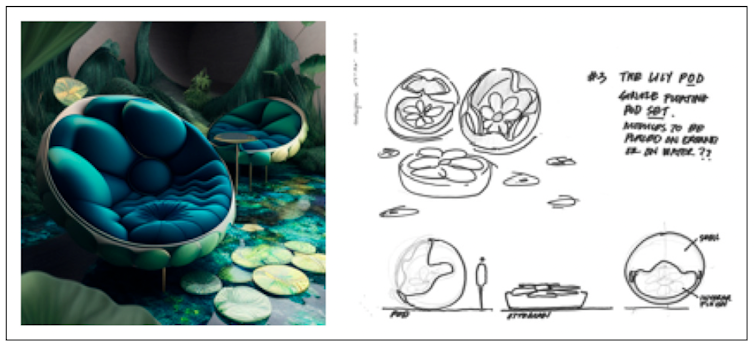
Oklahoma State University, CC BY-ND
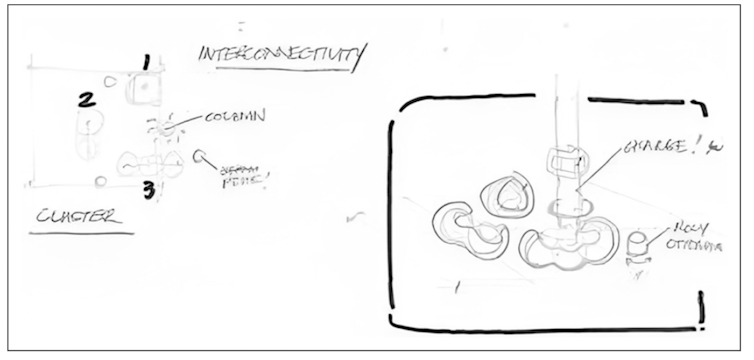
Oklahoma State University, CC BY-ND
How we did our work
My colleagues and I worked with 40 design students and split them into two groups.
One group used AI to help design urban furniture, such as benches and seating for public spaces, while the other group didn’t use AI. The AI tool created pictures of the first group’s design ideas from simple text descriptions. Both groups refined their ideas by either sketching them by hand or with design software.
Next, the two groups were given a second design task. This time, neither group was allowed to use AI. We wanted to see whether the first task helped them learn how to develop a design concept.
My colleagues and I evaluated the students’ creativity on three criteria: the novelty of their ideas, the effectiveness of their designs in solving the problem, and the level of detail and completeness in their work. We also wanted to see how hard the tasks felt for them, so we measured something called cognitive load using a well-known tool called the NASA task load index. This tool checks how much mental effort and frustration the students experienced.
The group of students who used AI in the first task had an easier time in the second task, feeling less overwhelmed compared with those who didn’t use AI.
The final designs of the AI group also showed a more creative design process in the second task, likely because they learned from using AI in the first task, which helped them think and develop better ideas.
What’s next
Future research will look at how AI tools can be used in more parts of design education and how they might affect the way professionals work.
One challenge is making sure students don’t rely too much on AI, which could hurt their ability to think critically and solve problems on their own.
Another goal is to make sure as many design students as possible have access to these tools.
The Research Brief is a short take on interesting academic work.
About the Author:
Tilanka Chandrasekera, Professor of Interior Design, Oklahoma State University
This article is republished from The Conversation under a Creative Commons license. Read the original article.

- GBP/USD at Month’s Lows: The Outlook Remains Weak Jul 29, 2026
- Crude oil falls below $80 per barrel. Australia sees inflation slowdown Jul 29, 2026
- The US Tech sector hit by sell‑off. Oil prices decline on renewed negotiations Jul 28, 2026
- Gold Declines, Focus on Fed and Falling Oil Prices Jul 28, 2026
- This week will be one of the most crowded for central‑bank meetings Jul 27, 2026
- EUR/USD Ahead of a Key Week: Holding Near Lows Jul 27, 2026
- COT Metals Charts: Weekly Speculator Changes led by Copper Jul 26, 2026
- COT Bonds Charts: Speculator Bets led by SOFR 3-Months & 5-Year Bonds Jul 26, 2026
- COT Energy Charts: Weekly Speculator Bets led by WTI Crude & Natural Gas Jul 26, 2026
- COT Soft Commodities Charts: Weekly Speculator Bets led by Corn & Soybeans Jul 26, 2026
