
By Jordan Frith, Clemson University
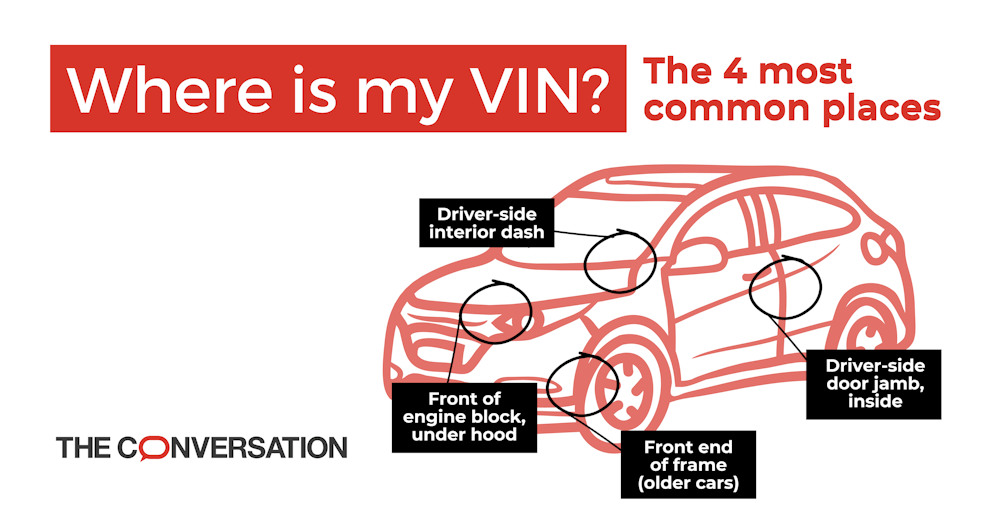
Every vehicle built after 1981 has a unique vehicle identification number, or VIN. The location of this string of letters and numbers varies, but it’s located somewhere on every car, SUV, motorcycle and truck – typically on a small metal plate or a sticker.
VINs serve many purposes. They help consumers learn about a used car’s history, including whether it was stolen, or determine whether rebates for a particular electric vehicle are available. This code appears in the paperwork necessary to do everything from insuring your car to selling it.
I research data standards and became interested in VINs while doing research for my book about the cultural history of barcodes.
Like barcode numbers, a VIN’s characters are standardized. They can tell a story if you know what to look for.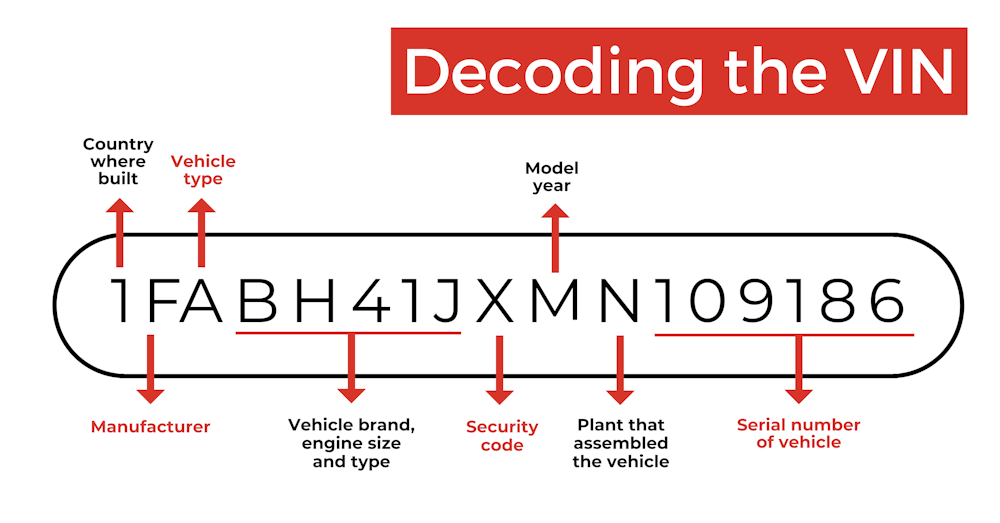
The Conversation U.S., CC BY-SA
What VINs can tell you
VINs can convey at least seven pieces of information.
Free Reports:
 Download Our Metatrader 4 Indicators – Put Our Free MetaTrader 4 Custom Indicators on your charts when you join our Weekly Newsletter
 Get our Weekly Commitment of Traders Reports - See where the biggest traders (Hedge Funds and Commercial Hedgers) are positioned in the futures markets on a weekly basis.
- Origin
If a VIN begins with a 1, 4 or 5, that means it’s a vehicle assembled in the U.S. Many other countries have their own unique identifier. A 2, for example, means the vehicle was made in Canada; a J stands for Japan. - Manufacturer
The second and third characters indicate the manufacturer. In some cases, the code corresponds with a line of vehicles that now belongs to a larger corporation. Dodge and Jeep, now part of Stellantis, each has its own. So does Lincoln, which became a division of Ford Motor Co. in 1922. - Description
The fourth through eighth characters provide several details, such as body type and engine type. - Security
The ninth character is a “check digit” determined by a complex mathematical equation based on the rest of the VIN’s numbers and letters. This digit, either a number or the letter X, is used to authenticate that the VIN is not a forgery. - Year
The 10th character indicates the model year. There’s only one slot for this, and not all letters and numbers are used, resulting in repetition. An R could signal either 2024 or 1994, for example. - Factory
The 11th character indicates the specific plant where the vehicle was assembled. - Serial number
The VIN’s final six characters compose a serial number that differentiates the vehicle from all others made in the same factory that are the identical type and model year.
The Conversation U.S., CC BY-SA
Finding more information
Only experts can tell where a vehicle was assembled or what type of engine it has by looking at its VIN. But help is available.
The National Highway Traffic Safety Administration provides a handy VIN decoder. When I plugged my vehicle’s VIN into the decoder, the site correctly determined that my SUV is a 2011 Subaru Forester with an automatic transmission.
Of course, I already knew all that.
What I didn’t realize was that it weighs between 4,000 and 5,000 pounds, has a 2.5-liter engine and features side curtain airbags to protect the driver and passengers in the front and back seats. I also learned that this Subaru Forester was assembled in Gunma, Japan.
Those details had been invisible to me as a consumer, but they had been within easy reach ever since I bought my Forester in 2018. I had somehow driven that car well over 100,000 miles without realizing the number on the side of my driver’s seat contained some history.
Before buying the Forester, even though I didn’t know that my VIN could say so much, I did run it through a free online system to make sure it hadn’t been stolen.
To be sure, VINs won’t tell you everything you might want to know about a vehicle, such as what color it was when it rolled off the line. But if you can do a little decoding and make use of widely available online tools, they do harbor important information.
About the Author:
Jordan Frith, Pearce Professor of Professional Communication, Clemson University
This article is republished from The Conversation under a Creative Commons license. Read the original article.

- EUR/USD: Busy Week Ahead Aug 3, 2026
- Positive sentiment in the AI sector supported stock indices. Oil prices remain volatile Aug 3, 2026
- The Tech‑heavy NASDAQ Index jumped by more than 3.3%. The offshore yuan is trading at its highest level since 2023 Jul 31, 2026
- USD/JPY After Volatility: Multiple Events in One Day Jul 31, 2026
- The US indices sell off amid renewed US-Iran clashes. Oil jumps by 7% Jul 30, 2026
- USD/JPY Temporary in Equilibrium: Multiple Factors in Focus Jul 30, 2026
- GBP/USD at Month’s Lows: The Outlook Remains Weak Jul 29, 2026
- Crude oil falls below $80 per barrel. Australia sees inflation slowdown Jul 29, 2026
- The US Tech sector hit by sell‑off. Oil prices decline on renewed negotiations Jul 28, 2026
- Gold Declines, Focus on Fed and Falling Oil Prices Jul 28, 2026
